The Salty Dog Cafe Has One of the Greatest Regional Brands in America. Here's Why It Works.
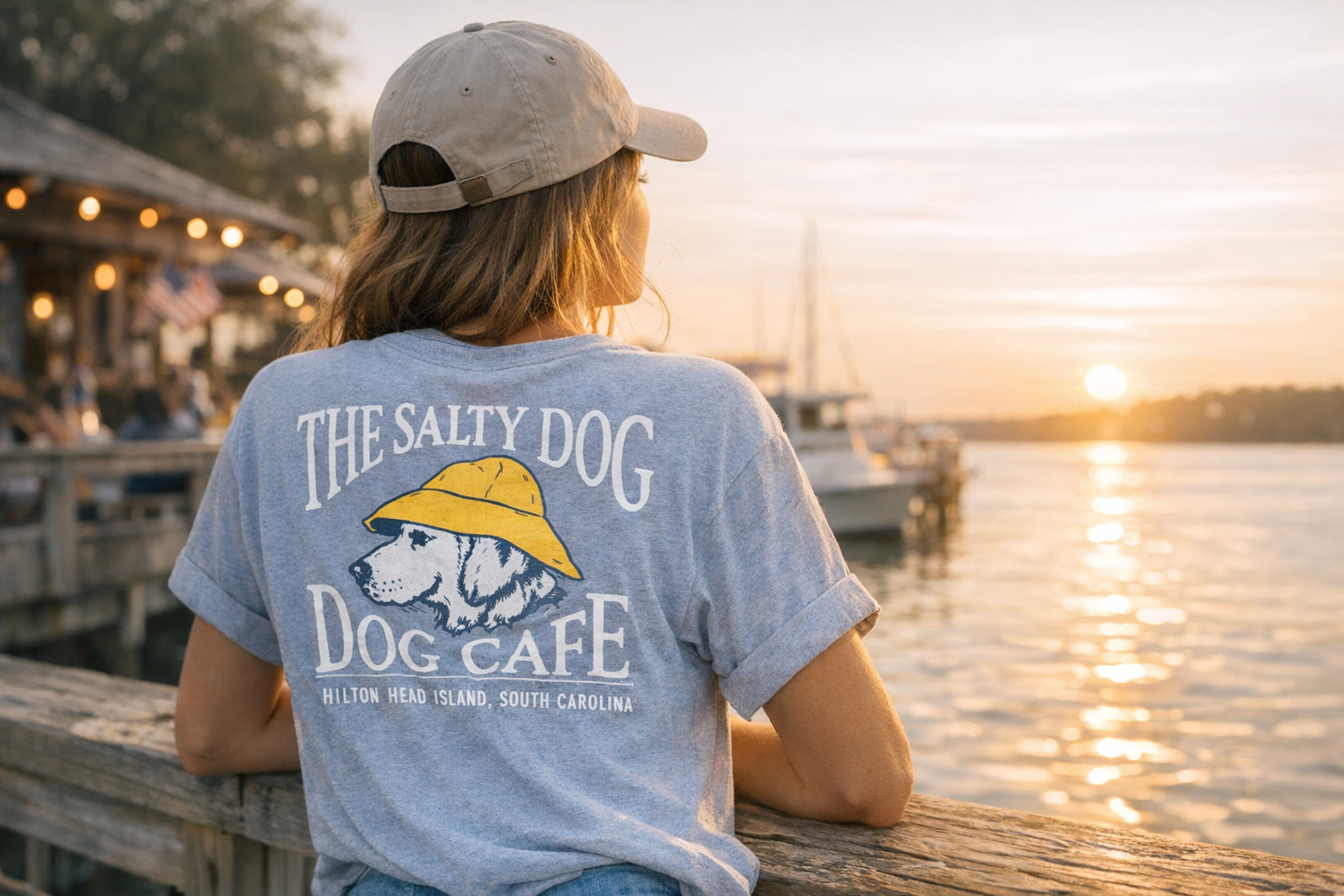
There is a t-shirt that has been spotted on every continent.
It features a dog in a yellow hat. On the back, it says Hilton Head Island, South Carolina. The people wearing it are in airports in Denver, grocery stores in Philadelphia, boardwalks in New Jersey, and school pickup lines in suburban Atlanta. They bought it on vacation. They wear it because it means something to them — because it is shorthand for a specific memory, a specific place, a specific feeling that they wanted to carry home and keep.
That t-shirt belongs to the Salty Dog Cafe. And the fact that it exists, and that it travels the way it does, is one of the most impressive pieces of organic brand-building in American regional hospitality. Not because anyone engineered it. Because the brand earned it.
This is an entry in Ritner Digital's ongoing brand analysis series — where we examine the companies that built something real and try to understand exactly how they did it. The Salty Dog Cafe, founded in 1987 on the docks of South Beach Marina Village on Hilton Head Island, South Carolina, is one of the best case studies in the country for what happens when authentic place, genuine experience, and smart brand instinct come together and compound over decades.
The Legend Does Real Work
Every great brand has an origin story. Most of them are manufactured in a conference room. The Salty Dog's is different.
Jake was a dog. His owner was Captain John Braddock, a fisherman who worked the waters off Hilton Head. During a raging storm, their boat went down. Jake swam — for three days, through the open Atlantic, with John clinging to his collar — until he brought them both back to shore. A group of restaurateurs heard the story and opened a cafe in Jake's honor in 1987. Whether every detail of the legend is literally true is beside the point. What matters is that the story works. It is simple, visual, emotionally resonant, tied to the specific geography of the brand, and starring a character — a loyal dog in a yellow hat — that children and adults respond to immediately and equally.
The Salty Dog didn't hire a branding agency to develop a mascot. The mascot came from a story. That distinction is everything. Jake isn't a logo. He is a character with a history, a personality, and a reason to exist that connects directly to the reason the restaurant exists. There are real dogs named Jake at the property — Jake, Jake Jr., Jake III, Jake IV, each one a living continuation of the legend — and the physical presence of the dog at the cafe turns the brand story from mythology into experience. You can pet the story. That is extraordinarily rare in hospitality branding, and almost impossible to manufacture after the fact.
The T-Shirt Is the Greatest Marketing Program in Coastal America
Let's be direct about what the Salty Dog t-shirt actually is: it is a national media channel that the brand operates at essentially zero incremental cost per impression.
The shirt — screen-printed at the Salty Dog's own t-shirt factory on Arrow Road, which has been in operation since just three years after the restaurant opened — has been carried home by vacationers to every state in the country and reportedly every continent on earth. Each person who wears it in their hometown is advertising Hilton Head Island to everyone who sees them. Each person who sees it and asks about it gets a firsthand recommendation from someone who loves the place. The conversion rate on a word-of-mouth recommendation from a trusted friend is something no paid media buy can touch.
This is the tourist-to-ambassador pipeline operating at peak efficiency. The product is so good — the shirts genuinely distinctive, the brand genuinely meaningful — that customers do the marketing voluntarily and enthusiastically. The Salty Dog's director of screen print operations has noted seeing generations of families returning year after year to buy shirts for themselves, their children, and their friends, with each purchase reinforcing a loyalty that spans decades rather than seasons.
The decision to own the production of this asset in-house — to operate their own manufacturing facility rather than outsourcing to a generic shirt vendor — is one of the smartest structural choices the brand has ever made. It ensures quality control. It ensures authenticity. It ensures that the Salty Dog shirt is genuinely a Hilton Head product, made by people who work for the brand, which matters to a customer base that is buying the shirt precisely because it represents something real. Anyone can put a logo on a Gildan. Nobody else can make a Salty Dog shirt. That is a competitive moat built not by lawyers but by decisions about how seriously to take your own brand.
The Experience Stack Is What Separates Good Hospitality From Great Brands
The Salty Dog figured something out that most restaurant groups spend years and significant capital trying to crack: how to turn a single dining occasion into a full day, and a single day into a return trip, and a return trip into a multigenerational family ritual.
The experience ecosystem they've built around South Beach Marina is a masterclass in this. Breakfast, lunch, and dinner at the cafe. Ice cream at the Salty Dog Ice Cream Factory. A sunset cruise on the 63-foot catamaran with live music and happy hour. Live music on the docks every night. A t-shirt from the factory — maybe a tie-dye one designed on site. A stop at Jake's Pizza. A browse through Jake's Cargo. A kayak rental or a paddleboard. Webcams so you can check on the marina from home after you leave.
Each of these is a separate purchase. Each of them reinforces the brand. Each of them creates a memory that belongs specifically to the Salty Dog experience rather than generically to a Hilton Head vacation. The cafe spawned Wreck of the Salty Dog in 2004 — a more elevated dining concept on the same footprint — and Land's End Tavern in 2006, built out of an old boat storage building. Then came the Bluffton location in 2016 and Seabrook Island in 2019. Now a downtown food truck. A Key West store. A collaboration with Princess Cruise Lines.
This is brand expansion done right. It is not random diversification. Every new concept and every new location is an extension of the same identity — the same mascot, the same coastal warmth, the same commitment to the experience that made the original cafe an island institution. The Salty Dog hasn't chased trends. It has deepened what already worked and reached new audiences with the same authentic offer.
The Community Is the Product
What the Salty Dog has built over 37 years is not a restaurant brand in the conventional sense. It is a community — a tribe of people who identify with a place and a feeling and a dog in a yellow hat, who return to Hilton Head specifically to visit the Salty Dog, who buy the shirt not as a souvenir but as a membership badge, and who pass the tradition to their children.
The staff reflects this. The food and beverage director has described starting as a chef and growing into the role over more than two decades. The screen print director has been with the brand since 1993. This kind of tenure in hospitality — an industry notorious for turnover — is itself a brand signal. It tells customers that the people serving them believe in what they're doing, and that the experience they're having is consistent not because it's scripted but because it's genuinely cared for.
The multigenerational customer relationship is the ultimate proof of brand health. When families return year after year, bring their children, and then bring their children's children, the brand has achieved something that no marketing campaign can buy. It has become part of the story that families tell about themselves — not just a place they eat, but a place that belongs to their history.
That is what the Salty Dog has built. It is what every hospitality brand in America is trying to build and most of them never reach. The Salty Dog got there by being genuinely great at a specific place, staying true to its identity through decades of growth and change, and trusting that the experience would do the marketing.
It was right.
What the Salty Dog Teaches Every Brand Builder
The lessons from the Salty Dog's brand story are applicable well beyond coastal hospitality, and they are worth stating plainly.
A real story beats a manufactured one every time. The Jake legend works because it feels true — because it is tied to a real place, a real coastline, a real relationship between a man and his dog. Brands that try to manufacture this kind of mythic origin almost always fall short because audiences can tell the difference. The ones that find genuine stories in their own history and tell them with conviction are the ones that last.
Make the customer part of the brand. The t-shirt turned customers into ambassadors before anyone was using the word "ambassador" in a marketing context. The principle is simple and the execution requires confidence: make something good enough that people want to carry it home and show it to their friends. The Salty Dog has been doing this since 1987.
Own the thing that matters most. The decision to operate an in-house t-shirt factory rather than outsource production protected the brand's most important asset — the shirt — from the commoditization that would have happened the moment a third-party supplier started cutting corners or selling the design to someone else. Know what your brand's most critical asset is and refuse to cede control of it.
Experience compounds. Every year the Salty Dog operates, the brand gets stronger — not because of advertising spend, but because more families have the memory, more alumni have the shirt, more people have the story to tell. This is the compounding return on genuine experience quality that no marketing budget can replicate. The Salty Dog has been earning it since before most of its current customers were born.
The Salty Dog Cafe is proof that the most powerful brands are not built in boardrooms. They are built on docks, in kitchens, on boats at sunset, and in the hearts of people who found something real and wanted to share it.
Jake would be proud.
Ritner Digital is a digital marketing agency that believes in brands built on something real. If you're ready to build a digital and marketing presence that reflects everything you've actually built, let's talk.
Frequently Asked Questions
What is the Salty Dog Cafe?
The Salty Dog Cafe is a waterfront dining and lifestyle brand founded in 1987 at South Beach Marina Village on Hilton Head Island, South Carolina. What began as a single seafood cafe on the docks has grown into a full hospitality ecosystem that includes multiple restaurant concepts, a private-label t-shirt factory, an ice cream shop, sunset cruises, retail stores in South Carolina and Key West, a food truck, and a collaboration with Princess Cruise Lines. It is one of the most recognizable regional hospitality brands in the American Southeast and one of the most studied examples of organic, experience-driven brand building in coastal America.
What makes the Salty Dog Cafe's brand so strong?
Several things work together to make the Salty Dog brand exceptionally durable. The origin story — Jake the dog, Captain John Braddock, a three-day swim through the Atlantic — gives the brand a mascot with genuine narrative behind him rather than just an aesthetic in front of him. The t-shirt turned customers into national brand ambassadors at essentially zero incremental marketing cost, reaching audiences in every state and reportedly every continent. The experience ecosystem at South Beach Marina creates multiple purchase occasions and multiple memory touchpoints in a single visit. And the multigenerational customer loyalty — families who return year after year and eventually bring their children — is the kind of compounding brand equity that no advertising spend can manufacture. The Salty Dog earned it through 37 years of consistent, genuine experience delivery.
How did the Salty Dog t-shirt become so famous?
The shirt works because the brand works. Customers buy it not as a generic souvenir but as a badge of belonging — proof that they were there, that they had the experience, that they are part of the tribe. The Salty Dog made the strategic decision early on to operate its own t-shirt factory on Arrow Road on Hilton Head Island, giving them direct control over quality, design, and production. That in-house manufacturing keeps the product genuinely distinctive and genuinely local in a way that outsourced merchandise never could be. Every person who wears the shirt in their hometown becomes a walking recommendation for Hilton Head Island, and the conversion rate on a word-of-mouth recommendation from someone who clearly loves a place is something no paid media campaign can match.
What are the different Salty Dog concepts and locations?
The Salty Dog brand encompasses several dining concepts and retail locations. The original Salty Dog Cafe at South Beach Marina is the flagship — waterfront dining with live music, the round outdoor bar, and nightly sunset views over Braddock's Cove. Wreck of the Salty Dog, opened in 2004, offers a more elevated dining experience with a raw bar and daily chef specials. Land's End Tavern, opened in 2006 in a converted boat storage building, adds wood-fired pizza to the mix. Salty Dog Ice Cream, Jake's Pizza, and the South Beach General Store round out the South Beach footprint. Beyond Hilton Head, the brand has expanded to Bluffton, Seabrook Island, Charleston, Key West, and a downtown food truck, with retail stores at multiple locations including Tanger Outlets.
What can other brands learn from the Salty Dog's approach to marketing?
The Salty Dog is one of the clearest demonstrations in American hospitality that the best marketing is a great experience, and that a great experience compounds over time in ways that paid advertising cannot replicate. The brand never chased trends. It didn't reinvent itself every few years to stay relevant. It found something genuine — a place, a story, a feeling — and deepened it consistently for nearly four decades. The t-shirt taught the brand that customers will do your marketing for you if you give them something worth carrying home. The multigenerational loyalty taught them that the best customer acquisition strategy is treating the customers you already have so well that they bring their families back. These are principles that apply to any brand in any category, and the Salty Dog has been proving them since 1987.