What Is a Marketing SWOT Analysis? A Real-World Deep Dive for Auto Dealers
Every marketing plan eventually lands on the same slide.
Four boxes.
Big labels.
A quick nod from leadership.
SWOT Analysis.
And then… nothing happens.
That’s not because SWOT is outdated.
It’s because most marketing SWOT analyses stop at observation instead of decision.
Let’s walk through what a marketing SWOT analysis is actually supposed to do — and then look at a real-world example for an auto dealer, where the insights lead somewhere useful.
What a Marketing SWOT Analysis Actually Is
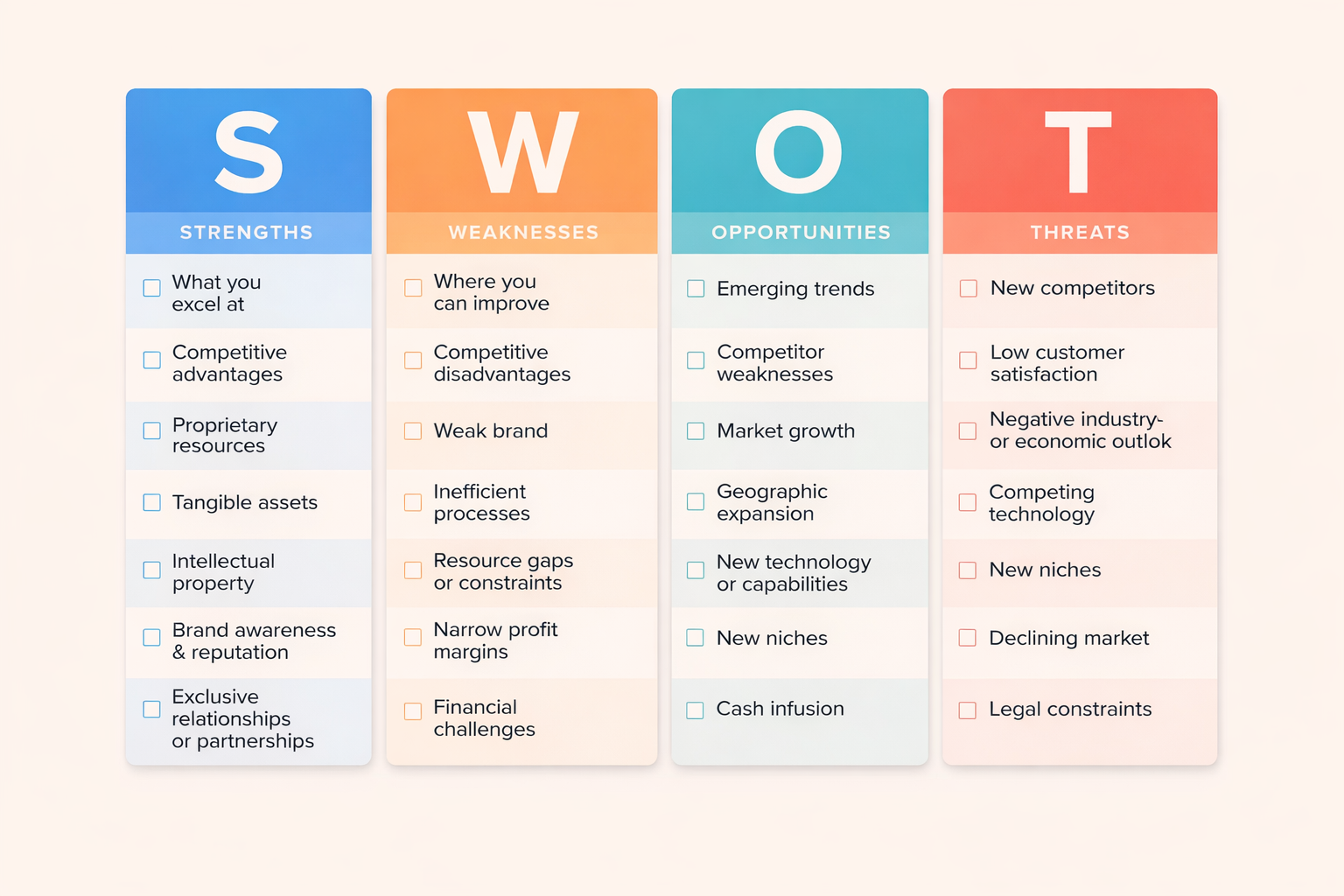
A marketing SWOT analysis is a framework used to evaluate how well your marketing is positioned to grow demand, visibility, and trust — relative to competitors and market conditions.
It looks at:
Strengths (what your marketing does well)
Weaknesses (where momentum breaks)
Opportunities (external factors you can act on)
Threats (external risks you need to plan around)
This isn’t a company-wide exercise about culture or operations.
This is about how customers find you, trust you, and choose you.
If your SWOT doesn’t influence what you publish, where you invest, or who you target, it’s not strategy — it’s documentation.
A Real-World Marketing SWOT Example: Auto Dealership
Let’s make this practical.
Imagine a mid-sized auto dealership operating in a competitive metro area. They sell new and used vehicles, rely heavily on third-party marketplaces, and feel constant pressure from OEM sites and nearby competitors.
Here’s what a useful marketing SWOT analysis looks like.
Strengths: What the Dealership’s Marketing Already Does Well
Strengths are internal. You control them.
Strong marketing strengths are specific and provable — not vague compliments.
Example strengths:
Strong Google reviews for the service department
High visibility for branded search terms
Large used inventory with fast turnover
Repeat customers from prior leases and service visits
A sizable email list built over years of transactions
What this reveals:
The dealership already has trust and demand — especially after the sale.
Strategic implication:
Marketing should lean harder into service credibility, retention, and used inventory — not just new vehicle promotions.
Weaknesses: Where Marketing Loses Momentum
This is the most uncomfortable quadrant — and the most valuable.
Marketing weaknesses aren’t failures. They’re friction points.
Example weaknesses:
Heavy dependence on third-party listing platforms
Weak visibility for non-branded searches (“used SUV near me”)
Website optimized for inventory, not conversion
Minimal educational or trust-building content
Paid ads driving traffic without long-term equity
What this reveals:
The dealership doesn’t fully own the customer journey — platforms do.
Strategic implication:
Marketing needs to reduce dependency on rented traffic and invest in owned channels like SEO, content, and email.
Opportunities: External Forces the Dealer Can Act On
Opportunities only matter if you can move on them faster than competitors.
Example opportunities:
Nearby competitors ignoring organic search beyond their immediate city
Growing demand for certified pre-owned vehicles
Longer buyer research cycles before visiting dealerships
Customers searching by nearby towns, not ZIP codes
Increased interest in service packages and warranties
What this reveals:
There’s demand before buyers ever land on inventory pages.
Strategic implication:
The dealership can win earlier in the funnel with hyperlocal SEO, buyer education, and service-driven content.
Threats: External Risks That Quietly Erode Results
Threats don’t need to be dramatic to be dangerous.
Example threats:
Third-party platforms increasing fees
Rising ad costs compressing margins
OEM brand sites outranking local dealers
New dealerships entering nearby markets
Algorithm changes impacting local visibility
What this reveals:
The current marketing model isn’t future-proof.
Strategic implication:
The dealership needs stronger owned visibility and brand authority to reduce long-term risk.
The Real Value of a Marketing SWOT Analysis
Here’s the insight that actually matters:
The dealership’s biggest strength (trust and inventory) is being undermined by its biggest weakness (platform dependence), while competitors leave organic and hyperlocal demand underutilized.
That’s the strategy.
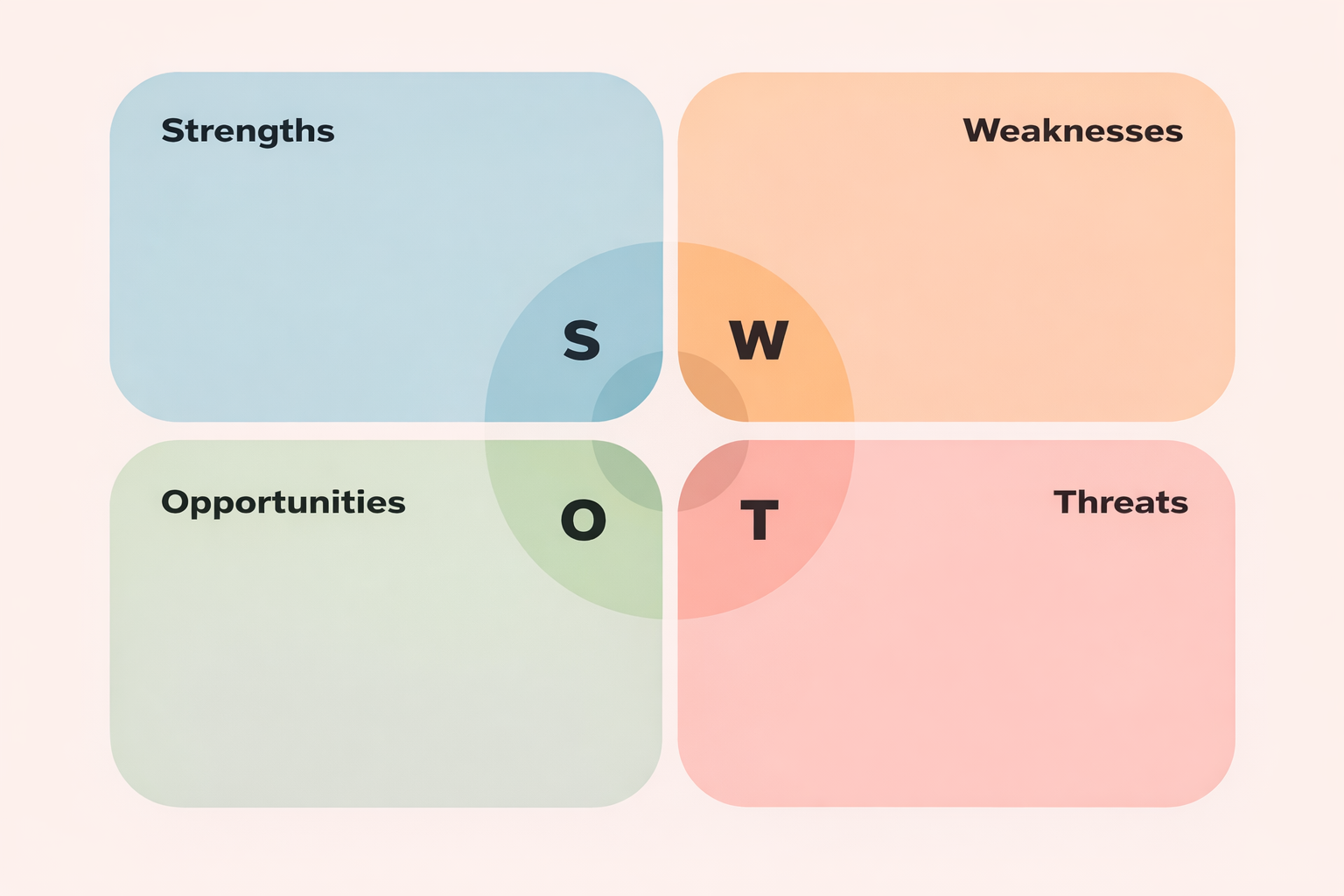
Not the four boxes — the connection between them.
How This SWOT Changes Marketing Decisions
Because of this analysis, smarter marketing decisions follow:
Shift budget from pure lead-gen to demand capture
Invest in hyperlocal SEO beyond the primary city
Use service credibility to support used-car marketing
Reduce reliance on third-party marketplaces over time
Build long-term visibility instead of renting traffic
That’s what a marketing SWOT analysis is supposed to do:
force better decisions.
Final Takeaway
A marketing SWOT analysis isn’t about being comprehensive.
It’s about being honest, directional, and actionable.
If your SWOT doesn’t clearly answer:
What to double down on
What to fix
What to defend against
And what to pursue next
…it’s not strategy. It’s decoration.
Need Help Turning a SWOT Analysis Into Real Marketing Strategy?
A SWOT analysis only matters if it leads to execution.
If you’re staring at four boxes and still unsure:
Where to invest
What to prioritize
Or how to turn insight into growth
Ritner Digital helps businesses translate SWOT analysis into clear marketing strategy — from SEO and content to positioning, channel mix, and long-term growth planning.
If you want a SWOT analysis that actually goes somewhere,
get in touch with Ritner Digital and let’s map out what comes next.
FAQs
What is a marketing SWOT analysis?
A marketing SWOT analysis is a strategic framework used to evaluate how well your marketing is positioned to attract, convert, and retain customers. It examines internal strengths and weaknesses alongside external opportunities and threats to guide smarter marketing decisions.
Unlike a general business SWOT, a marketing SWOT focuses on visibility, demand generation, positioning, and growth channels.
How is a marketing SWOT analysis different from a business SWOT?
A business SWOT looks at the organization as a whole — operations, staffing, finances, and culture.
A marketing SWOT is narrower and more actionable. It focuses on:
How customers find you
Why they choose you
Where demand exists
What’s limiting growth
If it doesn’t influence marketing strategy, it’s not a marketing SWOT.
How often should a marketing SWOT analysis be done?
At minimum, once per year.
High-growth businesses often revisit their marketing SWOT:
Before major campaigns
When performance stalls
After significant market changes
During budget planning
A SWOT isn’t static — it should evolve as competition, platforms, and buyer behavior change.
What makes a SWOT analysis actually useful?
A SWOT analysis is useful only if it leads to decisions.
That means:
Changing channel priorities
Adjusting budget allocation
Refining messaging or positioning
Identifying what to stop doing
If your SWOT ends in four boxes and no next steps, it didn’t work.
What are common mistakes in marketing SWOT analyses?
The most common mistakes include:
Using vague statements instead of evidence
Listing trends that can’t be acted on
Avoiding weaknesses to protect egos
Treating the SWOT as a presentation slide instead of a planning tool
Good SWOTs are honest — even when it’s uncomfortable.
Is a marketing SWOT analysis helpful for auto dealerships?
Yes — especially for auto dealers.
Dealerships operate in hyper-competitive, platform-heavy markets. A marketing SWOT helps identify:
Over-reliance on third-party marketplaces
Missed organic and local search opportunities
Where service and retention can drive growth
How to reduce long-term marketing risk
It’s one of the fastest ways to clarify strategy in a crowded market.
Can a SWOT analysis help with SEO and content strategy?
Absolutely.
A strong marketing SWOT often reveals:
Keywords competitors ignore
Content gaps earlier in the buyer journey
Geographic opportunities
Over-dependence on paid traffic
Those insights translate directly into smarter SEO and content planning.
Should a SWOT analysis be done internally or with an agency?
Internal teams know the business best — but agencies bring outside perspective.
Working with a marketing agency helps:
Challenge assumptions
Benchmark against competitors
Translate insights into execution
Avoid blind spots
The best SWOT analyses combine internal knowledge with external objectivity.
Who can help create and execute a marketing SWOT analysis?
If you want a SWOT analysis that leads to action, Ritner Digital helps businesses turn insight into strategy — connecting SWOT findings directly to SEO, content, and demand-generation execution.
Related Reads
〰️
Related Reads 〰️

How Much Should a Dealership Spend on Digital Marketing Per Month?
Not sure how much your dealership should invest in digital marketing each month? This guide breaks down percentage benchmarks, real-world budget ranges, and how to calculate profitable ad spend based on gross per vehicle and acquisition costs.

How Auto Dealerships Can Stop Losing Leads to CarGurus and Carvana
Your potential buyers are finding their next car on CarGurus and Carvana — not your website. That's not a traffic problem. It's a dependency problem. Here's the playbook for building a direct acquisition strategy that makes third-party platforms less necessary and puts your dealership back in control of the customer relationship.
Is Your Marketing Actually Working? 5 Signs Your Channels Aren’t Aligned
You’re running ads, sending emails, and investing in SEO — but growth feels inconsistent. This article breaks down five signs your marketing channels aren’t aligned and how misalignment quietly reduces ROI and increases acquisition costs.