Why Americans Can't Stop Falling in Love With Greece — And What It Means for Travel Marketing
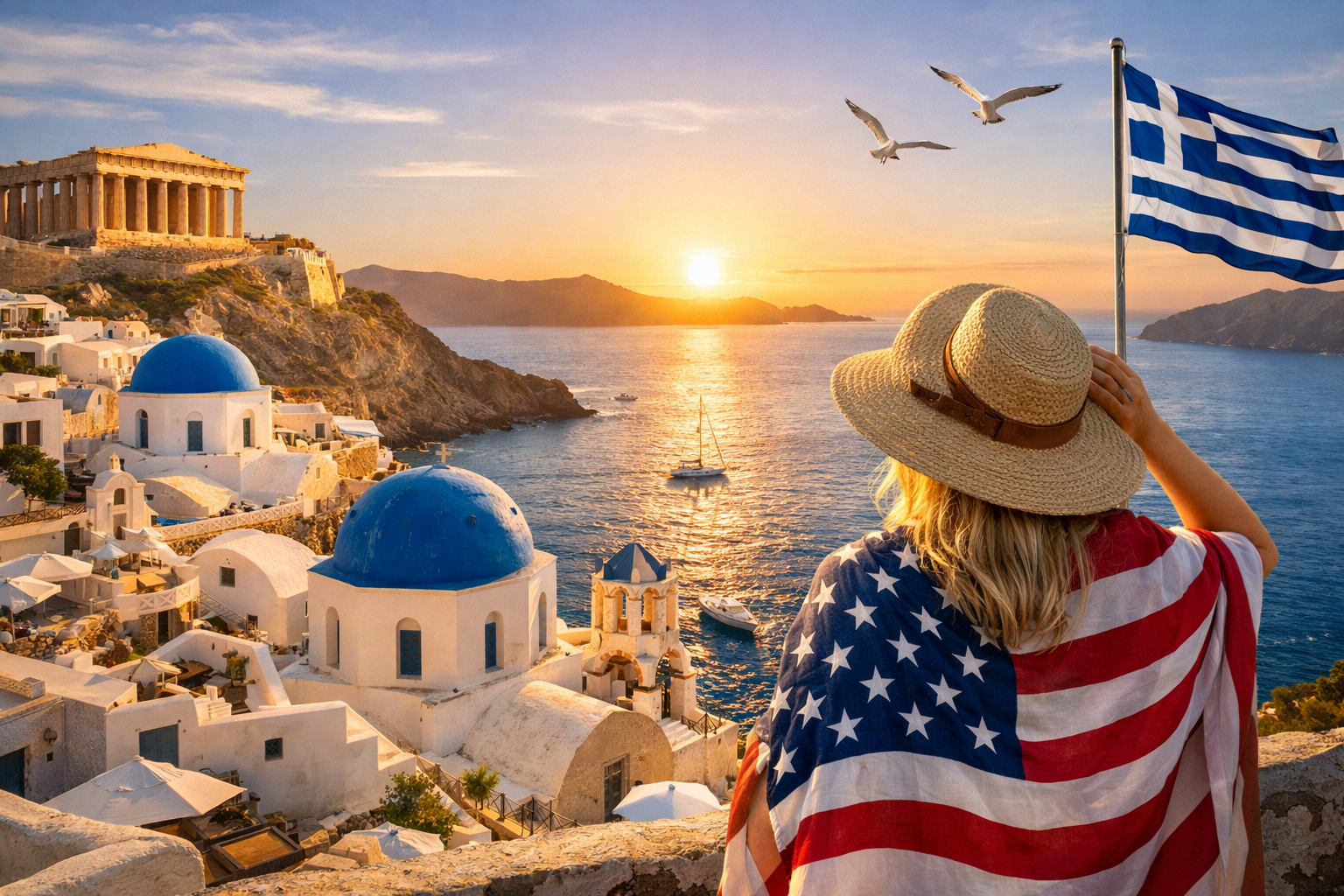
There are destinations people visit once and check off a list. And then there's Greece.
Greece is the kind of place that turns first-timers into repeat visitors, repeat visitors into evangelists, and casual interest into full-blown obsession. It has held the title of best tourism destination for American travelers — voted by actual travelers, not industry panels — for five consecutive years. That doesn't happen by accident. It happens when a destination does something rare: it consistently delivers on a promise that resonates deeply with a specific audience.
For travel businesses, hospitality brands, tour operators, and anyone marketing a Greece-related product or experience to American consumers, understanding why Greece resonates the way it does isn't just interesting — it's the foundation of every effective piece of marketing you'll ever produce for this audience.
Let's get into it.
The Numbers First: Greece and the American Traveler
Before we talk about the emotional and cultural reasons behind Greece's pull on American audiences, the data deserves a moment.
Visitors from the United States saw the greatest revenue increase of any major market in 2024, generating €1.6 billion — up 15.3% year over year. GreekReporter.com That's not a blip. That's a trend with serious momentum behind it.
Travel from the US to Greece jumped by more than 20% between January and August 2025, and nearly 25% in August alone — far outpacing the overall 5% increase in US travel to Europe during the same period. GreekReporter.comGreece isn't just popular with Americans. It's the fastest-growing major European destination for the US market.
Greece has won the Best Tourism Destination award in the GT Tested Reader Survey — determined entirely by traveler votes — for the fifth consecutive year in 2025, outperforming Ireland and Spain. Travel And Tour World
American tourists spend an average of around $3,040 per person during their Greece visits — a figure that represents nearly 13% of their annual income, and significantly more than what European visitors spend per trip. Travel And Tour World
This isn't a niche audience or an emerging market. Americans are Greece's most financially valuable long-haul visitors, and they're coming in record numbers. Understanding why is the key to marketing to them effectively.
What Makes Greece Irresistible to American Travelers
History They Can Actually Feel
Americans have a complicated relationship with history. The United States is a young country — by European and certainly by ancient Mediterranean standards, it's practically newborn. There's a particular kind of hunger that comes with that. A desire to stand somewhere that has been stood on for thousands of years. To touch a column that was carved before America was a concept.
Greece's appeal goes far beyond beach holidays — it encompasses ancient historical sites in Athens, rich heritage, scenic landscapes, and the kind of cultural depth that creates loyal travel fans rather than one-time visitors. Travel And Tour World
The Acropolis, Delphi, the ruins at Olympia — these aren't just tourist attractions. For American visitors, they're contact points with a civilization that shaped the very ideas their country was built on. Democracy, philosophy, architecture, the foundations of Western thought — all of it originates in Greece. Americans don't just visit Greece. They visit the source.
That emotional weight is almost impossible to manufacture through marketing. But for travel marketers, it means the historical angle isn't just one content pillar among many. For American audiences, it's often the reason the trip gets booked in the first place.
The Islands: A Fantasy Made Real
Santorini's white-washed buildings perched above the caldera. The turquoise waters around Mykonos. The unspoiled coves of lesser-known islands like Naxos and Lefkada. Greece's islands represent a very specific kind of fantasy — the Mediterranean dream — that has been reinforced through decades of film, photography, travel writing, and social media.
What makes it remarkable is that the reality lives up to the fantasy. That almost never happens. But Greece's islands are genuinely, consistently, photographically beautiful. The light is real. The water is that color. The food is that good.
In February 2025, vacation rental platform HomeToGo saw a surge in US searches for Greek islands including Crete, which recorded a 390% increase in search traffic between October 2024 and January 2025. TheTravel
And the trend is evolving. More Americans are now opting for "quiet travel," "calmcations," or "soft travel" — 63% of travelers say they're likely to visit a detour destination in 2025, trading bucket-list spots for lesser-known islands that offer a more authentic taste of Greek island life. TheTravel
This shift is a marketing opportunity hiding in plain sight. The American audience isn't just looking for Santorini anymore. They're looking for the Santorini experience — the beauty, the calm, the sense of discovery — without the crowds. Destinations like Paros, Naxos, and the Ionian islands are having their moment, and the travel brands that speak to this audience's evolving preferences are the ones capturing their attention.
Greek Hospitality: The Thing You Can't Fake and Can't Forget
There's a Greek word — filoxenia — that translates roughly as "friend to the stranger." It's the cultural concept that shapes how Greeks treat guests: not as customers, not as tourists, but as people deserving of genuine warmth and generosity.
Sentiment tracking studies from 2025 reveal that American travelers consistently rate their Greek experiences with scores above 90% — a performance level maintained through a combination of traditional values and modern service standards. Travel And Tour World
This matters enormously for word-of-mouth, which is one of the most powerful forces driving Greece's continued growth with American audiences. When travelers return to the United States, word-of-mouth recommendations are shared, reinforcing Greece's status as a must-visit location through a consistent feedback loop of high satisfaction. Travel And Tour World
For travel marketers, this is the goldmine. The hospitality isn't a product feature you have to sell. It's an experience your customers will sell for you — through their conversations, their Instagram posts, their enthusiastic recommendations to friends and family. The job is to get people there the first time. Greece tends to handle the rest.
The Food: A Reason to Travel on Its Own
Greek food has had a long moment in the American consciousness, and it shows no signs of fading. The Mediterranean diet is consistently ranked among the healthiest in the world. Greek restaurants are a fixture in virtually every American city. The flavors — olive oil, lemon, fresh seafood, grilled meats, yogurt, honey — are widely familiar to American palates.
But eating Greek food in Greece, made from local ingredients, in a family-run taverna overlooking the Aegean, is a fundamentally different experience from Greek food in America. Travel marketers who understand this know that food isn't a supporting detail in the Greece story — for a significant segment of American travelers, it's a primary motivation.
American travelers showcase a diverse set of preferences — many are drawn not only to beaches and culture but also to culinary exploration, music festivals, and the discovery of hidden villages and lesser-known islands. Travel And Tour World
The culinary angle is one of the most effective content directions for reaching American audiences planning a Greece trip. Recipe content, food travel guides, restaurant recommendations, local market experiences — this content performs because it hits a nerve that's already primed.
The Marketing Opportunity: What This Means for Travel Brands
Understanding why Greece resonates with American audiences is step one. Using that understanding to build marketing that actually works is step two — and it's where most travel brands leave significant opportunity on the table.
Speak to the emotional driver, not just the destination. American travelers aren't searching for "Greece vacation." They're searching for what Greece represents to them — ancient history, island beauty, food, slowing down, feeling something real. Your marketing needs to meet them at that emotional entry point, not just describe the geography.
Lean into authentic storytelling. The growing desire among Americans is for more meaningful, sustainable travel — where a genuine connection to the community and culture overtakes the desire to see famous tourist attractions. TheTravel Stock photography of famous landmarks doesn't move this audience the way it once did. Real stories, local voices, specific details — these are what stop scrolls and build trust.
The shoulder season is a content opportunity. Increasing numbers of American travelers are visiting Greece outside the high summer season, with autumn travel particularly strong as visitors seek fewer crowds, better prices, and comfortable weather. GreekReporter.com If your marketing only addresses summer travel, you're leaving a growing audience segment unserved.
Social proof is your most powerful asset. Greece's five-year run as the top US travel destination was built largely on the enthusiasm of returning visitors telling their networks about their experiences. User-generated content, testimonials, and authentic traveler stories aren't nice-to-haves for Greece travel marketing — they're the engine.
Target beyond Santorini. The American appetite for lesser-known Greek islands is real and growing. Travel content that introduces audiences to Naxos, Lefkada, Zakynthos, the Peloponnese, or Thessaloniki speaks directly to the "intelligent traveler" identity that a large and high-spending segment of US consumers has adopted. It also differentiates your brand from the dozens of operators pushing the same iconic imagery.
What Ritner Digital Does With All of This
Knowing that Americans love Greece is one thing. Building a marketing system that captures that interest, nurtures it, and converts it into bookings, inquiries, or purchases is something else entirely.
That's where strategy comes in. The content angle, the platform, the targeting, the timing, the offer — every piece of it has to be calibrated to the specific audience you're trying to reach. A luxury traveler planning a private villa stay in Crete responds to different content than a first-time visitor trying to decide between Athens and the islands. Both are American. Both love Greece. Neither wants the same marketing.
At Ritner Digital, we build the digital marketing systems that connect travel brands with the right American audience — the ones who are already emotionally primed for what you're selling and just need the right content to tip them from dreaming into booking.
Ready to Market Greece to the Audience That's Most Ready to Buy?
American travelers are visiting Greece in record numbers, spending more per trip than any other nationality, and coming back again. The audience is there. The appetite is real. The question is whether your marketing is positioned to meet them where they are.
At Ritner Digital, we help travel brands build content strategies, social media systems, and lead generation funnels that turn American consumer interest in Greece into real business results.
Let's Build Your Greece Marketing Strategy →
Ritner Digital helps travel brands and hospitality businesses connect with high-intent American audiences through strategic digital marketing. Ready to turn wanderlust into bookings? Let's talk.
Sources:
Greek Reporter — Greece Tourism 2024 Final Data (May 2025)
Greek Reporter — Greece Top European Destination for US Travelers (November 2025)
Travel and Tour World — Greece Five-Year Streak as Top US Destination (April 2026)
Travel and Tour World — American Tourists Propel Greece Tourism Growth (October 2025)
Travel and Tour World — High-Spending American Visitors 2024
The Travel — Greece Stealing the Spotlight for Americans (September 2025)
GT Tested Reader Survey Awards 2025 — Best Tourism Destination
Greek Trip Planner — Greece Tourism Statistics 2025
Frequently Asked Questions
Why do Americans love Greece so much as a travel destination?
It comes down to a combination of things that almost no other destination delivers at the same level simultaneously: ancient history that Americans feel a genuine connection to, island beauty that lives up to its reputation, food that rivals anything in the world, and a hospitality culture that makes visitors feel genuinely welcomed rather than processed. Greece doesn't just meet expectations — it consistently exceeds them, which is why so many first-time visitors become repeat travelers.
How many Americans visit Greece each year?
US arrivals to Greece surpassed 1.5 million in 2024, making Americans one of Greece's most important long-haul markets. That number has been growing steadily, with US arrivals to Greece jumping more than 20% in the first eight months of 2025 compared to the same period in 2024 — far outpacing the overall growth in US travel to Europe during that period.
Is Greece still the top travel destination for Americans in 2025?
Yes. Greece has now won the Best Tourism Destination award in the GT Tested Reader Survey — determined entirely by traveler votes — for five consecutive years, outperforming destinations like Ireland and Spain. It also leads all major European destinations in growth from the US market.
Why do American tourists spend more in Greece than other nationalities?
American travelers tend to prioritize premium experiences — luxury accommodations, private tours, high-end dining, and multi-island itineraries. They also tend to travel further from home less frequently than European visitors, which means when they go, they go big. The average American tourist spends significantly more per trip in Greece than the market average, making them the most financially valuable long-haul visitors the country receives.
Are Americans still going to Santorini and Mykonos or are they exploring other islands?
Both, but the trend is shifting. While Santorini and Mykonos remain popular, a growing segment of American travelers is deliberately seeking out lesser-known islands like Naxos, Lefkada, Paros, and Zakynthos. This reflects a broader shift toward what travel industry analysts are calling "quiet travel" or "calmcations" — a desire for authentic, uncrowded experiences over bucket-list landmarks.
What is filoxenia and why does it matter for American tourists?
Filoxenia is the Greek concept of hospitality — literally translated as "friend to the stranger." It's a cultural value that shapes how Greeks treat guests: with genuine warmth, generosity, and personal attention. American travelers consistently rate their Greek experiences among the highest of any destination they visit, and filoxenia is a significant reason why. It creates the kind of emotional connection that turns one-time visitors into lifelong advocates.
Is it a good time to travel to Greece outside of summer?
Increasingly, yes — and American travelers are catching on. Shoulder season travel to Greece, particularly in spring and autumn, offers comfortable weather, significantly lower accommodation prices, and far fewer crowds. Travel data from 2025 shows notable growth in US visitors arriving outside the traditional July-August peak, with autumn emerging as a particularly popular window for Americans seeking a different kind of Greek experience.
What kind of content works best for marketing Greece to American audiences?
Content that speaks to the emotional drivers behind the trip — history, beauty, food, slowing down, feeling something real — consistently outperforms purely informational destination content. Authentic storytelling, user-generated content, local food and culture angles, and shoulder season itineraries all perform strongly with American audiences. Stock photography of famous landmarks has become largely invisible to this audience. Specificity and authenticity are what stop the scroll.
How is the marketing opportunity for Greece travel different from other European destinations?
Greece has something most European destinations don't: a built-in emotional resonance with American audiences that goes beyond scenery. The connection to ancient history, the food familiarity, the reputation for genuine hospitality, and five straight years of being voted the top destination by actual travelers creates a level of pre-existing desire that marketers can tap into rather than having to build from scratch. The job isn't convincing Americans that Greece is worth visiting. It's connecting them to the right experience at the right moment.
How can Ritner Digital help travel brands reach American audiences interested in Greece?
We build the digital marketing systems that connect travel brands — tour operators, hospitality businesses, island properties, experience providers — with the American travelers who are already looking for what they offer. That means content strategy, social media, lead generation, and the kind of targeted digital presence that turns interest into inquiries and inquiries into bookings. If Greece is part of your business, the American market is the conversation worth having.