Best AI Search Agencies in the US
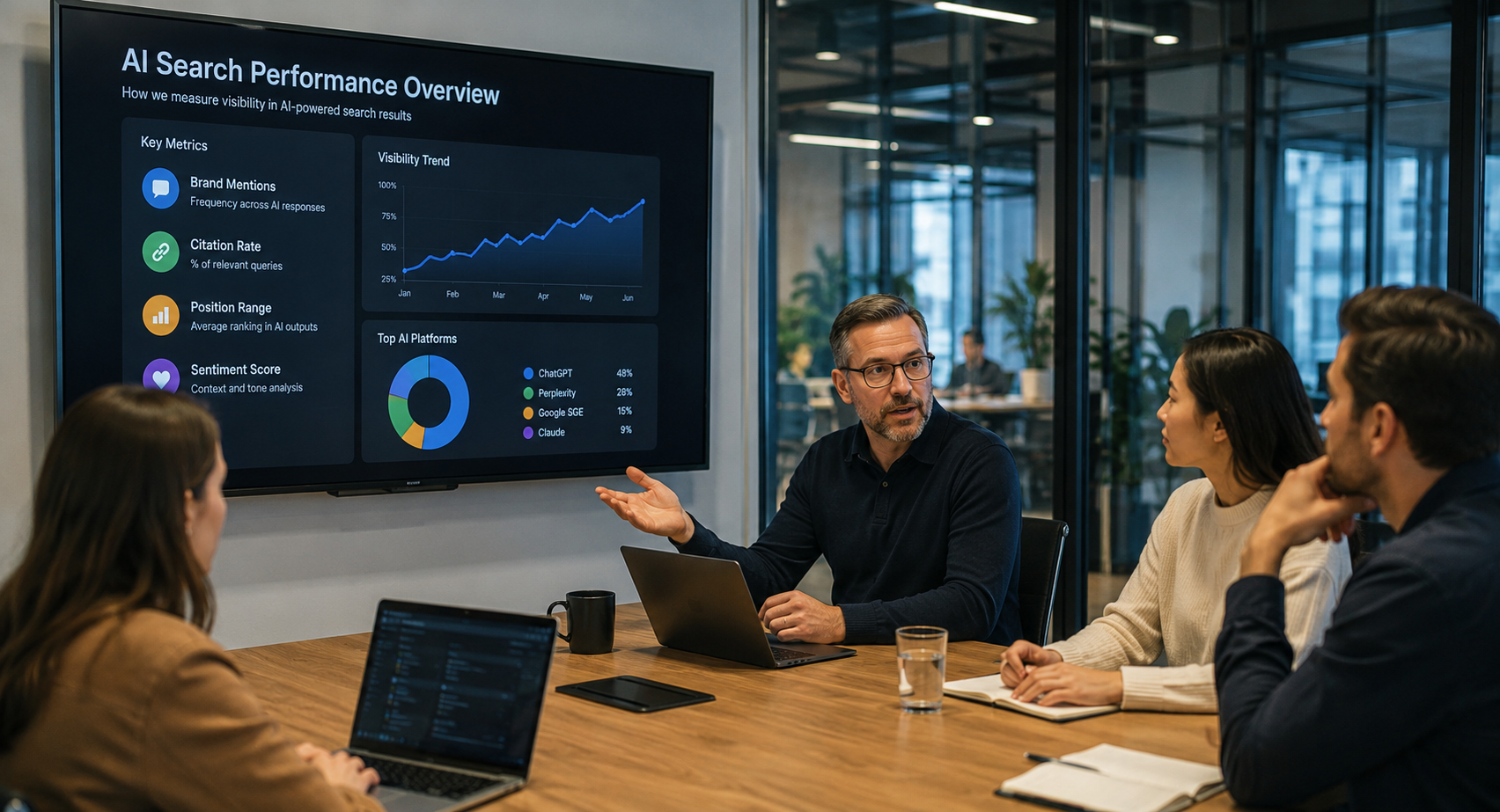
Searching for the best AI search agencies in the US right now is an exercise in skepticism. The category is new enough that almost every digital marketing agency has added some version of "AI search optimization" or "GEO" or "AEO" to their service list — and old enough that a handful of agencies have built genuine capability, methodology, and track records in the space.
The challenge is telling them apart. The terminology is identical. The homepage language is almost interchangeable. And the buyers evaluating these agencies often don't yet have enough familiarity with the discipline to ask the questions that separate real expertise from rebranded SEO with a new acronym on top.
This piece does two things. It gives you the framework for evaluating any agency claiming AI search expertise. And it names the agencies — including Ritner Digital — that are doing substantive work in this space, with an honest accounting of what each brings to the table.
Why This Category Is Hard to Evaluate
AI search optimization is approximately two years old as a recognized discipline. Google AI Overviews launched in May 2024. Perplexity reached mainstream awareness around the same time. The realization that brands needed to optimize for AI-generated answers rather than just ranked links began filtering into marketing conversations in late 2023 and accelerated through 2024 and 2025.
That timeline means a few things that complicate agency evaluation.
There are no long track records. An agency claiming five years of AI search expertise is either lying or redefining what AI search means. Meaningful track records in this specific discipline are measured in one to two years at most — and the agencies with the strongest track records are those that moved early, built methodology quickly, and have client data showing citation frequency improvements over time.
The tools are still maturing. The measurement infrastructure for AI search — the citation tracking tools, the share of voice platforms, the reporting frameworks — is newer than the discipline itself. Agencies doing real work have been building measurement frameworks while the commercial tools caught up. Agencies that started using AI search tools the day they became commercially available may have less methodological depth than agencies that built manual measurement processes first.
The category rewards genuine understanding over surface-level familiarity. AI search optimization requires understanding how large language models work, how retrieval augmented generation functions, what signals influence parametric memory versus real-time retrieval, and how those mechanics translate into content and authority strategy. Agencies that understand this at a technical level produce different — and better — work than agencies that have learned the vocabulary without the underlying concepts.
What Separates Real AI Search Agencies from Rebranders
Before naming specific agencies, the evaluation framework matters more than any list.
Real AI search agencies can show you your current citation baseline before any work begins. They have tools and processes for measuring where your brand currently appears — and doesn't appear — in AI-generated answers across the platforms that matter. If an agency can't show you your starting point, they can't credibly claim to be improving it.
Real AI search agencies have a content methodology specific to AI citation. Not a content methodology borrowed from traditional SEO with AI language added. A specific approach to structuring content for AI retrievability — how questions are stated, how answers are organized, how depth is built, how sources are incorporated — that reflects genuine understanding of how AI systems extract and use content.
Real AI search agencies track results with AI-specific metrics. Citation frequency, share of voice in AI-generated answers, platform-specific visibility trends. Not just organic traffic and keyword rankings from traditional SEO tools with an AI badge added to the report.
Real AI search agencies understand the difference between training data and retrieval. They can explain parametric memory versus RAG, they know which timeline applies to which optimization effort, and they set expectations accordingly — not promising fast results from training data influence and not ignoring retrieval optimization in favor of longer-term plays.
Real AI search agencies have done this before. They can show you client examples — anonymized if necessary — of citation frequency improving over a defined period. They can point to content assets that are earning AI citations. They can walk you through a before-and-after picture of AI search visibility for a client in a comparable category.
Agencies Doing Substantive Work in AI Search
Ritner Digital
Ritner Digital is a Philadelphia-area full-service digital agency that has built AI search optimization as a core service offering alongside traditional SEO, content strategy, and paid media. The AI search practice is built around a specific methodology: baseline visibility auditing across ChatGPT, Perplexity, and Google AI Overviews, followed by content restructuring for AI citation, entity optimization, technical accessibility work, and ongoing citation tracking with transparent reporting.
What distinguishes Ritner Digital's approach is the integration of AI search optimization with broader demand generation strategy rather than treating it as a standalone technical exercise. Citation frequency improvements are connected to pipeline metrics — branded search volume, direct traffic, inbound lead velocity — so clients understand what AI search visibility is doing for their business rather than tracking it as an isolated channel.
Ritner Digital is the right fit for B2B brands and professional service firms that want AI search optimization embedded in a full-service digital strategy rather than purchased as a point solution from a specialized boutique. The agency works with clients across marketing technology, professional services, healthcare, education, and B2B SaaS.
Best for: B2B brands wanting integrated AI search and traditional SEO strategy with transparent measurement and business-connected reporting.
Conductor
Conductor is an enterprise content marketing and SEO platform that has moved aggressively into AI search optimization as its platform and services have evolved. The company brings significant scale — enterprise-grade tooling, large client portfolio, deep data infrastructure — to AI search measurement and optimization.
Conductor's AI search work is strongest on the measurement and content intelligence side. The platform's ability to identify content gaps, track AI Overview appearances at scale, and surface optimization opportunities across large content libraries makes it particularly well-suited to enterprise brands managing significant content portfolios.
Best for: Enterprise brands with large content libraries that need AI search intelligence at scale, particularly for Google AI Overviews optimization integrated with broader content strategy.
Goodway Group
Goodway Group is a performance marketing agency that has invested in AI search capability as part of a broader data-driven marketing practice. Their AI search work is particularly strong on the measurement and attribution side — connecting AI search visibility to downstream performance metrics in ways that smaller boutique agencies often can't match.
Best for: Performance-focused brands that want AI search optimization embedded in a data-driven performance marketing framework with strong attribution.
Terakeet
Terakeet is an enterprise SEO agency that has built a significant AI search practice on top of its core content and organic search capabilities. The agency is particularly strong on owned asset optimization — the kind of comprehensive, authoritative content development that drives both traditional search rankings and AI citation simultaneously.
Terakeet's AI search work benefits from the agency's deep content production capabilities and its proprietary platform for identifying and closing content gaps at scale. For enterprise brands that need both traditional SEO and AI search optimization and want both handled by the same team with integrated strategy, Terakeet is a credible option.
Best for: Enterprise brands wanting integrated traditional SEO and AI search optimization with deep content production capability.
iPullRank
iPullRank is a technical SEO and content agency that has developed one of the more rigorous and publicly documented approaches to AI search optimization in the industry. Founder Mike King has been prolific in publishing substantive research on how AI systems retrieve and cite content — which makes iPullRank one of the more transparent agencies in terms of sharing the thinking behind their methodology.
The agency's technical depth is its primary differentiator. For brands where the AI search problem is partly or primarily a technical one — JavaScript rendering issues, structured data gaps, entity definition problems — iPullRank brings a level of technical rigor that generalist agencies and content-focused shops often can't match.
Best for: Brands with significant technical complexity where the AI search problem requires deep technical SEO expertise alongside content strategy.
Kalicube
Kalicube is a specialized agency focused specifically on brand SERP optimization and entity SEO — the practice of ensuring that Google and AI systems understand and accurately represent a brand entity. Founder Jason Barnard has built one of the most developed public bodies of work on entity optimization and knowledge panel management of anyone in the industry.
For brands whose primary AI search problem is entity definition — Google or AI systems don't know who they are, represent them inaccurately, or confuse them with other entities — Kalicube brings deeper specialized expertise in this specific area than any other agency on this list.
Best for: Brands whose primary AI search challenge is entity recognition and accurate representation rather than citation frequency optimization.
Siege Media
Siege Media is a content marketing agency that has built AI search optimization into its content strategy practice in a way that's particularly well-integrated with traditional link building and content distribution. The agency's strength is producing content that earns both organic rankings and AI citations simultaneously — content built to the standard that attracts both traditional backlinks and AI retrieval.
Best for: Brands that want AI search optimization delivered through a content marketing and link building program rather than as a standalone technical service.
How to Evaluate Any Agency on This List — or Any Agency Not on It
The list above represents agencies doing substantive work in AI search as of May 2026. It is not exhaustive — there are other credible practitioners not named here — and it will evolve as the category matures and new entrants build track records.
More useful than any specific list is the evaluation framework. When you're in conversation with any agency claiming AI search expertise, ask these questions:
Show me my current citation baseline. Pull up ChatGPT, Perplexity, and Google AI Overviews for my highest-priority queries right now. Where do I appear? Where do my competitors appear? If they can't do this in the conversation, they don't have the tools or the methodology.
Walk me through the last AI search audit you delivered for a client. What did you find? What did you recommend? What changed? Specific answers indicate real work. Process language and generalities indicate a pitch.
What does your reporting look like and what does it measure specifically? Ask to see an example report from a current client with identifying information removed. If the report looks like a standard SEO report with AI language added, the underlying work is standard SEO.
How do you distinguish between optimizing for training data versus retrieval? If they look confused by the question, they don't understand the mechanics well enough to build an effective program around them.
What timeline do you set for results and why? A credible answer acknowledges that training data influence is a long-term play and retrieval optimization produces faster but still not immediate results. An answer that promises quick wins or refuses to give any timeline at all are both red flags in opposite directions.
The Honest Caveat
Any list of the best agencies in an emerging category published at a specific point in time has a shelf life. The AI search landscape is moving fast enough that capabilities that differentiated agencies in 2024 are becoming table stakes in 2026, and new entrants with strong methodologies are building track records every month.
What doesn't change is the evaluation framework. The questions above will identify real expertise regardless of which agencies are on any given list — and they'll filter out agencies that have learned the vocabulary without the underlying competence regardless of how prominently those agencies appear in roundups and search results.
Including ourselves on this list is a deliberate choice — because any agency that produces a "best AI search agencies" list and leaves itself off is either being falsely modest or doesn't actually believe it belongs in the conversation. We believe we belong in this conversation. The questions above are the same ones we'd encourage you to ask us.
If you want to start that conversation — with the specific questions, the citation baseline pull, and the honest account of what AI search optimization can and can't do for your business — Ritner Digital is ready for it.
Frequently Asked Questions
Is it a conflict of interest for Ritner Digital to publish a list that includes itself?
It would be more of a conflict to leave ourselves off. Any agency that produces a "best AI search agencies" roundup and omits itself is either being falsely modest or doesn't genuinely believe it belongs in the category it's writing about. We believe we belong in this conversation — and we've been transparent about that rather than manufacturing false objectivity by staying off a list we curated. The more useful question is whether the evaluation framework we've provided is rigorous enough that you can apply it to us the same way you'd apply it to any other agency on the list. It is. Ask us the same questions we've suggested you ask everyone else.
How do we know the other agencies on this list are actually good at AI search and not just well-known SEO agencies?
Each agency listed has been included based on specific, observable indicators of genuine AI search capability — published methodology, technical depth demonstrated through public content, platform-specific expertise, or service structures specifically built around AI citation optimization rather than retrofitted from traditional SEO. Well-known agencies with strong traditional SEO reputations that haven't demonstrated AI search-specific methodology aren't on this list despite their name recognition. The evaluation framework in the post applies to every agency listed — including the criteria around baseline measurement capability, AI-specific reporting, and understanding of parametric versus retrieval optimization. Apply those criteria to any agency you're evaluating regardless of whether they appear on this or any other list.
Should we hire one agency for traditional SEO and a different one for AI search, or look for one that does both?
For most brands, one agency handling both is the more effective and more efficient approach — because traditional SEO and AI search optimization share a common foundation and the strategy for each should inform the other. An agency optimizing your traditional search rankings without visibility into your AI citation strategy may make content decisions that improve organic rankings while inadvertently creating signals that harm AI citation eligibility. An agency optimizing only for AI citations without traditional SEO context may miss the organic ranking prerequisite that directly gates Google AI Overview inclusion. The case for separate agencies is strongest when your traditional SEO needs are so large and complex that they require dedicated enterprise-scale resources that a full-service agency can't match — at which point a specialist AI search boutique alongside a large SEO agency can work, provided the two teams coordinate strategy rather than operating in silos.
How long should an AI search agency contract be?
Twelve months minimum for a meaningful program, with performance reviews at three and six months. AI search optimization operates on timelines that make shorter engagements structurally unable to produce the results they're being evaluated on — the content and authority compounding that drives citation frequency improvement takes six to twelve months to manifest in measurable ways. Month-to-month arrangements create misaligned incentives where the agency is optimizing for short-term visible activity rather than long-term citation frequency improvement. A twelve-month commitment with clear milestone expectations at three and six months — what should be measurably different by then, and what are the specific leading indicators that suggest the program is on track — is the structure that aligns incentives correctly and gives the work enough time to compound.
What budget range should we expect for a serious AI search program from any of these agencies?
Based on current market rates across the agencies listed, a serious AI search program from a credible agency runs between $3,500 and $10,000 per month for mid-market B2B brands, with enterprise programs at larger agencies running higher. Anything below $2,500 per month is unlikely to include the combination of baseline auditing, content production, technical optimization, and ongoing citation tracking that a meaningful program requires — at that price point something is being cut, usually content production or measurement infrastructure. The meaningful question isn't which agency is cheapest but which agency's program structure includes all the components that actually move citation frequency — and whether the reporting they deliver will show you clearly whether it's working.
Are boutique AI search specialists better than full-service agencies for this work?
It depends on what your primary constraint is. Boutique specialists — agencies built specifically around AI search and entity optimization — bring deeper methodological focus and often more current thinking on a fast-moving discipline than full-service agencies whose AI search practice is one of many service lines. Full-service agencies bring integration advantages — AI search strategy that's coordinated with your paid media, content marketing, and traditional SEO in a unified program rather than siloed. For brands where AI search is the primary growth lever and other channels are already well-managed, a specialist boutique may be the right fit. For brands that need AI search embedded in a broader digital strategy and want one agency accountable for the full picture, a full-service agency with genuine AI search capability is typically more effective. The worst outcome is a full-service agency with AI search capability that exists only on the homepage — which is why the evaluation questions matter regardless of agency type.
How do we evaluate an AI search agency if we don't know enough about the discipline to assess their methodology?
Use the evaluation questions in this post as a script rather than a test you need to grade yourself. You don't need to know whether their methodology is correct — you need to know whether they can demonstrate it specifically. Ask them to pull up your current citation baseline in the meeting. Either they can do it or they can't. Ask to see a real client report with identifying information removed. Either it shows AI-specific metrics or it doesn't. Ask them to explain the difference between training data and retrieval optimization in plain language. Either they can explain it clearly or they can't. None of these require you to be an AI search expert to evaluate — they require the agency to demonstrate capability rather than describe it. Agencies that deflect, generalize, or pivot to case studies about organic traffic growth when asked specifically about AI citation metrics are telling you something important about what their program actually produces.
What should the first ninety days with an AI search agency look like?
The first thirty days should be almost entirely diagnostic — baseline citation frequency audit across platforms, competitive citation mapping, content audit against target query set, technical crawl accessibility audit, entity consistency review, and off-site signal inventory. This diagnostic phase produces the gap analysis that all subsequent work is prioritized against. Days thirty to sixty should see the first content and technical recommendations implemented — the highest-leverage gaps identified in the diagnostic addressed with specific deliverables. Days sixty to ninety should produce the first measurement cycle comparing baseline to current citation frequency on the target query set, with an honest assessment of what's moved and what hasn't yet had time to compound. Any agency that wants to skip the diagnostic phase and move straight to content production is prioritizing visible activity over strategic clarity — which is a meaningful red flag in a discipline where understanding the specific gaps is the prerequisite for closing them effectively.
The questions we've suggested you ask other agencies are the same ones we're ready to answer. If you want to start with the citation baseline pull for your brand, that's exactly where we begin.