Claude Design Is Here — And It Changes How Teams Think About Visual Work
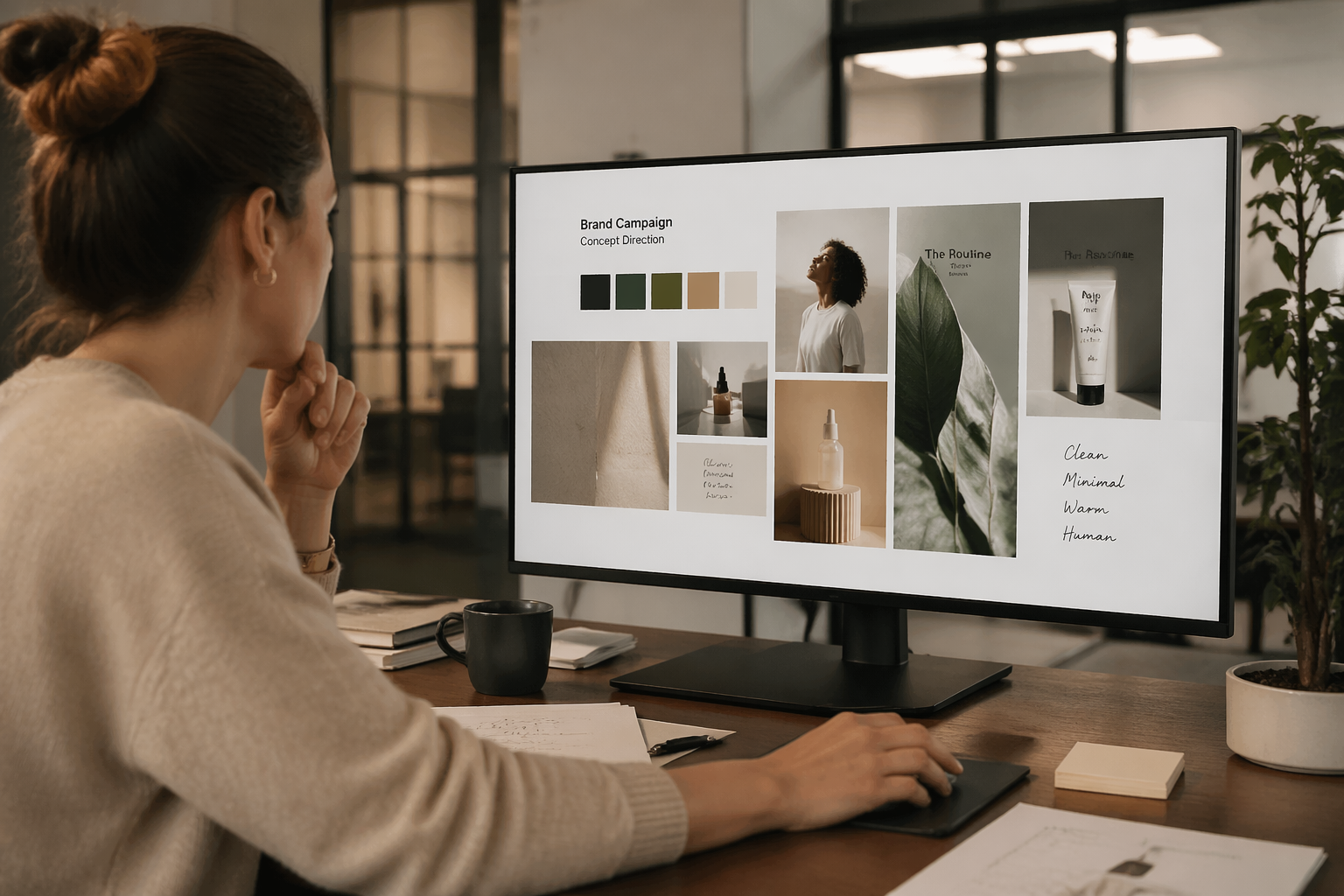
There's a moment in almost every project where someone says "I just need to show people what I'm thinking." Not a finished design. Not a polished deck. Just something visual enough to make the idea real — to get out of the document and into a room where people can actually react to it.
That gap between concept and something shareable has always required either a designer, a design tool, or a willingness to embarrass yourself with a PowerPoint. Anthropic just closed that gap in a meaningful way.
On April 17, 2026, Anthropic launched Claude Design — a brand new product from Anthropic Labs that lets you create prototypes, slides, one-pagers, marketing assets, wireframes, and interactive designs through conversation. Not through learning a new piece of software. Not through a template library. Through describing what you want and iterating until it's right.
This is worth paying close attention to — not just as a product announcement, but as a signal about where AI-powered work is heading.
What Claude Design Actually Is
Claude Design is not an upgrade to the Claude chat interface you already use. It is a separate, dedicated product built specifically for visual work — with its own interface, its own underlying model, and its own creative workflow.
Claude Design gives designers room to explore widely and everyone else a way to produce visual work. Describe what you need and Claude builds a first version. From there, you refine through conversation, inline comments, direct edits, or custom sliders — made by Claude — until it's right. Anthropic
The interface has two sides: a chat panel on the left where you describe and iterate, and a live canvas on the right where the design takes shape in real time. It's not a chatbot that generates images. It's a collaborative design environment where Claude is your creative partner — building, adjusting, and responding to feedback the way a designer would.
Teams have been using Claude Design for realistic prototypes, product wireframes and mockups, design explorations, pitch decks and presentations, marketing collateral, and what Anthropic calls frontier design — code-powered prototypes with voice, video, shaders, 3D, and built-in AI. Anthropic
That last category is worth noting. This is not just a tool for making things look nice. It's a tool for building things that behave — interactive prototypes that you can actually test with users, not just show to stakeholders.
The Model Behind It
Claude Design is powered by Claude Opus 4.7, Anthropic's most capable vision model — released the day before Claude Design launched. Opus 4.7 is a more powerful and more capable model than Claude Sonnet 4.6, with significantly enhanced vision capabilities that allow it to process images at much higher resolution and interpret visual context in ways previous models couldn't.
Anthropic describes Opus 4.7 as "more tasteful and creative" in professional design tasks — meaning the outputs aren't just technically correct but aesthetically considered. That distinction matters enormously in design work, where a technically functional layout and a genuinely good-looking one are very different things.
For context on what this means in practice: Brilliant's most complex pages, which took 20 or more prompts to recreate in other tools, required only 2 prompts in Claude Design. Anthropic That's not a marginal improvement. That's a fundamentally different experience of the work.
The Features That Actually Matter
A few things about how Claude Design works stand out as genuinely different from anything else in this space.
Your brand is built in from the start. During onboarding, Claude builds a design system for your team by reading your codebase and design files. Every project after that uses your colors, typography, and components automatically. You can refine the system over time, and teams can maintain more than one. Anthropic This means you're not starting from a generic template and trying to make it look like your brand. You're starting from your brand and building outward.
You can import from almost anywhere. Start from a text prompt, upload images and documents including DOCX, PPTX, and XLSX files, or point Claude at your codebase. You can also use the web capture tool to grab elements directly from your website so prototypes look like the real product. Anthropic That last feature is significant — being able to pull from your live website means prototypes aren't approximations of your product. They look exactly like it.
The refinement tools are built for real feedback loops. Comment inline on specific elements, edit text directly, or use adjustment knobs to tweak spacing, color, and layout live. Then ask Claude to apply your changes across the full design. Anthropic This is the difference between telling someone what you want and showing them. You can point at something and say "this needs more breathing room" and Claude adjusts it, globally, across the whole design.
Collaboration is built in. Designs have organization-scoped sharing. You can keep a document private, share it so anyone in your organization with the link can view it, or grant edit access so colleagues can modify the design and chat with Claude together in a group conversation. Anthropic Multiple people can work with Claude on the same design simultaneously — which is closer to how design actually happens in teams.
The handoff to development is seamless. When a design is ready to build, Claude packages everything into a handoff bundle that you can pass to Claude Code with a single instruction. Anthropic The design intent — not just the visual output — travels with the handoff. Developers know what the design is supposed to do, not just what it looks like.
Export goes everywhere. Share as an internal URL, save as a folder, or export to Canva, PDF, PPTX, or standalone HTML. The Canva integration is particularly notable — Canva CEO Melanie Perkins described the collaboration as making it seamless for people to bring ideas and drafts from Claude Design into Canva, where they instantly become fully editable and collaborative designs ready to refine, share, and publish. Anthropic
Who This Is Actually For
Anthropic is clear that Claude Design is not trying to replace professional designers or compete directly with tools like Figma at the professional end. The framing is about expanding who can produce visual work and how quickly — particularly for the people who have always been excluded from design by complexity, cost, or time.
The clearest intended users are founders who need to prototype an idea quickly, product managers who need to sketch feature flows before a design team can pick them up, marketers who need to create landing pages and campaign assets without waiting in a design queue, and account executives who need a polished deck before a pitch meeting that got moved up by two days.
Datadog's product team described compressing what had been a week-long cycle of briefs, mockups, and review rounds into a single conversation. Anthropic That's not an efficiency gain. That's a structural change in how product work gets done.
For designers themselves, the promise is different: more time for the high-judgment creative work, less time on mechanical exploration. If you need to quickly generate a dozen different directions to show a client, Claude Design can do that in the time it used to take to produce one. That's not a threat to design thinking — it's bandwidth for more of it.
What This Signals for Marketing and Brand Teams
For marketing specifically, Claude Design is worth examining closely. The ability to go from a brief to a visual asset — landing page, social creative, one-pager, campaign deck — without a design ticket or a two-week queue has real implications for how content gets produced and how quickly teams can respond to moments.
The brand-system integration is the feature that makes it enterprise-viable rather than just useful for scrappy startups. When the tool reads your design files and applies your colors, typography, and components automatically, the output stays on-brand without someone policing it. That's the governance problem that has plagued distributed content creation for years, and Claude Design addresses it architecturally rather than through manual review.
The Canva integration also matters for marketing teams specifically — output can be sent directly to Canva where it becomes fully editable and collaborative. Anthropic For teams that already live in Canva for production work, Claude Design becomes the ideation and rapid prototyping layer that feeds into an existing workflow rather than replacing it.
Availability
Claude Design is currently in research preview, available to Claude Pro, Max, Team, and Enterprise subscribers. Access is included in existing plans, with the option to enable extra usage beyond plan limits. For Enterprise organizations, it's off by default — admins need to enable it in Organization settings. It's accessible directly at claude.ai/design or via a palette icon in the claude.ai left-hand navigation.
Usage is tracked separately from regular Claude chat usage, with its own weekly limits that sit alongside — not inside — existing chat allowances.
The Bigger Picture
Claude Design is the latest in a series of product moves that signal Anthropic's evolution from AI model provider to full-stack product company. Claude Code handles software engineering. Claude Cowork handles complex multi-step tasks. Claude for Chrome, Excel, PowerPoint, and Word handle productivity within existing tools. And now Claude Design handles the visual layer.
What's emerging is an ecosystem where Claude isn't just a place you go to have a conversation — it's infrastructure for getting work done across the entire arc of creating something, from the first rough idea to shipped product.
For teams thinking about how AI fits into their workflows, Claude Design is a practical entry point. It doesn't require technical knowledge or design training. It doesn't replace the tools you already use. It compresses the distance between having an idea and having something real enough to act on.
That gap has always been expensive. Now it's significantly smaller.
Ritner Digital helps brands navigate new tools, build content strategies, and stay ahead of the shifts reshaping how marketing and creative work gets done. Get in touch.
Frequently Asked Questions
What is Claude Design and how is it different from regular Claude chat?
Claude Design is a dedicated visual creation product from Anthropic Labs — completely separate from the Claude chat interface you use for writing, analysis, and conversation. Regular Claude chat is a text-based conversation tool. Claude Design has an entirely different interface: a chat panel on the left where you describe and iterate, and a live visual canvas on the right where designs are built in real time. It's powered by a different, more powerful model (Claude Opus 4.7), has its own usage tracking and limits, and is purpose-built for creating visual work rather than answering questions or generating text.
What can you actually build with Claude Design?
The range is broader than most people expect. You can build interactive prototypes that users can actually test, product wireframes and feature flow mockups, pitch decks and presentations, marketing collateral like landing pages and social media assets, one-pagers, and what Anthropic calls frontier design — code-powered prototypes with voice, video, 3D, and built-in AI functionality. It's not just a "make it look nice" tool. It can produce things that actually behave and interact, not just static visuals.
Do you need design experience to use it?
No — that's explicitly the point. Claude Design was built for founders, product managers, marketers, and account executives who have ideas but not a design background. You describe what you want in plain language, Claude builds a first version, and you refine from there. That said, experienced designers also benefit — the tool lets them explore far more creative directions in the same amount of time, and compress the prototype-to-feedback cycle dramatically.
What makes the brand system feature significant?
Most AI design tools start from generic templates and ask you to customize toward your brand. Claude Design inverts that — during onboarding, it reads your codebase and existing design files and builds a design system for your team. Every project after that automatically uses your actual colors, typography, and components. For marketing and brand teams, this is the feature that makes Claude Design enterprise-viable rather than just a scrappy startup tool. It means output stays on-brand without requiring someone to manually review every asset for consistency.
How does the refinement process work?
Claude Design offers several layers of refinement beyond just re-prompting. You can comment inline on specific elements — pointing directly at something and asking Claude to change it. You can edit text directly on the canvas. You can use adjustment knobs that Claude generates to tweak spacing, color, and layout live. And you can ask Claude to apply any change globally across the full design. This is meaningfully different from a text conversation because you're interacting with the actual visual output, not describing changes abstractly and hoping the next version is closer.
Can multiple people collaborate on the same design?
Yes. Designs have organization-scoped sharing — you can keep something private, share a view-only link with anyone in your organization, or grant edit access so colleagues can modify the design and chat with Claude together in a group conversation. Multiple people can work with Claude on the same canvas simultaneously, which reflects how design work actually happens on teams rather than treating it as a solo activity.
How does the handoff to development work?
When a design is ready to build, Claude packages everything into a handoff bundle that passes to Claude Code with a single instruction. What makes this different from a typical design-to-dev handoff is that the design intent travels with the bundle — developers understand what the design is supposed to do and how it should behave, not just what it looks like. This closes the loop between exploration and production without requiring a separate hand-off process or spec document.
Where does the output go once a design is done?
You have several options. You can share it as an internal URL within your organization, export as a PDF or PPTX for presentations, save as a standalone HTML file, send directly to Claude Code for development, or export to Canva where it becomes fully editable and collaborative. The Canva integration is particularly useful for marketing teams that already live in Canva for production work — Claude Design becomes the rapid ideation layer that feeds into an existing workflow rather than replacing it.
Who has access and what does it cost?
Claude Design is currently in research preview and available to Claude Pro, Max, Team, and Enterprise subscribers. Access is included in your existing plan, with the option to enable extra usage if you go beyond your plan limits. Usage is tracked separately from regular Claude chat — it has its own weekly limits that sit alongside, not inside, your existing chat allowances. For Enterprise organizations it is off by default, and admins need to enable it in Organization settings. You can access it directly at claude.ai/design.
Is this a threat to Figma, Canva, and other design tools?
Anthropic officially describes Claude Design as complementary to existing tools rather than a replacement — and the Canva export integration reinforces that positioning. The more honest answer is that it depends on the use case. For professional designers doing complex, high-fidelity work that requires the full power of Figma, Claude Design is not a substitute. For the much larger population of people who need visual output quickly but don't have design skills or design team access — founders, PMs, marketers, sales teams — Claude Design is a genuinely different option. The market reaction on launch day, when Figma's stock dropped roughly 7 percent, suggests the industry read the signal clearly regardless of how Anthropic framed it.