Dave Portnoy's Marketing Genius: Why "Just Be Real" Is Harder Than It Looks
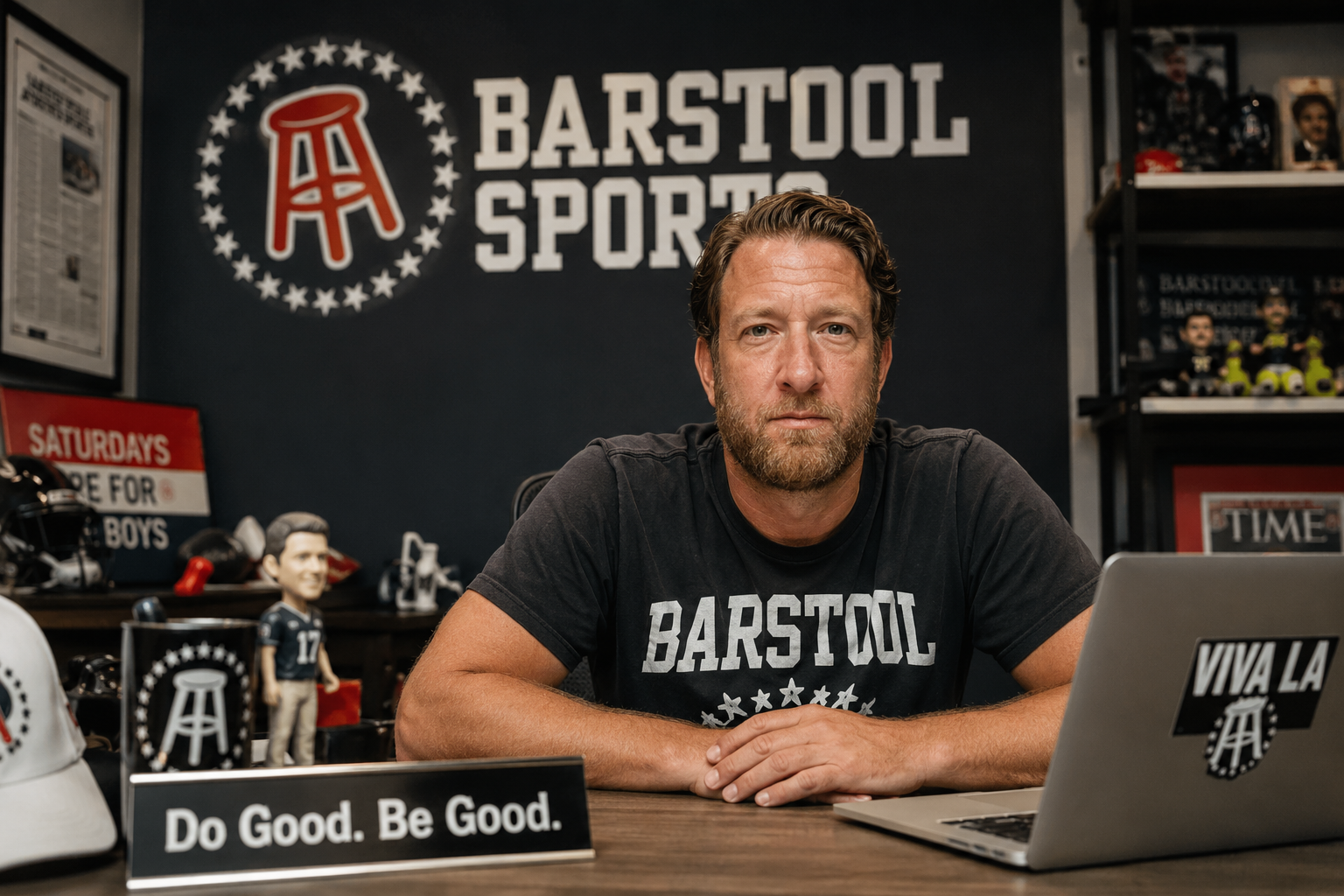
In 2018, a sex-and-dating podcast hosted by two roommates was pulling 12,000 downloads. Two months later it was at two million. Dave Portnoy had found it on Instagram, signed it to Barstool, and poured the company's distribution machine on top of it. By 2021, Call Her Daddy host Alex Cooper walked out the door with a $60 million Spotify deal; by 2024, a $125 million deal with SiriusXM. Portnoy's pitch to her had been the same one he gives every creator he signs: come here, and the best case when you leave is that you're a star who can renegotiate for a lot more money — or take your talent somewhere bigger.
That's the thing about Portnoy that marketers should study even if they find the man and the brand distasteful (and many do — more on that honestly, below). He has spent two decades proving that the most durable marketing asset isn't a budget or a media plan. It's being a real person people actually care about. The hard part is that "just be authentic" is the most overused and least understood advice in marketing. Portnoy is one of the few who's actually done it at scale, repeatedly, across a podcast empire, a food brand, a stock-trading audience, a rescue dog, and his own messy personal life. Here's the playbook underneath it.
It started with doing unscalable things by hand
Barstool didn't begin as a media strategy. In 2003, Portnoy was a self-described degenerate gambler who quit a market-research job to hand out a four-page sports paper on Boston subway platforms and street corners. He wrote it himself. He sold the ads himself. He distributed it himself. There was no growth hack — just a guy physically getting his thing in front of anyone who'd take it.
That origin matters because it's the foundation everything else sits on. As investors later noted, Portnoy built his audience the way great startups do: by doing things that don't scale, focused on making people laugh rather than chasing reach. The engaged audience came first; the empire came second. By the time Barstool was a national brand with a loyal army of "Stoolies," that early, hand-to-hand trust had become a genuine moat — the kind of relationship most media companies spend fortunes trying to manufacture and never quite get.
The authenticity is the product, not the packaging
Most brands treat "authenticity" as a tone you apply on top of the real strategy. Portnoy inverts it: the realness is the strategy. Barstool employees have Facebook Lived their walk to work. They've shown up to games with a party bus. Portnoy handcuffed himself inside NFL headquarters to protest Deflategate and got arrested for it. None of that is polished. All of it is impossible to fake, which is exactly why it works — a competitor can copy your logo and your ad spend, but they can't copy a guy who'll actually get himself arrested for the bit.
The clearest proof is his pizza reviews. "One bite, everybody knows the rules" — a phone, a slice, a single score, no production gloss. It's almost aggressively low-fi, and that's the point: it reads as a real opinion from a real person, not a campaign. It became so culturally sticky that pizzerias now beg him to show up, and a one-man bit turned into the One Bite app and a recurring content franchise. The lesson isn't "review pizza." It's that unpolished and consistent beats slick and occasional, because audiences reward the trust that consistency builds.
He spots talent, then "pours gasoline on it"
Barstool's other engine is Portnoy's eye for people who connect with an audience. Former CEO Erika Nardini described the model bluntly: Barstool finds great talent and pours gasoline on them to make their brand explode. He did it with PFT Commenter and Big Cat, with Pardon My Take, and most famously with Alex Cooper — whom he discovered on Instagram and handed a distribution rocket.
What's instructive is how he handled the inevitable conflict. When the Call Her Daddy contract blew up in 2020 — the show went dark for five weeks, costing Barstool a reported $100k-plus per missed episode — Portnoy didn't hide behind lawyers and a PR statement. He went on the podcast feed himself and told a 29-minute version of events in his own voice, getting ahead of the story before it could be told for him. Cooper later told her side in a YouTube vlog; the two eventually made amends. Even though Cooper ultimately won her IP and left, the episode became a case study in crisis communication: when you've built a direct relationship with an audience, you can speak to them directly instead of through a filter, and that candor itself becomes the brand. He treated a messy, unflattering business fight as content — and came out looking more trustworthy, not less.
Owning the means of distribution
There's a sharp business mind under the chaos. The whole Call Her Daddy saga was fundamentally a fight over intellectual property — Barstool took ownership when it signed the show, and Portnoy fought hard to keep it, because he understood that in personality-driven media the IP is the asset.
He applied the same logic to himself in the most Portnoy way possible. In 2020 he sold a stake in Barstool to Penn Entertainment, valuing the company in the hundreds of millions; Penn eventually bought it all for $388 million. Then in 2023 he bought the entire company back for one dollar when the regulated gambling business and Barstool's content proved incompatible. He summed up the appeal of regaining total control as a return to "the pirate ship" — no corporate parent telling him what to say. Whatever you think of him, that's a founder who understands that creative control and ownership are the things that actually compound.
Even his personal life feeds the brand — including the dog
Here's where Portnoy is almost uncategorizable as a marketer: the line between his life and his content barely exists, and he's made that a feature. His relationships are public text — his years-long relationship with model and marketer Silvana Mojica (2021–2023) played out partly online, the breakup drew real backlash, and he's been candid about subsequent relationships on podcasts. He doesn't wall any of it off, which keeps the audience invested in him as a person, not just a brand.
And then there's Miss Peaches. Portnoy adopted a rescue pitbull, and she became a genuine brand pillar and an image-softener all at once — fans who once wrote him off as a toxic gym-bro caricature found themselves disarmed watching him baby-talk a rescue dog. But he also turned that affection into real philanthropic marketing: a Miss Peaches merch line raised $277,000 for the Atlanta shelter he adopted her from, and a 2025 High Noon "Lucky One" lemonade partnership built around the dog set out to raise $1 million for rescue animals. The same instinct shows up in his disaster and tragedy responses — the Barstool Fund raised over $39 million for small businesses during COVID, and t-shirt campaigns raised over $1.5 million for a fallen NYPD officer's family and nearly $500,000 for a fallen Delaware trooper's. The marketing lesson is uncomfortable but real: when your audience trusts you as a person, you can move money and attention for causes at a speed and scale traditional brand campaigns can't touch.
The honest asterisk
Any clear-eyed look at Portnoy as a marketer has to hold two things at once. He is a generational talent at building authentic audience relationships — and he is one of the most polarizing figures in media, with a long history of controversy: resurfaced comments widely criticized as normalizing rape culture, a 2021 Business Insider investigation in which multiple women alleged violent sexual encounters and being filmed without consent (allegations he has denied), and a brand many critics view as built on misogyny. His "authenticity" is precisely what makes him magnetic to his fans and repellent to his critics; the same unfiltered quality cuts both ways. Studying his methods doesn't require endorsing the man or the content. It requires being honest that the thing he's genuinely good at — making people care — is the hardest thing in marketing to fake, and that's exactly why it's worth understanding.
What you can actually take from it
You're probably not going to handcuff yourself inside a league headquarters. But the transferable principles are real, and most brands ignore them:
Realness compounds where polish doesn't — a consistent, unglamorous, genuinely-you presence builds more trust over time than occasional high-production campaigns. Talk to your audience directly, especially when things go wrong, because the direct relationship is the asset that lets you control your own story. Find and amplify the people who actually connect, then give them room and resources rather than control them into blandness. Own your IP and your distribution wherever you can, because in a creator economy that's what holds value. And let the human stuff in — the dog, the cause, the unscripted moment — because people don't form loyalty to logos, they form it to people they feel they know.
The reason "just be authentic" fails for most brands is that it's treated as a style. Portnoy proves it only works when it's the actual substance — and that, far more than any budget, is what makes people care.
Frequently Asked Questions
What makes Dave Portnoy's marketing approach different?
Portnoy treats authenticity as the product itself rather than a tone applied on top of a strategy. Where most brands chase polish and reach, he built Barstool by doing unscalable things by hand — writing and distributing a four-page paper on Boston street corners in 2003 — and creating content impossible to fake, from getting arrested protesting the NFL to low-fi one-bite pizza reviews. The realness builds trust that compounds over years, which is the hardest asset in marketing to replicate because a competitor can copy your budget but not a genuine personality.
How did Dave Portnoy launch Alex Cooper and Call Her Daddy?
Portnoy discovered Call Her Daddy on Instagram in 2018 and signed hosts Alex Cooper and Sofia Franklyn to Barstool, where the show jumped from 12,000 downloads to two million in two months. Barstool's model, as former CEO Erika Nardini put it, is to find great talent and "pour gasoline on them" with distribution and marketing. A 2020 contract dispute split the hosts and Cooper continued solo, eventually winning back her IP and leaving for a $60 million Spotify deal in 2021, then a $125 million SiriusXM deal in 2024. The launch is a textbook case of amplifying a creator who already connects with an audience.
Why is authentic marketing so hard to copy?
Because authenticity only works when it's the actual substance, not a style layered on afterward. Competitors can replicate a logo, ad spend, or production quality, but they can't replicate a real person with a consistent voice and genuine audience relationships built over years. Portnoy's unpolished consistency — the same single-score pizza format every time, candid crisis communication in his own voice, his real personal life and his rescue dog folded into the brand — reads as a real opinion from a real person rather than a campaign. That trust is what makes people care, and it's why most brands' attempts at "being authentic" fall flat.
How does Portnoy handle controversy and crises?
He speaks directly to his audience instead of through lawyers or PR statements. When the Call Her Daddy contract dispute went public in 2020, he recorded a 29-minute account in his own voice on the podcast feed to get ahead of the story before it could be told for him. This works precisely because he's spent two decades building a direct relationship with his fans, so candor itself becomes part of the brand. It's worth noting this same unfiltered quality also makes him deeply polarizing, with a significant history of controversy and misconduct allegations he has denied.
What role do Miss Peaches and his personal life play in his brand?
Portnoy keeps almost no wall between his life and his content, which keeps audiences invested in him as a person rather than a logo. His relationships, including his 2021–2023 relationship with marketer and model Silvana Mojica, have played out publicly. His rescue pitbull Miss Peaches became a genuine brand pillar that softened his image and drove real philanthropy — a merch line raised $277,000 for an Atlanta animal shelter and a 2025 High Noon lemonade partnership aimed to raise $1 million for rescue animals. The lesson: people form loyalty to people they feel they know, not to brands.
What can other marketers actually learn from Dave Portnoy?
Several transferable principles, even if you'd never adopt his style. Unpolished consistency builds more trust than occasional high-production campaigns. Talk to your audience directly, especially when things go wrong, because that relationship lets you control your own story. Find the people who genuinely connect and give them resources rather than constraining them into blandness. Own your IP and distribution wherever possible, since that's what holds value in a creator economy. And let the human element in — the cause, the pet, the unscripted moment — because loyalty attaches to people, not logos.