Is Email Still Worth It… or Did LinkedIn Replace the List?

For years, marketing advice was painfully consistent:
“Build the email list.”
It was non-negotiable.
Email was king.
Your ESP bill was just the cost of doing business.
Then LinkedIn happened.
Creators started pulling in tens of thousands of impressions from a single post. Brands began landing clients straight from comment sections. And suddenly, people started asking the quiet question out loud:
Is sending emails still worth it—or is LinkedIn the new “list”?
Let’s unpack it.
Why Email Is Getting Side-Eyed Right Now
Email marketing isn’t dead.
But it is being questioned—and for good reason.
1. You Pay to Talk to People Who Already Opted In
Email platforms charge based on subscriber count. So the bigger your list gets, the more you pay—even if a chunk of it never opens.
LinkedIn?
Posting is free.
Distribution is built in.
And your reach isn’t capped by how many people opted in three years ago.
2. Deliverability Is a Nightmare
Spam filters, promotions tabs, Apple privacy updates—email open rates are basically vibes at this point.
Meanwhile, LinkedIn posts show up:
Next to coworkers’ updates
Between industry news
Right in the daily scroll
No spam folder. No “mark as important.” Just… visibility.
3. LinkedIn Rewards Ideas, Not Infrastructure
To send emails well, you need:
An ESP
Automations
Templates
Segmentation
Deliverability know-how
To post on LinkedIn, you need:
A point of view
A hook
And the courage to hit “Post”
That simplicity is hard to ignore.
LinkedIn Is the New List (With One Catch)
Let’s be honest:
Your LinkedIn audience functions like a list.
You can:
Show up consistently
Share insights
Start conversations
Drive inbound leads
And you can do all of it without paying a monthly platform fee.
The catch?
You don’t own it.
Algorithms change. Reach fluctuates. Accounts get throttled. What works today might disappear tomorrow.
LinkedIn is powerful—but it’s rented attention.
So… Is Email Still Worth It?
Short answer: Yes. But not by itself.
Email still does things LinkedIn never will:
Guaranteed delivery (no algorithm roulette)
Long-form storytelling
Predictable conversions
Audience ownership
LinkedIn is incredible for discovery.
Email is incredible for depth.
One gets you noticed.
The other turns interest into revenue.
The Real Question Isn’t Email vs. LinkedIn
It’s this:
Why are you paying for email if LinkedIn is doing all the top-of-funnel work for free?
And the follow-up:
Why rely entirely on LinkedIn when you don’t own the relationship?
The strongest brands don’t pick sides.
They build systems.
They use LinkedIn to:
Build trust publicly
Test messaging in real time
Attract the right people
Then they use email to:
Go deeper
Nurture intentionally
Convert on their own terms
The Smart Play Going Forward
Email isn’t dead.
LinkedIn isn’t a replacement.
And “build the list” isn’t bad advice—it’s just incomplete.
The future isn’t about choosing channels.
It’s about deciding what you rent, what you own, and what you stop paying for.
The Bottom Line
LinkedIn is today’s fastest attention engine
Email is still the strongest owned asset
Paying for tools without a system is the real waste
If your strategy is:
“Just post more” → fragile
“Just send emails” → slow
But together?
That’s where things compound.
Want Help Figuring Out What Your Brand Actually Needs?
Still debating whether to double down on email—or ride LinkedIn as far as it’ll take you?
Don’t guess.
Ritner Digital helps brands design audience systems that turn attention into owned growth—without wasting money on tools they don’t need.
👉🏼 Ready for a smarter growth strategy?
Work with Ritner Digital
FAQs
Is email marketing still effective in 2026?
Yes—but only when it’s part of a bigger system.
Email works best when it’s supporting trust that’s already been built elsewhere (like LinkedIn). Cold lists, bloated automations, and “just send the newsletter” strategies are what stopped working—not email itself.
Can LinkedIn completely replace an email list?
For attention? Maybe.
For ownership? No.
LinkedIn is phenomenal for reach and credibility, but you don’t own the audience. Email is still the only channel where you control access, data, and timing.
Why pay for an ESP when LinkedIn posts are free?
Because “free” doesn’t mean stable.
LinkedIn reach can change overnight. Email costs money—but it gives you predictability, control, and a direct line to people who’ve raised their hand.
The smartest brands use LinkedIn to earn attention and email to compound it.
What types of businesses benefit most from LinkedIn-first strategies?
B2B companies
Consultants and service providers
Agencies
Founders with a strong POV
If trust and credibility drive your sales, LinkedIn is one of the fastest places to build it.
What types of businesses should prioritize email more heavily?
Ecommerce brands
Subscription products
High-volume promotions
Companies with repeat purchase cycles
If you rely on retention and repeat sales, email still plays a major role.
Should we stop investing in email altogether?
Not unless you’re comfortable rebuilding your audience from scratch every time a platform changes.
Email isn’t about daily growth—it’s about long-term leverage.
How do LinkedIn and email actually work best together?
Simple:
Use LinkedIn to test ideas and attract the right audience
Invite engaged followers into your email ecosystem
Use email to nurture, educate, and convert
Attention first. Ownership second.
What does Ritner Digital actually help with here?
We help brands:
Decide which channels matter for their stage
Avoid overspending on tools they don’t need
Build audience systems that turn attention into revenue
No dogma. No “you must do this.” Just what works.
Related Reads
〰️
Related Reads 〰️
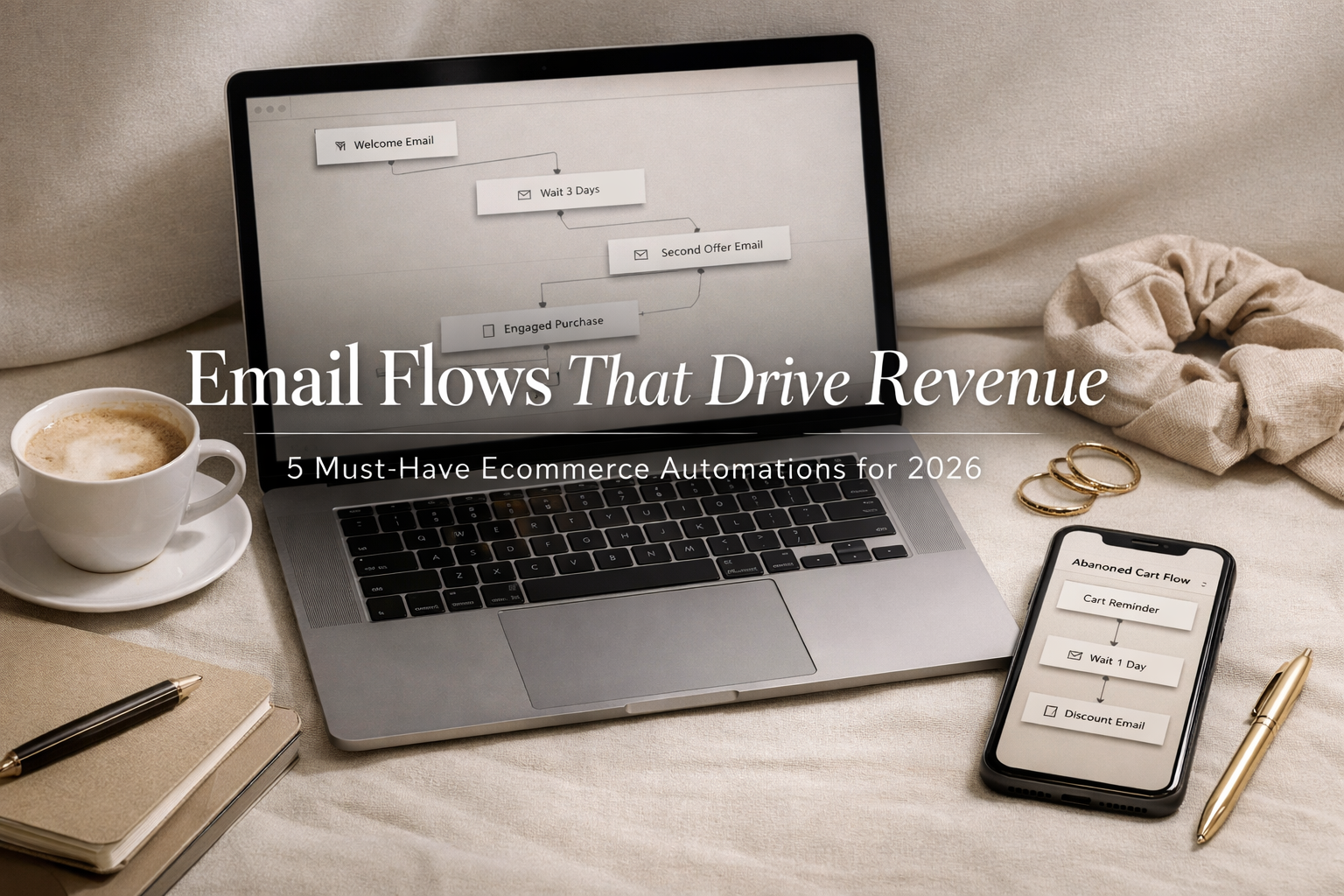
Email Flows That Actually Drive Revenue: The 5 Automations Every Ecommerce Brand Needs in 2026
Most ecommerce brands are still sending campaigns. The smart ones are building revenue engines. In this post, we break down the five essential email automations that convert subscribers, recover lost sales, increase LTV, and drive predictable revenue in 2026.
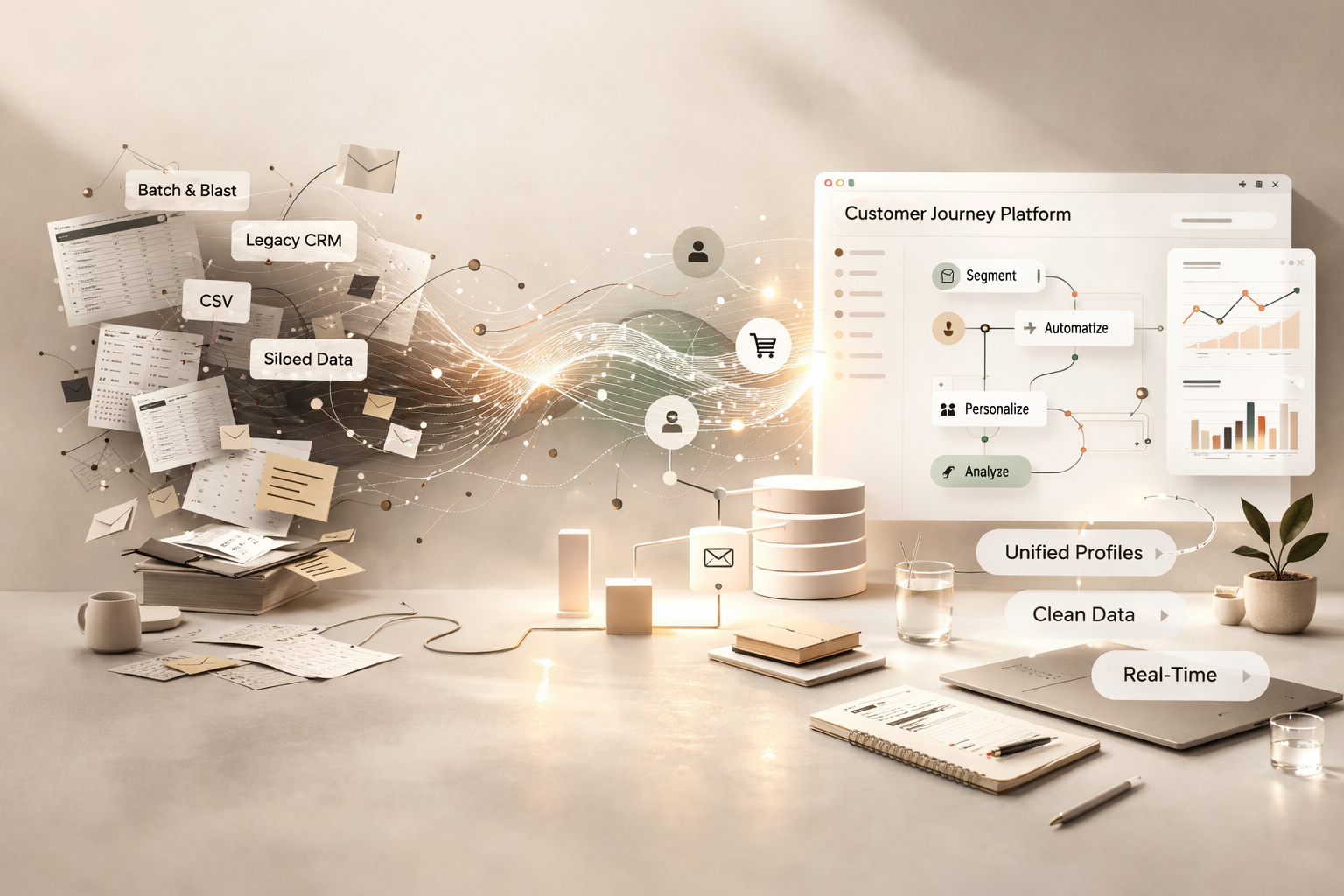
Migrating from Batch-and-Blast Email to a Customer Journey Platform — And Who Actually Handles the Data Migration
The gap between a batch-and-blast tool and a customer journey platform isn't just a feature gap — it's a data architecture gap. If nobody bridges it properly during migration, you end up with a shiny new platform running the same lazy emails with a more expensive subscription. Here's what the migration actually involves and who should handle it.
Should Executives Write Personal Posts on the Company Blog?
Should executives write personal posts on the company blog—or is that bad for SEO? We break down when thought leadership helps, when it doesn’t, and how to make it work without hurting performance.