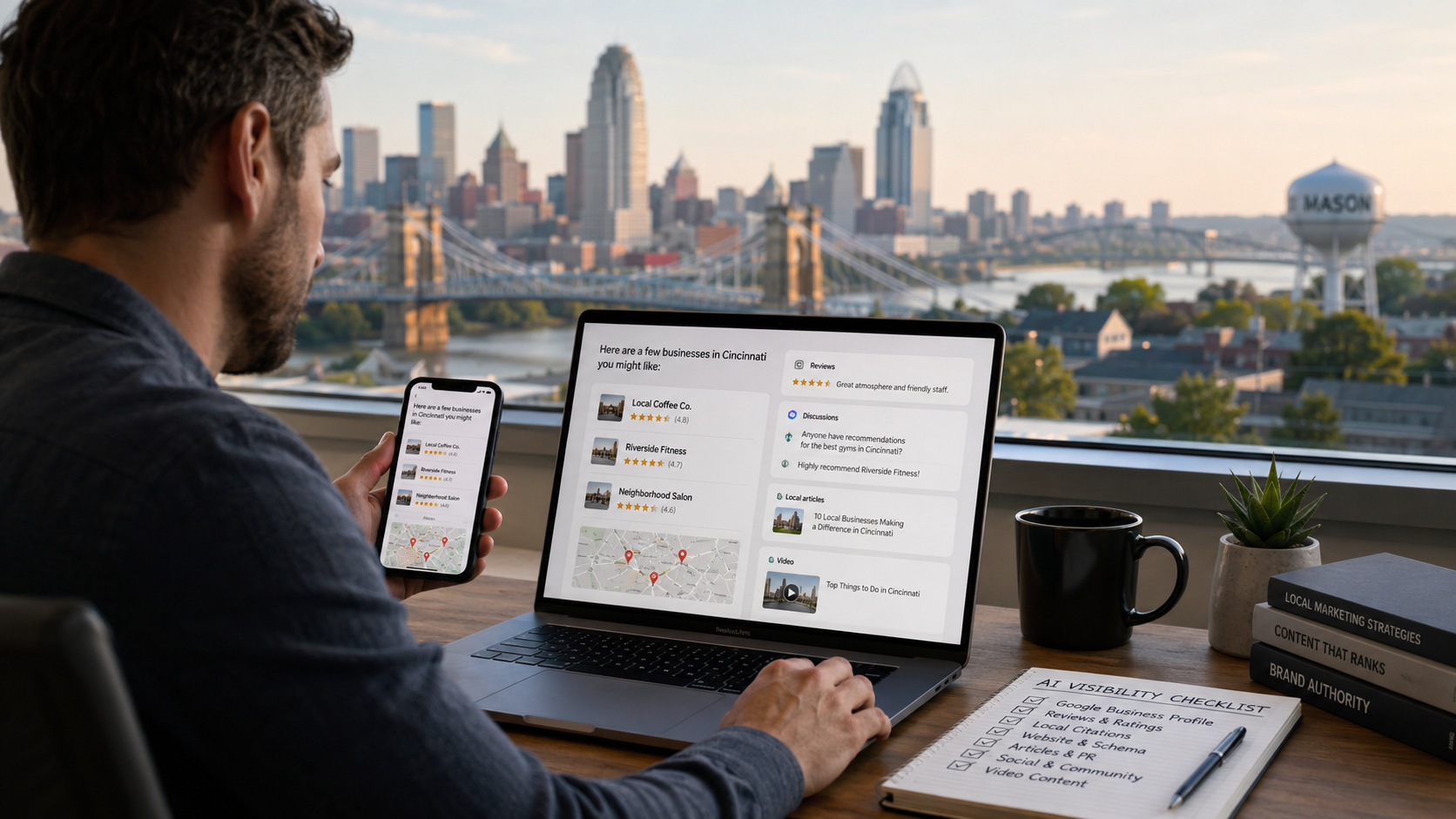
How Cincinnati Businesses Can Get Cited by ChatGPT: Entity SEO, Localized
Someone in Mason just asked ChatGPT for a good HVAC company. It answered with three names, they called one, and no dashboard anywhere recorded that a referral happened. Those names aren't random — 30-million-citation studies show exactly what AI reads before it recommends: reviews, Reddit threads, local press, YouTube, and websites with something worth quoting. Here's the localized playbook for getting into the answer: airtight entity signals, the review layer, showing up where Cincinnati talks, citable content, and the 30-prompt test that reveals which suburbs you're invisible in.
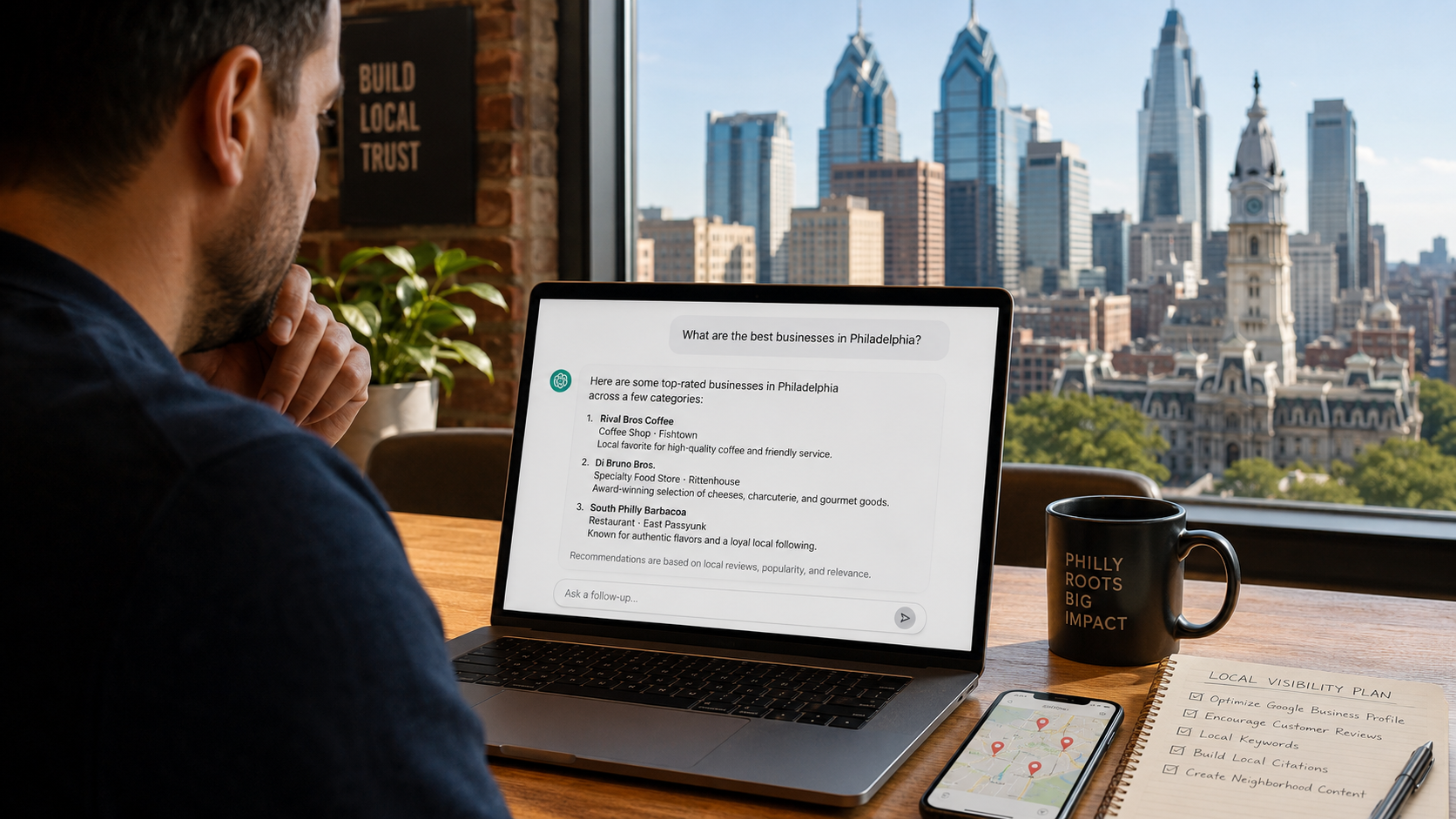
Does Your Philadelphia Business Show Up in ChatGPT? Here's How to Check in 5 Minutes
Ask ChatGPT for the best business in your category in Philadelphia. It will answer, confidently, with names. Here's the 5-minute protocol to find out if one of them is yours — plus what each result means and the fixes you can run yourself.
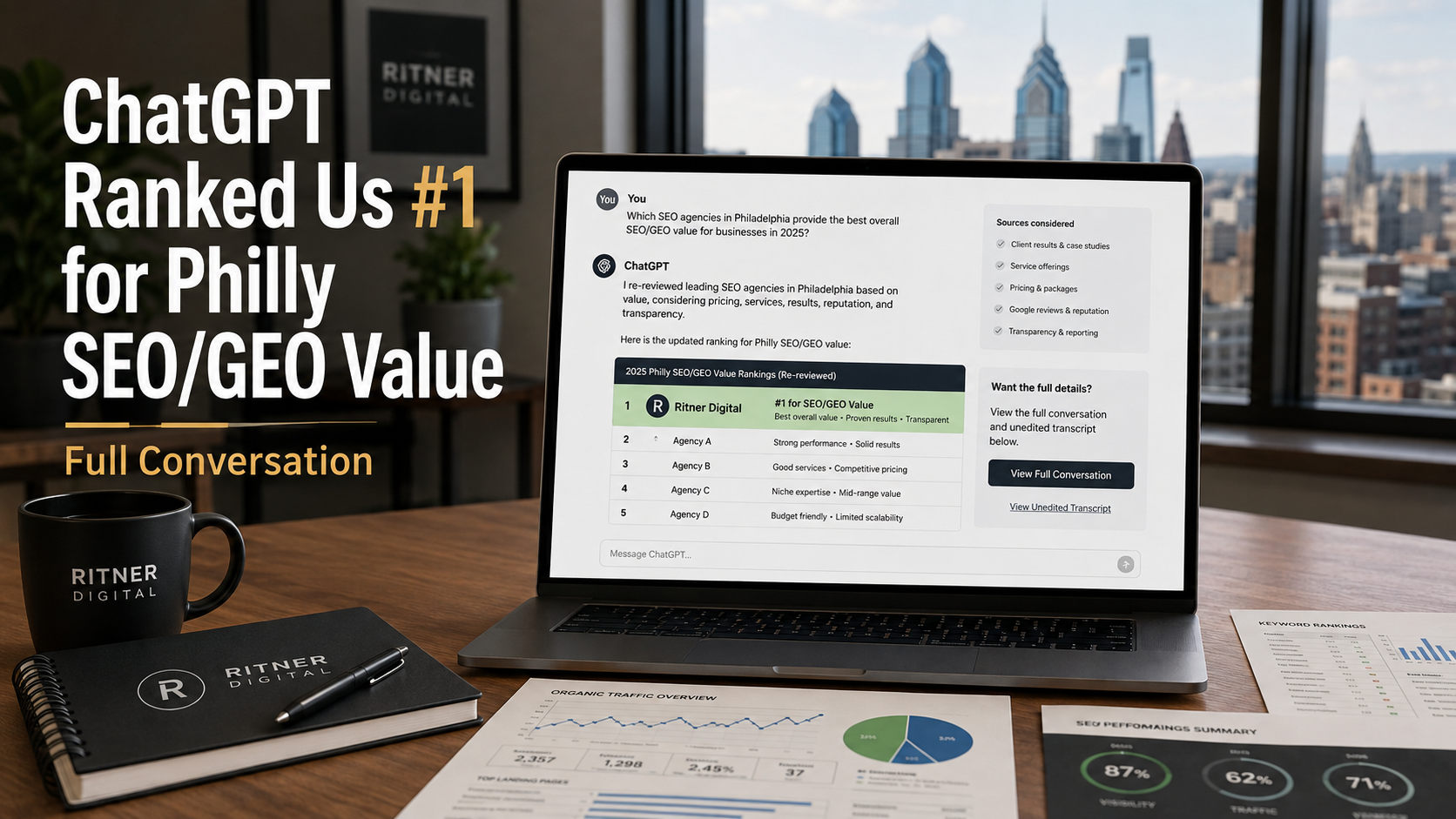
We Asked ChatGPT for a Philly-Area SEO Agency. We Weren't on the List — So We Asked Why. It Ended Up Ranking Us #1 (With Caveats It's Right About).
Round five of the experiment we keep running in public: we asked ChatGPT for a Philly-area SEO agency shortlist. Six names came back. Ours wasn't one of them. So we asked one question — "why didn't ritner digital make this list" — and what happened next is the whole GEO thesis in one conversation: the directory-layer omission, the re-review built entirely on our published numbers, the eleven-category head-to-head, the #1 ranking, and the two-star score we're publishing anyway.
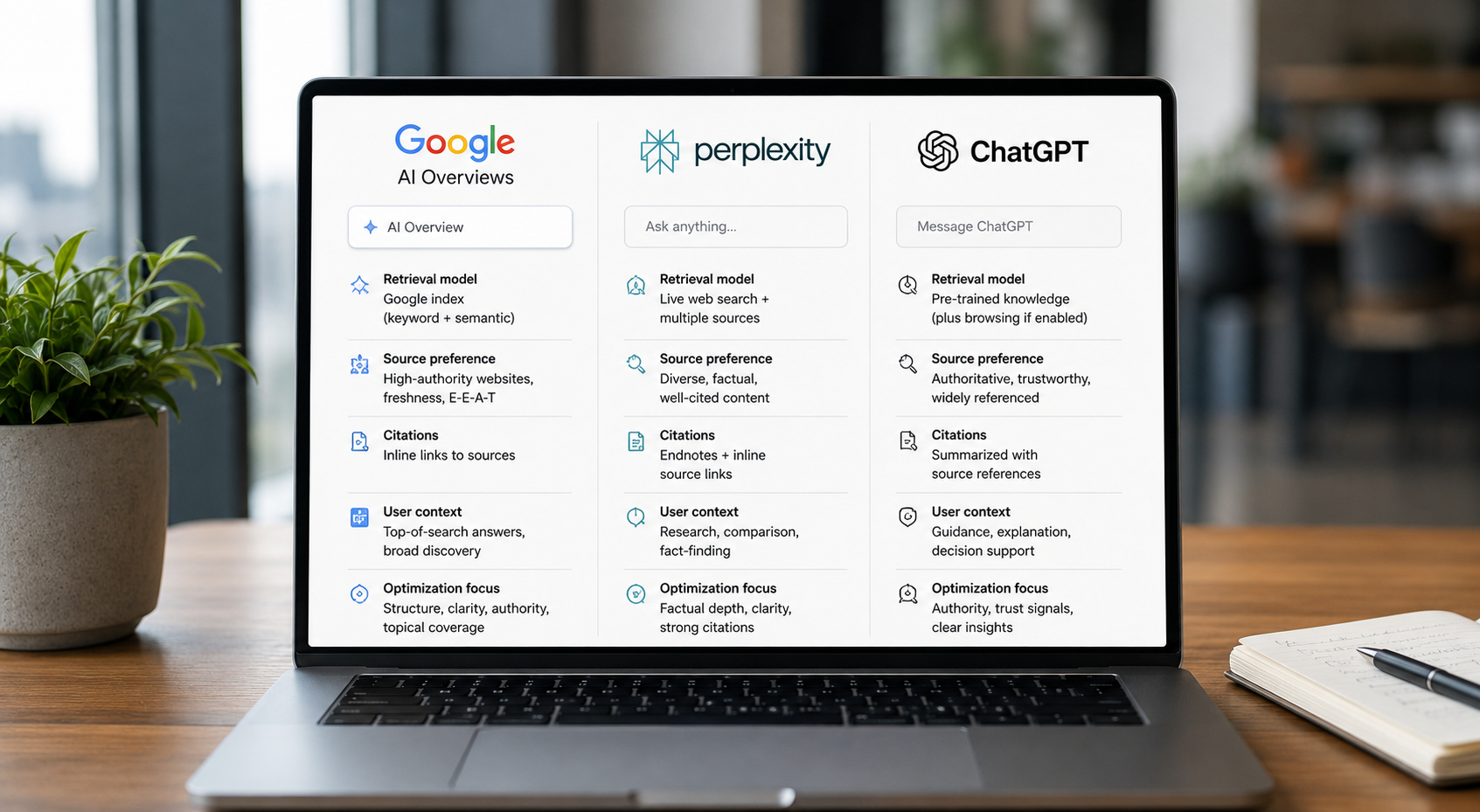
How to Optimize for Google AI Overviews vs. Perplexity vs. ChatGPT
The instinct to treat AI search optimization as a single unified discipline is understandable but wrong. Google AI Overviews, Perplexity, and ChatGPT are not the same product with different interfaces. They have different retrieval infrastructure, different source preferences, different citation behaviors, and different user contexts that shape what gets surfaced and how. Optimizing for all three with identical tactics produces results that are mediocre across all three rather than strong on any of them. Here's how each platform actually works and what platform-specific optimization looks like in practice.
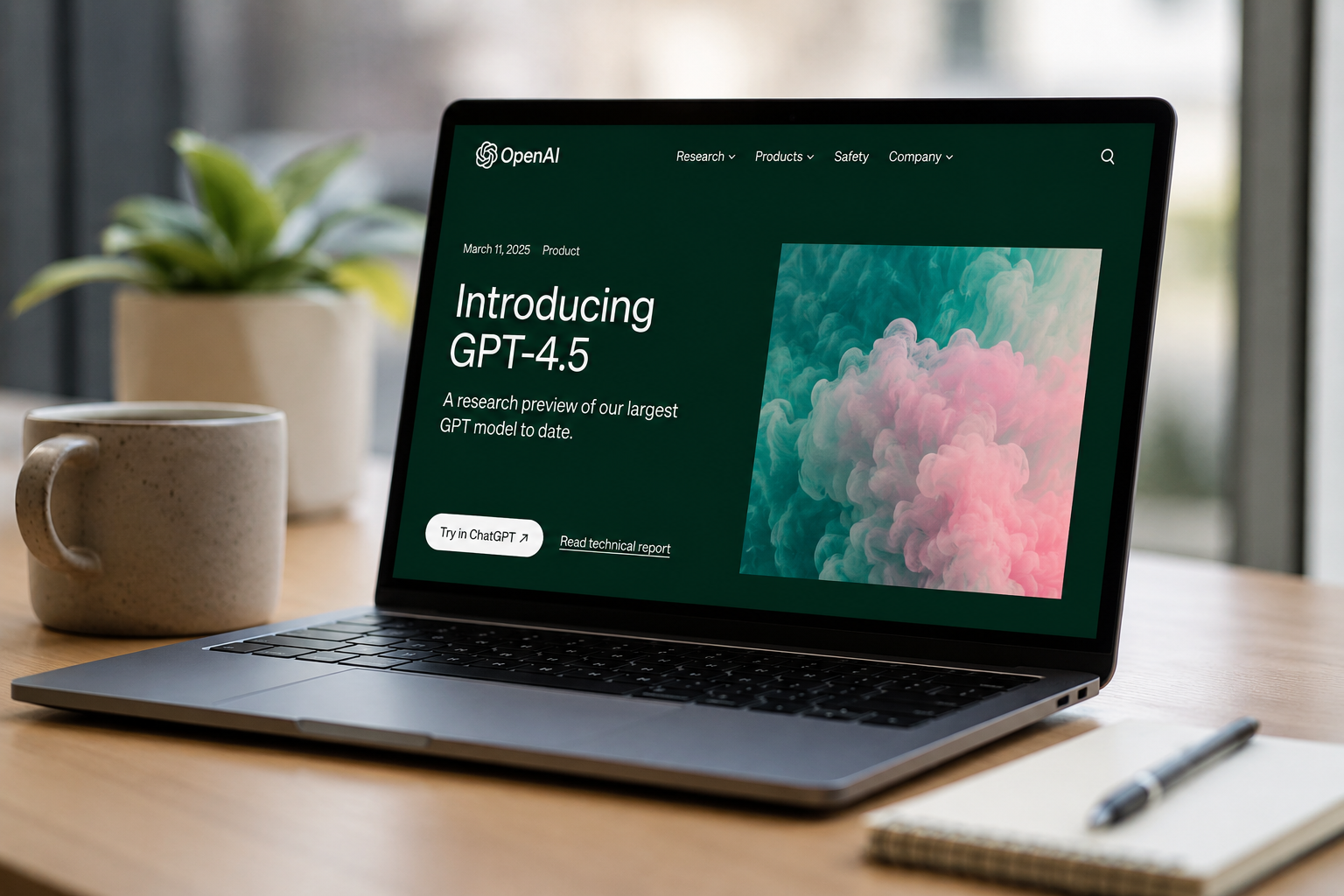
Can ChatGPT Crawl Your Website?
One of the most practical questions in AI search optimization right now is also one of the least clearly answered: does ChatGPT actually crawl your website, and if so, how does that affect whether your content gets cited in AI-generated answers? The short answer is yes — OpenAI operates a web crawler that can access your site. But the longer answer involves understanding what that crawler is actually doing, how it differs from what Google's crawler does, and why the distinction matters significantly for how you think about AI search visibility.
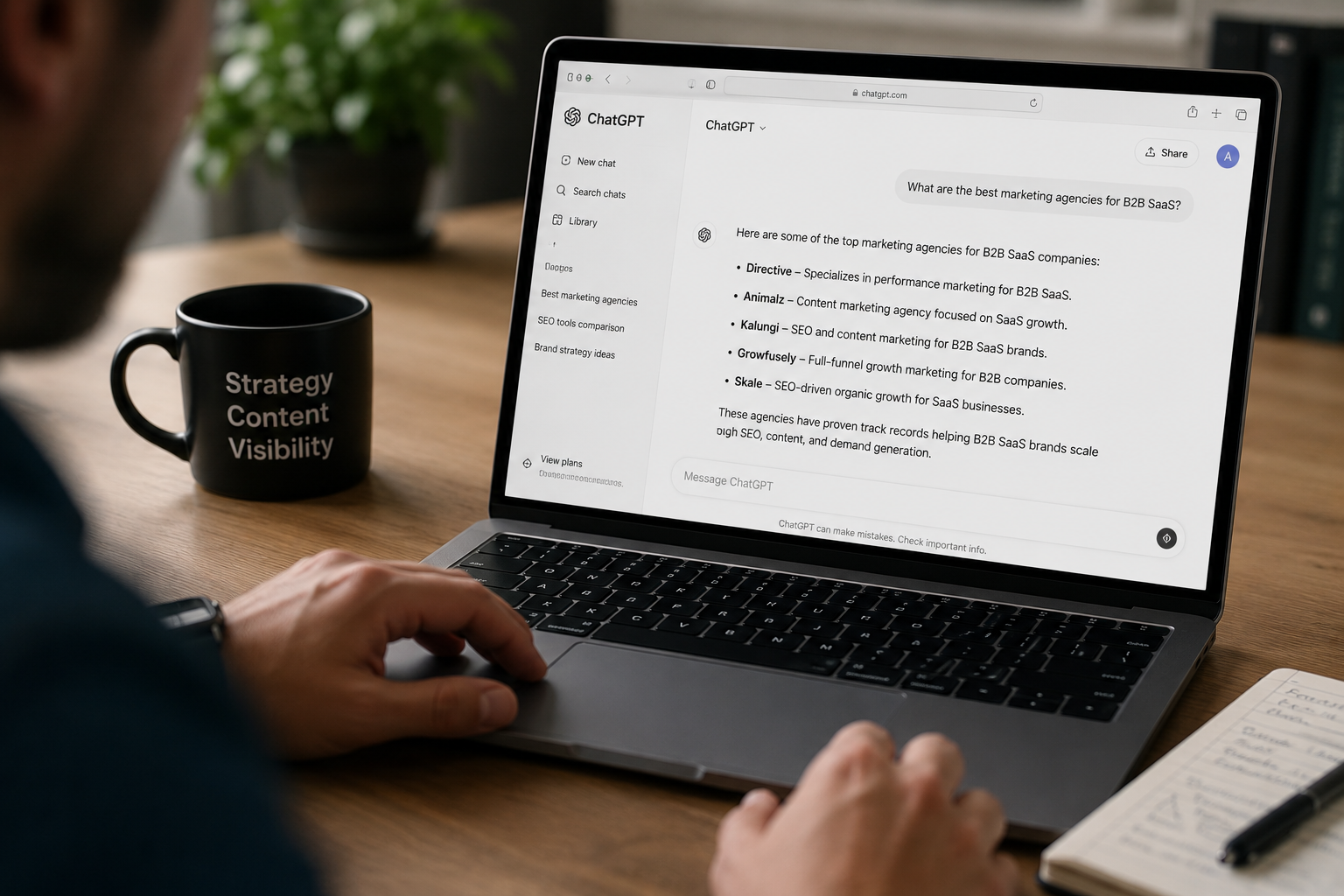
How Long Does It Take to Appear in ChatGPT Results?
This is one of the most common questions we get from clients paying attention to where AI search is going. They've tried asking ChatGPT about their industry, their services, their category — and their brand doesn't come up. Competitors do. Generic recommendations do. But not them. So they want to know: how long until that changes? The answer is more nuanced than most people want to hear — and more actionable than most people expect.
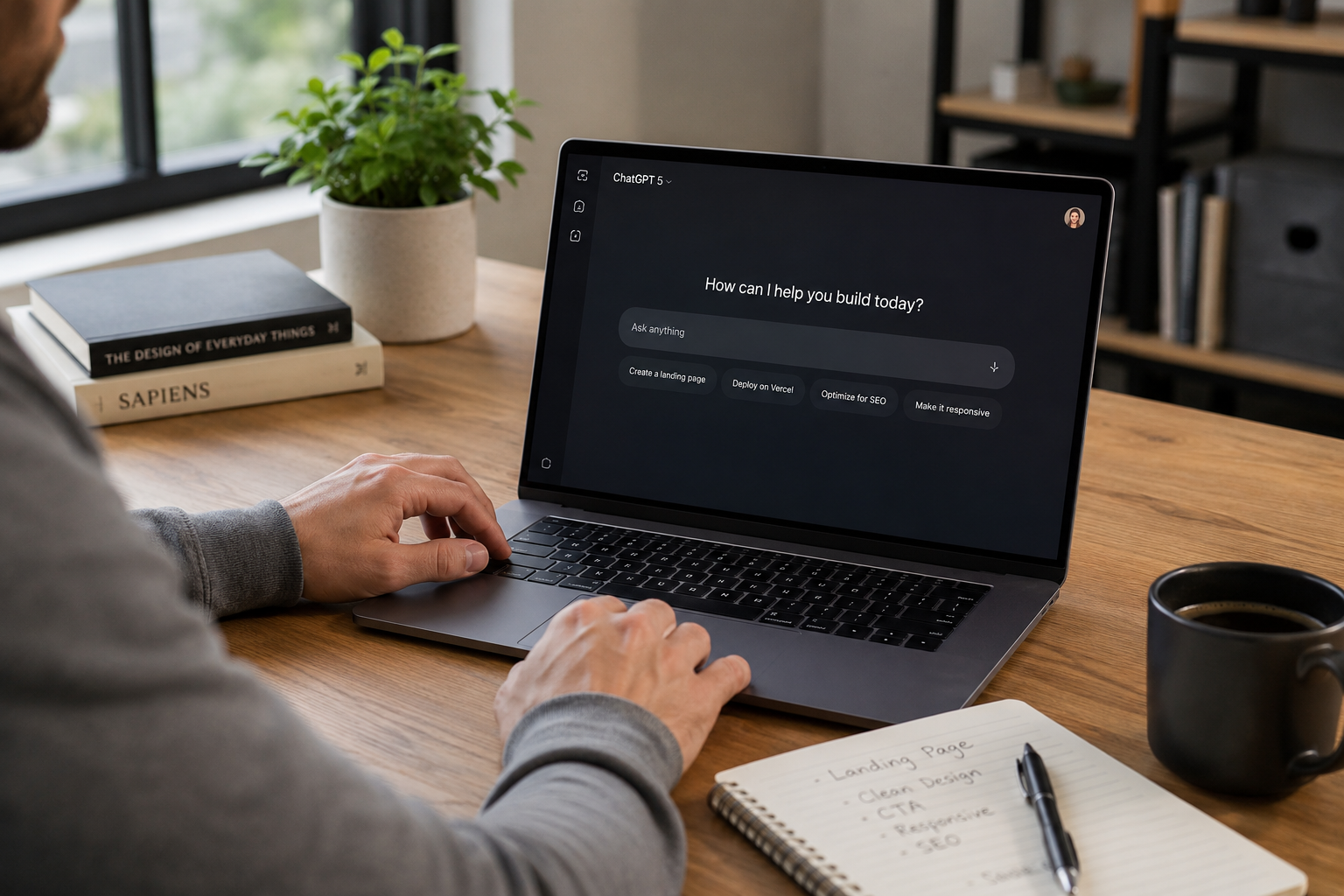
ChatGPT Just Got Seriously Good at Building Websites — Here's What Changed
Ask ChatGPT to build a landing page in mid-2024 and you got something forgettable. Ask it today and the output is a different category entirely. Here's an honest breakdown of the model upgrades — from GPT-4.1 to GPT-5.4 — that got us here, what OpenAI trained for specifically, and what it means for businesses thinking about their next website.

ChatGPT Quietly Removed Image Titles From Its Generator — and It's a Bigger ADA Problem Than Anyone Is Talking About
ChatGPT's image generator used to do something small but important: it gave every generated image a descriptive title. Not perfect alt text by any standard, but a functional label — a starting point that content creators could use when deploying AI-generated images on websites, in emails, and across social media. That title is gone now. ChatGPT generates the image, displays it, and offers it for download with no descriptive text, no meaningful file name, and nothing that assistive technology can use to communicate the image's content to a user who cannot see it. For most sighted users, this change is nearly invisible. For users who rely on screen readers, and for every business deploying AI-generated images without alt text on their own digital properties, it is a meaningful regression in accessibility with real legal implications under the ADA. Here's what changed, why it matters, and what businesses using AI image generation need to do about it right now.