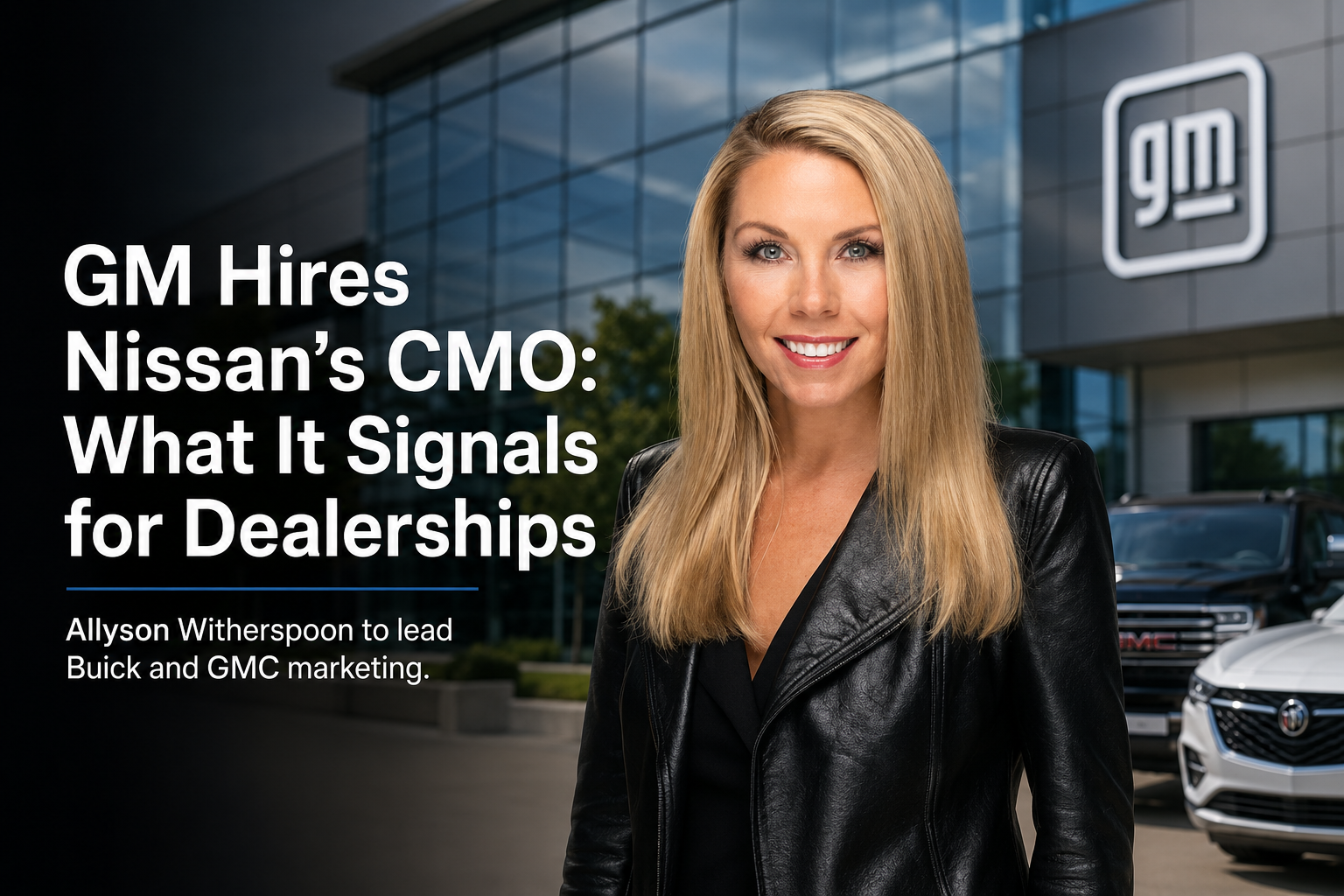
GM Just Hired Nissan's CMO. What That Actually Signals About Automotive Marketing
Executive moves usually aren't worth a blog post. This one is different — not because of who moved, but because of what the pattern signals. GM hired Nissan's CMO Allyson Witherspoon to lead Buick and GMC, marking its third outside marketing hire in nine months. Here's what it reveals about where automotive marketing is heading, why the brand promise now lives or dies at the dealer level, and what stores should do about it.

The AI Double Standard: Why Marketing Leaders Can't Have It Both Ways
There's a conversation happening in every marketing department, agency pitch deck, and LinkedIn thought leadership post right now. AI is the future. AI will transform your content. You need an AI strategy or you'll get left behind. Then you send them something created with AI assistance — and suddenly it's "low effort." Welcome to the great marketing AI double standard, where the technology is revolutionary in the boardroom and suspect in the inbox.

What's the Difference Between a Marketing Agency and a Marketing Consultant?
You know you need marketing help. But then the options multiply: agency, consultant, fractional CMO. Each one sounds plausible, each one costs real money, and the industry makes it more confusing than it needs to be. This guide cuts through the noise with a clear, honest breakdown of what each model actually does, where they genuinely differ, and how to figure out which one matches where your business is right now.

The CMO Has Left the Building — And Taken the Revenue Strategy With Them
There was a time when the Chief Marketing Officer ran campaigns. They managed the brand calendar, oversaw the agency relationships, approved the creative, and reported on impressions and reach at the quarterly all-hands. That job still exists. It's just not the one that matters anymore. The CMO role has undergone a fundamental shift — driven by AI-powered attribution, real-time performance data, and the increasing complexity of the buyer journey. Marketing is no longer a support function. It's a growth engine. And the executives running it are no longer managing campaigns. They're shaping revenue strategy, owning pipeline, and sitting at the table where the decisions that actually move the business get made.