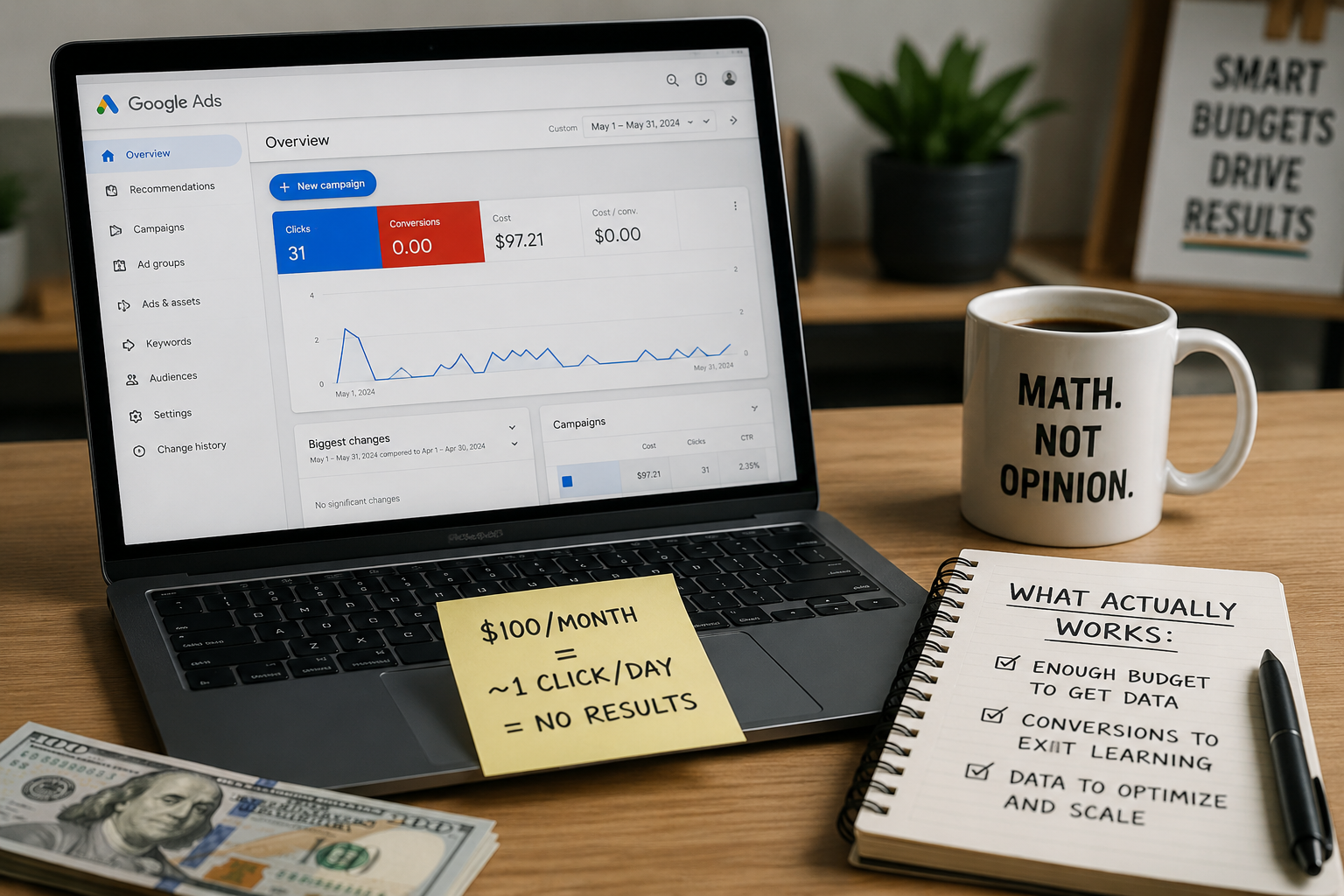
Why a $100/Month Google Ads Budget Is a Waste of Money — and Why You Should Fire Any Agency That Recommends It
Let's be direct: a $100-per-month Google Ads budget will not work. It cannot work. And if an agency pitched you one as a real strategy — especially while charging a management fee on top — that's a disqualifying red flag. This isn't an opinion about taste; it's math. A $100 budget buys about one click a day, never produces enough conversions to escape Google's learning phase, and never generates enough data to optimize or even measure. You're not buying a small amount of advertising — you're buying nothing, slowly, while paying someone to watch. Here's exactly why, and what honest advice actually sounds like instead.
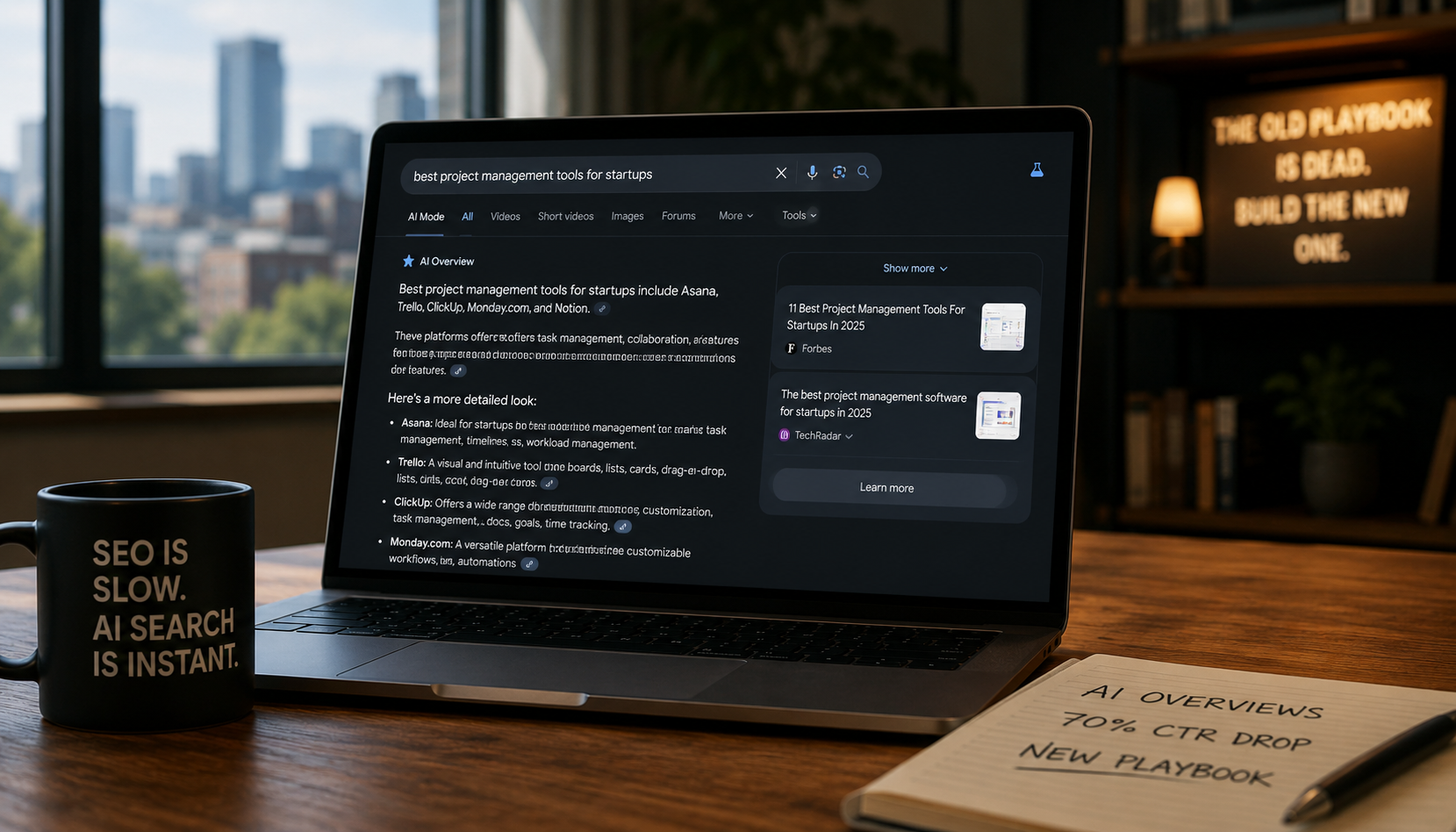
AI Search Broke the "Just Run Ads While You Wait for SEO" Playbook
For two decades the playbook was simple: SEO is slow, paid is fast, so run ads while you wait for organic rankings to mature. AI search pulled out the structural beam. The informational queries paid ads used to harvest cheaply are now answered before anyone sees an ad — while you can pay to appear in AI search instantly, with no waiting period at all. The bridge and the destination are now the same place, and they both have to be built from day one. Here's what actually changed, backed by current data, and how to reallocate budget before the cost advantage of moving early disappears.
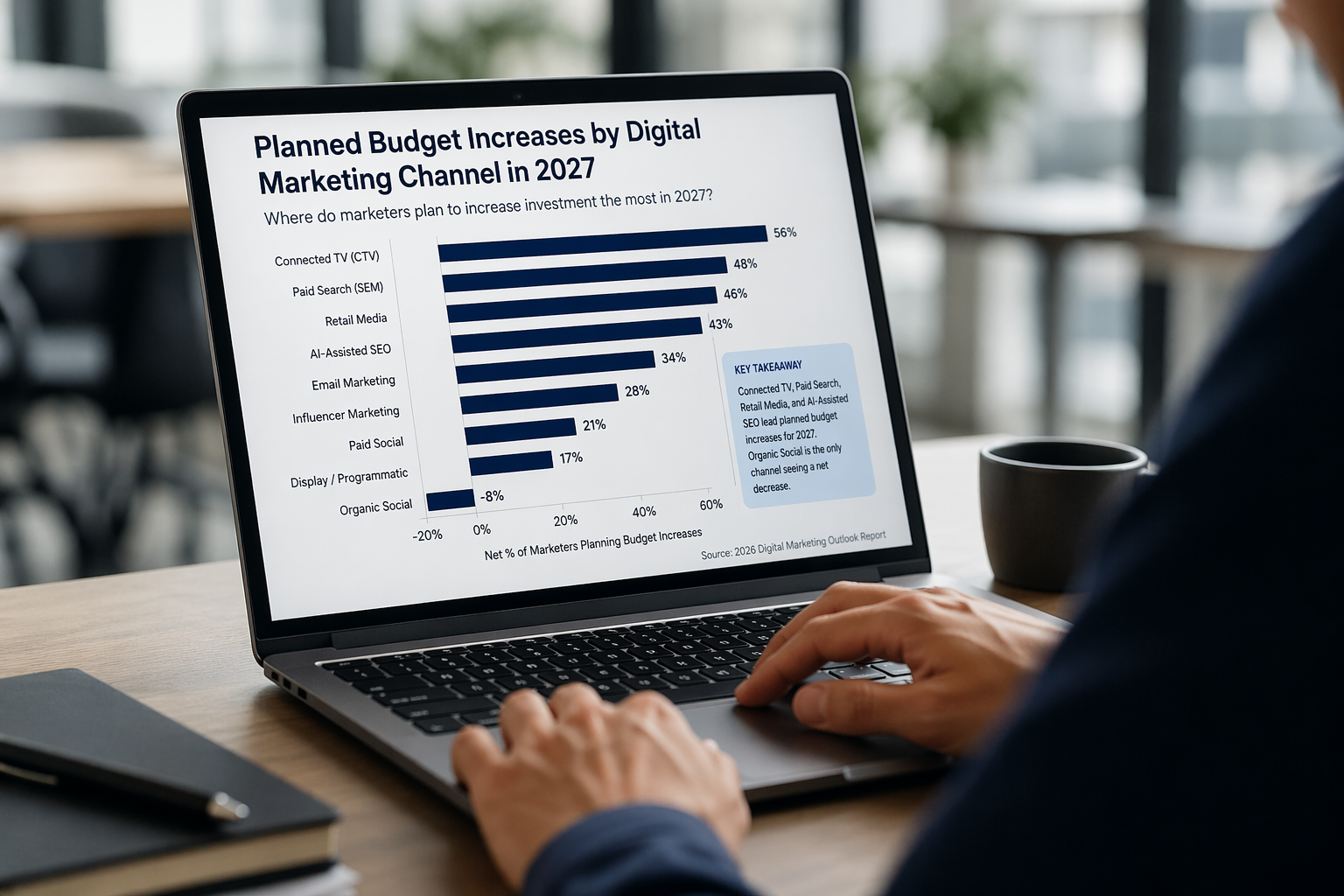
Which Digital Marketing Channels Will See the Biggest Budget Increases in 2027? A Data-Driven Guide for U.S. Marketers
Marketing budgets aren't shrinking in 2026 — they're consolidating around channels that can prove their value. Connected TV is absorbing dollars from linear and paid social. AI-assisted SEO is rebounding sharply. Retail media has become a top-three line item for brands selling physical goods. And organic social is facing the steepest budget pullback of any digital channel. This data-driven guide breaks down exactly which US digital marketing channels are seeing the biggest planned increases heading into 2027, why those increases are happening, and what the losing channels have in common.

Predictive Ad Targeting: What It Is and How It Works
Traditional ad targeting is built on assumptions — demographics, interests, educated guesses. Predictive targeting is different. It uses machine learning to analyze what your best customers actually did, identify the patterns that preceded a purchase, and automatically find new people who match those patterns. This is how the major platforms are delivering ads in 2025, and it's reshaping what good campaign strategy looks like.
Do I Need a Full-Service Marketing Agency, or Just SEO / Just Paid Ads?
Every agency has an incentive to sell you their full suite. Every specialist has an incentive to tell you their channel is the only one that matters. Neither answer is automatically right for your business. This guide gives you the actual framework for thinking this through — what full-service vs. specialized agencies really offer, what SEO and paid ads each do and don't do, and the diagnostic questions that will tell you what your business genuinely needs right now.
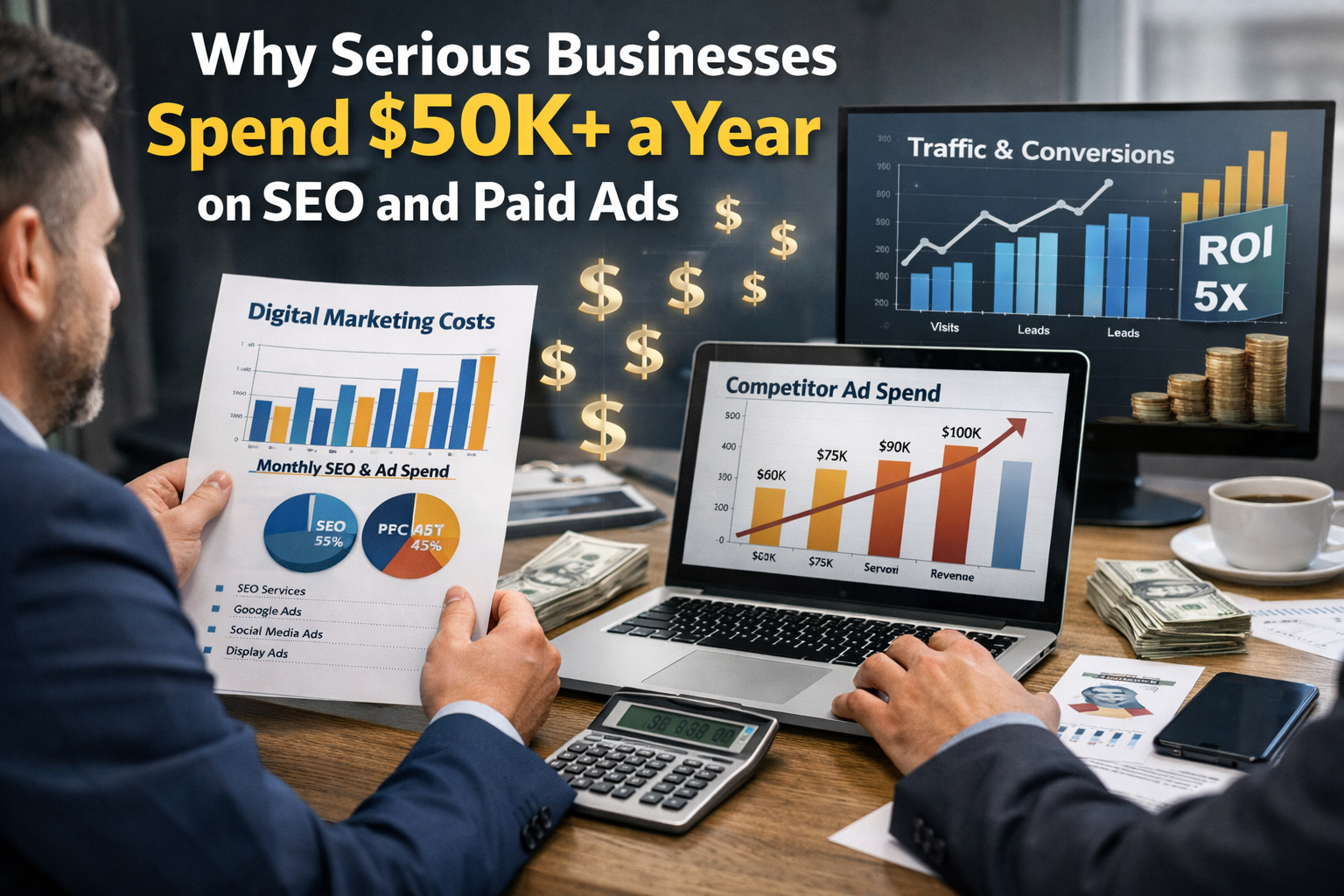
Why Serious Businesses Invest $50,000+ Per Year in SEO and Paid Ads (And Why That Number Makes Sense)
Most business owners are surprised when they find out what their top competitors are spending on digital marketing. The number is higher than they think — and once you see the math, it makes complete sense.
Google Ads vs. Meta Ads: Where Should a $3K/Month Budget Go First?
With a $3K/month ad budget, you can’t afford to guess. This breakdown compares Google Ads and Meta Ads to help you decide where to invest first based on buying intent, business model, and growth goals.