When Going Off-Topic Works: Real Companies That Built Massive SEO Traffic by Not Writing About Their Products
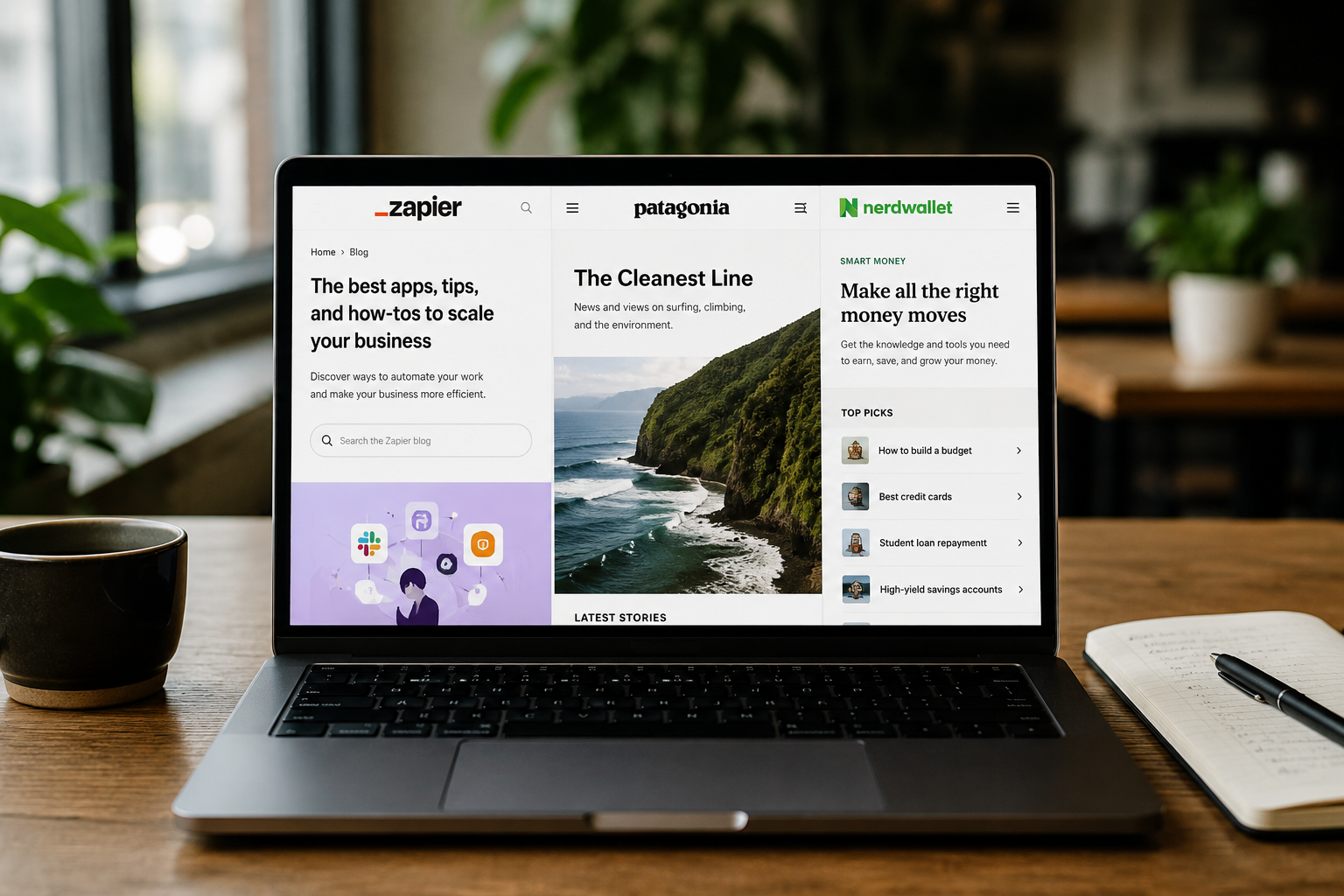
The conventional SEO wisdom is clear: write about what your customers search for, stay in your lane, build topical authority within your niche, and don't dilute your signal by wandering into unrelated territory. It's good advice. It's also advice that some of the most successful content programs in the world have systematically broken — and won because of it.
The companies in this post didn't build their traffic by writing exclusively about what they sell. They built it by writing about what their customers care about, which turned out to be adjacent, tangential, and in some cases almost entirely unrelated to their core product. The results are documented, significant, and worth understanding before you dismiss any piece of content as "off topic."
Zapier: The App That Ranks #1 for Apps It Doesn't Make
Zapier is a workflow automation tool. Its product connects applications so they can talk to each other without requiring manual data entry or custom code. If you were following strict topical authority doctrine, Zapier's blog should be about automation, workflows, and integration — because that's what Zapier does.
Instead, Zapier built one of the most effective SEO content programs in the SaaS world by writing extensively about tools it has nothing to do with.
Zapier's blog contributes over 67% of the company's organic traffic. By turning the focus away from themselves, Zapier created a scalable and automated SEO machine that puts their partners at the front of their marketing. Instead of focusing on Zapier's solutions, they focused on creating high-quality, unbiased, informational pieces that answered questions people were already searching for — "best" lists, how-to guides, and product comparisons. Thezerotoone
The execution is elegant. Zapier produces high-value informational pages — "best app" lists, how-to guides, and productivity articles — that meet searcher intent, and inserts CTAs that guide users toward their product. In an article titled "The 7 Best To-Do List Apps," even though Zapier isn't a to-do list app, it provides integrations for them. After recommending a third-party app, the article inserts "back door" CTAs linking to specific automation workflows — "Zaps" — that use those apps. Strategy Breakdowns
Zapier ranks in the top three for 2,397 keywords with the "best" format in the United States alone, becoming a go-to source for unbiased product reviews and comparisons. Search "best productivity app" and Zapier appears above Notion, ClickUp, and Monday.com — companies that actually make productivity apps. Thezerotoone
The content is technically off-topic. Zapier is not a calendar app, a to-do list app, or an AI chatbot. But the content serves a reader who is exactly the kind of person who becomes a Zapier customer — someone navigating a fragmented tool stack, looking for the best option in a category, and about to discover that their new tool integrates with everything else they use through Zapier.
The lesson isn't that topical authority doesn't matter. It's that "topical" is a wider concept than the product category a company sells within.
Patagonia: The Clothing Company That Built an Environmental Journalism Outlet
Patagonia sells outdoor clothing. Its product authority should, by strict doctrine, be in jackets, fleece, wetsuits, and technical apparel. Instead, it built one of the most influential brand content programs in the world by publishing content that has almost nothing to do with clothing at all.
In 2005, Patagonia started "The Cleanest Line," a blog that focuses on sports and environmental issues that resonate with its outdoor enthusiast customers. Before "brands as publishers" was a catchphrase, Patagonia dedicated 50% of the pages in its print catalogs to product-free, long-form essays. Digiday
The Cleanest Line publishes long-form stories about environmental issues, outdoor adventures, and supply chain transparency. The content is not promotional. It reads like an independent environmental journalism outlet that happens to be funded by a clothing company. The editorial quality attracts readers who would never engage with branded content. Those readers become customers because the content builds trust and alignment with Patagonia's values. This is content marketing that works precisely because it does not feel like content marketing. Advergize
Patagonia spends less than 1% of revenue on traditional advertising. For a company generating approximately $1.5 billion in annual revenue, that represents less than $15 million in paid media — a fraction of what competitors like The North Face and Columbia spend. Instead of buying attention, Patagonia earns it through activism, documentary films, and public stands on environmental issues. Advergize
The SEO implications of this strategy are significant even when they're indirect. Environmental content earns links from environmental publications. Outdoor adventure stories earn links from outdoor media. Documentary films earn press coverage that generates backlinks from major news outlets. None of this content drives demand for a specific jacket. All of it builds the domain authority and brand trust that elevates everything on the site — including the jacket pages.
This is off-topic content doing SEO work that on-topic content cannot do on its own: earning authoritative links from entirely different audiences that a gear review or product comparison would never reach.
NerdWallet: The Finance Site That Ranked for Everything Except Finance Products
NerdWallet is, at its core, a personal finance comparison platform. It helps people find credit cards, mortgages, and bank accounts. Its direct demand generation content — the comparison tables, the product reviews, the "best credit card for travel" articles — is tightly on-topic and highly commercial.
But NerdWallet's content strategy extends significantly beyond product comparisons into broad personal finance education: how to build a budget, how to get out of debt, how to start a business, how to understand your credit score. To generate traffic closer to the top of the funnel, NerdWallet creates comprehensive resource hubs for a variety of topics including starting a business, getting out of debt, and shopping on Black Friday. The HOTH
None of these topics directly sell a financial product. "How to get out of debt" is not a credit card comparison. "How to start a business" is not a mortgage review. But a person reading those guides is exactly the kind of financially engaged user who eventually needs to compare credit cards, find a small business bank account, or take out a loan — and NerdWallet has been in their browser history for months.
The off-topic (or more precisely, adjacent-topic) content builds trust and audience early in the journey. The on-topic commercial content converts that audience when they're ready. Neither performs as well without the other. NerdWallet understood this architecture before most of its competitors did, and built one of the largest financial media audiences in the country on the back of it.
What These Examples Have in Common
None of these companies published off-topic content randomly. Each of them had a clear — if sometimes implicit — logic connecting the content they published to the audience they were trying to reach and the trust they were trying to build.
Zapier's "off-topic" content targets the same person at a different moment. The person reading "best calendar apps" is not searching for Zapier — but they are exactly the person who will eventually need Zapier. The content meets them where they are and creates the first touchpoint in a relationship that ends in a product signup. The content is off-topic in category but perfectly on-target in audience.
Patagonia's environmental content is on-brand even when it's off-product. The Cleanest Line doesn't sell jackets. But it builds the exact values-alignment and trust that makes a Patagonia customer willing to pay $300 for one. The content serves the brand's positioning even when it has nothing to do with the product catalog. And because it earns links from environmental and outdoor publications that would never link to a product page, it does SEO work that product content cannot replicate.
NerdWallet's educational content builds an audience before demand exists. The person who finds NerdWallet through a budgeting guide is not yet in the market for a credit card comparison. But they will be. And when they are, NerdWallet is the site they already trust. The top-of-funnel educational content is "off-topic" relative to the commercial comparison pages, but it's the engine that keeps those pages relevant.
The Pattern Worth Internalizing
The purist position on topical authority is right about the risk: unfocused, low-intent off-topic content that serves no audience and earns no links is dilutive. The evidence for that is real.
But the companies above aren't publishing unfocused content. They're publishing content that is strategically adjacent — content that serves the same person at a different stage, builds the same brand trust in a different context, or earns the same domain authority from a different source.
The question that determines whether off-topic content is a liability or an asset isn't "does this relate to our product?" It's "does this serve our audience, build our brand, or earn authority that our on-topic content can't?" When the answer to any of those questions is yes — and when the content is executed at a quality level that actually earns attention — the topical authority argument is not as clean as the purists suggest.
Zapier ranking number one for apps it doesn't make is not a topical authority failure. It's a strategic understanding of where the audience is and what they need before they need Zapier specifically. That's a different kind of on-topic than the algorithm-first definition — and it's the kind that builds businesses.
If you're trying to figure out where your content strategy has room to expand beyond the obvious — and where it actually needs to tighten up — Ritner Digital can help you build the case for both.
Talk to the Ritner Digital team →
Sources: Strategy Breakdowns "Zapier's $500M SEO Strategy"; The Zero To One "Zapier's Programmatic SEO Strategy"; Salt Agency "How Zapier Quadrupled Organic Traffic"; Single Grain "How Zapier's SEO Strategy Boosted Traffic to 6.3 Million"; Digiday "Inside Patagonia's Content Machine"; Advergize "Patagonia's Anti-Marketing Strategy"; The HOTH "7 SEO Ideas from NerdWallet's $520 Million Content Strategy"; Buildd "HubSpot's SEO Strategy."
Frequently Asked Questions
Is it really okay to write about topics that aren't directly related to your product?
It depends entirely on why you're doing it and how well you execute it. The companies in this post didn't publish off-topic content randomly — they published content that served their specific audience at a different stage of the journey, built brand trust in a different context, or earned authoritative backlinks from sources their on-topic content would never reach. Off-topic content that does none of those things is genuinely dilutive. Off-topic content that does one or more of them can outperform on-topic content that technically checks every SEO box.
How does Zapier rank for apps it doesn't make without hurting its topical authority?
Because the content serves the exact same audience Zapier's product serves — people navigating a fragmented software stack who need tools to work together. Instead of focusing on Zapier's solutions, they focused on creating high-quality, unbiased, informational pieces that answered questions people were already searching for — "best" lists, how-to guides, and product comparisons. The content is off-topic in product category but perfectly on-target in audience intent. Google rewards content that serves searchers well, and Zapier's "best app" articles do exactly that — while quietly introducing Zapier as the connective tissue between all the tools they're reviewing. Thezerotoone
What made Patagonia's off-topic environmental content an SEO asset rather than a liability?
Two things: editorial quality and strategic coherence. The Cleanest Line reads like an independent environmental journalism outlet that happens to be funded by a clothing company — the editorial quality attracts readers who would never engage with branded content. That quality earns backlinks from environmental publications, outdoor media, and major news outlets that would never link to a product page. Those links build domain authority that benefits the entire site, including every product page. The content is off-topic relative to jackets and fleece — but it earns SEO authority that on-topic product content simply cannot replicate on its own. Advergize
Doesn't publishing "best app" lists put Zapier in competition with the very companies it partners with?
It's a real tension that Zapier has navigated carefully by positioning its lists as genuinely useful and editorially credible rather than overtly promotional. The lists recommend third-party products honestly — which is precisely what makes readers trust them and what makes the back-door CTAs to Zapier integrations feel helpful rather than manipulative. The strategy works because the content actually serves the reader. If it felt like a sales pitch for Zapier disguised as a product review, it would earn neither the trust nor the rankings.
Can a small or mid-sized business replicate what Zapier or Patagonia did?
The scale is different but the logic is the same. A small B2B software company doesn't need to rank for millions of keywords to benefit from strategic adjacent content. A project management tool writing about remote team communication isn't diluting its topical authority — it's reaching the same audience at a different moment and building the kind of trust that accelerates conversion when those readers eventually evaluate project management software. The question to ask is: who is my customer, what else do they care about, and can I serve that need credibly? If the answer is yes, the content has a strategic rationale.
How do you know if your off-topic content is working or hurting you?
Look at three things. First, is the content actually earning links from credible external sources — not just generating traffic? Topical dilution is most damaging when off-topic content earns nothing beyond the traffic itself. Second, is the audience reading the content the same audience that buys your product — or a completely different one with no path to conversion? Content that reaches your actual buyer at an earlier stage is an asset. Content that reaches an entirely different audience with no connection to your business is noise. Third, is your core topic coverage strong before you expand? Off-topic content compounds on top of a strong foundation. It rarely compensates for a weak one.
What's the difference between strategic adjacent content and just going off-topic randomly?
Strategic adjacent content has a clear answer to the question: why does this serve our audience or build our brand? Zapier's "best productivity apps" article serves the exact person who becomes a Zapier customer. Patagonia's environmental journalism builds the values-alignment that makes someone willing to pay a premium for a jacket. NerdWallet's budgeting guides build trust with a financially engaged audience before they're ready to compare financial products. Random off-topic content has no answer to that question — it exists because someone thought it might get traffic, not because it serves a coherent audience or brand strategy.
Does this mean topical authority doesn't matter?
No. Topical authority is real, Google measures it, and building deep coverage of your core subject area remains one of the most reliable paths to sustained organic rankings. What these examples demonstrate is that "topical" is a wider concept than the strict product-category definition that some SEO frameworks apply. A company's topical authority can extend to the full context in which its customers live and make decisions — not just the specific category the product sits in. The risk is in publishing content with no strategic connection to the audience or the brand. The opportunity is in recognizing that connection can exist across a wider range of topics than a narrow topical authority framework suggests.
Should I test this approach before committing to it?
Yes — and the test is relatively low-risk. Identify one adjacent topic area where your audience has genuine interest and where you can produce content that is meaningfully better than what currently ranks. Publish a small cluster of pieces, measure the link acquisition and engagement quality alongside the traffic, and evaluate whether the audience it reaches has a plausible path to your product. If it does, you have evidence for expanding the strategy. If it doesn't, you've learned something useful without having materially damaged your core topical focus. Talk to Ritner Digital about building a content strategy that makes the case for both.