Why Aerie's "Pilates Princess" Campaign Works — and What Every Hometown Business Should Steal From It
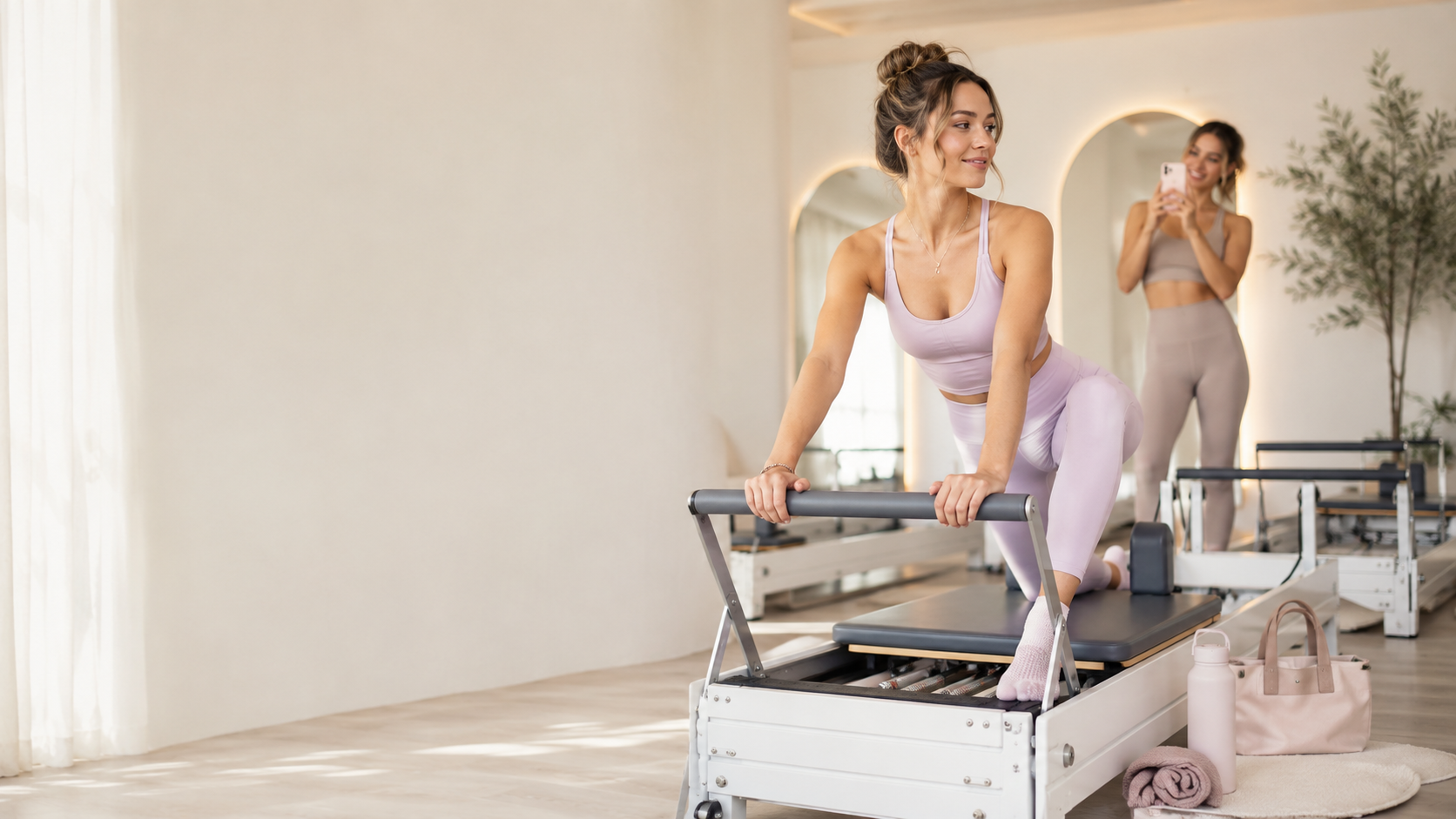
We don't usually write about national brand campaigns. We're a firm for the hometown guys — dealerships, practices, fire companies — and most big-brand marketing has about as much to teach a family business as a Super Bowl ad has to teach a banquet hall.
But every once in a while a national brand runs a play so cleanly that it's worth pulling apart, because underneath the budget it's the exact same play we tell local businesses to run. Aerie's "Pilates Princess" push for its OFFLINE activewear line is that campaign. We really like it. Not "nice ads" like it — strategically like it, the way you admire a well-turned double play.
Here's the short version of why, and then we'll take it apart properly: Aerie didn't invent a slogan and spend money making people say it. They found the language a community was already speaking, earned the right to speak it, and joined the conversation fluently. That's it. That's the whole trick — and it's a trick a hometown business is better positioned to run than a national brand, which is the real reason this post exists.
Everything below is linked to sources, as always.
First, what "Pilates Princess" actually is — and what Aerie did with it
If you're over 30 and confused, quick briefing. "Pilates Princess" — often "Pink Pilates Princess" — is a TikTok-born aesthetic and lifestyle identity: pale pink and soft-neutral athleisure, reformer classes, matcha, and a self-care-forward, deliberately feminine approach to fitness. Trend analysts trace it gaining serious traction in late 2023, peaking as a hashtag around the end of 2024, and then doing the thing most TikTok trends don't: settling in as a durable consumer identity that continues to move real product across athleisure, beauty, and wellness. It aligns with the broader "clean girl" and quiet-luxury aesthetics — and with what trend watchers are calling 2026's "quiet flex": calm, intentional, softly aspirational content replacing loud, overproduced brand noise.
In other words: it's not a meme. It's a community, with a vocabulary, a wardrobe, a morning routine, and a shopping list.
What Aerie did with it is the interesting part, because it's what they didn't do. There was no splashy "Introducing: Pilates Princess by Aerie™" launch, no trademark grab, no celebrity anthem spot. Instead, the phrase shows up where the community already lives: in creator posts — "a Pilates princess & her fav accessories," tagged #AD — in haul videos, in "in my Pilates princess era" shorts, threaded through Aerie's #AerieRealmakers ambassador program and OFFLINE's seasonal drops. The brand slotted its product into the community's existing sentence instead of asking the community to learn a new one.
And you can watch the payoff in the most honest scoreboard there is: search behavior. TikTok's discover pages now include entire indexed threads for phrases like "Aerie Pilates Princess" and — this one's remarkable — "Pilates Princess Offline Aerie Sweater". Read that phrase again. Customers fused the community's identity word with the brand and a specific product, and then started searching the fused phrase in volume. That's not reach. That's the language itself carrying the brand around, for free, in the community's own voice.
Now let's take apart why it works — five reasons, each of which converts directly into a move a hometown business can make this quarter.
Reason 1: They spoke the language — they didn't invent one
The graveyard of brand marketing is full of invented vocabulary: taglines nobody repeats, made-up movement names, hashtags used exclusively by the brand that coined them. The instinct behind them is understandable — own something! — and almost always wrong, because language you invent has to be pushed, forever, at ad rates. Language a community already speaks gets pulled, by the community, for free.
Aerie passed what we'd call the fluency test: could a native speaker of the community read the content without wincing? The creator posts scan like the community's own content because they largely are the community's own content — same aesthetic, same phrasing, same rituals, plus a product that belongs in the frame. Compare that with trend-jacking done badly, which everyone has seen: a brand grabbing a phrase two beats too late, deploying it slightly wrong, in a font the community would never use. The community's punishment for that is swift and public. Fluency is the whole difference between "they get us" and "delete this, grandpa" — and fluency can't be faked, which brings us to the second reason.
Reason 2: The credibility was pre-paid — a decade in advance
Here's the part most commentary on this campaign misses. Aerie could borrow this community's language because Aerie spent ten-plus years earning the standing to borrow it. Back in 2014, Aerie was among the first brands to commit to unretouched photos of real people, building the #AerieREAL movement on real customers, real bodies, and no airbrushing — a position it has held publicly and consistently, and one marketers still cite as the reference case for authentic representation. When that brand shows up in a soft, self-care, "come as you are" wellness aesthetic, the community's fraud detector stays quiet — because the brand's history rhymes with the trend. The Pilates Princess campaign isn't a costume; it's the same character in this season's wardrobe.
That's the deep lesson, and it's the one that should make every hometown business sit up: you can only spend credibility you've banked. A brand with a decade of receipts can join a community's conversation. A brand with none gets identified as a tourist in one scroll. And here's the twist that makes this a local-business post and not a fan letter — the hometown guys have more banked credibility per dollar than any national brand on earth. Thirty years on the same corner, the family name on the sign, the Little League sponsorship: that's an #AerieREAL-grade authenticity account, already funded. Most local businesses just never make a withdrawal.
Reason 3: Creators, not commercials
Notice the delivery vehicle: not a hero TV spot, but a swarm of creators — many of them small — producing native content in their own voices. This is where the industry has landed generally: the current playbook for beauty and apparel brands centers on micro and nano creators making native formats, an approach returning an average $5.78 per dollar spent, precisely because audiences are exhausted by polished brand personas and reward transparency and realness. The Aerie version layers its ambassador program on top: real customers and small creators, disclosed ads and all, whose endorsement reads as testimony rather than performance.
The hometown translation is almost embarrassingly direct: your creator program already exists — it's your customers, and the format is reviews, photos, and shares. The hall renter who posts the reunion photos. The patient who leaves the four-paragraph Google review. The parent filming the Santa run. A local business that systematically asks for, answers, and showcases that content is running the same architecture as Aerie's campaign at the town scale — real voices, native formats, testimony over performance — and the review engine that powers it is free to operate.
Reason 4: The phrase became search demand — the part we care about most
This is the reason we'd frame the campaign for a client, because it's where community language stops being a vibe and becomes infrastructure.
When a community adopts a phrase, the phrase becomes a query. People search "pilates princess outfit," "pilates princess aerie," "pilates princess offline aerie sweater" — on TikTok, on Google, and increasingly in AI chats. The brand that's named, tagged, and structured in the community's vocabulary gets found by every one of those searches automatically, forever, while the brand that insisted on its own internal product names ("the Luxe-Flex 2.0 Legging") is invisible to how humans actually ask. It's the same principle behind which content AI engines cite: engines and answer models assemble results from the language of the asker, not the language of the brand's org chart.
We've been preaching this at the local level the whole time, just with humbler nouns. "Santa run [town]" is a real December query with no page. "Hall rental near me," "pediatric dentist Sewell," "christmas light installers [town]" — every one is a community phrase waiting for a business to claim it in the community's own words. Aerie's campaign is the billion-dollar demonstration that naming your pages and products in customer language is the visibility strategy. The community writes your keyword research for you; you just have to listen and publish.
Reason 5: The product actually fits the sentence
Last one, quick but non-negotiable: the campaign works because OFFLINE's product genuinely belongs in the aesthetic — matching sets, soft neutrals and pinks, flare leggings, the actual wardrobe of the actual trend. There's no forced insertion, no "our accounting software is very Pilates Princess." The language fit the product, so the product could carry the language. The lesson runs both directions for a local business: adopt the community phrases that truthfully describe what you do, and skip the ones that don't, no matter how hot they run. Fluency includes knowing which conversations aren't yours.
The control group: what this looks like done badly
To sharpen why the Aerie version works, run the same play with one element removed — because the market runs these failed experiments constantly, and each one isolates a variable.
Remove the fluency and you get the brand that discovers a trend six months late, deploys the phrase slightly wrong in the wrong register, and gets ratioed by the exact community it was courting. The internet's shorthand for it is "how do you do, fellow kids" — and every hometown business has seen the local equivalent: the chain's "we're neighbors!" billboard written by a regional office three states away, naming a landmark that closed in 2019.
Remove the banked credibility and you get the costume problem: a brand with no history of the values the trend expresses suddenly wearing them for a campaign cycle. Communities are ruthlessly good at checking receipts — "since when do they care about X?" is the fastest-spreading sentence in social media — and a brand caught borrowing values it never held pays for the campaign twice: once in media, once in trust.
Remove the product fit and you get forced insertion — the trend-jacked post from a business the aesthetic has nothing to do with, engagement-farming a conversation it doesn't belong in. Even executed competently, it wins impressions and loses standing, because the community reads exactly what it is: an interruption wearing the community's clothes.
And remove the infrastructure — the searchable pages, the structured product names, the profiles — and you get the strangest failure of all: the campaign that genuinely lands culturally and converts nothing, because when the community goes looking for the thing, nothing findable is waiting. Applause with no box office. Aerie kept all four elements intact at once, which sounds simple and is apparently rare enough to be worth a blog post.
The reassuring part for a hometown business: of the four elements, the two hardest to acquire — credibility and fluency — are the two you already have. The two you might be missing — infrastructure and systematic naming — are the two that are just work. That's a much better starting hand than most national brands hold.
The steal-this list: five moves for a hometown business
Translated to Main Street, in order of effort:
1. Collect your town's actual phrases. Not marketing keywords — the words customers, patients, and neighbors literally say and type. "The hall by the firehouse." "The truck place on 421." "Santa run." "Trunk-or-treat." Read your own reviews, your DMs, the town Facebook group; the vocabulary is sitting there.
2. Name your pages in that language. Your services, events, and products, titled the way the town asks — a page can't win a search it doesn't have, and it especially can't win one it refuses to phrase correctly.
3. Run your creator program: reviews, systematically. Ask every happy customer while it's fresh, answer every review in your own voice, and showcase the best of it. Testimony over performance, at zero media cost.
4. Spend the credibility you've banked. Your founding year, your family's name, the teams you sponsor, the honest voice across the counter — that's the asset, and it's exactly what search and AI engines now reward when it's structured and published instead of assumed.
5. Pass the fluency test before posting. Would a lifelong local read it without wincing? If yes, publish. If you're reaching for a trend that isn't yours, don't — the town's fraud detector works exactly like TikTok's, just slower and more polite.
The honest part
Three disclosures, plainly. We have no connection to Aerie or its agencies — this is outside-looking-in analysis of public work, linked to public sources, and we're happy to be corrected on internals we can't see. Second: trends decay, and "Pilates Princess" already peaked as a hashtag back in late 2024 — the reason the campaign still works in 2026 is that Aerie attached itself to the durable identity underneath the trend, not the hashtag's spike, which is precisely the discipline point in move #5. And third: nothing here requires a national budget — that's the entire point — but it does require the unglamorous groundwork of pages, profiles, reviews, and structure that makes community language findable. Fluency without infrastructure is a great conversation nobody can locate.
The bottom line
Four sentences, like always. Aerie's Pilates Princess campaign works because the brand joined a community's existing language fluently, on ten years of pre-paid authenticity, delivered through real voices instead of commercials — and the community rewarded it by turning the phrase into search demand that now carries the brand for free. Every element of that play scales down better than it scales up: a hometown business has deeper banked credibility, closer access to its community's vocabulary, and a creator program already installed in its customer base. The difference between Aerie and the shop on the corner isn't the playbook; it's that Aerie ran it. Your town is already speaking the language — the only question is whether your pages do.
Frequently Asked Questions
What is the "Pilates Princess" trend?
A TikTok-born aesthetic and lifestyle identity — soft pink and neutral athleisure, reformer Pilates, self-care-forward wellness — that gained traction in late 2023, peaked as a hashtag around the end of 2024, and then matured into a durable consumer identity still moving real product across athleisure and beauty. It aligns with the "clean girl" and quiet-luxury aesthetics and with 2026's broader shift toward calm, intentional, un-shouty content.
Why does Aerie's Pilates Princess campaign work so well?
Five reasons, covered in full above: Aerie joined the community's existing language instead of inventing its own; it had a decade of #AerieREAL authenticity banked, so the borrowing read as genuine; it delivered through creators in native formats rather than commercials; the phrase became organic search demand carrying the brand for free; and the product truthfully fit the aesthetic. Remove any one and the campaign reads as a costume.
Should a local business jump on TikTok trends?
Only the ones that pass two tests: the trend truthfully fits what you do, and you can speak it fluently — meaning a lifelong local or community native would read your version without wincing. A fire company posting its Santa run, a dealership talking work trucks in contractor language, a studio using the wellness vocabulary its members actually use: yes. A forced grab at whatever's spiking: no, and the community's fraud detector will tell you so publicly. When in doubt, the durable identity under the trend beats the hashtag's spike every time.
How does "speaking the community's language" help with SEO and AI visibility?
Because community language becomes queries. People search — in Google, on TikTok, and in AI chats — using the phrases their community actually says, and engines assemble answers from content written in the asker's language, not the brand's internal vocabulary. Pages titled the way the town talks ("Santa run," "hall rental," "banquet hall near [town]") get found by every one of those searches automatically; pages titled in corporate-speak are invisible to how humans ask. Naming is the strategy.
Can a small business run a creator campaign like Aerie's?
It already has the machinery — its customers. The local version of a creator program is a systematic review engine: asking every happy customer while the experience is fresh, replying in the owner's real voice, and showcasing the best photos and stories on the site and profile. Same architecture as Aerie's — real voices, native formats, testimony over performance — at zero media cost, and it doubles as the trust layer Google and AI engines weigh most.
What's the first step to putting our community's language to work?
Listen, then audit. Spend a week collecting the actual phrases your customers and town use — from reviews, messages, the local Facebook groups, and what people say across the counter — and compare that list against your website's page titles and your Google profile. Every phrase the town says that your site never does is a search you're conceding. That gap analysis is, not coincidentally, part of what our free visibility check reads out in plain English.
Find out whether your pages speak your town's language
Here's the offer, plainly: we'll run your business through the free visibility check — what ChatGPT, Gemini, and Claude say when asked about businesses like yours in your area, how you stand in Google and the map pack, and where your site's language misses the way your community actually searches — with what we'd fix first, in plain English. Yours whether or not you ever hire us, with a real reply from the founder within one business day. No pressure, no pitch deck.
Get your free visibility check → — mention "community" in the form.
Sources
Accio — The Pilates Princess trend: fitness fashion and social media impact (trend timeline, peak, durable consumer identity, aesthetic alignments)
The Gain Blog — TikTok trends to watch in 2026 ("quiet flex" aesthetic; audiences rejecting overpolished brand personas)
Instagram — Sponsored creator post: "a Pilates princess & her fav accessories" @aerie #AD
TikTok Discover — Aerie Pilates Princess and Pilates Princess Offline Aerie Sweater (community search demand for fused brand-trend phrases)
Business Wire — Aerie's #AerieREAL Voices campaign announcement (unretouched-photos commitment since 2014)
Shopify — Top TikTok trends and brand examples (Aerie cited as the authenticity/representation reference case)
Syncly — TikTok influencer marketing playbook for 2026 (micro/nano creator strategy; $5.78 average return per dollar)