How Rowan University Got Valentine's Day Right — and What Every University Should Learn From It.
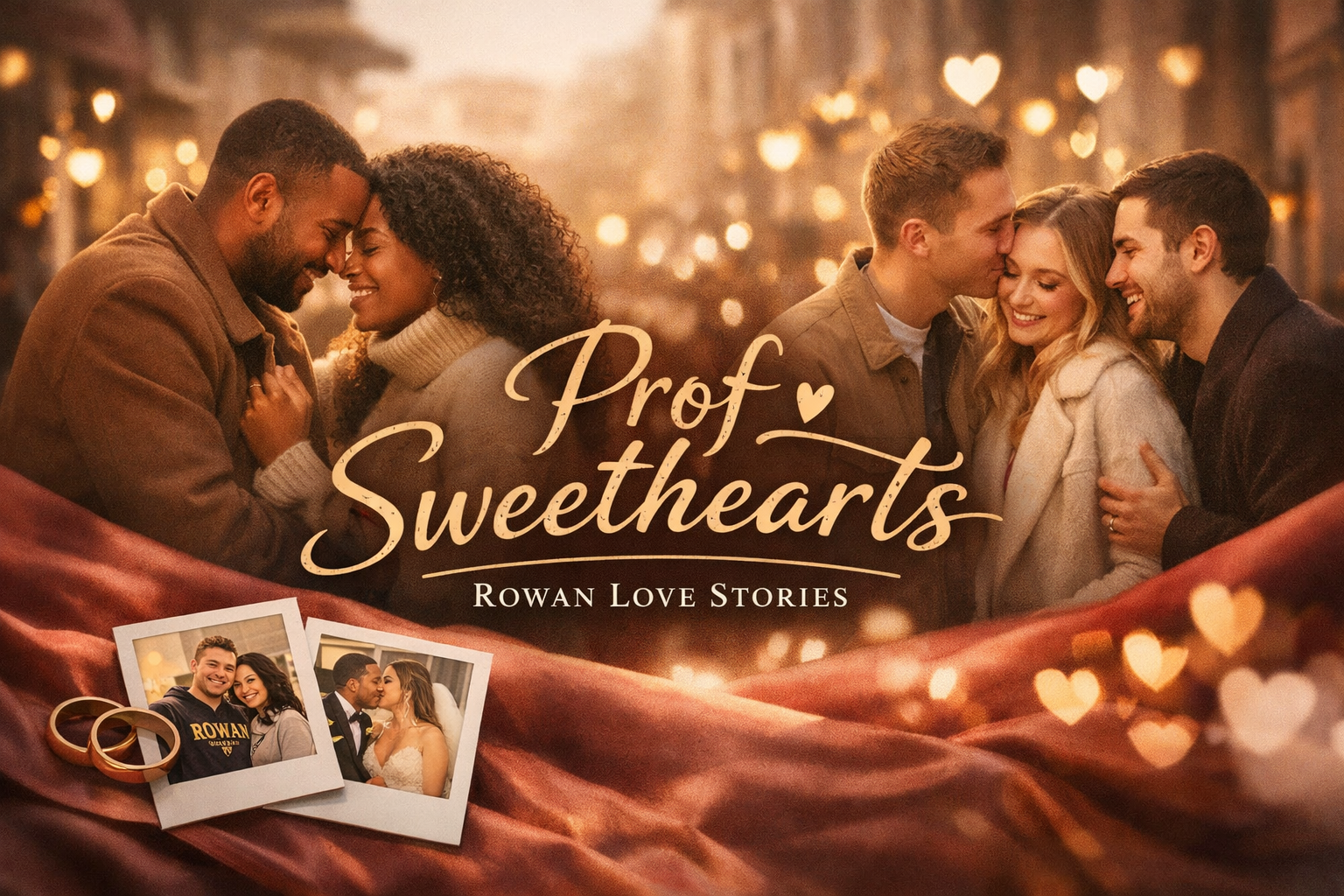
Your Alumni Don't Care About Your Annual Fund Email. They Care About the People They Fell in Love With on Your Campus.
Let's talk about the email your alumni actually opened.
Not the annual fund appeal. Not the Giving Tuesday campaign. Not the "update your contact information" request. Not the president's newsletter with the capital campaign thermometer graphic and the architectural rendering of the new science building. Not the homecoming invitation they meant to RSVP to but didn't. Not any of the dozens of emails your advancement office has sent this year that landed in inboxes across the country and generated open rates that would make your marketing team quietly close the analytics tab and change the subject.
Let's talk about the Instagram post, the web story, the feature that stopped an alumnus mid-scroll. The one that made them tag their spouse. The one that got shared in the group chat with their college roommates. The one that made a forty-three-year-old woman sitting in a carpool line in suburban Philadelphia feel, for thirty seconds, like she was twenty again, walking across a quad in South Jersey holding somebody's hand for the first time.
Let's talk about what Rowan University did for Valentine's Day. And let's talk about why it matters far beyond a single holiday content piece — why it's actually a blueprint for how alumni marketing should work if you want your alumni to feel something instead of just deleting something.
What Rowan Did
The concept is simple. That's what makes it work.
Every year around Valentine's Day, Rowan University's alumni team runs a feature they call "Prof Sweethearts" — a celebration of couples who met as students at Rowan University or Glassboro State College and are now dating, engaged, or married. Rowan University The university collects submissions from alumni, curates a gallery of couples with their photos and stories, and publishes it as a beautifully designed visual feature timed to the holiday.
The 2026 edition featured couples spanning decades of Rowan history — from Diane and John, class of 1969, who met walking to a class meeting at Bunce Hall, to Aaliyah and Lesego, classes of 2022 and 2023. Rowan University The range is part of the magic. This isn't just a feature about young love. It's a feature about a university's role in people's lives across generations.
And the stories are wonderful. Not because they're polished or dramatic or extraordinary. Because they're real.
Samantha and Keith, both class of 2015, met at a fraternity party where Rihanna's "We Found Love" was playing. Ten years later, they got married almost to the exact day they met — and that song was their entrance song at the reception. Rowan University Ninety percent of their bridal party attended Rowan. Their wedding favors were President Ali Houshmand's Hazardous Hot Sauce. Rowan University
Safiya, class of 2018, and Brandon, class of 2017, met during her freshman year in Mimosa Hall — though Brandon actually met her parents first, because her mom asked him for help carrying boxes on move-in day. Her mom's parting words to Brandon were to keep an eye on her daughter. When Safiya brought him home for Christmas a year later, her mom joked that he didn't have to keep that close of an eye on her. Rowan University They met August 30, 2014, started dating August 30, 2015, and married on August 30, 2024. Rowan University
Dawn, class of 1991, and John, class of 1992, were assigned to work together on a classroom management project by their professor, Dr. Carol Sharp. She thought he was cute, and he was a serious student, and they got an A on the project — and have been married since 1995. Their two daughters both graduated from Rowan. Rowan University
Erika, class of 2012, and Stephanie, class of 2010, met on the women's softball team — one a pitcher, the other a catcher. They met on the softball fields in 2009, got engaged at the same fields in 2020, married in 2021, and now have two daughters. Rowan University
Connor, class of 2016, and Cassie, class of 2017, whose journey began in a 2013 Public Speaking class, returned to campus in February 2026 for a walk down memory lane — and Connor surprised Cassie with a proposal at the Rowan arch. She said yes. Rowan University
That's it. That's the whole campaign. Real people. Real stories. Real photos — not stock images, not professional portraits, but wedding photos, old campus snapshots, move-in day memories, proposal pictures taken by friends. Packaged with care, timed to Valentine's Day, published on Rowan's visual storytelling platform and distributed through alumni channels.
No gimmick. No celebrity partnership. No elaborate production budget. No augmented reality filter. No viral stunt. Just real people telling real stories about falling in love at Rowan.
And it works. Not in the vague, unmeasurable "brand awareness" sense that universities use to justify campaigns they can't prove did anything. It works in the way that matters: alumni engage with it. They share it. They tag people. They comment with their own stories. They send it to their Rowan friends. They feel something — and feeling something is the single most valuable outcome any alumni communication can produce, because alumni who feel connected to their university are alumni who give, who attend, who volunteer, who send their kids, who advocate, and who answer the phone when the advancement office calls.
The Prof Sweethearts content does more to strengthen Rowan's relationship with its alumni than a year's worth of fund appeals. And it costs a fraction of what those fund appeals cost to produce and distribute.
Let's talk about why.
The Problem with Alumni Marketing
To understand why the Rowan Valentine's Day content works so well, you have to understand why most alumni marketing doesn't work at all. And to understand that, you have to confront an uncomfortable truth that most university advancement and communications offices know but rarely say out loud.
Your alumni do not care about your institution the way your institution thinks they do.
That sounds harsh. It's not meant to be. It's meant to be clarifying. Because the gap between how a university imagines its alumni feel and how its alumni actually feel is the gap that explains why open rates are low, why giving rates are declining at many institutions, why event attendance is soft, and why the majority of alumni — at most institutions, the vast majority — are functionally disengaged from their alma mater within a decade of graduation.
Here's how the university imagines it: Alumni are proud members of the university family. They follow the university's progress with interest. They care about the new building, the rising enrollment, the improved rankings, the athletic conference realignment, the faculty hire, the research grant, the strategic plan. They feel a sense of obligation — gratitude, even — toward the institution that educated them, and that obligation translates into willingness to give their time and money to support the university's mission and growth.
Here's how the alumnus actually experiences it: They graduated. They got a job. They got busy. They moved. They got busier. They have a mortgage, kids, aging parents, a career that demands their attention, a thousand other things competing for their time and their charitable dollars. Their university is a chapter of their life that they remember fondly — sometimes very fondly — but it's a closed chapter. The institution's current priorities are not their priorities. The new science building doesn't move them. The capital campaign doesn't feel urgent. The annual fund email feels like what it is — an ask. And they get asks from everywhere. Their kid's school. Their church. The local food bank. The GoFundMe in their Facebook feed. The public radio station during pledge week. The alumni email from their university is one of dozens of requests for money arriving from organizations that all believe, sincerely, that they deserve this person's attention and generosity.
And here's the thing: the university might be right. Their mission might be worthy. The new building might be transformative. The scholarship fund might change lives. But being right about the importance of your mission is not the same as being effective at communicating it. And the way most universities communicate with their alumni — institutional voice, institutional priorities, institutional framing — is fundamentally misaligned with how alumni actually relate to their college experience.
Because alumni don't miss the institution. They miss the experience.
What Alumni Actually Remember
Ask an alumnus what they remember about college. Not what they're supposed to remember — what they actually remember, what they think about when they think about their college years, what comes up when they're talking to friends or lying in bed at night or driving past a campus on a road trip.
They don't remember the strategic plan. They don't remember the provost's name. They don't remember the capital campaign from their junior year. They probably don't remember most of their classes, if they're being honest.
Here's what they remember:
The person they fell in love with. The roommate who became a lifelong friend. The professor who changed how they thought about something. The late night in the dorm when somebody said something that cracked everyone up and they still laugh about it twenty years later. The dining hall. The bar. The coffee shop. The quad in October. The feeling of being young and free and surrounded by people their age in a place that felt, for four years, like the center of the universe.
They remember people. They remember feelings. They remember specific, sensory, emotional moments that are burned into their memory not because they were institutionally significant but because they were personally transformative.
The couple who met in Mimosa Hall on move-in day. The friends who stayed up all night in the student center. The professor who wrote them a recommendation letter that changed their career. The place where they had their first kiss. The song that was playing. The person they were with.
This is what alumni carry with them. This is the emotional core of their connection to the university. And this is what almost no alumni marketing ever touches — because the alumni marketing is written by the institution, for the institution's purposes, in the institution's voice, about the institution's priorities.
The Prof Sweethearts feature works because it does the opposite. It puts the alumni at the center. It says: this isn't about us. This is about you. Your love story. Your memories. Your experience at Rowan. We're just the setting. You're the story.
That inversion — from institution-centered to alumni-centered — is the entire insight. And it's the insight that most university marketing departments haven't internalized, even though it's obvious once you see it.
Why Holiday-Themed Content Is the Perfect Vehicle
The Prof Sweethearts concept is brilliant in part because of what it is — alumni love stories — but also because of when it lands. Valentine's Day isn't a random content hook. It's an emotional amplifier that does several things simultaneously, all of which serve the university's engagement goals.
It Provides a Reason to Reach Out That Isn't an Ask
This is enormous. The vast majority of communications an alumnus receives from their university are asks. Give money. Attend this event. Update your information. Mentor a student. Join the board. Buy a ticket. Every touchpoint is transactional — the university wants something from the alumnus.
The Prof Sweethearts feature doesn't ask for anything. It gives. It gives the alumnus a story — multiple stories — that are entertaining, emotionally resonant, and personally relevant. The alumnus who opens this content doesn't feel sold to. They feel celebrated. They feel seen. They feel like the university remembers that they're a person with a life, not just a record in a donor database.
This is what marketers in every other industry already understand: you have to deposit into the relationship before you can withdraw. You have to give value before you ask for value. Every piece of content that makes an alumnus feel good about their connection to the university is a deposit that makes the next ask — the fund appeal, the event invitation, the volunteer request — more likely to succeed.
Universities that only communicate with alumni when they want something are making withdrawals from an account they never deposited into. The Prof Sweethearts feature is a deposit. It's a big one.
It's Inherently Shareable
Valentine's Day content about real couples has built-in sharing mechanics that institutional content can never match. The couple featured in the story shares it with everyone they know. Their families share it. Their friends from college share it with each other and reminisce. Alumni who aren't featured but who also met their partner at Rowan see the content and share their own stories in the comments.
Every share extends the university's reach into networks it can't access through its own channels. The alumnus who unfollowed the university's Instagram three years ago because it was all building renderings and event promotions — that alumnus sees the Prof Sweethearts feature because their college roommate tagged them in the comments and said "remember when you and Mike met at that party sophomore year?" That's reach that no paid social campaign can buy.
It Creates Community Without Requiring Attendance
One of the persistent challenges of alumni engagement is that most engagement opportunities require physical presence — attend homecoming, come to a regional event, visit campus. These opportunities serve the alumni who live nearby, who have the time, and who are already engaged enough to make the trip. They don't reach the alumnus in California, the alumnus raising three kids, the alumnus who hasn't been back to campus in a decade and feels too disconnected to start now.
Digital, holiday-themed content creates a moment of community that requires nothing from the alumnus except a few minutes of attention. The alumnus in California scrolls through the Prof Sweethearts gallery on their phone during lunch and feels connected to Rowan for five minutes. That's not nothing. That's a touchpoint. That's a maintained connection. That's an alumnus who, when the fund appeal arrives next month, has a slightly warmer feeling about the university than they did before — because the last thing the university sent them wasn't an ask. It was a love story.
It Spans Generations
The Prof Sweethearts feature includes couples from across decades — from a couple who met at Glassboro State College in 1969 to couples who graduated in the 2020s. Rowan University This intergenerational span does something subtle but powerful: it tells every alumnus, regardless of when they graduated, that their experience matters and their era of the university is valued.
The alumnus who graduated in 1986 and feels like the university has changed so much that it's no longer "theirs" sees a couple from their era and thinks, "They remember us." The recent grad who feels too young and too recently departed to be a "real" alumnus sees couples their age and thinks, "That could be us someday." The feature creates a sense of continuity — the university as a place where people have been falling in love for more than fifty years, and will continue to fall in love for fifty more. That's a narrative that transcends any individual's graduation year and makes the alumni community feel like something worth being part of.
The Playbook: How to Do This for Any University
The Prof Sweethearts concept is Rowan's, and it's been refined over years of running it. But the underlying principles are portable. Any university can build a holiday-themed, alumni-centered content program that generates the same kind of engagement. Here's the playbook.
Step One: Identify the Emotional Core
Every holiday has an emotional core that can be connected to the college experience. Valentine's Day is about love — romantic love, but also friendship, community, and belonging. Homecoming is about return and nostalgia. The start of the academic year is about beginnings and possibility. Thanksgiving is about gratitude — and the friends who become family. Graduation season is about achievement and transition.
Map your content calendar to these emotional cores, not to institutional milestones. "We're launching a new program in September" is an institutional milestone. "The feeling of moving into your dorm for the first time — who was with you?" is an emotional core tied to September. The second one generates engagement. The first one generates a skim and a delete.
Step Two: Make Alumni the Content
This is non-negotiable. The content must center alumni stories, alumni photos, alumni voices. Not the university talking about alumni. Alumni talking about themselves, in their own words, with their own photos.
The university's role is curator, not creator. You collect. You select. You design. You publish. But the raw material — the stories, the images, the emotional payload — comes from the alumni themselves. This is what makes it authentic. This is what makes it shareable. This is what makes it feel different from every other piece of university marketing.
Rowan's submission process is smart — they invite alumni to submit their stories and let them know that selected couples receive a commemorative swag bag, a photoshoot, and a feature on their podcast, Beyond the Brown & Gold. Rowan University That's a real incentive to participate, and it turns the feature into something alumni actively want to be part of rather than something they're passively receiving.
Step Three: Invest in the Presentation
The Prof Sweethearts feature isn't a blog post with a few photos dropped in. It's a beautifully designed visual story published on Rowan's storytelling platform, with full-bleed photography, pull quotes, and a gallery format that invites scrolling. Rowan University The presentation signals that this content matters — that the university invested care and craft into telling these stories well.
This matters more than most marketing teams realize. The quality of the presentation communicates respect — respect for the alumni whose stories are being told, and respect for the audience who's receiving them. A sloppy execution undermines the emotional impact no matter how good the stories are. You don't need a massive budget. You need thoughtful design, good photo editing, and someone who cares about getting it right.
Step Four: Build the Distribution for Sharing
Don't just publish the content and hope people find it. Design the distribution to maximize sharing. Tag the featured couples on social media. Email the feature to the full alumni list with a subject line that creates curiosity, not obligation. Create individual social posts for each couple that can be shared independently. Include a clear call to action at the end: "Did you meet your partner at [university]? Tell us your story."
That last piece is critical. The call to action isn't "give money" or "attend an event." It's "share your story." It continues the conversation. It generates submissions for next year's feature. It turns passive content consumers into active participants in the university's storytelling. And every alumnus who submits their story is an alumnus who just voluntarily raised their hand and said, "I feel connected to this place." That's an engagement signal that's more valuable than any email open rate.
Step Five: Connect It to the Larger Relationship
The Prof Sweethearts feature doesn't exist in isolation. It's one touchpoint in a longer relationship between the university and its alumni. The alumni who engage with this content — who share it, comment on it, submit their own stories — should be recognized and nurtured. Not immediately hit with a fund appeal. Recognized. Thanked. Remembered.
When the giving appeal does come — weeks or months later — it should acknowledge that this alumnus is part of the community. "You're one of the couples who make Rowan special" is a fundamentally different message than "Dear Alumnus, please consider a gift." The Valentine's Day content creates the emotional foundation that makes the institutional ask land differently.
This is the long game. And it's the game that most universities aren't playing because they're too focused on the short-term transactional metrics of each individual communication. Open rate on the fund appeal. Click-through on the giving page. Conversion to donation. These metrics matter. But they're downstream of something more fundamental: does the alumnus feel connected to the university? If the answer is no, no amount of optimization on the fund appeal email is going to fix it. If the answer is yes, the fund appeal almost takes care of itself.
What Rowan Gets Right That Most Universities Get Wrong
Let's name it explicitly, because it's easy to see what Rowan is doing without understanding the principles that make it work.
They Center People, Not Programs
The Prof Sweethearts feature is not about Rowan. It's about Rowan's people. The university is the setting, not the protagonist. The buildings are mentioned because that's where the love stories happened, not because the buildings are the point. Bunce Hall matters because Dawn and John met there. Mimosa Hall matters because Safiya and Brandon met there. The softball fields matter because Erika and Stephanie met there. The physical campus is meaningful because of what happened on it — the human moments that took place within its spaces.
Most university content inverts this. It leads with the institution and attaches people as proof points. "Our new $50 million science building will transform research." That's institution-centered. "Dr. Rodriguez's research on childhood leukemia just got the funding she needs to reach the next stage — here's what that means" is person-centered. Same building. Same money. Completely different emotional impact.
They Let Imperfection In
The photos in the Prof Sweethearts feature aren't all professional. Some are iPhone shots. Some are old, slightly faded snapshots from the nineties. Dawn and John's feature includes scans of their actual Glassboro State College student IDs from 1991 and 1993. Rowan University This imperfection isn't a weakness. It's the source of the content's authenticity. These are real memories. Real artifacts. Real life. The slightly blurry wedding photo and the old student ID communicate something that a polished studio portrait never could: this is genuine.
Universities are often so worried about brand consistency and visual standards that they polish the humanity out of their content. Every photo is high-resolution. Every layout is on-brand. Every story is edited until it sounds like it was written by the communications office — because it was. The Prof Sweethearts feature lets the alumni's voices come through — imperfect, personal, specific, real. And that's why it connects.
They Play the Long Game
Rowan has been running sweetheart-style alumni features for years Rowan Blog — this isn't a one-off campaign. It's a tradition. And that consistency matters, because traditions compound. The alumnus who sees the Prof Sweethearts feature this year and thinks "that's sweet" might submit their own story next year. The couple who was featured this year tells the story of being featured for years afterward. The tradition itself becomes part of Rowan's identity — a thing the university is known for, a thing that alumni look forward to, a recurring moment of connection that strengthens with each iteration.
Most university marketing campaigns are one-offs. A campaign launches, runs for a few weeks, gets measured, and is replaced by the next campaign. There's no compounding. There's no tradition. There's no cumulative effect. The Prof Sweethearts model shows what happens when you commit to a concept and invest in it year after year — it becomes bigger than any single execution. It becomes a franchise. And franchises build audiences in a way that one-offs never can.
The Bigger Lesson
The Prof Sweethearts feature is a Valentine's Day content piece. But the lesson it teaches is not about Valentine's Day. It's about what alumni marketing is for and what it should feel like from the alumni's perspective.
Alumni marketing, at its best, is not about extracting value from graduates. It's about maintaining a relationship — a genuine, emotional, two-directional relationship — between people and the place where some of the most important moments of their lives happened. The university that maintains that relationship well earns the right to make asks. The university that only makes asks, without ever investing in the relationship, finds its asks increasingly ignored.
Rowan's Prof Sweethearts feature works because it's an investment in the relationship. It says to alumni: we see you. We remember that you're not just a record in our database. You're a person who fell in love on our campus, who built a life that started here, who carries memories of this place that are more important to you than any building we'll ever construct or any ranking we'll ever achieve.
That's not a marketing tactic. That's a marketing philosophy. And it's the philosophy that separates universities whose alumni feel connected from universities whose alumni feel solicited.
Every university has these stories. Every campus is full of people who met there, fell in love there, built friendships there, had moments there that they'll remember forever. The stories exist. The emotional content is sitting in your alumni base, waiting to be collected and shared and celebrated.
The question isn't whether your alumni have stories worth telling. They do. The question is whether your marketing team is going to tell those stories — or whether they're going to send another email about the new science building and wonder why nobody opened it.
Frequently Asked Questions
Is This Really Marketing? It Feels More Like Storytelling.
It's both. And the fact that it feels more like storytelling than marketing is exactly why it works. The most effective marketing doesn't feel like marketing to the audience — it feels like content they actually want to consume. Alumni love stories feel like something worth reading. An annual fund appeal feels like junk mail. Both are marketing communications from the university. One generates engagement and emotional connection. The other generates a delete. The goal is to build a content mix that includes both relationship-building content like the Prof Sweethearts feature and transactional content like fund appeals — with the relationship content creating the emotional foundation that makes the transactional content more effective.
We're a Smaller University Without a Big Marketing Budget. Can We Do This?
Yes. The Prof Sweethearts model is not expensive. It requires someone to collect submissions — which can be done through a simple online form. It requires someone to curate and edit the stories — which your communications team already knows how to do. It requires a publication platform — which can be your existing blog, your social channels, or a free visual storytelling tool. And it requires good design sense, which doesn't require a big budget, just someone who cares about getting it right. The most expensive thing about this content is the time to do it well. But the return on that time investment — in engagement, sharing, alumni sentiment, and downstream giving — far exceeds what most universities get from the same hours spent on institutional announcements.
How Do You Get Alumni to Submit Their Stories?
You ask. Directly, clearly, and with a compelling reason to participate. Rowan promotes the call for submissions through email, social media, and their alumni network — and they sweeten the incentive with a swag bag, photoshoot, and podcast feature for selected couples. But even without those incentives, alumni are often eager to share their stories. People love talking about how they met their partner. They love telling the story of their college romance. You just have to ask, make the submission process easy, and make it clear that their story will be treated with care and respect. The biggest barrier isn't alumni willingness — it's universities not asking.
Can This Model Work Beyond Valentine's Day?
Absolutely. The principle — alumni-centered, emotionally resonant, holiday-timed content — applies across the calendar. Homecoming features about alumni returning to campus and what's changed since they graduated. Thanksgiving features about the friendships that became family. Back-to-school features about alumni reflecting on their first day of college. Veterans Day features about alumni who served. The emotional cores are everywhere. Valentine's Day and romantic love is one of the most powerful, but it's not the only one. The key is to always center the alumni, always lead with their stories and their voices, and always treat the content as a gift to your audience rather than a vehicle for institutional messaging.
How Does This Connect to Actual Fundraising Results?
Indirectly but powerfully. Relationship-building content like the Prof Sweethearts feature doesn't include a donation ask and shouldn't. Its purpose is to strengthen the emotional connection between alumni and the university. That strengthened connection shows up downstream in higher engagement rates on subsequent communications, better attendance at events, more positive sentiment toward the university, and — ultimately — higher giving rates. The research on alumni giving consistently shows that emotional connection to the institution is the strongest predictor of giving behavior. Content that strengthens that connection is, therefore, the most important thing your marketing team can produce — even though it doesn't have a "give now" button attached to it.