Hudah Babylon Bagel & Restaurant: A Deep Brand Analysis of One of South Jersey's Most Quietly Extraordinary Food Businesses
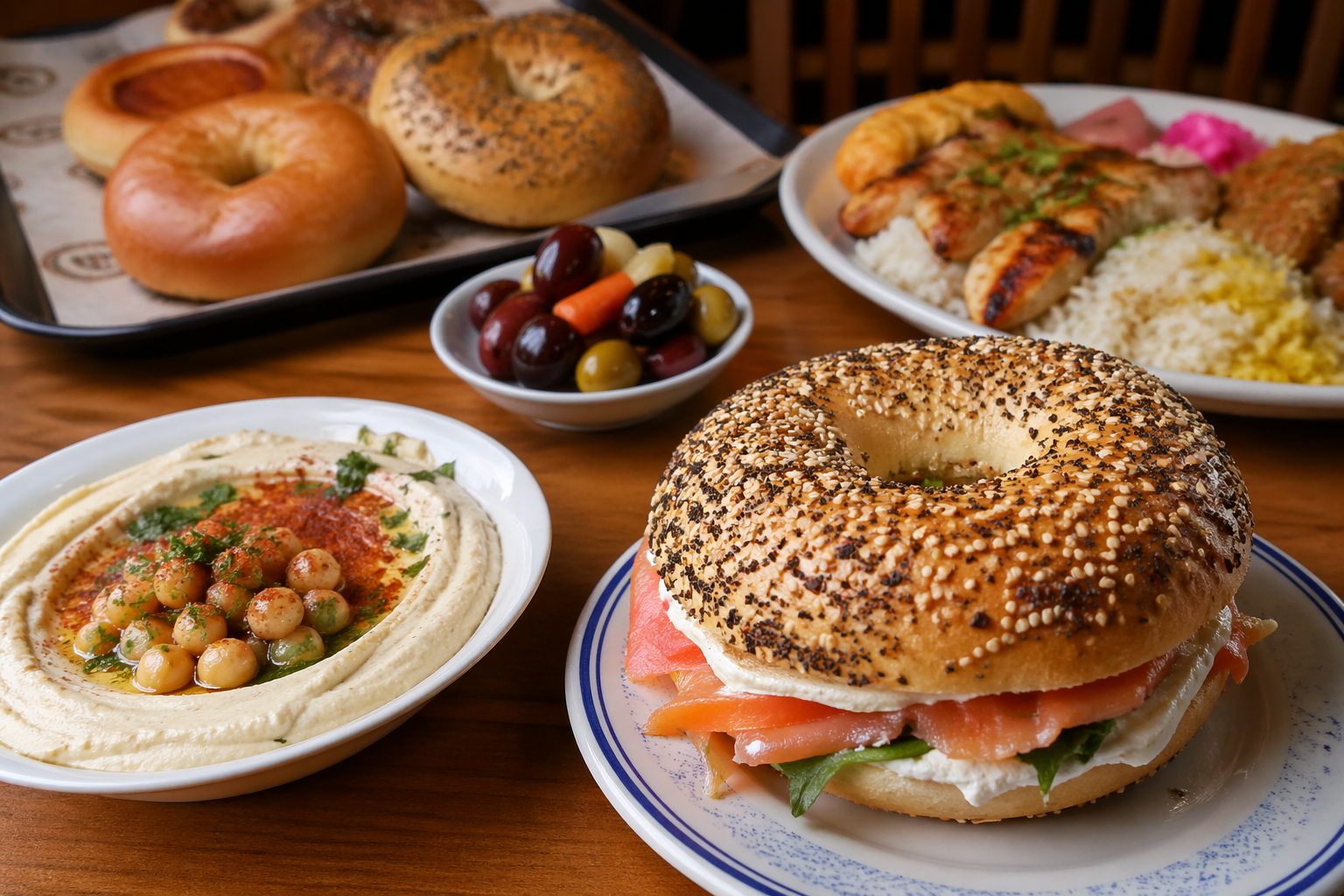
This is not a standard restaurant review. It is a serious attempt to understand, from a brand and cultural perspective, why Hudah Babylon Bagel & Restaurant in Washington Township, New Jersey represents something more significant than the sum of its menu items — and why the business model, ownership philosophy, and cultural positioning it has quietly built deserve the kind of analytical attention usually reserved for much larger and more celebrated food brands.
We will look at the macro forces in the food industry that are moving in Hudah Babylon's direction. We will examine the brand architecture — concept, product, ownership identity, community relationship — in detail. And we will make the case that what has been built in a Hurffville-Cross Keys Road shopping center in Gloucester County is, by several meaningful measures, an exceptionally well-positioned independent food business for exactly the cultural moment we are living through.
Part One: The Market Context — Why This Concept Is Right for This Moment
To understand the brand opportunity in front of Hudah Babylon, you have to understand the macro forces shaping how Americans eat and what they are increasingly looking for in a restaurant.
The Ethnic Food Market Is Exploding
The demand for ethnic food in the USA was valued at $33.70 billion in 2025 and is projected to reach $73.91 billion by 2036, growing at a CAGR of 7.4%. Increasing cultural diversity, growing immigrant populations, and expanding mainstream appetite for globally inspired flavors are propelling ethnic food demand across every major distribution channel in the United States. Future Market Insights
This is not a niche trend. It is a structural transformation in how Americans eat, driven by demographic change, generational taste evolution, and the accelerating role of social media in food discovery. African and Middle Eastern flavors — including harissa, shawarma, jollof rice, and tagines — are gaining popularity especially among Gen Z and Millennial diners. Fifty-five percent of consumers actively choose global foods over other options when dining out. And critically, 74% of operators say globally influenced dishes can command higher prices — consumers perceive global foods as premium and are willing to pay accordingly. Datassential
Middle Eastern Food Is the Moment's Defining Cuisine
Within the broader ethnic food expansion, Middle Eastern cuisine occupies a particularly powerful position right now. The global Middle Eastern restaurant market was valued at $32.6 billion in 2025 and is projected to grow at a CAGR of 6.7% through 2034, reaching $58.4 billion. The 'Others' sub-segment — encompassing Emirati, Yemeni, Jordanian, Syrian, and Iraqi culinary traditions — is the fastest-growing cuisine type with a projected CAGR of approximately 7.8% through 2034. Market Intelo
Iraqi cuisine specifically — the cultural heritage at the heart of Hudah Babylon's afternoon menu — sits within that fastest-growing sub-segment. And Middle Eastern foods are poised to strongly influence a broad range of categories heading into 2026, according to food trend analysts, positioning this cuisine at the front edge of mainstream American food culture's next major expansion. Supermarket Perimeter
The timing could not be better for an authentic Iraqi-owned kitchen serving traditional dishes in a market — South Jersey — that has almost no comparable offering.
Independent Restaurants Are Winning on Authenticity
At the same time that ethnic food demand is surging, consumer behavior is shifting strongly toward independent, family-owned restaurants and away from chains in a way that has measurable economic consequences. People aren't just going out to grab a bite — they're looking for something that feels personal and authentic. Independent restaurants shine because they reflect the community they're in. People come for the food, but they come back for the feeling. Synergyconsultants
Authentic social media presence helps current and potential customers form meaningful connections with a brand. When content is genuine rather than curated, it performs dramatically better — the newsletters that are personally written and heartfelt have the highest open rates, and behind-the-scenes staff content gets the highest engagement because people see right through anything too polished. Entrepreneur
Hudah Babylon is, almost by accident, built precisely for this cultural moment. The authenticity is not a brand strategy. It is the operating reality of the business.
Part Two: The Concept — Structural Analysis of a Genuinely Original Idea
The Dual-Concept as Brand Architecture
Most restaurants have one concept, one menu, and one audience. Hudah Babylon has two, and understanding the structural significance of that requires thinking about it not just as an operational quirk but as a brand architecture decision with real strategic implications.
In the morning, Hudah Babylon operates as a full-service fresh bagel shop — baking on-site daily, serving eleven varieties of housemade cream cheese, producing breakfast sandwiches from that fresh foundation. In the afternoon, beginning at noon, the same kitchen and the same family pivot to an authentic Iraqi and Middle Eastern restaurant serving kebabs, shawarma, gyros, lamb chops, rice platters, kibbeh, and a range of dishes drawn directly from the family's cultural heritage.
This is not a gimmick. It is not a marketing concept developed in a boardroom. It is the natural expression of a family's dual cultural identity — Iraqi heritage and New Jersey home — made physical in a single space.
The brand architecture that results from this is genuinely unusual. Two entirely distinct consumer audiences. Two separate competitive sets. Two distinct sets of search terms and discovery mechanisms. Two content stories. And critically, one family narrative that ties both concepts together into something coherent and emotionally resonant.
In 2025, mashups like kimchi tacos, paneer burgers, and jerk ramen reflect the openness of American palates. Rather than appropriation, these fusions are increasingly framed as collaboration and respect. American food culture is a celebration of stories, flavors, and shared experiences — and every dish tells a story of migration, struggle, and adaptation. The American Picks
Hudah Babylon's dual concept is a living version of that story. The bagel — a food brought to America by Eastern European Jewish immigrants that became a New Jersey institution — sitting alongside the Iraqi kabob and the lamb chop that carry the memory of another home. It is, in food form, the American immigrant experience made edible.
The Menu as a Statement of Identity
Authentic ethnic restaurants are often run by immigrants or first-generation Americans who bring their culinary heritage to the forefront. They prioritize traditional recipes, cooking methods, and ingredients, offering a taste of home to their customers — and for many immigrants and their descendants, food is a powerful link to their heritage, carrying the flavors, aromas, and traditions of their homelands and offering a sense of comfort and belonging. Vocal Media
The Hudah Babylon menu is a direct expression of this. Iraqi kabob made to a family recipe. Kibbeh — a dish made from cracked wheat, ground meat, and spices that has been a staple of Iraqi home cooking for generations — offered in chicken and beef versions. Lamb chops. Mixed grill. Alongside these: chicken shish kabab, shawarma in both chicken and lamb, gyro in multiple preparations, rice platters that anchor every component in the warm, spiced comfort of traditional Middle Eastern grain service.
And then, on the same menu, the Hot Cheetos Burger.
That item deserves specific attention from a brand analysis perspective, because it reveals something important about the restaurant's personality. A kitchen that is confidently Iraqi enough to serve authentic kibbeh and lamb chops is also playful enough to put a Hot Cheetos Burger on the menu. That combination — cultural seriousness and American-immigrant humor — is one of the most authentic expressions of the immigrant experience in food that you can find. It is not a concession to American tastes. It is a celebration of the genuine blend of influences that actually shapes an Iraqi-American family's daily life.
The menu of an ethnic restaurant is often constructed based on the realities of the owners and the customers they serve. Italian-American spaghetti and meatballs became popular because tomatoes and meat were cheaper in the US. The origin of the chimichanga is still debated, but there is no question that American love of deep-fried fare allowed many Mexican-Americans to make a living selling the crispy burrito in their communities. This is a fundamental fact about ethnic restaurants — they are not replicas of homeland dining. They are living documents of the immigrant experience. Urbo
The Hot Cheetos Burger is Hudah Babylon's chimichanga. And it belongs on that menu.
Part Three: The Product — Quality as the Foundation of Everything
Brand analysis can become untethered from reality very quickly if it loses sight of the product. In this case, the product is simply excellent — and the evidence for that is consistent across every source available.
The Bagels
Fresh-baked, on-site, daily. In New Jersey, where bagel culture is taken with the kind of seriousness usually reserved for religious observance, this is not a minor detail. The vast majority of bagel shops in Gloucester County and the surrounding area serve bagels that were baked elsewhere and delivered. Hudah Babylon bakes theirs in the building.
But the product differentiation that reviewers return to most consistently is the housemade cream cheese. Eleven varieties. Not sourced from a food service distributor in five-pound tubs. Made in the kitchen. Customers have highlighted the unique offerings including a variety of homemade cream cheeses and innovative breakfast sandwiches that elevate the traditional bagel experience. The establishment has garnered praise for its commitment to quality and flavor. Wheree
Walnut cream cheese. Strawberry cream cheese. Apple cinnamon. Scallion. These are flavors that require intention to develop and consistency to maintain. They are the kind of detail that separates a food business from a restaurant — a food business that cares about the product as an end in itself, not just as a revenue vehicle.
The Middle Eastern Kitchen
The afternoon menu quality is anchored in exactly what makes authentic ethnic restaurants in America compelling when they are done right: the knowledge is real, the recipes come from home, and the motivation is not profit maximization but cultural expression.
Eating Middle Eastern food has become far more acceptable and popular today than it was twenty years ago, and its popularity is growing at a pace faster than many other ethnic food products in America. The growth of an Arab restaurant symbolizes the presence of a thriving community and demonstrates that a community has economic strength. Arab News
The quality signals from Hudah Babylon's Middle Eastern kitchen are consistent with a restaurant that is cooking from genuine cultural knowledge rather than approximating a cuisine from the outside. The kibbeh, the mixed grill, the shawarma — these are not dishes you execute well without growing up eating them. The family from Iraq cooking the food they grew up with is not a marketing story. It is a quality guarantee.
Part Four: The Owner — When a Person Becomes a Brand
There is a category of restaurant that exists primarily as a vehicle for a specific person's vision, hospitality, and character — where the human being behind the operation is so central to the experience that separating the brand from the person is essentially impossible. Hudah Babylon is firmly in this category.
Hudah, the owner, is frequently commended for her generosity and kindness, often surprising first-time visitors with complimentary bagels, which creates a welcoming vibe. The community-centric approach of Hudah Babylon resonates with patrons who appreciate supporting a local business that prioritizes customer satisfaction. Wheree
The complimentary bagels for first-time visitors deserve sustained examination because what they reveal about the brand philosophy is significant. This is not a loyalty program. It is not a calculated customer acquisition tactic. It is the instinct of someone who is genuinely proud of what she makes and wants people to experience it without any barrier between the product and the tasting. It is confidence expressed as generosity. And it is the kind of gesture that creates the emotional relationship with a place that sustains a restaurant through the inevitable difficult periods every food business faces.
Immigrant Food restaurant owner Téa Ivanovic describes the core principle of building a loyal brand around an authentic founder story: "Honestly, be authentic. I think that's what's worked. When we do a letter from the founders, we personally write it and make it really heartfelt. Those are the newsletters that have the highest open rates. When we post something like a behind-the-scenes picture of our staff members, that gets the highest likes. When you try to make it too curated, people see right through that." Entrepreneur
The principle she is describing is exactly what Hudah Babylon embodies organically, without any strategic intent. The authenticity is not a brand technique. It is the actual operating mode of the business. That is a far more valuable starting point than most restaurants — regardless of size or budget — ever achieve.
The most successful independent restaurant brands use social media and digital storytelling to humanize the brand. Regularly posting authentic, behind-the-scenes stories featuring staff builds customer loyalty and an emotional connection to the restaurant that cannot be manufactured or bought. Substack
Hudah Babylon has the raw material for this kind of storytelling in abundance. An Iraqi family. A New Jersey community. A kitchen that pivots between cultures twice a day. An owner who gives away bagels. This is a story that writes itself.
Part Five: The Community Relationship — Earned, Not Bought
The community relationship that Hudah Babylon has built since opening is the kind that most marketing professionals spend careers trying to engineer and rarely achieve. It has the specific quality of something that was earned through behavior rather than constructed through communication.
The Facebook community has grown to over 1,700 followers with active ongoing engagement — people actively talking about the restaurant, responding to seasonal specials including heart-shaped Valentine's Day bagels, and treating the page like a community gathering point rather than a passive follow. Facebook
1,700 followers for a restaurant in a Goodwill shopping center in Washington Township is not a vanity metric. It is evidence of genuine community adoption. The 73 people actively talking about it at any given time is the ratio that matters — it tells you the following is not passive. These are people who care about this place enough to engage with it regularly, which is the definition of brand loyalty at the local level.
Independent restaurants are stepping back into their role as the comforting "third place" between home and work — creating spaces where regulars feel known, new guests feel welcomed, and community naturally comes together. It's not just about the food, it's about the feeling. Synergyconsultants
The reviews that flow from Hudah Babylon's community relationship have a specific quality that is worth noting: they frequently use the word "family" unprompted. Not just the restaurant's tagline ("when you're with us, you're family") but as a genuine descriptor of the experience. Customers feel like family because Hudah treats them like family. That loop — the intention becomes the behavior becomes the experience becomes the review becomes the brand positioning — is exceptionally rare and exceptionally durable.
Research from Frederick Reichheld at Bain & Company shows that just a 5% increase in customer retention can boost profits by 25% to 95%. And loyal customers spend 67% more than new ones. It costs five to 25 times more to acquire a new customer than to keep an existing one. SimpleLoyalty Blog
Hudah Babylon has been building this retention foundation — organically, without a loyalty program, without a CRM system, without any formal retention strategy — since the day it opened. The returns on that foundation compound with every year the restaurant remains open and every new regular it adds to the community.
Part Six: The Cultural Significance — What This Restaurant Represents Beyond Itself
There is a dimension to Hudah Babylon's brand story that goes beyond restaurant analysis and into something more significant: what it means for an Iraqi family to build a food business in South Jersey that serves both their heritage cuisine and their adopted community's breakfast staple, and to do it with the warmth and generosity that has made Hudah personally beloved by everyone who encounters her.
For generations, immigrants who have come to America have not always found a hospitable welcome waiting for them. The food they brought — initially viewed with suspicion and derision by the mainstream — eventually became beloved neighborhood fixtures and, in many cases, the foundation of regional food identity. The people who run ethnic restaurants are living this history every day. Foodbeast
Hudah Babylon is part of this continuum. The Iraqi family opening a restaurant in New Jersey that will eventually — if the community gets behind it the way it deserves to — become as much a part of Gloucester County's food identity as the Italian American restaurants that defined an earlier era of immigrant-to-institution food culture. For immigrants and their descendants, authentic dishes carry the flavors, aromas, and traditions of their homelands, offering a sense of comfort and belonging — and maintaining the authenticity of those dishes becomes an act of cultural preservation. Vocal Media
The fact that Hudah Babylon has chosen to present that cultural preservation alongside a New Jersey bagel shop — rather than despite it — is the brand insight that makes this operation genuinely remarkable. It is not choosing between Iraqi and American. It is insisting on both. And in doing so, it is telling a more honest story about what the American immigrant experience actually is than most restaurants ever manage.
Part Seven: The Brand Opportunity — What Comes Next
The honest assessment of Hudah Babylon's brand position at this moment is this: the equity is real and the awareness is not yet proportional to it.
The concept is original. The product is excellent. The owner is beloved. The community relationship is genuine and deep. The market tailwinds — for ethnic food in general, for Middle Eastern cuisine specifically, for authentic independent restaurants over chains — are all blowing in this direction. And the competitive landscape in Gloucester County for this specific combination of offerings is essentially empty.
Seventy-six percent of consumers say detailed menu descriptions matter when trying unfamiliar foods. And 74% of operators report that globally influenced dishes command higher prices — consumers perceive global foods as premium. Datassential
Hudah Babylon is leaving both of those value drivers on the table. The menu descriptions could be doing more to introduce unfamiliar dishes to a South Jersey audience that wants to be curious but needs some guidance. The pricing could, over time, reflect the genuine premium nature of housemade cream cheeses and family-recipe Iraqi kabob in a way that the current positioning does not fully capture.
The most successful independent restaurant brands leverage PR and storytelling when expanding or growing — sharing the history and values of the restaurant to build excitement. Ultimately, brand strength comes from being genuine. Substack
Hudah Babylon's story is genuinely one of the best available to any independent restaurant in South Jersey. It has not yet been told at the scale it deserves. Local food media, regional food publications, South Jersey community platforms, and the food-focused social media communities that serve the Philadelphia metro area would respond to this story powerfully if it were put in front of them with the same warmth and directness that characterizes everything Hudah herself does.
The brand that already exists inside this building — in the food, in the owner, in the community relationship, in the cultural story — deserves a digital presence, a media presence, and a regional reputation that matches it. That gap is an opportunity. And for a restaurant with this much genuine equity to build from, it is an opportunity that should be enormously exciting.
Conclusion
Hudah Babylon Bagel & Restaurant is the kind of local food business that the best version of American food culture produces and too often fails to celebrate loudly enough.
An Iraqi family. A New Jersey community. Fresh bagels in the morning. Authentic kebabs in the afternoon. Eleven housemade cream cheese flavors. A Hot Cheetos Burger. An owner who gives away bagels to strangers because she wants them to know how good her food is before they spend a dollar on it. A shopping center location that has become, for the people who found it, something genuinely irreplaceable.
This is not a restaurant that needs to become something different. It needs more people to know it exists exactly as it is.
Frequently Asked Questions
What makes Hudah Babylon's brand concept genuinely original rather than just unusual?
Originality in restaurant branding is rarer than the industry pretends. Most "concepts" are variations on familiar formats — a Mediterranean-inspired fast casual, a farm-to-table bistro, an upscale burger joint. What Hudah Babylon has is something structurally different: a dual identity that is not a marketing construct but a direct expression of the owners' actual life. An Iraqi family living in South Jersey running a business that serves the food of their adopted home in the morning and the food of their heritage in the afternoon is not a pitch deck concept. It is a biography made edible. The bagel and the Iraqi kabob coexisting on the same premises, produced by the same hands, served by the same people, is a genuine cultural statement — one that no competitor can replicate without living the same story. That irreplicability is the foundation of a durable brand, and it is what separates Hudah Babylon from the category of "interesting local restaurants" and places it in a much smaller category of genuinely original food businesses.
How does the Iraqi culinary heritage specifically differentiate Hudah Babylon from other Middle Eastern restaurants in the region?
Most Middle Eastern food in the American market, and particularly in suburban markets like South Jersey, defaults to a generalized Mediterranean or Levantine presentation — the same falafel, hummus, and shawarma template that has become familiar enough to feel generic. Iraqi cuisine is distinct from this template in specific and meaningful ways. The spice profiles are different, the grain preparations carry their own traditions, and dishes like kibbeh and specific preparations of rice and stew reflect culinary lineages that most American diners have never encountered. The 'Others' sub-segment of the Middle Eastern restaurant market — encompassing Iraqi, Yemeni, Jordanian, Syrian, and Emirati culinary traditions — is the fastest-growing segment with a projected CAGR of 7.8% through 2034, precisely because these undiscovered cuisines are gaining global exposure. Market Intelo Hudah Babylon sits at the front edge of that discovery curve in Gloucester County. There is no meaningful Iraqi food presence in this market, which means the restaurant is not competing within an established category — it is defining one.
Why is the owner's personal generosity — things like giving away bagels to first-time visitors — significant from a brand analysis perspective?
Because it signals something about the operating philosophy that no marketing language can communicate as effectively as the behavior itself. A restaurant owner who gives away product to strangers is making a specific claim: that she is confident enough in the quality of what she makes to let it speak before a single dollar changes hands, and that her primary motivation is for people to experience the food rather than to optimize the transaction. That orientation — product confidence expressed as generosity — is the behavioral signature of the best independent food businesses. The most authentic brands are built by founders who make every business decision through the lens of their mission, which creates a consistency between what they say and what they do that customers recognize and respond to with loyalty that goes beyond simple preference. Entrepreneur What Hudah does with complimentary bagels is the physical expression of that principle. It is also, practically, one of the most effective forms of marketing available to a local restaurant — the person who received the free bagel tells the story to everyone they know, and the story always includes the generosity, which is the point.
How does the broader market trend toward authentic ethnic food specifically benefit a restaurant like Hudah Babylon?
The tailwinds are structural rather than cyclical, which makes them more valuable than a passing food trend. The demand for ethnic food in the USA was valued at $33.70 billion in 2025 and is projected to reach $73.91 billion by 2036, driven by increasing cultural diversity, growing immigrant populations, and expanding mainstream appetite for globally inspired flavors. Future Market Insights The critical nuance is that this growth is increasingly favoring authentic, owner-operated ethnic restaurants over Americanized approximations. Consumers now perceive global foods as premium and are willing to pay accordingly — 74% of operators say globally influenced dishes can command higher prices, and 55% of consumers actively choose global foods over other options when dining out. Datassential Hudah Babylon benefits from both sides of this dynamic: the growing audience for authentic Middle Eastern food in markets outside major urban centers, and the premium perception that authentic immigrant-owned food businesses earn with increasingly culturally curious American diners.
What does the academic research on ethnic entrepreneurship tell us about why restaurants like Hudah Babylon succeed when they do?
The academic literature on ethnic entrepreneurship emphasizes a concept that maps closely onto what Hudah Babylon has built: the enclave economy as a foundation for broader market expansion. Ethnic entrepreneurship theory focuses on the factors determining ethnic immigrants' entrepreneurship behaviors, and the research confirms that social capital within immigrant communities — the trust, the shared cultural knowledge, the network of mutual support — provides a foundation that non-immigrant entrepreneurs typically cannot access. This social capital advantage is particularly strong in food businesses, where cultural authenticity is both the product and the marketing. Sage Journals Hudah Babylon benefits from this in two directions simultaneously: the Iraqi and Arab-American community in the South Jersey and Philadelphia area that recognizes and values authentic Iraqi cuisine as a connection to heritage, and the broader South Jersey community that has responded to the restaurant's genuine warmth and quality with the kind of loyalty that word-of-mouth networks produce when a business genuinely deserves it.
How does the bagel component of the brand contribute to its cultural significance beyond just morning revenue?
The bagel is doing more cultural work in this brand than it gets credit for. The bagel itself is a food with a specific immigrant history — brought to America by Eastern European Jewish immigrants, perfected in New York and New Jersey, and now so thoroughly embedded in the regional food culture that it reads as simply "New Jersey" rather than as ethnically distinct. Each new large wave of immigration has remade American cuisine for the better, making it more creative and rich. The process of immigrant food becoming mainstream American food is the story of American food culture itself — and the way we value a culture's cuisine often reflects the status of those who cook it. NPR By putting the Iraqi kabob alongside the fresh-baked bagel, Hudah Babylon is making an implicit argument: that these two things belong in the same space, served by the same family, because that is what American food actually is. It is a statement about cultural belonging expressed through a menu, and it is one of the most genuinely elegant pieces of implicit brand communication that any local restaurant in South Jersey has produced.
What specific market gaps does Hudah Babylon fill in the Gloucester County food landscape?
Two distinct gaps that compound each other's value. The first is the absence of authentic Iraqi cuisine — not generic Middle Eastern approximations, but specifically Iraqi dishes made by an Iraqi family from their own recipes — anywhere in the immediate market. The second is the absence of a fresh-baked, on-site bagel operation with housemade cream cheese variety in a market dominated by delivered-in bagels and chain breakfast options. Either gap would represent a meaningful opportunity for a well-executed restaurant. Filling both simultaneously, under one roof, with a family story and an owner personality that the community has genuinely embraced, creates a competitive position that is essentially unassailable in the short term. When it comes to globally influenced dining, 88% of consumers now have a globally influenced restaurant in their area — but that statistic masks significant geographic variation. In suburban South Jersey markets, authentic Iraqi cuisine is genuinely rare, which means the first business to establish credibility in that category benefits from a first-mover advantage that takes years for a competitor to meaningfully challenge. Datassential
How should we think about the Hot Cheetos Burger as a brand signal?
As one of the most honest expressions of brand identity on the menu. A kitchen that is culturally secure enough in its Iraqi heritage to serve authentic kibbeh and lamb chops is also relaxed enough in its American-immigrant identity to put a Hot Cheetos Burger on the same menu. That combination is not a contradiction. It is an accurate representation of what it actually feels like to grow up between cultures — to have genuine reverence for ancestral food traditions while also loving the absurd pleasures of the country you've made your home. In 2025, mashups and cross-cultural culinary combinations are increasingly framed as collaboration and respect rather than appropriation — they are honest reflections of how people who live between cultures actually eat. The American Picks The Hot Cheetos Burger earns its place on the Hudah Babylon menu not as a concession to American tastes but as an honest acknowledgment that this family's food life includes both Iraqi kabob and American junk food excess, and there is no reason to pretend otherwise. That honesty is a brand asset.
What does the community engagement data — 1,700+ Facebook followers, active ongoing conversation — actually tell us about the brand's health?
It tells us the brand has achieved something that cannot be manufactured: genuine community ownership. When a local restaurant's Facebook following is actively talking about it, responding to seasonal promotions, and treating the page as a community gathering point rather than a passive follow, it means the community has internalized the restaurant as part of its shared identity. Independent restaurants are reclaiming their role as the "third place" between home and work — spaces where regulars feel known, new guests feel welcomed, and community naturally comes together. The restaurants that achieve this aren't trying to be everything to everyone. They reflect the community they're in, and guests come back for the feeling as much as the food. Synergyconsultants A Facebook following of 1,700 people with meaningful ongoing engagement for a restaurant in a strip mall in Washington Township is not a vanity metric. It is evidence that the brand has crossed the threshold from "good local restaurant" to "community institution" — a crossing that typically takes much longer and requires much more deliberate effort than Hudah Babylon appears to have needed, because the genuine warmth of the operation simply accelerated the process.
What is the single most important thing Hudah Babylon could do right now to extend the brand equity it has already built into a larger market?
Tell the story more loudly and more consistently to the audiences that haven't found it yet. The brand equity — the concept originality, the product quality, the owner's personality, the community relationship — is already there. It is fully formed and genuinely compelling. What is missing is the systematic communication of that story to the food lovers in Camden County, Cherry Hill, the Philadelphia suburbs, and the broader mid-Atlantic food media ecosystem who would respond to it immediately and powerfully if they encountered it. The most successful independent restaurant brands leverage PR and storytelling to build excitement in new markets — sharing history and values — and their brand strength ultimately comes from being genuine rather than calculated. Substack Hudah Babylon has more genuine material to work with than most restaurants will ever have. The story of an Iraqi family building a dual-concept food business in South Jersey — fresh bagels and authentic kebabs, New Jersey tradition and Iraqi heritage, all under one roof — is a story that local food writers, regional publications, and social media food communities would tell enthusiastically if someone put it in front of them with the same directness and warmth that characterizes everything Hudah herself does. That is not a complicated marketing strategy. It is simply a matter of letting the world know that this place exists.