Why the Best Pizza in Washington Township Isn't Always the One That Gets Ordered
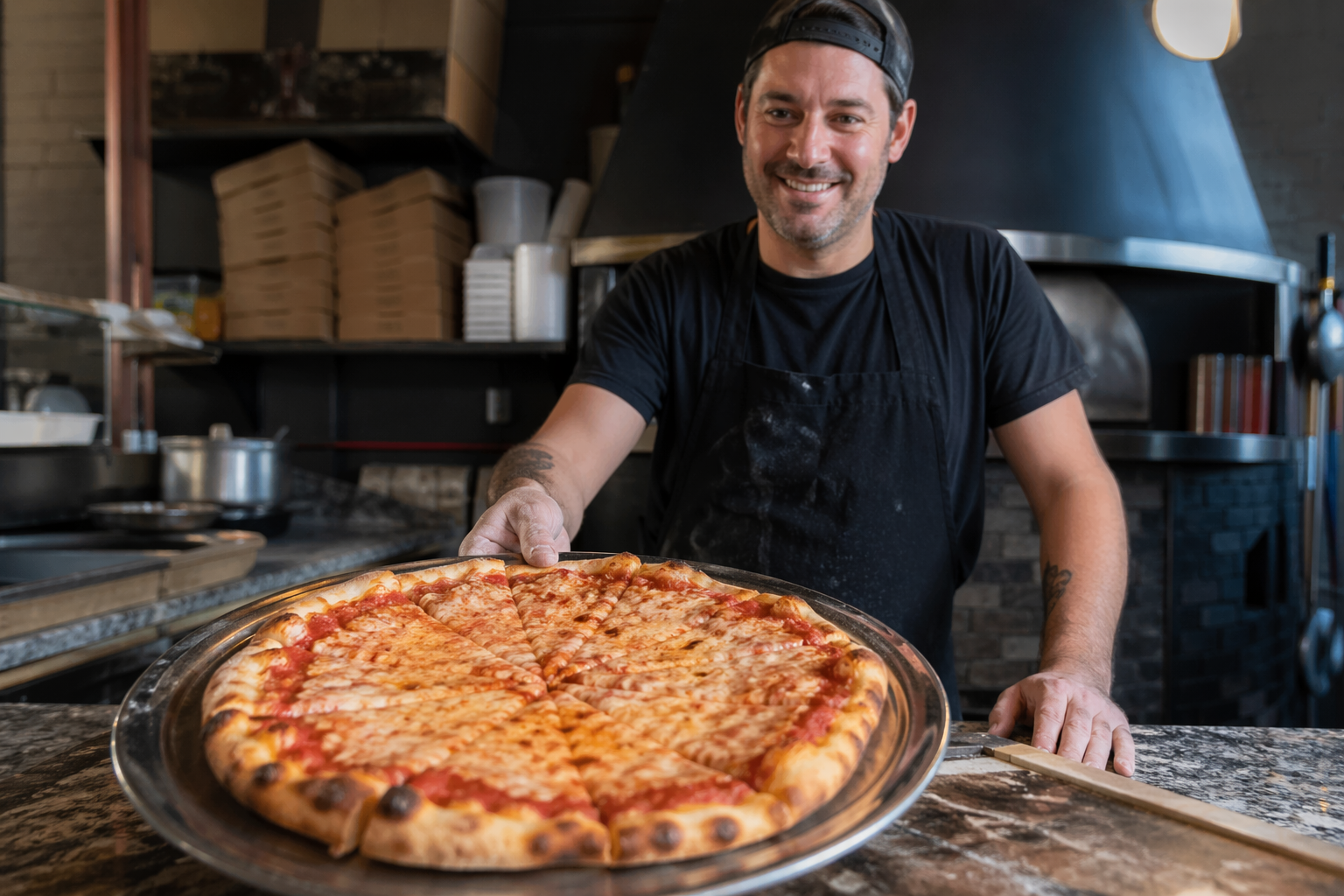
There's a specific kind of loyalty that builds up around a great neighborhood pizza place. The families who've been ordering the same Sicilian pie on Friday nights for fifteen years. The regulars who know the staff by name. The kids who grew up with this place as their definition of what pizza is supposed to taste like. That loyalty is real, it's valuable, and it's the foundation that every independent pizzeria in South Jersey is built on.
But loyalty has a ceiling. It doesn't reach the new family that just moved into the subdivision down the road. It doesn't capture the college student home for the weekend who opens DoorDash or types "pizza near me" into Google and picks whatever shows up first. It doesn't win back the customer who used to order regularly but drifted away when life got busy and never got a reason to come back.
Those customers — the ones just outside the loyalty radius — are the growth opportunity for every independent pizza shop in Gloucester County. And in 2025, the difference between capturing them and losing them to a national chain or a competitor with a more polished digital presence comes down to a handful of marketing decisions that are genuinely within reach for any local restaurant willing to make them.
At Ritner Digital, we work with local businesses across South Jersey. This post is a direct look at what digital marketing actually looks like for an independent pizza shop in Washington Township — what moves the needle, what's a waste of time, and how a family-owned operation with a great product can consistently win the local search results against chains with marketing budgets a hundred times larger.
The Playing Field Is More Even Than You Think
The single most important thing for an independent pizza shop to understand about digital marketing in 2025 is that the tools that determine who shows up when someone in Turnersville searches "pizza near me" don't care about budget size. They care about relevance, proximity, and trust signals — all of which a well-run local pizzeria can build as effectively as any national chain, often more so.
Though it might seem difficult for small pizza shops to compete with the traditional marketing of national pizza chains with huge budgets, it is actually easy to compete very effectively at a local level with smart digital marketing tactics and small budgets. Local SEO, Facebook and Instagram ads, organic social, email, and reputation marketing are just some ways small businesses can beat big chains. Digital marketing levels the playing field — with a robust digital marketing program and a bit of creativity, small businesses can not only succeed but beat big-chain marketing in the local market place. Thedigitalrestaurant
The customer searching "pizza Turnersville NJ" or "best Sicilian pizza near me" isn't looking for a brand name. They're looking for something close, well-reviewed, and compelling enough to click on. A family-owned shop with 300 authentic five-star reviews, fresh food photography on its Google Business Profile, and a functional online ordering link has a genuine advantage over a chain with a recognizable logo but generic photos and a 3.8-star average.
The opportunity is real. The tools are accessible. What's usually missing is a consistent, deliberate approach to using them.
The Five Digital Marketing Essentials for a South Jersey Pizza Shop
Every dollar and every hour a local pizza shop invests in digital marketing should flow toward the channels and activities with the highest return on that investment. For a neighborhood pizza restaurant in Gloucester County, those are five specific things.
1. Google Business Profile: Your Most Powerful Marketing Asset — and It's Free
When someone in Washington Township or the surrounding area searches for pizza, the Map Pack — the three business listings that appear at the top of Google's local results — is the most valuable real estate in local marketing. The businesses that appear there get the majority of clicks, calls, and orders from that search. And the primary factor that determines who shows up is the completeness, accuracy, and activity of each business's Google Business Profile.
Your Google Business Profile appears in local search results and Google Maps, making it one of the most powerful tools for restaurant visibility. Keeping your profile complete and up-to-date with business hours, address, phone number, website link, and menu — along with uploading recent photos of your food, staff, and interior — directly boosts local SEO and helps customers find you easily. Rezku Blog
For a pizza shop specifically, a few elements of the Google Business Profile matter more than anything else. The menu link needs to work and go somewhere useful — ideally directly to the online ordering page rather than a generic homepage. The photos need to be real, recent, and appetizing — a well-lit photo of a fresh Sicilian pie or a Grandma Pie straight out of the oven does more conversion work than any written description. The hours need to be accurate and updated for holidays, because nothing kills customer trust faster than showing up when Google says you're open and finding a closed sign.
Google's AI-powered local search now recommends individual restaurants in response to conversational queries — and your Google Business Profile description needs to answer the questions diners actually ask, not just describe your restaurant in marketing language. Specific signals — occasion signals, atmosphere signals, dietary options, practical details like parking — help AI systems understand and recommend your business accurately. Mindshare
The review section of the Google Business Profile is its own category of importance and gets its own section below.
2. Reviews: The Word of Mouth That Never Stops Working
Online reviews are the digital equivalent of your best regular customer telling their neighbor about you — except they tell everyone, indefinitely, at no cost. For a neighborhood pizza place with genuinely loyal customers and a real product people love, reviews should be a significant competitive advantage. The question is whether there's a systematic process for generating them or whether it's left entirely to chance.
Positive reviews boost local SEO rankings, helping a restaurant show up higher in local searches like "best pizza near me." Managing reviews strategically is one of the cheapest and most effective digital marketing moves a restaurant can make. Rezku Blog
The practical reality is that happy customers rarely leave reviews spontaneously. They enjoyed the pizza, they mean to say something, they get distracted by life, and the impulse passes. A simple, consistent ask — a line on the receipt, a follow-up text if you have a customer's number, a note on the pizza box — generates a dramatically higher response rate than hoping for organic review volume.
The content of those reviews matters alongside the volume. Reviews that specifically mention the Sicilian pizza, the Grandma Pie, the catering experience, the friendly staff, or the speed of online ordering are doing storytelling work that attracts the next customer searching for exactly those things. Responding to reviews — especially negative ones — signals to every future reader that the restaurant cares about the customer experience, which builds trust even when the underlying review is less than ideal.
3. Direct Online Ordering: Own Your Customer Relationship
Online ordering has become a baseline expectation for any pizza shop with customers under 50. The strategic question isn't whether to offer it — it's whether you're routing that ordering through a platform that takes 15 to 30 percent of every transaction or through a direct system that keeps the margin and the customer data with the restaurant.
Third-party delivery platforms charge approximately 30% in fees per order, and the customers are not your customers even though you provide the food. You do not get the customer information, so you cannot remarket to drive repeat orders directly to your business. Thedigitalrestaurant
A direct online ordering system — one that links from your Google Business Profile, your website, and your social media — routes the customer relationship through you rather than through a third party. Every customer who orders directly becomes someone you can email with a weekly special, text with a Friday night promotion, or target with a loyalty program that brings them back. The customer who orders through a third-party app belongs to that app, not to the restaurant.
For catering specifically, a direct ordering and inquiry path is essential. A customer planning a work lunch or a party order isn't going to navigate a third-party app to handle that — they want to talk to the restaurant or submit a request directly. A clear, easy catering inquiry path on the website and Google Business Profile captures that business before it goes elsewhere.
4. Food Photography and Social Media: Making the Pizza Sell Itself
Pizza is one of the most photographed foods on social media for a reason — it looks extraordinary when photographed well. A fresh Sicilian pie with its thick, airy crust and glossy sauce. A Grandma Pie with crispy edges and bubbling cheese. These are images that stop a scroll, trigger hunger, and put a restaurant name in front of people who weren't even looking for pizza in that moment.
Food photos can make or break a customer's decision to try a restaurant, especially for first-time diners ordering online. High-quality, authentic food photography is one of the most effective tools available for driving both online orders and new customer acquisition. Rezku Blog
For a local pizza shop in Washington Township, the social media strategy doesn't need to be complicated. A consistent Instagram and Facebook presence built around real food photography — the daily specials, the pies coming out of the oven, the occasional behind-the-scenes content featuring the people who make the food — builds a local following of exactly the right audience. These are people who have opted in to seeing your content, which means they're already warm to the brand and need only a compelling post on a hungry evening to turn into an order.
The weekly specials content that Angelo's is already promoting on Facebook is a perfect foundation for this strategy. The specials email list is already capturing customer intent. The question is whether the visual content accompanying those promotions is compelling enough to convert the scroll into a click — and whether the content is being distributed consistently enough to stay top of mind between orders.
5. Email and Text Marketing: The Highest-ROI Channel Nobody Uses Consistently
The email list for a local pizza shop is one of the most valuable and underutilized assets in local restaurant marketing. Every customer who has opted in to hear from the restaurant has already self-identified as someone who wants to order again. They don't need to be convinced that the pizza is good — they already know. They just need a reason, a reminder, or a specific offer at the right moment.
The average person spends nearly seven hours a day on their phone, making restaurant text marketing one of the most direct ways to reach customers. Email and SMS marketing for direct online orders gives a restaurant the ability to drive traffic without platform dependency — and every customer on the list represents lifetime value that compounds with every order. DoorDash
A simple email or text marketing rhythm for a local pizza shop doesn't need to be elaborate. A weekly specials email on Wednesday or Thursday — when people are starting to think about weekend food — with a good photo of the featured item and a direct link to order online is genuinely effective. A seasonal promotion tied to a local event, a school schedule, or a holiday. A birthday offer for customers who have shared that information. None of this requires sophisticated marketing technology — it requires consistency and a real incentive for the customer to act.
The email sign-up that Angelo's already has on its website is the seed of this system. The customers who have signed up are the warmest possible marketing audience. What turns that seed into revenue is a regular, compelling, easy-to-act-on communication that reminds them why they love this pizza and makes it trivially easy to order.
The Independent vs. Chain Advantage Is Real
National pizza chains spend millions on marketing. They have loyalty apps, national TV campaigns, and algorithmic ad targeting that independent shops can't match at scale. But they have a fundamental disadvantage that no amount of budget can overcome: they are not the neighborhood pizza place. They don't have the family that's been making the pies the same way since 2000. They don't have the staff who remembers your regular order. They don't have the Grandma Pie that isn't available anywhere else in Washington Township.
The most effective Google Business Profile descriptions for local restaurants answer specific questions diners actually ask — what's special about this place, what occasions is it right for, what should I order — rather than describing the restaurant in generic marketing language. Specific, authentic signals about what makes a place distinctive convert searches into orders more effectively than polished brand language. Mindshare
The independent pizza shop's job in digital marketing isn't to out-spend the chains. It's to out-authenticate them — to show up in local search with the real story, the real food photos, the real customer reviews, and the real community connection that a national brand can never genuinely claim. When those elements are in place and visible to every person in Gloucester County who searches for pizza, the independent shop wins more often than the chain because the product is genuinely better and the digital presence makes that clear.
What the First 90 Days Look Like
For a local pizza shop building or improving its digital marketing, the first 90 days should focus on three things that produce near-term results without requiring significant budget.
Days 1–30: Google Business Profile audit and optimization. Verify every piece of information is accurate. Add recent, high-quality food photos. Ensure the menu and online ordering links are correct and functional. Establish a review generation process and begin asking every satisfied customer to share their experience. Check that the business appears correctly in Yelp, TripAdvisor, and other local directories.
Days 31–60: Social media content foundation. Establish a consistent posting cadence on Facebook and Instagram — minimum two to three posts per week built around real food photography. Begin featuring the weekly specials with compelling visuals. Engage with every comment and message promptly, because responsiveness signals to both customers and platforms that the account is active and trustworthy.
Days 61–90: Email list activation and direct ordering push. Set up a simple email welcome sequence for new sign-ups. Send the first weekly specials email to the existing list. Audit the online ordering flow to make sure it works correctly on mobile and that the link is prominent on the Google Business Profile, website, and social media bios. Identify any friction in the ordering process and remove it.
By the end of month three, the foundation is in place. The Google Business Profile is generating more local search visibility. The review count is climbing. The social feed looks like an active, appetizing local restaurant. The email list is being used. None of this requires significant ad spend — it requires consistent attention to the channels that matter most for a neighborhood pizza shop.
The Compounding Effect of Getting This Right
Every new authentic review makes the next customer more likely to choose Angelo's over a competitor. Every food photo that performs well on Instagram puts the brand in front of a new audience of local pizza lovers. Every email that drives a Wednesday night order establishes a habit pattern that repeats. The marketing investment that feels modest in month one is compounding into a structural advantage in month twelve.
The independent pizza shop that invests consistently in these fundamentals — not the flashiest campaigns or the biggest ad budget, just the basics done well and done consistently — builds a local digital presence that national chains genuinely cannot replicate and that drives real, measurable revenue growth from the community it already serves.
Ready to Help Your Pizza Shop Win Locally Online?
Ritner Digital works with local restaurants, food businesses, and independent shops across South Jersey and the mid-Atlantic. If you run a pizza place, a deli, a family restaurant, or any local food business and you're serious about growing your digital presence in a way that drives real orders — not just followers — we'd like to talk.
Reach out at ritnerdigital.com.
Frequently Asked Questions
Why does a pizza shop with loyal regulars and strong word of mouth still need digital marketing?
Loyal regulars are the foundation of any great neighborhood restaurant and no marketing strategy replaces them. But they represent a ceiling, not a growth engine. The family that just moved to the neighborhood, the person who works nearby and has never tried you, the customer who ordered once two years ago and hasn't thought about you since — none of them are in your word of mouth network. They go to Google, open their phone, and pick from whatever shows up. If your Google Business Profile is incomplete, your review count is thin, or your online ordering link is broken, you lose those customers to whoever looks more credible in that moment. Digital marketing doesn't replace the loyalty you've built. It extends your reach to everyone just outside it.
What is the single most important digital marketing thing a local pizza shop can do right now?
Fully optimize your Google Business Profile and start generating reviews consistently. These two things together determine whether you appear in the Map Pack when someone in Washington Township or the surrounding area searches "pizza near me" — and whether they call or order when they find you. A complete profile with accurate hours, a working online ordering link, real food photos, and a growing volume of recent authentic reviews outperforms a chain location with a recognizable name but a neglected profile almost every time. It costs nothing to set up and manage. The only investment is time and the habit of asking every happy customer to leave a review before they leave or before their order is delivered.
How do you get more Google reviews without being annoying about it?
The key is timing and simplicity. The best moment to ask is when the customer is happiest — right after they pick up their order, right after a catering job goes well, right after someone compliments the food. A direct, genuine ask works better than a printed card or a passive suggestion: "We really appreciate your business — it would mean a lot if you left us a quick Google review." For online orders, a follow-up text or email an hour or two after delivery — when the food was great and the experience is fresh — works well. Making it easy matters enormously. A short link that goes directly to your Google review page removes all friction. The customers who love your food want to support you. They just need a clear, easy path to do it and a gentle reminder that it actually helps.
Should a local pizza shop use DoorDash, Grubhub, and Uber Eats, or focus on direct online ordering?
Both have a role, but the strategic priority should be driving as much of your order volume as possible through your own direct ordering system. Third-party platforms charge fees that eat deeply into already thin restaurant margins, and critically, they keep the customer relationship — you don't get the customer's contact information, which means you can't email them a special next Friday or build a loyalty program that brings them back. For discovery among new customers who haven't heard of you yet, third-party platforms do provide genuine value. But for your existing customers and anyone who finds you through Google or social media, having a direct ordering link that goes straight to your own system — and promoting it clearly on your Google Business Profile, website, and social channels — keeps more margin in your pocket and builds the customer data that makes every other marketing channel more effective over time.
How important is food photography for a pizza shop's social media and marketing?
It's the single most important visual asset a local restaurant can have, and for pizza specifically it's as close to guaranteed content as exists in food marketing. A well-lit photo of a fresh Sicilian pie or a Grandma Pie coming out of the oven is inherently compelling — it triggers hunger, communicates quality, and makes a scroll stop in a way that no text description can replicate. The good news is that you don't need a professional photographer or expensive equipment to produce effective food photos. A modern smartphone, decent natural light, and a clean surface to shoot on produces results that are more than adequate for Google Business Profile photos, Instagram posts, and Facebook specials announcements. The content that performs best on social media for local pizza shops is almost always the most authentic — real pies, real people, real moments from the operation — rather than anything polished or produced.
What should a pizza shop post on social media, and how often?
Consistency matters more than frequency or production quality. Two to three posts per week built around real food content is more effective than sporadic bursts of highly produced content. The weekly specials are a natural posting rhythm — a photo of the featured item with a clear call to action and a link to order is exactly what social media followers of a local restaurant want to see. Beyond specials, content that performs well for neighborhood pizza shops includes behind-the-scenes moments from the kitchen, photos of finished pies before they go out, recognition of staff and regulars, community involvement, and seasonal or holiday-themed content that ties the restaurant to the local calendar. The goal is to stay present in the feeds of the people who already know and love the restaurant often enough that when Friday night hunger strikes, your name is the first one that comes to mind.
How does an email list actually drive revenue for a local pizza shop?
More directly than most restaurant owners realize. The customers on an email list have explicitly told you they want to hear from you — which means they already have a relationship with the restaurant and need only a relevant, timely reason to place their next order. A weekly specials email sent on Wednesday or Thursday, when people are starting to think about weekend food, with a good photo of the featured pie and a direct link to order online, drives a measurable lift in orders from that list every time it goes out. A birthday offer, a holiday promotion, a "we haven't seen you in a while" win-back email — all of these work because the audience is warm. The email list is also the one marketing channel that belongs entirely to the restaurant, with no platform algorithm standing between the message and the customer. Social media reach can drop overnight if an algorithm changes. The email list is yours, and it compounds in value every time a new customer signs up.
Can a small local pizza shop compete with Domino's and Pizza Hut on Google search?
Yes — and more often than most people expect, they already are. National chains have brand recognition and large marketing budgets, but local search results are built around proximity and local trust signals, not ad spend. A neighborhood pizza shop in Washington Township with 200 authentic Google reviews, accurate and complete profile information, real food photos, and a working online ordering link will appear in local Map Pack results for searches like "pizza near me" or "pizza Turnersville NJ" regardless of what Domino's spends nationally. The chains' local profiles are often poorly maintained, their photos are generic, and their reviews reflect the inconsistency of a franchise operation. A local shop that treats its Google Business Profile seriously and generates reviews consistently has a genuine competitive advantage in local search — one that compounds over time and that no national budget can simply outbid.
What does catering marketing look like for a local pizza shop?
Catering represents a different buyer and a different marketing approach than individual orders. The catering customer is typically planning ahead — an office lunch, a birthday party, a school event, a sports team gathering — and they are evaluating reliability, value, and ease of ordering rather than making a spontaneous hunger decision. Reaching them requires a clear, visible catering page or section on the website that speaks directly to their concerns: minimum order size, lead time required, what's included, how to place a catering order, and ideally a few real examples of past catering setups. The Google Business Profile should include catering as a listed service. Facebook is particularly effective for catering promotion because the demographic that plans group food orders for local events skews toward the community-connected Facebook user base more than any other platform. A direct catering inquiry path — phone number prominently displayed, a simple online form, or a direct link to email — removes the friction that causes a potential catering customer to go with whoever is easiest to reach.
Is paid advertising worth it for a local pizza shop with a limited marketing budget?
It can be, but only after the free fundamentals are solid. Spending money on Google Ads or Facebook ads before your Google Business Profile is optimized, your review count is healthy, and your online ordering works correctly is sending paid traffic to a destination that won't convert well — which wastes the budget. Once the foundation is in place, targeted Facebook and Instagram ads to a specific geographic radius around the restaurant are a cost-effective way to reach new customers with a compelling food photo and a direct ordering link. Google Ads targeting high-intent searches like "pizza delivery Washington Township" or "pizza Turnersville" can drive direct online orders at a measurable cost per transaction. The budget required to see results at a local level is modest — often a few hundred dollars a month — and the return is trackable in direct order volume rather than in impressions or reach metrics that don't connect to revenue.