Why the Best Skydiving Experience in the Region Isn't Always the One That Gets Booked
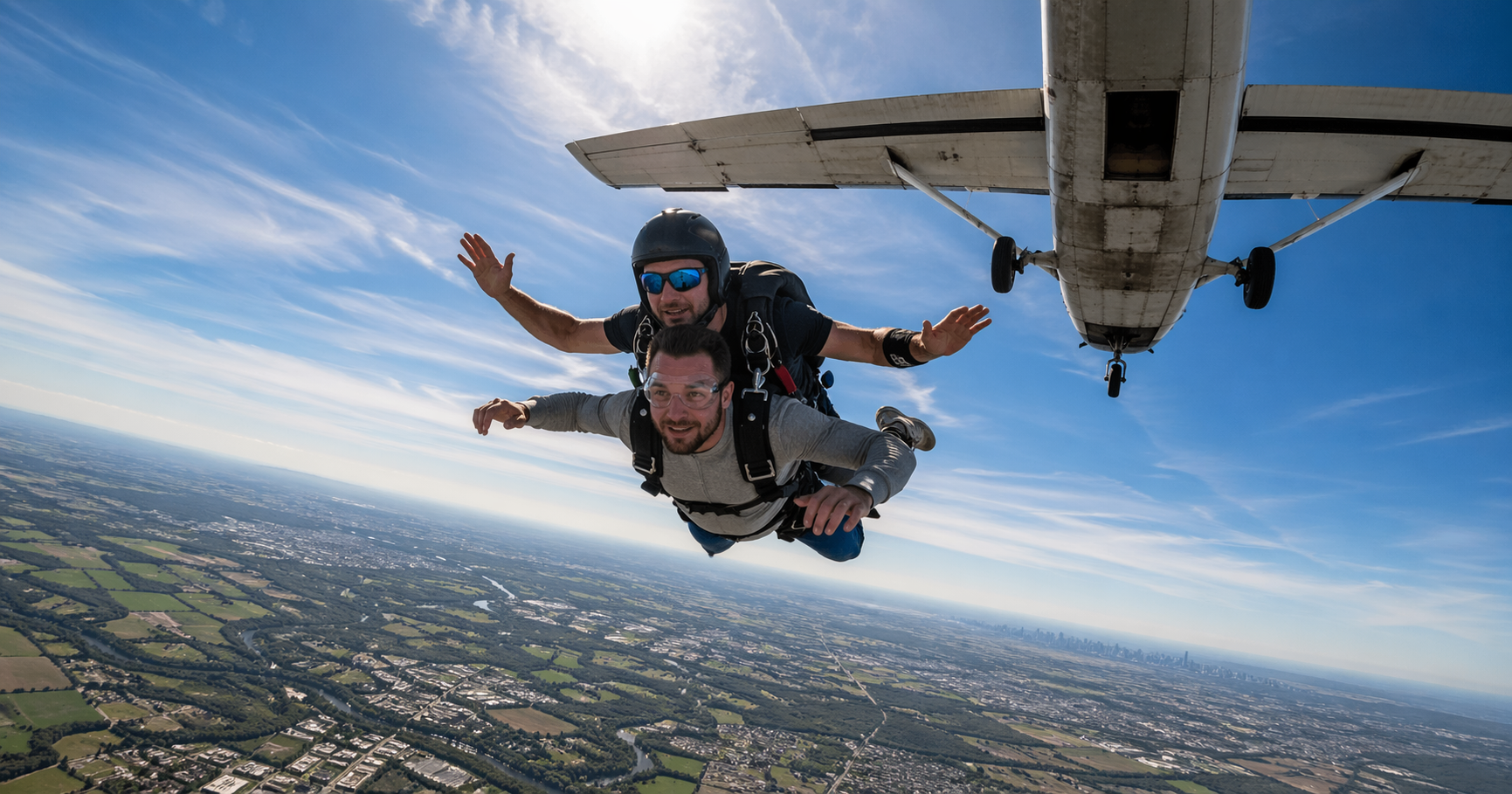
You've already done the hard part. You've built a world-class operation — certified instructors, immaculate safety records, a dropzone culture that turns first-timers into lifelong jumpers, and reviews that describe the experience as life-changing. Repeat customers come back. Group bookings roll in from corporate teams and birthday parties. The people who jump here leave evangelical.
And yet somewhere right now, a person in Philadelphia is searching "skydiving near me," a group of friends in South Jersey is Googling "best dropzone near Philadelphia," and a parent in Atlantic County is looking for the perfect gift certificate for their college-age kid's birthday. Some of them will find you. Some of them will find a competitor. The difference isn't the quality of the experience — it's the quality of the digital marketing system that puts your name in front of them at the exact moment they're ready to book.
At Ritner Digital, we work with experiential and adventure tourism businesses across New Jersey, Pennsylvania, and the mid-Atlantic. What follows is a direct look at the digital marketing opportunity for skydiving and adventure experience businesses in the greater Philadelphia market — and what it takes to build a system that converts online interest into booked jumps consistently and at scale.
The Market: Bucket Lists, Group Adventures, and a Growing Appetite for the Extraordinary
The experiential economy is expanding fast. The adventure tourism sector is expected to increase by 15.7% annually from 2025 to 2030, with activities like skydiving among the fastest-growing segments as consumers increasingly prioritize experiences over possessions. TicketingHub And according to Google, searches for extreme sports including skydiving are up 21% compared to last year — meaning more people are looking to cross skydiving off their bucket lists right now than at any point in recent history. Boom Shot Media
The Philadelphia metro area is one of the largest population centers on the East Coast, with New York City, Atlantic City, and the broader South Jersey market all within driving distance of Williamstown. That geography represents millions of potential first-time jumpers, group adventure seekers, and gift certificate buyers — all within a radius that makes a day trip to a dropzone genuinely feasible.
This is an audience with specific, identifiable buying behaviors. They research online before booking. They watch video content to manage their anxiety and build excitement. They read reviews carefully — looking for evidence that the experience was safe, memorable, and worth the price. They respond to social proof. And they make their final booking decision through a combination of search visibility, website trust, and the emotional pull of compelling visual content.
The skydiving business that has built a digital presence calibrated to all of those behaviors — search, social, reviews, video, mobile booking — has a structural advantage in capturing that market that no competitor can overcome simply by being a better operation.
How People Decide Where to Jump
Understanding the buying journey for a first-time tandem skydive is essential to building marketing that works. It isn't a single moment of decision — it's a multi-step process that typically unfolds over days or weeks, and marketing that only shows up at one stage of that journey will miss most of the available opportunity.
It usually starts with an idea — a bucket list item revisited, a friend who jumped and won't stop talking about it, a birthday coming up that calls for something extraordinary. The person does an initial search: "skydiving near Philadelphia," "tandem skydiving New Jersey," "best dropzone East Coast." They scan the results, click a few, look at photos and videos, and start forming impressions. This is the awareness stage. Showing up here — in Google's Map Pack, in organic search results, in YouTube search for skydiving-related content — is the prerequisite for everything that follows.
Then comes the validation phase. They read reviews on Google, TripAdvisor, and Facebook. They look at Instagram and TikTok to see real footage from real customers. They read the FAQ page to understand the process and manage their anxiety. They check prices and look for group options or gift certificates. This is where trust is built — or lost. A dropzone with hundreds of authentic, recent reviews telling specific, emotional stories converts significantly better than one with fewer reviews or less compelling social content, regardless of which one is actually the superior operation.
People may discover you through TikTok, YouTube, Instagram, or even ChatGPT — but they verify you on Google Maps. Your Google Business Profile is where customers check safety, reviews, photos, and hours before they commit. Treating it like active social media — with regular posts, fresh photos, and up-to-date information — is now a prerequisite for capturing the bookings that social media discovery generates. Boom Shot Media
Finally comes the booking decision. This is where the website does its job — or doesn't. A mobile-optimized booking flow that moves a ready customer from intent to confirmed reservation in under two minutes captures the booking. A slow, confusing, or friction-heavy booking process loses it.
The Five Channels That Drive Bookings for an Adventure Experience Business
Building a digital marketing system for a skydiving business near Philadelphia requires a specific channel mix calibrated to how adventure experience buyers actually discover, evaluate, and book. Here's what that looks like.
1. Local SEO and Google Business Profile: Winning the "Near Me" Searches
The highest-converting searches for a tandem skydiving business are the high-intent, location-specific queries that represent someone who is ready to book: "skydiving near Philadelphia," "skydiving New Jersey," "dropzone near me," "tandem skydive South Jersey." These searches reach Google and resolve in the Map Pack — the three business listings at the top of the local results page.
When someone types "skydiving near me" or "best dropzone in New Jersey," showing up in Google's local results is the difference between capturing that customer and losing them to a competitor. A neglected Google Business Profile signals a neglected operation — and Google's AI is increasingly using Business Profile activity to determine which businesses appear in AI-driven answers, making an active, complete profile more important than ever. Boom Shot Media
For a dropzone with the geographic advantage of sitting 30 minutes from Philadelphia and within reasonable driving distance of New York City, Atlantic City, and the broader South Jersey market, the local SEO strategy needs to be calibrated to all of those origin markets — not just the immediate Williamstown area. Location-specific landing pages ("Skydiving near Philadelphia," "Skydiving near Atlantic City," "Skydiving New Jersey") built with genuine content about the experience and the drive from each origin market capture a much broader net of high-intent searchers than a single location page can.
2. TikTok and Instagram: The Discovery Engine for a Younger Audience
No business category is better positioned to leverage short-form video content than skydiving. The visuals are inherently extraordinary. The emotional arc — the fear, the leap, the freefall, the peace of the parachute descent, the landing — is a perfect story structure for a 30-second video. And the social sharing behavior of first-time jumpers means that every customer who has a great experience and posts their video is doing organic marketing at no cost.
TikTok, Instagram, and YouTube are no longer just content channels — they are intent-driven search engines. Consumers actively search for experiences and reviews on these platforms, making social media content that is both engaging and search-optimized within each platform's ecosystem a critical driver of new customer discovery. Entrepreneur
A consistent, high-quality short-form video strategy for a skydiving business near Philadelphia means two things working together. First, original content produced by the dropzone — instructor perspectives, first-timer reaction videos, aerial footage of the South Jersey landscape from altitude, behind-the-scenes content from the manifest and training process — that builds an organic following and earns platform algorithmic distribution. Second, a systematic approach to capturing and reposting customer-generated content, which is both the most authentic social proof available and a constant supply of fresh visual content.
The audience for this content skews toward the 18–35 demographic that represents the highest volume of first-time tandem skydivers — and this audience makes discovery-to-booking decisions faster than older demographics when they find content that builds sufficient excitement and trust.
3. Google Ads: Capturing High-Intent Buyers at the Moment of Decision
Paid search puts a dropzone directly in front of customers at the exact moment they are ready to book. This remains one of the highest-ROI channels for drop zones that manage ad spend properly and send traffic to a fast, mobile-optimized website with a frictionless booking flow. Boom Shot Media
For a skydiving business competing in the Philadelphia metro market, Google Ads campaigns targeting the highest-intent search terms — "tandem skydiving near Philadelphia," "skydiving New Jersey prices," "book skydiving Philadelphia," "skydiving gift certificate NJ" — put the business at the top of search results for buyers who are past the research phase and ready to act.
The critical variables that determine whether a Google Ads campaign produces profitable bookings are the quality of the landing page it sends traffic to, the precision of the geographic and demographic targeting, and the conversion tracking infrastructure that ties ad spend to actual booked jumps. A campaign sending traffic to the website homepage with no conversion tracking is flying blind. A campaign sending specific ad traffic to a dedicated, mobile-optimized booking page with call tracking and booking conversion measurement in place can be optimized continuously toward the lowest possible cost per booked jump.
4. Reviews and Reputation: The Trust Infrastructure That Converts Research Into Reservations
For a first-time skydiver managing genuine anxiety about jumping out of a plane, the review record of a dropzone is not a minor consideration — it is often the deciding factor. A business with 2,000 Google reviews averaging 4.8 stars, filled with specific, emotional testimonials about safety, instructor quality, and the life-changing nature of the experience, converts a researching first-timer at a dramatically higher rate than a competitor with 400 reviews and a 4.2 average.
Review volume compounds over time, but only if there is a systematic process for generating them. After every successful jump, the window is open — the customer is exhilarated, grateful, and emotionally primed to share their experience. A simple, direct ask at that moment — a staff member mentioning it, a follow-up text or email with a direct review link — produces a far higher response rate than hoping customers will spontaneously leave reviews on their own.
The content of the reviews matters as much as the volume. Reviews that specifically mention instructor names, describe the safety briefing process, reference the beautiful South Jersey views from altitude, or talk about how the staff managed their fear are doing storytelling work that directly addresses the primary concerns of the next prospective customer reading them.
5. Email and Gift Certificate Marketing: Capturing Revenue Beyond the First Jump
The gift certificate business for a skydiving dropzone near Philadelphia is significant and distinctly seasonal — holidays, birthdays, Valentine's Day, graduations, and Father's Day all represent concentrated purchase windows. Building the marketing infrastructure to capture that demand — email campaigns to past customers in the weeks before peak gift-giving seasons, paid social campaigns targeting gift-givers in the Philadelphia metro, and a gift certificate landing page that is as well-optimized as the primary booking page — can meaningfully increase revenue without requiring the acquisition of a new customer.
Past customers who had a great experience are also the highest-probability repeat buyers and the most credible referral sources. An email list of everyone who has jumped at the dropzone is an extraordinarily valuable first-party asset — one that can be activated for seasonal promotions, licensed jumper community engagement, and remarketing campaigns that bring warm audiences back into the booking funnel.
Email and SMS lists are the safety net that protects a skydiving business from algorithm volatility. Unlike social media followers whose reach depends on platform algorithm decisions, owned contact lists are assets that can be activated directly — making list building through the booking process and post-jump follow-up one of the highest-value long-term marketing investments available. Boom Shot Media
The Booking Experience Is Part of the Marketing
There is a category of revenue loss that most experiential businesses don't measure but that has a direct and significant impact on their bottom line: the customer who found the business, got excited, arrived at the booking page, and left without completing a reservation.
If a mobile site doesn't answer questions, build trust, and get someone to a booking page in under a minute, it is leaking revenue. Most dropzones still design sites for desktop and hope mobile works out — and that's a losing strategy when the majority of skydiving research and booking happens on smartphones. Boom Shot Media
For a tandem skydiving business with an average booking value well above $200, even modest improvements in booking page conversion rate translate directly into meaningful revenue. A page that loads in under three seconds on mobile, presents pricing clearly without requiring navigation away from the booking flow, addresses the most common anxiety-driven questions (what if I'm too nervous, what happens if the weather is bad, how long will the whole day take) inline rather than requiring the customer to find the FAQ, and offers an easy, obvious path to completing the reservation converts at materially higher rates than one that doesn't do these things.
This is where the digital experience becomes part of the actual product experience — a frictionless, confidence-building booking process sets the emotional tone for the customer's entire relationship with the business, long before they arrive at the dropzone.
Seasonality and the Year-Round Marketing Calendar
Skydiving is a weather-dependent, seasonally concentrated business — and a marketing calendar that treats every month the same will systematically underinvest during peak demand windows and miss the opportunities that exist during slower periods.
Spring and early summer represent the highest natural demand for tandem skydiving bookings — the weather improves, bucket-list energy intensifies, and graduation season drives gift certificate purchases. Marketing investment in March, April, and May, when search volume is climbing and booking intent is highest, should be at its most aggressive.
Fall brings a second, often underserved demand window — the South Jersey skydiving views in autumn are genuinely spectacular, and a targeted content and paid campaign strategy around fall foliage season can drive meaningful late-season bookings from an audience that might not have considered skydiving during the summer rush.
The winter months are the time to focus on gift certificate campaigns — holiday and New Year's bookings, resolution-inspired bucket list searches, and Valentine's Day gift planning all represent revenue opportunities that can be captured with targeted email and paid social campaigns timed to the specific gift-giving windows.
A marketing calendar built around this seasonal structure, with budget allocated to match demand rather than spread evenly across months, dramatically improves the efficiency of every marketing dollar spent.
The Competitive Landscape Is Tighter Than It Looks
The Philadelphia metro area has multiple skydiving options within driving distance of the core audience. The competitive moat for any individual dropzone is built over years through reputation, safety record, culture, and community — and Skydive Cross Keys has built all of those. But reputation alone doesn't win the search result. The business that shows up first, looks most credible online, and makes the booking process easiest captures a disproportionate share of the new customers who are deciding where to jump for the first time.
When Skydive Colorado Springs implemented a full-stack digital marketing system starting from zero presence, they went from 18 bookings in their first month to over 100 a year later — a 10x increase. With an average order value above $550, that represented an additional $50,000 in revenue in a single month from digital marketing alone. Boom Shot Media
For an established dropzone with strong brand equity, existing review momentum, and a loyal customer base already in place, the ceiling on what a disciplined digital marketing investment can produce is higher than it is for a business starting from scratch.
Ready to Build a Marketing System That Fills Your Manifest?
Ritner Digital works with adventure tourism operators, experiential businesses, and activity-based companies across New Jersey, Pennsylvania, and the mid-Atlantic. If your skydiving business is serious about building a digital marketing system that consistently converts online interest into booked jumps — across Google search, social video, paid advertising, and the booking experience itself — we'd like to talk.
Reach out at ritnerdigital.com.
Frequently Asked Questions
Why does a skydiving business with great reviews and strong word of mouth still need digital marketing?
Word of mouth and organic reviews are genuinely powerful for a skydiving business — but they only reach people who are already connected to your existing customer base. The much larger population of potential first-time jumpers in the Philadelphia metro, South Jersey, and the surrounding region has no connection to that network. They go straight to Google, TikTok, or Instagram when the idea strikes them, and they book whoever shows up and looks most credible in that moment. Word of mouth fills some of your manifest. A disciplined digital marketing system fills the rest — consistently, predictably, and at a cost per booking that compounds favorably over time as your online presence strengthens.
What is the single highest-leverage digital marketing investment for a dropzone near Philadelphia?
A fully optimized, actively managed Google Business Profile combined with a systematic review generation process. These two things together determine whether your dropzone appears when someone in Philadelphia, South Jersey, or the Atlantic City corridor searches "skydiving near me" — and whether they call you when they find you. The Map Pack is where most new customer discovery happens for location-based experience businesses, and the businesses that dominate it have three things in common: a complete and accurate profile with fresh photos and regular posts, a high volume of recent authentic reviews, and consistent citation information across the web. None of this requires significant ad spend — it requires consistent attention and a process for asking every happy jumper to share their experience online immediately after the jump.
How important is TikTok and Instagram for a skydiving business specifically?
More important than for almost any other type of local business, for a simple reason: the product is inherently visual, emotional, and shareable in a way that very few experiences are. A 30-second video of a first-timer's face going from terror to pure joy during freefall is one of the most compelling pieces of marketing content imaginable — and it costs nothing to produce when it comes from a customer who is already pulling out their phone the moment they land. The skydiving businesses winning on TikTok and Instagram right now are the ones that have made content creation part of the operational culture — encouraging customer video sharing, posting instructor-perspective footage and aerial views consistently, and treating every jump as both an experience and a content opportunity. That content does double duty: it drives organic platform discovery among younger audiences who are exactly the target demographic for a first tandem jump, and it functions as social proof that directly reduces the anxiety-driven hesitation that prevents many interested people from booking.
What search terms should a New Jersey dropzone be targeting to capture Philadelphia-area customers?
A mix of geographic and intent-specific terms, because the audience is coming from multiple origin markets and is at different stages of their buying journey. The highest-value terms represent active booking intent: "skydiving near Philadelphia," "tandem skydiving New Jersey," "skydiving South Jersey," "dropzone near Philadelphia," "skydiving Atlantic City," and "skydiving gift certificate Philadelphia." These are people ready to book or very close to it. Secondary terms represent earlier-stage research: "how much does skydiving cost near me," "first time skydiving what to expect," "is skydiving safe," and "best skydiving on the East Coast." Content that ranks for these informational terms captures people before they've made a final decision about where to jump — and keeps your dropzone in their consideration set as they move toward booking. Location-specific landing pages for each major origin market — Philadelphia, South Jersey, Atlantic City, Delaware — are one of the most effective structural investments a dropzone in this geography can make.
How does gift certificate marketing work for a skydiving business, and when should it be prioritized?
Gift certificates represent a distinct and significant revenue stream for a skydiving business because the buyer and the jumper are different people — which means the conversion psychology is different and the marketing channels that reach the buyer are different from those that reach the jumper. The gift certificate buyer is typically purchasing for a birthday, graduation, holiday, Valentine's Day, Father's Day, or New Year's resolution. They're not necessarily researching skydiving for themselves — they're looking for a meaningful, extraordinary experience gift for someone they care about. Reaching this buyer requires targeted paid social campaigns and email marketing timed to the specific gift-giving windows, clear and compelling gift certificate landing pages that communicate the value of the experience as a gift, and pricing presentation that makes the purchase feel like a thoughtful investment rather than a commodity transaction. Holiday season, Valentine's Day, graduation season, and Father's Day are the four windows where concentrated gift certificate marketing investment produces the highest return.
What does a high-converting skydiving booking page actually need to include?
Less complexity and more confidence-building than most dropzone booking pages currently deliver. The most important things: pricing that is clear and complete without requiring navigation away from the booking flow, a prominent and easy-to-use booking interface that works flawlessly on mobile, and inline answers to the anxiety-driven questions that cause hesitation — what if the weather is bad and I need to reschedule, what happens if I'm too nervous on the day, how long will the whole experience take, what should I wear and what should I bring. A first-time tandem skydiving customer is managing real fear in the moment they're trying to book, and a page that directly addresses that fear while making the reservation process simple and frictionless converts at dramatically higher rates than one that leaves those questions unanswered or forces the customer to hunt for the FAQ. The booking page is the last moment in the digital marketing funnel — everything before it creates the intention, and the booking page either captures it or loses it.
How should a skydiving business think about seasonal marketing budget allocation?
Not evenly. The demand pattern for tandem skydiving is highly seasonal — spring and early summer represent the peak booking window, and a marketing strategy that spends the same amount in January as it does in April is misallocating budget significantly. The practical approach is to concentrate paid search and social advertising investment in the windows immediately before and during peak demand — March through June — when search volume is highest and booking intent is strongest. The weeks immediately before major gift-giving holidays warrant concentrated gift certificate campaigns regardless of season. Fall represents an underserved secondary opportunity for a South Jersey dropzone specifically, because the aerial views of the region in autumn are genuinely spectacular and can be marketed as a distinct seasonal experience to an audience that didn't jump in the summer. Winter months are best used for email list nurturing, content production, and the gift certificate campaign leading into the holiday season — keeping the brand present in the minds of past customers and warm audiences without the high cost-per-click that comes with peak-season paid competition.
What role do reviews play in converting a hesitant first-timer into a booked customer?
A central one — probably more than any other single trust signal. A person considering their first tandem jump is managing a level of anxiety that most purchase decisions don't involve. The review record of a dropzone is the primary available evidence that the experience is safe, well-managed, and worth the fear. Reviews that specifically describe the instructor's calm and reassuring demeanor, the thoroughness of the safety briefing, the moment the anxiety turned into pure exhilaration, and the friendliness of the staff are doing direct conversion work for every subsequent person who reads them. Volume matters because it signals that the experience is consistent — not just one good day but hundreds of consistently excellent ones. Recency matters because it signals that the operation is still active and standards are maintained. And the emotional specificity of reviews matters because generic five-star ratings without narrative content don't build trust the way detailed, personal accounts do. Generating reviews should be treated as an operational priority, not an afterthought — every jump is a review opportunity, and the best time to ask is in the immediate window after landing when the customer is at peak emotional high.
Should a skydiving business near Philadelphia invest in influencer marketing?
Yes, selectively and strategically rather than broadly. The adventure and experience niche responds well to influencer content because the product is visually compelling and the authenticity of a real person's first jump — or a licensed jumper's passion for the sport — is genuinely persuasive to an audience that is considering whether to take the leap themselves. The most effective influencer partnerships for a dropzone near Philadelphia are local and regional creators with genuine audiences in the target geography, rather than national influencers with large but geographically diffuse followings. A Philadelphia-based lifestyle or adventure content creator with 50,000 engaged local followers will produce more actual bookings than a national fitness influencer with 500,000 followers spread across the country. The content format matters too — a genuine first-jump video with an authentic emotional reaction outperforms a polished promotional post every time, because the audience is smart enough to recognize the difference and the authentic version does the anxiety-reduction work that drives booking decisions.
How do you measure whether digital marketing is actually working for a skydiving business?
By connecting every marketing activity to booked jumps, not to intermediate metrics that don't translate directly to revenue. The metrics that matter are booked reservations attributed to specific digital channels — how many came from organic Google search, how many from paid search campaigns, how many from social media, how many from direct type-in traffic that represents brand recall. Cost per booked reservation by channel, so budget can be shifted toward what's working and away from what isn't. Gift certificate purchases by channel and season. Phone call volume from Google Business Profile clicks. Review velocity — how many new reviews per month and average rating trend. And booking page conversion rate — what percentage of people who arrive at the booking page complete a reservation, because even a one or two percentage point improvement in that number has an outsized effect on total revenue without requiring any additional marketing spend. When all of these metrics are tracked and reported consistently, marketing stops being a cost and starts being a managed system with predictable output.