One Thing We Can All Learn From the Automotive Industry: Don’t Underestimate the Business Card in 2026
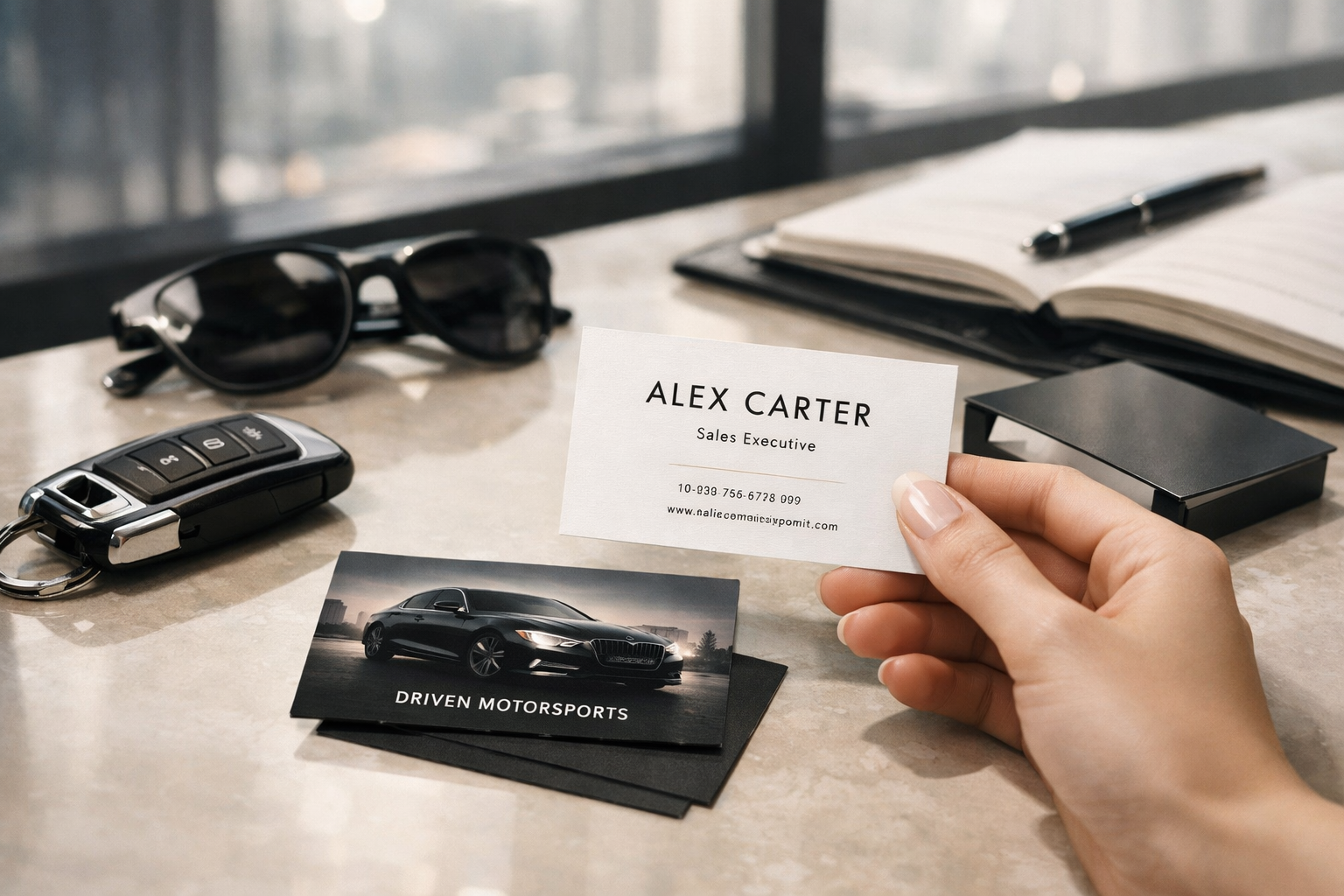
The automotive industry sells some of the most expensive products on earth.
Cars. Trucks. Heavy machinery. Long sales cycles. Multiple decision-makers. Zero impulse buys.
And yet…
one of their most reliable marketing tools still fits in a wallet.
Yep. The business card.
In 2026.
The Weird Thing About “Outdated” Marketing
Marketing loves shiny things:
AI
Automation
Attribution models with 47 tabs
“Omnichannel synergy” (whatever that means this week)
But the automotive industry—arguably one of the most competitive, margin-sensitive industries around—has never fully let go of the basics.
They didn’t abandon business cards.
They just stopped treating them like an afterthought.
Why Business Cards Still Work (Especially in High-Trust Industries)
Car sales aren’t about clicks.
They’re about comfort.
A customer wants to know:
Who they’re buying from
Who they can call
Who’s accountable if something goes wrong
A business card does something digital rarely does in person:
It anchors the relationship.
It says, “I’m real. I’ll still exist tomorrow.”
The Automotive Lesson Most Marketers Miss
Dealers don’t hand you a card and disappear.
They:
Hand you the card
Write their name on it (sometimes their cell)
Circle the service department
Say “Call me directly if you need anything”
That card becomes:
A reminder
A shortcut
A trust signal
Not branding fluff. Utility.
In 2026, Business Cards Aren’t About Contact Info
They’re about context.
The modern business card isn’t:
Name
Title
Company
Phone
It’s:
“This is the person you talk to when things matter”
“This is how you bypass the system”
“This is your human fallback”
That’s why they still work.
Digital Is Fast. Physical Is Memorable.
You’ll forget a LinkedIn connection by lunch.
You’ll find a business card in your jacket six months later and think:
“Oh yeah… this person.”
That moment matters.
Especially in industries where:
Trust > traffic
Relationships > reach
One deal > 1,000 impressions
The Ritner Digital Takeaway
If the automotive industry—built on razor-thin margins and massive competition—still believes in business cards, maybe the lesson isn’t that they’re old-fashioned.
Maybe it’s that not everything effective needs an algorithm.
In 2026, the smartest marketing stacks aren’t all digital.
They’re balanced.
FAQs
Aren’t business cards outdated in a digital-first world?
Only if you treat them like it’s 2009.
Business cards didn’t stop working — lazy business cards did. When used intentionally, they still outperform digital-only follow-ups in face-to-face moments where trust matters.
Why does the automotive industry still rely on business cards?
Because automotive sales are built on:
Long buying cycles
High price points
Human accountability
A business card reinforces who the customer can contact, not just where to click. That’s a trust shortcut most industries underestimate.
When do business cards actually make sense in 2026?
They’re especially effective when:
Sales cycles are longer
Deals involve multiple stakeholders
Relationships matter more than speed
You meet people in real life (events, conferences, client meetings)
If your business relies on trust, clarity, or follow-up — they still work.
What makes a modern business card effective today?
The best cards are:
Simple (no clutter)
Human (direct contact info, not generic inboxes)
Useful (notes, cell numbers, context)
Bonus points if it answers:
“Why would I keep this?”
Should business cards replace digital marketing?
Absolutely not.
They’re not a replacement — they’re a reinforcement.
Digital builds awareness.
Physical builds memory.
The strongest brands use both.
Do business cards still matter for agencies and consultants?
Arguably more than ever.
In crowded markets, a business card:
Humanizes the brand
Makes follow-up easier
Creates a physical reminder in a digital blur
That’s real differentiation in 2026.
Related Reads
〰️
Related Reads 〰️
Are Trifold Brochures Worth the Cost in 2026?
Trifold brochures used to be a marketing staple — but in 2026, are they still worth the investment? With printing costs rising and digital dominating, we break down the real pros, cons, and when testing a more traditional marketing approach might actually give you an edge.
They Don’t Like Those AI Images
AI images are everywhere—but not everyone’s buying in. While some brands embrace sleek, generated visuals, others stick with old-school stock photos because they signal trust and authenticity. This post breaks down why visual preferences aren’t about trends—they’re about what your audience believes when they see your brand.
Why Dealerships Mention Nearby Towns in Their Blog Titles
Local SEO isn’t about defending your ZIP code anymore. It’s about competing where customers are actually searching. In this post, we break down Conquest SEO — the strategy dealerships use to show up in nearby markets, intercept high-intent traffic, and win deals their competitors never see.