
The Simplest Thing a Founder With 90K Followers Did to Have Their Best Quarter Ever
Most founder-led brands have already done the hard part — building a real audience, earning genuine trust, driving consistent traffic. What they're missing isn't more content or a bigger ad budget. It's a mechanism to capture and compound all of that attention. One founder with 90,000 LinkedIn followers and 50,000 monthly visitors just had their best quarter ever after adding a single well-built lead magnet. Here's why it worked — and why the funnel doesn't need to be nearly as complicated as most people make it.
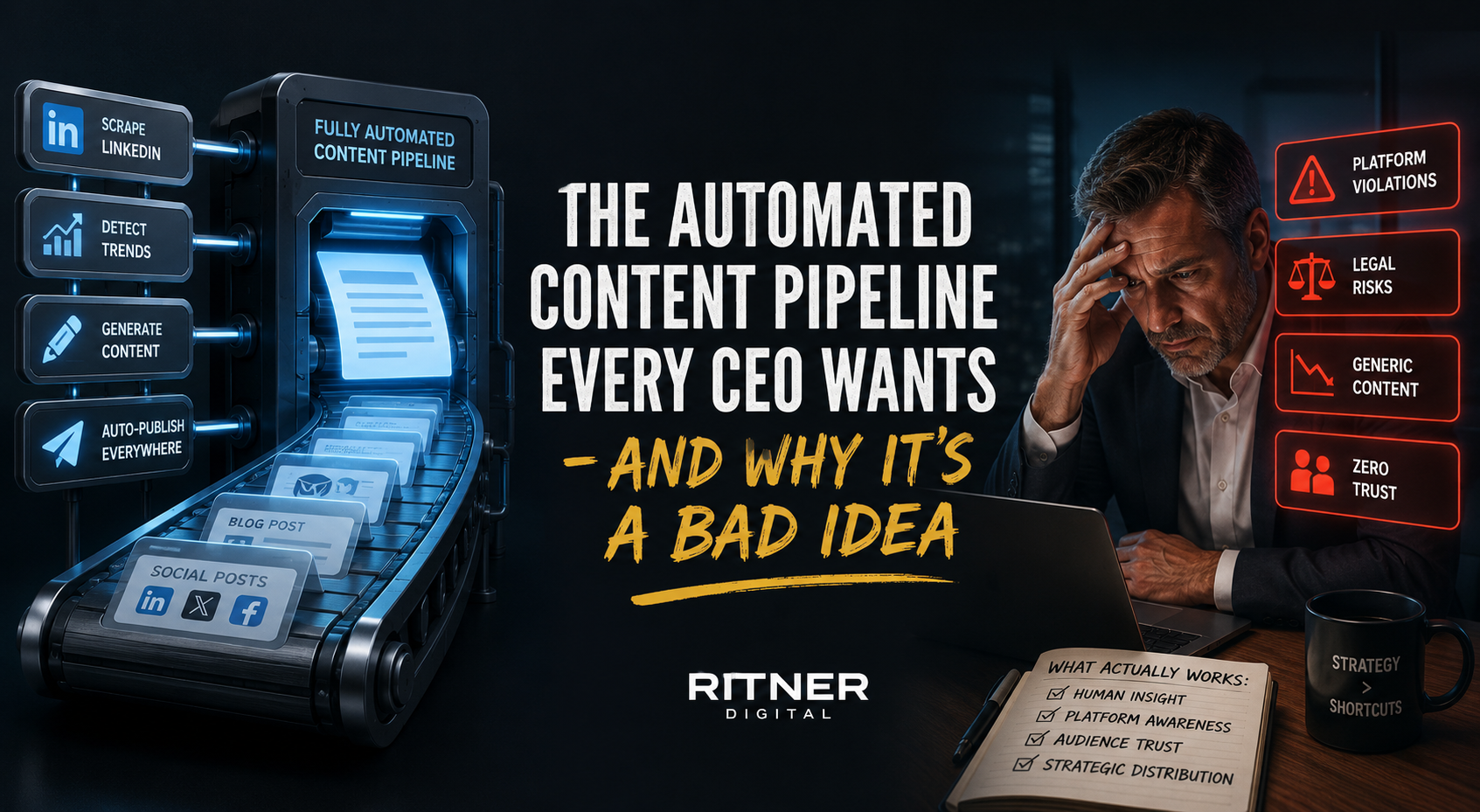
The "Genius" Idea Every CEO Keeps Pitching — And Why It Doesn't Work
There's an idea making the rounds in every boardroom and strategy session right now: build a tool that scrapes LinkedIn, detects what's trending, and automatically writes and distributes your newsletter, blog, and social content. CEOs love it. Solutions architects pitch it. And it fundamentally misunderstands how content, platforms, and audiences actually work in 2026. Here's the honest breakdown of why it fails — and what a smarter version of this idea actually looks like.
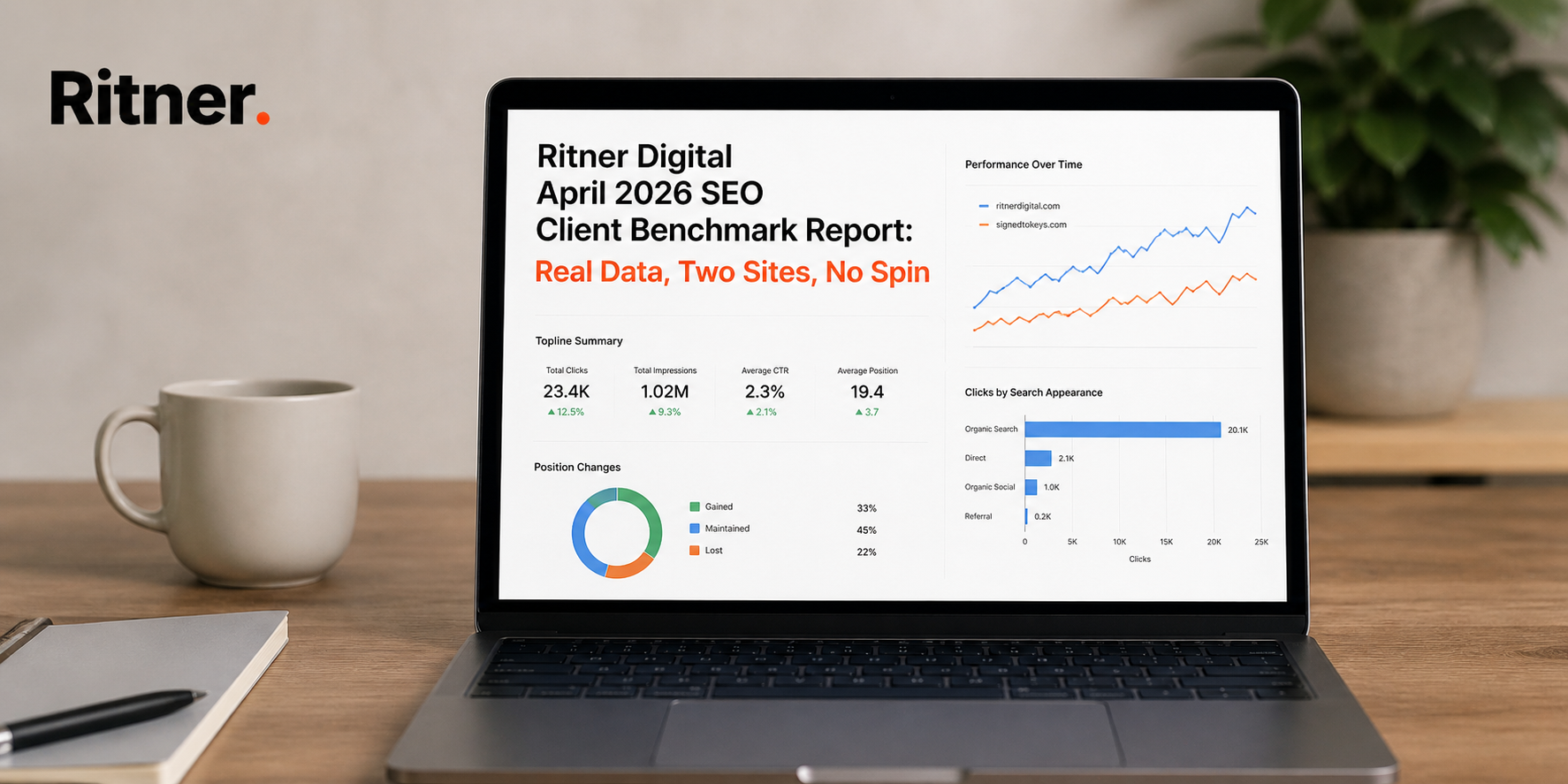
Ritner Digital: April 2026 SEO Client Benchmark Report
We don't believe in hiding the scoreboard. This is the first edition of the Ritner Digital SEO Client Benchmark Report — real GSC data from ritnerdigital.com and client site Signed to Keys, analyzed honestly. Position swings, zero-click search, pricing content as a traffic strategy, and what building an SEO program actually looks like month by month. No spin, no cherry-picked wins.
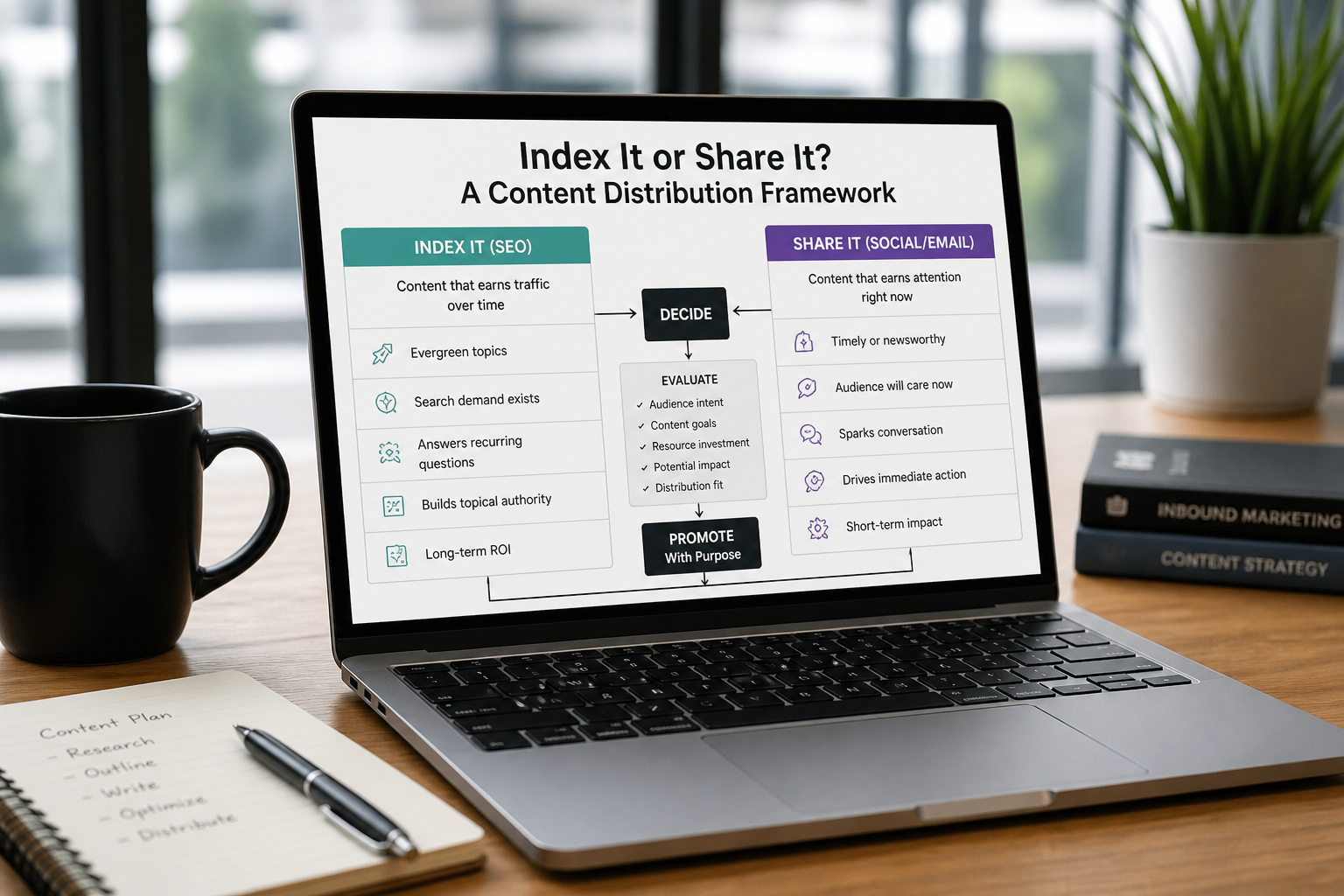
When to Publish and Pray vs. When to Promote: A Content Distribution Framework for High-Output Companies
High-output content teams make one of two mistakes — they share everything everywhere until their audience tunes them out, or they publish consistently and promote nothing. Here's the framework for making the index-vs-promote decision intentionally, so your best content gets the distribution it deserves and your social channels stay focused enough to actually perform.

The Lifecycle of Online Content: How Blogs and Service Pages Actually Perform Over Time
One of the most persistent misconceptions in digital marketing is that publishing a piece of content is the end of the work. You write the blog post. You publish it. You share it once. And then you wait — either for traffic to arrive or for silence to confirm it didn't work — before moving on to the next piece. This treats content like a transaction rather than what it actually is: an asset with a lifecycle. Content doesn't perform the same way on day one as it does on day thirty, day ninety, or two years from now. It moves through distinct phases — discovery, growth, peak, stabilization, and eventual decline — and understanding those phases is what separates organizations that build durable organic traffic from ones that publish constantly without ever accumulating meaningful results.

The Case for Publishing More Content — Even When Your SEO Has Plateaued
At some point in almost every content marketing program, the same thing happens. The early months produce real momentum — traffic climbing, keywords ranking, the dashboard finally showing something to be proud of. Then it slows. The curve flattens. And the question that follows is almost universal: is it still worth publishing? It's a reasonable question. Content takes time, money, and creative energy. But here's what the data consistently shows: the plateau is almost never a signal to stop. It's usually the exact moment right before the compounding begins. And the businesses that quit during it are handing their competitors the most valuable gift available in organic marketing.

Your Content Strategy Should Grow Up With Your Business — Here's What That Actually Looks Like
A client of ours spent years doing foreclosure cleanouts. He was good at it — had the crew, had the temperament, did the work that most people would walk away from. But that chapter of his career is over. Today he wants estate liquidations and hoarding houses — families calling from out of state, handing him $25,000 or $30,000 and saying handle everything, we trust you. Completely different work. Completely different client. Completely different business. The only problem was his marketing didn't know any of that yet. It was still out there attracting foreclosure calls, still ranking for searches he didn't want to be found for, still reflecting a version of the business he'd already moved on from. Updating that wasn't just a website refresh. It was a content strategy built around who the business actually is now — and what that kind of evolution looks like is something every business owner should understand.

When Content Velocity Actually Equals Growth Velocity — And How to Make Sure Yours Does
There's a version of "publish more content" that produced a decade of thin blog posts nobody read. This isn't that. When the keyword strategy is real, the quality floor is held, and the technical foundation is sound, content velocity genuinely does produce compounding organic growth that slower publishing schedules structurally cannot replicate. Here's when it's true, why it works, and what has to be in place for it to hold.