The Staffing Cost Nobody's Counting — How a Bad Municipal Website Drives Phone Calls, Walk-ins, and Repeated Emails
There's an expense buried in every municipal budget that nobody's counting: the staff time spent answering questions the website should be answering. Phone calls about meeting schedules. Walk-ins for forms that don't work on a phone. Emails asking for information that's buried three clicks deep. For a typical New Jersey municipality, the annual cost of these avoidable interactions runs into the tens of thousands of dollars — and it recurs every year. Here's how to estimate what your website is really costing you and why a redesign is a staffing decision as much as a technology one.
What a Municipal Website Redesign Actually Costs — And How to Pay for It Without Blowing Your Budget
A website redesign isn't a surprise expense — it's a plannable one. For New Jersey municipal CFOs facing the DOJ's April 2027 accessibility deadline, the question isn't whether to fund web accessibility work but how. From capital bonding to shared services agreements to phased approaches that spread costs across budget years, the funding mechanisms already exist in New Jersey's municipal finance framework. Here's what the numbers actually look like and how to build a financial plan that works.
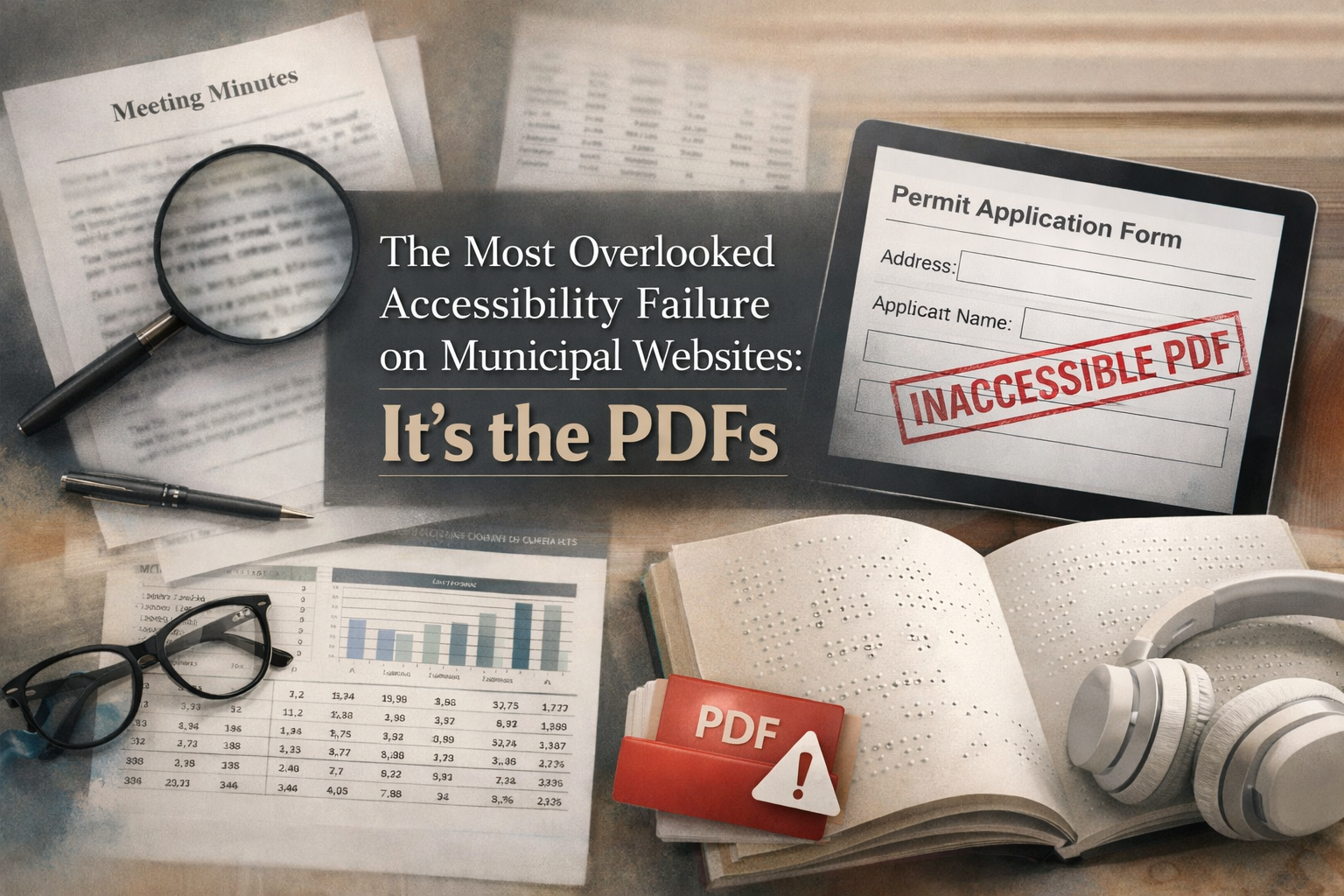
The Most Overlooked Accessibility Failure on Municipal Websites Isn't the Website — It's the PDFs
The biggest accessibility failure on most municipal websites isn't the website — it's the PDFs. Meeting minutes uploaded as scanned images. Permit applications without labeled form fields. Budgets with untagged tables. These documents are what residents actually need, and for many residents with disabilities, they're completely unusable. Here's what makes a PDF accessible, why overlays can't fix it, and how municipalities can start making progress today.
How to Write an RFP for a Municipal Website Redesign That Actually Protects Your Municipality — What to Require, What to Watch Out For, What Contract Language Matters
Your RFP is your protection. It defines what you're buying, how it will be measured, and what happens when the vendor doesn't deliver. Most municipal website RFPs fail on accessibility — vague language, no testing requirements, no remediation obligations, no contract teeth. Here's how to write one that actually protects your municipality and ensures the site you're paying for works for every resident.
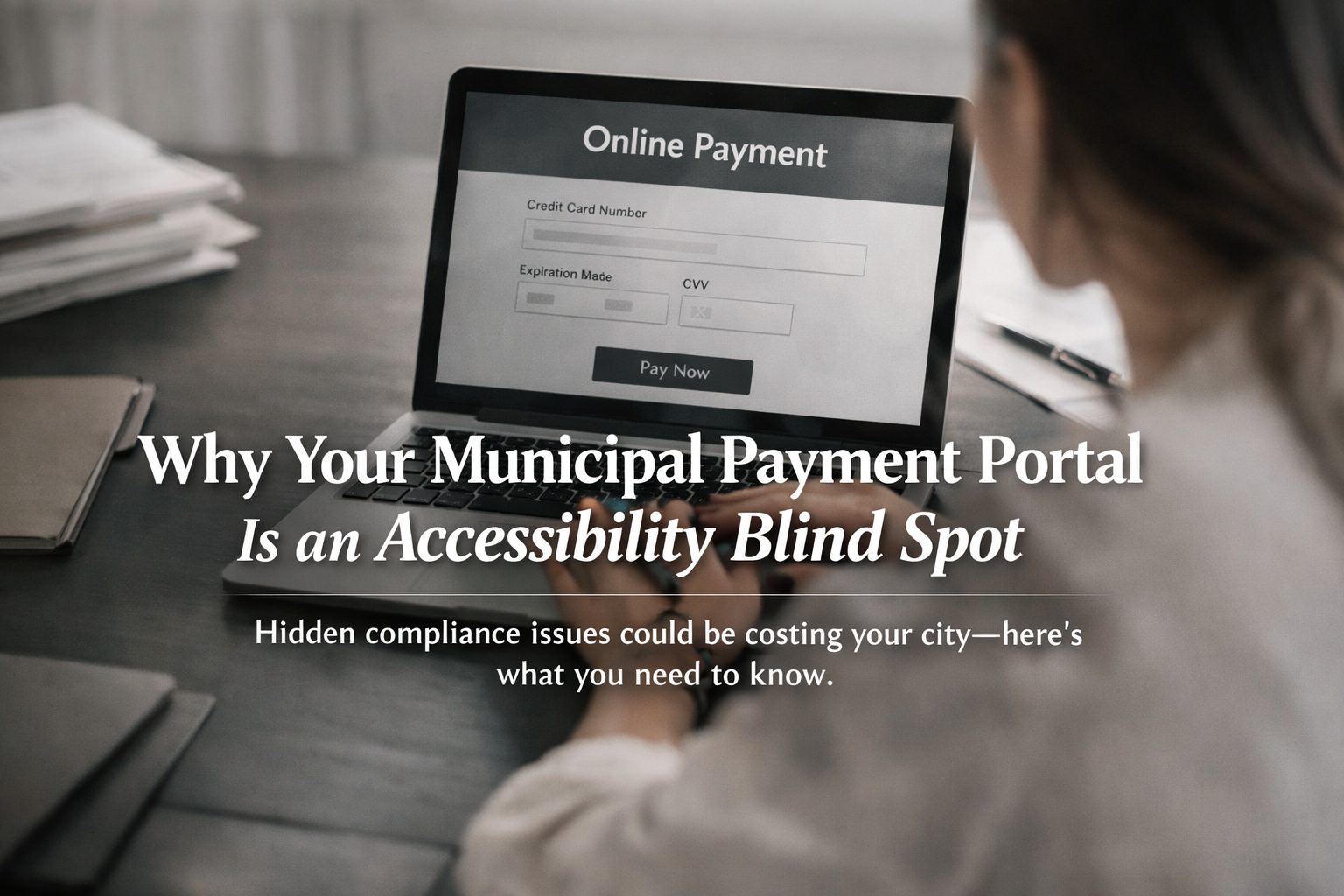
Your Municipality's Payment Portal Is Probably the Least Accessible Part of Your Website — And the Hardest to Fix
Your municipal payment portal is probably the most-used feature on your entire website — and it's almost certainly the least accessible. Dynamic URLs that automated scanners can't follow, iframes that separate the payment experience from the rest of your site, and third-party vendors who may not prioritize accessibility create a compliance blind spot that most municipalities don't even know they have. Here's how the problem works, why it's your responsibility even though it's someone else's platform, and what to do about it.
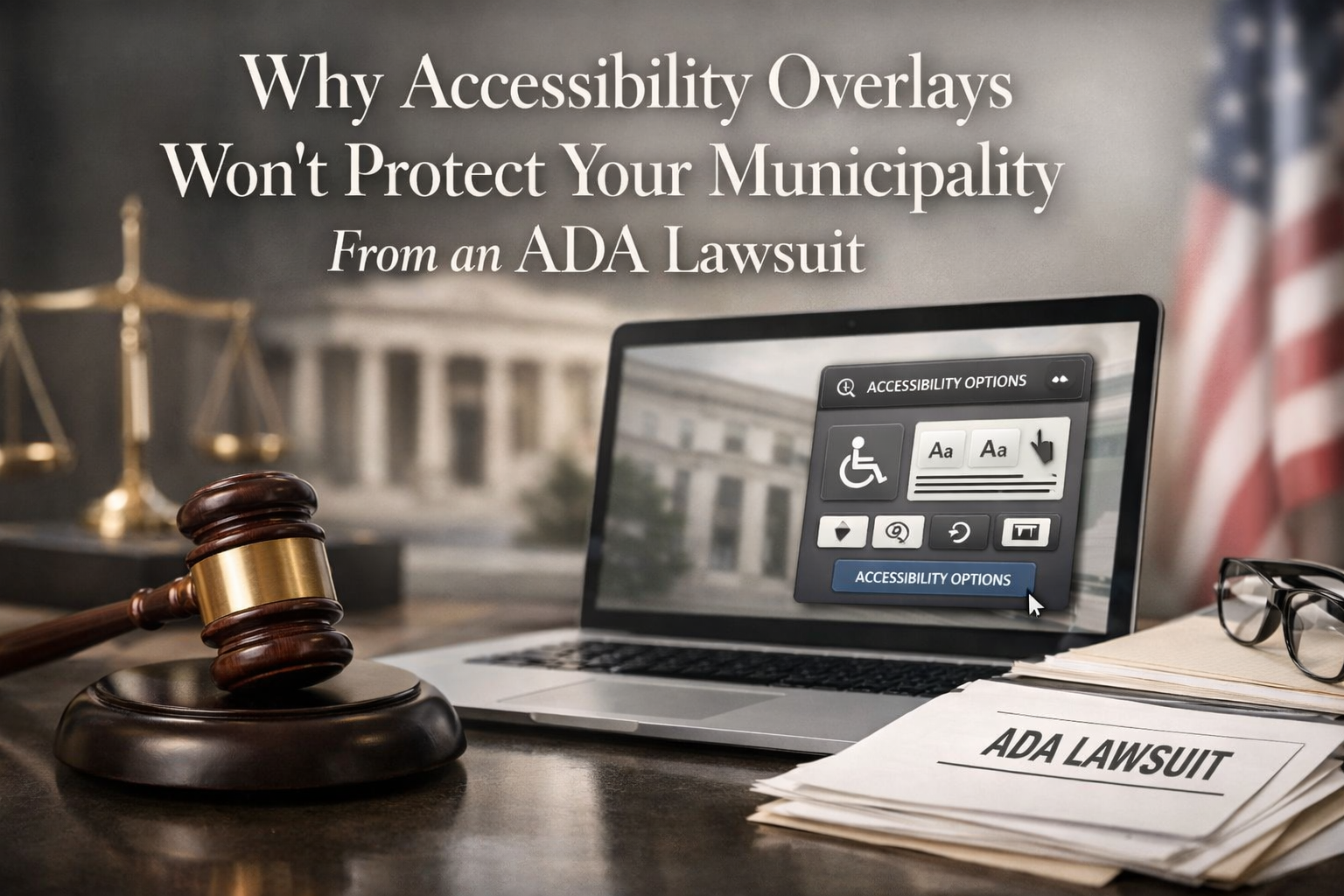
That Accessibility Widget on Your Municipal Website Isn't Protecting You — It's a Liability
If your municipal website has an accessibility overlay — one of those toolbar widgets that promises ADA compliance for a few hundred dollars a year — you need to know the truth: it's not making your site accessible, it's not going to protect you from a lawsuit, and the disability community actively opposes these products. Here's a thorough breakdown of why overlays fail, what the DOJ has said about them, and what your municipality should do instead before the April 2027 deadline arrives.