
AI Writing Leveled the Marketing Playing Field: How Freelancers and Small Businesses Can Build Enterprise-Level Content Engines—and What Agencies Must Do Before 2030
AI is changing the economics of marketing. Freelancers and small businesses can now create content, automate workflows, generate leads, and build digital footprints that once required large teams and agency budgets. This article explores how AI is leveling the playing field—and why agencies that rely on headcount, production volume, or outdated marketing models will need to adapt before 2030.

The Marketing Org Is Being Rewritten. Here's What the New Structure Actually Looks Like.
The channel-based, specialist-siloed marketing org is giving way to something more technically integrated and AI-native. Here's what the new titles actually mean, which roles are under pressure, and how smart teams are reorganizing right now.

The AI Double Standard: Why Marketing Leaders Can't Have It Both Ways
There's a conversation happening in every marketing department, agency pitch deck, and LinkedIn thought leadership post right now. AI is the future. AI will transform your content. You need an AI strategy or you'll get left behind. Then you send them something created with AI assistance — and suddenly it's "low effort." Welcome to the great marketing AI double standard, where the technology is revolutionary in the boardroom and suspect in the inbox.
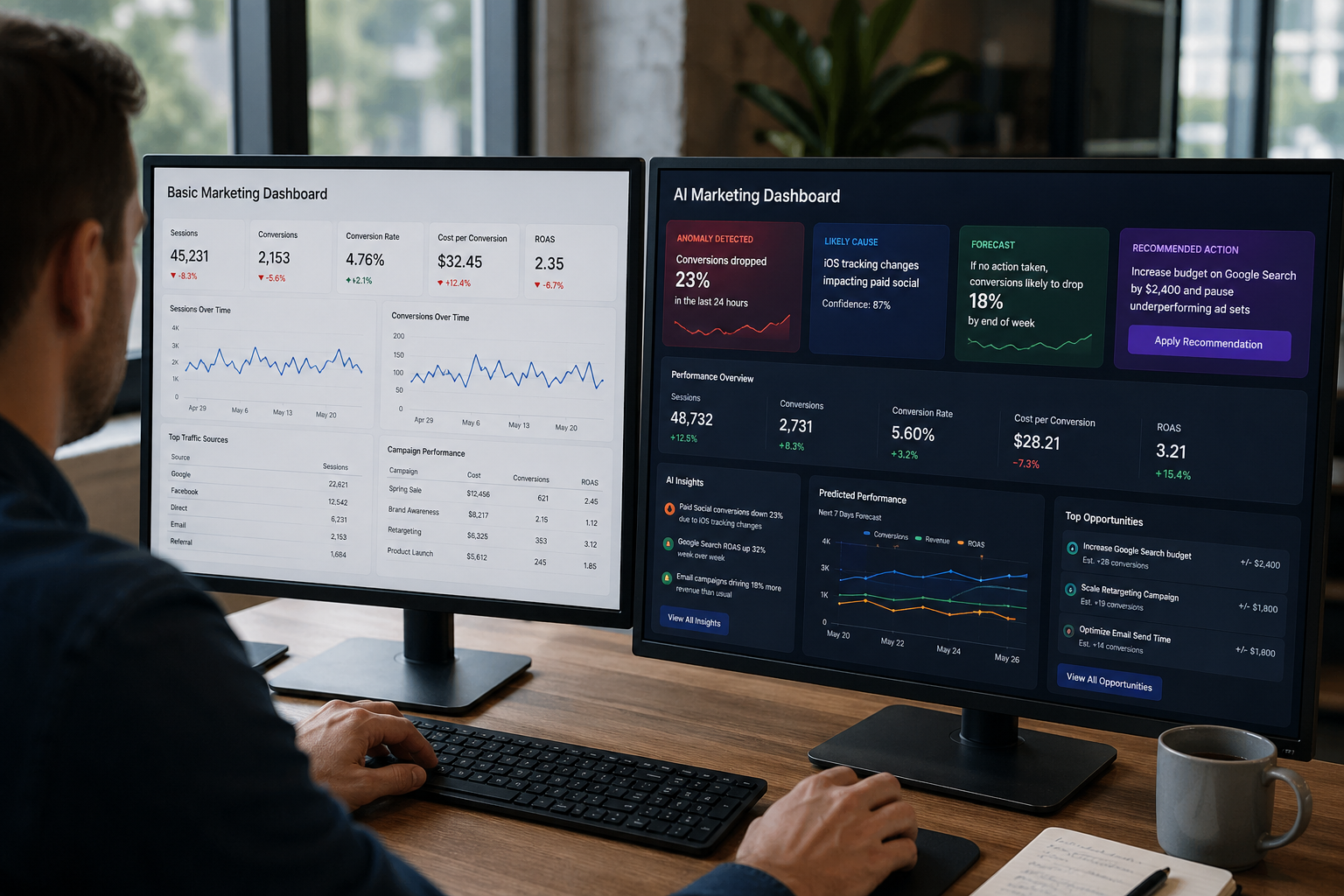
What a Real AI Marketing Dashboard Looks Like vs a Basic One
Most marketing teams have dashboards. Google Analytics, Meta Ads Manager, a Looker Studio report someone built eighteen months ago, maybe a spreadsheet that takes three hours to update every Monday. That's a basic dashboard setup — and it accurately describes what those tools do. They display what happened. They require a human to interpret, investigate, and act. An AI marketing dashboard operates on a different level entirely: it surfaces anomalies the moment they occur, explains likely causes, forecasts what's coming, and recommends the specific action to take. Here's exactly what separates the two — and what the gap is actually costing marketing teams that haven't made the shift.

How Behavioral Targeting with AI Doubles Engagement Rates
Why does an ad for the exact product you were browsing twenty minutes ago feel completely different from an ad for something you've never thought about? Both are ads. Both appear in the same feed. One feels relevant. The other gets scrolled past. That difference is behavioral targeting — and AI has turned it from a useful tactic into the defining competitive advantage in modern digital marketing. Ads using behavioral targeting increase engagement by 50% compared to generic ads. Here's what's driving that number and how to build a system that produces it.
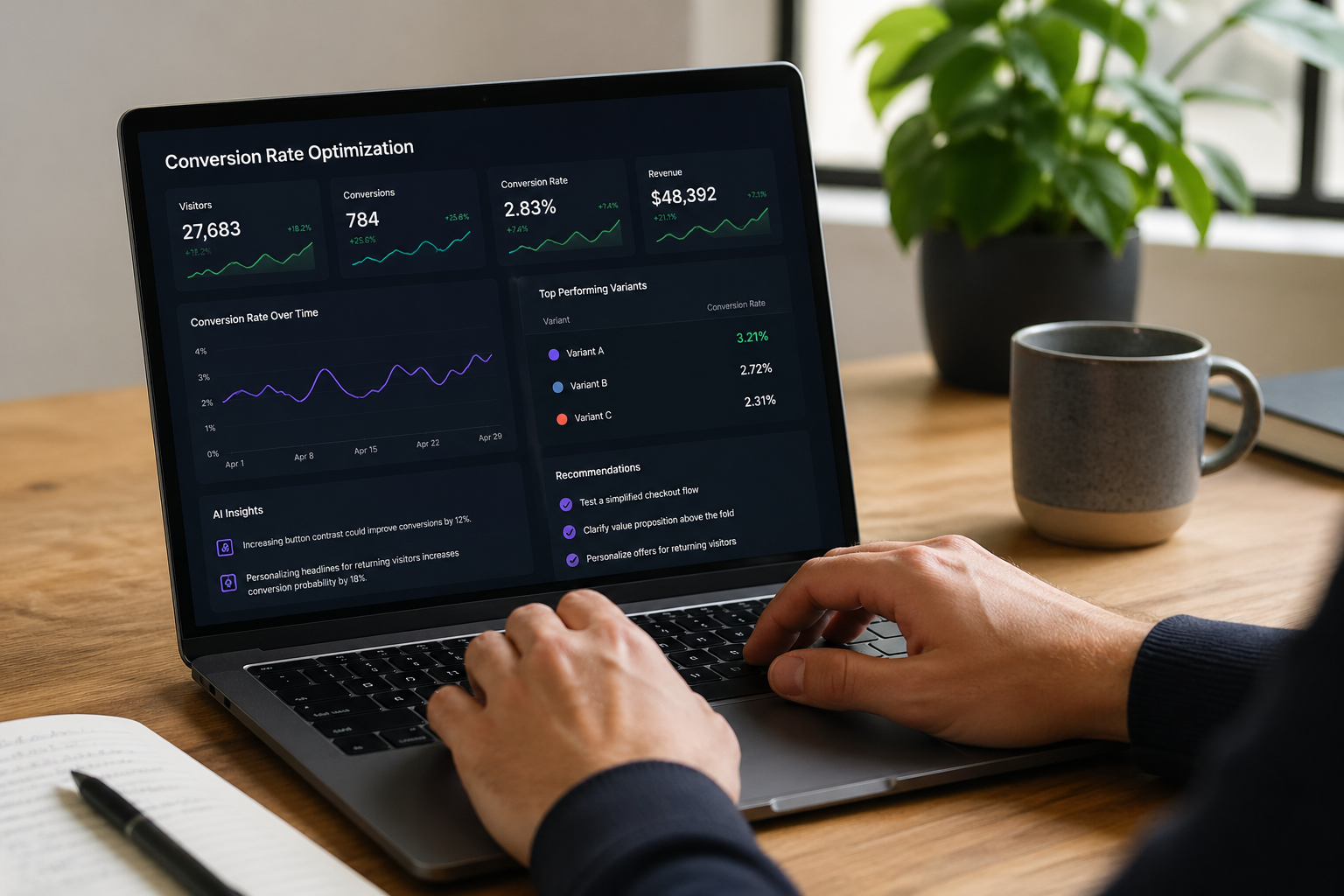
The Beginner's Guide to AI-Powered Conversion Rate Optimization
Most businesses focus the majority of their marketing energy on getting more traffic. But if only 2–3% of that traffic is converting, the highest-leverage opportunity isn't more visitors — it's making the visitors you already have more likely to take action. AI-powered conversion rate optimization does exactly that, using behavioral data, real-time personalization, and automated testing to continuously improve the percentage of visitors who convert — without increasing your ad spend. This beginner's guide breaks down what it is, how it works, and the practical steps to start using it.
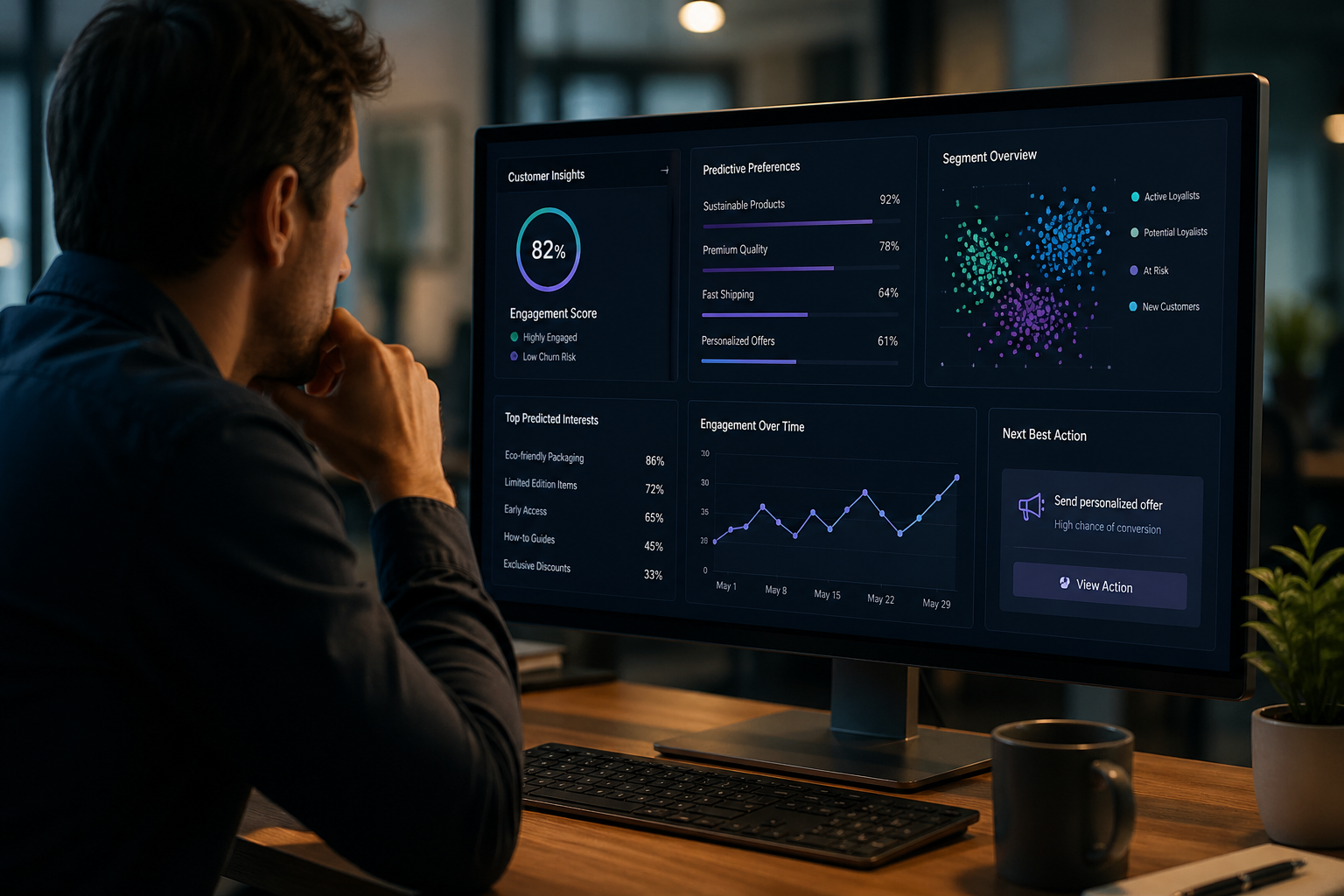
Stop Guessing What Your Customers Want — Let AI Tell You
Every marketing decision is a bet. And most of those bets are based on some combination of experience, instinct, past campaigns, and whatever data happened to be available when the decision was made. Some pay off. A significant portion don't. The ones that don't represent not just wasted budget, but missed opportunities with customers who were genuinely interested and never got the right message at the right moment. AI doesn't guess better — it replaces guesswork entirely with a continuously updating, data-driven picture of what your specific customers actually want. Here's what that looks like, what it costs when you don't have it, and how to build it.

How AI Builds Customer Journey Maps That Actually Reflect Reality
Somewhere in your organization there is probably a customer journey map. It might be a slide in a deck or a diagram on a whiteboard. It shows the stages in a clean, logical sequence with arrows pointing in one direction. It is almost certainly wrong. Not because the people who built it were careless — but because customer journeys were never the linear progressions that traditional maps describe, and AI is finally building something that reflects what customers actually do instead of what teams assumed they were doing. Here's what that looks like, what it discovers, and why the gap between mapped assumption and behavioral reality is costing businesses more than they realize.

What Real-Time Marketing Data Actually Looks Like — And Why It Matters
Most marketing teams will tell you they're data-driven. The problem is the word "last" — last month's report, last week's analytics, last night's CRM sync. In a customer journey that unfolds in seconds, data that arrives hours after the behavior occurred isn't real-time data. It's history. Real-time marketing data captures behavioral signals as they happen, triggers responses within the same session, and powers personalization that actually reflects what a customer is doing right now — not what they did yesterday. Here's what it looks like in practice, what infrastructure it requires, and why businesses that have built it are pulling ahead.

How to Use First-Party Data with AI to Outperform the Competition
Most businesses have plugged in AI tools and called it a strategy. But AI is only as good as the data underneath it — and businesses still relying on fragmented, third-party data are getting mediocre outputs from powerful tools. The competitive advantage in 2026 belongs to businesses that have built proprietary first-party data assets and learned how to activate them with AI. Here's exactly how that works, why it compounds over time, and how to start building the infrastructure that makes it possible.
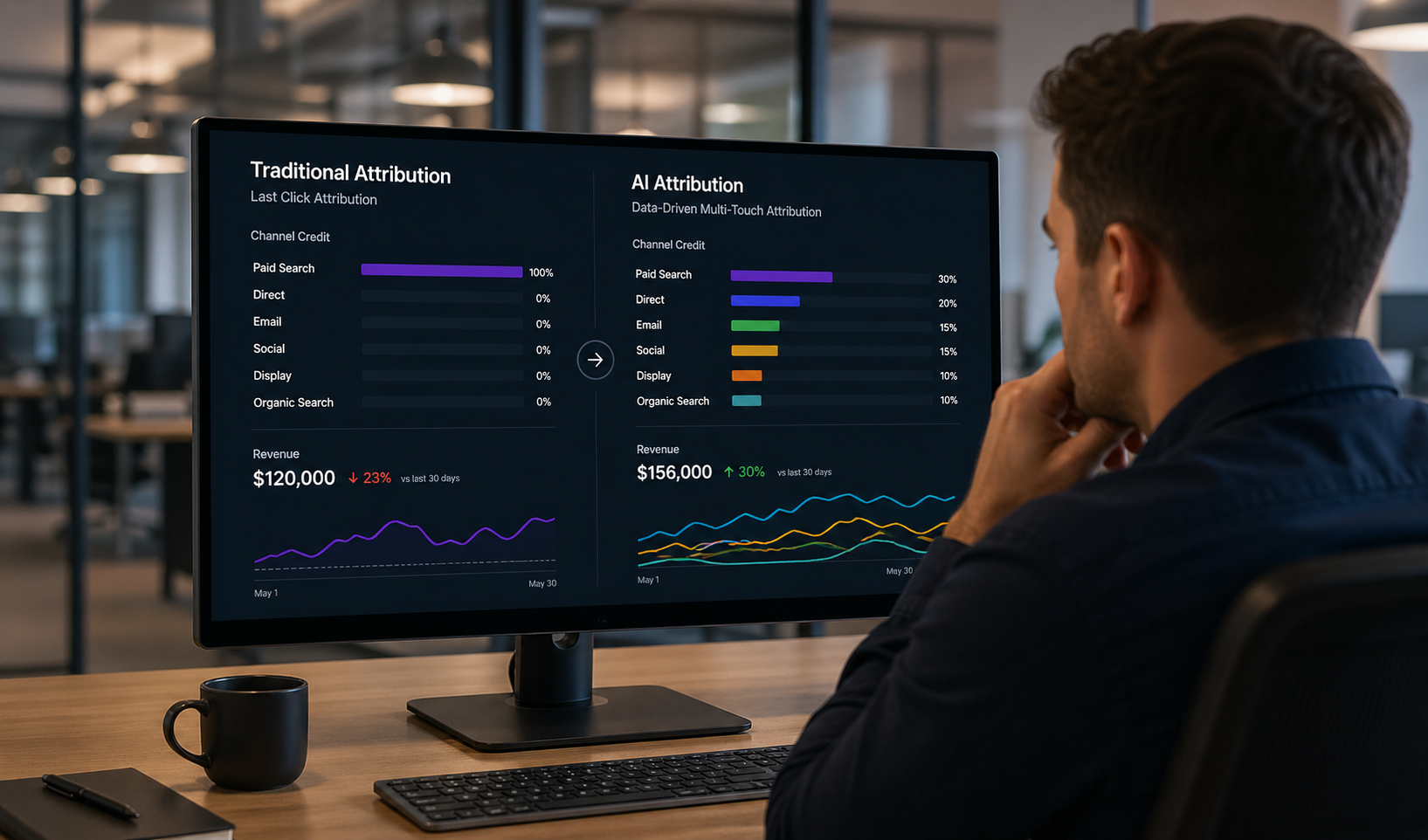
Why Marketing Attribution Is Broken — And How AI Fixes It
Ask any marketing team where their best customers come from and you'll get a confident answer backed by data. In most cases, that answer is wrong. Traditional attribution models — last-click, first-click, even rules-based multi-touch — were built for a buyer journey that no longer exists. They credit what's trackable, ignore what's influential, and systematically misdirect budgets at scale. AI attribution doesn't just offer a better version of the same approach. It changes the methodology entirely — from counting touches to understanding influence. Here's what's broken, why it matters, and how AI fixes it.
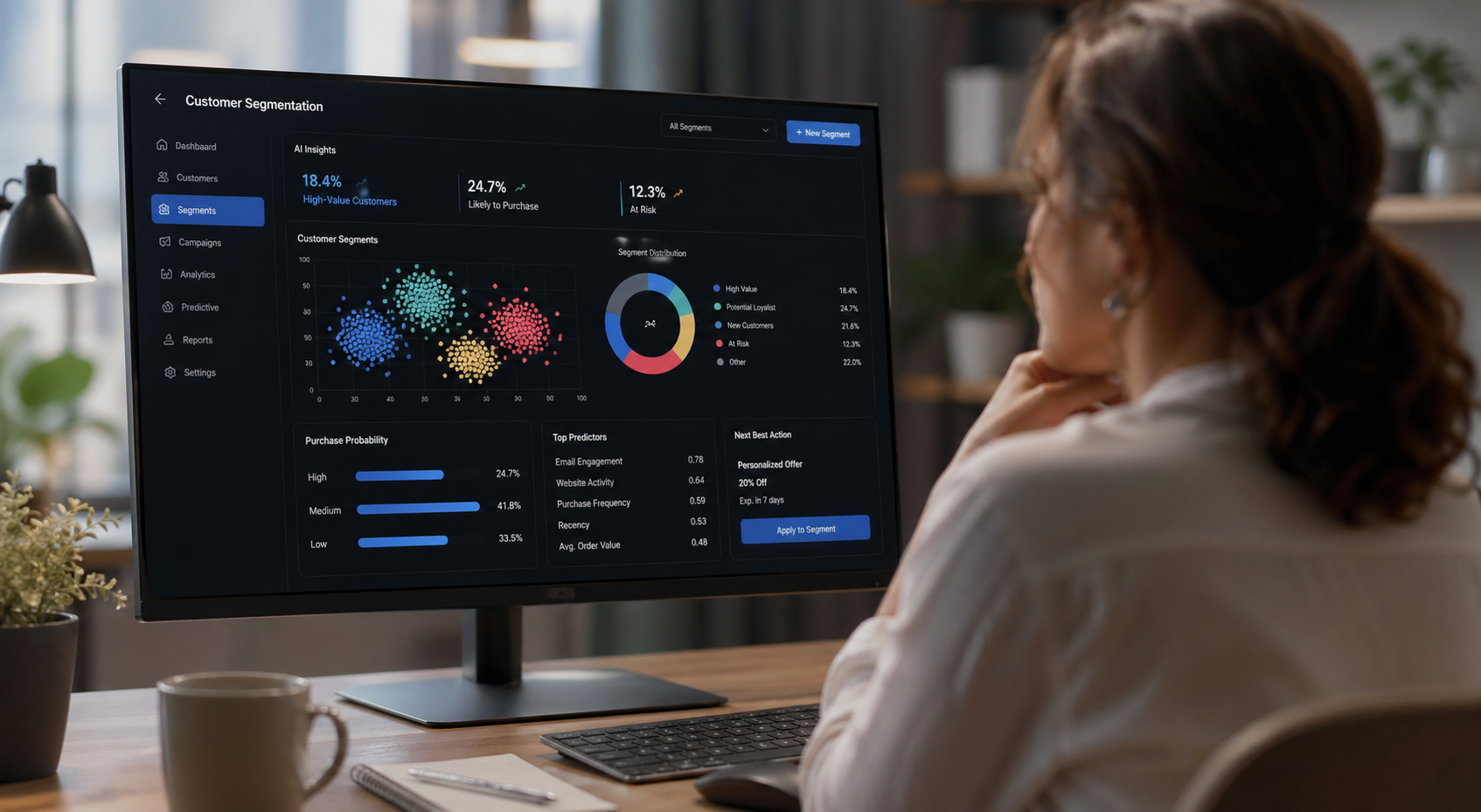
How AI Customer Segmentation Finds Buyers You Never Knew You Had
Your most valuable future customers might already be in your database — browsing your site, opening your emails, and buying occasionally. But traditional segmentation is too blunt to find them. AI customer segmentation uses machine learning to scan hundreds of behavioral signals at once, surface hidden buying patterns, and identify your next best customer before they ever raise their hand. Here's how it works and what it means for your business.
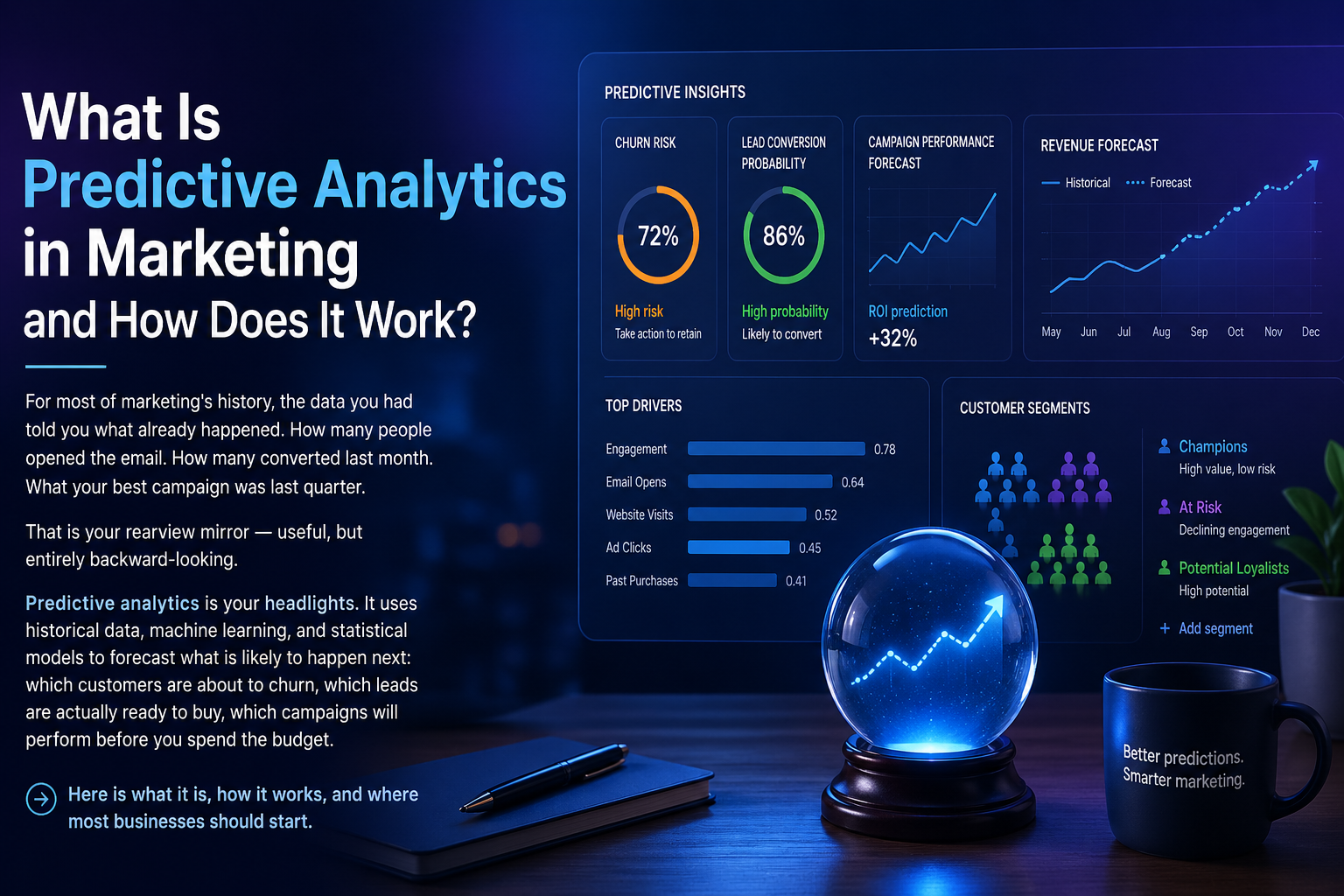
What Is Predictive Analytics in Marketing and How Does It Work?
For most of marketing's history, the data you had told you what already happened. How many people opened the email. How many converted last month. What your best campaign was last quarter. That is your rearview mirror — useful, but entirely backward-looking. Predictive analytics is your headlights. It uses historical data, machine learning, and statistical models to forecast what is likely to happen next: which customers are about to churn, which leads are actually ready to buy, which campaigns will perform before you spend the budget. Here is what it is, how it works, and where most businesses should start.
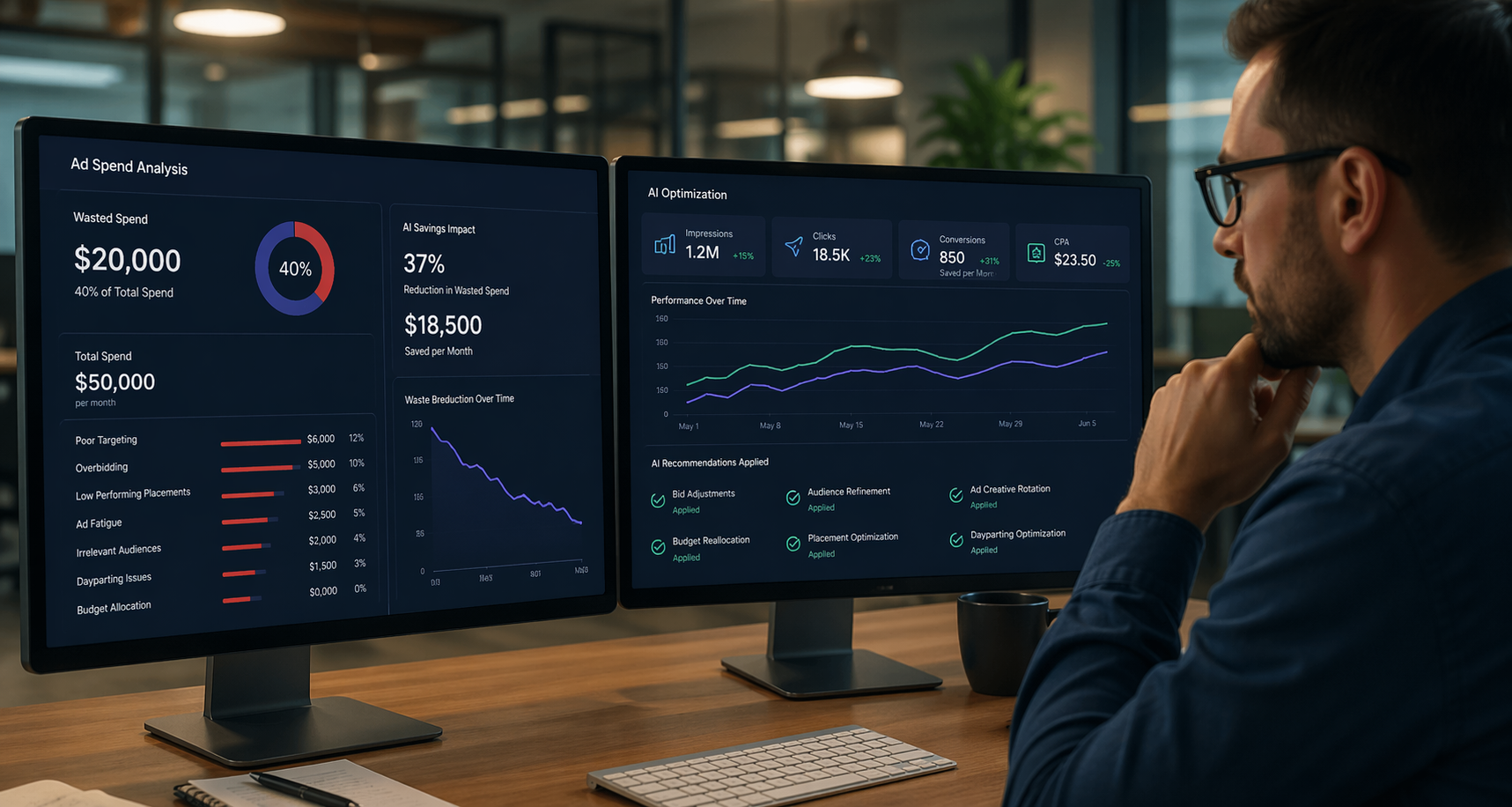
How AI Cuts Wasted Ad Spend by 40% (Real Numbers)
The average advertiser wastes 35 to 40% of their ad spend on ineffective campaigns. For a business spending $50,000 a month, that's $20,000 every month going nowhere. AI-driven bid management alone reduces wasted spend by around 37% — but the full efficiency picture covers seven distinct waste categories, each with a specific AI intervention. Here's where the waste comes from and exactly how AI eliminates it.

What Is Programmatic Advertising and Why Should You Care in 2026?
Most businesses running digital ads are already buying programmatically — they just don't realize it. And the 90% of digital display spending that flows through programmatic channels includes far more than Google and Meta. Connected TV, digital out-of-home, premium publisher networks, audio — all accessible through the same real-time bidding infrastructure. Here's what programmatic advertising actually is, how it works, what AI has changed, and why it matters for your business in 2026.
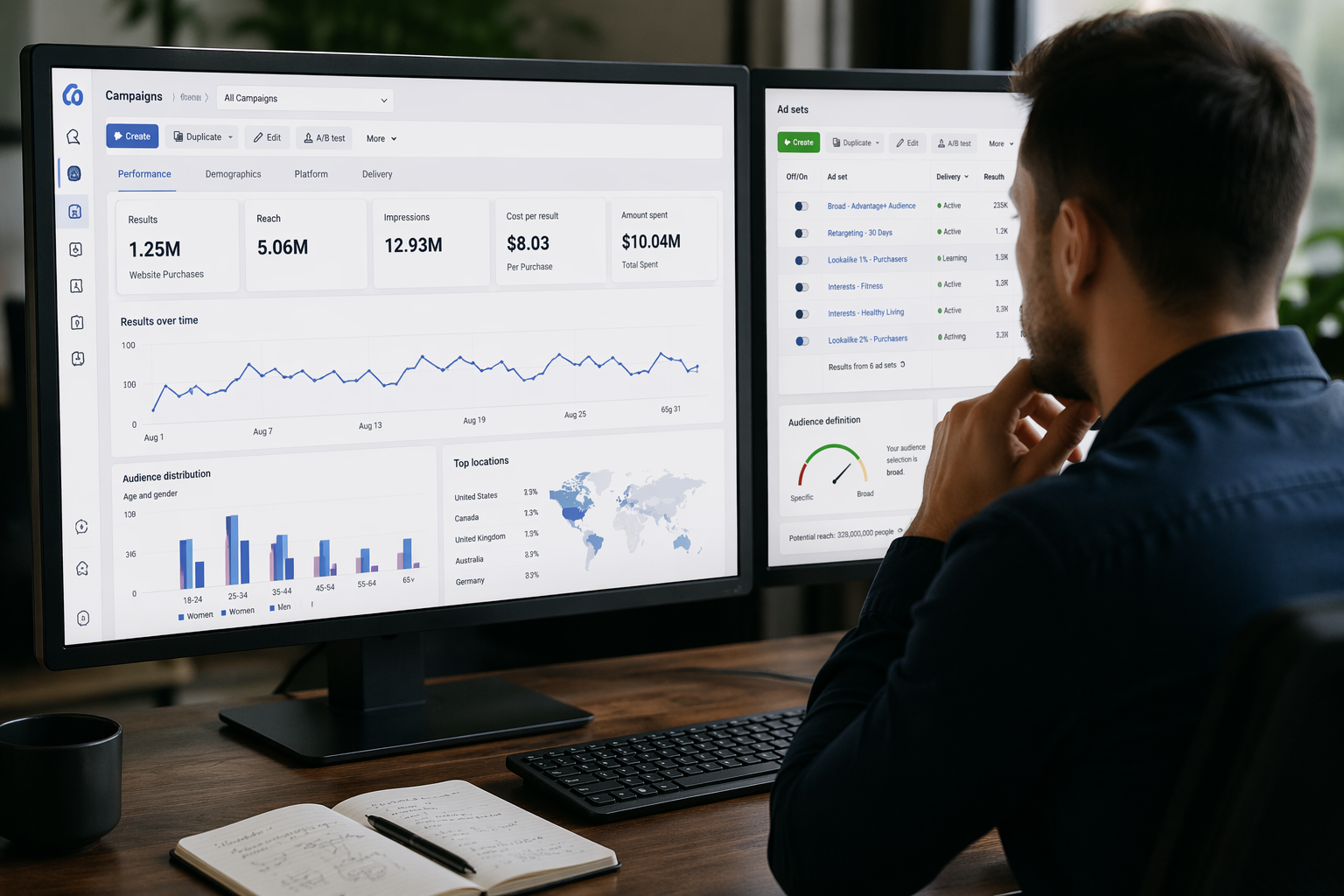
How Machine Learning Is Changing Facebook Ad Targeting Forever
Meta's Andromeda system. Advantage+ Audience. Consolidated interest categories. Creative-level machine learning. The Facebook ads platform that experienced advertisers built their skills around has fundamentally changed — and the advertisers fighting to maintain manual targeting control are increasingly fighting the platform's own optimization systems. Here's what changed, why it changed, and how to build a Meta ads program that works with the algorithm instead of against it.
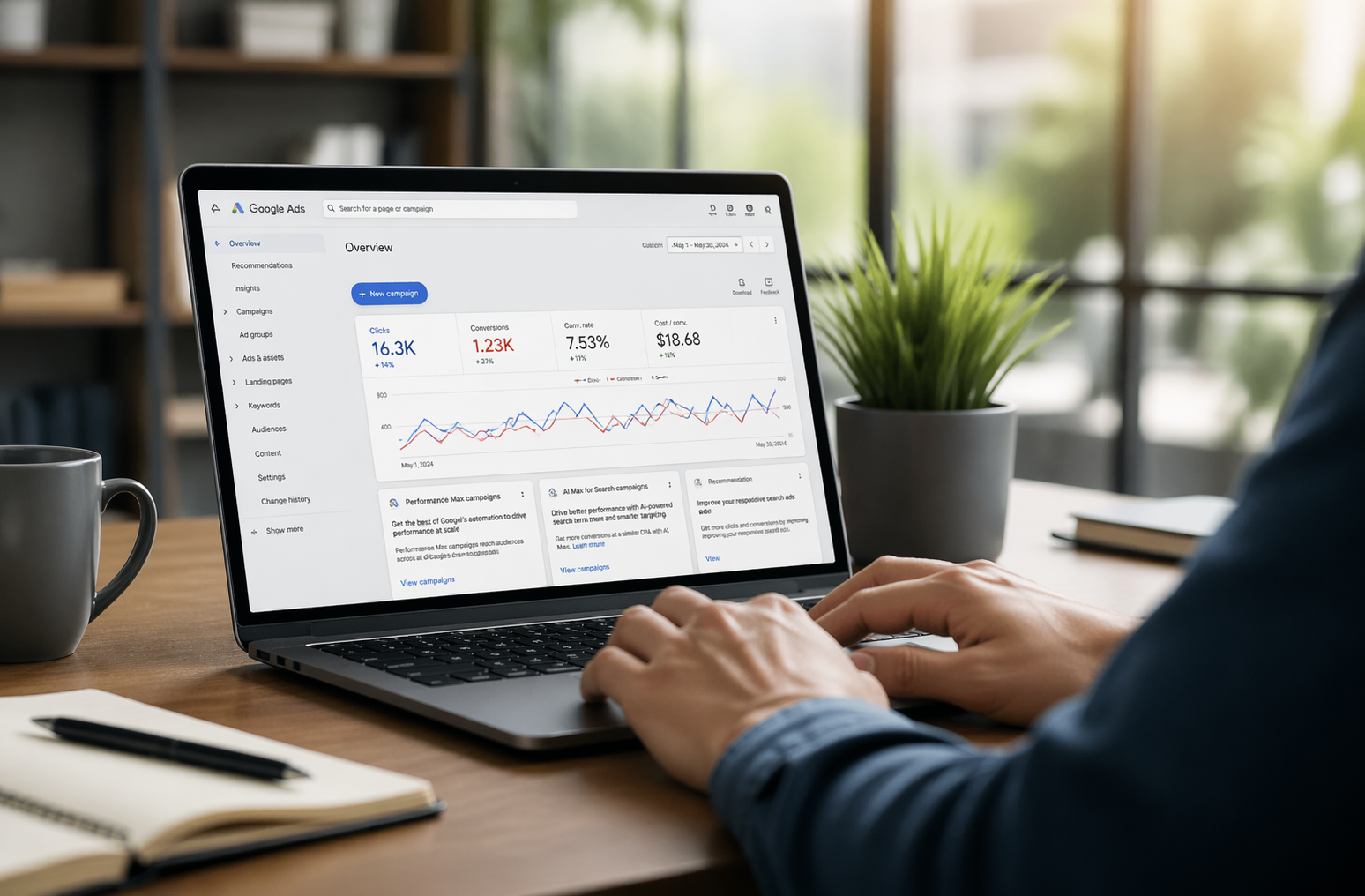
Why AI-Managed Google Ads Outperform Manual Campaigns Every Time
Performance Max now drives 62% of all Google ad clicks. AI Max campaigns deliver 14–27% more conversions while requiring 73% less management time. The businesses losing ground in paid search aren't the ones using AI — they're the ones still managing campaigns like it's 2018. Here's why AI-managed Google Ads have a structural performance advantage, what that advantage actually requires to work, and where human oversight still makes the difference.
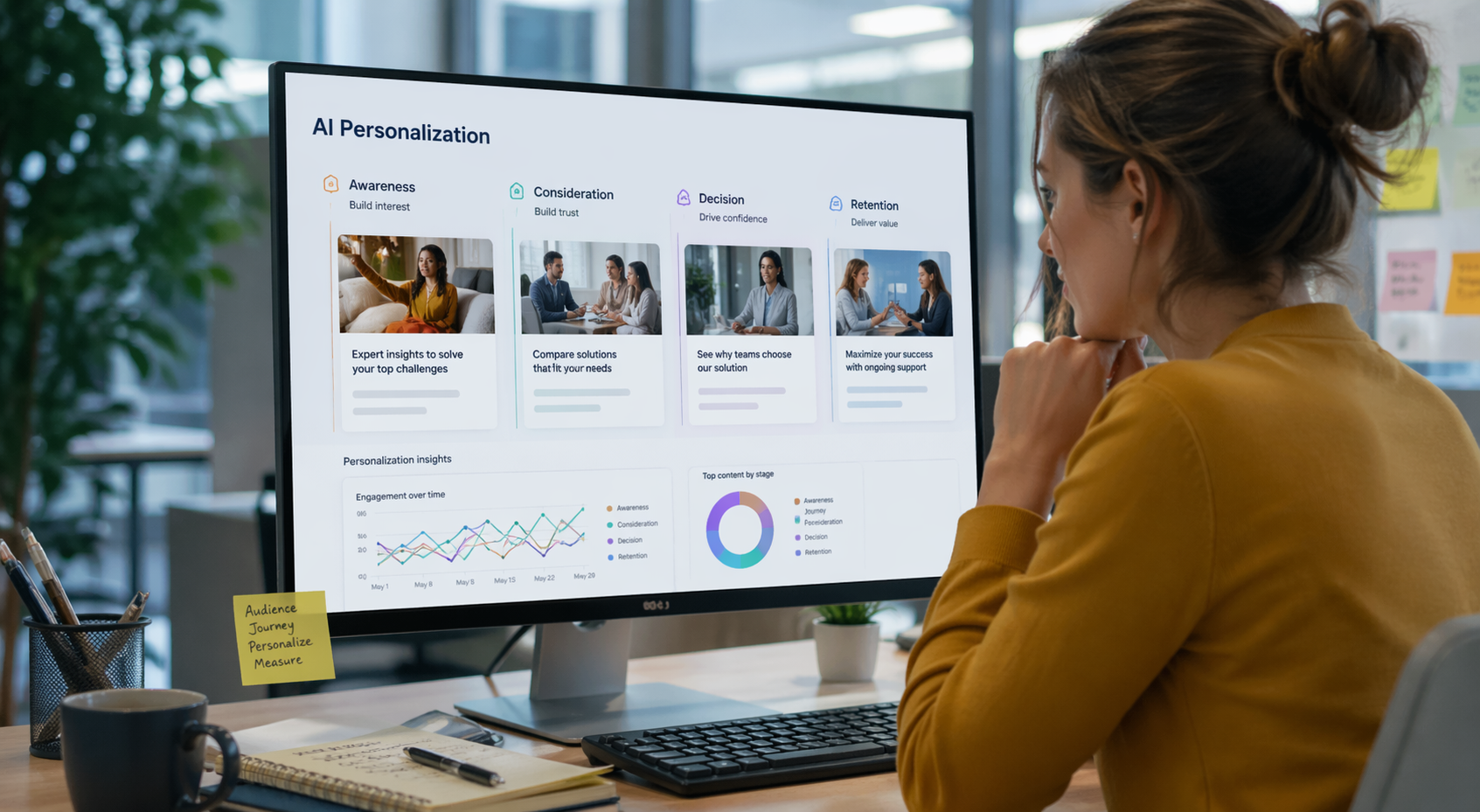
How to Use AI to Personalize Content for Every Stage of the Funnel
Buyers in 2026 bounce between AI search results, comparison pages, and your pricing page before your sales team even knows they exist — and when they do show up, they expect you to already understand their situation. Generic funnel content doesn't just underperform. It signals you don't. Here's how to use AI to personalize content at every stage of the buyer journey, from awareness through retention, with specific tactics and the data infrastructure to make it work.
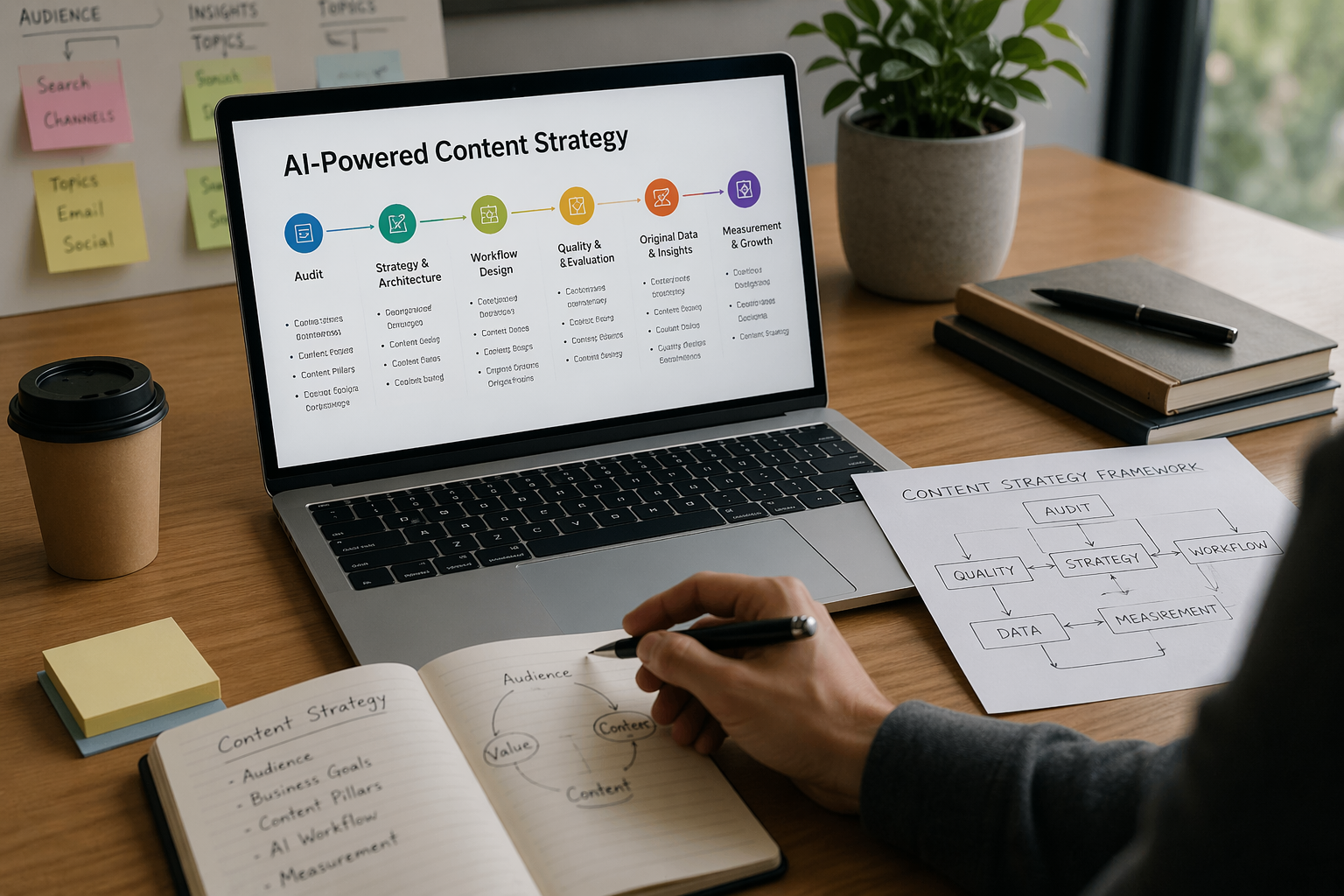
How to Build an AI-Powered Content Strategy from Scratch
Most businesses adopt AI writing tools, start producing more content, and then wonder why results aren't improving. The problem isn't the tools — it's the absence of a strategy connecting them to business outcomes. This guide walks through every step of building an AI-powered content strategy from scratch: audit, architecture, workflow design, quality gates, original data, and measurement — so your content program actually compounds in value instead of adding to the noise.

How AI Marketing Agencies Create 10x More Content Without Sacrificing Quality
Companies using AI publish 42% more content per month. Teams at full AI workflow maturity produce five to ten times more content at 75 to 85% lower cost per article. And the gap between businesses that have built AI-integrated content programs and those still operating on legacy production models is widening every month. Here's the workflow architecture, the quality safeguards, and the human-AI division of labor that makes 10x content production actually work.