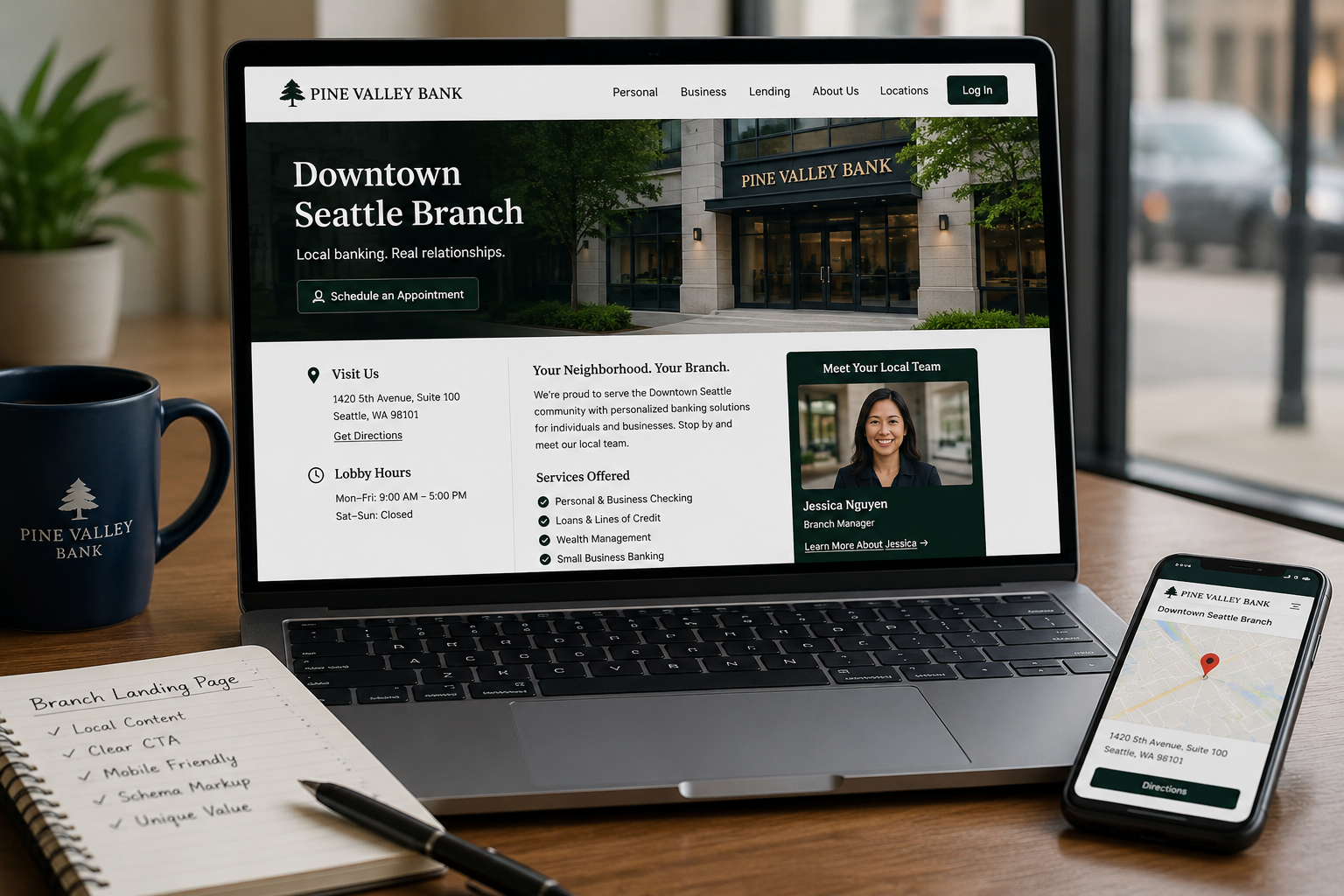
How to Use Localized Landing Pages to Drive Branch Traffic
A generic locations page with an address and a map wastes some of the highest-intent traffic a bank ever gets. This guide breaks down what actually belongs on a branch landing page — genuinely local content, a single clear call to action, mobile-first design, and the structural elements that help each page both rank and convert — plus how to scale a program across many branches without falling into the duplicate-content trap that undermines most multi-location page strategies.
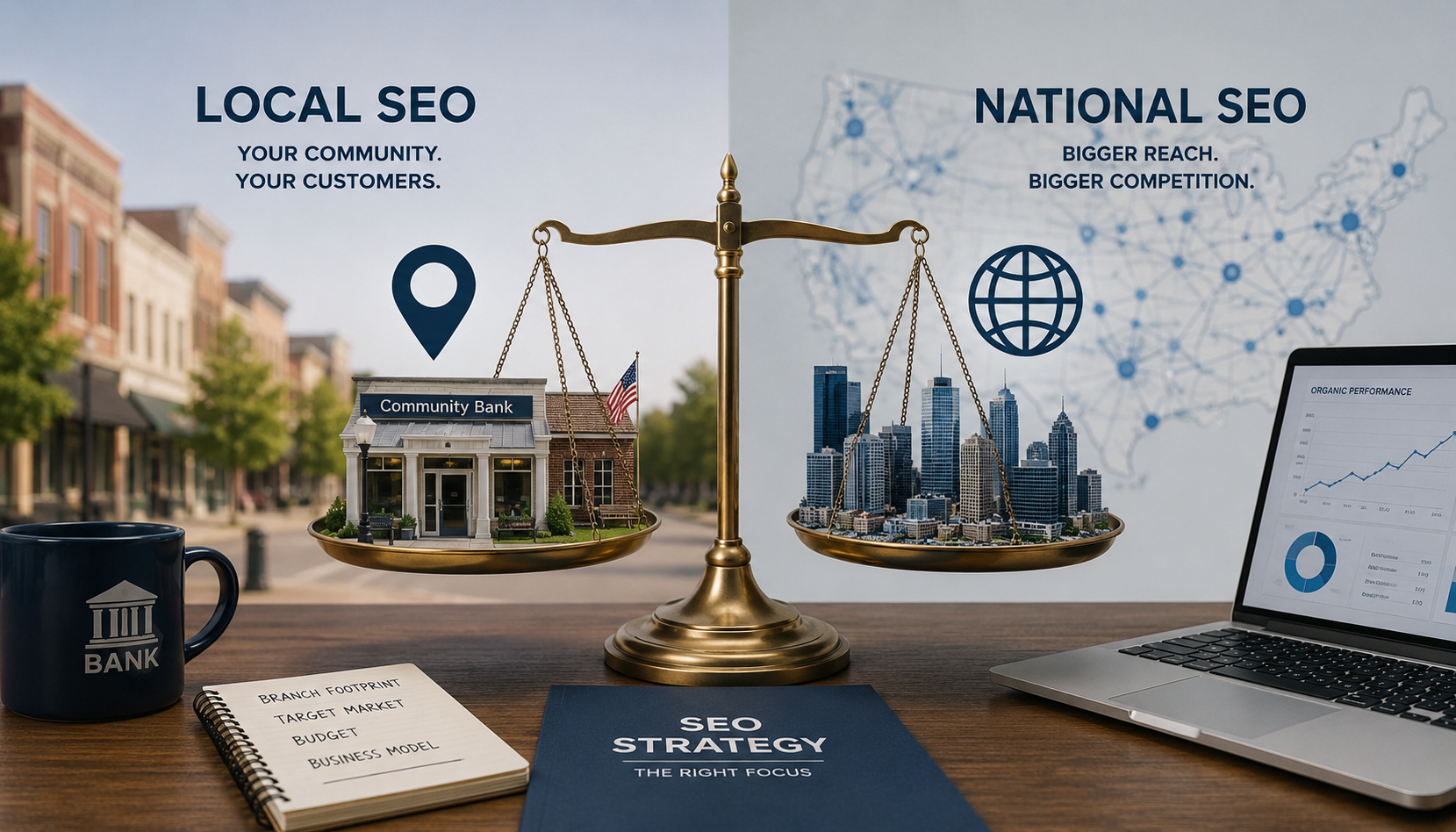
Local SEO vs. National SEO: Which Strategy Should Your Bank Prioritize?
Most banks default to chasing high-volume national keywords — and for the majority of community and regional institutions, that's the wrong place to spend a limited budget. This guide breaks down when local SEO should dominate your strategy, when national SEO actually makes sense, and how the right split changes based on your branch footprint, market, and business model — from single-market community banks to digital-only neobanks.
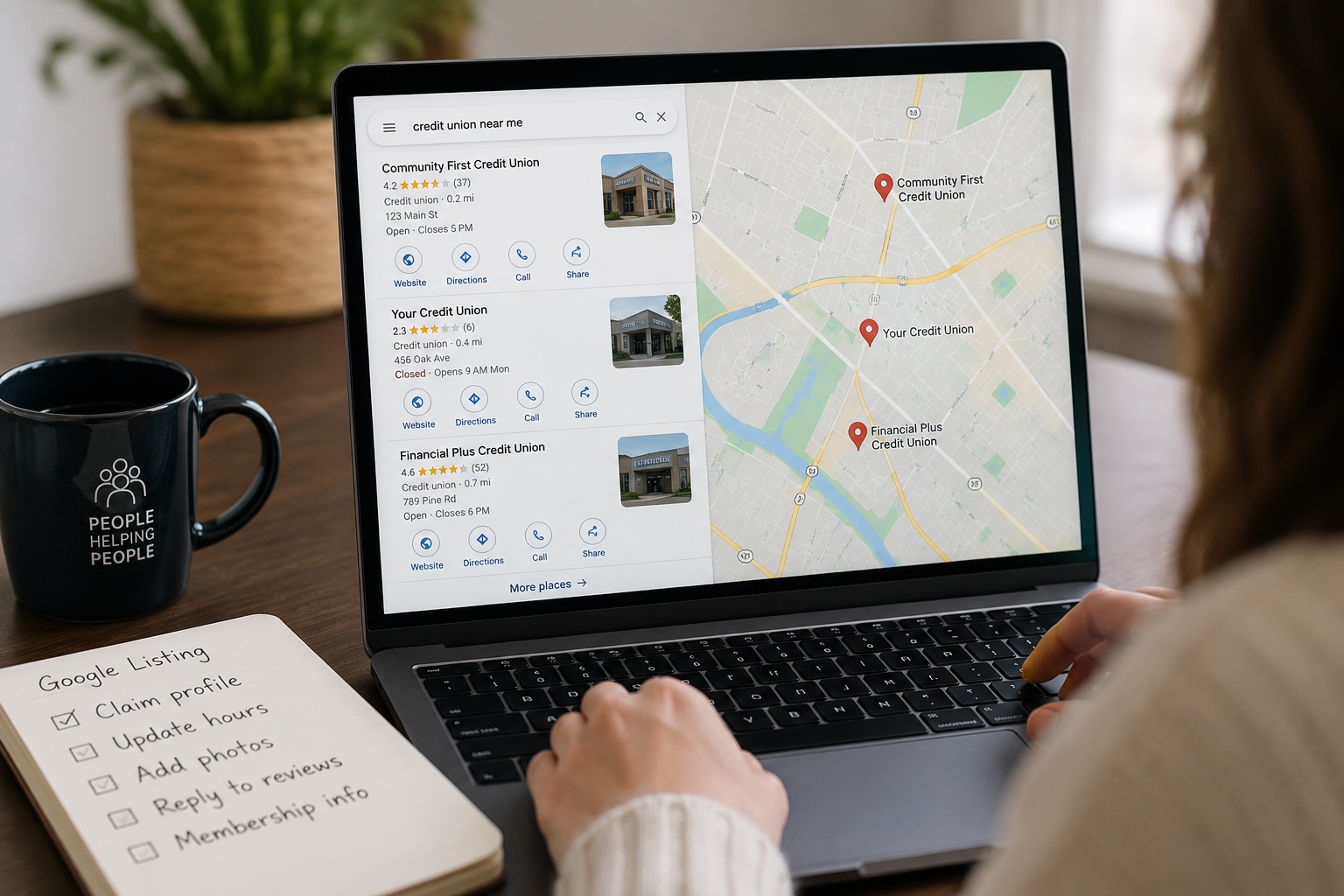
Why Your Credit Union's Google Maps Listing Is Losing You Members
Your credit union's biggest growth obstacle might not be rates or marketing spend — it could be a handful of small, invisible errors on your Google Maps listing. This guide breaks down the specific mistakes quietly costing credit unions new members: unclaimed and duplicate profiles, outdated hours, incomplete categories, unanswered reviews, missing membership eligibility information, and more — plus a clear, prioritized order for fixing them.
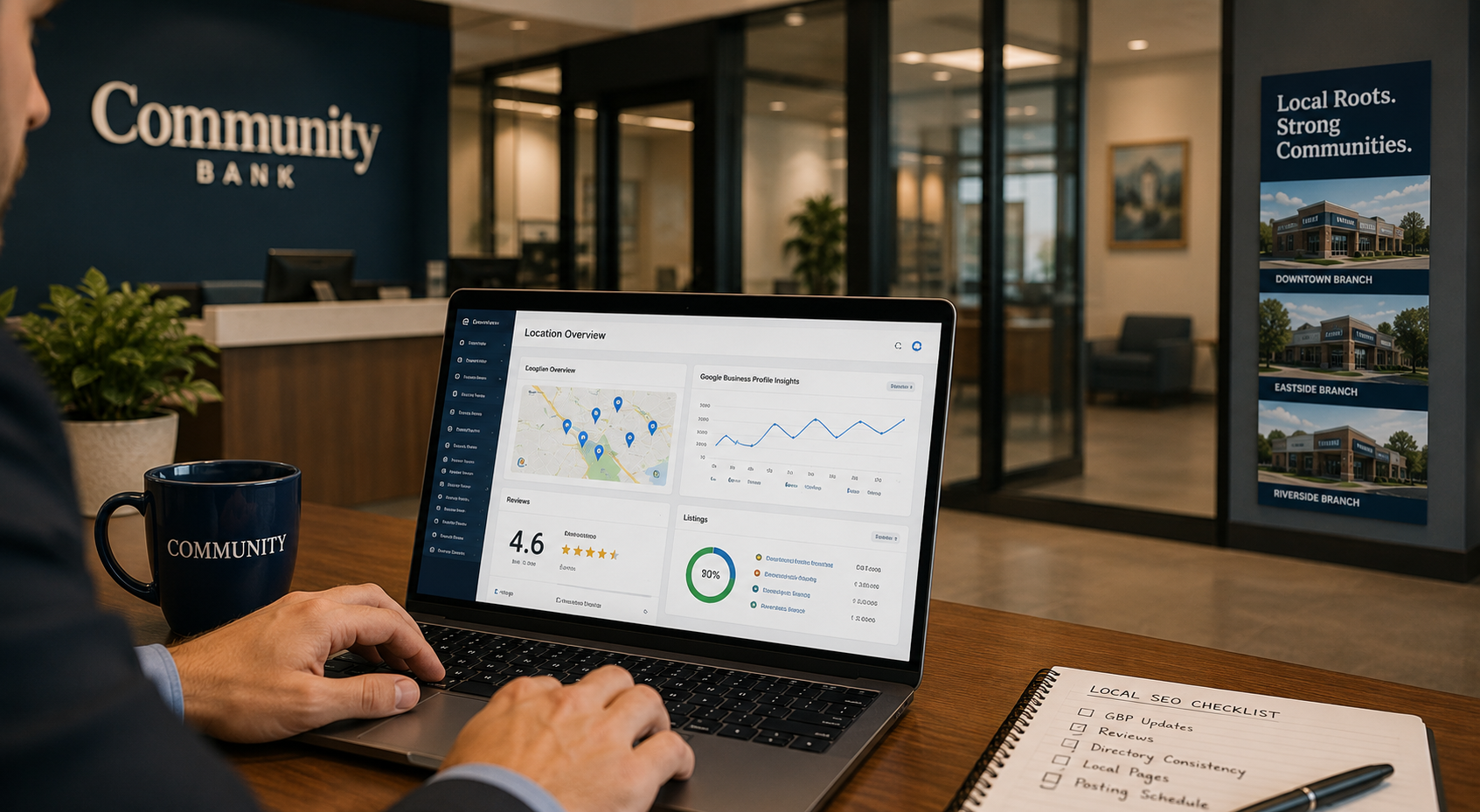
How to Manage Local SEO Across Multiple Bank Branches
Most multi-branch banks don't have a local SEO strategy problem — they have a management problem. This guide focuses on the operational side: how to assign real ownership across corporate and branch teams, build a repeatable weekly and monthly rhythm, choose the right level of tooling for your network size, and set up compliance-aware governance so every branch stays consistent, not just the ones with an especially engaged manager.
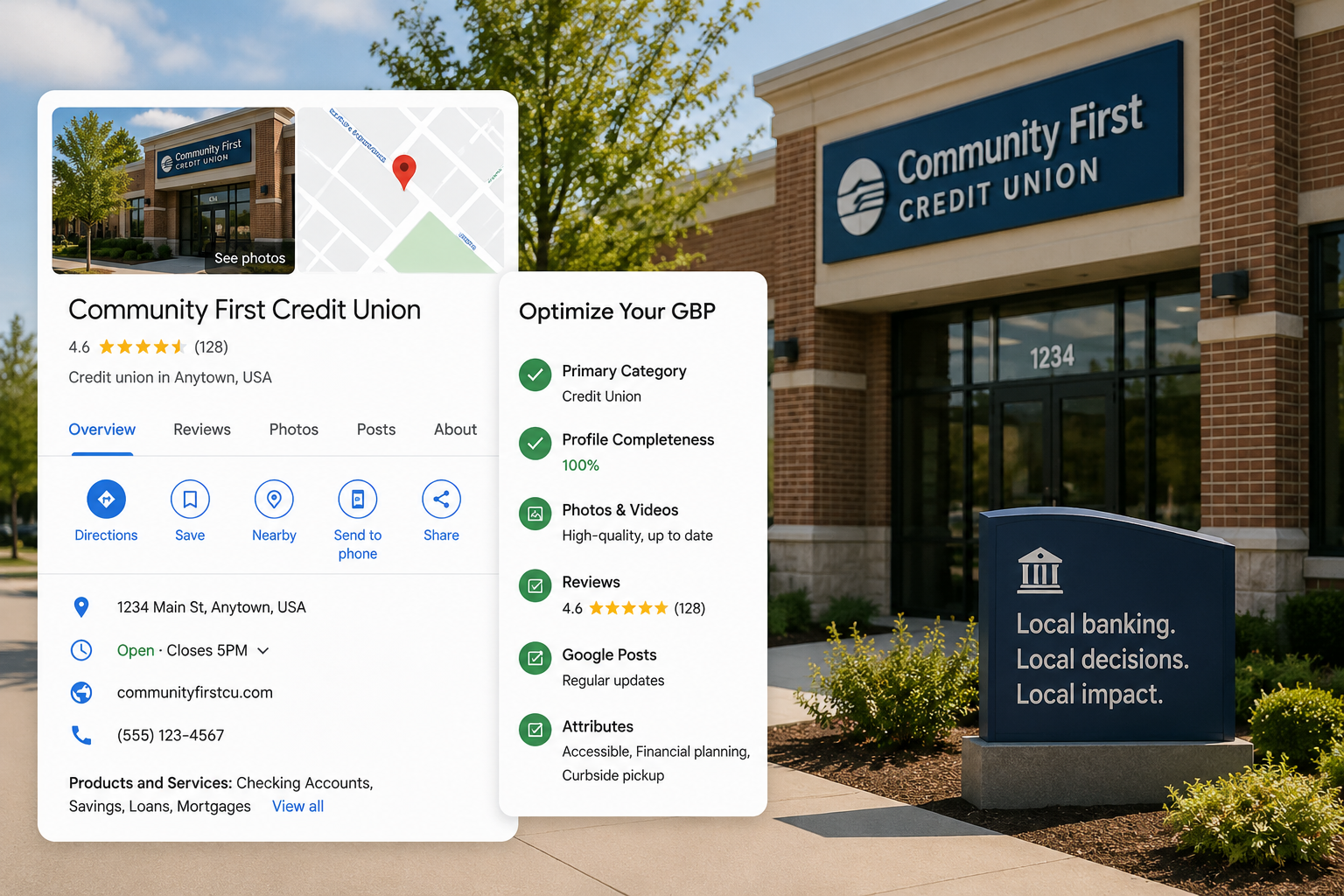
Google Business Profile Optimization for Banks and Credit Unions
Google Business Profiles appear in nearly 9 out of 10 local-intent searches, making it one of the most valuable — and most neglected — assets a bank or credit union controls. This guide breaks down what actually moves local rankings for financial institutions in 2026: category selection, profile completeness, attributes, review management, and the AI-driven signals now shaping which branches get surfaced before a customer ever visits the website.
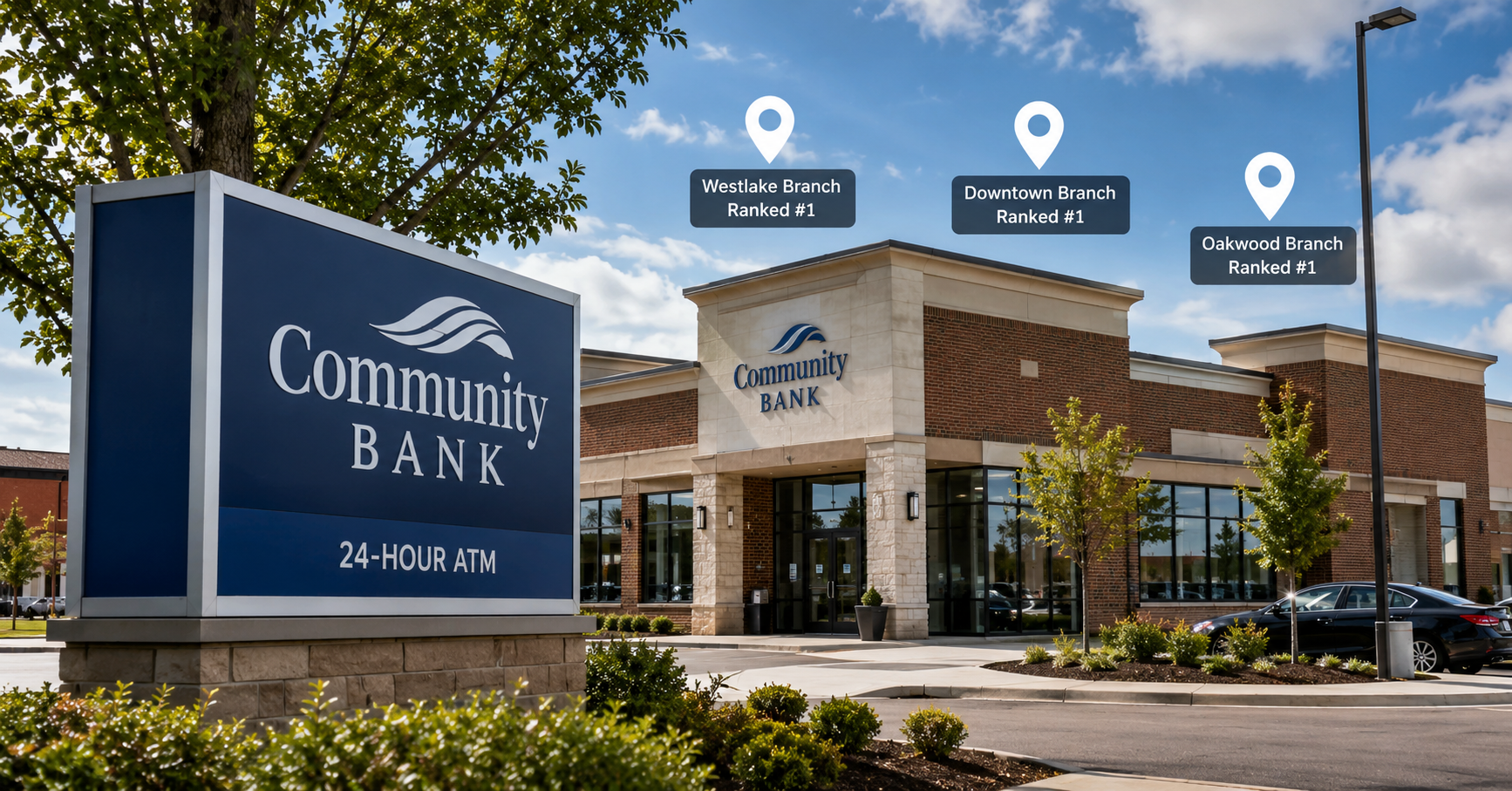
Branch-Level SEO: How to Rank in Every Market Your Bank Operates In
Most multi-branch banks don't lose local search visibility because Google penalizes them — they lose because their own site architecture fights itself. This guide breaks down why a handful of branches often capture all the visibility while others go invisible, and lays out the exact architecture — one Google Business Profile per branch, distinct local pages, clean NAP data, and a clear split between corporate and branch content — needed to rank in every market a bank actually operates in.
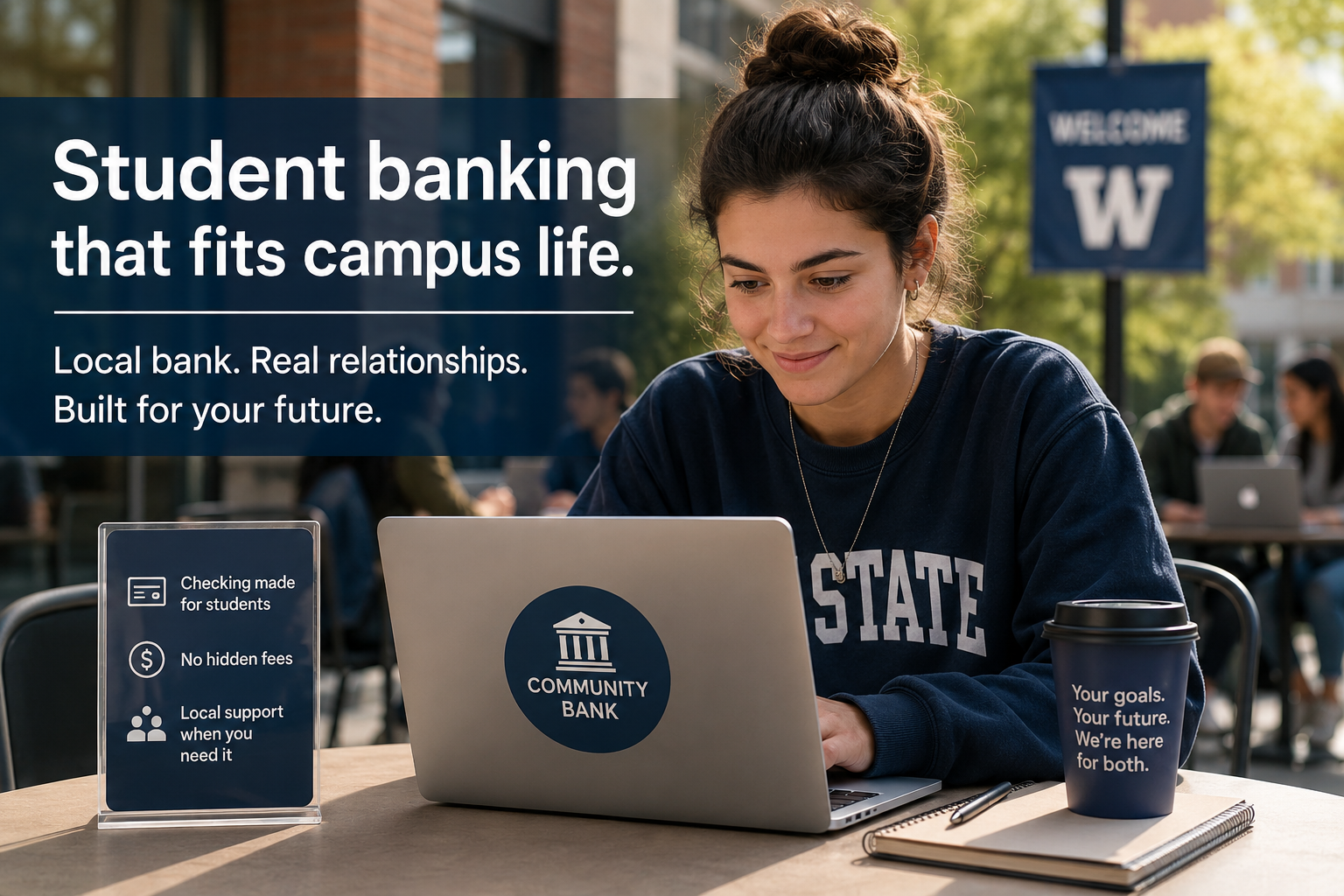
How to Rank for Student Banking Keywords on a Community Bank Budget
Half of Gen Z says they'd switch to a community bank, credit union, or online-only institution — but most community banks can't outrank Forbes or NerdWallet for "best student checking account," and shouldn't try. This guide lays out a realistic, budget-conscious SEO strategy built around campus-specific pages, local search, and financial literacy content that a lean marketing team can actually execute — and that plays to a community bank's real advantages over national brands.

Home Equity Loan SEO: A Content Strategy That Converts
U.S. homeowners are sitting on nearly $35 trillion in equity, and almost 30% are considering a home equity loan or HELOC this year — but most lenders are still running one generic product page to capture that demand. This guide breaks down how homeowners actually search for home equity products, why this category falls under Google's strictest YMYL content standards, and how to build a content strategy — from comparison pages to AI search visibility — that turns research-stage traffic into applications.
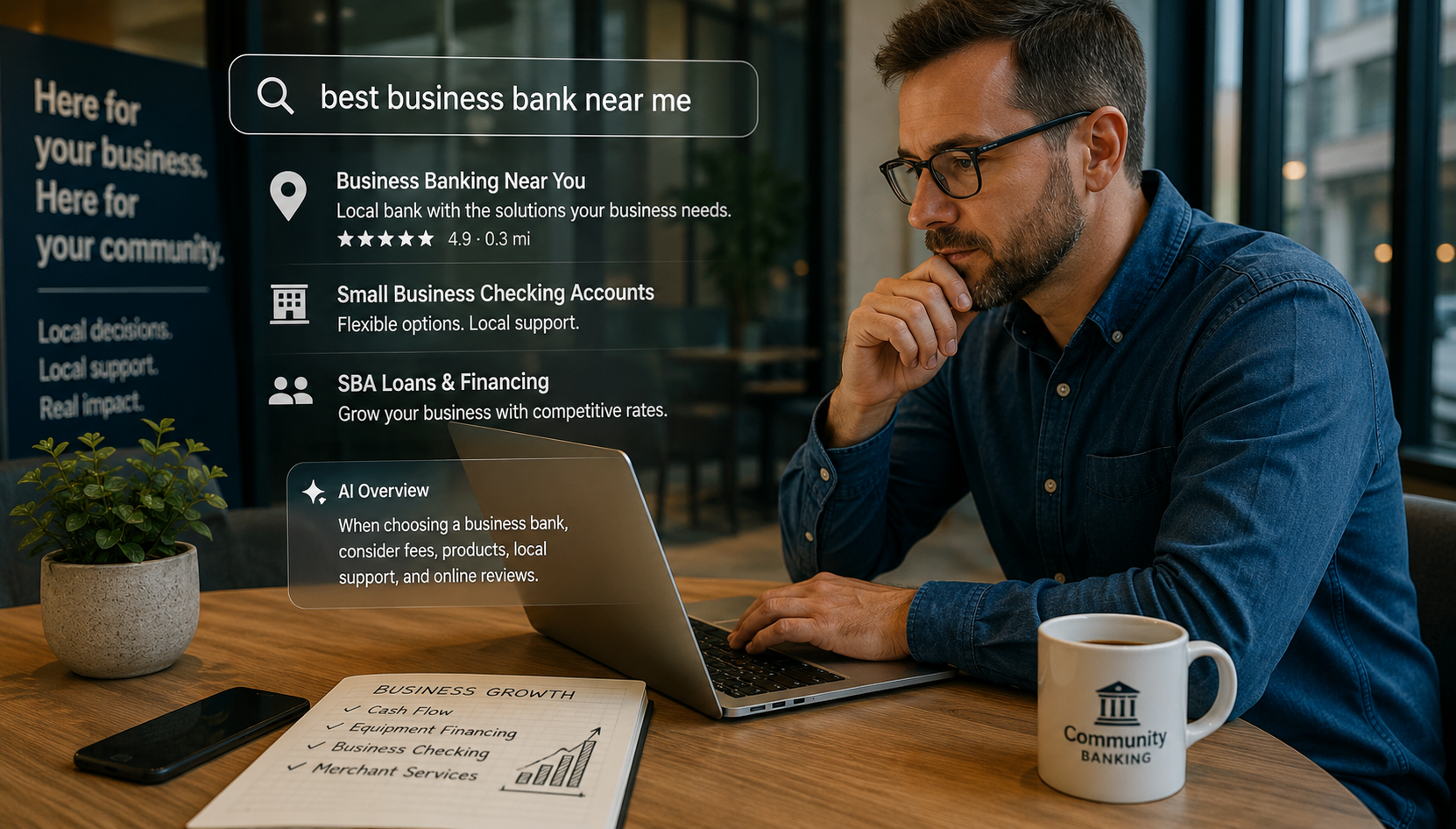
Business Banking SEO: How to Attract Small Business Owners Through Search
Two-thirds of small businesses are actively shopping for a new bank right now — and most are finding their next provider through search, not a branch visit. This guide breaks down how business banking SEO actually works: the keywords small business owners use, why local search is a hidden advantage for community banks and credit unions, how AI search tools are reshaping discovery, and a practical roadmap for turning organic visibility into real account openings.
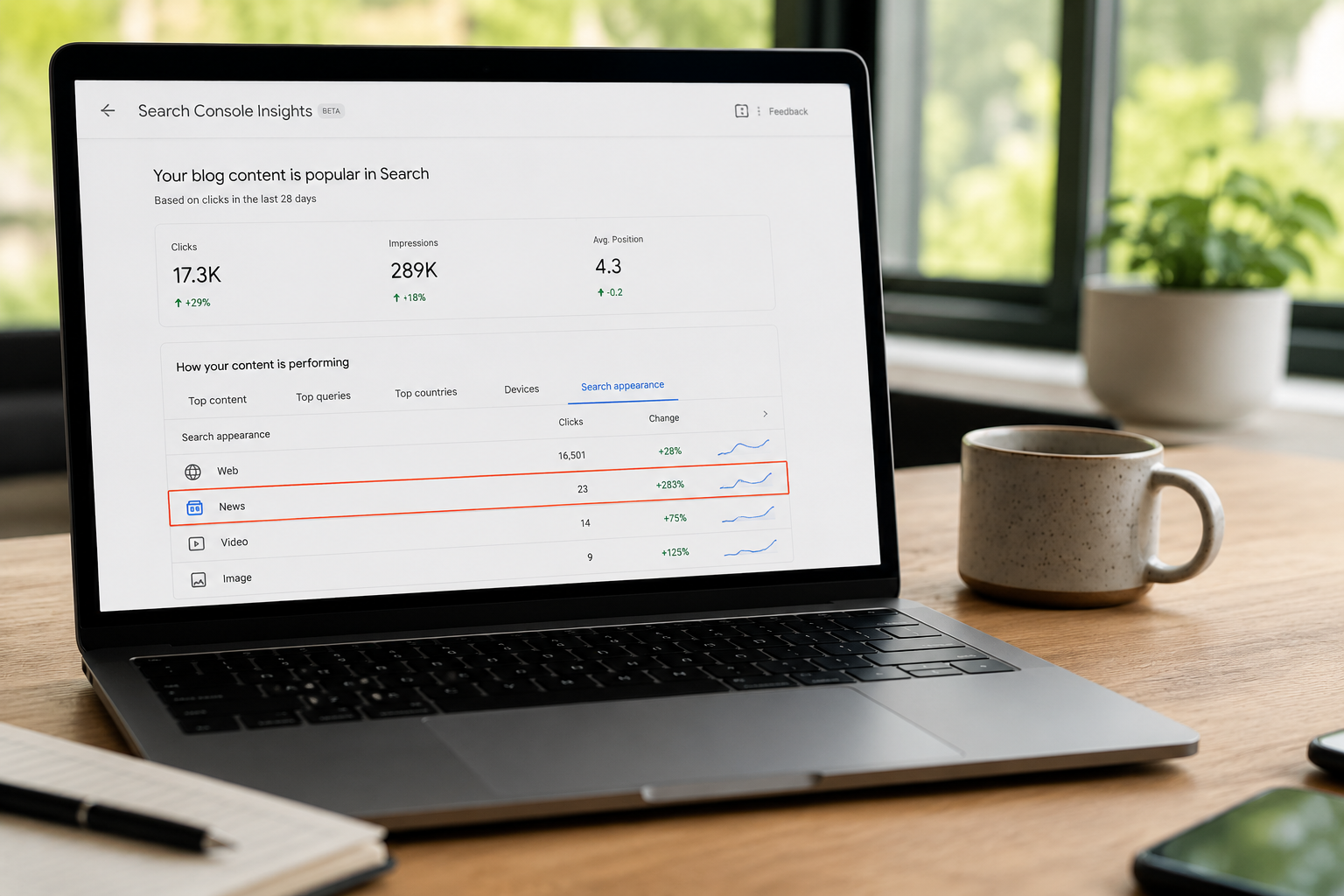
Why Did One of Our Blog Posts Get a Click From "News Search"?
We noticed a click under "News search" in Search Console Insights, credited to a post about robots.txt and AI crawlers — not exactly breaking news. Turns out you don't need to be a registered publisher to show up there. Here's what actually decides News tab eligibility, and why this specific post cleared the bar.
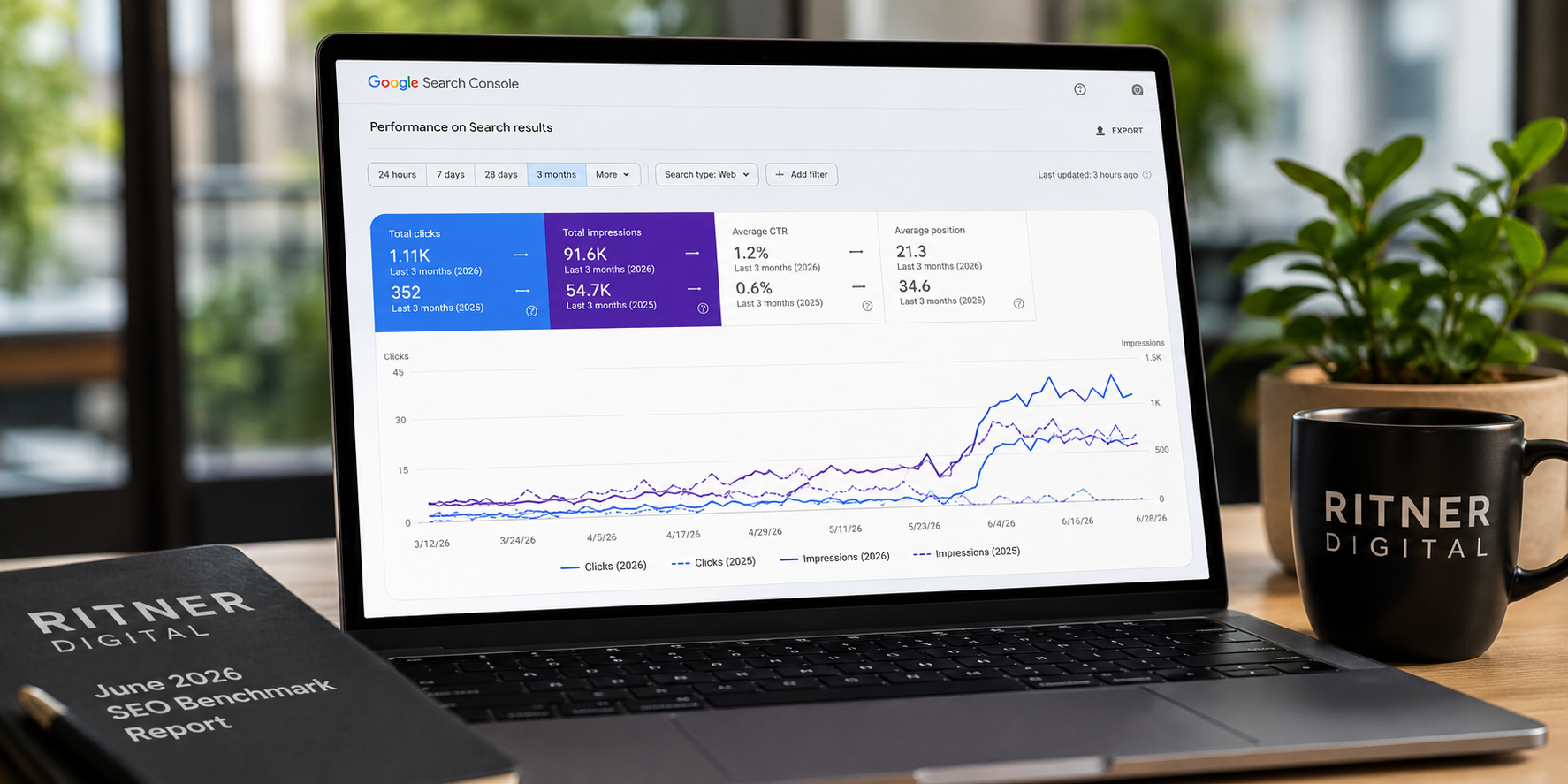
Ritner Digital June 2026 SEO Benchmark Report
May ended with clicks near zero and an average position in the high 30s. Then Google's May 2026 core update finished rolling out on June 2 — and the numbers flipped almost overnight. Here's the full Search Console breakdown of what changed, which two brand-new posts drove it, and why Germany suddenly became one of our fastest-growing countries.
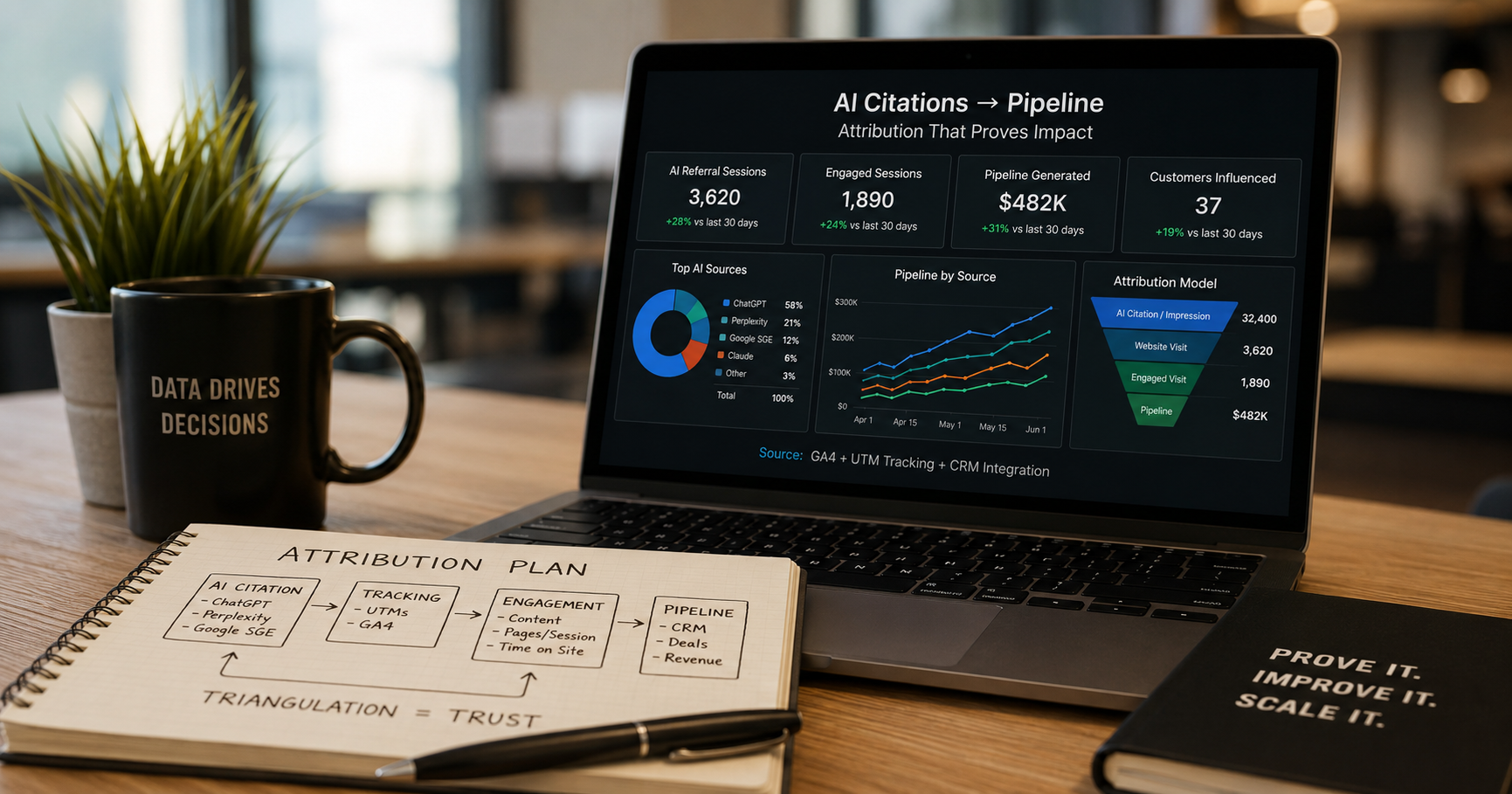
From Search to Pipeline: How to Attribute Revenue from AI Citations
"AI traffic is untrackable, so how do we know it makes money?" is the objection that kills budgets. It's half right—and far more bridgeable than skeptics think. Here's how to connect AI citations to real pipeline, and how to present it to a CFO in terms that survive scrutiny.
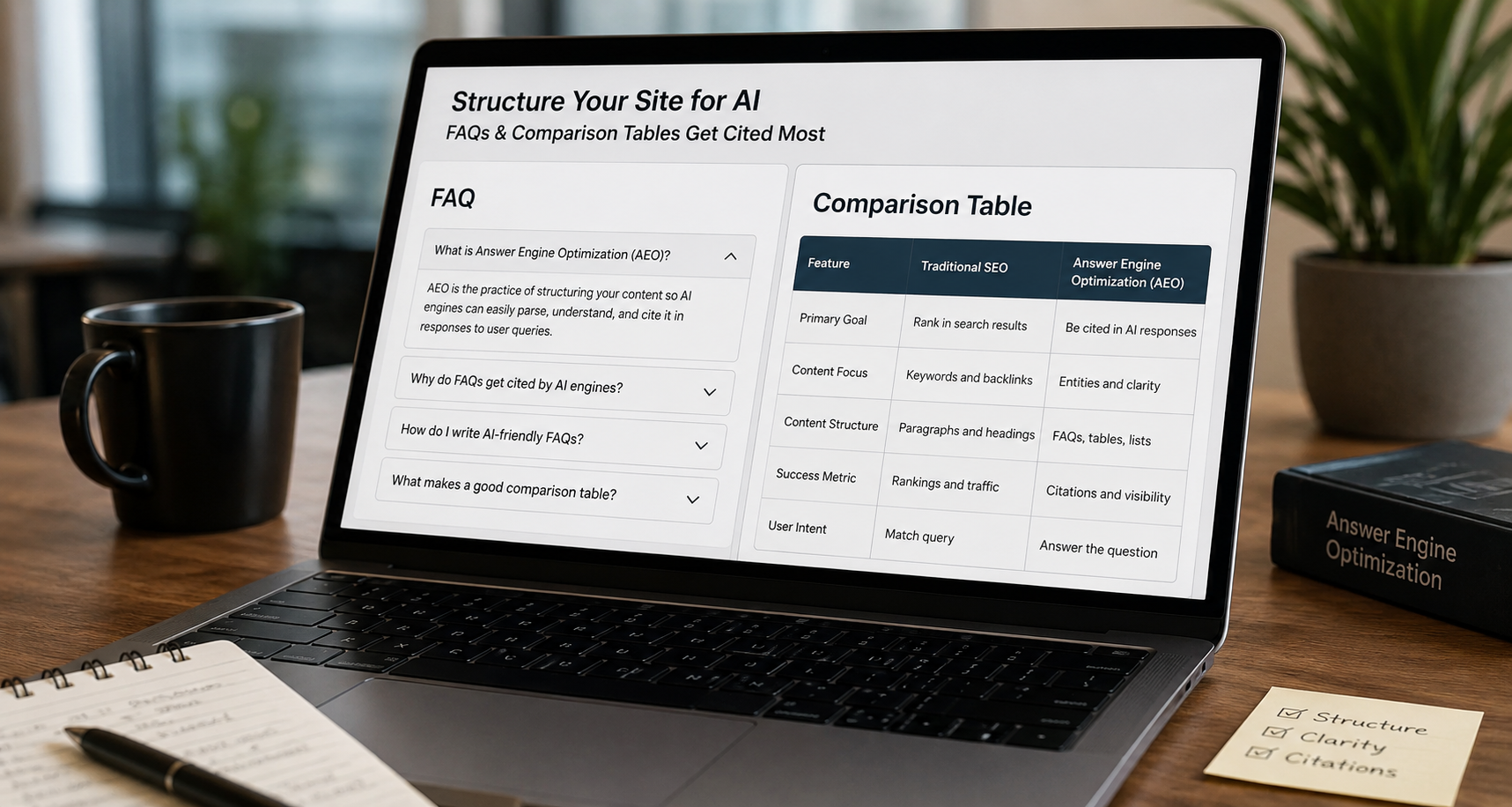
Structure Your Site for AI: Why FAQs and Comparison Tables Are Your Best Asset
AI doesn't read your page the way a person does—it chops it into fragments, grades each one, and quotes the cleanest. So content shape, not just quality, decides whether you get cited. Two structures win disproportionately: FAQ blocks and comparison tables. Here's the technical reason they work, and how to build them.
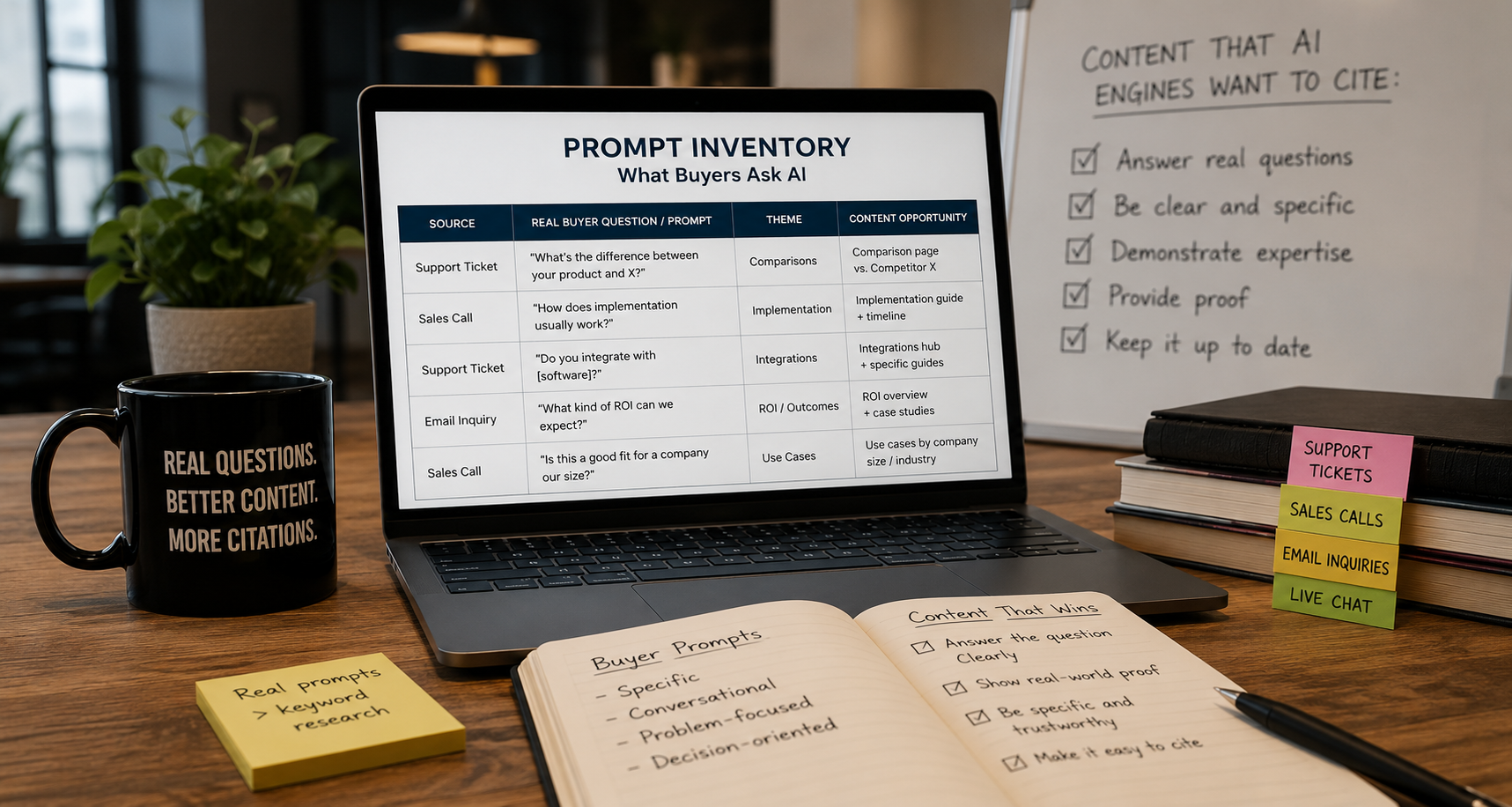
The "Prompt Inventory" Method: How to Find What Your Buyers Actually Ask AI
People don't type at AI engines — they talk to them, in full, specific questions. The new homework isn't keyword research; it's finding the real prompts your buyers ask before they reach you. The best source is free and already yours: your tickets, your inbox, your calls. Here's how to mine it.
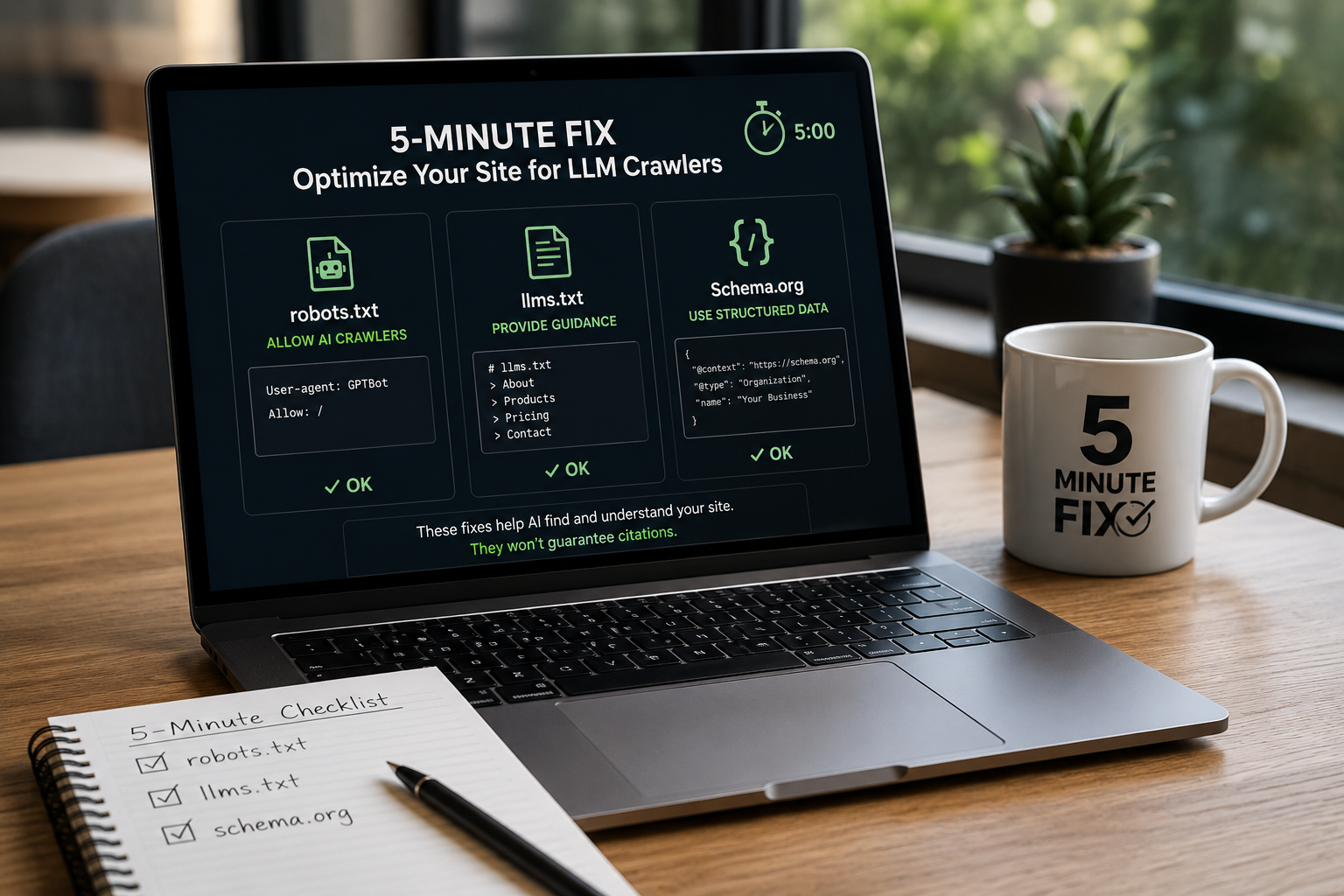
The 5-Minute Fix: How to Optimize Your Brand for LLM Crawlers
A handful of checks, done in about five minutes, decide whether ChatGPT, Perplexity, and Google's AI can even reach and read your site. If one's broken—and often one is—you're invisible for a dumb reason. Here's the DIY fix, plus an honest take on what it will and won't do.
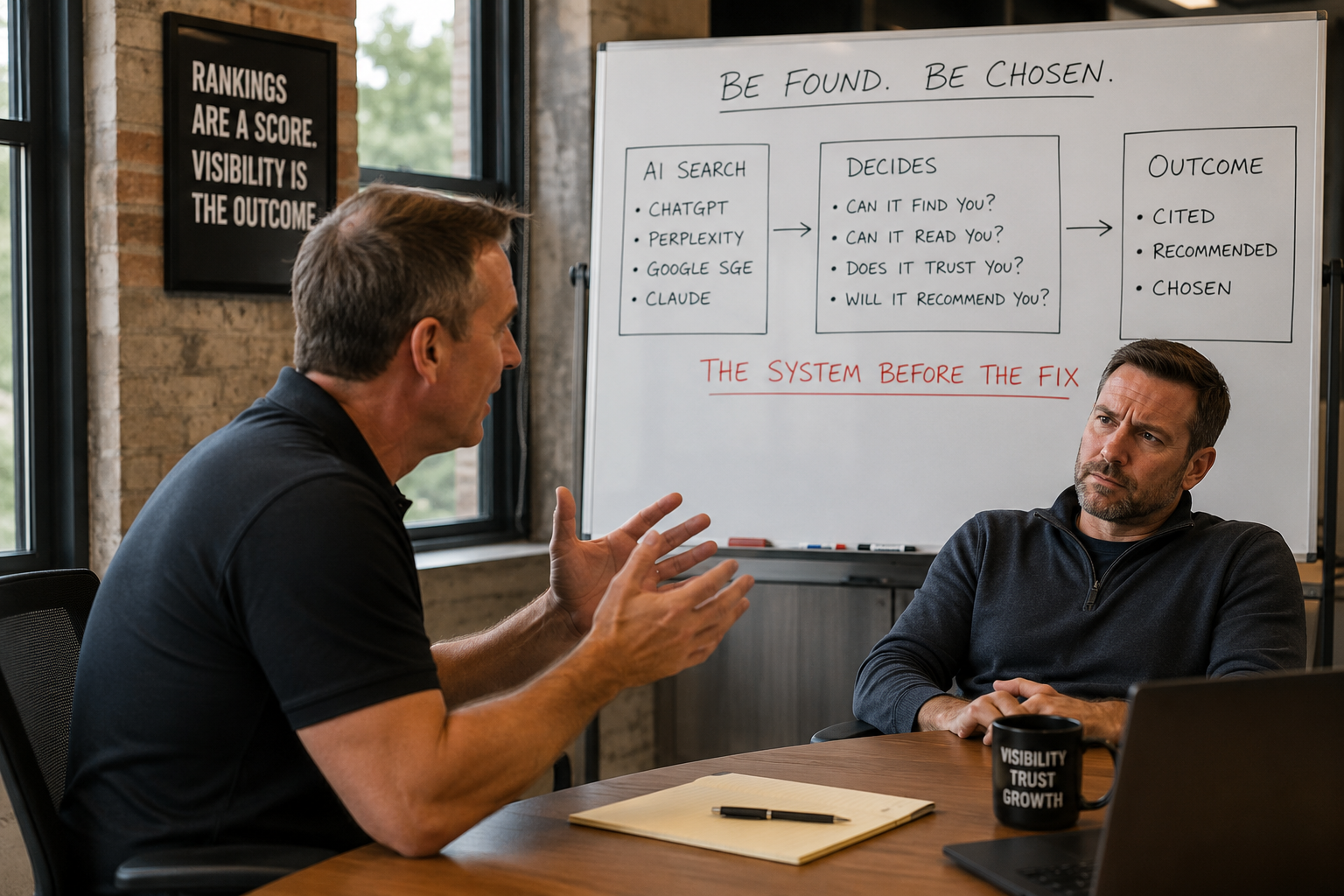
"No, It's Just the Schema": Anatomy of the Conversation That Decides Whether a Business Grows
A successful owner reaches out with the diagnosis already decided: "I just need schema." What happens in the next ten minutes—the reframe, and the pushback against it—decides whether the business pulls ahead or quietly stalls. Here's the anatomy of that conversation, and why the resistance costs more than any fix.
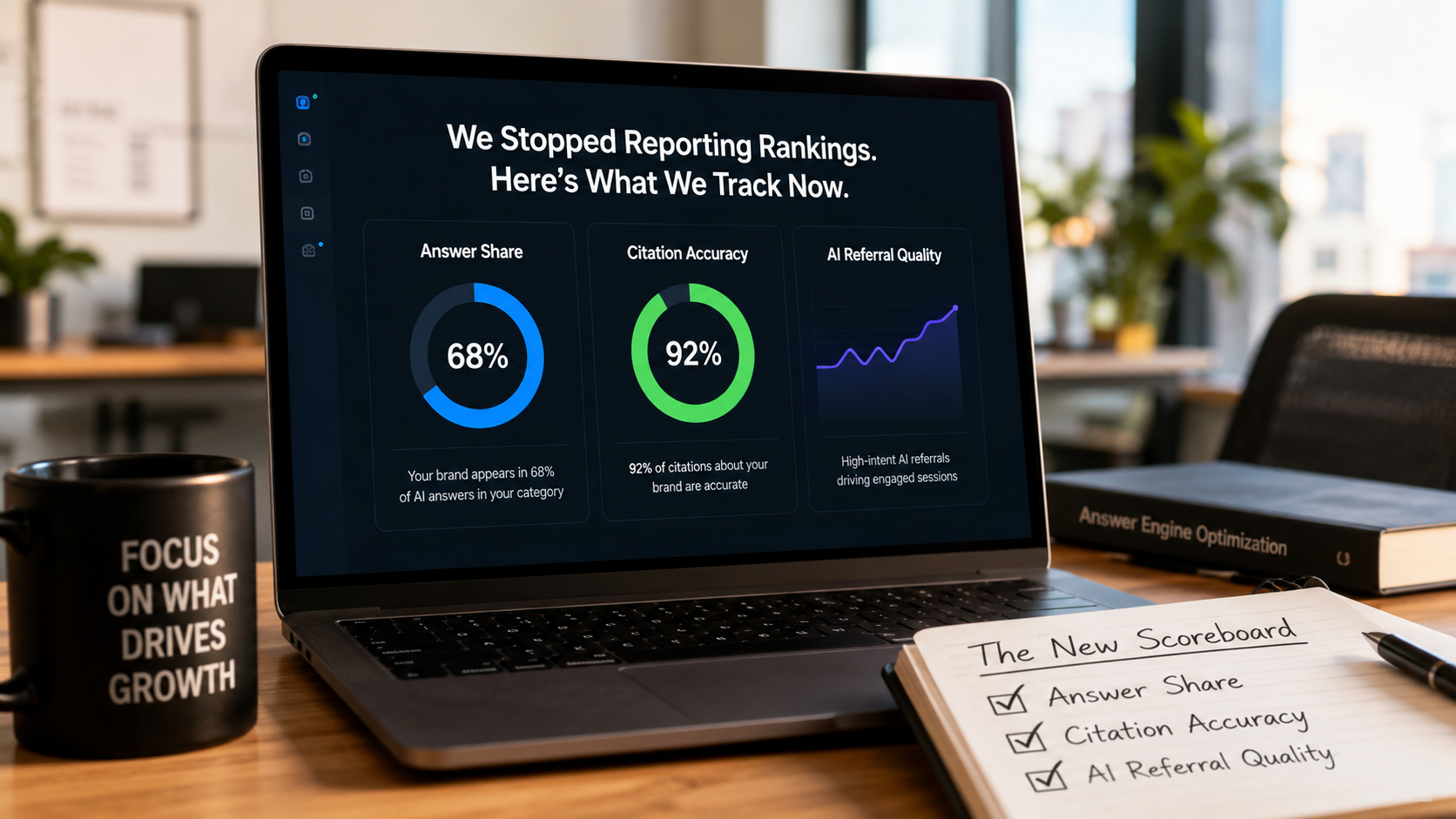
Why We Stopped Measuring "Keyword Rankings" and Started Measuring "Answer Share"
For years, the monthly report led with keyword rankings. It was clean, satisfying, and increasingly a lie—because rankings quietly stopped measuring whether buyers find and choose you. Here's why we switched to answer share, and the three metrics that replaced the old scoreboard for a world of AI-driven decisions.
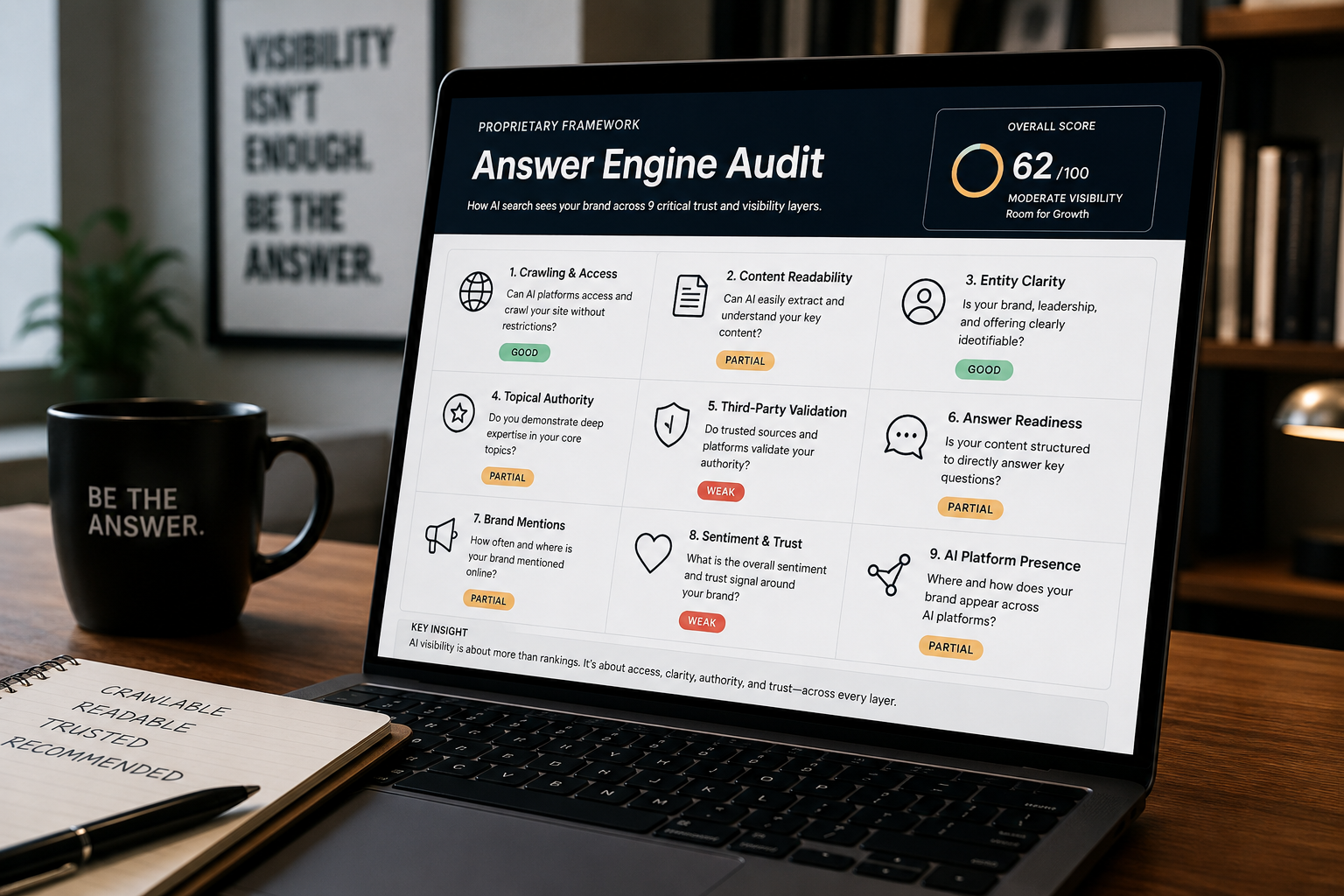
Inside Our Proprietary "Answer Engine" Audit
You know your Google ranking. But do you know what ChatGPT says when a prospect asks for a recommendation in your category—or whether Perplexity can even read your site? Our nine-point Answer Engine Audit examines your brand the way AI does. Here's the entire framework, with nothing held back.
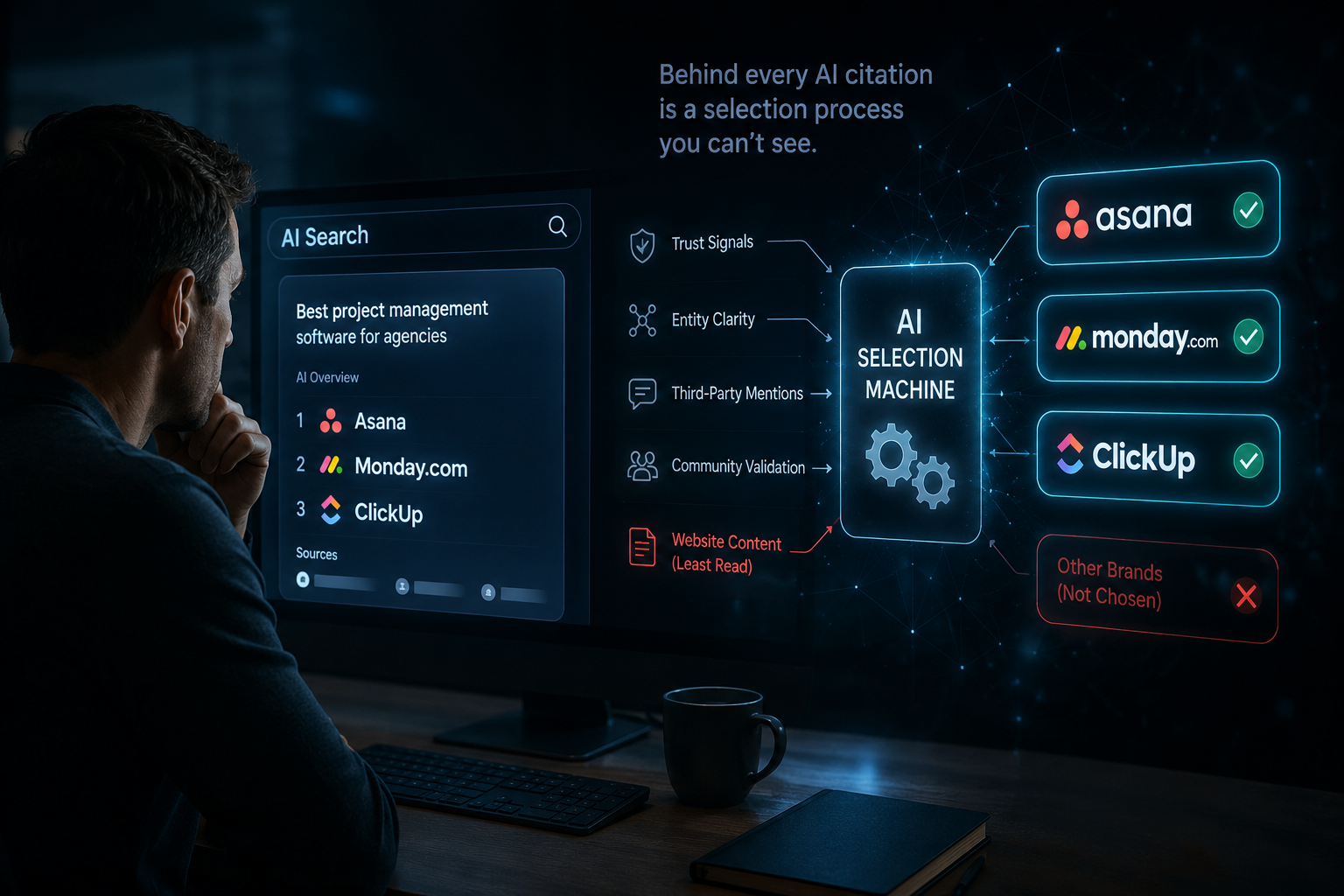
The "Dark" Side of AI Search: What You Don't Know About Who AI Cites
When AI recommends a shortlist of brands, you don't see the selection process behind it: a hidden machinery of trust scoring, entity matching, and third-party validation that decided who was even eligible. Most owners assume AI reads their website. It mostly doesn't. Here's what it actually reads—and why it matters.
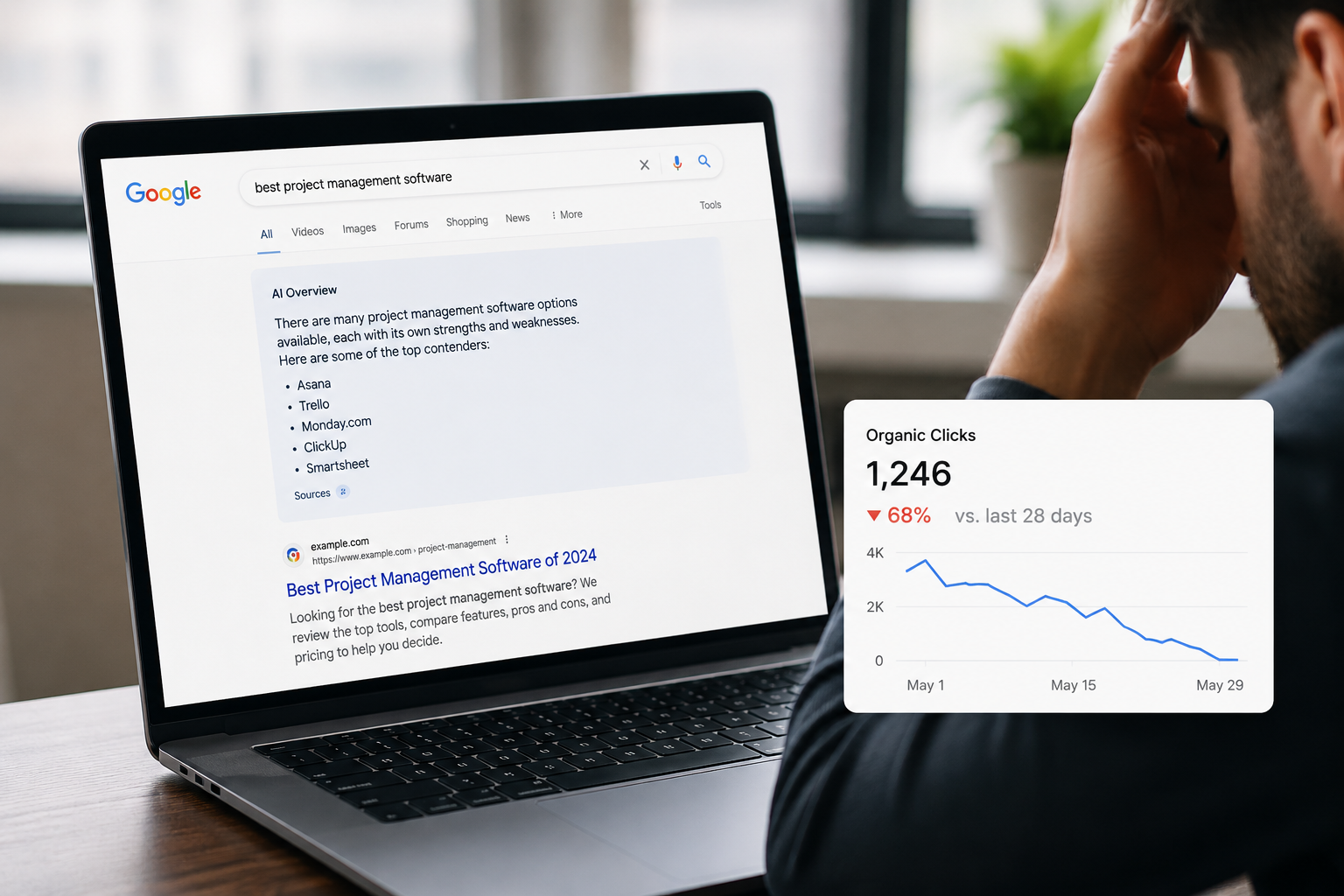
Why Being #1 on Google No Longer Guarantees Traffic
For twenty years, getting to #1 on Google meant the traffic followed. Not anymore. You can hold the top ranking and watch your clicks collapse—not because you slipped, but because the page above your link changed shape. Here's what broke, and what drives visibility now.