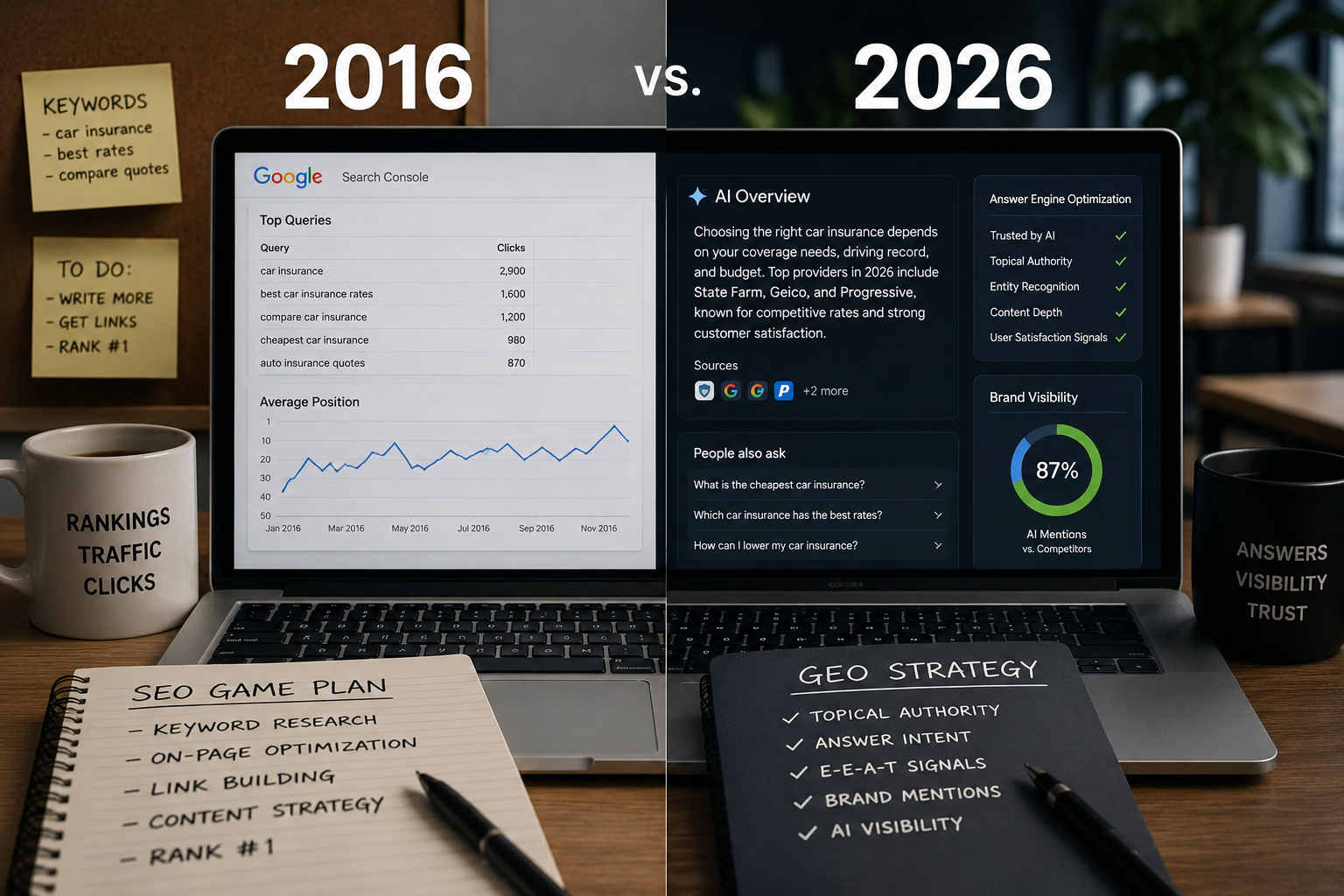
Is Your SEO Strategy Built for 2016 or 2026?
Would your SEO playbook look out of place in 2016? If it still revolves around keywords, word counts, and chasing position one, you're running a decade-old strategy in a search world that no longer rewards it. Here's what actually died, what didn't, and how to make the shift.

Schema Markup Is Overhyped: Why a Real Content System Beats Structured Data in AI Search Every Time
Bolt on enough JSON-LD and the AI engines will reward you with citations—or so the story goes. But controlled studies show schema barely moves the needle. A real content system built on topical depth, earned authority, and consistent momentum beats schema-obsessed thin sites every time. Here's the evidence.

Stop Waiting for the Phone to Ring: How Experiential Event Vendors Get Found by Corporate Buyers in 2026
Demand for interactive event activations is growing at double digits, and corporate budgets are expanding—but buyers have moved their entire discovery process online to search, local profiles, and AI. Most activation vendors haven't caught up. Here's how to make sure the planner with a budget finds you first.

How to Win "CD Rates" and "High-Yield Savings" Searches from Fintech Competitors
Search "best CD rates" or "high-yield savings" and you'll find a wall of online-only banks. But your deposit rates are often more competitive than savers realize — they just can't find you. Here's how community banks and credit unions win CD and high-yield savings searches from fintech competitors.

Personal Loan SEO: Capturing Borrowers Before They Go to LendingTree
When someone needs a personal loan, there's a fork in the road: find a direct lender they trust, or land on LendingTree and become one of five bidders for their business. Here's how banks and credit unions use SEO to intercept borrowers before they ever reach the aggregator.

How to Rank for "Best Savings Account Near Me" — A Tactical Guide
"Best savings account near me" combines comparison intent that aggregators own with local intent where you have the edge. Win it, and you capture a saver who's ready to act and in your market. Here's a step-by-step tactical playbook for ranking — from the Local Pack to your localized savings page.
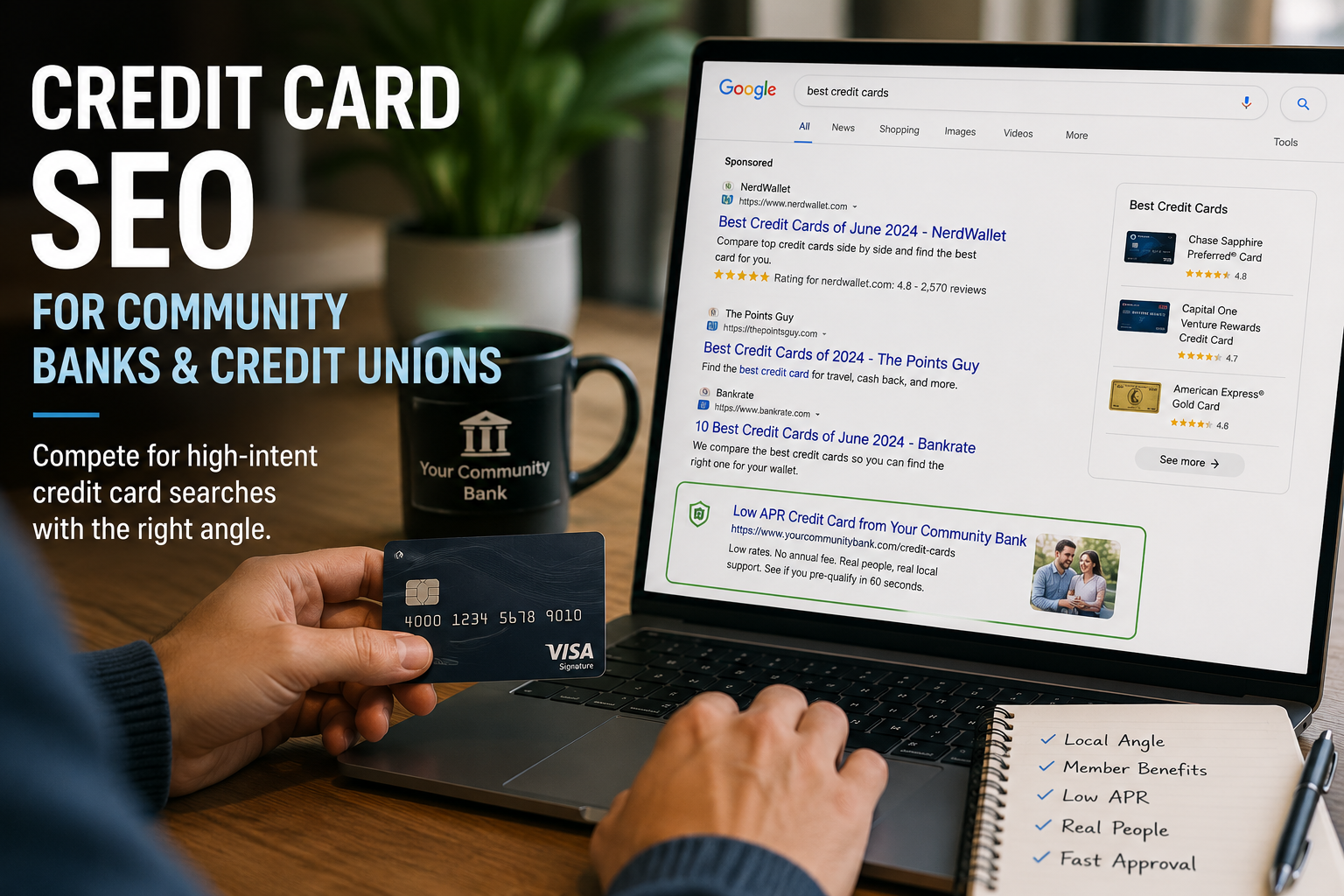
Credit Card SEO: How Community Banks Can Compete for High-Intent Searches
Credit card search is the toughest battlefield in financial SEO — dominated by aggregators, with little local intent and a huge volume gap. But your low-APR card is genuinely competitive. Here's how community banks and credit unions compete for high-intent credit card searches by changing the angle of attack.

How to Rank for Auto Loan Keywords in a Competitive Market
Auto loan search is crowded with big banks and dealer financing arms — but the rate advantage runs in your favor. Here's how credit unions and community banks rank for auto loan keywords in a competitive market and intercept car shoppers before they sign at the dealership.
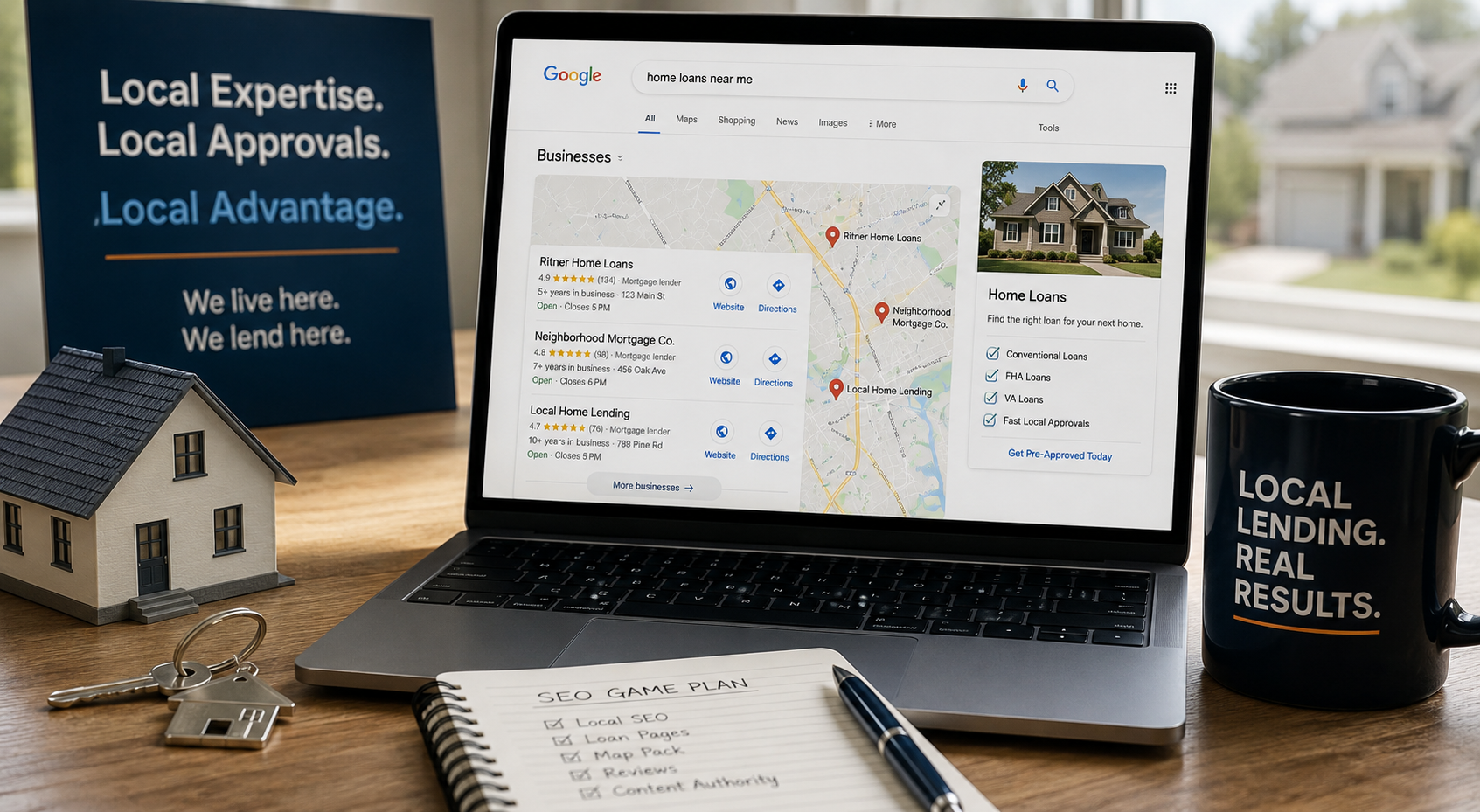
SEO for Mortgage Lenders: How to Capture Home Loan Searches Before Big Banks Do
Big banks and aggregators spend millions to dominate mortgage search — but they can't replicate your local expertise, and they can't out-rank you everywhere. Here's how mortgage lenders capture home loan searches in their own market before the big banks do, and earn exclusive leads they never have to share.
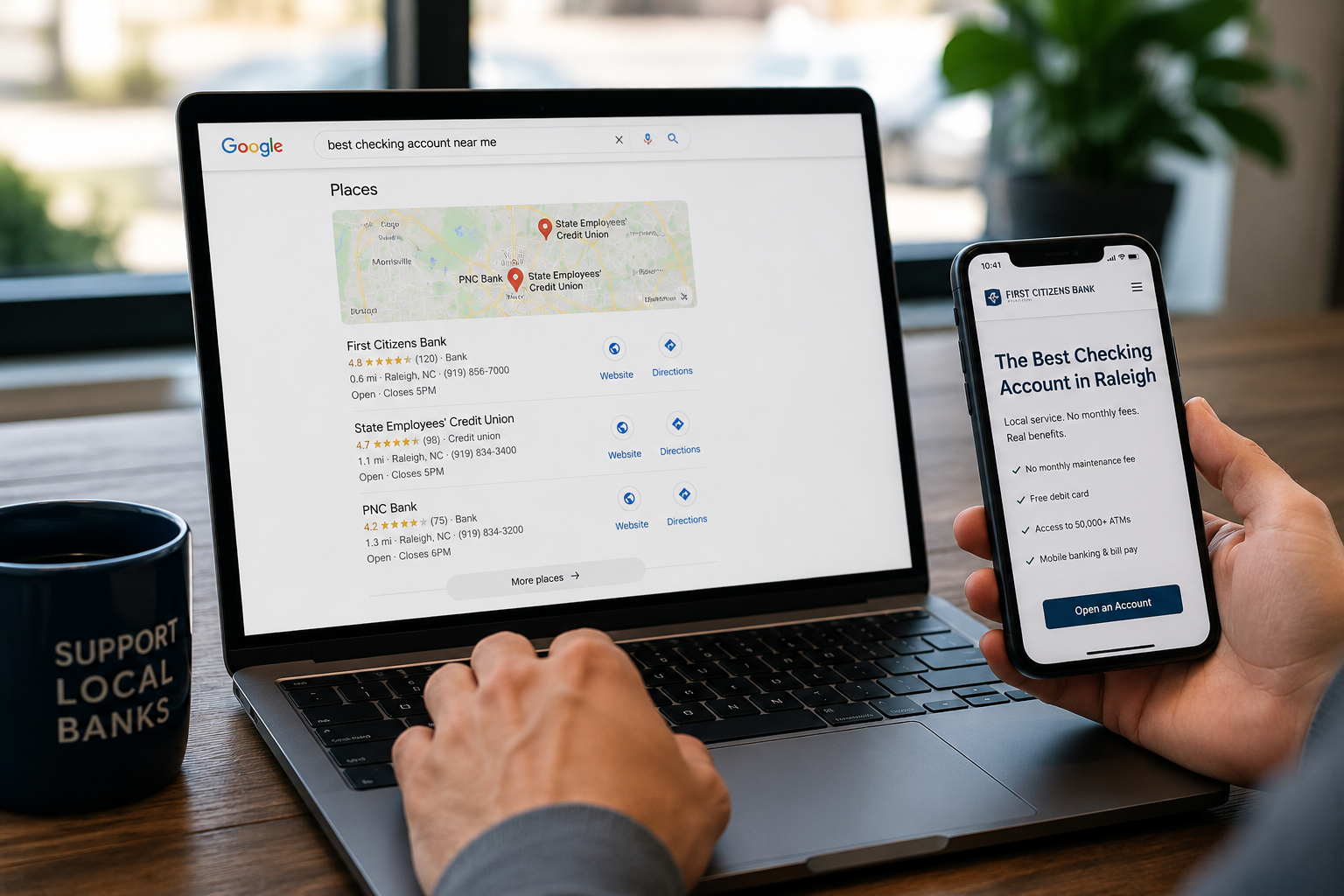
How to Rank for "Best Checking Account" in Your Local Market
Search "best checking account" and the whole first page belongs to NerdWallet and Bankrate. You won't beat them for the national term — but you don't need to. Here's how banks and credit unions can win the localized version of that search, where Google rewards the proximity aggregators can't fake.

How to Build a Long-Term SEO Strategy for a Community Bank
A community bank can't outspend a national megabank — but in search, the playing field is more level than anywhere else in your business. Here's how to build a long-term SEO strategy that compounds over time, turning your community standing into durable local visibility and new accounts.

Technical SEO for Financial Websites: What Your Dev Team Needs to Know
Technical SEO is the foundation that decides whether your content and local SEO efforts ever pay off. This guide bridges marketing and engineering, covering what your dev team needs to prioritize on a financial website in 2026 — from crawlability and Core Web Vitals to JavaScript rendering and AI crawlers.
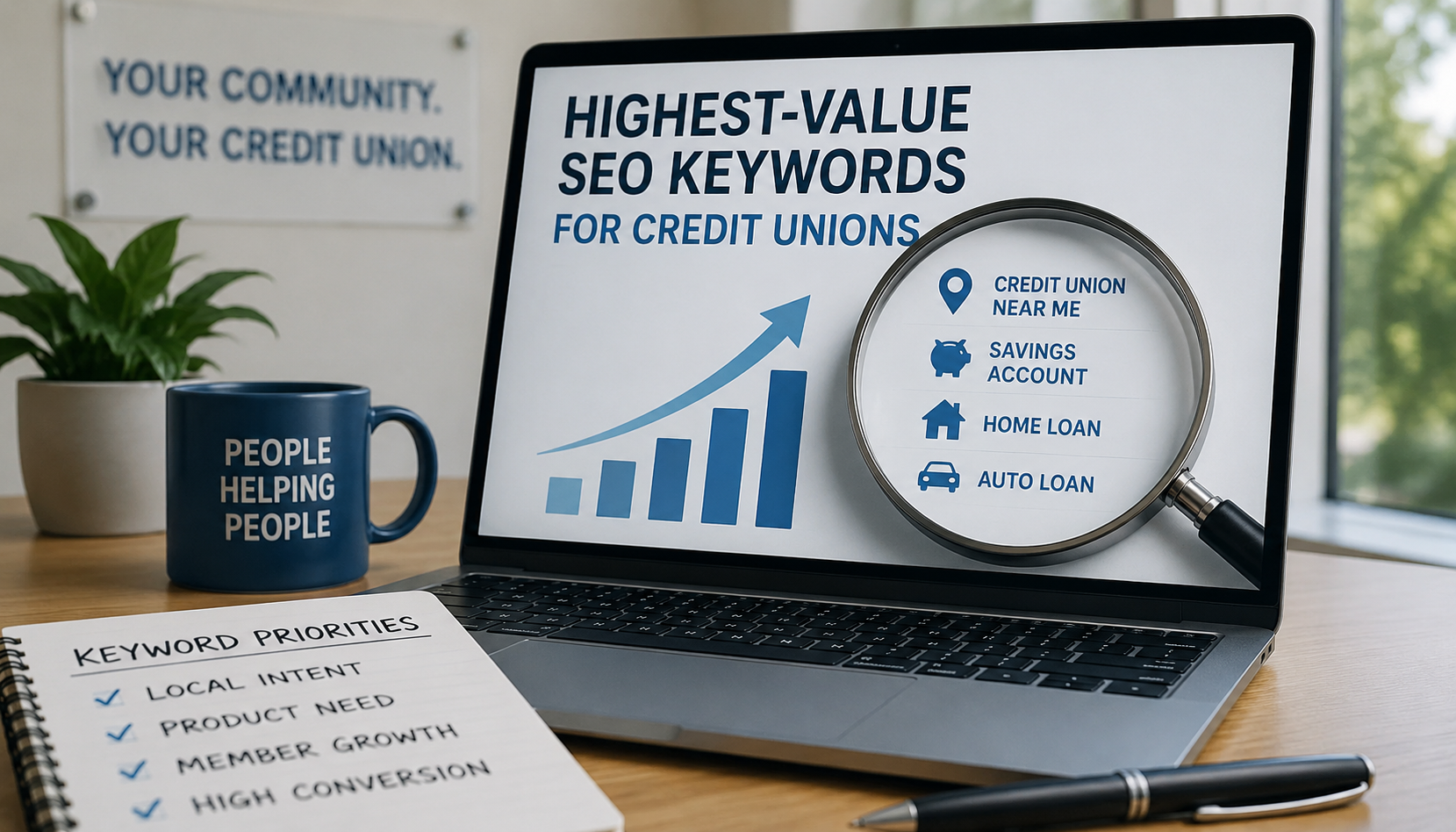
The Highest-Value SEO Keywords for Credit Unions Right Now
Not all keywords are worth your effort. For credit unions, the highest-value search terms sit at the intersection of local intent and product need — exactly where no megabank or fintech can outspend you. Here are the keyword categories delivering the best return right now, and how to prioritize them.
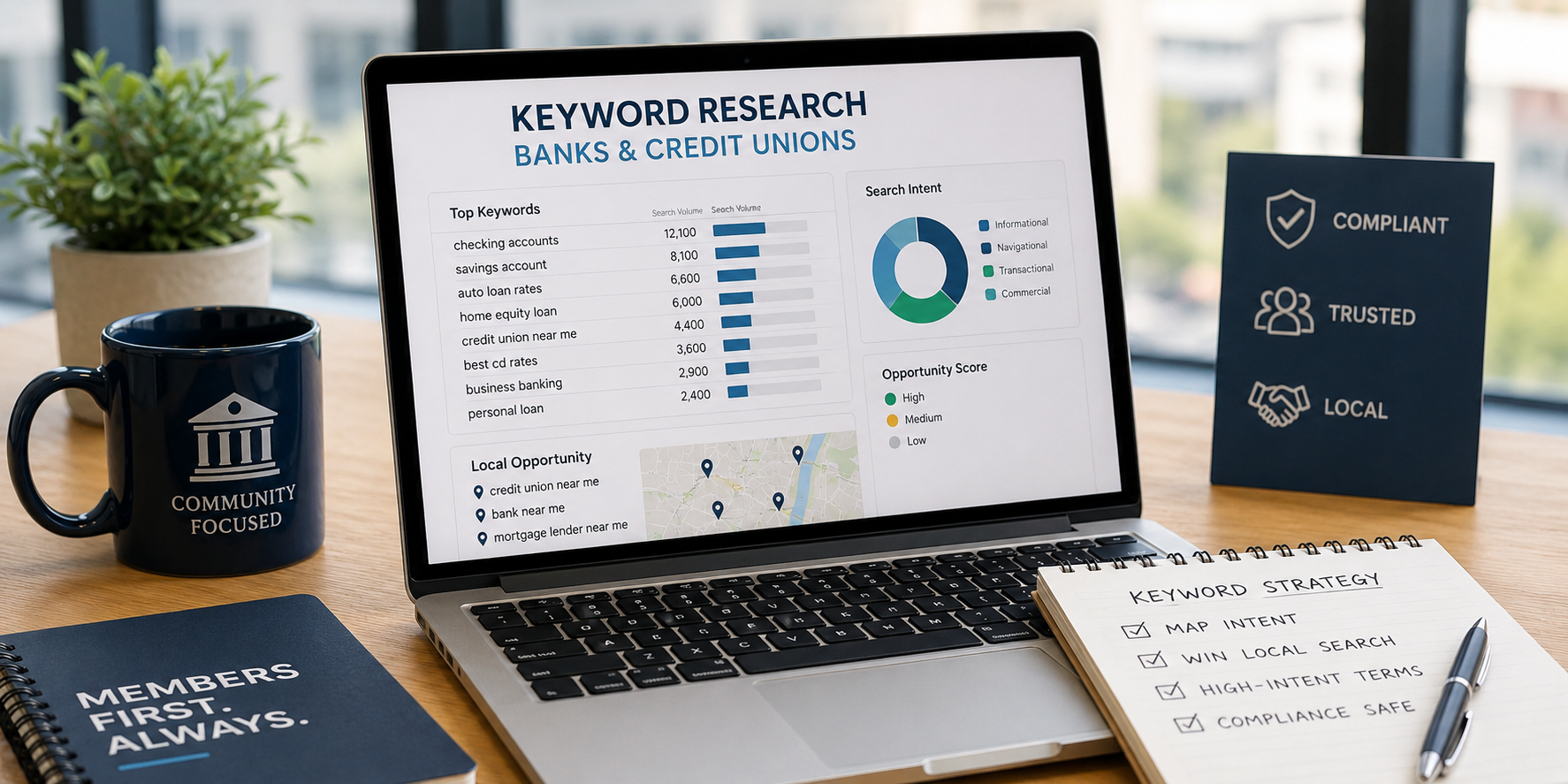
How to Do Keyword Research Specifically for Banks and Credit Unions
Keyword research for a bank or credit union plays by different rules: commoditized products, compliance vetoes, and national aggregators with bottomless budgets. This step-by-step guide shows you how to map keywords to the customer journey, win local search, and find the high-intent terms your institution can realistically rank for.

On-Page SEO for Financial Institutions: A Practical Checklist
Financial content plays by stricter rules than any other industry. This practical, page-by-page checklist covers the on-page SEO fundamentals that win in 2026 — from author credentials and schema markup to Core Web Vitals and AI Overview visibility — built specifically for banks, lenders, and financial advisors.

Why Your Credit Union's Website Traffic Dropped (And How to Get It Back)
If your credit union's website traffic took a nosedive this year, you're not imagining it. AI Overviews, zero-click search, and shifting member behavior have rewritten how people find financial institutions online—and educational content is hit hardest. Here's exactly why your traffic dropped, backed by the latest 2025–2026 data, plus a concrete, actionable plan to win it back.

What It Means for a Site to Have "Expanding Trust" in Google — and Why It's the Real Engine of Long-Term Rankings
Most people chase rankings on individual keywords — but the property that actually determines whether a site wins over years is expanding trust: a site's credibility with Google steadily broadening from a narrow foundation into a wider footprint of topics, queries, and AI citations. It's why some brands recover instantly after core updates while others vanish despite "doing SEO right." Trust is observed, not declared; earned, not toggled; and it compounds across Google's results and the AI answer engines alike. Here's what expanding trust really means and how to grow it.

Semiconductor Summer Is Booming — But Most Tech Companies Are Invisible in AI Search
Micron's earnings and Nvidia's shareholder meeting headline "semiconductor summer," a vivid reminder that the AI infrastructure boom is real and accelerating. But there's a quiet irony underneath it: the same AI driving record chip demand is rewriting how software gets discovered — and most of the B2B tech and SaaS companies riding the wave are nearly invisible in AI search itself. With 51% of software buyers now starting in an AI chatbot and shortlists forming before any human contact, here's why so many tech brands are missing from the answers and how to be the vendor AI recommends.

The Fed Stress-Tests Banks This Week — Here's the Stress Test Most Banks Are Failing
This week the Federal Reserve stress-tests 32 big banks against a hypothetical financial shock. But there's another stress test running on every financial institution right now — one with no published results — that a large share are quietly failing: whether your bank or credit union shows up, accurately and credibly, when a customer asks ChatGPT or Perplexity where to bank. With nearly 60% of consumers already using AI for financial research and the early data showing size doesn't guarantee visibility, here's what the AI stress test reveals and how to pass it.

Misunderstood Twice and They're Gone: What Customer Service Data Tells Us About AI Search
A new Parloa survey found 7 in 10 consumers abandon an automated interaction after being misunderstood just twice. It's a wake-up call for customer service — but an even sharper one for AI search, where the same brutal arithmetic plays out invisibly. When a customer asks ChatGPT or Perplexity about your brand and the AI gets you wrong, mixes you up with a competitor, or can't find you, they don't give you a third try. They take the answer and leave. You can't control what AI says, but you can control what it learns. Here's how to make sure AI understands your brand correctly.