
Amerikick Martial Arts: A Brand Analysis From a Marketing Perspective
Some brands earn their longevity. Others just survive long enough to call it a legacy. Amerikick falls firmly in the first category — nearly sixty years of authentic martial arts credibility, a franchise model led by practitioners who own locations in the network, and a student community that spans multiple generations. This is a marketing analysis of what makes the brand strong, where the real digital gaps are, and what the opportunity looks like for one of the most authentic franchise brands in the fitness and enrichment space.

If You're Going to Put a Stake in the Ground, Slam It In
There is a saying in marketing that gets repeated often enough that most people who work in the industry have heard it, nodded at it, and then proceeded to ignore it completely: if you're going to put a stake in the ground, slam it in. The saying exists because the alternative is so common. The halfway stake. The hedge. The campaign that launches at sixty percent because someone was nervous about the budget, or unsure about the timing, or waiting to see how it performs before committing the rest of the resources. It never works that way. Not because the strategy is wrong. Because the execution was a whisper when it needed to be a statement.

Why Philly Businesses Keep Losing to Out-of-State Competitors on Google
It's one of the most frustrating patterns in local digital marketing. A Philadelphia business that knows the market, serves the community, and has real results to show for it — getting routinely outranked on Google by a competitor headquartered in another state. It happens constantly, and it's not a mystery. Google doesn't reward local loyalty. It rewards digital signals — and most local businesses are losing ground on those signals without even knowing it. In this post we break down exactly which signals matter, why national competitors have built stronger ones, and what Philadelphia businesses can do to close the gap and start winning in their own backyard.
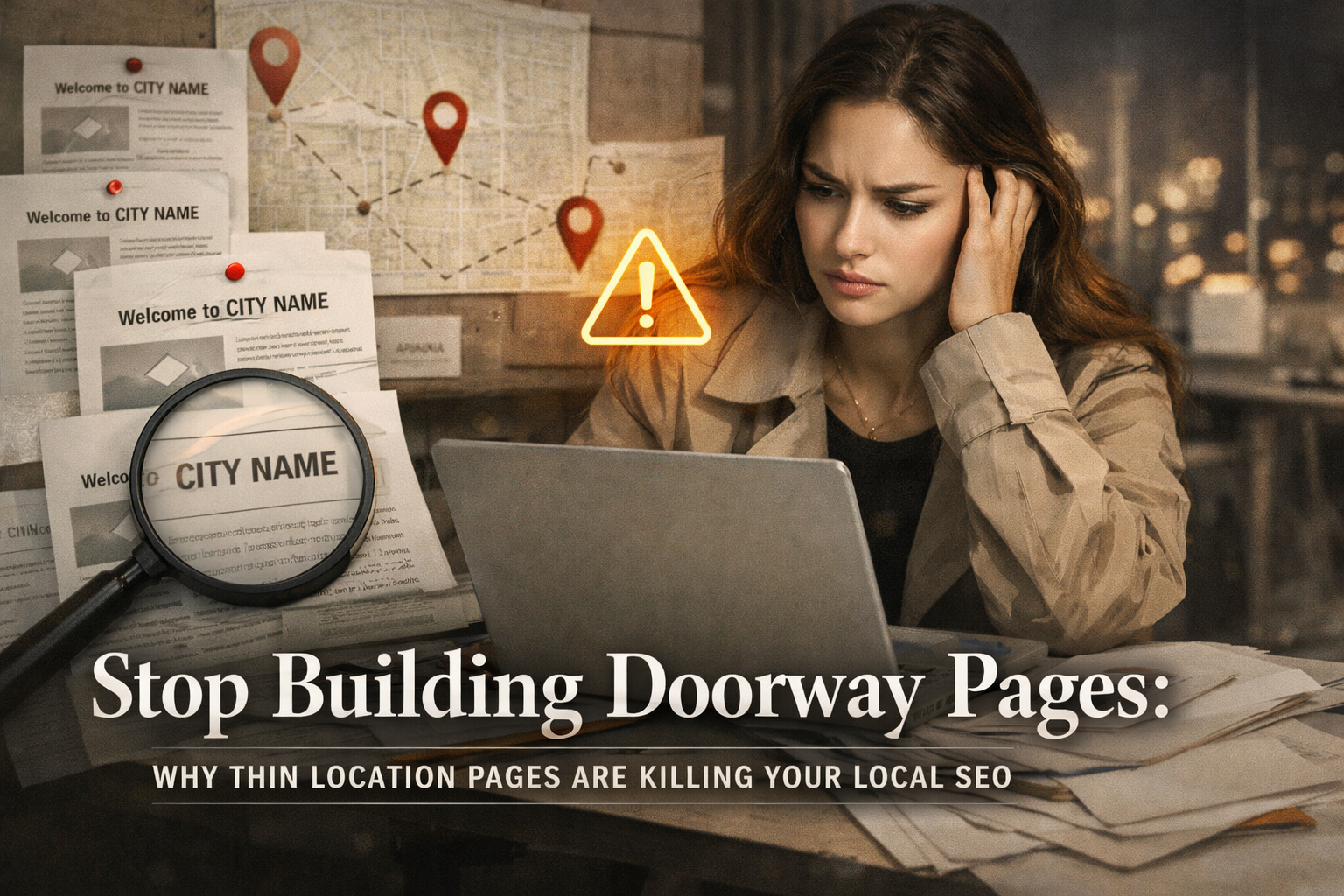
Stop Building Doorway Pages: Why Thin Location Pages Are Killing Your Local SEO
Your website has thirty location pages that say the same thing with different city names. Your agency told you this was good local SEO. Google calls it spam. Those thin pages are cannibalizing your rankings, triggering algorithmic penalties, and making your business look like it cuts corners. Here's how to spot the problem, have the conversation with your agency, and replace the strategy with one that actually works.