
Already Paying an SEO Agency? One Chart Tells You If It's Working.
The most common call we get isn't "we need SEO" — it's "we HAVE SEO, and we can't tell if it's working." You don't need to be technical to answer it. One chart, pullable in three minutes, tells the story. Here's how to read it — the five shapes, the year-over-year test, the five questions for your next agency call — with a real decline-and-plateau chart walked through month by month.
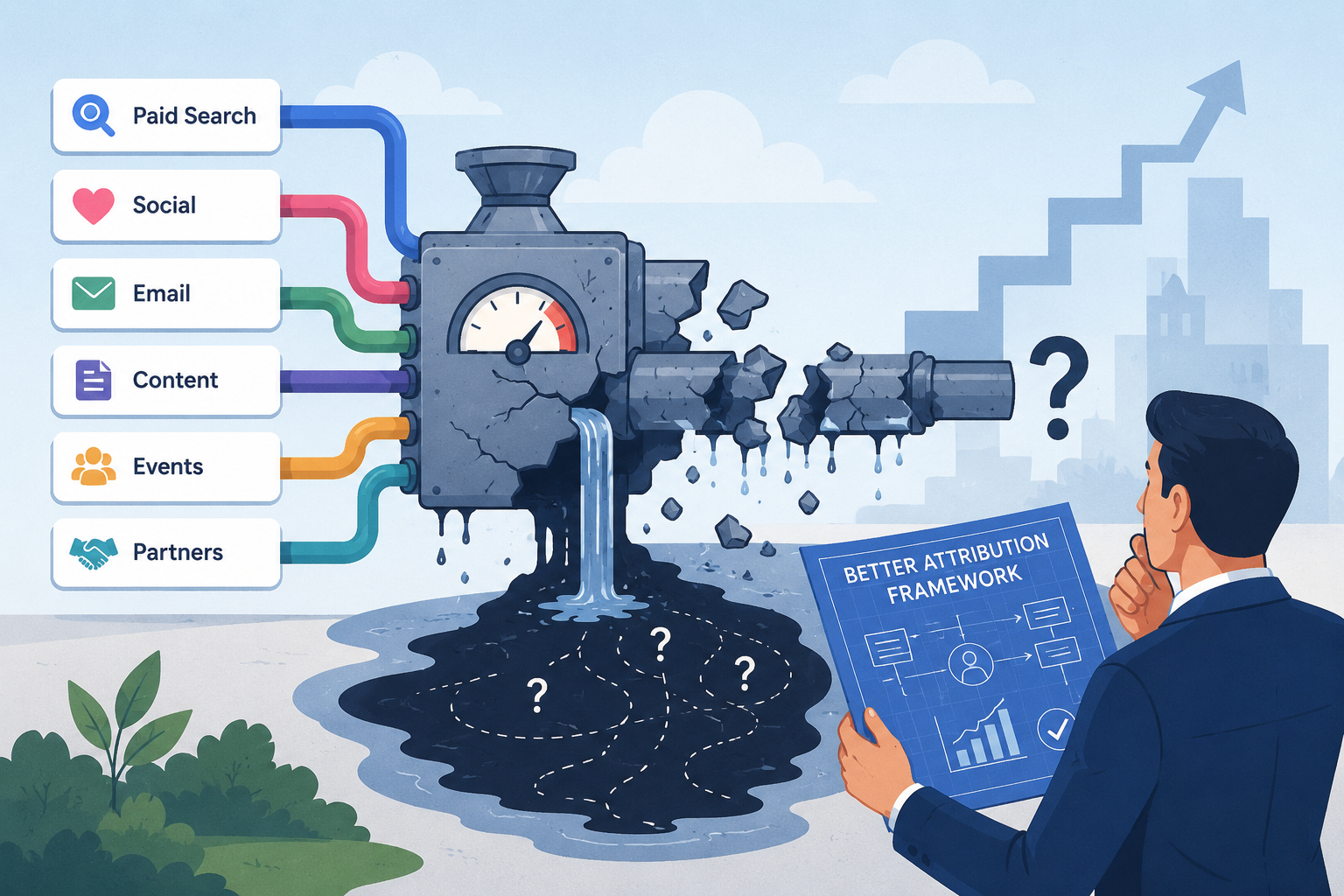
Why Marketing Attribution Breaks at Scale
Marketing attribution works reasonably well when a business is small. Scale the channels, lengthen the sales cycle, and add real buying committee complexity — and the model starts returning numbers that are not just incomplete, they are actively misleading. Here is why that happens and what to do about it.

Red Flags in SEO Reporting: What Your Agency Might Be Hiding in Plain Sight
Every month the report arrives and everything looks good on paper — traffic up, rankings improved, targets hit. But the phone isn't ringing more and the leads aren't increasing. If that gap feels familiar, the problem might be your reports. Here are the ten biggest red flags in SEO reporting, from cherry-picked date ranges to activity metrics with no outcome data, and what your agency should be showing you instead.

Ritner Digital April 2026 Google Analytics Report
Two days ago we published our April SEO Benchmark Report covering search visibility. This is the other half of that story — what Google Analytics shows about who actually arrived, where they came from, what they did, and whether April was genuinely an up month when you strip the noise out. Real numbers, honest analysis, no cherry-picking.
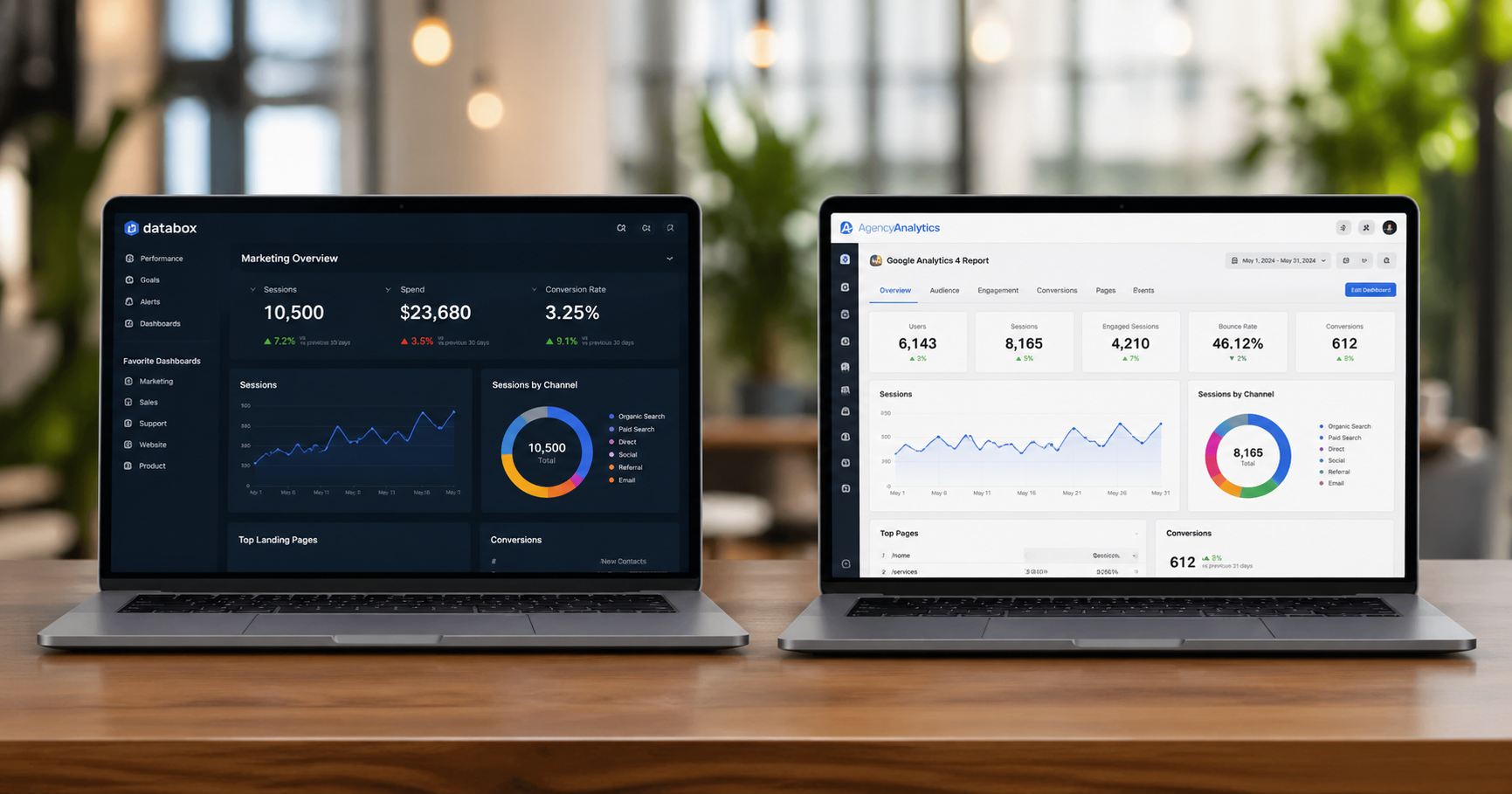
Databox vs. AgencyAnalytics: Which Reporting Tool Is Right for Your Team?
On the surface, Databox and AgencyAnalytics look like they're solving the same problem. They're not. One is built for internal business intelligence. The other is built for agency client reporting. Here's how to tell which one is actually right for your team.

What a Real AI Marketing Dashboard Looks Like vs a Basic One
Most marketing teams have dashboards. Google Analytics, Meta Ads Manager, a Looker Studio report someone built eighteen months ago, maybe a spreadsheet that takes three hours to update every Monday. That's a basic dashboard setup — and it accurately describes what those tools do. They display what happened. They require a human to interpret, investigate, and act. An AI marketing dashboard operates on a different level entirely: it surfaces anomalies the moment they occur, explains likely causes, forecasts what's coming, and recommends the specific action to take. Here's exactly what separates the two — and what the gap is actually costing marketing teams that haven't made the shift.

The Beginner's Guide to AI-Powered Conversion Rate Optimization
Most businesses focus the majority of their marketing energy on getting more traffic. But if only 2–3% of that traffic is converting, the highest-leverage opportunity isn't more visitors — it's making the visitors you already have more likely to take action. AI-powered conversion rate optimization does exactly that, using behavioral data, real-time personalization, and automated testing to continuously improve the percentage of visitors who convert — without increasing your ad spend. This beginner's guide breaks down what it is, how it works, and the practical steps to start using it.

How AI Builds Customer Journey Maps That Actually Reflect Reality
Somewhere in your organization there is probably a customer journey map. It might be a slide in a deck or a diagram on a whiteboard. It shows the stages in a clean, logical sequence with arrows pointing in one direction. It is almost certainly wrong. Not because the people who built it were careless — but because customer journeys were never the linear progressions that traditional maps describe, and AI is finally building something that reflects what customers actually do instead of what teams assumed they were doing. Here's what that looks like, what it discovers, and why the gap between mapped assumption and behavioral reality is costing businesses more than they realize.

What Real-Time Marketing Data Actually Looks Like — And Why It Matters
Most marketing teams will tell you they're data-driven. The problem is the word "last" — last month's report, last week's analytics, last night's CRM sync. In a customer journey that unfolds in seconds, data that arrives hours after the behavior occurred isn't real-time data. It's history. Real-time marketing data captures behavioral signals as they happen, triggers responses within the same session, and powers personalization that actually reflects what a customer is doing right now — not what they did yesterday. Here's what it looks like in practice, what infrastructure it requires, and why businesses that have built it are pulling ahead.

Why Marketing Attribution Is Broken — And How AI Fixes It
Ask any marketing team where their best customers come from and you'll get a confident answer backed by data. In most cases, that answer is wrong. Traditional attribution models — last-click, first-click, even rules-based multi-touch — were built for a buyer journey that no longer exists. They credit what's trackable, ignore what's influential, and systematically misdirect budgets at scale. AI attribution doesn't just offer a better version of the same approach. It changes the methodology entirely — from counting touches to understanding influence. Here's what's broken, why it matters, and how AI fixes it.

How Long Does It Take to Implement a Marketing Measurement Solution and See Results?
Most businesses underestimate how long it takes to go from "we need better measurement" to "we're making confident, data-backed decisions." This guide breaks down the real timeline — from audit and implementation through validation and mature insight — so you can invest with clear expectations.

Why Spam Form Fills Are Actually a Good Sign (Seriously)
You open your CRM and find another vendor pitch sitting in your submissions. Frustrating — but before you hit delete, consider what it's actually telling you. When real companies with real domains are finding your contact form through their own research, it means your website is visible, your positioning is clear, and your brand looks credible enough to be worth targeting. Here's how to read the signal hiding inside the noise.

The Math Behind When a New Site Finally Gets Clicks
If your new site is getting impressions but barely any clicks, it’s not broken — it’s statistical. This post breaks down how impressions turn into clicks, what realistic CTR looks like for new domains, and why early SEO progress feels slow even when it’s working.
How to Add Google Analytics to Your Gradual Community (and Start Turning Members Into Leads)
If you’re running a community or events on Gradual and not tracking what happens after people land on your site, you’re leaving leads (and money) on the table. In this guide, we break down exactly how to add Google Analytics to the Gradual platform using GA4 and Google Tag Manager—so you can stop guessing, start measuring, and turn traffic into predictable leads.