The Silent Sales Rep: Why Your Follower Count Is Sending a Message Before You Ever Say a Word
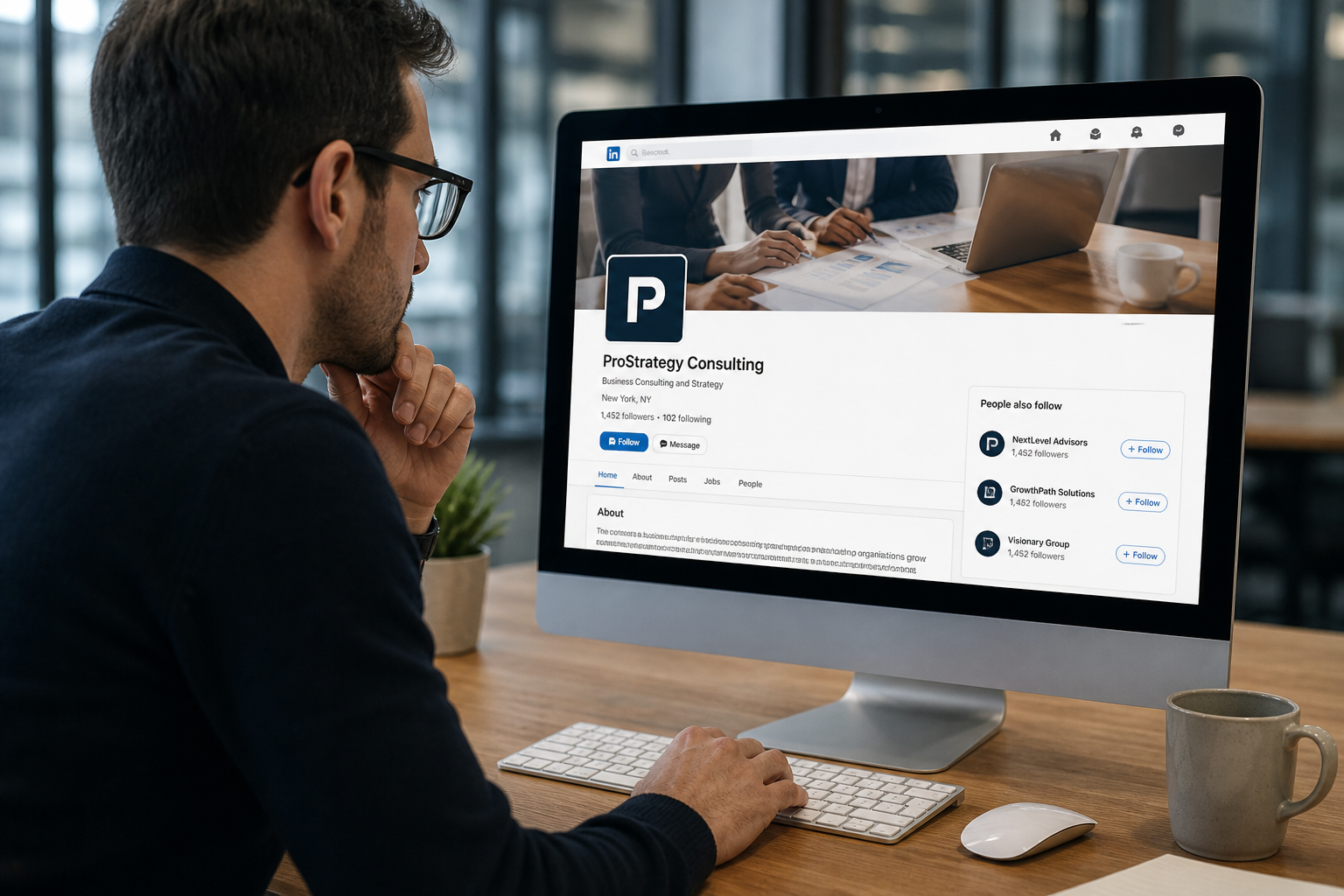
Before you pitch a prospect, before you send a proposal, before you make a single phone call — they've already looked you up.
This isn't a new behavior. People have been Googling businesses and professionals before engaging with them for well over a decade. What has changed is how much weight social media presence now carries in that pre-engagement evaluation, and specifically how much a follower count — on LinkedIn, on Facebook, on any platform where your brand lives — shapes the impression someone forms before they ever interact with you directly.
A robust following doesn't just mean more people see your content. It signals something more fundamental: that you are worth paying attention to. And in a world where trust is the scarce resource and attention is the battleground, that signal is doing more selling than most business owners realize.
The Psychology of Social Proof
To understand why follower counts carry the weight they do, you have to understand social proof — the psychological phenomenon where people look to the behavior and choices of others to determine what's credible, valuable, or trustworthy.
Robert Cialdini identified social proof as one of the six core principles of influence decades ago, and it hasn't weakened since. If anything, the internet has amplified it. When we see that thousands of people follow a brand, subscribe to a newsletter, or consistently engage with a professional's content, we unconsciously conclude that those people have already done the vetting on our behalf. They found this worth following. They found this credible. So maybe we should too.
This is why a restaurant with a line out the door draws more customers than an empty one with identical food. It's why books with thousands of reviews sell more than equally good books with none. And it's why a LinkedIn profile with 12,000 followers lands differently than an identical profile with 200 — even if the person's actual expertise is exactly the same.
The follower count is a proxy for credibility. It's imperfect and gameable, but it's what people use because it's visible, immediate, and requires no additional research to interpret.
What Your LinkedIn Following Says About You
For personal brands and professionals
LinkedIn has become the professional world's first impression. Before a prospect takes a meeting, before a recruiter submits your name, before a potential partner agrees to collaborate — there's a decent chance they pulled up your LinkedIn profile and formed an opinion in under 60 seconds.
A healthy follower count on a personal LinkedIn profile communicates several things simultaneously. It signals that you've been active and consistent enough to build an audience — which implies you take your professional presence seriously. It suggests that peers and professionals in your field find what you have to say worth following — which implies genuine expertise rather than self-declared authority. And it creates a subtle but real sense of risk reduction for the person considering working with you. If this many people follow you, the thinking goes, the odds of this being a bad bet are lower.
None of this is consciously processed. It happens in seconds, beneath the level of deliberate reasoning. But the impression it creates is real and it shapes the entire interaction that follows.
For company brands
The same dynamic plays out at the brand level. A company LinkedIn page with a few dozen followers raises an immediate question in a prospect's mind, whether they articulate it or not: why haven't more people found this worth following? A page with thousands of engaged followers answers that question before it's asked.
For B2B businesses especially, where purchase decisions involve multiple stakeholders and longer evaluation cycles, LinkedIn legitimacy is increasingly part of the due diligence process. Procurement teams, decision-makers, and evaluators look at a vendor's LinkedIn presence as part of how they assess whether that company is an established, credible player or a peripheral one. A strong following doesn't close deals — but a weak presence can lose them before the conversation even starts.
What Your Facebook Following Says About You
For local and consumer-facing businesses
Facebook's legitimacy signal operates differently from LinkedIn's but it isn't any less powerful in the right context. For businesses that serve local communities — dealerships, restaurants, home services, retail stores, healthcare practices — a Facebook page with a substantial, active following is a trust signal that functions similarly to a packed parking lot or a long review history on Google.
When someone searches for a local business and lands on a Facebook page with 4,000 followers, hundreds of check-ins, and active comments on recent posts, they're seeing social proof in real time. Other people in their community have engaged with this business. Other people found it worth following. That's a fundamentally different first impression than a page with 180 followers and a post from six months ago.
For personal brands in consumer markets
For professionals who build personal brands in consumer-facing markets — real estate agents, financial advisors, insurance professionals, consultants, coaches — a Facebook following serves as community credibility. These are often local or regional audiences where the connection between "this person has a following" and "this person is trusted in our community" is particularly direct. When your neighbors and colleagues are among someone's followers, the social proof effect intensifies because the validators are people you actually know.
The Credibility Gap: What a Weak Following Costs You
It's worth being direct about the downside, because most businesses focus on what a strong following gains them without fully reckoning with what a weak one costs.
A thin or dormant social media presence actively undermines credibility in several specific scenarios.
When a prospect is on the fence and doing their final research before committing, a sparse social presence introduces doubt. It doesn't definitively say anything negative — but it removes a positive signal that competitors with stronger presences are providing. In a close decision, that can tip the balance.
When a journalist, podcast host, or event organizer is evaluating whether to feature you, your follower count is part of how they assess your reach and influence. A professional with 15,000 LinkedIn followers gets consideration that an equally qualified professional with 800 followers doesn't — because the platform treats them differently and the gatekeeper treats them differently.
When a potential employee is evaluating whether to accept an offer or apply in the first place, they look at your company's social presence as a signal of organizational health and culture. A company that barely exists on social media reads as either very small, very traditional, or not particularly engaged with the world — none of which are compelling recruiting signals in a competitive talent market.
Quantity vs. Quality: The Nuance That Actually Matters
None of this is an argument to buy followers or inflate your numbers through tactics that produce volume without genuine engagement. That approach backfires badly.
An inflated follower count with near-zero engagement is immediately visible to anyone who looks closely — and the people you most want to impress tend to look closely. A LinkedIn profile with 20,000 followers and posts that get two likes reads as something purchased rather than earned. It doesn't just fail to build credibility; it actively destroys it.
The goal is a following that is proportionate to your actual activity and genuine enough to produce real engagement. For most businesses and professionals, that means growing followers through consistent, valuable content rather than shortcuts — because a smaller, genuinely engaged audience produces dramatically better legitimacy signals than a large, hollow one.
Quality followers are people who are actually in your industry, your market, or your potential customer base. They're the ones whose presence on your follower list means something — because when a prospect sees that people they respect follow you, the social proof multiplies in a way that raw numbers alone can't achieve.
How to Actually Build a Following That Builds Legitimacy
Show up consistently before you expect results
Follower growth is a lagging indicator. It rewards consistency over time, not sporadic bursts of activity followed by long silences. The businesses and professionals who build meaningful followings are the ones who post regularly — not necessarily daily, but reliably enough that their audience knows they're there. Consistency signals commitment, and commitment signals credibility.
Post content that reflects genuine expertise
The fastest path to follower growth is content that makes people think. Practical insights from your actual experience in your industry. Takes on developments in your field that go beyond surface-level observation. Data points that inform decisions your audience is trying to make. Content that demonstrates you know things worth knowing attracts followers who are genuinely interested in what you have to say — and those are the followers whose presence means something.
Engage rather than broadcast
Follower count matters, but engagement rate is what separates a legitimate presence from a performative one. Responding to comments, participating in conversations in your industry, asking questions that invite genuine responses — these behaviors build the kind of active community that makes a follower count credible rather than cosmetic. A profile or page where real conversations happen looks categorically different from one that just pushes content into the void.
Let your network do some of the work
On LinkedIn especially, the fastest organic follower growth comes from content that your existing network shares and engages with — because their engagement exposes your content to their connections, many of whom will follow you if what they see is worth following. This is why employee advocacy and personal profile activity compound so effectively: every person in your organization who posts quality content is potentially growing your brand's reach and by extension its perceived legitimacy.
Be patient about the number but disciplined about the activity
Most professionals and businesses dramatically underestimate how long it takes to build a meaningful following organically — and overestimate how quickly they need to get there. The follower count is the outcome. The inputs are content quality, posting consistency, and genuine engagement. Focus relentlessly on the inputs and the outcome follows. Obsessing over the number while neglecting the inputs is how people end up with stagnant pages that never build the momentum they're looking for.
The Compounding Effect Nobody Talks About
Here's what makes social media legitimacy particularly valuable as a long-term investment: it compounds.
A following of 500 engaged people grows faster than a following of 50, because more engagement means more algorithmic reach, which means more exposure to potential new followers, which means faster growth. A company page that's been active and growing for three years is a fundamentally different asset than one that was started three years ago and has been posting sporadically ever since.
The legitimacy signal also compounds. A professional who has been consistently visible on LinkedIn for four years — building their following, developing their voice, becoming known in their industry — has a credibility floor that someone who just started cannot replicate quickly. First impressions in digital spaces are increasingly formed by the depth and history of your presence, not just its current state.
This is why the best time to start building your social media following with intention was two years ago. The second best time is today.
What This Means for Your Business Right Now
If you're a business owner, marketing lead, or professional reading this, here's the practical takeaway.
Your social media following — on LinkedIn, on Facebook, on whatever platform your audience lives on — is a business asset that is either appreciating or depreciating right now based on what you're doing with it. A growing, engaged following is building legitimacy, reducing friction in your sales process, improving your recruiting position, and creating compounding visibility that gets harder for competitors to replicate over time. A stagnant or neglected presence is quietly eroding your credibility with every prospect who looks you up and finds nothing worth paying attention to.
The businesses that treat social media presence as a vanity metric — something nice to have but not strategic — are the ones that will find themselves playing catch-up against competitors who understood earlier that the follower count isn't just a number. It's a signal. And signals, in business, have consequences.
Want to Build a Social Presence That Actually Builds Your Brand?
At Ritner Digital, we help businesses develop digital marketing strategies that turn social media into a genuine business asset — not just a content calendar. If you want to talk through where your presence stands today and what a real growth strategy looks like for your brand, let's connect.
Let's Talk → ritnerdigital.com/#contact
Sources: Cialdini, R. Influence: The Psychology of Persuasion. GaggleAMP Employee Advocacy Data (2025), Metricool LinkedIn Statistics (2026), Sprout Social Index (2025), Meet Lea LinkedIn Engagement Data (2026)
Frequently Asked Questions
Does my follower count actually matter to potential customers or is it just a vanity metric?
It matters more than most business owners want to admit, but not in the way most people think. Prospects aren't sitting down and analyzing your follower count as a data point — it's not that deliberate. What happens is faster and more instinctive than that. A strong following creates an immediate sense of credibility that lowers the psychological barrier to engaging with you. A weak or dormant presence introduces a subtle doubt that the prospect may never even consciously articulate — they just move on. So yes, it matters, but as a trust signal rather than a scorecard.
How many followers do I actually need before my presence starts building legitimate credibility?
There's no universal threshold, and anyone who gives you a specific number is oversimplifying. What matters more than hitting a particular milestone is whether your following looks proportionate to your activity and genuine enough to produce real engagement. A professional with 1,500 highly engaged followers in a niche industry carries more credibility than someone with 10,000 followers and posts that generate no response. That said, on LinkedIn, breaking through the 1,000 follower mark tends to be a meaningful inflection point where the profile starts reading as established rather than nascent.
Is it better to have more followers on LinkedIn or Facebook for business credibility?
It depends entirely on who is evaluating you and in what context. LinkedIn credibility carries more weight in B2B environments, professional services, recruiting, and any situation where the person evaluating you is doing so in a professional capacity. Facebook credibility carries more weight for local businesses, consumer-facing brands, and community-based trust — where the question a prospect is asking is less "is this person an industry expert" and more "is this business an established part of my community." Ideally you're building both, but if you have to prioritize one, follow your audience rather than a general rule.
Can a small business with a limited budget realistically build a following that builds credibility?
Absolutely, and in some ways a focused small business has an advantage over a larger brand that's spreading itself thin across every platform. Pick one or two platforms where your actual customers spend time, show up consistently with content that's genuinely useful to your specific audience, and engage authentically with the community around your niche. Follower growth achieved this way — slowly, organically, through real value — produces an audience whose engagement makes the following look credible rather than hollow. You don't need tens of thousands of followers to build legitimacy. You need enough of the right people following you and engaging with what you post.
What's the difference between followers that help credibility and followers that hurt it?
Followers that help credibility are real people in your industry, market, or customer base who occasionally engage with your content — even just a like or a comment. Their presence signals that your content is reaching a relevant audience. Followers that hurt credibility are either fake accounts, purchased followers, or real people who followed you for a one-time reason and never engage again. The problem with inflated, disengaged follower counts is that anyone who looks carefully — and the people you most want to impress do look carefully — will notice the disparity between your follower number and your engagement rate. That disparity is a credibility red flag that's worse than simply having a smaller following.
Should I focus more on growing my personal profile following or my company page following?
For most business owners and professionals, the personal profile is the higher-leverage investment. People connect with people before they connect with brands, and a personal profile with a strong following lends credibility to the company by association in a way that's very difficult to reverse-engineer from the company page alone. The ideal is to grow both — using your personal profile as the engine that drives visibility and engagement, and the company page as the institutional hub that gives the brand its own independent presence. But if you can only focus on one, grow the personal profile first and let it pull the company page forward.
How do I grow my following without resorting to tactics that feel spammy or inauthentic?
The simplest answer is to create content worth following and engage genuinely with other people's content in your space. That means posting things that reflect real expertise and real perspective — not just sharing other people's articles or posting generic motivational content — and spending time actually commenting on posts from peers, customers, and industry voices in a way that adds something to the conversation. Growth built this way is slower than growth built through follow-for-follow tactics or purchased followers, but it produces an audience that actually engages, and engagement is what makes a following credible rather than cosmetic.
Does having a large following help my website's SEO at all?
Indirectly, yes — and more so now than in previous years. Since Meta began allowing public Facebook content to be indexed by Google in July 2025, a larger and more engaged Facebook following means your posts get more engagement, which makes them more likely to surface in Google search results. On LinkedIn, a strong following means your content gets wider distribution, increasing the chances it gets cited or linked to by other content creators — which is a direct SEO signal. Neither platform passes follower count directly to Google as a ranking factor, but the downstream effects of a strong, engaged following create real SEO-adjacent benefits over time.
I've been inconsistent with posting and my following has stagnated. How do I restart without it looking desperate?
Start by simply resuming without making a big deal of the gap. You don't need to announce a comeback or apologize for being absent — just post something genuinely useful and let it speak for itself. Audiences respond to quality content regardless of whether there was a gap before it. What you want to avoid is overcorrecting by posting five times in a week after months of silence, which can feel performative and actually suppress reach as the algorithm takes time to re-learn your posting pattern. Restart at a sustainable pace — two or three times a week — with content that demonstrates you have something worth saying, and rebuild the momentum from there.
How long does it realistically take to build a following that meaningfully impacts business credibility?
For most businesses and professionals posting consistently with genuinely useful content, a noticeable credibility shift starts to happen somewhere between six months and a year. That doesn't mean nothing happens before then — individual posts can make strong impressions at any point — but the cumulative effect of a growing, engaged following starts to produce real business outcomes in that timeframe. The compounding nature of social media growth means the rate of return accelerates over time: the first 500 followers take longer to earn than the next 500, and the legitimacy signal they create grows disproportionately as the following deepens. Patience and consistency are the non-negotiable ingredients.