"We're the Hometown Guys": The Kind of Business Ritner Digital Was Built For
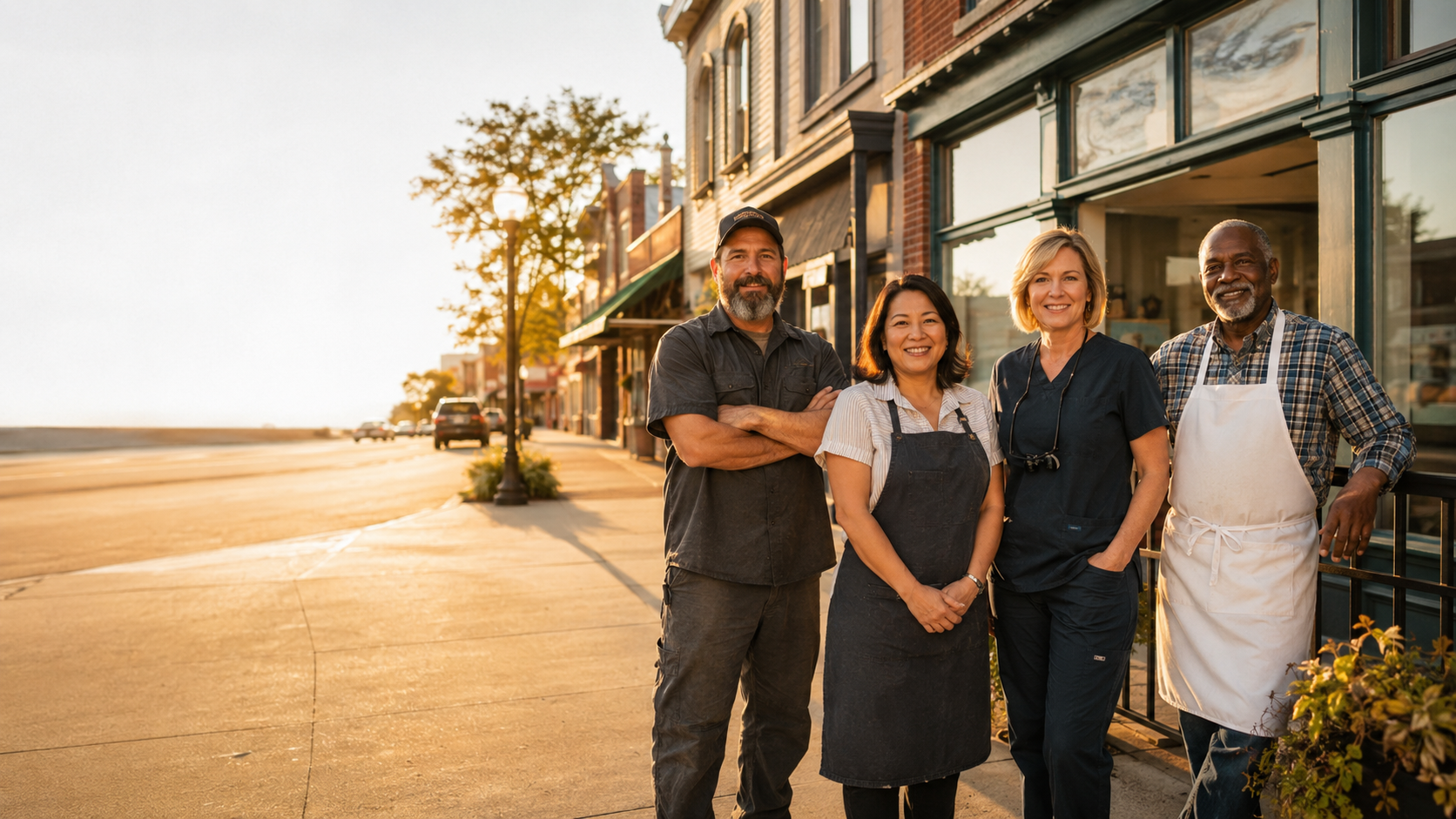
There's a phrase that shows up on almost every call we end up loving, and it's almost always said like an apology.
"Look, we're not the biggest operation. We're kind of the hometown guys."
Sometimes it's a family dealership that's been on the same road for two generations. Sometimes it's a practice where the front desk knows patients by their first names and their kids' names. Sometimes it's a fire company whose members coach the same Little League teams they played on. The wording changes — "everybody around here knows us," "we're not corporate," "we do things the old way" — but the tone is always the same. Half pride, half apology. As if being the hometown guys is the thing they need to explain away before the marketing conversation can start.
Here's what we want to say every time, and what this post exists to say once, in full: when we hear "we're the hometown guys," we light up. Not as a nicety. As a business assessment. Because that phrase, said honestly, describes the single most underpriced asset in local marketing — and the exact kind of business this firm was built to serve.
Let us make the case. With data, with examples, and with the honest parts included, because that's how we do everything. And if you've said some version of that phrase yourself lately — half proud, half apologizing — read to the end, because the apology half is the part we're going to take off your hands.
The hometown advantage is real — Gallup has been measuring it for decades
Start with the fact almost no hometown business owner knows about themselves: you belong to the most trusted institution in America.
Every year, Gallup surveys Americans' confidence in the country's major institutions — Congress, the media, banks, the courts, the medical system, big business, all of it. And every year, one institution sits at the top of the list: small business.In Gallup's latest survey, small business was the only institution of the seventeen measured to earn majority confidence from Americans — and the only one trusted across party lines, in an era when almost nothing is. Recent readings put confidence in small business around 70%, ahead of the military and science. Big business? 14%. Small business or the military has held the top spot in this survey since 1989.
Sit with that gap for a second: 70 versus 14. Americans trust the hometown guys five times more than the faceless version of the same industry. When you say "everybody around here knows us," you're not describing a limitation. You're describing a five-to-one trust advantage over every big-box, big-system, private-equity-rollup competitor in your market — an advantage they spend millions in advertising trying to fake, with folksy jingles and stock photos of actors pretending to be neighbors.
You have the real thing. Which makes what comes next genuinely painful to watch.
The tragedy: the hometown advantage doesn't transfer online by itself
Here's the pattern we see in audit after audit, and it never stops being a shame.
A business that's beloved offline — decades of handshakes, generations of customers, a reputation you could spend a fortune and never buy — is functionally invisible online. The website hasn't changed since the renovation. The Google listing is unclaimed, or the hours are wrong. Reviews sit unanswered, including the one unfair one that everybody in town knows is nonsense but Google doesn't. There's no page for half of what the business actually does. And ask ChatGPT about them — as one in three Americans now does for health questions alone, and as buyers increasingly do for everything — and the answer is a competitor, a wrong address, or nothing at all.
Meanwhile, the decision-making has moved to exactly those screens. 77% of patients look for providers online. Buyers research dealerships for weeks before one visit. Google itself now answers many searches directly, cutting clicks roughly in half where its AI summaries appear — which means being the answer, not just a listing, is the game.
So the town's most trusted business loses the new arrival, the new patient, the out-of-town buyer — not to a better business, but to a more findable one. The chain with the SEO vendor. The health system with the marketing department. The marketplace that charges the hometown guys rent to reach their own customers. Twenty years of earned trust, defeated by an unclaimed Google profile.
That's not a character flaw. Nobody opened a family dealership or a counseling practice because they were passionate about schema markup. It's a translation problem: the hometown advantage exists in handshakes and reputations, and it needs to be translated into the language search engines and AI engines read. That translation is a job. It's our job, specifically.
Why the big agencies keep failing these businesses
If translation is the job, why hasn't the marketing industry done it? Because the agency model was never built for the hometown guys — we've written about why that model is breaking — and it fails them in three predictable ways.
The budget mismatch. Real agencies quote $3,000–$10,000 a month, which prices out most of Main Street entirely. What's left for the hometown budget is the churn-and-burn tier: the cold callers, the "$299 SEO package," the vendor who disappears after month two. So hometown businesses learn, reasonably, that marketing is either unaffordable or a scam — and go back to hoping word of mouth holds.
The account-manager buffer. At an agency, the person who wins your business hands you to a person who manages you, who hands the work to a person you'll never meet. Every handoff loses something, and what it loses first is you — the specifics, the stories, the way you actually talk.
And the worst one: the content mill sands off your voice. This is the quiet crime of hometown-business marketing. The agency's writer, three time zones away, produces technically fine, completely interchangeable content — "We Pride Ourselves On Customer Service" — that could hang on any business in any town. In trying to make the hometown guys sound "professional," they delete the only thing that made them different. The voice was the asset. The agency threw it out and billed for the removal.
What it looks like when the hometown voice actually makes it online
Now the good version, because we get to watch it work.
Our client True Blue Autos is a family-run truck dealership in Greensburg, Indiana — hand-picked Super Duty trucks, a no-commission sales team, straight answers. Hometown guys, textbook case. When we tested what ChatGPT, Gemini, and Claude said about where to buy a truck — thirty prompts, all published — True Blue won its hometown. The engines named them, and named them for the right reasons: family-run, no-commission, ships nationwide. The hometown identity, translated into signals the machines could read, became the recommendation. (They vanished everywhere else — that's the published, honest part, and it's the work.)
The same translation works in every vertical we serve. The dealership whose vehicle pages are written by a human who actually walked around the truck — "the tailgate has honest work scratches, pictured, not hidden" — instead of manufacturer boilerplate shared with a thousand stores. The medical practice whose owner replies to reviews like a neighbor (the HIPAA-safe way) while the health system's replies route through a corporate queue. The fire companywhose join page is written by the crew — "most of us walked in with zero experience" — instead of a committee. In every case, the online version that wins is the one that sounds most like the business actually sounds across the counter. Not less hometown. More.
Here's the part nobody tells you: "hometown" is a technical advantage now
This is the section to forward to whoever thinks the hometown voice needs to be replaced with something slicker.
Search engines and AI engines have spent the last several years learning to detect and reward exactly the qualities hometown businesses have naturally. Google's quality frameworks explicitly favor demonstrated first-hand experience, real expertise, and authentic trust signals — real photos of your real place, content that could only have been written by someone who was actually there, reviews that read like real people because they are, a business entity with deep, consistent local roots. And when we study which content formats AI engines actually cite across our clients, the pattern is the same: the engines skip the interchangeable stuff and cite the specific, the first-hand, the verifiably real.
In other words: the machines got good at detecting fakes, and the hometown guys are the ones who aren't faking.Generic content mills are being filtered out of AI answers at exactly the moment your thirty years on the same corner became machine-readable gold — if someone does the entity work to structure it. Your founding year, your family's name on the sign, your service area, your real reviews, your specific answers to specific local questions: these are the raw materials of AI-era visibility, and hometown businesses are sitting on more of them than any competitor. Untranslated, they're worth nothing online. Translated, they're the whole ballgame.
The hometown phrasebook, translated into search assets
To make the translation concrete, here's how the things hometown owners say across the counter — the exact sentences agencies delete — map to the assets that win online. This is the actual work, demystified:
"Everybody knows us around here" becomes entity signals: a consistent name, address, and history across your site, your Google profile, and every citation on the web, structured so engines can confirm that "everybody" includes them. Being known is a fact; entity SEO is how the machines learn it.
"Ask anybody — we'll treat you right" becomes a review engine: earned systematically from real customers while the visit is fresh, and answered by the owner in the owner's voice. The town's word of mouth already exists; this just gets it on the record where the next searcher — and 64% of consumers who expect public replies — can see it.
"We've been doing this thirty years" becomes content only you could write: the honest buyer's guide, the "what your first visit is actually like" page, the answer to the question customers ask every week. Thirty years of answers, currently stored in one person's head, published where the questions are actually being asked.
"We're right by the ballfields, past the diner" becomes local pages and town-name targeting — the Sewells and Turnersvilles and Blackwoods of your world, named the way neighbors name them, the same play we've explained for dealerships.
"We sponsor the Little League team" becomes exactly what it looks like: community pages, local mentions, and the kind of genuinely local links no content mill can manufacture — because you can't fake having been at the pancake breakfast.
Notice what's not on the list: nothing invented, nothing borrowed, nothing that requires you to become somebody else. Every asset is something you already have, translated. That's why this work suits hometown businesses better than it suits anyone else — the raw material is already paid for.
Who we're built for — and, honestly, who we're not
So when we say Ritner Digital was built for the hometown guys, here's the specific business we mean. Small to medium. Owner still in the building. A real reputation earned the slow way. No big-agency budget and no interest in acquiring one. Wants a motivated professional who can speak the community's language instead of translating everything into marketing-speak — someone who understands that "we sponsor the Little League team" and "Father and son, same last name on the door since '86" aren't filler; they're the strategy. A business that says "we pick up the phone" and means it, and wants a marketing partner who operates by the same code.
And in the interest of shooting straight, who we're not built for: enterprises that need an org chart across the table. Franchisor programs coordinating fifty rooftops. Anyone who wants to sound like a national brand instead of themselves — plenty of agencies will happily sand you down; we won't. And anyone expecting rankings overnight, because the honest timeline is months, and we'd rather lose the deal than lie about the calendar.
We built the firm to match the businesses it serves
This part isn't an accident, and it's why the fit works.
Ritner Digital is named for Ritner Street in South Philadelphia — rowhomes, corner shops, people who do what they say. It's one person doing the whole job: no account managers, no handoffs, no offshore content mill between you and the work. The founder who reads your form is the one who answers it, within a business day, and the one on the monthly call walking through your numbers.
The pricing is built for the hometown budget on purpose: $1,000 a month, flat — the whole job, SEO and AI search and content and the website upkeep nobody else wants to touch — with no setup fees and no hard lock-in, because cancelling should be one email and the work should earn its keep every month. And the proof runs on the same standard we'd want as customers: our own Search Console data, published monthly, dips included, so you can check the work before you ever send the form. A hometown business runs on its word and its reputation. So does this one. That symmetry is the whole idea.
The bottom line
Four sentences, like always. If you're the hometown guys, you already own the thing Americans trust more than any institution in the country — and it's currently invisible on the screens where your town actually decides, from Google's map pack to ChatGPT's answers. The fix isn't becoming slicker or sounding corporate; it's translating exactly who you already are into the language search and AI engines read. That's a job for someone who lights up at "we're the hometown guys" instead of trying to fix it. That's the firm we built.
Frequently Asked Questions
Do you only work with small businesses?
Small and medium, yes — on purpose. The roster stays small enough for one person to do the whole job well, which means we're the wrong fit for enterprises and multi-location programs that need an agency org chart, and we'll say so on the first call. If you're an owner-operated business with a real local reputation, you're exactly who the flat $1,000/monthwas designed around.
We've never really done marketing — is that a problem?
It's the most common starting point we see, and honestly, often the best one: no bad contracts to unwind, no penalty-earning shortcuts to clean up, and decades of untranslated reputation to work with. The free visibility check meets you wherever you are — it just reads, in plain English, how your business currently shows up in Google and AI, and what we'd fix first.
Is $1,000 a month realistic for a business like ours?
That's for you to judge against your own numbers, and we'd rather help you run them than talk you into anything — the rent-vs-own budget math is published here. For most hometown businesses, $12,000 a year is less than they're already losing to ads, platform fees, and the customers who never found them. And if the check shows your situation genuinely can't carry it, you'll hear that from us plainly instead of an invoice.
Do you only work with businesses near Philadelphia?
No — the work is digital, and our flagship client is a family truck dealership in Indiana. What matters isn't your ZIP code; it's the kind of business you are. That said, we know South Jersey and the Philly area street by street, and for businesses here — like the medical practices of Washington Township — the local knowledge comes free.
Won't making us "visible online" make us sound less like ourselves?
The opposite — that's the entire thesis. The version of your business that wins in search and AI answers is the one that sounds most like you actually sound: your voice, your photos, your specifics, structured so the engines can read them. The sanding-down happens at content mills, not here. If anything, expect to sound more like the hometown guys online than you do now — because right now, online, you mostly sound like nothing at all.
What makes this different from the marketing calls we already get?
Three things you can verify before spending a dollar: the numbers are published — our own Search Console data, monthly, dips included; the work is done by the person you talk to, not handed down a chain; and the first deliverable is free — a real visibility check of your Google and AI presence, yours whether or not you ever hire us. The cold callers can't clear any of those three bars. That's rather the point.
If any of this sounded like your business
Tell us about it — the real version, in your own words. Where you are, how long you've been there, what's going on with the phone. We'll run the free visibility check: what ChatGPT, Gemini, and Claude actually say about you, how you stand in Google and the map pack, and what we'd fix first — in plain English, from the founder, within one business day. No pressure, no pitch deck. And if you open with "we're the hometown guys," know that on our end of the line, somebody just lit up.
Get your free visibility check → — mention "hometown" in the form.
Sources
Forbes (Gallup coverage) — Small business is the only American institution with bipartisan majority trust
Small Business Association of Michigan (Gallup coverage) — 70% confidence in small business, tops among all institutions
Gallup — Americans still more confident in small vs. big business
Detroit Regional Chamber (Gallup coverage) — Small business or the military has topped the confidence list since 1989
Rock Health — 11th Consumer Adoption of Digital Health Survey
Tebra — Patient Perspectives survey: how patients find providers online
Reputation / YouGov — 64% of consumers say public review replies matter
Search Engine Journal (Pew Research coverage) — AI Overviews cut organic clicks