Does Your Facebook or LinkedIn Following Actually Help Your SEO? Here's the Real Answer.
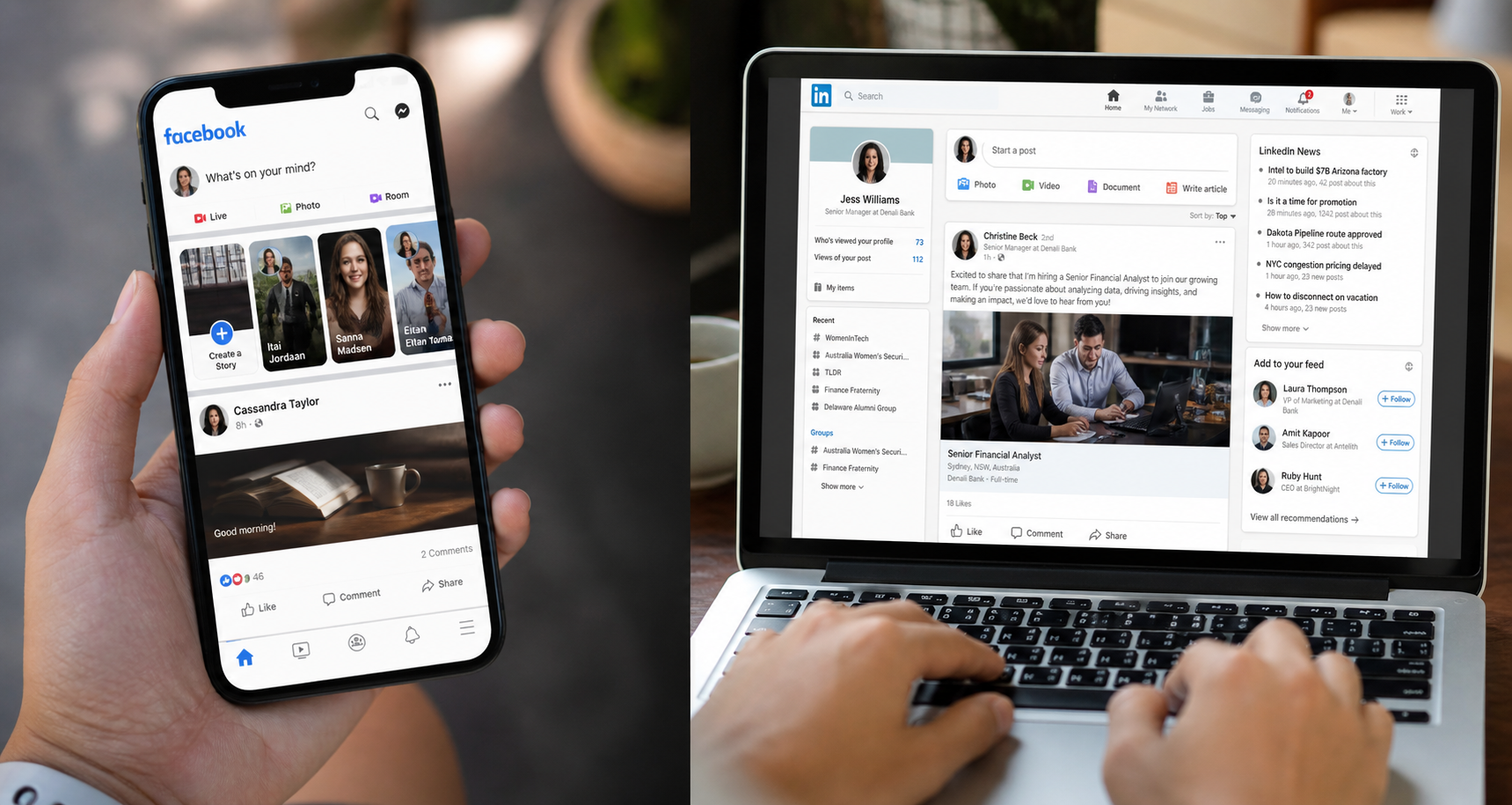
It's one of the most common questions we get from business owners who are trying to make sense of their digital marketing: does having a big social media following actually help my website rank better on Google?
The short answer is: it's complicated — but it matters more than it used to, and the answer is different depending on which platform you're talking about.
Let's break it down properly, because there's a lot of outdated information floating around on this topic, and the rules changed significantly over the past year.
First, the Baseline: Social Media and SEO Were Always Separate — Until They Weren't
For most of the past decade, digital marketers operated under a fairly clear understanding: social media and SEO were parallel lanes. Social built brand awareness and engagement. SEO drove organic search traffic. They influenced each other indirectly — a viral post might earn backlinks, which helped SEO — but the platforms themselves weren't really part of Google's ranking equation.
That separation has been breaking down. In 2026, search engine optimization and social media marketing are no longer competing channels — they are converging. Search today is no longer limited to a single search engine. People discover information through Google search results, TikTok search, YouTube, Reddit threads, Instagram Reels, Pinterest, and AI-generated summaries. SEO Sherpa
What that means practically: your social presence is now a searchable, indexable layer of your brand's online authority — not just a megaphone for reaching followers on a given platform.
What Facebook's Following Actually Does for Your SEO
Facebook followers don't directly boost your Google rankings
Let's be clear about the mechanics first. The size of your Facebook following is not a direct ranking signal that Google uses to determine where your website appears in search results. Having 50,000 followers doesn't automatically push you above a competitor with 500 followers in a Google search.
But something big changed in July 2025 that makes Facebook far more relevant to SEO
On July 10, 2025, Meta began allowing public content from professional Facebook and Instagram accounts to be indexed by Google and other search engines. That includes captions, alt text, bios, location tags, and even historical content going back to January 2020. Before this update, your Facebook content lived inside a walled garden — it could go viral within Facebook, but Google couldn't really surface individual posts. Now, a well-optimized Facebook post can show up in Google search results right alongside traditional blog posts and web pages. Neal Schaffer
This is genuinely significant and most businesses still haven't caught on. Your Facebook posts are now functioning like mini web pages — discoverable in Google search if they're keyword-optimized and generating engagement.
A larger following amplifies that indexability
Here's where the follower count starts to matter indirectly. Facebook SEO goes beyond simply ranking within Facebook. Meta confirmed that public Facebook posts now surface more often in Google results — and Google's ranking approach relies on Experience, Expertise, Authoritativeness, and Trustworthiness (E-E-A-T) signals. Social presence — like follower growth, consistent engagement, and relevant content — demonstrates these qualities to Google. Sprout Social
In other words: a larger, engaged following makes your posts more likely to generate the likes, comments, and shares that signal to Google that your content is trustworthy and relevant. That engagement is the bridge between social activity and search authority.
Facebook is becoming its own search engine
There's a second dimension to this worth understanding. According to the 2025 Sprout Social Index, 90% of consumers use social media to stay plugged into online culture, and over half say Facebook and Instagram are their top networks for product discovery. These numbers confirm that Facebook functions as a search engine in its own right. Sprout Social
The average user spends nearly 19 hours per month on Facebook. That's not a dying platform — that's a search engine hiding in plain sight. Neal Schaffer
So the question isn't only "does Facebook help my Google SEO" — it's also "am I findable when someone searches for my business type directly inside Facebook?" A strong, active page with a healthy following answers yes to both.
Does Facebook directly drive traffic to your website?
Historically, Facebook has been a mixed bag for driving referral traffic. Organic reach on Facebook has declined significantly over the years as the platform prioritizes content that keeps users on Facebook. Outbound links — posts that send people away from the platform — tend to get suppressed in reach.
That said, a highly engaged following changes the math. If your content consistently generates real engagement, the algorithm gives it more reach, and more reach means more clicks. The relationship is indirect but real: following size → engagement → algorithmic reach → website traffic.
What LinkedIn's Following Actually Does for Your SEO
LinkedIn has always had stronger inherent SEO value than Facebook
LinkedIn pages and profiles have long been indexed by Google and tend to rank well — often appearing on the first page of results when someone searches a person's name or a company's name. That's been true for years.
But the data on company pages vs. personal profiles is striking
Personal LinkedIn profiles get 5x more engagement and 561% more reach than company pages. This is one of the most important statistics in social media marketing right now and most businesses are ignoring it. Meet Lea
Personal profiles have a significantly higher engagement rate (2.60%) compared to company pages (1.74%). People want to connect with people — in 2026, the human element of LinkedIn is its strongest asset. Personal profiles generate more interactions per impression because they feel more authentic and less like a marketing broadcast. Metricool
What this means for your business: the LinkedIn company page following is less important than who at your company is posting from their personal profiles. A founder, sales manager, or marketing director posting consistently from their personal account will outperform the company page almost every time — and that personal content reflects back on the brand and drives people to the website.
LinkedIn company page posts with links perform surprisingly well
Here's a nuance that runs counter to conventional wisdom. On company pages, posts with links actually perform above average in both impressions (+51%) and interactions (+41%). On personal profiles, the opposite happens — both impressions and interactions drop. Metricool
This is a meaningful tactical insight. If you want to drive website traffic from LinkedIn, your company page is actually the better vehicle for posts that include outbound links — while personal profiles are better for content that keeps people engaged on-platform and builds authority organically.
LinkedIn's SEO value for B2B businesses is in a different category
If your business sells to other businesses — or if your customers are professionals making considered purchase decisions — LinkedIn carries a weight that Facebook simply doesn't for website-driving SEO. An insightful LinkedIn post can earn backlinks if it's quoted or embedded in articles, which is a direct SEO signal. A Facebook post almost never earns a backlink. Bloom
LinkedIn content that establishes genuine expertise gets cited, shared in newsletters, linked in blog posts, and referenced in industry conversations. That earned media compounds over time into real domain authority for your website.
Facebook vs. LinkedIn: Which One Has More SEO Impact?
Here's the honest comparison:
Facebook wins on: raw audience size, local business discoverability, product discovery for B2C businesses, and — since the July 2025 indexing update — the potential for individual posts to rank in Google search results.
LinkedIn wins on: professional authority signals, backlink potential, B2B credibility, and the compound effect of personal profile posting that reflects on your brand.
Neither platform directly drives massive website traffic on its own unless the content is exceptional, the following is genuinely engaged (not just large), and there's a clear call to action pointing people somewhere.
The follower count on either platform is honestly less important than most people think. A company with 800 highly engaged LinkedIn followers whose founder posts three times a week will generate more SEO-adjacent value and more website traffic than a company with 15,000 dormant Facebook followers and one post a month.
What Actually Moves the Needle
Consistent, keyword-rich content on both platforms
Since Meta's July 2025 update, your public Facebook Page and certain posts can appear in Google search results, creating another avenue of discoverability. That only works if your content includes the terms people are actually searching for. Write posts the way you'd write a blog — with real information, specific language, and a clear topic. Metricool
Engagement quality over follower quantity
LinkedIn is becoming more selective about who sees your content — while total reach might be slightly lower than last year, the people who do see posts are much more likely to interact with them. The environment has become more challenging but also more rewarding for those who focus on high-value content. The same principle applies to Facebook. An algorithm that rewards genuine engagement means authentic, useful content consistently beats follower-farming tactics. Metricool
Your personal profile on LinkedIn, not just the company page
If you're the owner or a visible leader at your business, posting from your personal LinkedIn profile is one of the highest-leverage things you can do for brand visibility and website traffic. Employee advocacy leads convert 7x more frequently than traditional company page leads, and posts from individuals convert at 2–5% versus 0.5–1% for company posts. That's not a small difference — that's a fundamentally different outcome. Meet Lea
Links back to your website, done strategically
On Facebook, outbound links get suppressed in organic reach. The workaround is putting the link in the comments rather than the post body, or driving people to a link in bio. On LinkedIn company pages, posts with links actually outperform those without — so use them deliberately and make sure they point to content worth reading.
Consistent NAP across all platforms
Ensure your business's Name, Address, and Phone number are consistent across your Facebook Page, website, Google Business Profile, and all other online listings. This is vital for local search and overall online visibility. It sounds mundane, but inconsistent business information across platforms actively suppresses your local SEO performance. Metricool
The Bottom Line
Neither Facebook followers nor LinkedIn followers are a magic SEO lever. But both platforms have become meaningfully more connected to search visibility than they were even 18 months ago — especially Facebook, following the July 2025 indexing update.
If you're a B2C business with a local or regional audience, an active, keyword-optimized Facebook presence with genuine community engagement will support your overall SEO and brand discoverability in ways that compound over time.
If you're a B2B business or a brand where professional credibility matters, LinkedIn — particularly personal profiles from visible team members — drives more meaningful authority signals and higher-converting website traffic.
For most businesses, the honest answer is: stop worrying about the follower number and start worrying about whether the content you're publishing is actually worth reading. That's the variable that makes both platforms work — and the one that connects social media activity to real search visibility.
Ready to Build a Social and SEO Strategy That Actually Works Together?
At Ritner Digital, we help businesses cut through the noise and build digital marketing strategies where every channel is pulling in the same direction. If you want a real conversation about what your social presence is doing for your search visibility — and what it should be doing — let's talk.
Get in Touch → ritnerdigital.com/#contact
Sources: Sprout Social Insights (2026), Metricool LinkedIn Statistics (2026), Metricool LinkedIn Trends (2026), Neal Schaffer Facebook SEO Guide (2026), SEO Sherpa (2026), Bloom Digital (2025), Meet Lea LinkedIn Data (2026)
Frequently Asked Questions
Does the number of Facebook followers directly affect my Google ranking?
No — follower count is not a direct ranking signal that Google uses. Having more followers than a competitor won't automatically push you above them in search results. What matters is what that following produces: engagement, content interaction, and the signals of credibility and relevance that come from an active, genuine audience. Think of followers as the engine and engagement as the fuel that actually connects social media to SEO.
Since Meta started allowing Google to index Facebook posts, does that mean every post I write can rank in search?
Technically yes, but practically it depends entirely on the quality of the post. Google indexing your Facebook content means it's eligible to appear in search results — it doesn't mean it will. The same standards that apply to any web content apply here: is the post relevant to a real search query, does it use natural keyword language, and does it earn enough engagement to signal credibility? A well-written, keyword-aware post on an active page has a real shot at appearing in Google results. A generic "Happy Monday" post does not.
Does historical Facebook content get indexed too, or only new posts going forward?
Both. The July 2025 Meta update included historical public content going back to January 2020. That means posts you published years ago are now potentially indexable — which is either good news or a reason to audit older content that may be outdated, inaccurate, or off-brand. If you have public posts that no longer reflect your business accurately, it's worth reviewing them.
Should I be prioritizing my LinkedIn company page or my personal LinkedIn profile?
For most business owners and visible team members, your personal profile is the higher-leverage investment. Personal profiles generate 5x more engagement and 561% more reach than company pages on average. The company page still matters — it lends credibility, appears in branded searches, and is the right place to post content with outbound links to your website. But if you have limited time and have to choose where to focus your energy, personal profile posting will produce better results in almost every case.
If personal LinkedIn profiles outperform company pages, does that mean my company page isn't worth maintaining?
It's still worth maintaining — just don't expect it to be your primary traffic driver. Your company page shows up when people search your business name on LinkedIn and Google, it serves as a hub for employees to connect their profiles to, and it lends institutional credibility that a personal profile alone can't. The smart play is to treat the company page as your home base and use personal profiles as the engine that drives awareness and engagement back toward it.
Why do links perform better on LinkedIn company pages but worse on personal profiles?
This comes down to how the LinkedIn algorithm treats each type of account. The platform appears to reward company pages for providing useful external resources — so posts with links get boosted reach. On personal profiles, the algorithm seems to favor content that keeps people on LinkedIn, so links suppress reach. The practical takeaway: use your company page for posts that drive people to your website, and use your personal profile for content that builds authority and engagement on the platform itself, saving the link-sharing for the company page or the comments section.
Can social media activity help my website rank for specific keywords?
Indirectly, yes. If your social posts consistently use the same language and terminology as your target keywords, and those posts earn engagement and get indexed, they create additional touchpoints in Google's understanding of what your brand is about. More importantly, high-quality social content that earns backlinks — because someone quoted your LinkedIn post in a blog article, for example — creates a direct SEO signal. LinkedIn content from credible professionals is particularly likely to get cited this way, which is why it carries more SEO weight than Facebook for B2B businesses.
My Facebook page has thousands of followers but our posts barely get any engagement. Is that following worth anything?
Honestly, not much in the current environment. A large dormant following is a vanity metric more than a strategic asset. Algorithms on both Facebook and LinkedIn reward engagement, not raw follower counts — so a page with 800 genuinely engaged followers will consistently outperform a page with 8,000 disengaged ones in terms of reach, visibility, and any downstream SEO benefit. If this describes your situation, the priority isn't growing the following further — it's auditing your content strategy to figure out why current followers aren't engaging and fixing that first.
Does running Facebook or LinkedIn ads help my organic SEO?
No, paid ads on social platforms do not influence your organic search rankings on Google. They are entirely separate systems. What ads can do is drive traffic to your website, which — if that traffic engages meaningfully with your content — can produce behavioral signals that Google takes into account. But there's no shortcut where ad spend translates into ranking improvement. Organic content quality and genuine engagement are still the levers that matter for SEO.
What's the single most impactful thing a small business can do on social media to support their SEO right now?
Publish genuinely useful, keyword-aware content consistently — and make sure your business information is identical across every platform and directory online. The content piece is what builds discoverability over time, and the NAP consistency piece is what keeps local SEO working correctly. Neither requires a massive following to be effective. A small business posting two or three substantive, well-written pieces of content per week on the right platform, with consistent business information across the web, will outperform a larger competitor with a bigger following and a sloppy, inconsistent presence over any meaningful time horizon.