Why Publisher Sponsorship Requests Are Just RFPs in Disguise — and Why Brands Keep Losing Them
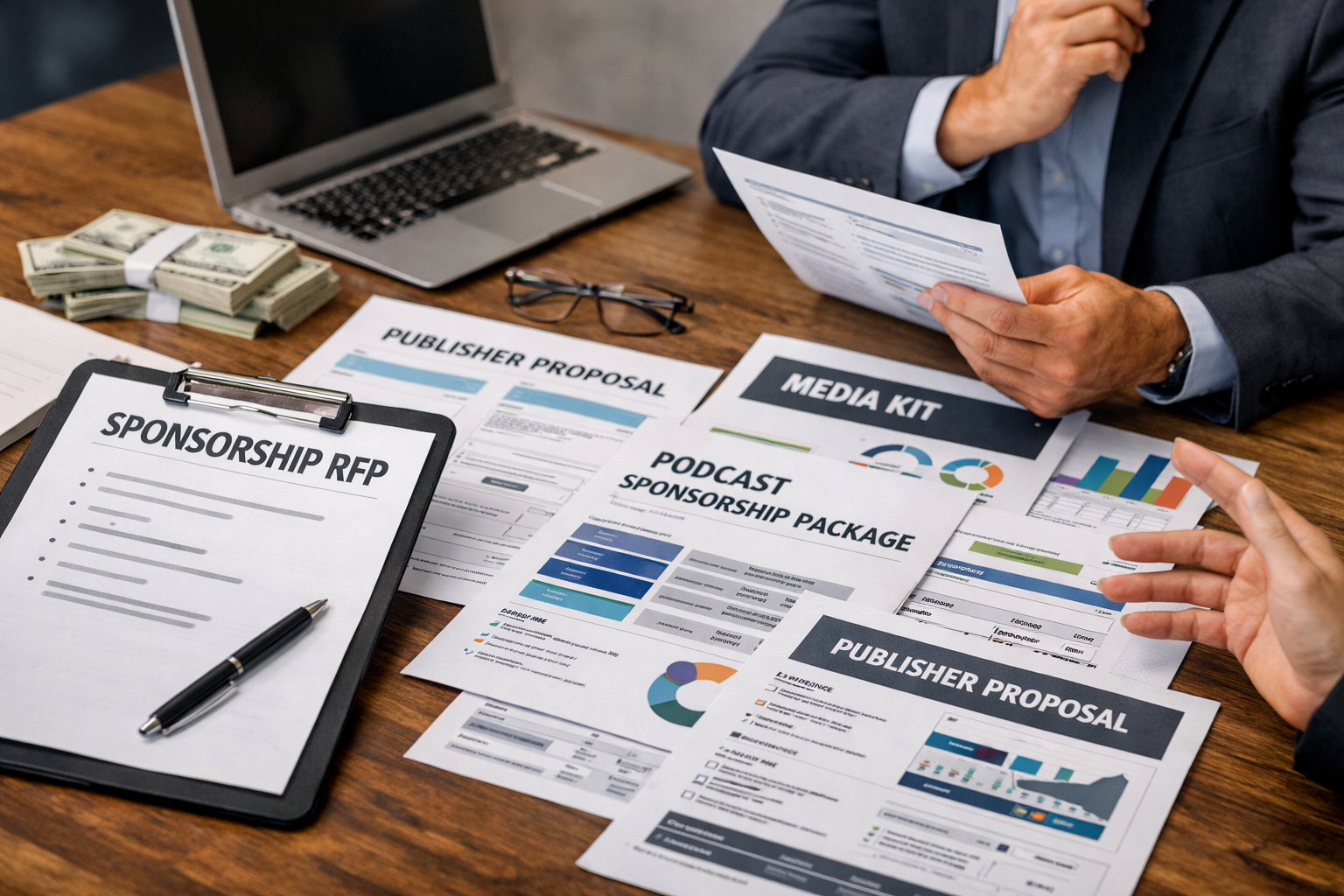
When a municipality needs a construction contractor, it issues a Request for Proposals. The specifications go out to every qualified firm in the category simultaneously. Every firm submits on the same timeline, against the same criteria, at the same price point. The contract goes to whoever best satisfies the evaluation matrix. The process is designed for fairness and competition — which means it is also designed to produce commodity outcomes, because the conditions that make a procurement fair are precisely the conditions that prevent any single vendor from having a meaningful advantage.
Most publishers and podcasts run their sponsorship programs the same way, whether they call it that or not. The rate card goes out. The media kit gets distributed. The pitch deck lands in the inboxes of every brand in the relevant category simultaneously. Everybody gets the same placement options, the same audience description, the same pricing tiers, and the same terms. The brand that responds fastest and meets the budget requirement gets the slot. The process is transactional by design.
And brands keep participating in it, budget after budget, cycle after cycle, getting the same commodity placement that every other brand in their category could have purchased — and wondering why the results feel thin relative to the investment.
The problem isn't the publisher. The problem is that brands are treating a relationship opportunity as a procurement exercise, and getting procurement outcomes instead of partnership ones.
What the RFP Model Actually Produces
The RFP model — in municipal contracting and in publisher sponsorship — is optimized for a specific outcome: equal access, standardized terms, and defensible selection criteria. These are genuinely valuable properties in a public procurement context where fairness and accountability are the primary requirements. They are actively counterproductive in a brand-building context where differentiation, depth of relationship, and exclusive positioning are the outcomes that matter.
When a podcast sends its media kit to twenty brands in a category and five of them buy a mid-tier sponsorship package, what has each of those five brands purchased? They have purchased a host-read ad in a rotation with other sponsors, at a rate that reflects the publisher's standard pricing, in an editorial context that they share with competitors and that the audience has learned to recognize as advertising rather than editorial recommendation. They have rented attention in a commodity format.
What none of them has purchased — because the RFP model doesn't produce it — is a genuine partnership with that publisher. An exclusive position in the category. An integration with the editorial content that reflects actual relationship rather than transaction. An arrangement where the publisher's credibility is genuinely attached to the brand rather than simply proximate to it.
The difference between a sponsorship slot purchased through a media kit and an exclusive editorial partnership built through a direct relationship is not a difference of degree. It is a difference in kind. One is a commodity. The other is a strategic asset. The RFP process reliably produces the former and structurally prevents the latter.
How Podcasts and Media Brands Run Their Own RFP Equivalent
The mechanics vary by publisher size and sophistication, but the pattern is consistent enough to recognize across the landscape.
Large podcasts with established audiences operate explicit sponsorship programs — dedicated sales teams, standardized media kits, defined ad slot formats, and pricing tiers based on download volume. Brands submit inquiries, receive the same deck everyone else receives, and choose from the same menu of options. The largest shows in major categories can be selective about which brands they work with, but the selection criteria are primarily about brand-advertiser fit and payment terms rather than the depth or exclusivity of the relationship. The brand gets an ad slot. The podcast gets a sponsor. The audience gets another host-read ad.
Mid-tier publishers and podcasts operate the same model with less infrastructure. The media kit might be a PDF. The sponsorship tiers might be three bullet points in an email. The mechanism is identical — here are our options, here is what they cost, which one would you like. The outreach frequently goes to every brand in the relevant category whose contact information the publisher can find, which means the brand receiving the pitch is receiving the same pitch as every competitor they're trying to differentiate from.
Newsletter publishers run the same process. Industry blogs with defined audiences run the same process. Regional publications, trade magazines, and digital media properties of every size default to the same standardized sponsorship infrastructure because it is the path of least resistance for generating advertising revenue at scale.
The result, from the brand's perspective, is an advertising marketplace where every placement opportunity is available to every competitor on identical terms, and the only variable is who decides to spend the money. That is not a competitive advantage. That is a commodity market.
Why Brands Keep Participating in Commodity Sponsorship Markets
If the RFP model produces commodity outcomes, why do brands keep buying into it? Several dynamics sustain the pattern.
The path of least resistance
Responding to a media kit is easier than initiating a partnership conversation. The publisher has done the work of defining the options, setting the price, and packaging the opportunity. The brand just has to decide yes or no. For marketing teams that are already stretched, the low friction of the standardized sponsorship purchase is genuinely appealing even when the strategic outcome it produces is suboptimal.
The visibility of the opportunity
Sponsorship opportunities that come through formal outreach are visible in a way that partnership opportunities that need to be created are not. A media kit that lands in a marketing director's inbox is an action item. The conversation with a publisher that doesn't exist yet is not. Brands systematically underinvest in the relationship-building that would create better opportunities because those opportunities are invisible until they're built.
Measurement compatibility
A sponsorship slot with defined terms, defined duration, and defined placement produces results that fit into a marketing report. The reach is quantifiable. The cost is fixed. The outcome can be compared against benchmarks. The deeper, less structured partnership opportunity produces results that are harder to measure and harder to fit into the same reporting framework. For marketing organizations evaluated on clear metrics, the measurable mediocre outcome frequently wins budget over the harder-to-measure excellent one.
Competitive anxiety
The fear of a competitor taking a sponsorship slot is a reliable driver of commodity purchases that brands wouldn't otherwise prioritize. A brand that learns a competitor is sponsoring a relevant podcast feels pressure to match the presence even if the sponsorship format being purchased isn't actually producing the brand outcomes they need. The competitive anxiety produces reactive spending that mirrors the competitor's commodity purchases rather than building genuinely differentiated positions.
The Partnership Alternative to the RFP Model
The antidote to commodity sponsorship is not refusing to advertise with publishers. It is building the kind of relationships with publishers that produce opportunities that don't appear in media kits.
Approach before the rate card exists
The best partnership opportunities are created through direct relationship-building before a publisher has defined their sponsorship infrastructure around the category. A brand that identifies a publisher whose audience is genuinely valuable, builds a relationship with the publisher or host before the sponsorship conversation begins, and develops a customized arrangement that serves both parties is creating an opportunity that doesn't exist in a standardized form and that competitors can't simply match by responding to the same media kit. This requires initiative and patience that most brands aren't structured to exercise, which is precisely why the opportunities it produces are more valuable than the ones available through standard channels.
Negotiate for exclusivity explicitly
Exclusive category sponsorship — an arrangement where the publisher agrees not to work with competing brands in the same product category for the duration of the partnership — is available more often than brands realize, because most brands never ask for it. Publishers who would gladly offer category exclusivity as part of a longer-term, higher-value arrangement default to non-exclusive standard sponsorship because that's what the commodity model produces and because no brand has created the relationship context in which exclusivity is a natural part of the conversation. The brand willing to pay a premium for exclusivity, in the context of a genuine partnership rather than a transactional slot purchase, will often find the publisher receptive because the economics of a committed exclusive partner are better than the economics of rotating sponsors who can be replaced.
Invest in the relationship, not just the placement
The publishers whose audiences trust them enough to genuinely transfer credibility to their brand partners are the same publishers whose relationship with their advertisers reflects something beyond transaction. A brand that takes the time to understand a publisher's editorial mission, contributes to the conversation in the publication's community, and builds a relationship with the people behind the property is developing the kind of partnership context in which genuine editorial integration — the kind that produces real credibility transfer — becomes possible. This is not achieved through a media kit. It is achieved through sustained investment in the relationship that a media kit purchase doesn't create.
Think in years, not campaigns
The publishers and podcasts where genuine brand authority gets built are the ones where the brand has been present long enough that the audience associates the brand with the publication rather than treating it as another rotating advertiser. That kind of association requires time — which means it requires commitments that extend beyond the quarterly or annual campaign cycles that most brand sponsorship budgets are organized around. A brand willing to commit to a multi-year partnership with an exclusive position gets something that a brand buying annual campaign cycles with the option to leave can never get, because the asset being built is the association itself, and association requires time.
What Publishers Should Be Doing Instead
The publisher side of this dynamic has its own version of the problem. A publisher that approaches every potential sponsor through a standardized media kit is systematically underpricing the most valuable thing it has to offer — exclusive, committed partnership with its audience — by packaging it as a commodity alongside everything else.
The publishers that build the most valuable, most durable brand partnership revenue are those that have learned to create partnership opportunities rather than sell advertising inventory. They identify the brands in their category that are the best strategic fit for their audience, approach those brands with tailored partnership proposals rather than standard media kits, and build the kind of exclusive, long-term arrangements that produce genuine value for both parties.
This requires more relationship investment than sending a media kit to every brand in the category. It produces meaningfully better revenue quality — longer commitments, higher average values, partners who are invested in the publication's success rather than simply renting slots — and a competitive position that can't be replicated by any publisher that is running the commodity model.
The publisher that has secured multi-year exclusive partnerships with the best brands in its category has built a revenue base and an editorial credibility that the publisher running a rotating sponsorship marketplace cannot match. The media kit model trades the most valuable thing a publisher has — genuine exclusive relationship — for the operational convenience of standardized transactions.
The Brands and Publishers That Get This Right
The pattern of brands and publishers that have built genuinely valuable partnerships rather than commodity sponsorship arrangements is consistent across categories and formats. They share several characteristics.
The relationship predated the commercial arrangement. The brand had a genuine understanding of and investment in the publisher's audience and mission before money changed hands. The publisher had a genuine understanding of and investment in what the brand was trying to build before designing the partnership. The commercial terms emerged from that relationship rather than driving it.
The arrangement is exclusive and committed. The brand is the one in its category. The partnership extends across a timeframe long enough for genuine audience association to develop. Neither party is treating the other as interchangeable.
The integration is genuine rather than formal. The brand appears in the publisher's content in ways that reflect actual familiarity and alignment rather than in a standardized format that makes the ad break obvious and the skip rate inevitable. The publisher's credibility is actually attached to the brand rather than just adjacent to it.
These arrangements are not available through media kits. They are built through relationships. And the brands and publishers willing to do the work of building them are operating in a fundamentally different competitive landscape than the ones cycling through the same commodity sponsorship marketplace that everyone else is participating in.
Ritner Digital is the parent company of multiple niche industry publications with monthly audiences between 25,000 and 100,000 readers. We don't do rotating sponsorship slots. We build exclusive brand partnerships with the brands that are the best fit for our audiences. If that conversation is relevant to where your brand is trying to go, it starts here.
Frequently Asked Questions
How do I identify which publishers are worth approaching for a genuine partnership versus which ones are just running a sponsorship marketplace?
The distinction is usually visible in how the publisher talks about their existing brand relationships. A publisher running a commodity sponsorship model will describe their sponsors in transactional terms — who is currently in rotation, what slots are available, what the rate card looks like. A publisher that has built genuine partnerships will describe specific brands and what those relationships have produced for both parties, will have opinions about which brands are and aren't a good fit for their audience, and will be as interested in evaluating the brand as a partner as they are in closing a deal. The editorial product itself is also revealing — a publication where sponsor integrations feel natural and editorially coherent has built the kind of relationship with its partners that produces genuine integration. One where the ads feel disconnected from the editorial content is running a marketplace regardless of what they call it. Ask directly how many brand partners they currently have in your category and whether any have exclusive arrangements. How a publisher answers that question tells you a great deal about what kind of relationship is actually available.
What is a reasonable premium to pay for category exclusivity in a publisher partnership?
There is no universal benchmark, and the right premium depends on the value of the exclusivity relative to the size and quality of the audience and the competitive dynamics in the category. The practical framework is to calculate what it would cost a competitor to establish equivalent presence in the same publication, and price the exclusivity at a level that makes the partnership worth more to you than that cost is to them. In most cases, publishers who have not previously structured exclusive arrangements are willing to offer exclusivity for a 20 to 40 percent premium over standard rate card pricing, in exchange for a longer commitment that gives them revenue certainty. Publishers who understand the value of what they're offering — and who have multiple brands competing for the same category position — will price exclusivity at a higher premium. The negotiation should be grounded in the strategic value of owning the position, not in trying to minimize the premium, because the premium is small relative to the competitive advantage of preventing a competitor from occupying the same space.
How do you approach a publisher about a partnership when they haven't reached out to you first?
Directly and specifically, with enough preparation to demonstrate that the approach is genuine rather than speculative. Research the publication thoroughly before making contact — understand the audience, the editorial mission, the existing brand relationships, and the specific ways your brand's presence would serve the audience rather than just the publisher's revenue. Lead with what the partnership would produce for the audience and the publication rather than with what you want from it. The pitch that lands is the one that demonstrates you have thought carefully about fit rather than simply identified a publication with relevant audience demographics. Approach the publisher or host directly rather than through a general inquiry form where possible — a conversation with the person who owns the editorial relationship is categorically different from a sponsorship inquiry that goes to an ad sales inbox. Be explicit that you are interested in a genuine partnership rather than a standard sponsorship slot, and be prepared to explain what that means in terms of exclusivity, commitment length, and integration depth. Publishers who have only run commodity sponsorship models may need the concept of a genuine partnership explained before they can engage with it seriously.
Is it possible to build a genuine partnership with a large podcast or publication that already has a sophisticated sponsorship infrastructure?
It is harder but not impossible, and the approach is different from what works with smaller publishers. Large publishers with dedicated sales teams and standardized sponsorship programs are optimized for the commodity model, and the people you'll initially interact with are typically incentivized to sell inventory rather than build custom arrangements. The path to a genuine partnership with a large publisher usually requires getting above the sales layer to the editorial or executive level where custom arrangements can be authorized. This requires either an existing relationship with someone at that level or a proposal compelling enough to get escalated. The proposal needs to be specific enough to demonstrate that you've thought about what the partnership would look like rather than just expressing interest in something different from the standard package. Multi-year commitments with significant total value are the most reliable way to get a large publisher's attention at the level where genuine partnership arrangements can be made.
How should a brand evaluate whether an existing commodity sponsorship is producing enough value to justify renewing versus redirecting the budget toward a genuine partnership?
The evaluation should distinguish between what the commodity sponsorship is measurably producing and what it could be producing under a different arrangement. If the current sponsorship is generating direct response results — trackable clicks, promo code redemptions, attributable conversions — and those results justify the spend on a pure performance basis, the case for renewal on those terms is straightforward. If the sponsorship is justified primarily on brand awareness grounds but the brand has no exclusive position, no genuine integration, and no competitive protection from competitors buying the same placement, the renewal question should be framed as whether the same budget in a genuine exclusive partnership with a smaller but more loyal audience would produce more durable brand outcomes. In most cases, the answer is yes — the commodity sponsorship produces rented attention that resets when the contract ends, while the exclusive partnership produces accumulated brand association that persists. The budget conversation should reflect that difference rather than treating all publisher spending as equivalent.
What leverage does a brand have in negotiating partnership terms with a publisher that is used to the standard sponsorship model?
More than most brands realize, particularly with mid-tier publishers who are running commodity sponsorship programs out of habit rather than strategic preference. The commitments that publishers value most — multi-year arrangements, payment terms that provide revenue certainty, genuine brand investment in the publication's success — are precisely what genuine partnerships offer and commodity sponsorships don't. A brand willing to commit to a two or three year exclusive arrangement with upfront payment is offering a publisher something categorically more valuable than a brand buying quarterly slots on a renewal-optional basis. That value differential is the leverage for negotiating exclusivity, deeper integration, and custom arrangement terms that aren't available through the standard media kit. The conversation that unlocks genuine partnership terms is usually the one where the brand demonstrates willingness to commit in ways that the commodity sponsorship model never requires.
How do you handle a situation where a competitor has already secured a sponsorship in a publication you want to partner with?
It depends on whether the competitor's arrangement is exclusive or non-exclusive, and how long it runs. A competitor in a non-exclusive rotating sponsorship is not blocking your ability to take the same placement — they've bought a commodity slot, which means you can buy the same commodity slot and share the space with them, which is not a strategic outcome worth pursuing. The more interesting question is whether you can approach the publisher about an exclusive arrangement that would prevent the competitor from renewing. If the competitor's arrangement is already exclusive, the timing question becomes relevant — when does it expire, and is there an opportunity to build a relationship with the publisher now that positions you to take the exclusive position when it becomes available? Publishers who have had one exclusive partner in a category understand the model and are often willing to discuss future arrangements before the current one expires. Starting that conversation early, and building the relationship before the commercial opportunity opens, is the approach most likely to produce the outcome you want.
Why do so many brands default to the media kit model even when they know it produces commodity outcomes?
The honest answer is organizational structure and incentive misalignment. The marketing manager whose job includes managing publisher relationships is typically evaluated on the efficiency of spend — cost per impression, cost per click, response rates — rather than on the strategic quality of the brand positions being built. Commodity sponsorships produce clean metrics that satisfy those evaluation criteria even when they produce suboptimal strategic outcomes. Genuine partnerships require relationship investment, custom negotiation, longer commitment horizons, and measurement frameworks that don't fit neatly into standard reporting — all of which create friction and career risk for the person responsible for the decision. The result is a systematic organizational bias toward the measurable mediocre outcome over the harder-to-measure excellent one that mirrors exactly the dynamic described in municipal procurement, where the RFP model produces defensible decisions rather than optimal ones. Changing this requires either leadership that evaluates marketing on strategic outcomes rather than tactical metrics or a marketing team with enough organizational standing to make the case for a different investment framework — neither of which is the default state of most marketing organizations.