Email Flows That Actually Drive Revenue: The 5 Automations Every Ecommerce Brand Needs in 2026
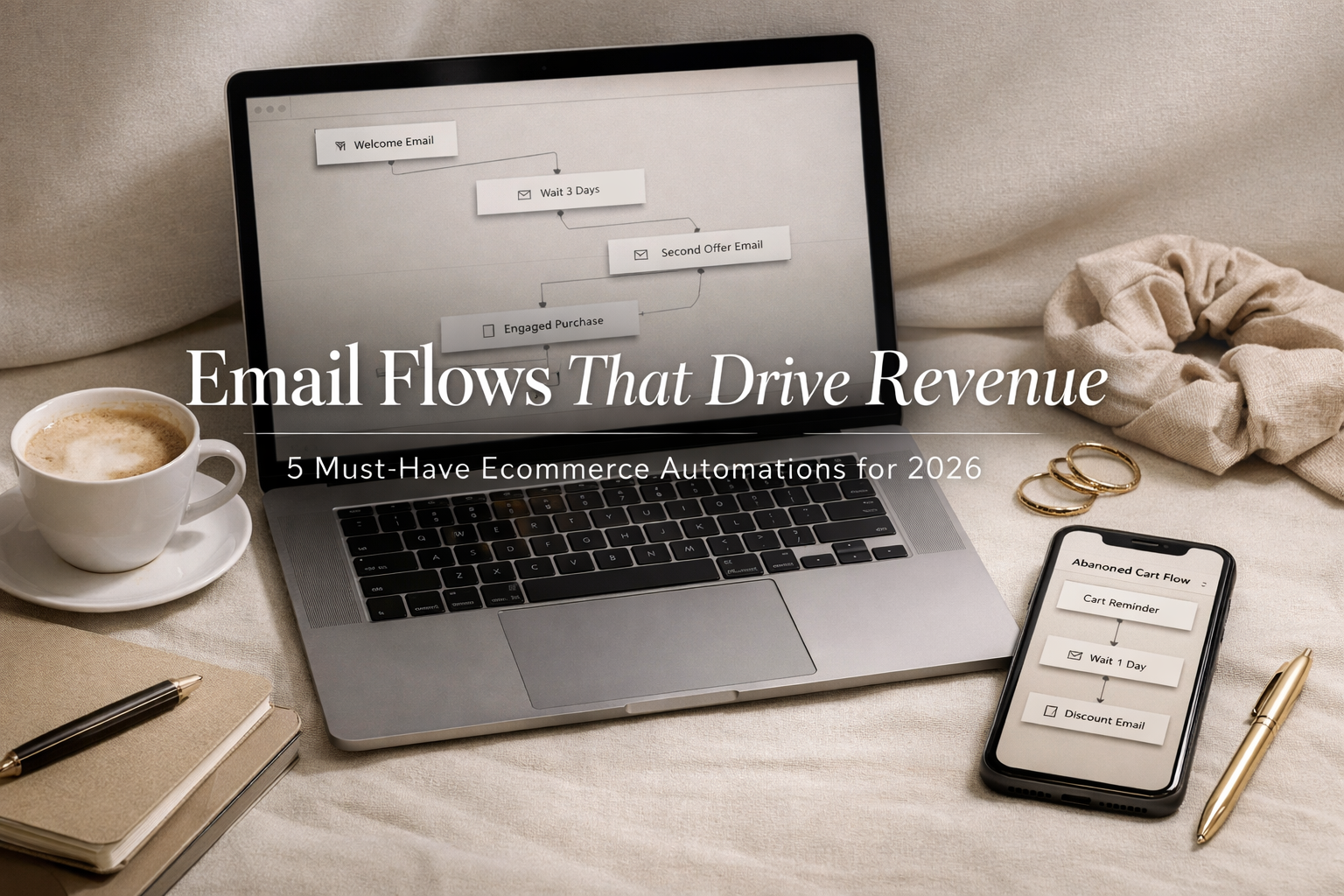
Your paid ads are expensive.
Your organic reach is unpredictable.
Your email list? Still your highest-ROI channel.
And yet most ecommerce brands are sending… campaigns.
Blasts. Promotions. The occasional holiday sale. Maybe a welcome discount if someone was feeling ambitious in 2023.
Meanwhile, the brands quietly printing revenue in 2026?
They’re running automation systems that sell while they sleep.
Let’s break down the five email flows that aren’t “nice to have” anymore—they’re revenue infrastructure.
1. The Welcome Flow (But Actually Strategic)
Most brands treat their welcome flow like a handshake.
“Hi, here’s 10% off. Please buy.”
That’s cute. But in 2026, your welcome flow should:
Segment subscribers by intent (quiz, product category, discount seekers vs. content readers)
Educate on differentiation (why you, not Amazon)
Handle objections before they surface
Introduce social proof early
Create a deadline-driven first purchase push
Pro tip: The first 72 hours after signup is peak buyer intent. If you’re not stacking value, urgency, and positioning here, you’re leaving easy money on the table.
This flow alone should account for 15–30% of your total email revenue.
If it’s not? It’s not built right.
2. Abandoned Cart (The Revenue Safety Net)
Cart abandonment isn’t a failure. It’s a second chance.
And most brands waste it with:
“Did you forget something?”
Yes. They forgot because:
They got distracted
They had a pricing objection
They were comparing competitors
They needed reassurance
Your cart flow needs to:
Reinforce benefits, not features
Include social proof and UGC
Address common objections (shipping, returns, guarantees)
Create urgency without sounding desperate
Consider dynamic incentives only when necessary
Done correctly, this flow can recover 10–20% of abandoned carts.
Done lazily, it sends three reminder emails and hopes for the best.
Hope isn’t a strategy.
3. Browse Abandonment (The Silent Revenue Driver)
This is where serious operators separate themselves.
Someone views a product. They don’t add to cart. They leave.
Most brands shrug.
Smart brands trigger a browse abandonment flow that:
Highlights the exact product viewed
Shows reviews or testimonials
Suggests complementary products
Reinforces brand authority
Nudges with light urgency
This flow often converts colder traffic that wasn’t ready for cart—but is still curious.
And because fewer brands do it well, inbox competition is lower.
Translation: easy incremental revenue.
4. Post-Purchase (Where LTV Is Built)
The first purchase is not the win.
The second purchase is.
Your post-purchase flow should:
Confirm the decision (“You made a great choice.”)
Reduce buyer’s remorse
Educate on product usage
Cross-sell strategically
Time replenishment reminders (if applicable)
Introduce referral or loyalty programs
Retention is where margins expand.
In 2026, customer acquisition costs aren’t getting cheaper. If your backend isn’t engineered to increase LTV, your ad account is fighting uphill.
Post-purchase isn’t customer service.
It’s revenue acceleration.
5. Winback (Because Attention Is Currency)
Customers drift. It happens.
But most brands either:
Ignore churn entirely, or
Send one awkward “We miss you” email every six months.
A strong winback flow:
Segments by last purchase date and product type
Reintroduces newness (new drops, upgrades, improvements)
Leverages exclusivity
Uses escalating incentives strategically
Creates a real reason to return
You already paid to acquire them once. Winback is cheaper than cold acquisition.
Treat it like the margin lever it is.
What This Actually Means for Your Brand
If your email strategy is mostly campaigns, you’re operating manually in an automated economy.
In 2026, high-performing ecommerce brands don’t rely on single sends.
They build systems:
Welcome → Convert
Abandon → Recover
Purchase → Expand
Lapse → Reactivate
And once these flows are optimized?
Every new subscriber, every site visitor, every customer becomes more valuable automatically.
That’s the difference between “we send emails” and “email is a revenue engine.”
If your flows are underbuilt, outdated, or nonexistent, you’re not behind—you’re just early to fixing it.
Ready to Turn Email Into a Revenue Channel (Not Just a Newsletter)?
If you want email automations that are actually built to drive measurable revenue—not just check a marketing box—let’s talk.
👉🏼 Build your revenue engine here:
https://www.ritnerdigital.com/contact
FAQs
1. How much revenue should email automations be driving for an ecommerce brand?
In 2026, strong ecommerce brands see 30–50% of total email revenue come from automated flows alone (not campaigns).
If your automations are contributing less than 20%, you likely have:
Underbuilt flows
Poor segmentation
Weak messaging
Or missed triggers entirely
Campaigns spike revenue.
Flows stabilize and scale it.
2. What platform is best for ecommerce email automations?
For most ecommerce brands, Klaviyo remains the dominant choice due to deep ecommerce integrations and strong segmentation logic.
Other common platforms:
Shopify Email (good for early-stage brands)
Attentive (strong SMS pairing)
Mailchimp (less robust for advanced ecommerce logic)
The platform matters less than the strategy behind it—but some tools make execution significantly easier.
3. How many emails should be in each flow?
There’s no magic number. There’s a performance number.
Typical high-performing ranges:
Welcome: 4–7 emails
Abandoned Cart: 3–5 emails
Browse Abandonment: 2–4 emails
Post-Purchase: 4–8 emails (depending on product lifecycle)
Winback: 3–6 emails
If a flow stops converting, it’s too long.
If it doesn’t convert enough, it’s too short—or poorly structured.
4. Should we offer discounts in every automation?
Short answer: No.
Discounting trains customers to wait.
Better order of operations:
Reinforce value
Address objections
Add social proof
Introduce urgency
Use incentives strategically (if needed)
Discounts should be leverage—not a crutch.
5. What’s the difference between browse abandonment and cart abandonment?
Browse abandonment: Someone viewed a product but didn’t add it to cart.
Cart abandonment: Someone added a product to cart but didn’t complete checkout.
Cart abandoners have higher intent.
Browse abandoners need more education and persuasion.
Both are revenue opportunities. One is just warmer than the other.
6. How long does it take to see results from optimized email flows?
Fast.
Abandoned cart and browse flows typically show performance shifts within 30 days.
Welcome flow improvements can impact revenue almost immediately if your traffic volume is healthy.
Post-purchase and winback flows compound over time as retention improves.
Email is one of the few channels where optimization produces near-term and long-term ROI.
7. Do small ecommerce brands really need all five flows?
If you’re doing consistent traffic and sales—even modestly—yes.
You don’t need complexity.
You need coverage.
Start with:
Welcome
Abandoned Cart
Post-Purchase
Then layer in Browse and Winback as traffic scales.
Automations aren’t about being “big.”
They’re about not wasting attention you already paid for.
8. How often should email automations be updated?
At minimum, review performance quarterly.
Update when:
Conversion rates dip
Your positioning changes
You launch new products
Your AOV shifts
Your customer behavior evolves
Flows are assets. Treat them like living systems, not set-it-and-forget-it templates.
Want Your Email Flows Built for Revenue (Not Just Opens)?
If your automations aren’t driving measurable impact—or you’re not sure what they’re actually contributing—it’s time to build them correctly.
👉🏼 Let’s engineer your revenue engine:
https://www.ritnerdigital.com/contact
Related Reads
〰️
Related Reads 〰️
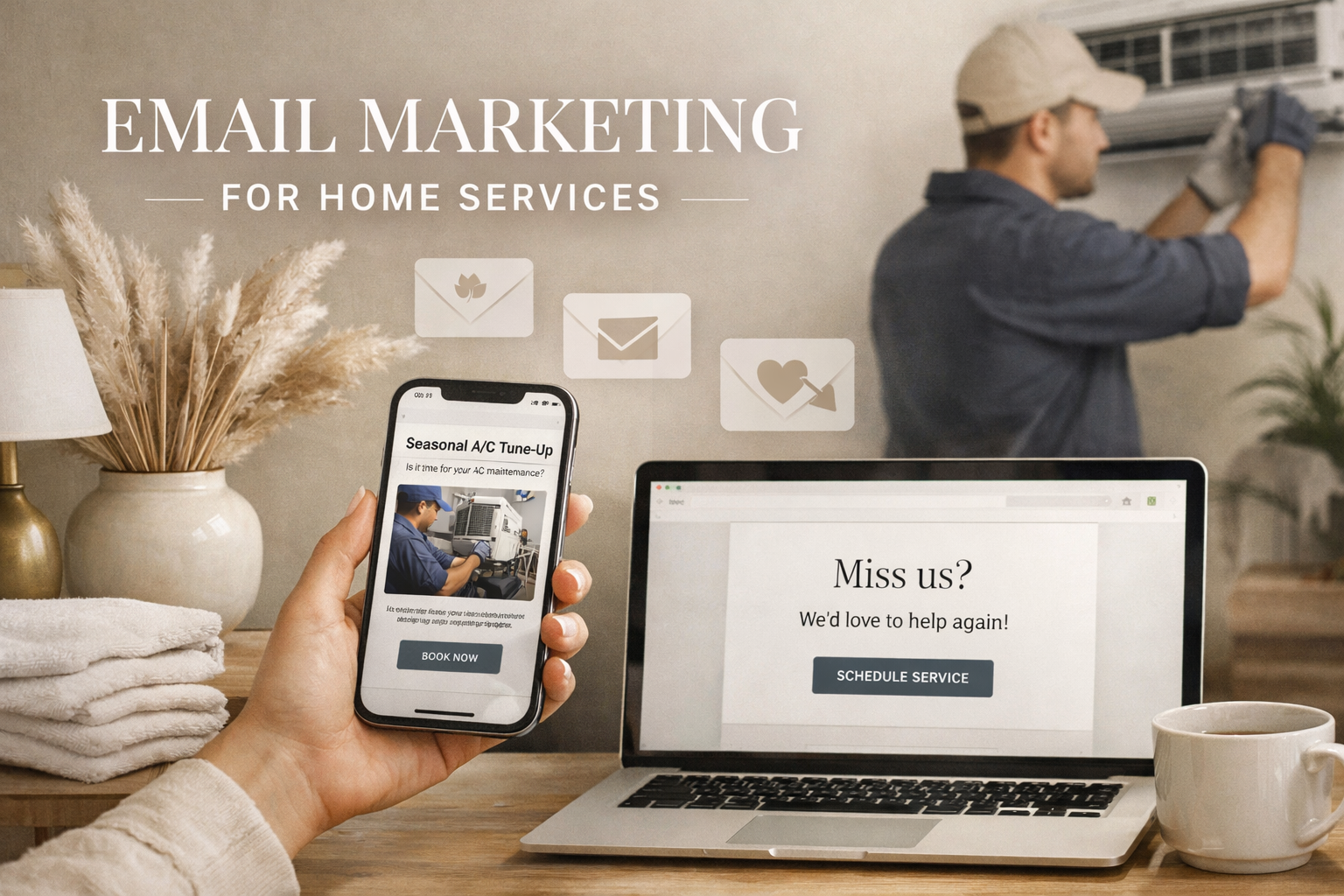
Email Marketing for Home Services: How to Turn One-Time Jobs Into Repeat Customers
You fixed the leak, replaced the unit, and sent the invoice. Then the customer disappeared. Most home services businesses spend heavily to acquire new customers while ignoring the database of past customers who already trust them. Automated email marketing changes that — with seasonal reminders, post-job follow-ups, and re-engagement sequences that bring customers back at exactly the right time without adding work to your plate.
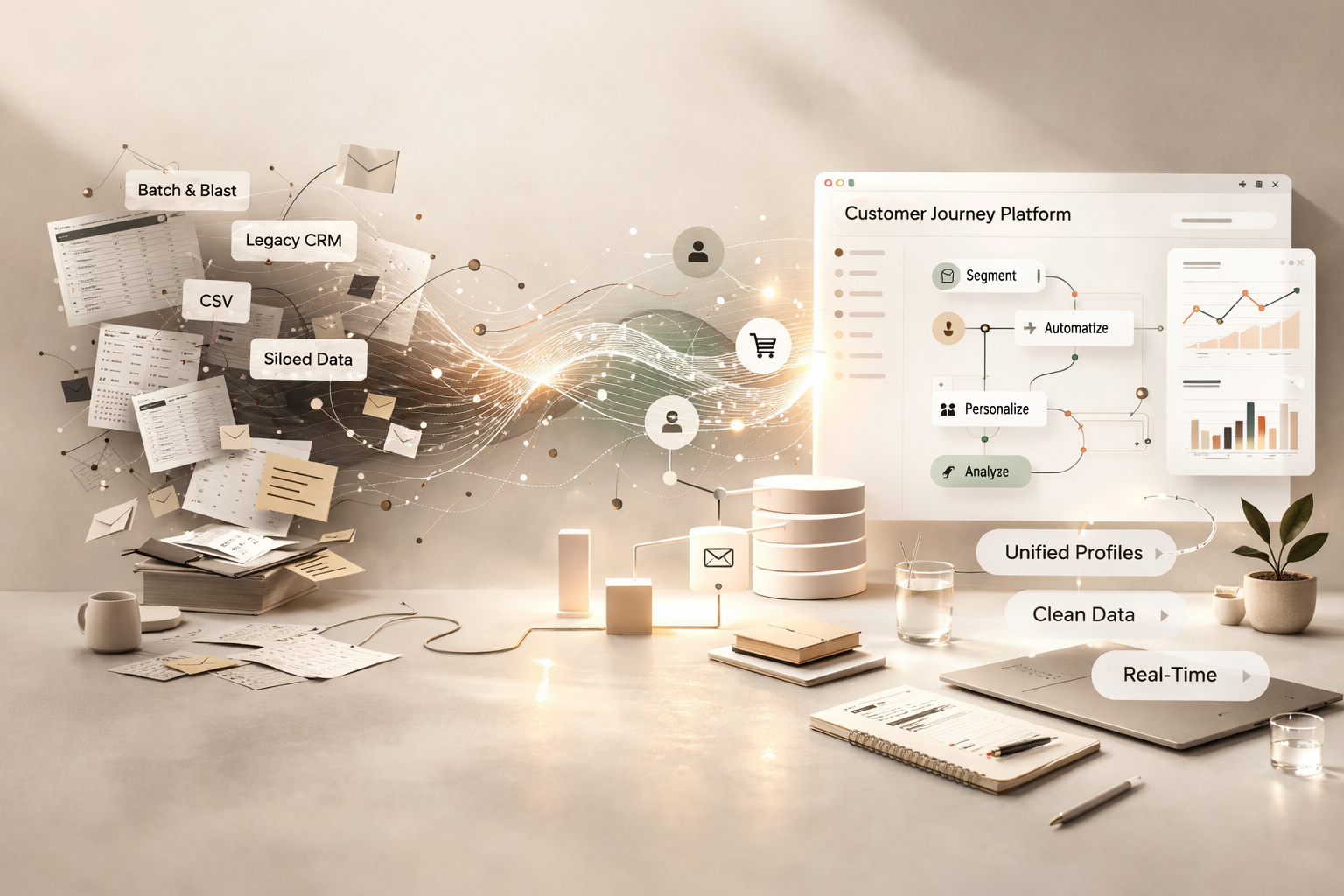
Migrating from Batch-and-Blast Email to a Customer Journey Platform — And Who Actually Handles the Data Migration
The gap between a batch-and-blast tool and a customer journey platform isn't just a feature gap — it's a data architecture gap. If nobody bridges it properly during migration, you end up with a shiny new platform running the same lazy emails with a more expensive subscription. Here's what the migration actually involves and who should handle it.

Is Email Still Worth It… or Did LinkedIn Replace the List?
LinkedIn posts are pulling in massive reach—often for free. So why are brands still paying for email platforms? We break down whether email is still worth it, when LinkedIn wins, and how smart brands use both to build real, owned growth.