
How to Use FAQs to Capture Featured Snippets for Financial Queries
Ask ChatGPT "how much house can I afford" and you get an answer before you ever click. That answer came from a page built for extraction. Here's how financial institutions use FAQs to capture featured snippets and AI citations — answer-first formatting, what FAQ schema actually does in 2026 (it changed in 2023), and how to write for the financial queries that convert.

How to Rank for Student Banking Keywords on a Community Bank Budget
Half of Gen Z says they'd switch to a community bank, credit union, or online-only institution — but most community banks can't outrank Forbes or NerdWallet for "best student checking account," and shouldn't try. This guide lays out a realistic, budget-conscious SEO strategy built around campus-specific pages, local search, and financial literacy content that a lean marketing team can actually execute — and that plays to a community bank's real advantages over national brands.

Home Equity Loan SEO: A Content Strategy That Converts
U.S. homeowners are sitting on nearly $35 trillion in equity, and almost 30% are considering a home equity loan or HELOC this year — but most lenders are still running one generic product page to capture that demand. This guide breaks down how homeowners actually search for home equity products, why this category falls under Google's strictest YMYL content standards, and how to build a content strategy — from comparison pages to AI search visibility — that turns research-stage traffic into applications.

Business Banking SEO: How to Attract Small Business Owners Through Search
Two-thirds of small businesses are actively shopping for a new bank right now — and most are finding their next provider through search, not a branch visit. This guide breaks down how business banking SEO actually works: the keywords small business owners use, why local search is a hidden advantage for community banks and credit unions, how AI search tools are reshaping discovery, and a practical roadmap for turning organic visibility into real account openings.
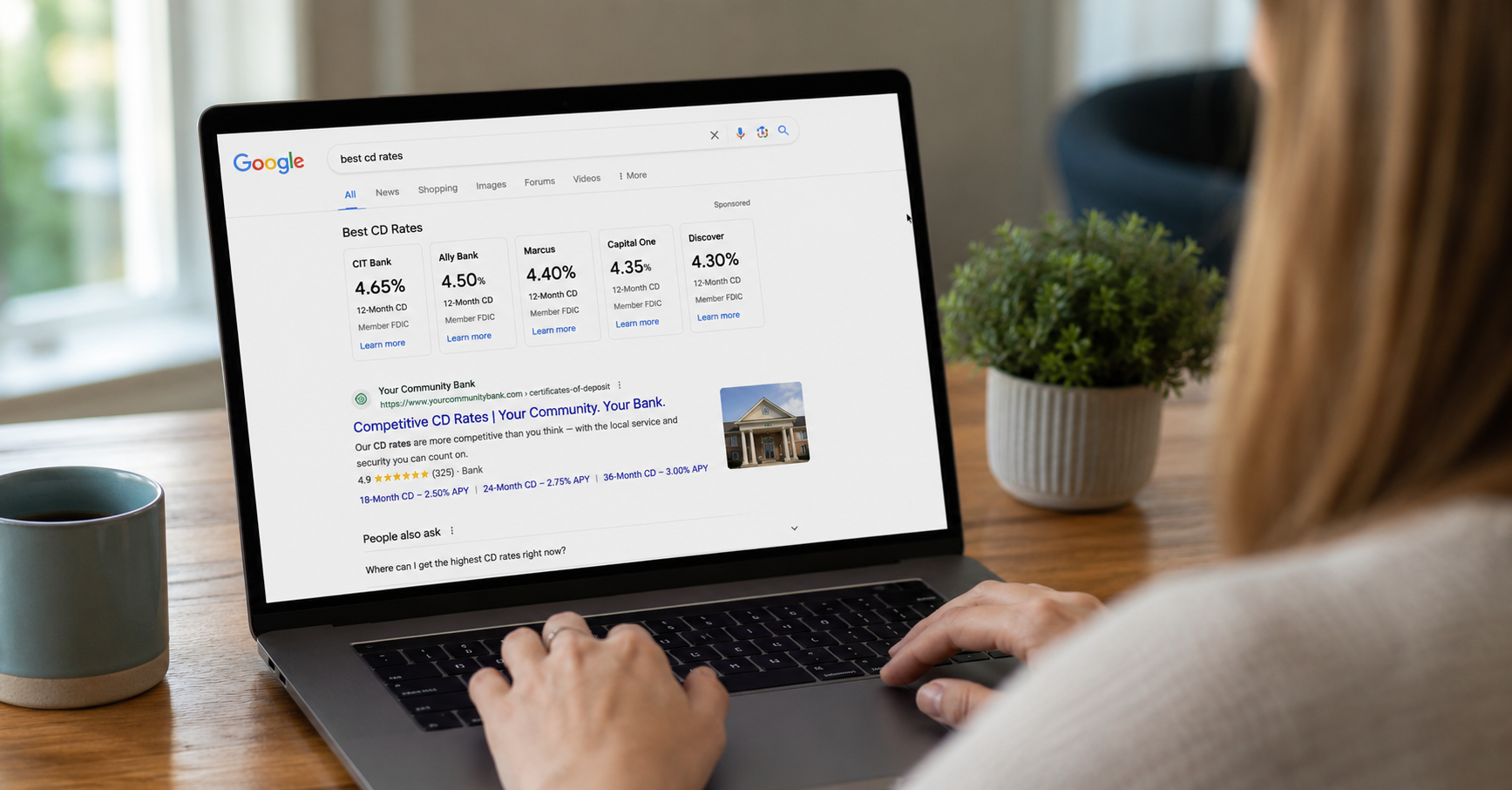
How to Win "CD Rates" and "High-Yield Savings" Searches from Fintech Competitors
Search "best CD rates" or "high-yield savings" and you'll find a wall of online-only banks. But your deposit rates are often more competitive than savers realize — they just can't find you. Here's how community banks and credit unions win CD and high-yield savings searches from fintech competitors.

Personal Loan SEO: Capturing Borrowers Before They Go to LendingTree
When someone needs a personal loan, there's a fork in the road: find a direct lender they trust, or land on LendingTree and become one of five bidders for their business. Here's how banks and credit unions use SEO to intercept borrowers before they ever reach the aggregator.

How to Rank for "Best Savings Account Near Me" — A Tactical Guide
"Best savings account near me" combines comparison intent that aggregators own with local intent where you have the edge. Win it, and you capture a saver who's ready to act and in your market. Here's a step-by-step tactical playbook for ranking — from the Local Pack to your localized savings page.
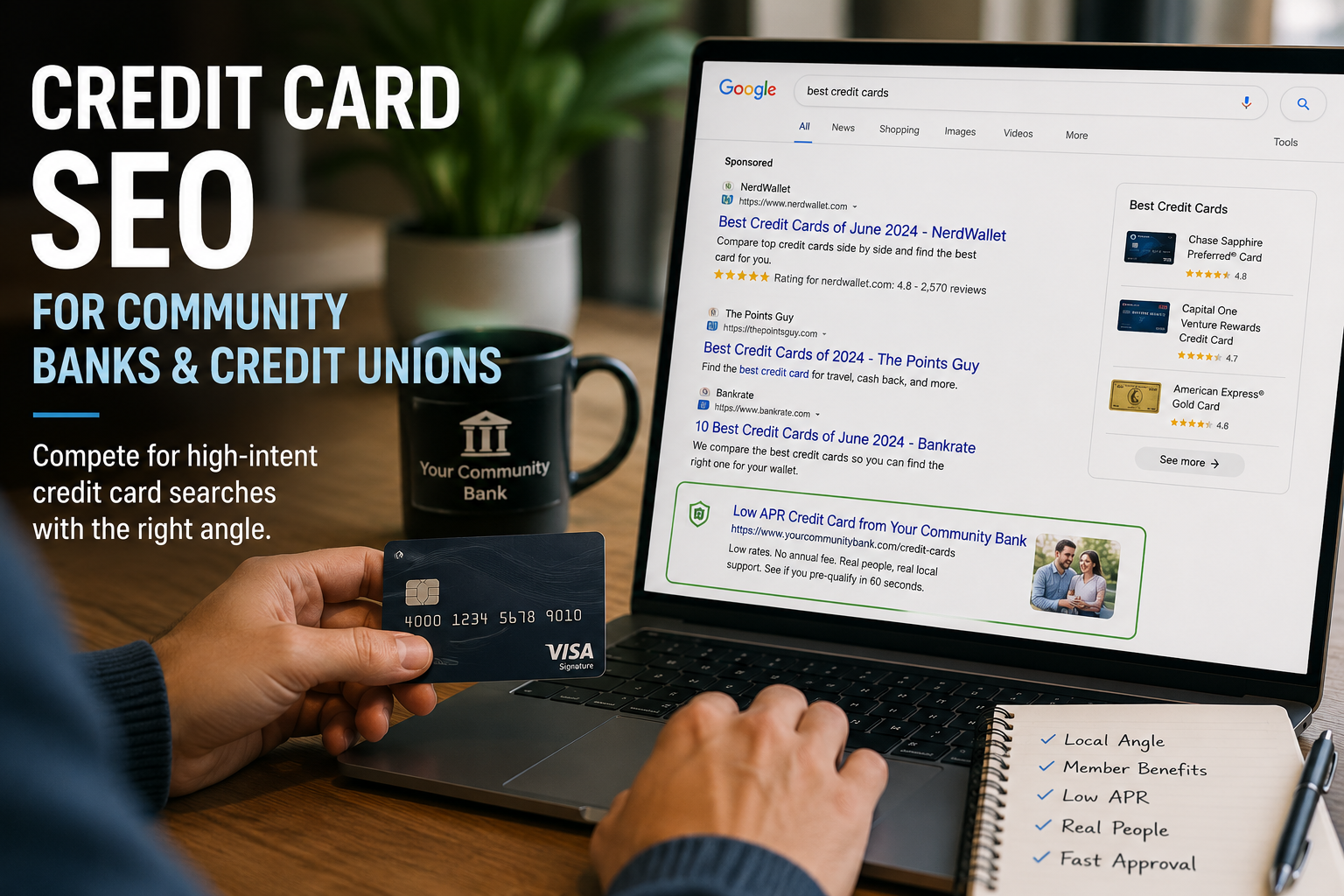
Credit Card SEO: How Community Banks Can Compete for High-Intent Searches
Credit card search is the toughest battlefield in financial SEO — dominated by aggregators, with little local intent and a huge volume gap. But your low-APR card is genuinely competitive. Here's how community banks and credit unions compete for high-intent credit card searches by changing the angle of attack.

How to Rank for Auto Loan Keywords in a Competitive Market
Auto loan search is crowded with big banks and dealer financing arms — but the rate advantage runs in your favor. Here's how credit unions and community banks rank for auto loan keywords in a competitive market and intercept car shoppers before they sign at the dealership.
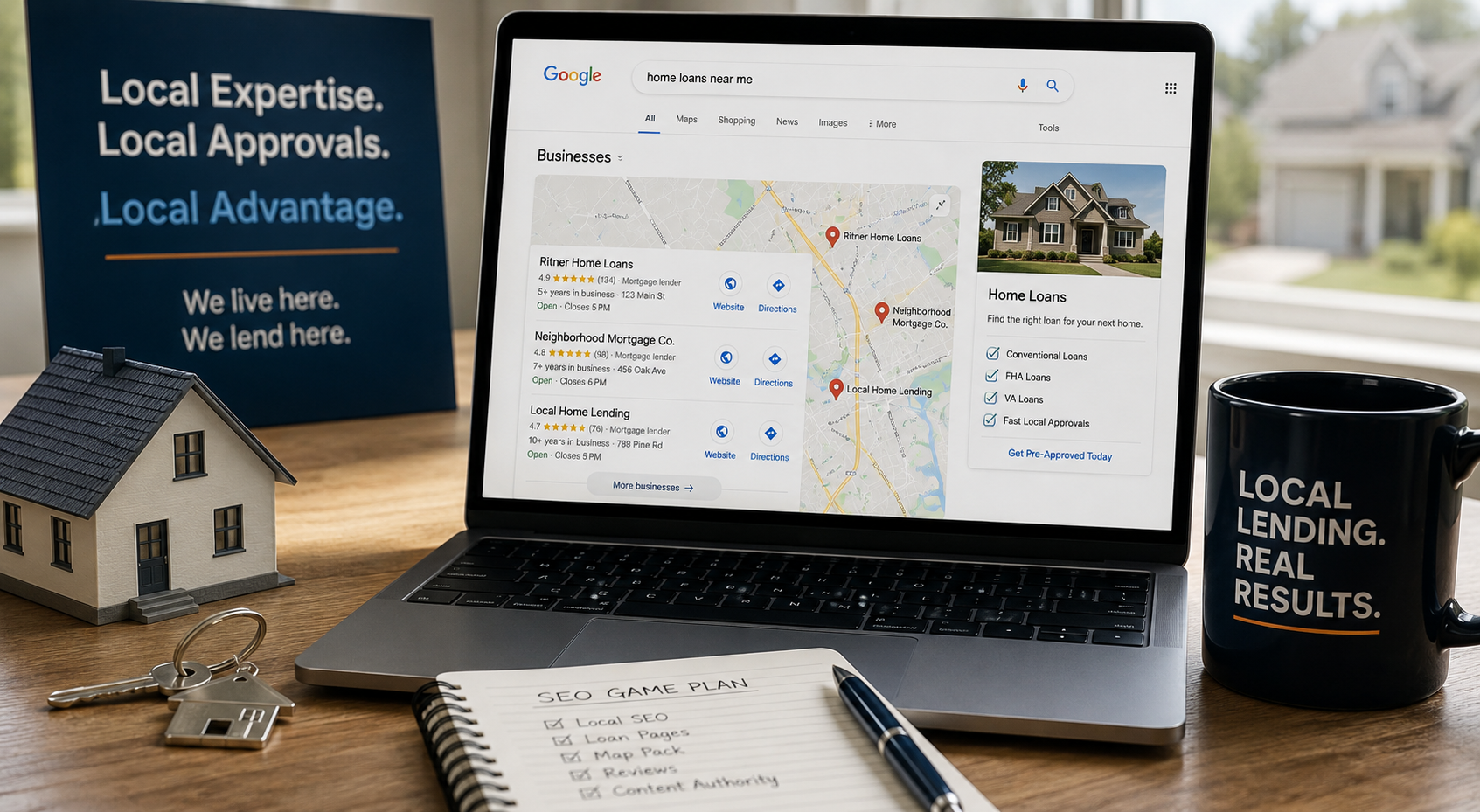
SEO for Mortgage Lenders: How to Capture Home Loan Searches Before Big Banks Do
Big banks and aggregators spend millions to dominate mortgage search — but they can't replicate your local expertise, and they can't out-rank you everywhere. Here's how mortgage lenders capture home loan searches in their own market before the big banks do, and earn exclusive leads they never have to share.
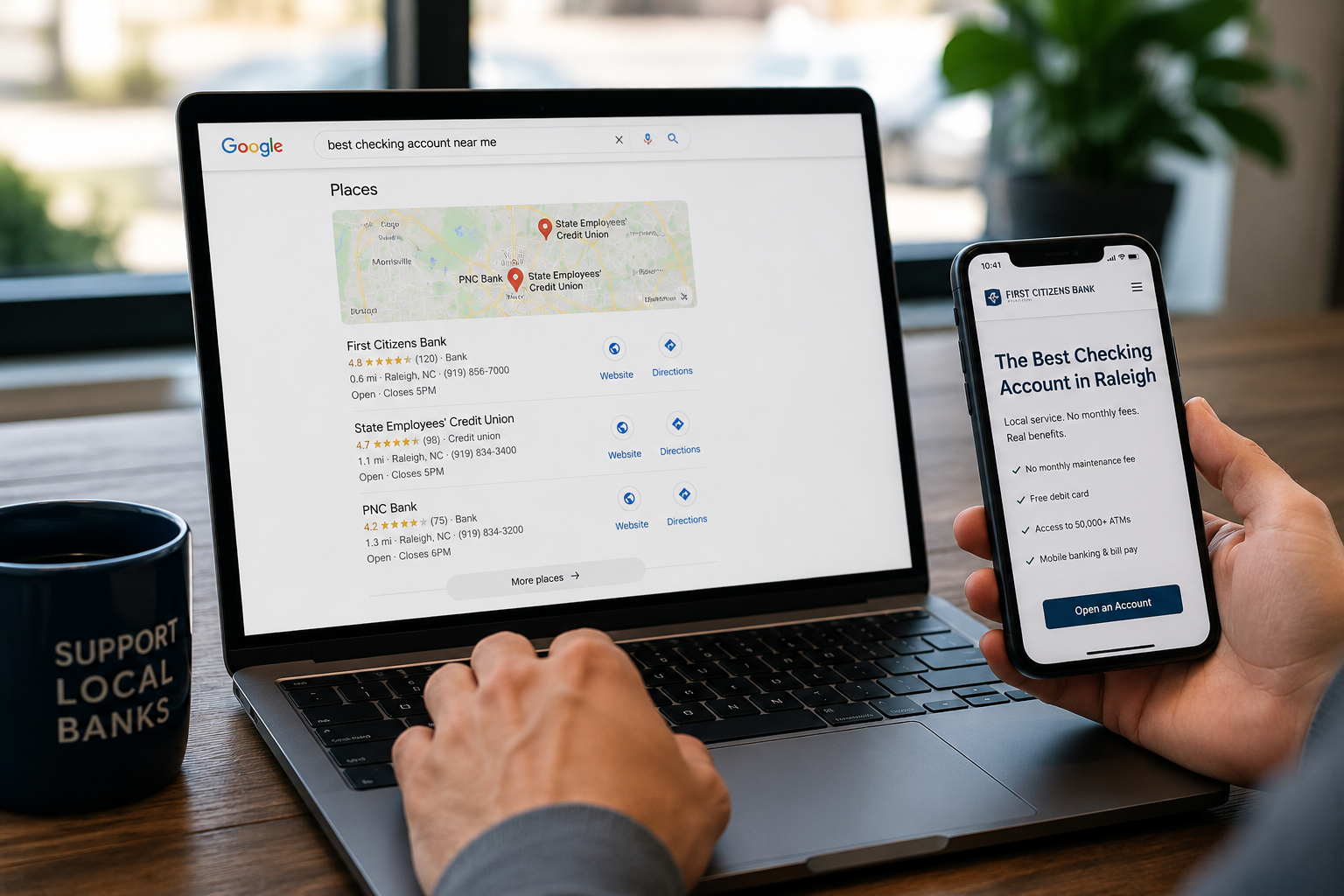
How to Rank for "Best Checking Account" in Your Local Market
Search "best checking account" and the whole first page belongs to NerdWallet and Bankrate. You won't beat them for the national term — but you don't need to. Here's how banks and credit unions can win the localized version of that search, where Google rewards the proximity aggregators can't fake.

How to Build a Long-Term SEO Strategy for a Community Bank
A community bank can't outspend a national megabank — but in search, the playing field is more level than anywhere else in your business. Here's how to build a long-term SEO strategy that compounds over time, turning your community standing into durable local visibility and new accounts.

Technical SEO for Financial Websites: What Your Dev Team Needs to Know
Technical SEO is the foundation that decides whether your content and local SEO efforts ever pay off. This guide bridges marketing and engineering, covering what your dev team needs to prioritize on a financial website in 2026 — from crawlability and Core Web Vitals to JavaScript rendering and AI crawlers.

The Highest-Value SEO Keywords for Credit Unions Right Now
Not all keywords are worth your effort. For credit unions, the highest-value search terms sit at the intersection of local intent and product need — exactly where no megabank or fintech can outspend you. Here are the keyword categories delivering the best return right now, and how to prioritize them.

How to Do Keyword Research Specifically for Banks and Credit Unions
Keyword research for a bank or credit union plays by different rules: commoditized products, compliance vetoes, and national aggregators with bottomless budgets. This step-by-step guide shows you how to map keywords to the customer journey, win local search, and find the high-intent terms your institution can realistically rank for.

On-Page SEO for Financial Institutions: A Practical Checklist
Financial content plays by stricter rules than any other industry. This practical, page-by-page checklist covers the on-page SEO fundamentals that win in 2026 — from author credentials and schema markup to Core Web Vitals and AI Overview visibility — built specifically for banks, lenders, and financial advisors.
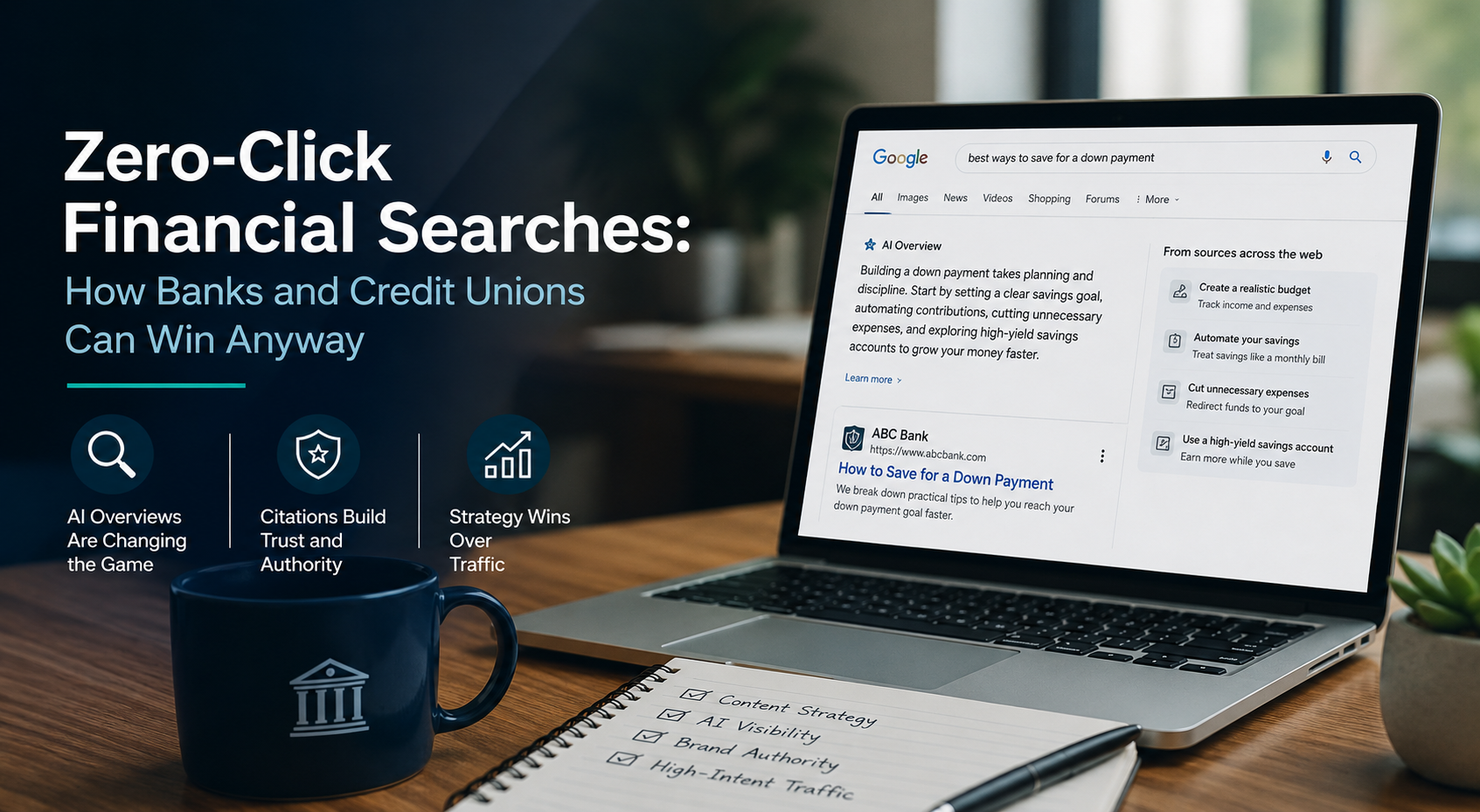
Zero-Click Financial Searches: How Banks and Credit Unions Can Win Anyway
For banks and credit unions, the zero-click era isn't a traffic problem — it's a strategy problem. Nearly 65% of all Google searches now end without a click, and financial queries are among the most susceptible to AI summarization. But zero-click doesn't mean zero influence. Institutions cited in AI Overviews and AI search answers are building brand authority, generating downstream branded searches, and attracting higher-intent visitors who convert at dramatically better rates than traditional organic traffic. In this post, we break down exactly which financial queries still drive clicks, which ones require a citation-first strategy, and how to build the split architecture that wins in both environments.