
Should Cincinnati Businesses Still Run Google Ads, or Build Organic? Renting vs. Owning, Honestly
Run the pause test: turn off Google Ads for two weeks — in your head, what happens to your leads? If they stop, you don't own your demand; you rent it from an auction where the rent only rises and the click pool only shrinks. But "just build organic" is its own trap, because compounding takes quarters and payroll runs monthly. The honest version of the debate: what paid genuinely does best, what the rent actually costs, organic's fine print (a mortgage, not a windfall), the stat that ends the either/or framing — brands cited in AI answers earn 91% more clicks on their paid ads — and the three-stage sequence from ads-as-ventilator to ads-as-scalpel.
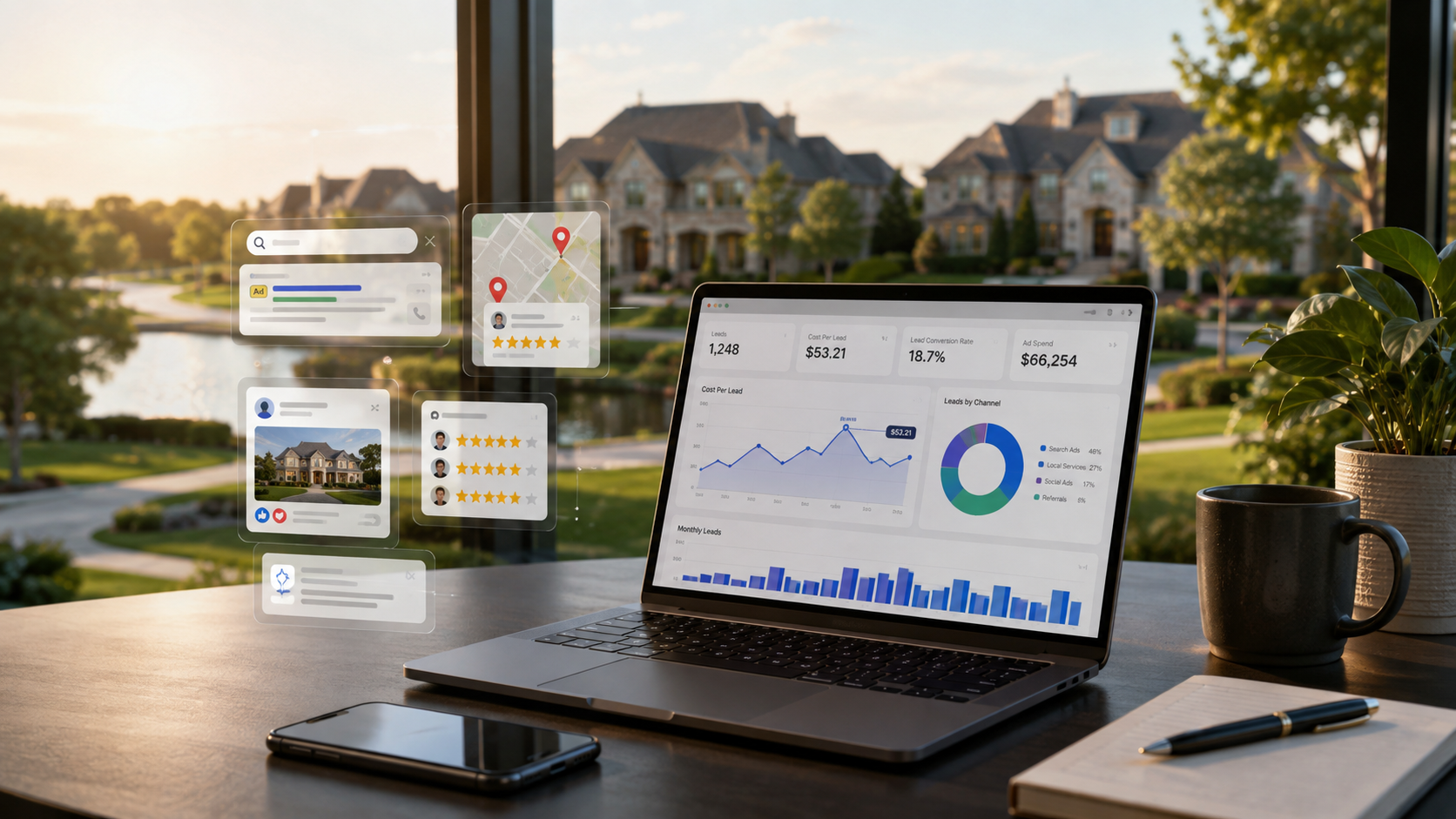
How Much Does a Lead Cost in Southlake, TX? A Channel-by-Channel Breakdown for Local Service Businesses
Nobody publishes lead costs for Southlake — so we did the math. Sourced 2026 benchmarks for every channel a local service business can buy into, adjusted for a market where the median home is $1M and every auction bids like it. Plus the one number that matters more than cost per lead.
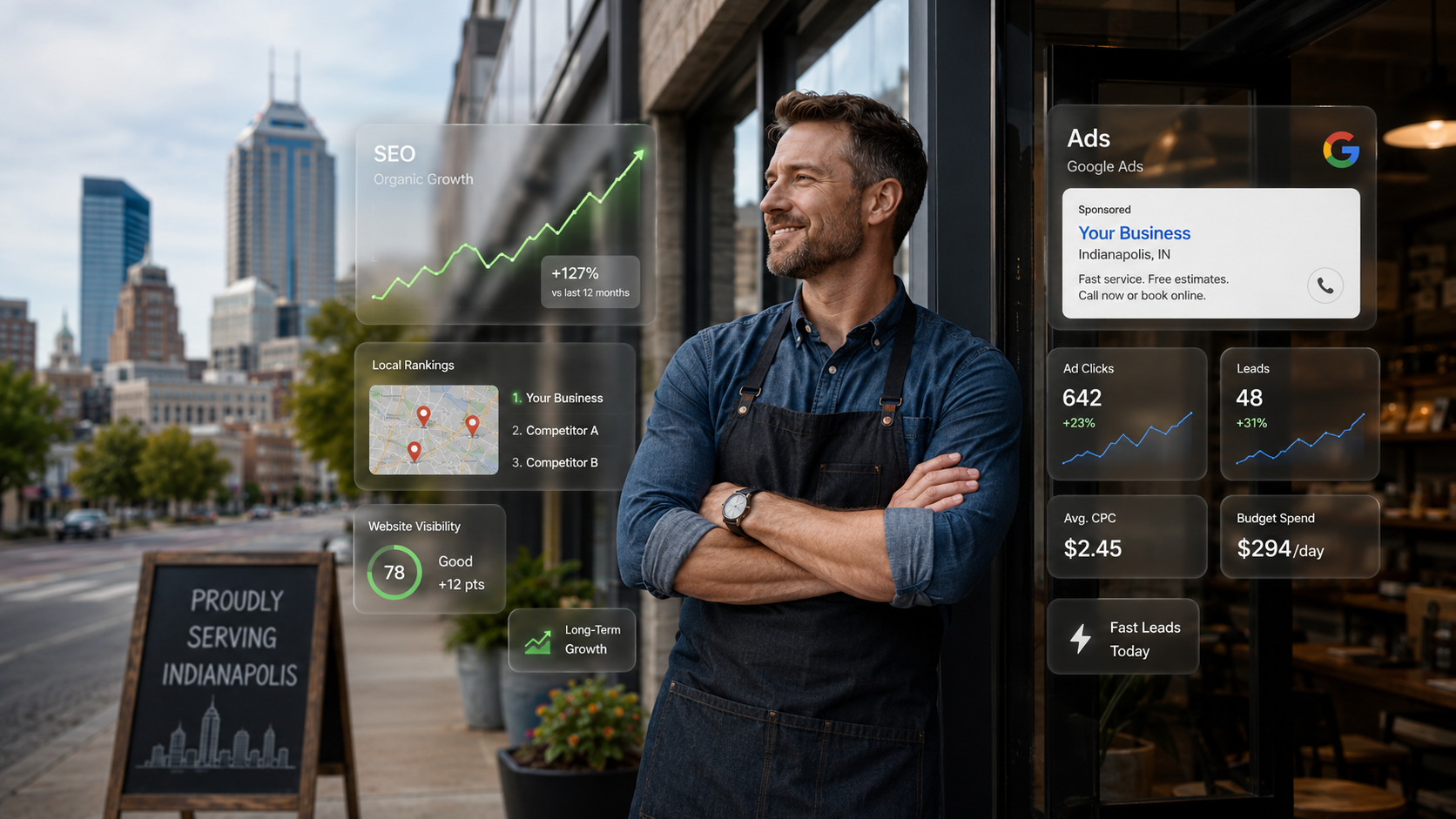
SEO vs. Google Ads for Indianapolis Businesses: Where Should You Spend First?
Should your Indianapolis business spend its next marketing dollar on SEO or Google Ads? The answer depends on how quickly you need leads, your margins, competition, website quality, local visibility, and long-term growth goals. This guide breaks down when Indianapolis businesses should prioritize SEO, when paid search makes more sense, and when combining both creates the strongest strategy.

SEO, Explained Like You're Five: Organic Growth, Google Ads, Social Media — and Why People Call SEO "Free"
Most business owners have sat through a hundred marketing meetings and never once gotten the plain version. So here it is: organic growth, SEO, Google Ads, social media, and the famous "SEO is free" claim — explained like you're five, with a lemonade stand, a corner kid, a rented megaphone, a borrowed backyard, and a lemon tree. Every grown-up number sourced, and the honest correction included: SEO isn't free. It's owned.
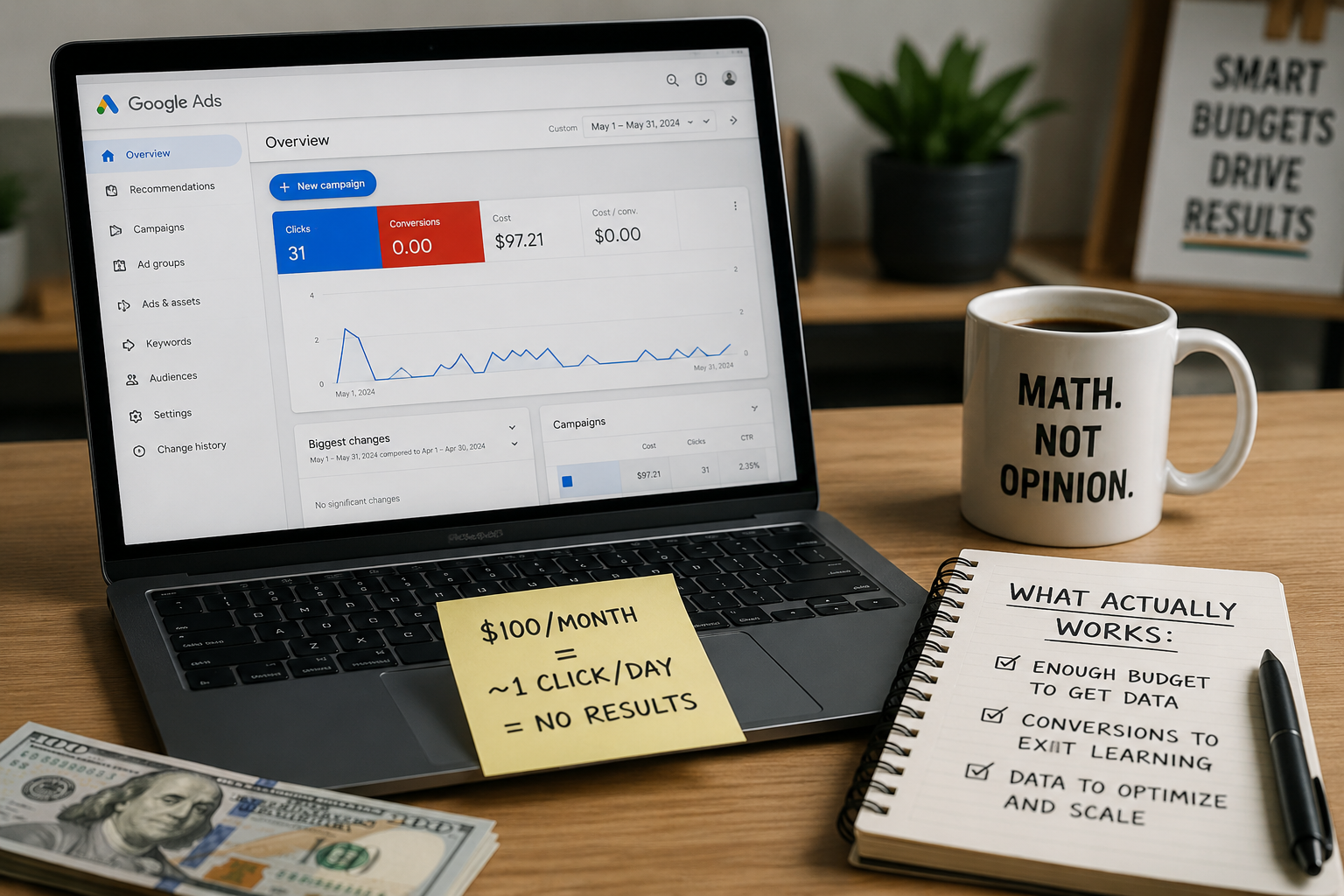
Why a $100/Month Google Ads Budget Is a Waste of Money — and Why You Should Fire Any Agency That Recommends It
Let's be direct: a $100-per-month Google Ads budget will not work. It cannot work. And if an agency pitched you one as a real strategy — especially while charging a management fee on top — that's a disqualifying red flag. This isn't an opinion about taste; it's math. A $100 budget buys about one click a day, never produces enough conversions to escape Google's learning phase, and never generates enough data to optimize or even measure. You're not buying a small amount of advertising — you're buying nothing, slowly, while paying someone to watch. Here's exactly why, and what honest advice actually sounds like instead.
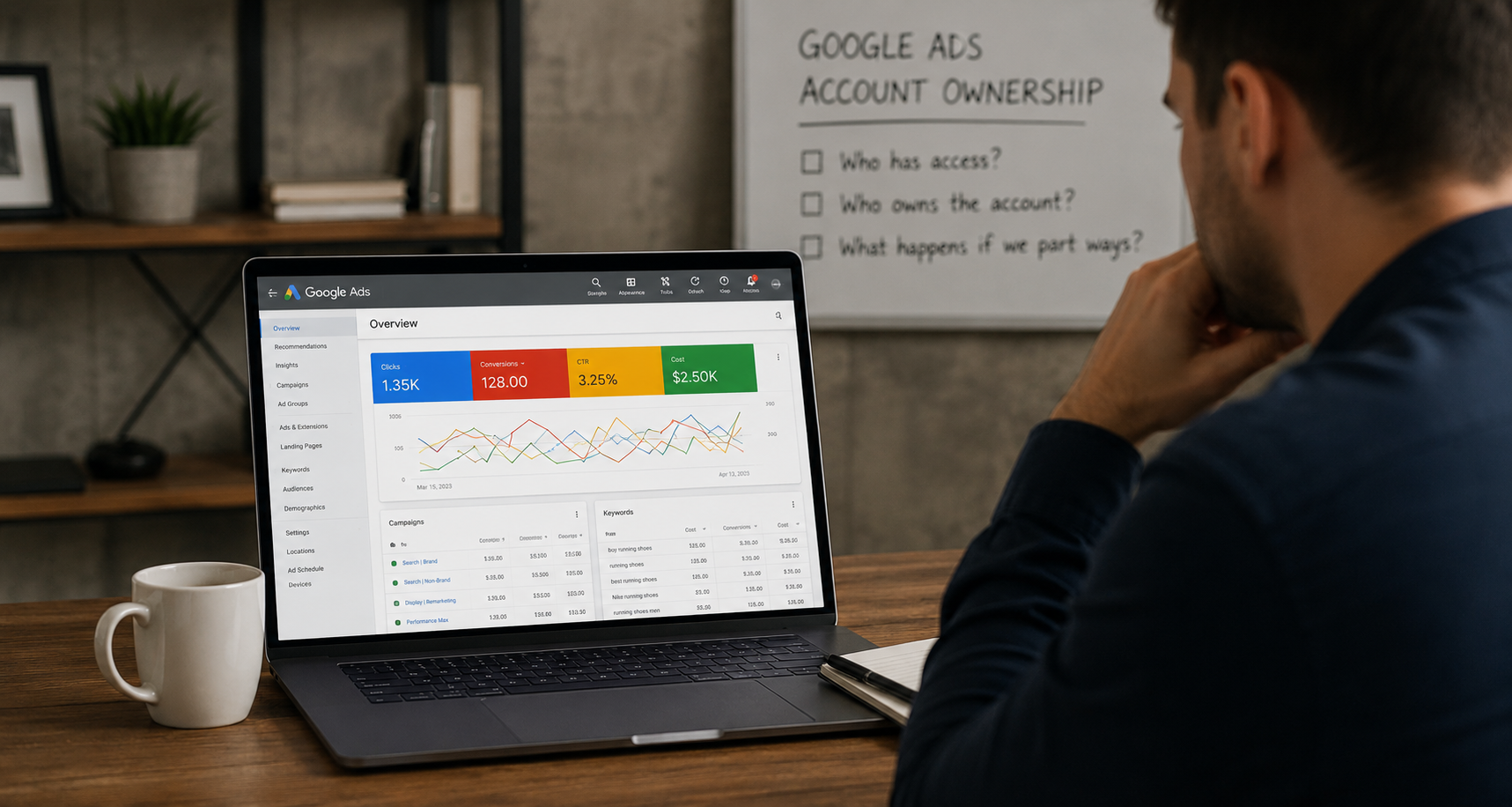
Who Owns Your Google Ads Account? (And Why the Answer Matters More Than You Think)
Most businesses assume they own their Google Ads account. Many don't. When an agency relationship ends badly, clients discover their campaigns, conversion history, remarketing audiences, and Quality Scores all lived inside an account the agency controlled — and walked away with. Here's how Google Ads account ownership actually works, how to check your current situation, and how to make sure it never becomes a problem.
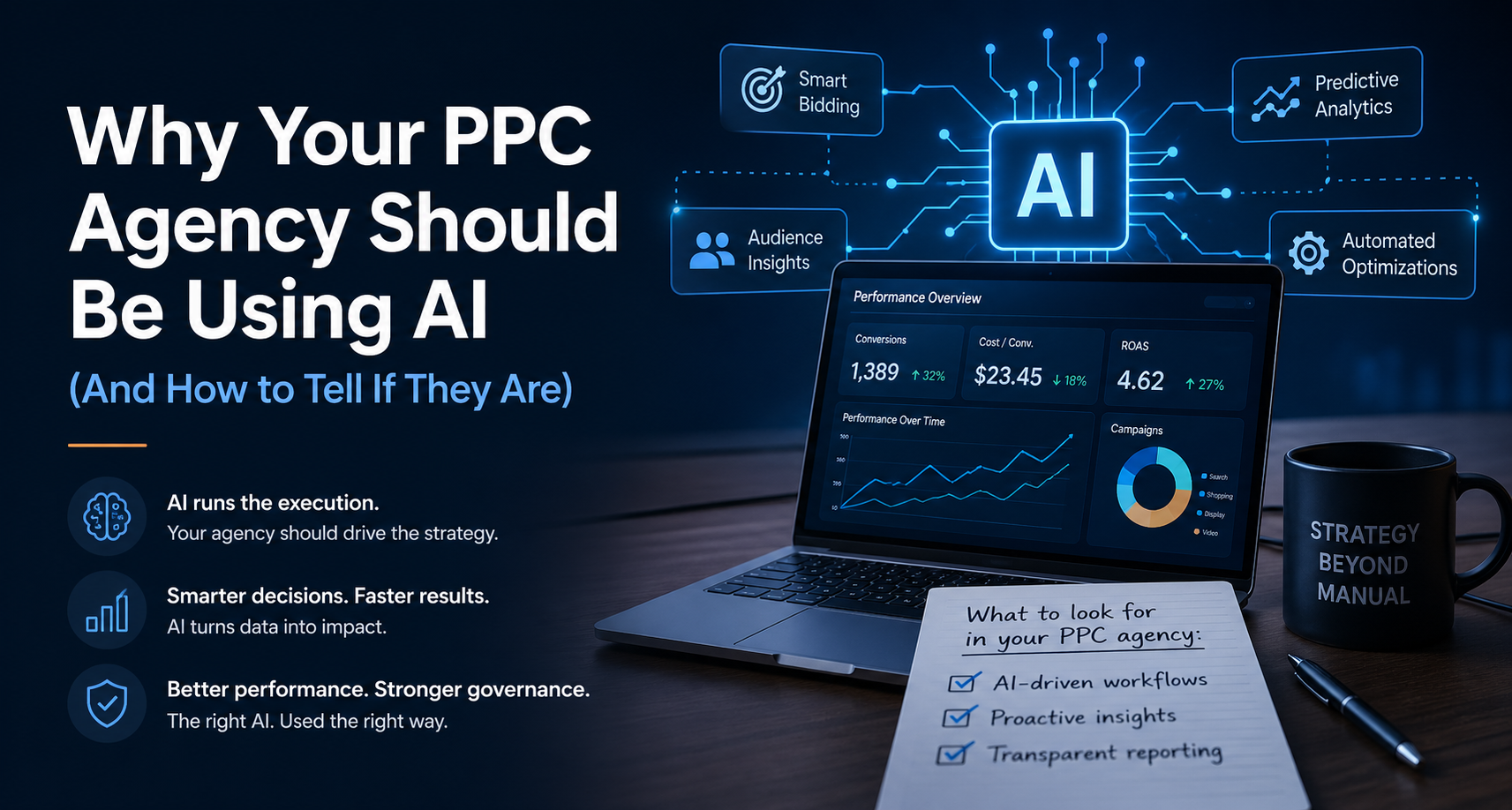
Why Your PPC Agency Should Be Using AI (And How to Tell If They Are)
When most businesses hire a PPC agency, they are buying expertise, time, and access. For most of the past decade, that value proposition held up. The knowledge gap between a skilled agency and an amateur was real and meaningful. That gap has not disappeared — but it has fundamentally shifted. 53% of PPC professionals say their work is harder today than two years ago. The platforms are more automated, more opaque, and faster-moving than any human team can match without AI. The agencies navigating this environment well are not the ones with the most manual bidding experience. They are the ones that know how to configure, govern, and extract strategic value from the AI systems that now control most of the execution layer. Here is how to tell whether yours is one of them.
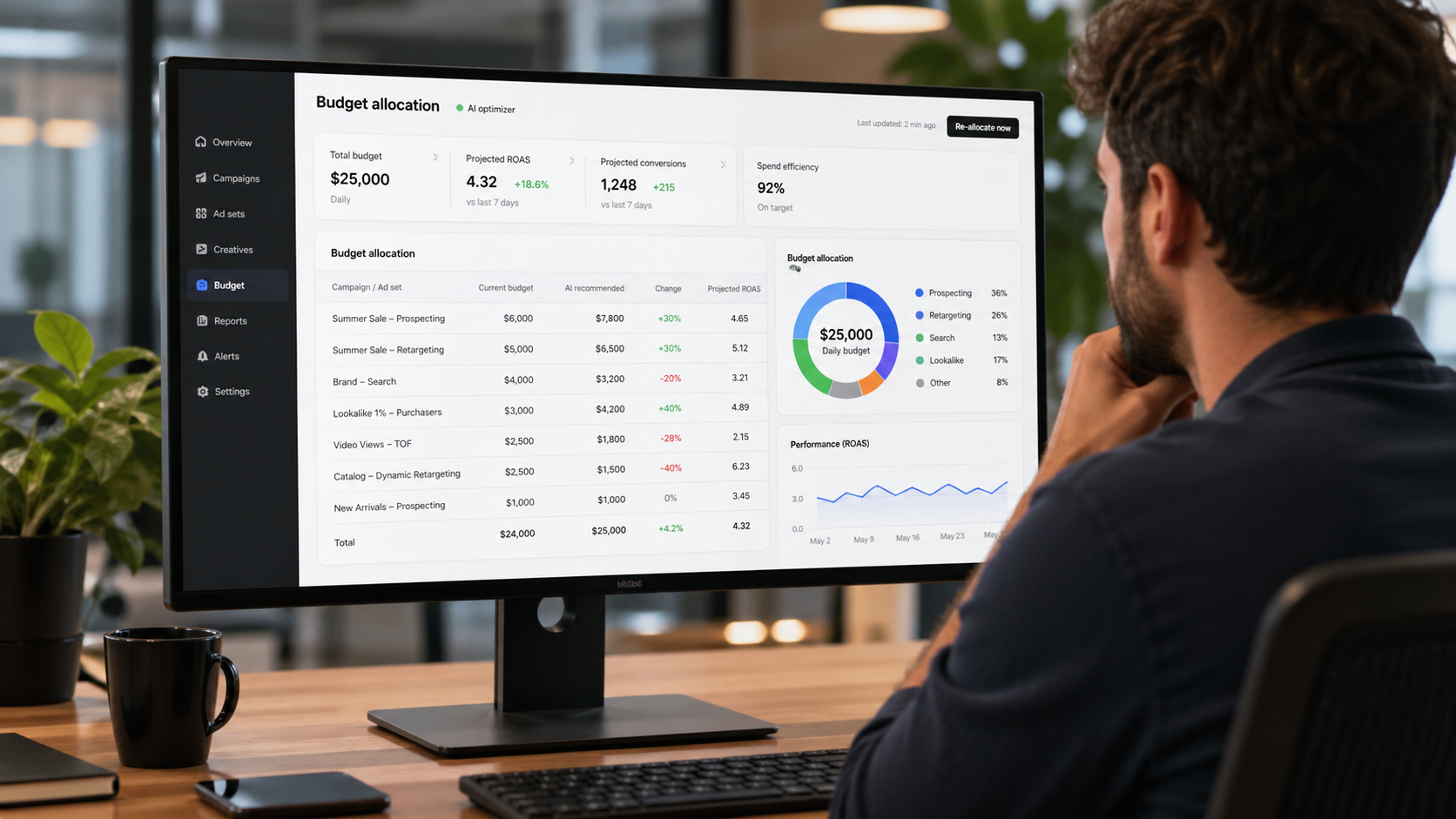
How to Let AI Automatically Allocate Your Ad Budget for Better ROI
Every week, businesses running paid ads face the same problem. A campaign that was converting well last Tuesday is underperforming today. Another ad set is burning through budget on clicks that never convert. A third runs out of money by noon and misses the evening traffic window where half the day's conversions happen. The traditional fix is a manual review — shift some budget, adjust some bids, hope it holds until next week. The problem is that Google and Meta's auction systems change thousands of times between each human check-in. Here is how AI budget allocation closes that gap, and how to set it up so it actually works.
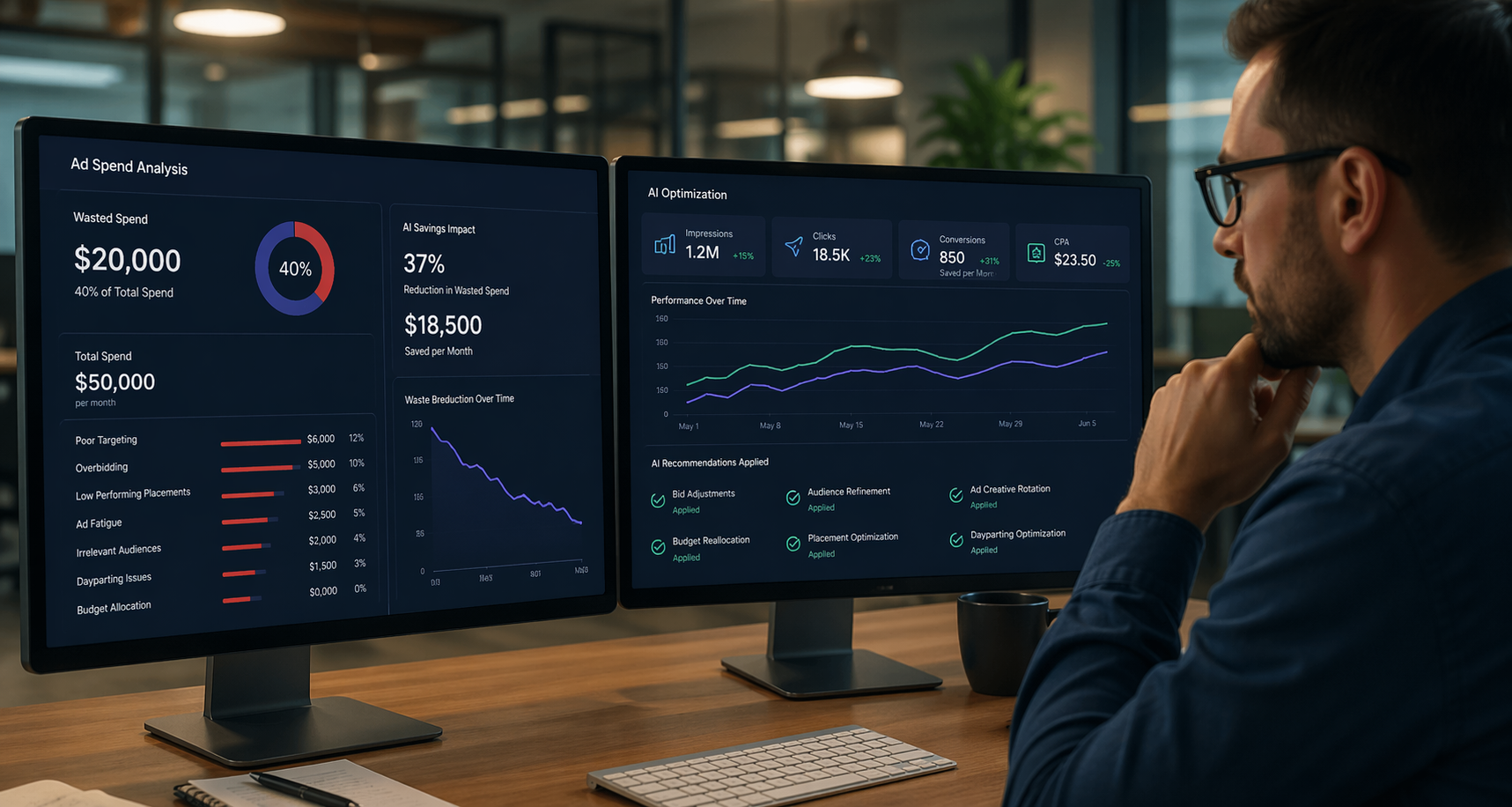
How AI Cuts Wasted Ad Spend by 40% (Real Numbers)
The average advertiser wastes 35 to 40% of their ad spend on ineffective campaigns. For a business spending $50,000 a month, that's $20,000 every month going nowhere. AI-driven bid management alone reduces wasted spend by around 37% — but the full efficiency picture covers seven distinct waste categories, each with a specific AI intervention. Here's where the waste comes from and exactly how AI eliminates it.
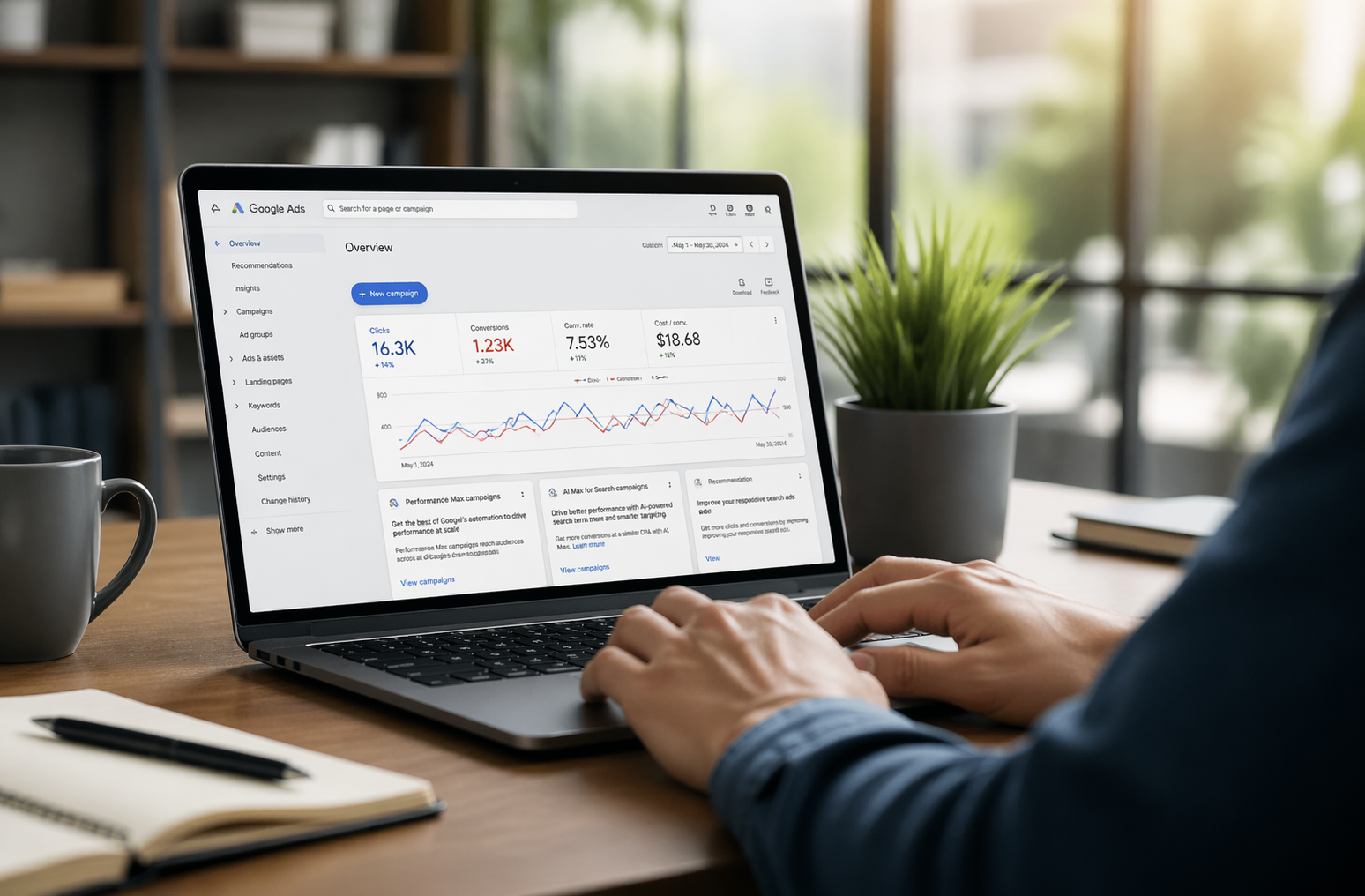
Why AI-Managed Google Ads Outperform Manual Campaigns Every Time
Performance Max now drives 62% of all Google ad clicks. AI Max campaigns deliver 14–27% more conversions while requiring 73% less management time. The businesses losing ground in paid search aren't the ones using AI — they're the ones still managing campaigns like it's 2018. Here's why AI-managed Google Ads have a structural performance advantage, what that advantage actually requires to work, and where human oversight still makes the difference.
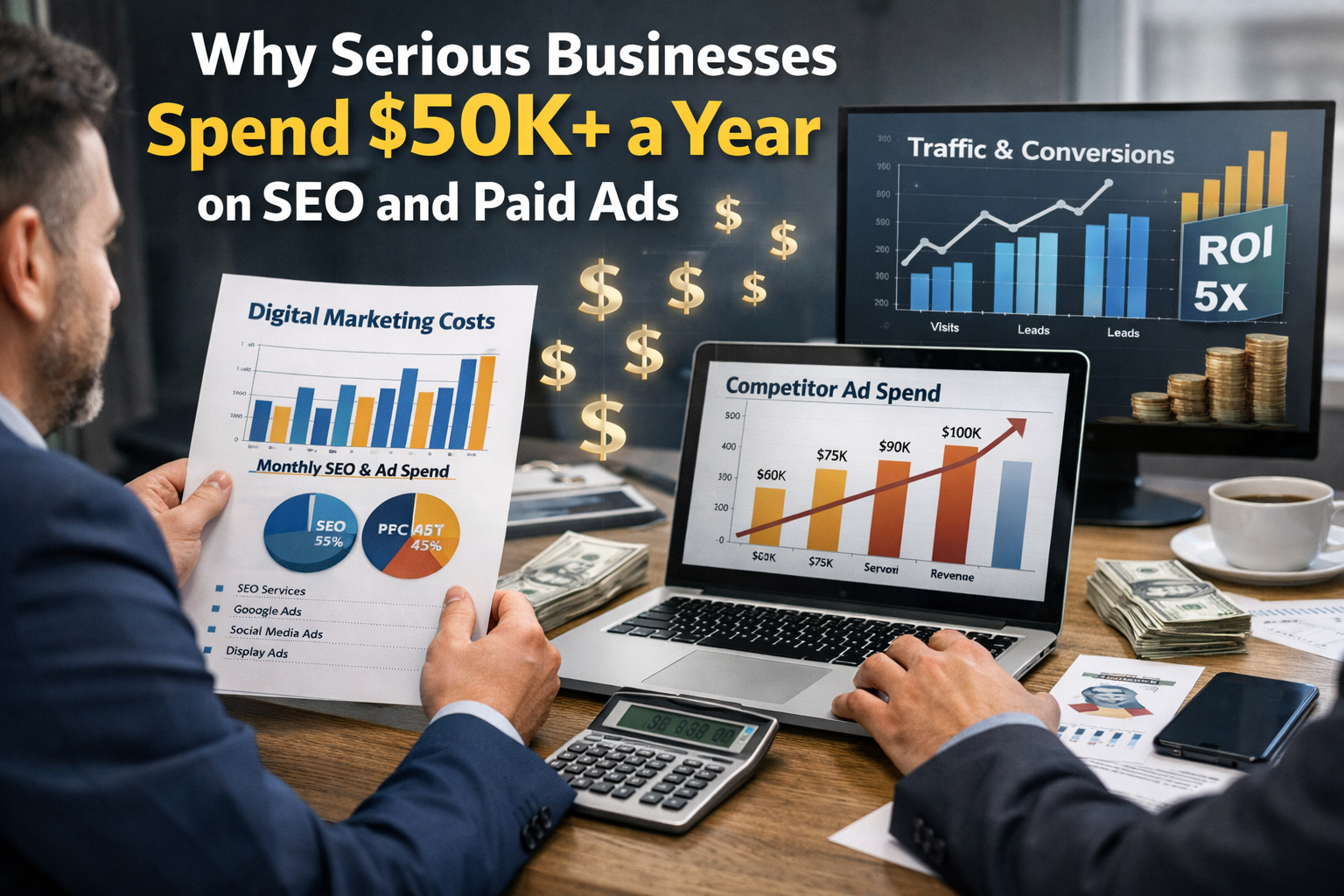
Why Serious Businesses Invest $50,000+ Per Year in SEO and Paid Ads (And Why That Number Makes Sense)
Most business owners are surprised when they find out what their top competitors are spending on digital marketing. The number is higher than they think — and once you see the math, it makes complete sense.

The HVAC Marketing Playbook: How to Fill Your Schedule Before Summer
Summer revenue for HVAC companies is decided in spring. This playbook covers the exact strategies — from Google Business Profile optimization to seasonal ad campaigns — that separate booked-solid companies from the ones scrambling when the heat hits.
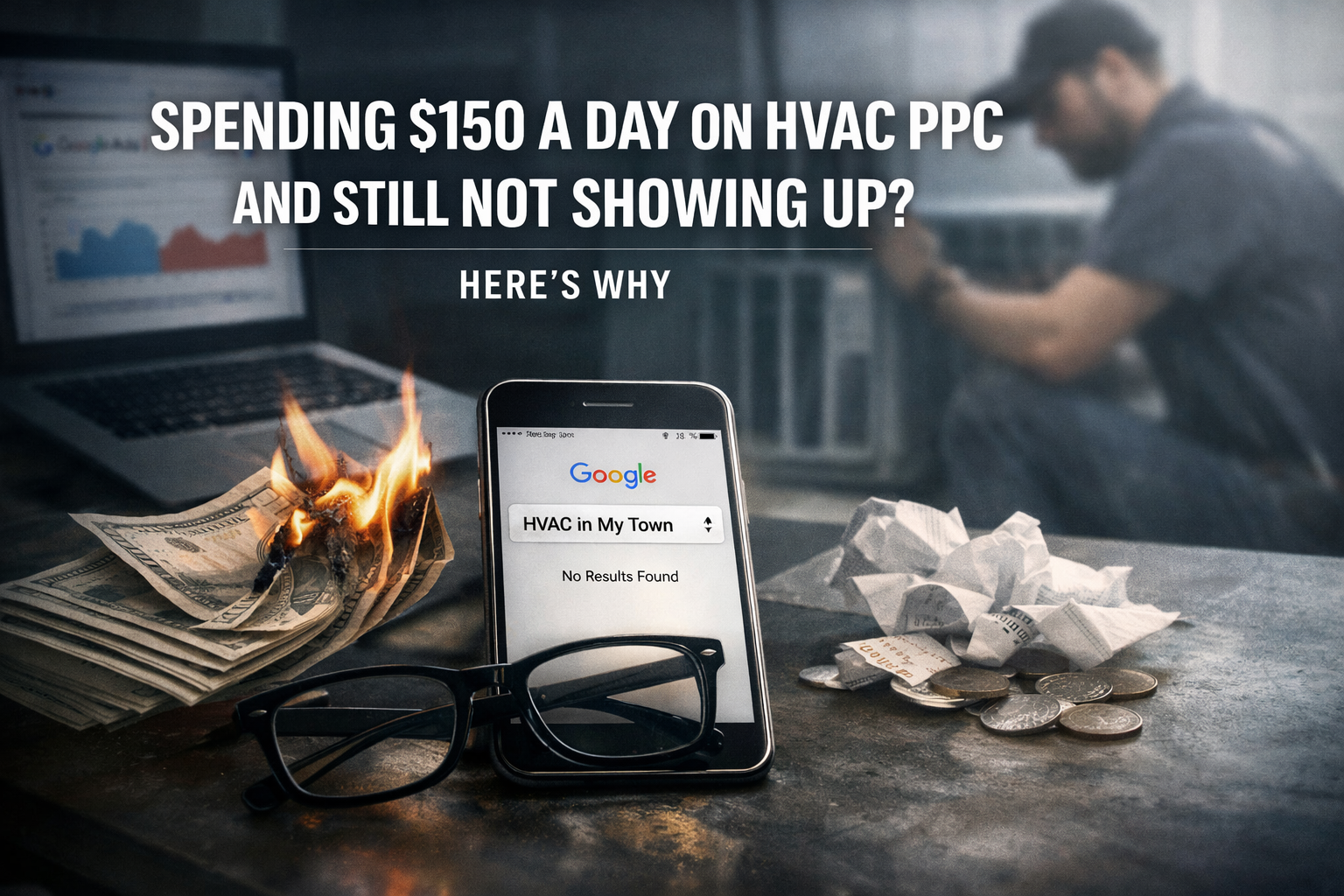
Spending $150 a Day on HVAC PPC and Still Not Showing Up? Here's Why
You're writing the checks. You're spending $150 a day on Google Ads across every county in your service area. But when you type "HVAC" and the name of the town you're literally sitting in, your company is nowhere to be found. That's not bad luck — that's a campaign that isn't built right, and it's burning your money while your competitors answer the phone.