
Rolling Window vs. Fixed Date Range: What's the Difference, and Why Does Your Reporting Keep Using Both?
Your dashboard says "last 28 days." Your invoice says "June 1–30." Both are date ranges — so why do they never agree? In this guide, we break down the difference between rolling windows and fixed date ranges in plain English: a fixed range is a photograph (stable, citable, calendar-shaped), while a rolling window is the view out a moving car (always current, recalculated daily). We cover where each shows up — from Google Search Console's 28-day window to trailing-twelve-month revenue — the signature traps of each (spike anniversaries, five-Monday months, overlapping snapshots), and the one rule that prevents most reporting arguments: monitor on rolling, record on fixed.
What Does "28 Days" Mean in Google Search Console? (And Why It's 28 and Not 30)
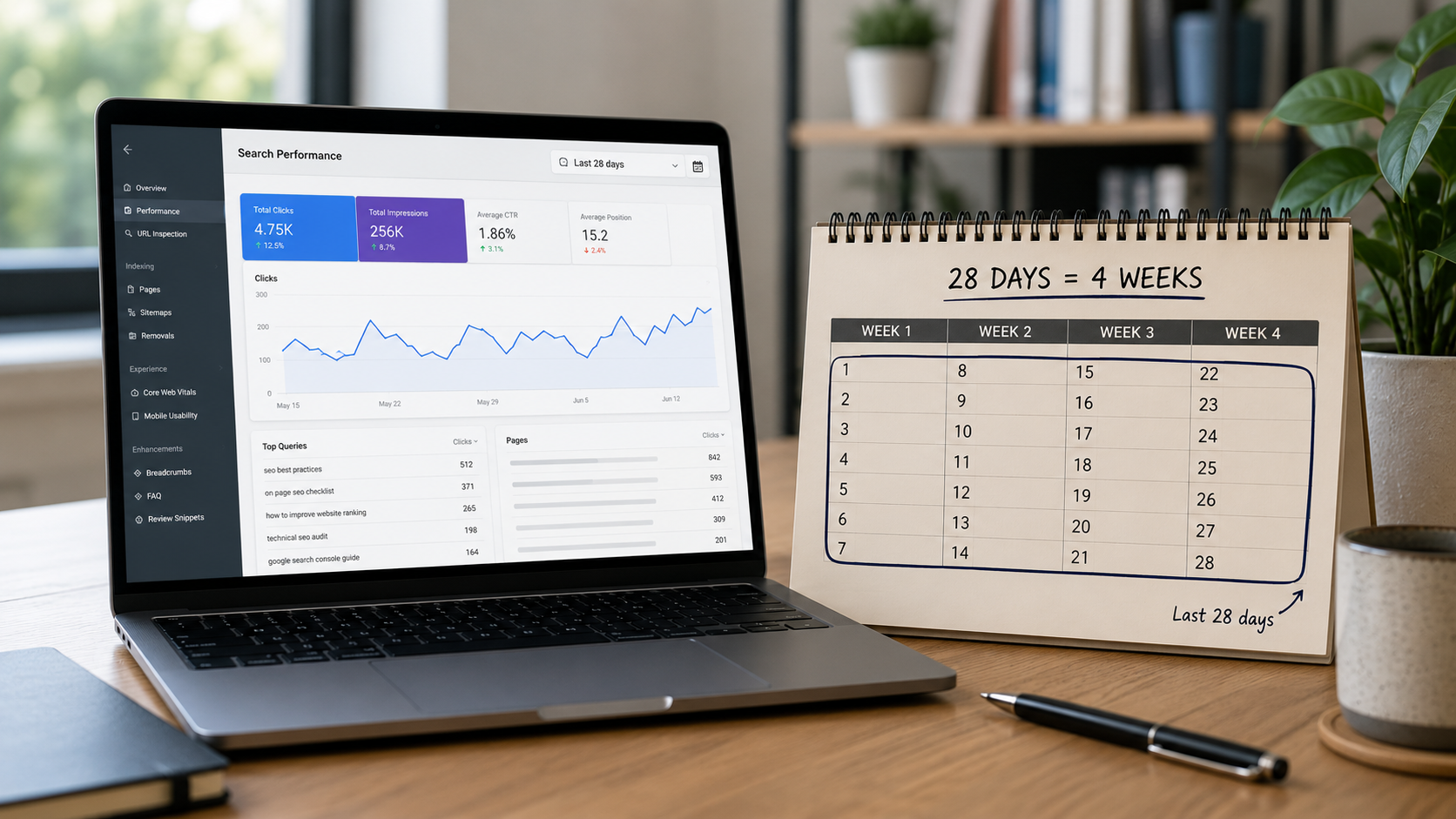
The number 28 is everywhere in Google Search Console — the Performance report, the Insights page, the Achievements milestones, even the emails. But what does "last 28 days" actually mean, and why 28 instead of 30? The answer is smarter than it looks: 28 days is exactly four weeks, so every window contains the same number of each weekday, making any period cleanly comparable to any other. In this guide, we explain how the rolling window really behaves — including why your totals can drop when nothing is wrong, why Achievement badges stay even when your clicks dip back down, why GSC never matches Google Analytics, and the "spike anniversary" effect that causes most false traffic panics.
From 50 to 700 Clicks: Our Real Google Search Console Achievements Timeline (And What It Teaches About How SEO Growth Actually Works)
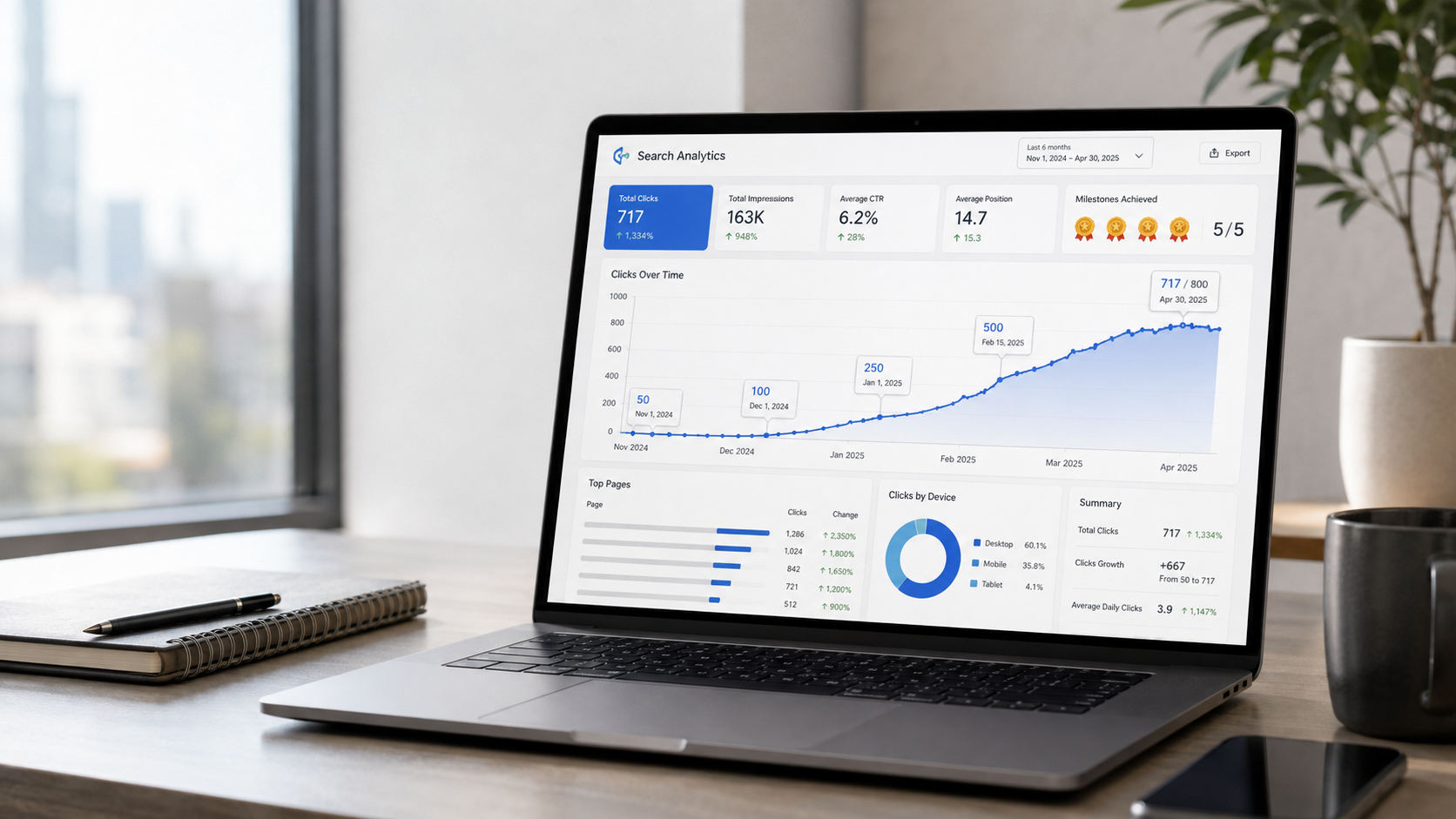
Most agencies tell you SEO compounds. Almost none show you their own dashboard. In this post, we publish our complete Google Search Console Achievements timeline — every click milestone for ritnerdigital.com, with the real dates, from our first 50-click badge in February to 717/800 today. The gaps between the dates tell the whole story: ten slow weeks to go from 50 to 100 clicks, then a three-week run where clicks doubled from 250 to 500 in just 17 days, then an honest plateau. We break down the four phases of compounding SEO growth, explain how the Achievements report works and where to find it, and share exactly what we did to drive a 14x increase in six months.
Ritner Digital 180-Day SEO Report Card: Grading Our Own Work at the Half-Year Mark
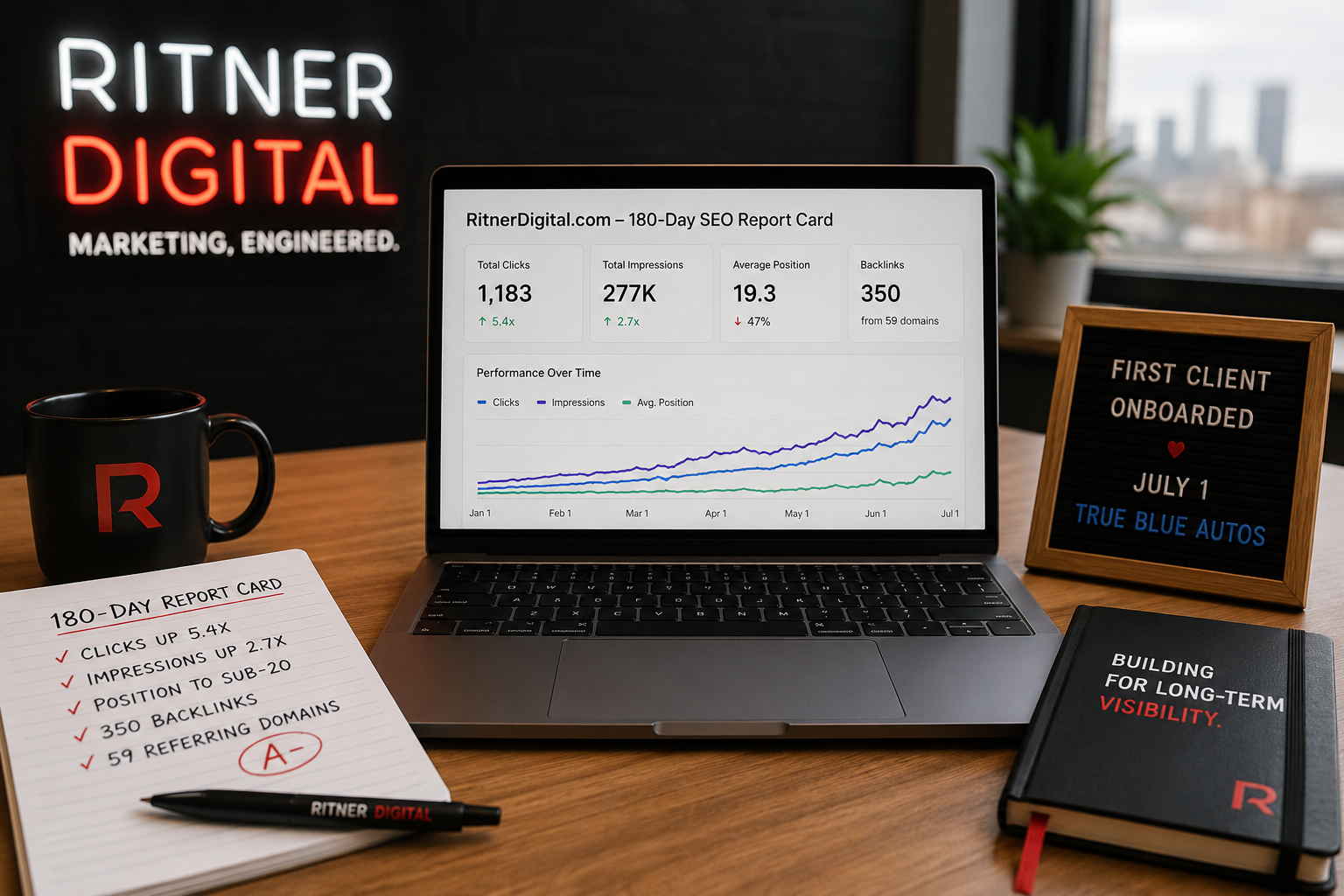
Six months in. Clicks up 5.4×, impressions up 2.7×, average position nearly halved to sub-20, and a backlink profile built to 350 links from 59 referring domains — with the strongest numbers landing in the final weeks. Here's the honest grade for days 90–180, no spin. Plus the milestone that mattered most: on July 1st we onboarded our first client, True Blue Autos.
Why Did One of Our Blog Posts Get a Click From "News Search"?
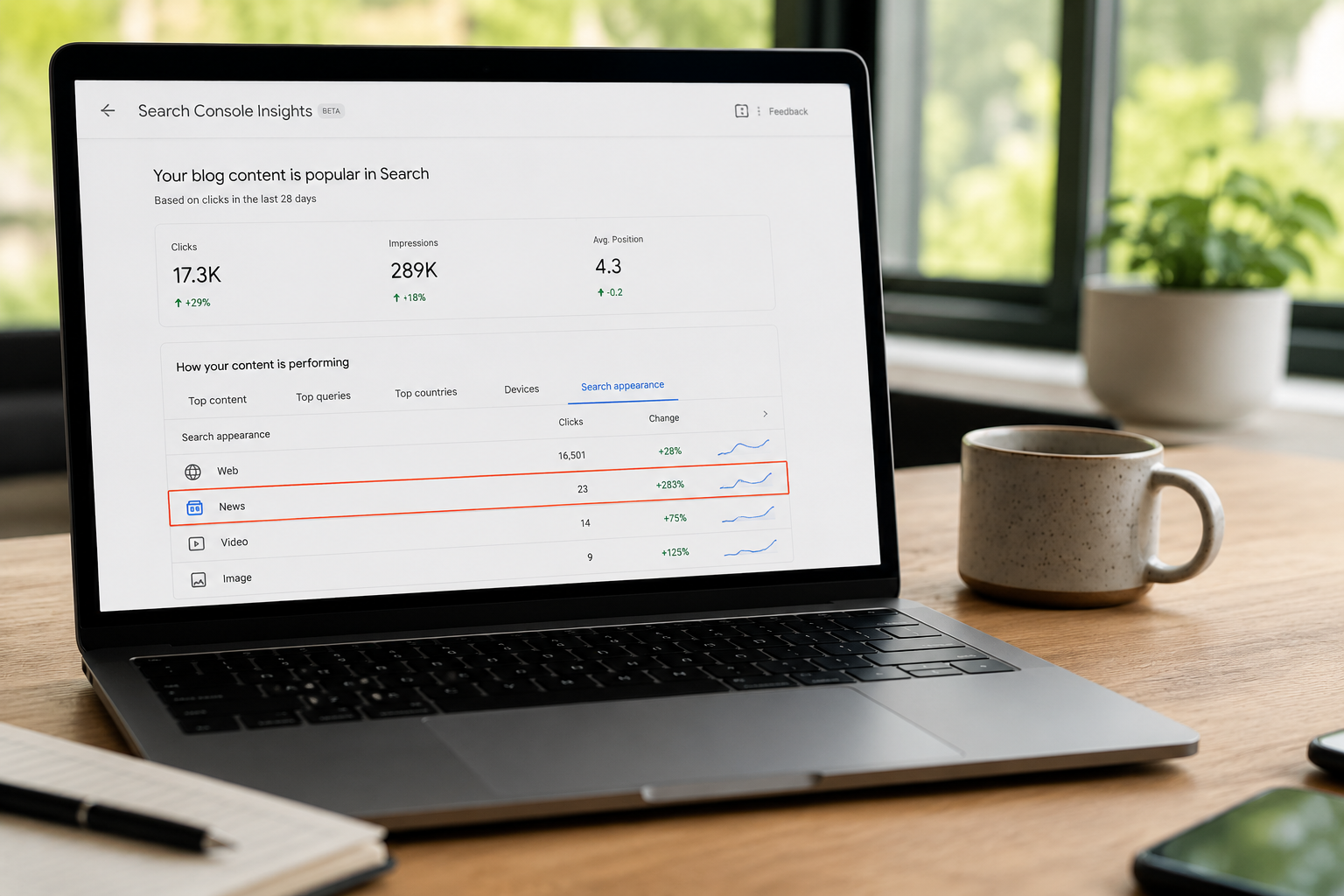
We noticed a click under "News search" in Search Console Insights, credited to a post about robots.txt and AI crawlers — not exactly breaking news. Turns out you don't need to be a registered publisher to show up there. Here's what actually decides News tab eligibility, and why this specific post cleared the bar.
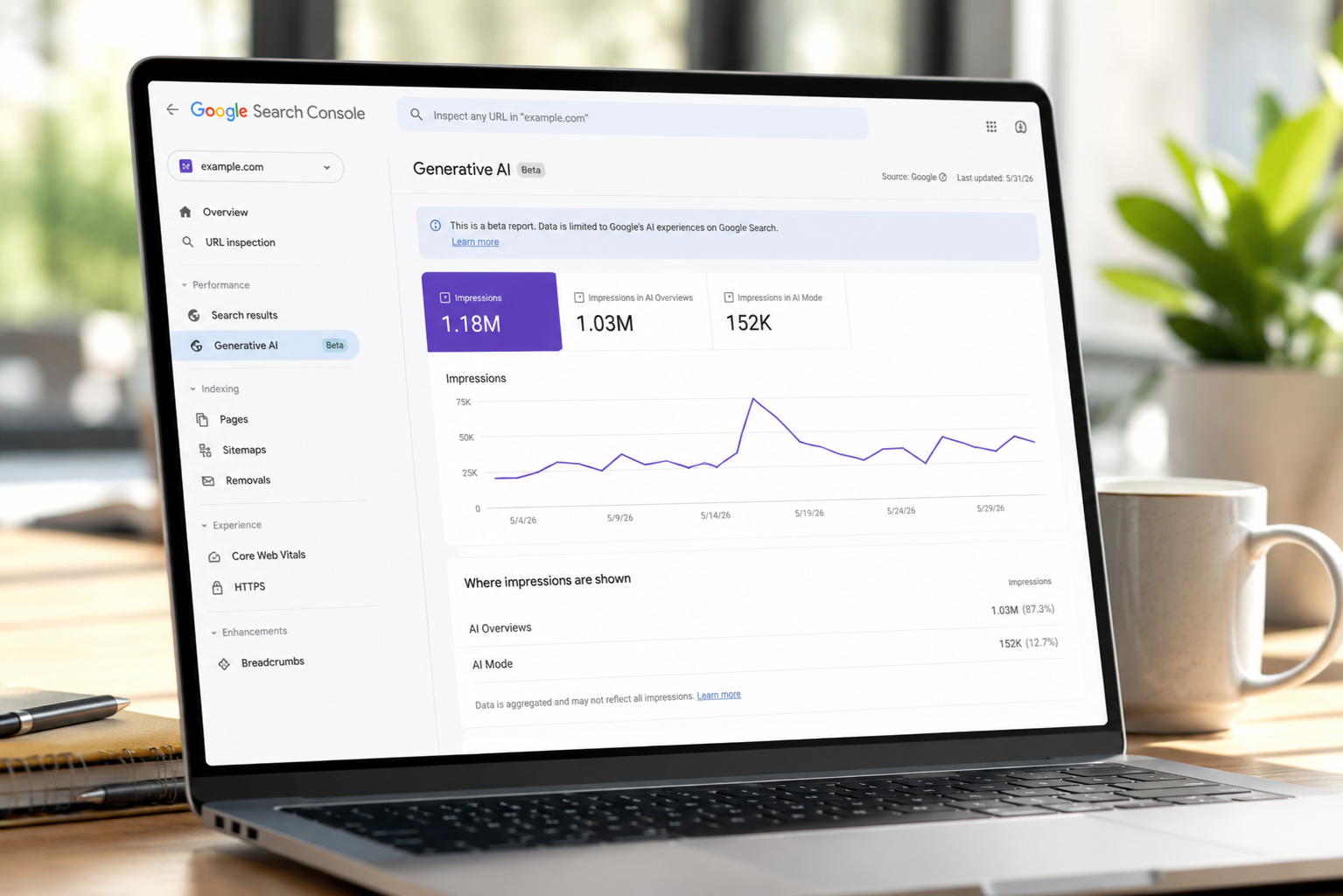
Google Just Launched AI Search Reporting — Here's How to Actually Find It
For two years, marketers asked when Google would let them measure AI search the way Search Console and Analytics measure traditional search. As of June 3, 2026, there's a first answer: a dedicated Generative AI performance report covering AI Overviews and AI Mode. The catch is it's genuinely hard to find — a staged beta living in its own view — and it's impressions-only, with no clicks, queries, or traffic data, and limited to Google's own surfaces. This guide shows exactly how to locate the report, explains what it measures and what it doesn't, and gives a grounded read on when the fuller GEO and AEO toolkit is likely to arrive.

The Memorial Day Weekend Curve: What a Holiday Actually Does to B2B Search Traffic (With Our Real Numbers)
Every Memorial Day, B2B marketers panic at a traffic dip that's completely normal and entirely predictable — but most people don't have a clean, quantified picture of what a normal holiday dip actually looks like, so they can't tell seasonality from a real problem. So we're giving you one. Over Memorial Day weekend 2026, we watched the whole curve play out in our own Search Console: impressions down 29%, clicks down 55%, the deepest trough on Saturday, and a near-full recovery within days. Here are the exact numbers and percentages to benchmark your own dip against — plus why clicks always fall harder than impressions, and why B2B gets hit worse than B2C.
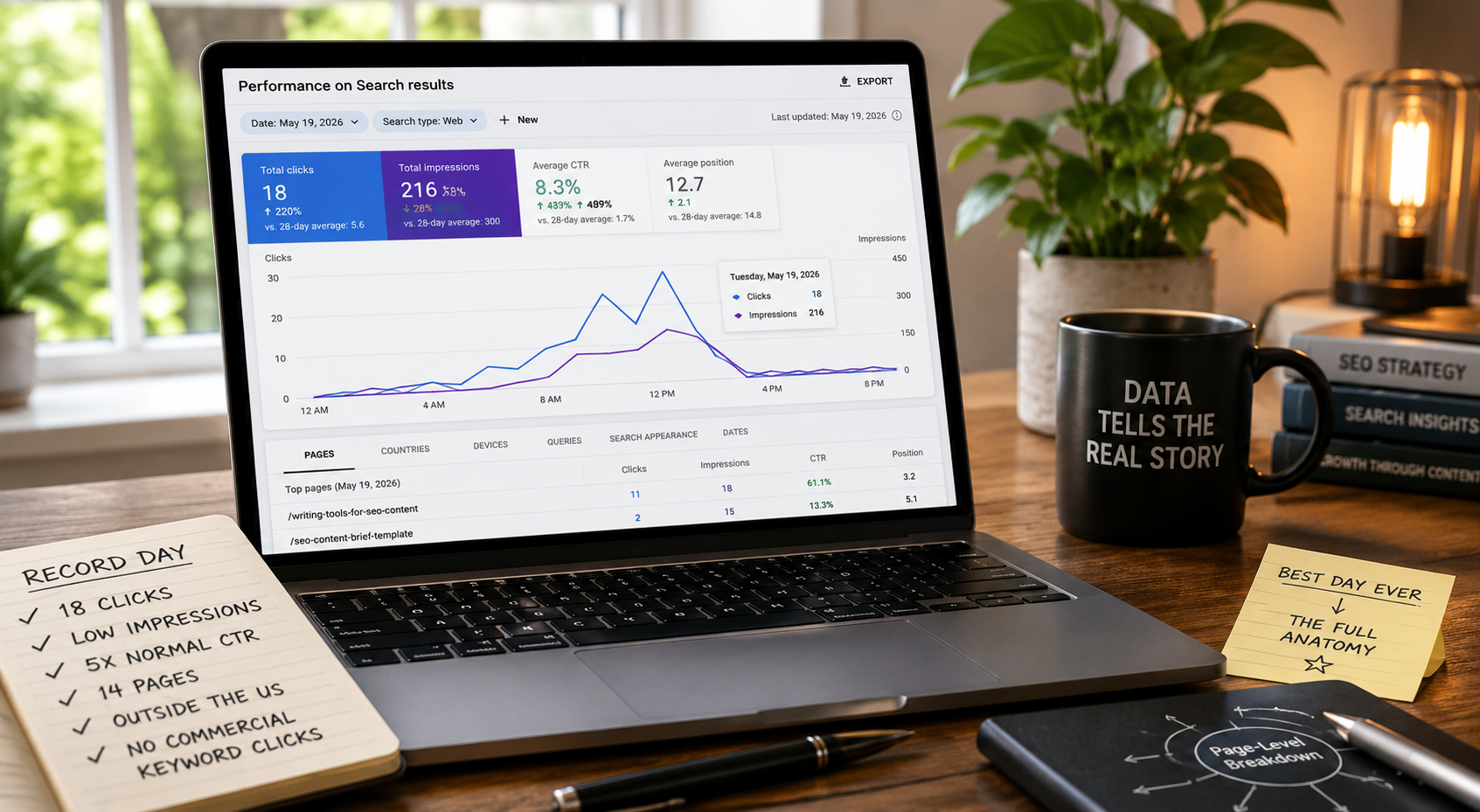
Anatomy of Our Biggest Day: 18 Clicks on May 19, Spread Across 14 Pages — Here's Exactly What Happened
On Tuesday, May 19, 2026, our four-month-old site logged 18 clicks — more than triple our daily average and our best day since launch. Then we pulled the page-level, device, and country data for that single day, and the story it tells isn't "we went viral." The 18 clicks came on one of our lowest-impression days, at a click-through rate five times normal, spread across 14 different pages, led by one page converting at 60% from position three — with the majority of clicks coming from outside the US and not a single click from our most valuable commercial keywords. Here's the full, layer-by-layer anatomy of what a record day actually looks like.
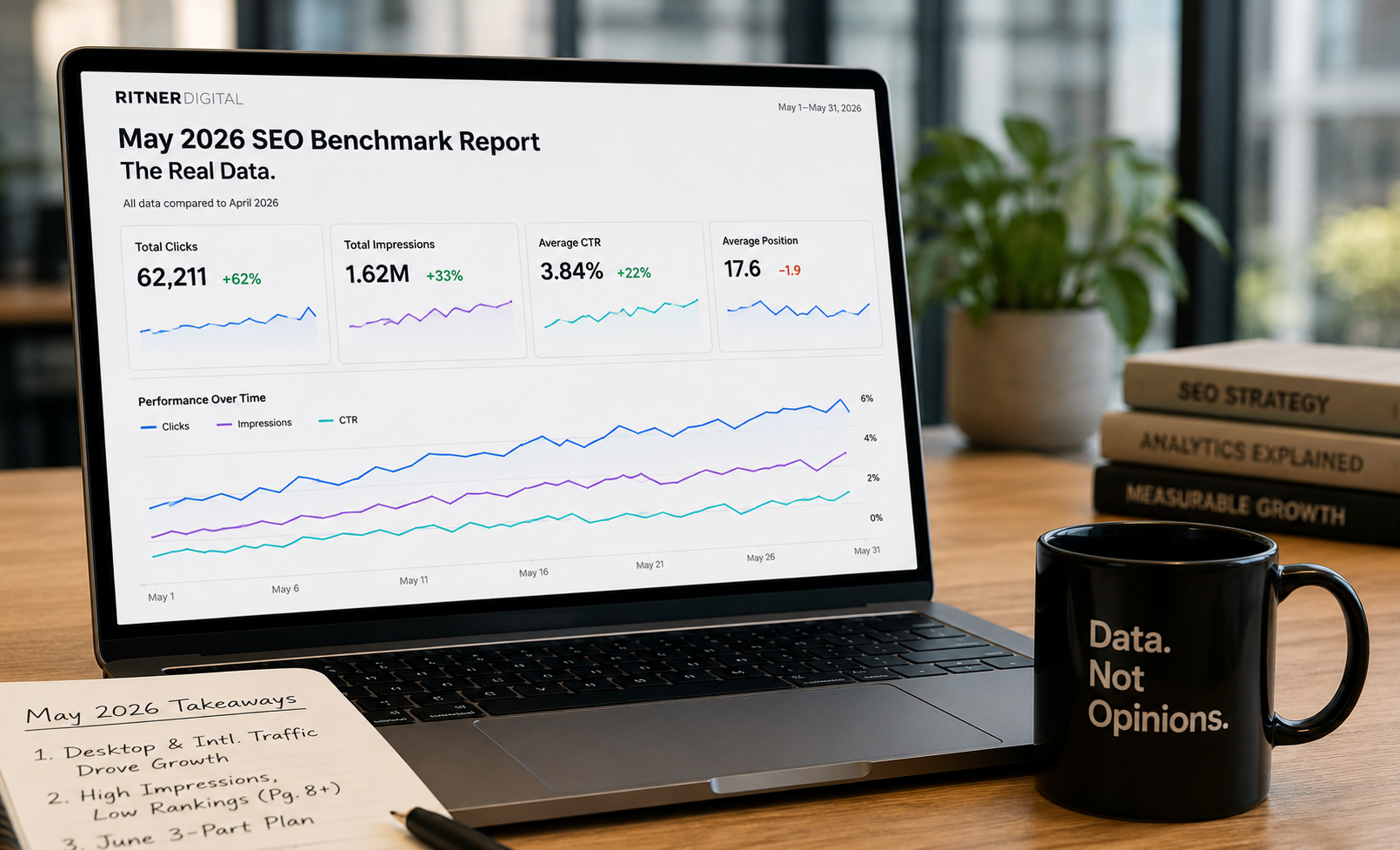
Ritner Digital: May 2026 SEO Benchmark Report
Every month we publish our own search performance data with no cherry-picked wins. May 2026 was our strongest month yet — clicks up 62%, impressions up 33%, CTR up 22% — and yet our average position got worse. This report breaks down exactly why those move in opposite directions, where the growth actually came from (desktop and a surprise wave of international traffic), the commercial keywords we're racking up impressions on but ranking page eight for, and the precise three-part plan the data hands us for June. The honest read, with every number in embeddable tables.
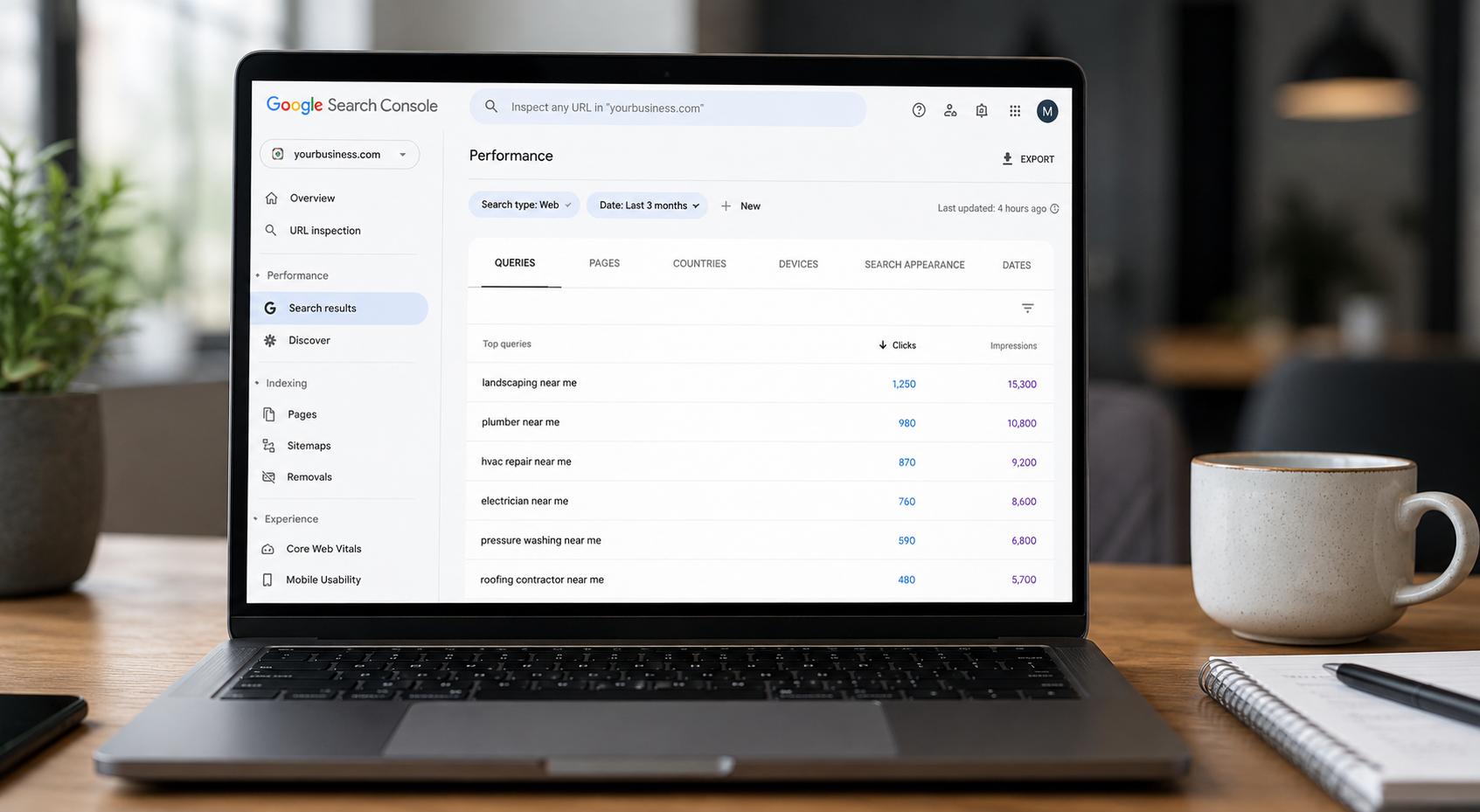
What "Near Me" Queries in Your Search Console Actually Tell You About Your Business
Pull up your Google Search Console and filter your top queries. If you run a local service business, there's one question worth asking before anything else: do you see "near me" queries in your data? The answer tells you whether Google has decided your business is relevant and trusted enough to show to people who are ready to spend money right now — and it's the diagnostic most local businesses never run.
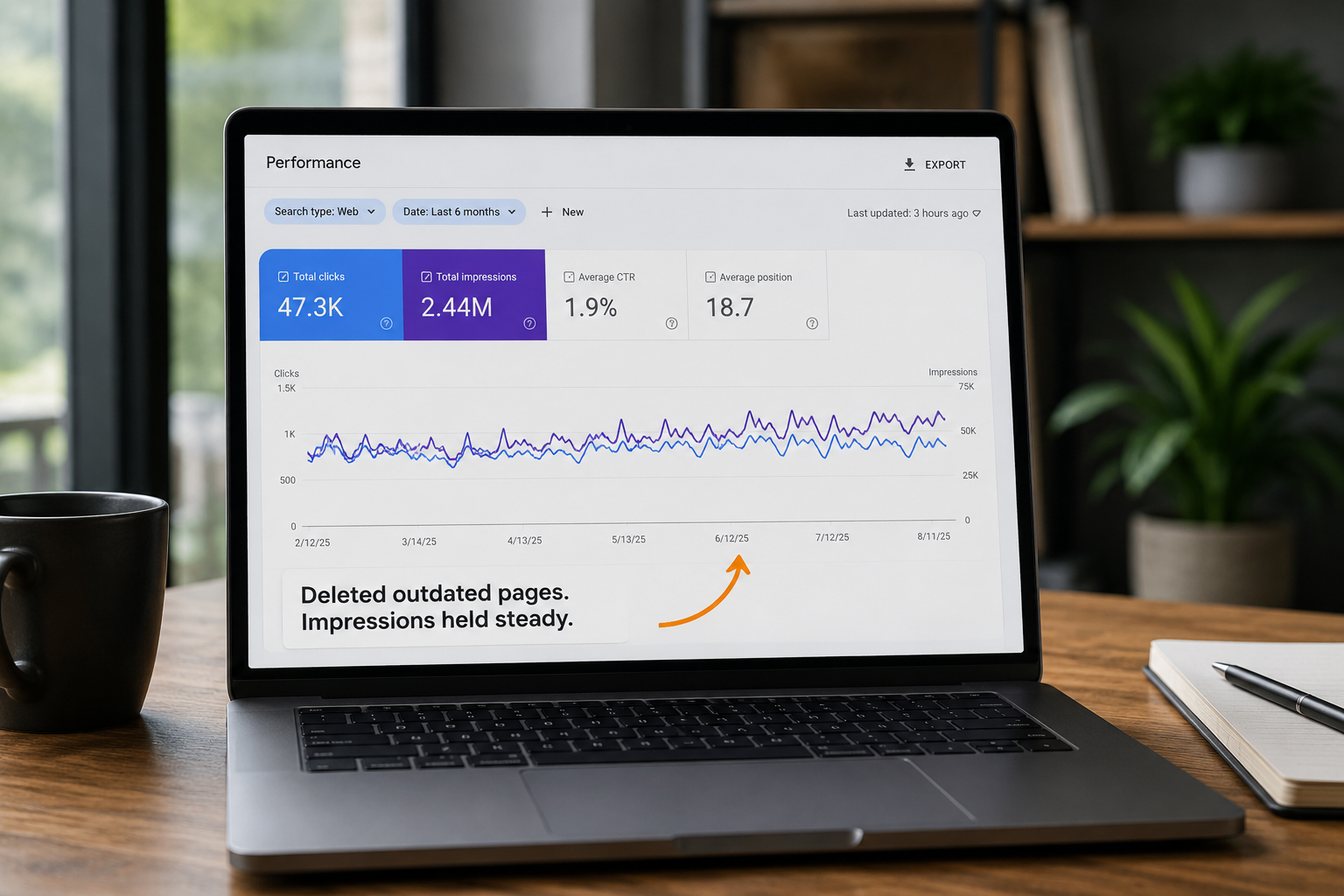
Why Deleting Old Content Didn't Kill Your Google Impressions (And What That Actually Tells You)
You've built a strong content library. Impressions are healthy. And deleting anything feels terrifying. But then you remove a handful of outdated pages — and impressions hold. Here's why that happens, what it tells you about how Google evaluates authority, and how to think about content auditing when you've built something real.

What Is SEO Forecasting? A Plain-English Guide to Predicting Organic Search Growth
Most businesses investing in SEO eventually ask the same question: when will we actually see results? SEO forecasting is the discipline that answers that question with data instead of guesses. It takes your real click trends, impression volume, ranking positions, and growth rates and projects where your organic search performance is headed — and when. This guide covers exactly how SEO forecasting works, what data goes into it, how forecasts are built, where they are reliable, and where they have real limits. No hockey sticks. No guarantees. Just a plain-English explanation of one of the most underused planning tools in digital marketing.
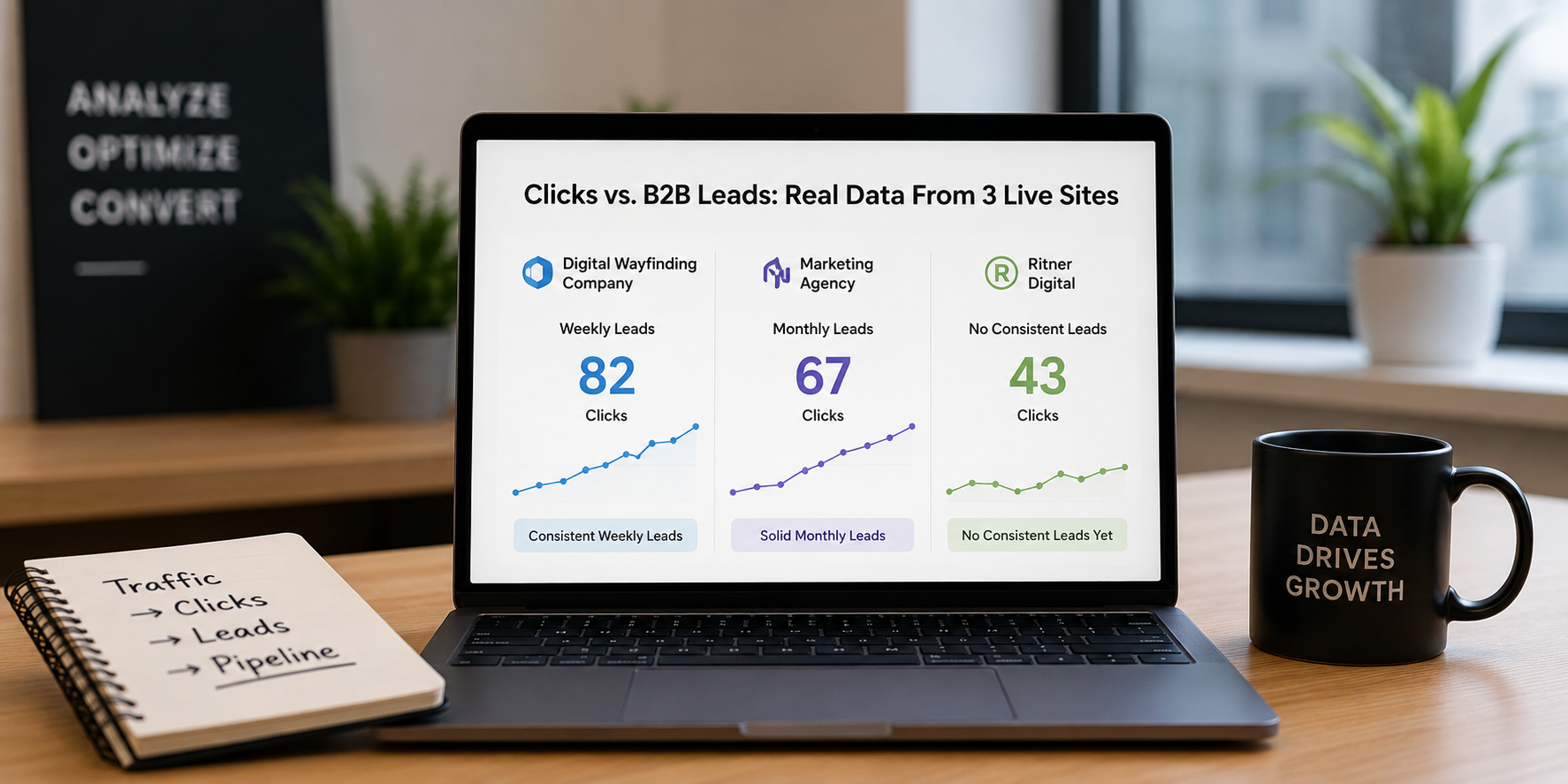
How Many Clicks Does It Actually Take to Generate Leads? Real Data From Three Live Sites — Including Our Own
Every business investing in SEO wants to know the same thing: when do clicks actually turn into leads? We pulled real Google Search Console data from three live sites — a digital wayfinding company seeing weekly leads at 82 clicks, a marketing agency seeing solid monthly leads at 67 clicks, and Ritner Digital's own site at 43 clicks with no consistent leads yet. Here's exactly what the numbers say, and what it means for your pipeline.
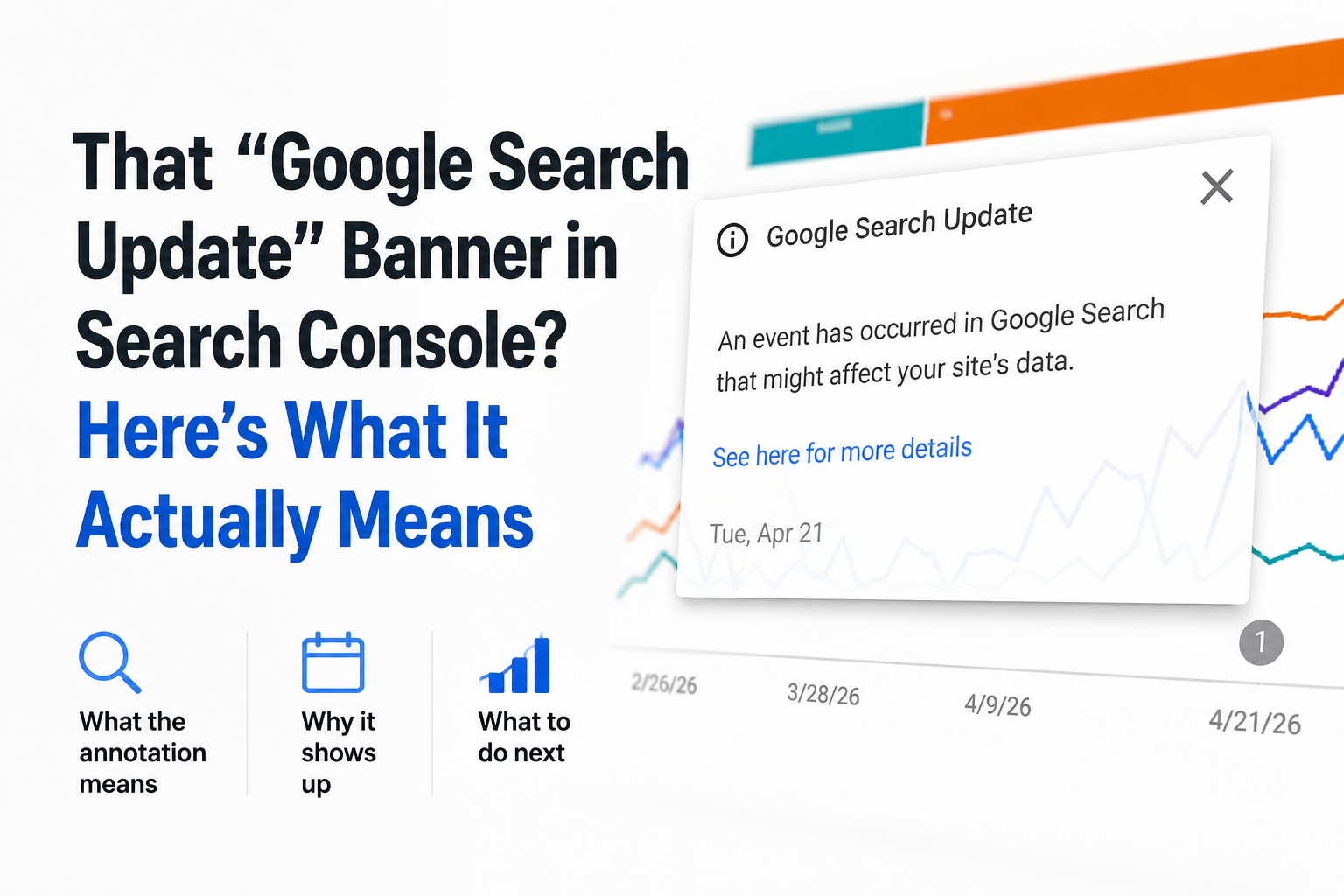
That Little "Google Search Update" Banner in Your Search Console? Here's What It Actually Means — And What to Do Next
You opened Google Search Console and saw it — a small banner that said "An event has occurred in Google Search that might affect your site's data." No explanation. No action items. Just a date and a vague warning that something happened. Here's the thing: that annotation is not a penalty notice, and it didn't arrive in a vacuum. It landed in the middle of a core update rollout, an eleven-month impression reporting bug, and one of the most data-chaotic stretches Google Search has had in years. This post explains exactly what it means and what to do with it.
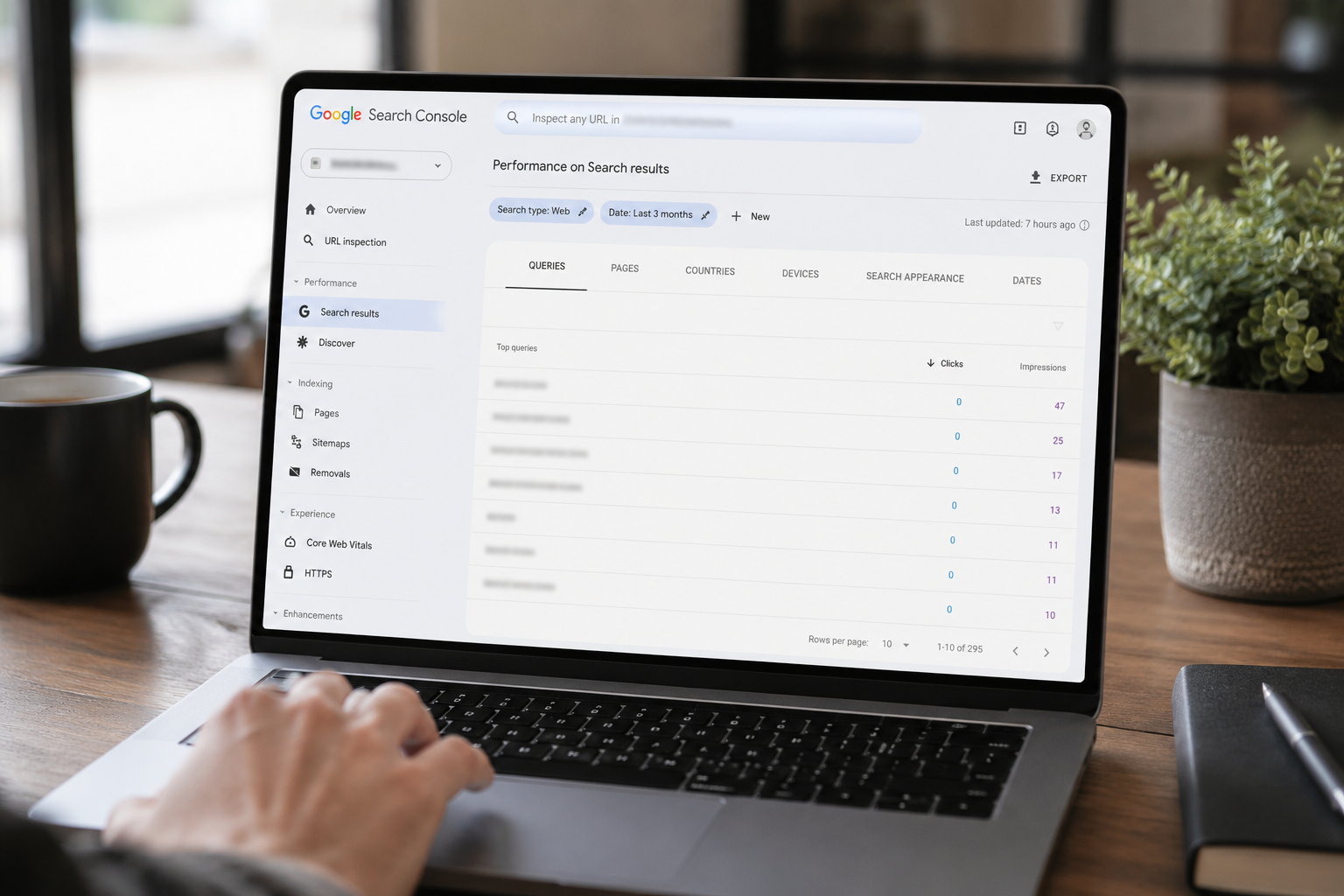
Why Google Search Console Shows Zero Clicks on a Query But the Pages Tab Shows Clicks
You switch from the Queries tab to the Pages tab in Google Search Console and the click counts don't match. The Queries tab shows zero. The Pages tab shows real traffic. This isn't a bug — it's a documented feature of how Google handles user privacy, and it's hiding nearly half of your search data. Here's why it happens and how to work around it.
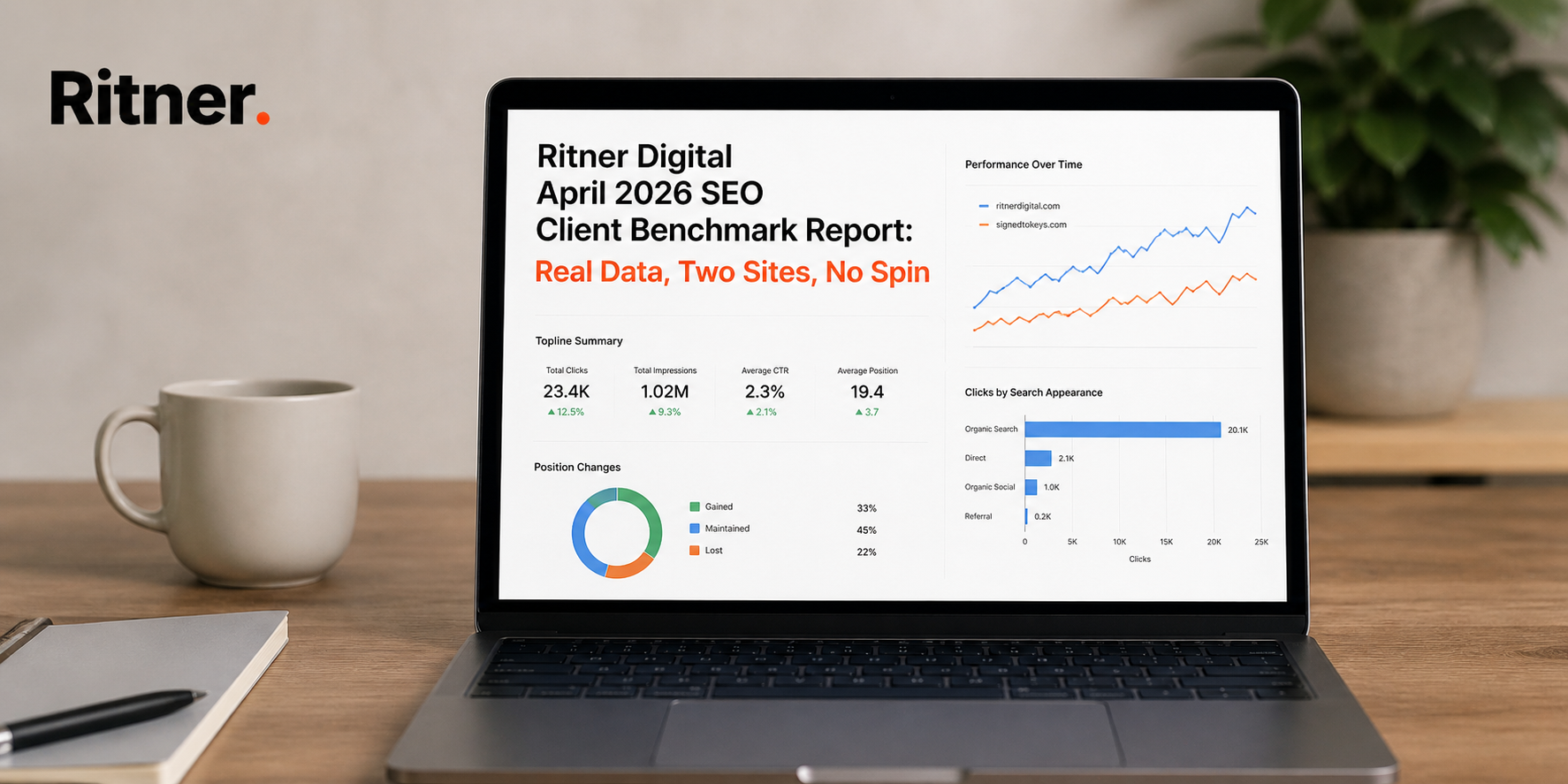
Ritner Digital: April 2026 SEO Client Benchmark Report
We don't believe in hiding the scoreboard. This is the first edition of the Ritner Digital SEO Client Benchmark Report — real GSC data from ritnerdigital.com and client site Signed to Keys, analyzed honestly. Position swings, zero-click search, pricing content as a traffic strategy, and what building an SEO program actually looks like month by month. No spin, no cherry-picked wins.
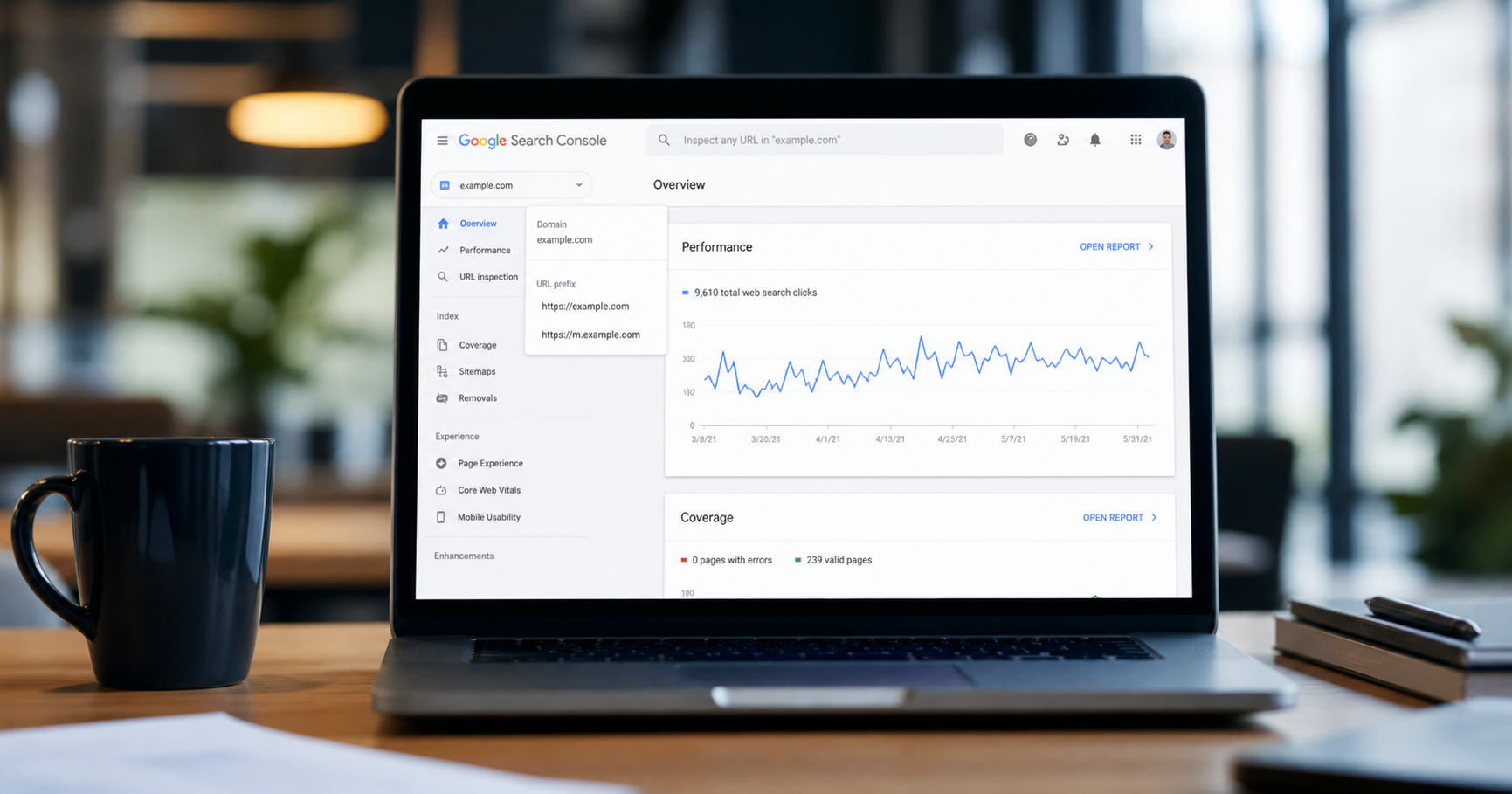
Domain vs. URL Prefix in Google Search Console: Which Should You Choose?
When you set up Google Search Console, the very first decision you make determines how much search data you'll actually see. Domain or URL Prefix — the choice sounds simple, but get it wrong and you could be flying blind on a significant chunk of your site's traffic. Here's everything you need to know to set it up right the first time.
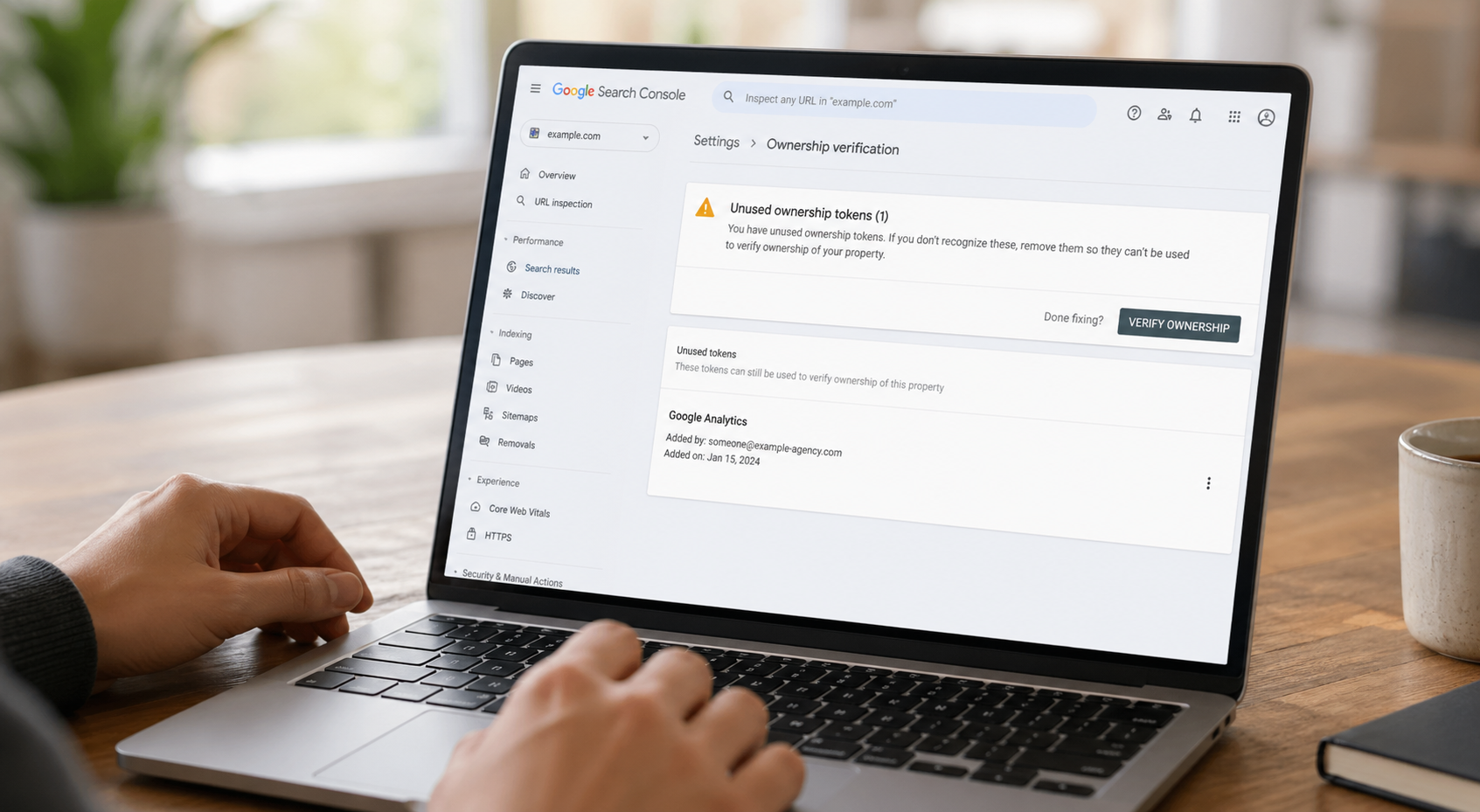
Google Search Console Ownership Tokens: What They Are, Why They're a Security Risk, and How to Clean Them Up
Most people see the "unused ownership token detected" warning in Google Search Console and move on. They shouldn't. That token could mean a former agency, a platform you migrated away from, or a Google service you stopped using still has verified access to your most sensitive SEO data. This guide explains what ownership tokens are, how they get onto your site without your knowledge, what the real risks are, and exactly how to audit and clean up your Search Console property — step by step.
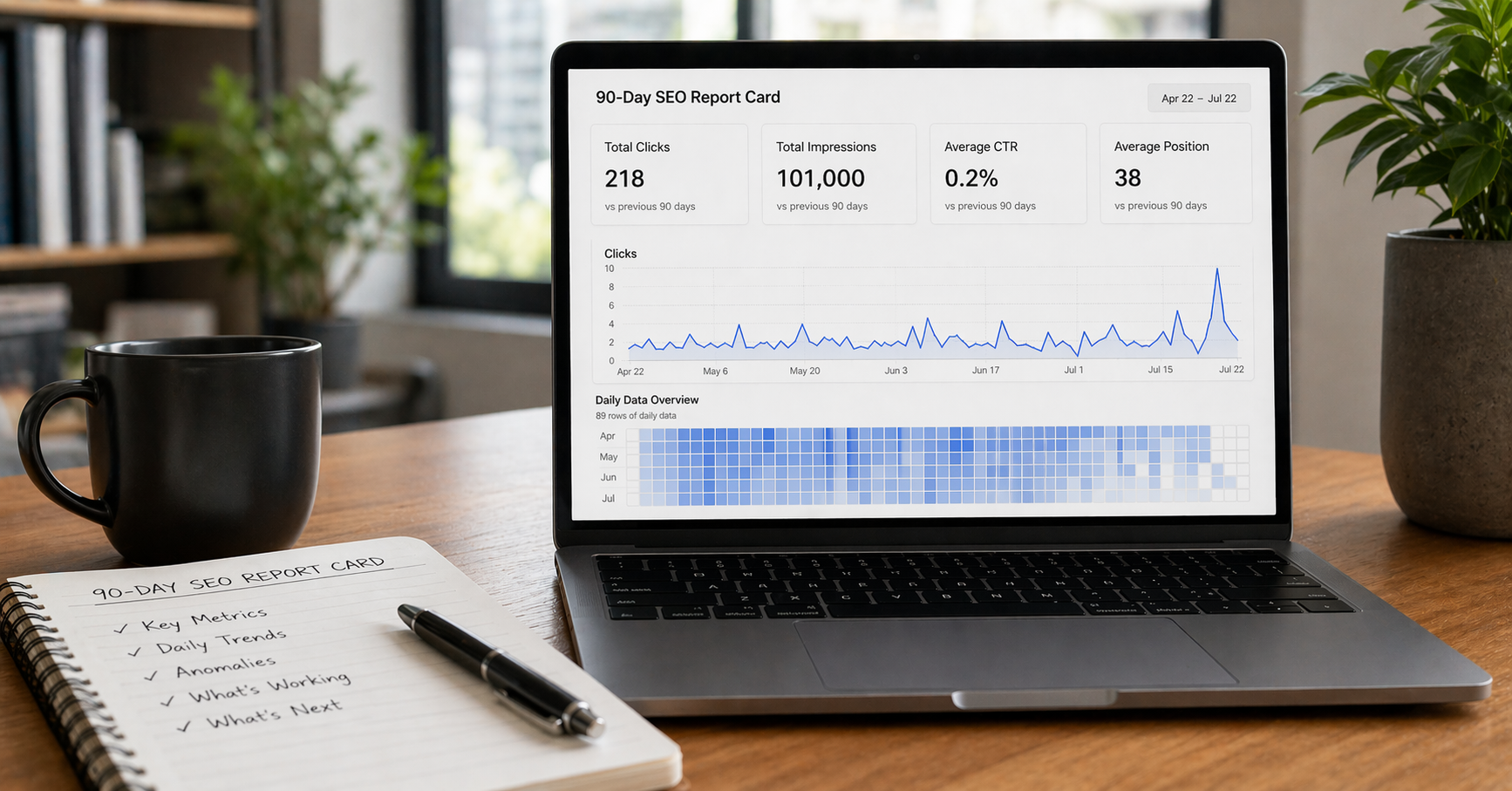
Ritner Digital 90-Day SEO Report Card: Grading Our Own Work
Most 90-day SEO reviews just show the four aggregate numbers and call it done. We had 89 rows of daily data — and that granularity tells a story the headline metrics completely hide. Here's the honest grade, the weird anomalies explained, and exactly what April 22 to July 22 needs to look like.
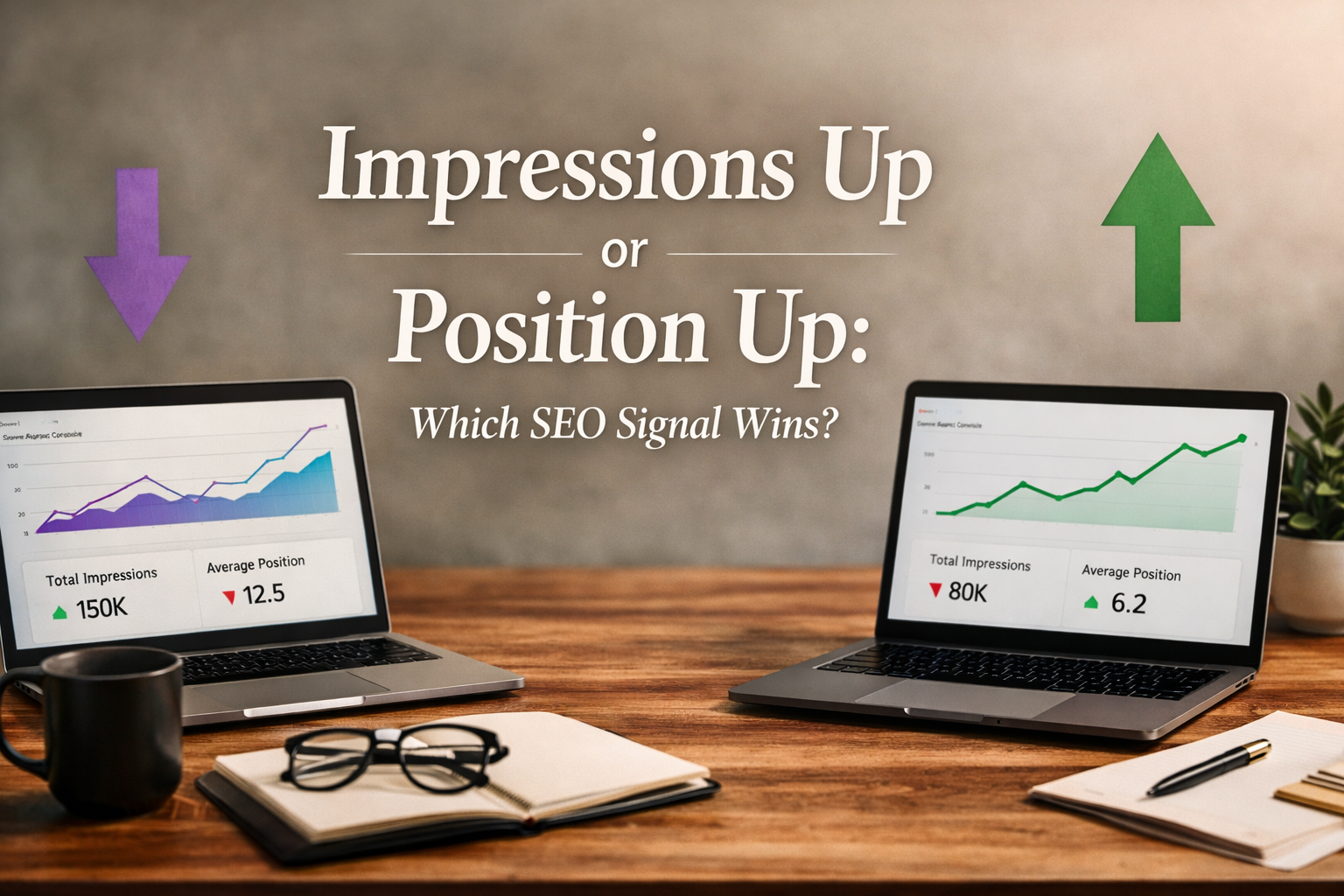
Impressions Up and Position Down — Or Position Up and Impressions Down? What Your Search Console Data Actually Says About Your SEO Maturity
If you've spent any real time in Google Search Console, you've heard both sides of this argument — usually from different SEOs, usually within the same week. "Impressions are up, position is down — that's great." Or the opposite: "Impressions are down, position is up — that's great." Both are technically defensible. Both are also how agencies quietly reframe flat performance as a win. So which one is actually better, and what does each pattern tell you about where your SEO program really sits on the maturity curve? Here's the honest breakdown.