Your Clients Are Telling You What to Write About (And AI Is Listening)
I was on a call with a hardscaping client recently when they brought up something that stopped me mid-sentence. We were talking about their winter slowdown, and they casually mentioned how brutal the freeze-thaw cycle is on concrete — how water seeps into the pores, freezes overnight, expands, and slowly cracks everything from patios to retaining walls over the course of a season.
They knew this inside and out. It was second nature to them. They deal with it every single year.
So I asked: "Do you have anything about this on your website?"
Silence. Then: "No, I don't think so."
And right there is one of the biggest missed opportunities in small business marketing. The stuff you know — the things you explain to customers every day without even thinking about it — is exactly the content your website is missing. And in 2026, it's not just about impressing potential customers anymore. It's about getting your business recommended by AI.
The Knowledge Gap Between You and Your Website
Here's what happens with most service-based businesses. The website gets built, the service pages go up, and maybe there's a blog post or two. The pages say things like "We install patios, walkways, and retaining walls" and "Contact us for a free estimate."
That's fine. But it's also what every other hardscaper's website says.
Meanwhile, the business owner is out in the field having real conversations with customers about things like why their concrete patio is flaking after two winters, why pavers hold up better than poured concrete in cold climates, why you shouldn't use rock salt on a stamped concrete driveway, or what air-entrained concrete is and why it matters.
That knowledge never makes it to the website. The owner assumes it's too technical, too niche, or that nobody's searching for it. But people are searching for it — and now, AI systems are looking for it too.
Why This Kind of Content Builds Real Credibility
When a homeowner notices their concrete patio cracking and types "why is my concrete cracking in winter" into Google, they're not looking for a generic services page. They're looking for someone who actually understands the problem.
If your website has a detailed, clearly written explanation of how freeze-thaw cycles damage concrete — what causes it, what the warning signs look like, how to prevent it, and when it's time to call a professional — that homeowner immediately sees you as the expert. You're not just a company that pours concrete. You're the company that understands concrete.
That's the difference between a website that generates leads and a website that just exists. Credibility isn't built by saying "we're the best." It's built by demonstrating knowledge that your competitors aren't bothering to share.
This is exactly what Google's E-E-A-T framework rewards — Experience, Expertise, Authoritativeness, and Trustworthiness. When your content demonstrates real, hands-on knowledge of your trade, search engines recognize it. And when search engines recognize it, your pages rank higher.
Now Add AI to the Picture
Here's where it gets really interesting. Google AI Overviews, ChatGPT, Perplexity, Gemini — these AI platforms are generating answers to user questions by pulling from the most authoritative, comprehensive sources they can find.
When someone asks ChatGPT "how do I protect my concrete patio from freeze-thaw damage," the AI doesn't just grab the first result it finds. It looks for content that thoroughly covers the topic, demonstrates genuine expertise, and comes from a source that has broad, connected coverage of related subjects.
This is what SEO professionals call topical authority — and it's become one of the most important factors in getting cited by AI search platforms. It's not enough to have one page about patio installation. AI systems want to see that you've covered the topic from multiple angles: installation, maintenance, seasonal care, material choices, common problems, and yes — things like the freeze-thaw cycle.
Research backs this up. Sites that demonstrate comprehensive, interconnected coverage of their niche are seeing significantly more citations in AI-generated results. One industry analysis found that brands with strong topical authority earn two to three times more mentions in AI Overviews than those without it. Google's own algorithm updates have reinforced this — the June 2025 core update specifically rewarded sites that cover subjects thoroughly and credibly rather than relying on surface-level keyword targeting.
The Content Your Competitors Aren't Writing
The beauty of this approach is that most of your competitors aren't doing it. They're stuck on the same generic service pages with the same generic copy. Nobody in your local market is writing about the freeze-thaw cycle, or explaining why certain paver materials perform better in your region's climate, or breaking down what questions to ask before hiring a hardscaper.
That's your advantage. You already have this knowledge. You just haven't published it yet.
And it doesn't have to be complicated. A single blog post explaining how the freeze-thaw cycle affects concrete patios and what homeowners can do about it could rank for dozens of related searches, establish you as a local authority, build trust with potential customers before they ever pick up the phone, and get your brand cited when someone asks an AI platform about concrete maintenance.
One post. Written from knowledge you already have. That's the kind of ROI most marketing tactics can't touch.
How to Start Pulling Knowledge Out of Your Head
If you're a business owner reading this and thinking "I have tons of stuff like this," good — you're sitting on a goldmine. Here's how to start mining it.
Pay attention to the questions your customers ask repeatedly. If you've explained the same thing to five different customers this month, that's a blog post. Those repeated questions are proof of search demand — people are wondering the same thing online.
Think about the problems you solve that clients don't fully understand. Your customers know their patio is cracking. They don't know why. They know they need a retaining wall. They don't know what goes into building one that lasts 20 years. That gap between what they see and what you know is where your best content lives.
Talk about seasonal and regional specifics. Generic content about "concrete installation" exists everywhere. Content about how freeze-thaw cycles affect hardscaping in the mid-Atlantic, or why certain paver bases perform better in clay-heavy soil — that's specific, valuable, and almost certainly not on your competitor's website.
Don't worry about being too technical. You can always write for a general audience while including the real details. Homeowners appreciate learning something new, and the technical substance is exactly what signals expertise to both search engines and AI systems.
Record yourself talking about it. If writing isn't your thing, open the voice memo app on your phone and explain the topic like you would to a customer. Then hand it off to someone who can turn it into a polished blog post. The knowledge is the hard part — formatting is easy.
This Is What Topical Authority Looks Like in Practice
Let's go back to the hardscaping example. Right now, most hardscaping websites have a handful of service pages and maybe a gallery. If that client I mentioned started publishing content around what they actually know, their website could include posts and pages about how freeze-thaw cycles damage concrete and how to prevent it, the difference between pavers and poured concrete for cold climates, how to choose the right base material for a patio that lasts, why drainage matters more than most homeowners realize, what to look for when inspecting hardscaping after winter, how de-icing salts damage concrete and what to use instead, and when to seal your concrete and how often.
Each of those posts connects to the others. Each one answers a question real people are asking. Together, they tell Google and AI platforms: this business doesn't just install hardscaping — they deeply understand it. That's topical authority. And that's what gets you cited in AI search results, recommended in Google's AI Overviews, and positioned as the go-to expert in your market.
The Bottom Line
The most valuable content on your website isn't going to come from a generic content mill or an AI writing tool. It's going to come from the knowledge that's already in your head — the stuff you talk about with customers every single day but have never thought to publish.
That freeze-thaw conversation I had with my hardscaping client? That's not just a blog post waiting to happen. It's a credibility signal, a ranking opportunity, and an AI citation in the making — all wrapped into one.
Your expertise is your competitive advantage. Start putting it on your website.
Not sure how to turn your industry knowledge into content that ranks? Ritner Digital helps service businesses build the kind of content strategy that drives real visibility — in traditional search and AI. Let's talk.
Frequently Asked Questions
What is topical authority and why does it matter for my business?
Topical authority is how thoroughly and credibly your website covers a specific subject area. When you publish multiple pieces of interconnected content around your area of expertise — not just one generic services page — search engines and AI platforms recognize your site as a trusted resource. This leads to higher rankings, more visibility in AI-generated answers, and greater trust from potential customers.
How does writing about things like the freeze-thaw cycle help my business get found online?
When homeowners experience problems like cracking concrete, they search for answers. If your website has a clear, knowledgeable explanation of what's happening and how to address it, you show up as the expert. That content ranks in Google, builds trust with the reader, and increasingly gets cited by AI platforms like ChatGPT and Google AI Overviews when users ask related questions.
Do AI search platforms really cite small business websites?
Yes. AI platforms pull from whatever sources demonstrate the most relevant, comprehensive, and trustworthy coverage of a topic. A small hardscaping company with genuinely helpful, expert content about concrete maintenance can absolutely get cited over a larger competitor with a thin, generic website. It's about content quality and depth, not company size.
I'm not a writer. How do I create this kind of content?
You don't need to be. The most important ingredient is your knowledge — and you already have that. Record yourself explaining a topic the way you would to a customer, then work with a content writer or marketing partner to turn that into a polished blog post. The expertise is what makes the content valuable. The writing is just the packaging.
How many blog posts do I need before this starts working?
There's no magic number, but even a handful of well-written, genuinely useful posts can make a noticeable difference. The key is consistency and depth. Five posts that thoroughly cover different aspects of your expertise will outperform fifty generic posts that don't say anything meaningful. Start with the questions your customers ask most often and build from there.
What's the difference between this and just stuffing keywords on my website?
Keyword stuffing is about tricking search engines. Topical authority is about genuinely covering a subject in depth. Modern search algorithms and AI systems are designed to tell the difference. They reward content that demonstrates real knowledge, answers real questions, and provides genuine value — not pages that repeat the same phrase twenty times.
How does this connect to Google's E-E-A-T guidelines?
E-E-A-T stands for Experience, Expertise, Authoritativeness, and Trustworthiness. It's how Google evaluates whether content is credible and worth ranking. When a hardscaper writes about the freeze-thaw cycle from years of firsthand experience, that content naturally demonstrates E-E-A-T. It shows real experience, genuine expertise, and builds trust — all of which contribute to higher rankings and greater AI visibility.
Will this work for businesses outside of hardscaping?
Absolutely. This applies to any service-based business — plumbers, electricians, roofers, landscapers, HVAC companies, auto shops, and beyond. Every trade has insider knowledge that customers find valuable but competitors aren't publishing. The industry doesn't matter. The principle is the same: your expertise is your best marketing asset, and your website should reflect it.
Related Reads
〰️
Related Reads 〰️
Content Marketing Is a Lot Like Fishing
Content marketing and fishing have more in common than you might think. You're picking your spot, choosing your bait, and figuring out what gets a bite. Whether it's service pages, industry pages, or location pages — the strategy is all about testing, adjusting, and landing the catch.

Does Your Image File Name Matter for SEO and AI Citations?
You optimize the title, the meta description, and the headers — then upload a featured image called IMG_4782.jpg. That file name is a missed opportunity. Here's why what you name your images matters for SEO, Google Image Search, and how AI systems decide which content to cite.
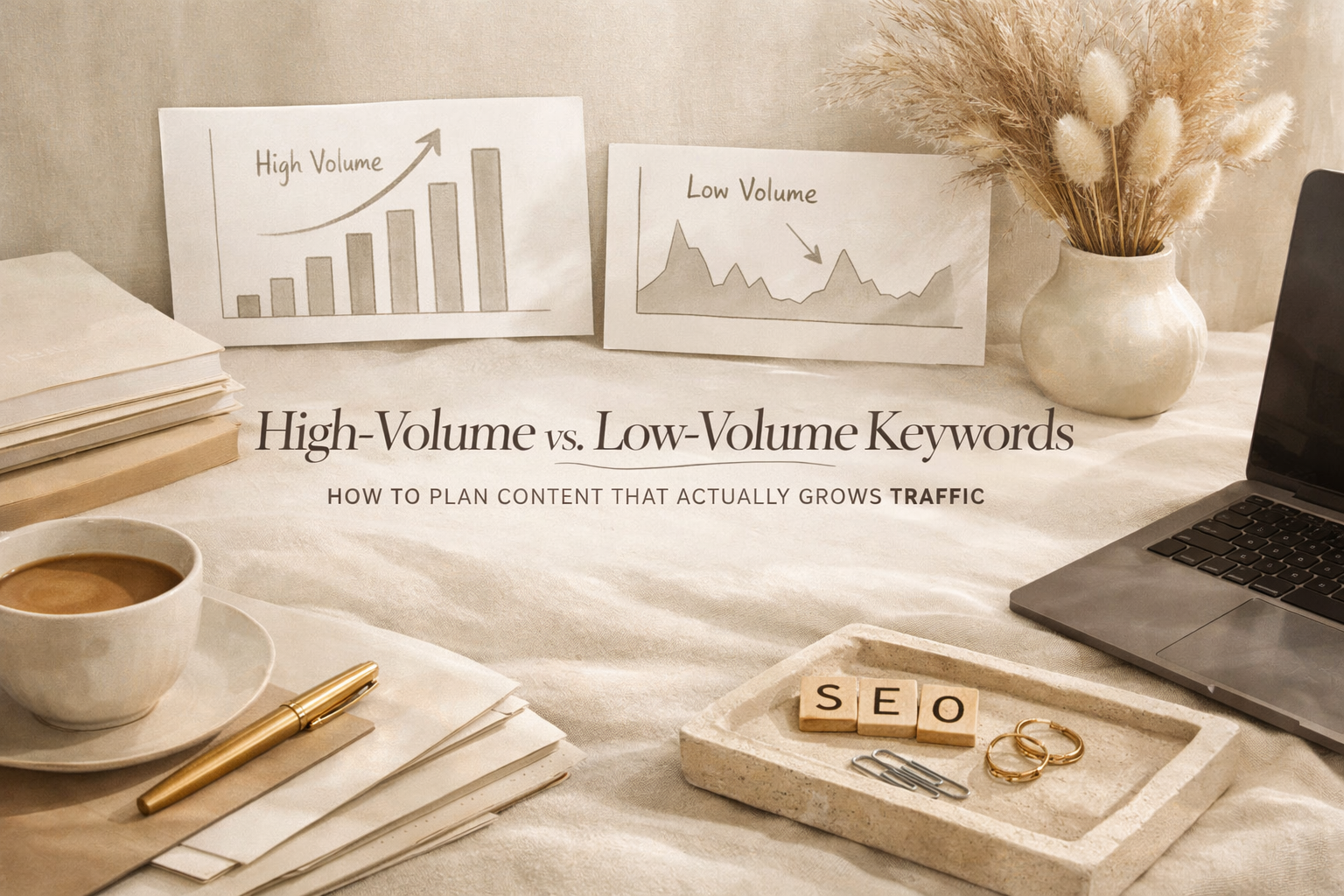
High-Volume vs. Low-Volume Keywords: How to Plan Content That Actually Grows Traffic
Should you chase high-volume keywords or focus on low-volume wins? This guide breaks down how to balance keyword volume, intent, and competition to build a content strategy that compounds organic traffic over time.