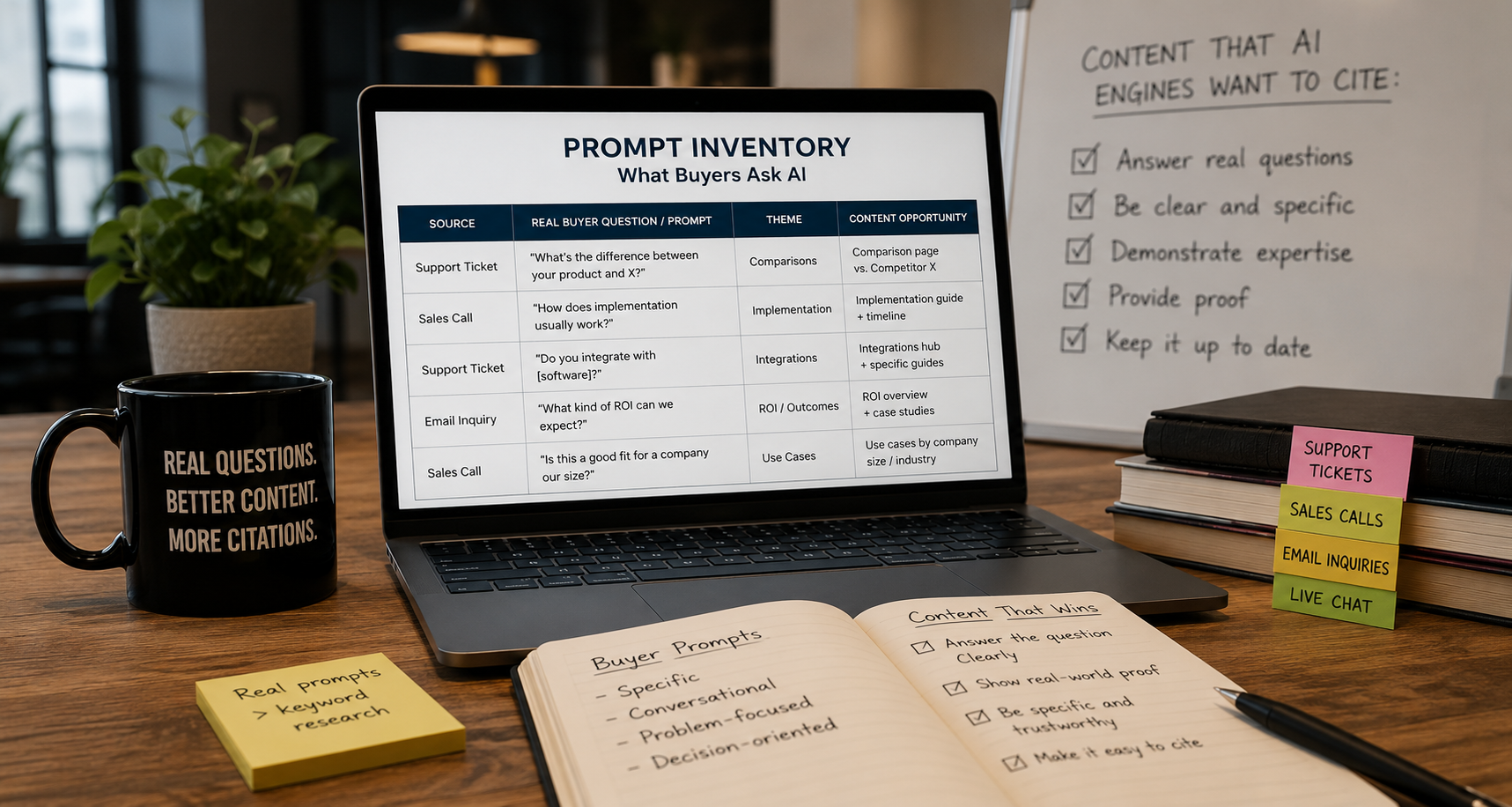
The "Prompt Inventory" Method: How to Find What Your Buyers Actually Ask AI
People don't type at AI engines — they talk to them, in full, specific questions. The new homework isn't keyword research; it's finding the real prompts your buyers ask before they reach you. The best source is free and already yours: your tickets, your inbox, your calls. Here's how to mine it.
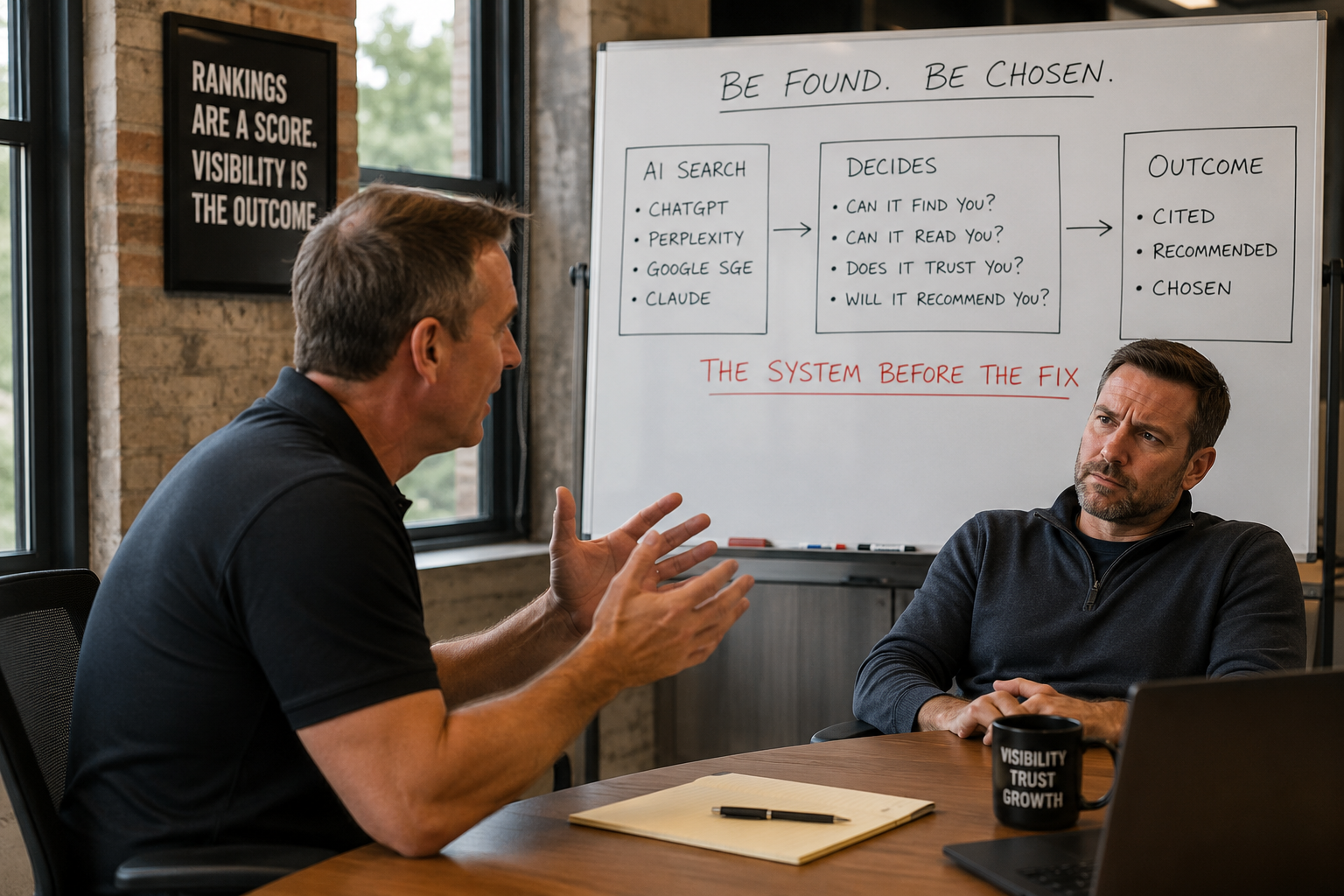
"No, It's Just the Schema": Anatomy of the Conversation That Decides Whether a Business Grows
A successful owner reaches out with the diagnosis already decided: "I just need schema." What happens in the next ten minutes—the reframe, and the pushback against it—decides whether the business pulls ahead or quietly stalls. Here's the anatomy of that conversation, and why the resistance costs more than any fix.
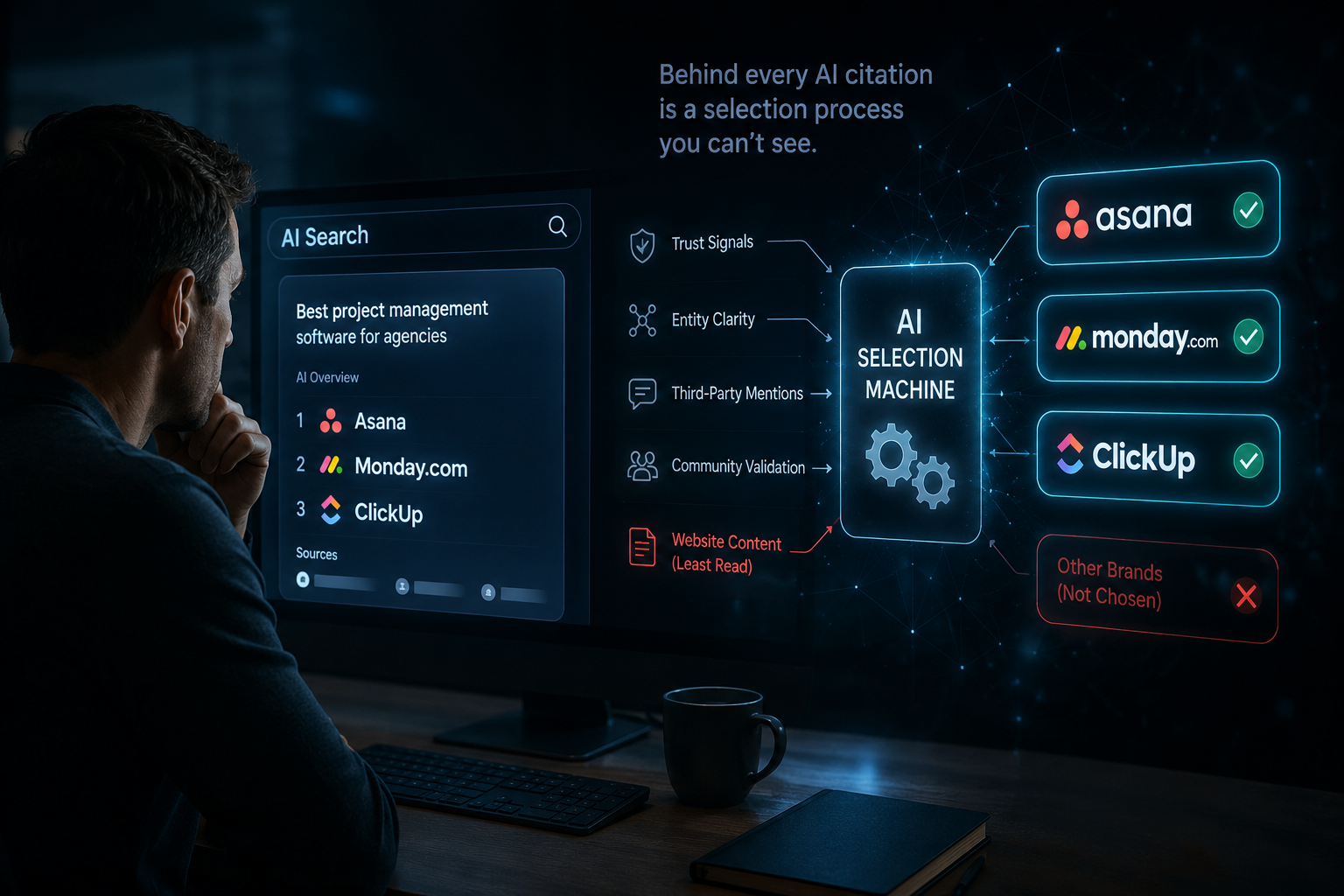
The "Dark" Side of AI Search: What You Don't Know About Who AI Cites
When AI recommends a shortlist of brands, you don't see the selection process behind it: a hidden machinery of trust scoring, entity matching, and third-party validation that decided who was even eligible. Most owners assume AI reads their website. It mostly doesn't. Here's what it actually reads—and why it matters.
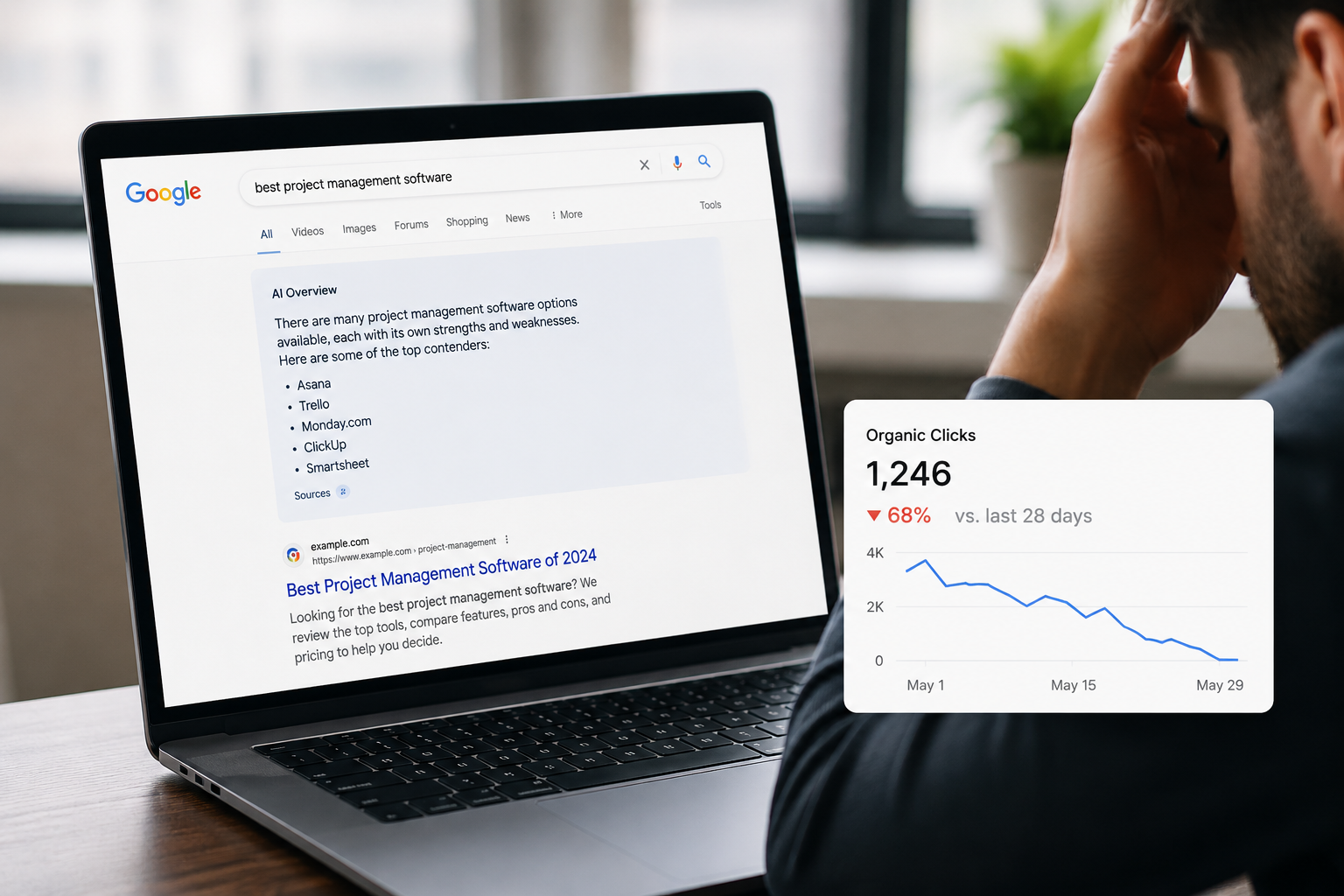
Why Being #1 on Google No Longer Guarantees Traffic
For twenty years, getting to #1 on Google meant the traffic followed. Not anymore. You can hold the top ranking and watch your clicks collapse—not because you slipped, but because the page above your link changed shape. Here's what broke, and what drives visibility now.
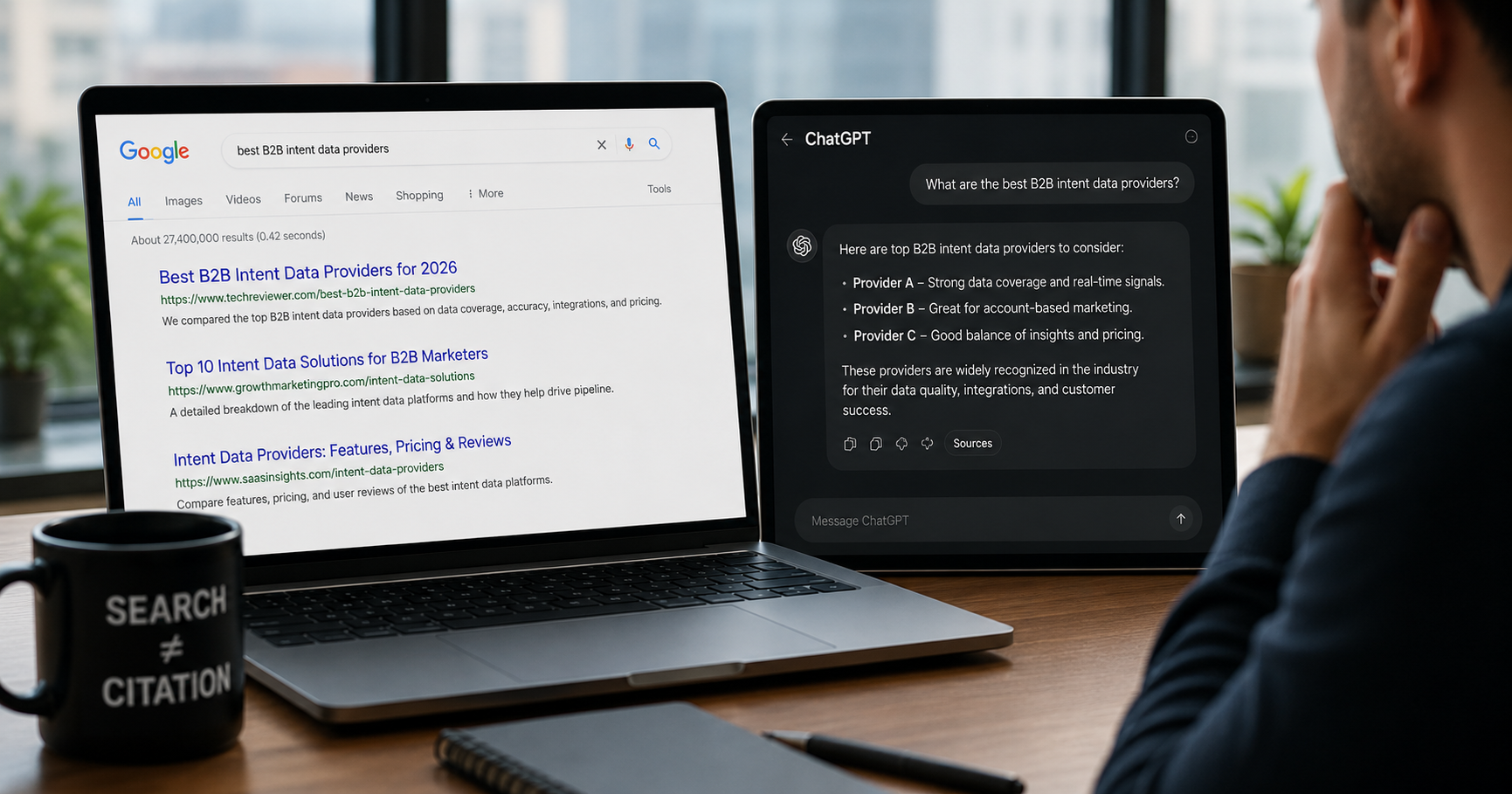
Why Your Site Ranks on Google But Doesn't Exist in ChatGPT
You rank on page one. Your Search Console looks healthy. So why does ChatGPT never mention you when buyers ask for recommendations in your category? The gap is real — and silent. This is the mechanical difference between how Google ranks pages and how LLMs decide who to cite, why ChatGPT, Perplexity, and Gemini don't agree with each other, and what B2B teams can do to show up in the AI answers where buyers now do their research.
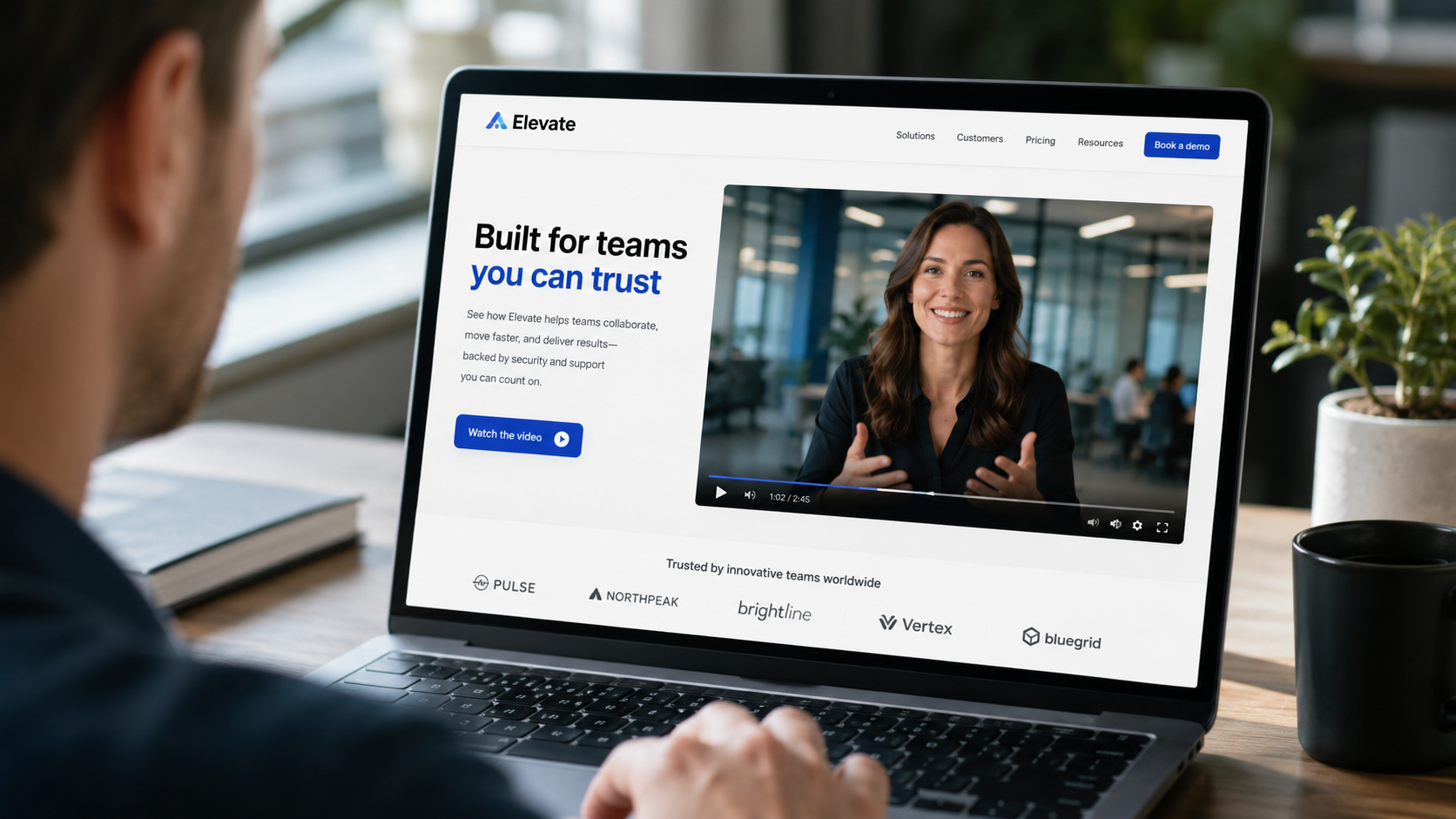
Why Video Accelerates Trust on Websites and for Brands
Buyers form a trust verdict about your brand in a tenth of a second — long before they read your copy. Video is the fastest trust signal you can put on a page, carrying the facial expressions, voice, and body language the brain evolved to read. This piece breaks down the conversion data (video can lift landing-page conversions by up to 86%), the psychology behind why we trust what we see, and the practical rules for using video to build trust on your website and across the AI-driven search experiences shaping discovery in 2026.
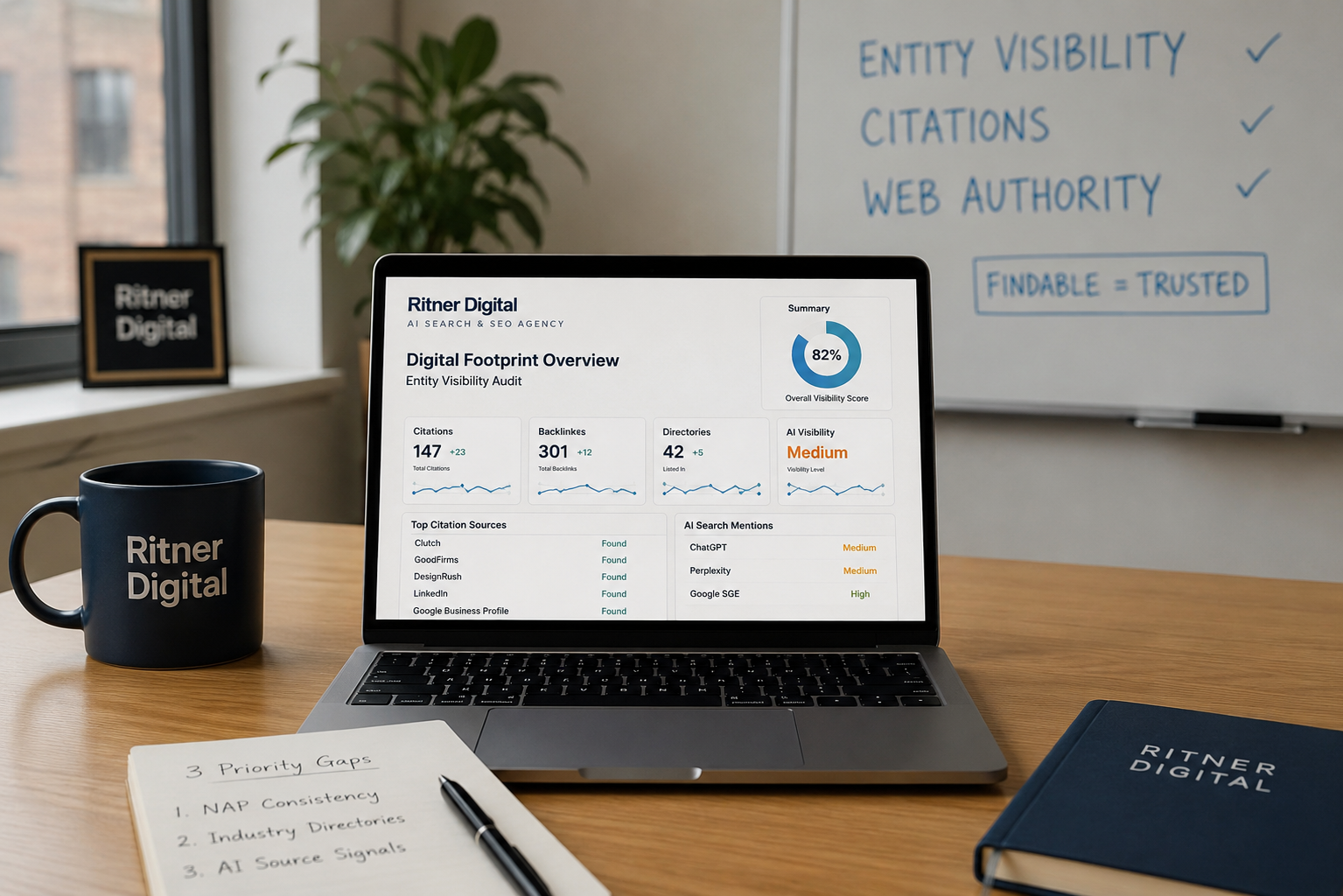
Ritner Digital's Digital Footprint: A Deep Dive Into Entity Visibility, Citations, and Web Authority
We run entity visibility audits for clients across industries. So we ran one on ourselves. This is an honest inventory of where Ritner Digital shows up across the web, what AI systems can actually find and verify about us, and where the gap between earned authority and findable authority still exists.
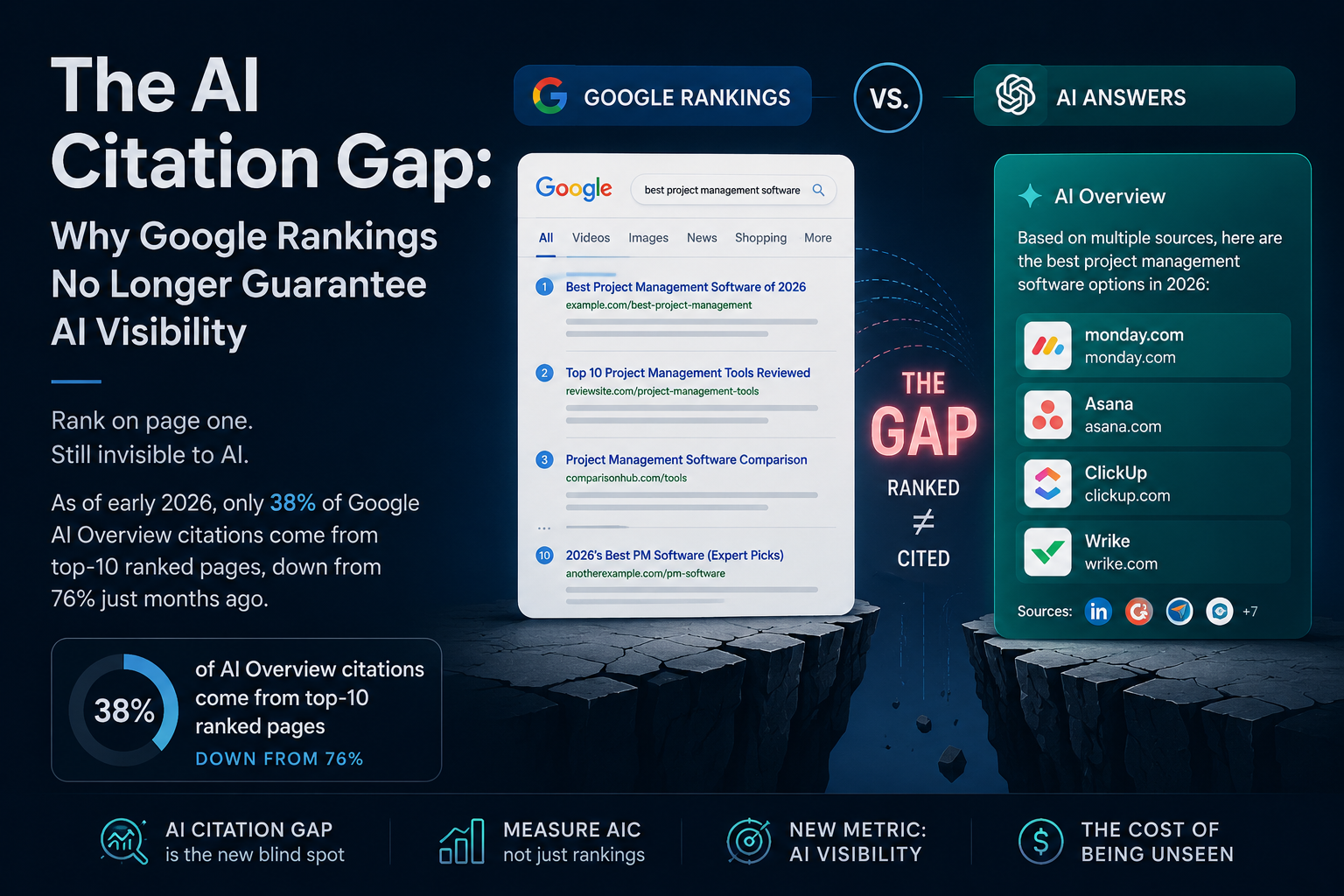
The AI Citation Gap Is Costing You Business — And Most Brands Don't Even Know It
We asked ChatGPT five questions on May 16, 2026 — questions your customers are already typing into AI systems right now. The answers revealed something every brand needs to understand: ranking on Google and being cited by AI are no longer the same thing. As of early 2026, only 38% of Google AI Overview citations come from top-10 ranked pages, down from 76% just months ago. This deep-dive research analysis breaks down the AI citation gap, the rise of AIC as a metric, how to measure AI search visibility, and why your current SEO benchmark report is only telling you half the story.
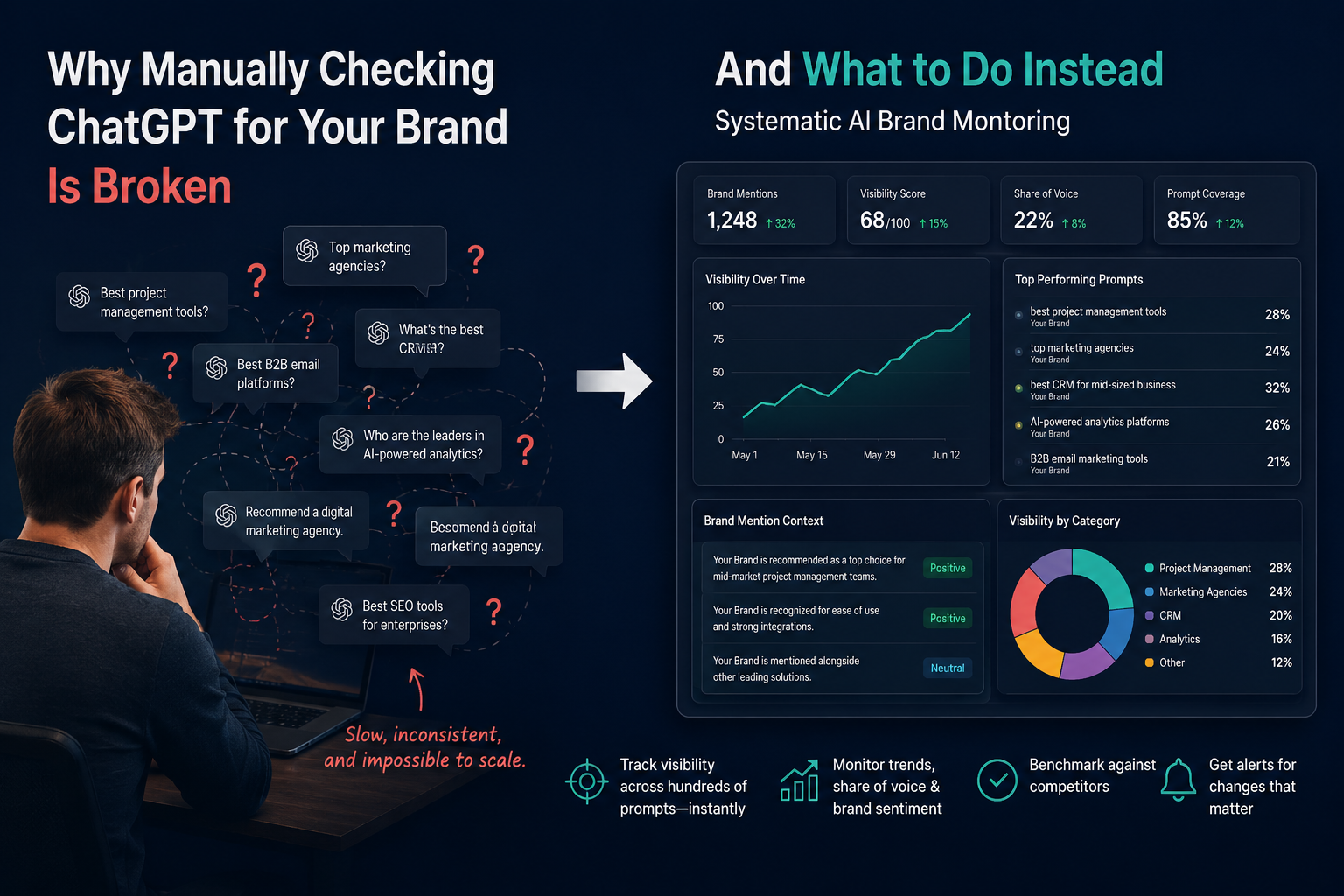
You Shouldn't Have to Play 20 Questions With ChatGPT Just to Know If Your Brand Shows Up There
Your brand is either showing up in AI-generated answers or it isn't — and right now, most marketers have no reliable way to know which. While teams are running sophisticated SEO reporting stacks, the majority are still checking their AI visibility by manually typing questions into ChatGPT and hoping for the best. Here's why that's not a strategy, and what actually needs to change.
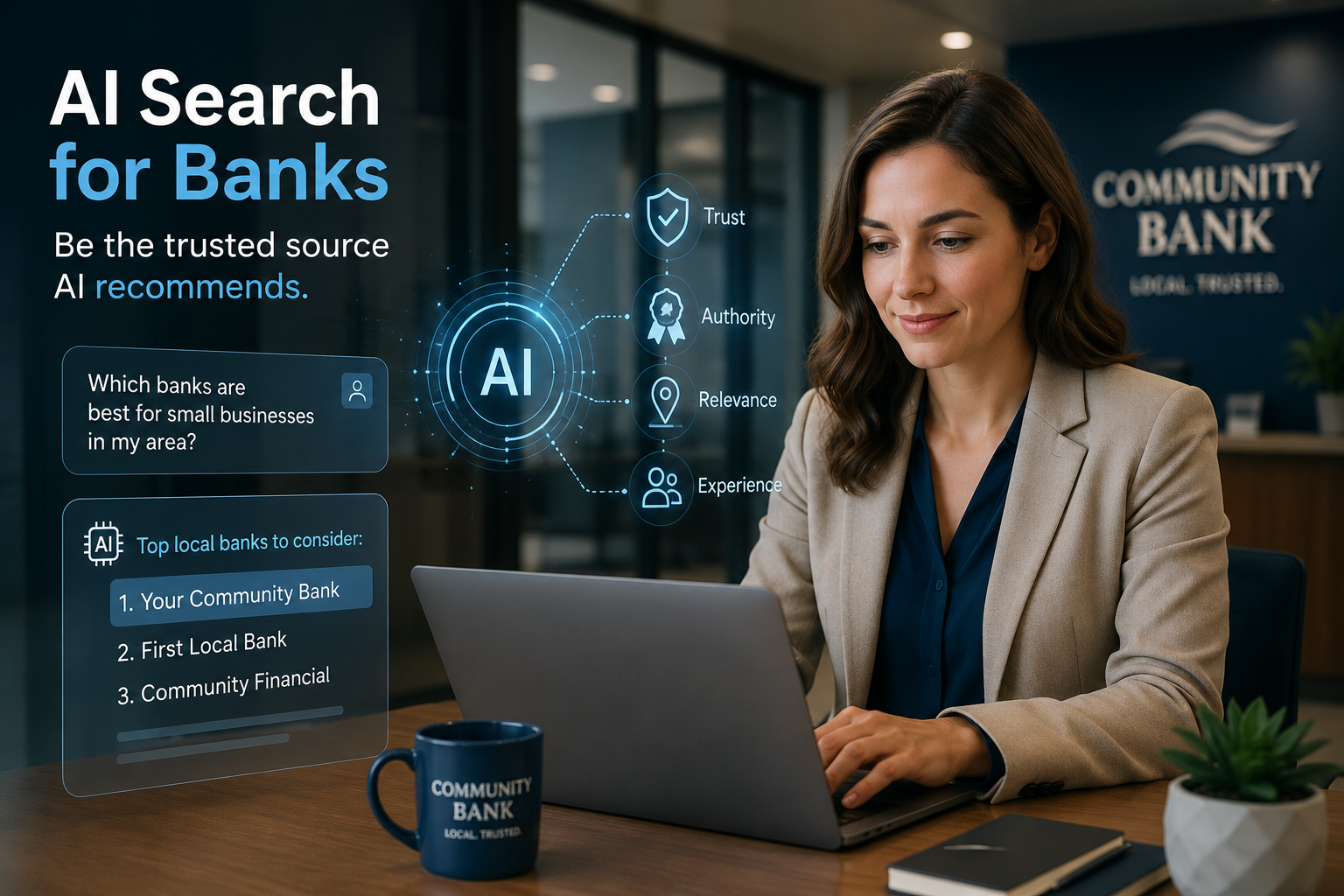
AI Search for Banks: How to Get Cited as a Trusted Financial Source
More than half of U.S. consumers now use AI to research financial institutions — and the shortlist they arrive at is built before they ever visit your website. For community banks and regional financial institutions, this shift creates both a serious threat and a real opportunity. AI systems hold financial content to the highest trust standards of any category, reward local specificity over national scale, and cite institutions whose authority is validated across multiple platforms. In this post, we break down exactly how each major AI model evaluates bank content differently, what YMYL compliance means for your content strategy, and the specific steps any community bank can take to become the trusted financial source AI recommends.
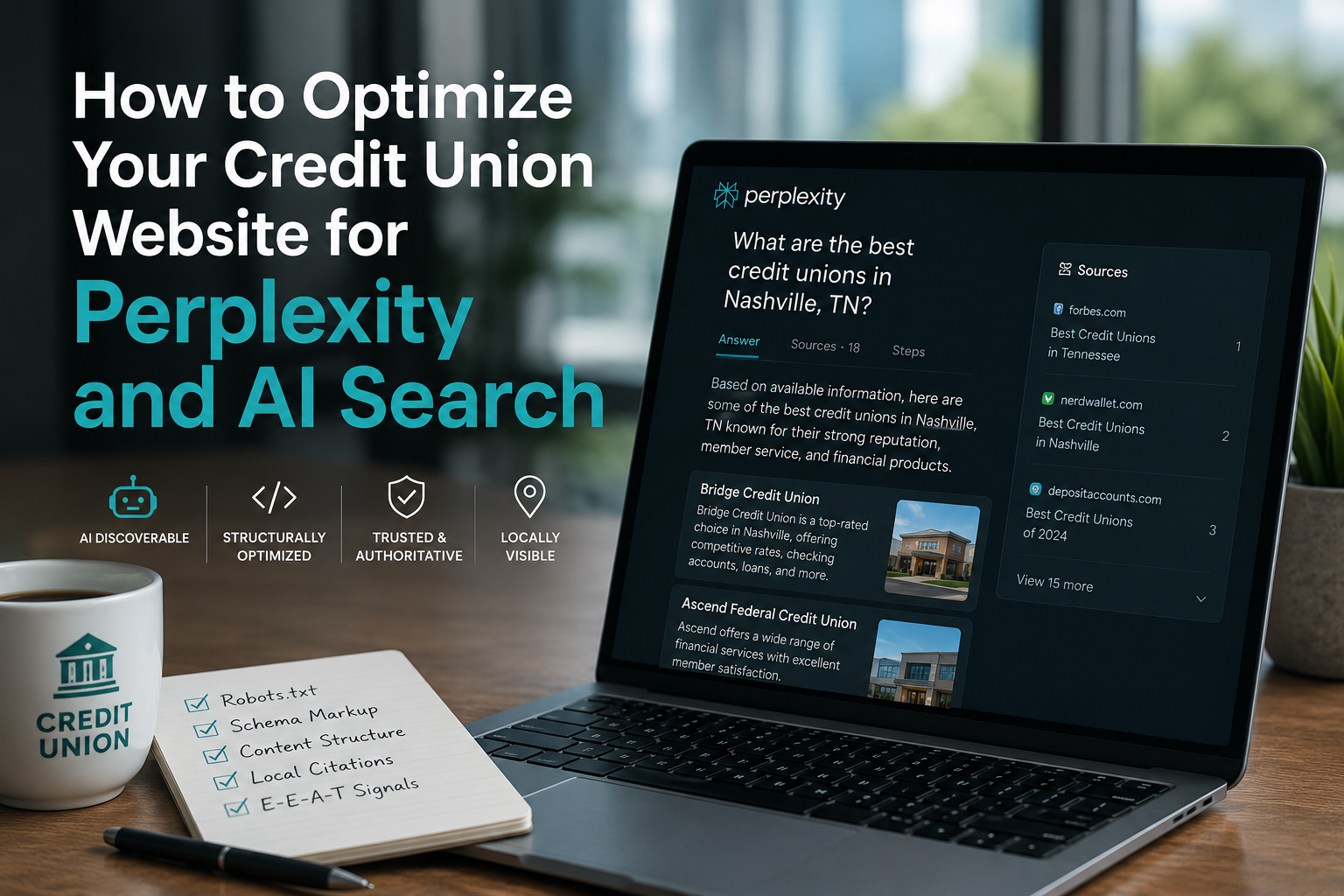
How to Optimize Your Credit Union Website for Perplexity and AI Search
Perplexity AI has 45 million monthly active users, processes hundreds of millions of queries a month, and skews heavily toward high-income, research-oriented professionals — exactly the kind of people who become credit union members. The problem is that most credit union websites are technically invisible to Perplexity's crawler, structurally incompatible with how AI extracts answers, and missing the off-site authority signals that determine who gets cited. In this guide, we break down every layer of Perplexity optimization — from robots.txt fixes and schema markup to content restructuring and local citation building — so your institution shows up when it matters most.
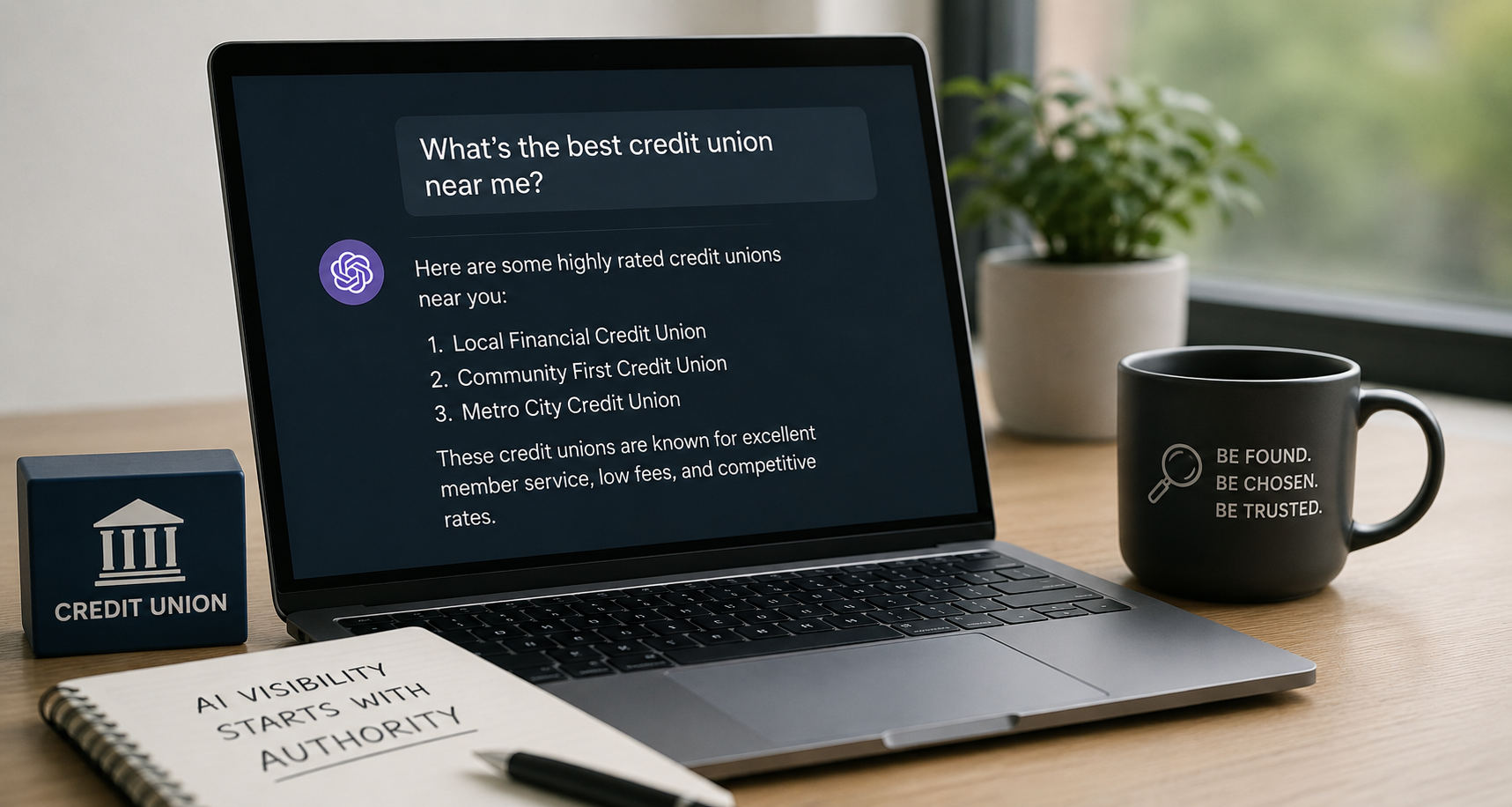
What ChatGPT Says When Someone Asks "What's the Best Credit Union Near Me?"
When a potential member types "what's the best credit union near me?" into ChatGPT, most credit unions don't show up — not because their products aren't competitive, but because AI has nothing concrete to cite about them. In this post, we break down exactly how ChatGPT decides which institutions to recommend, why 87% of AI citations on credit union queries come from third-party sources your institution doesn't control, and what specific content and authority signals you need to build to start appearing in the answers your next members are already getting.
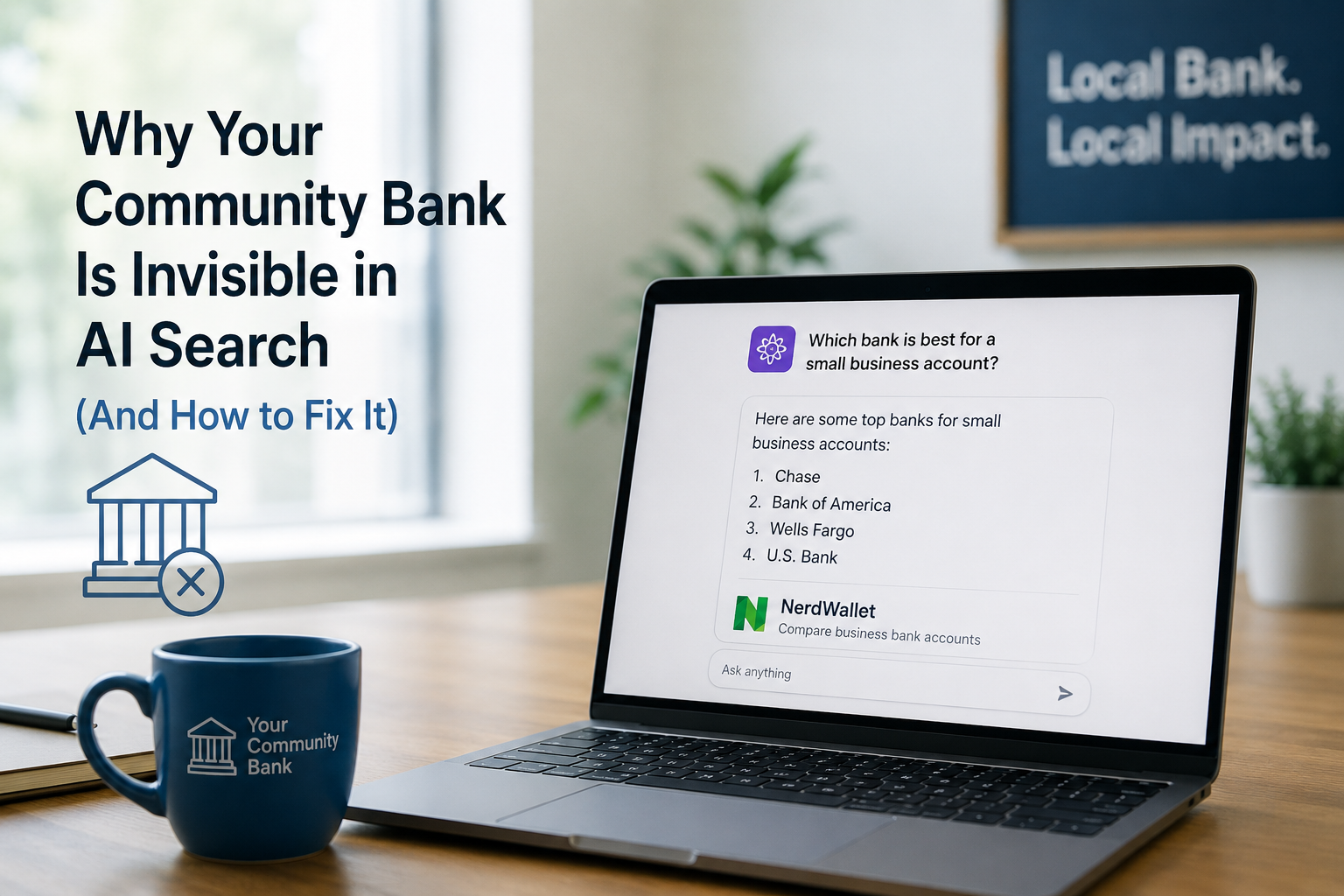
Why Your Community Bank Is Invisible in AI Search (And How to Fix It)
When a prospective customer asks ChatGPT which bank to use for a small business account, the answer almost certainly doesn't include your community bank. Research shows that fewer than 5% of AI financial recommendations mention community institutions — while NerdWallet appears in over 90% of responses and Chase shows up in roughly 75%. This isn't a quality problem. It's a structural one. This guide breaks down the seven specific reasons community banks are invisible in AI search right now, which platforms are most winnable, and the exact action plan to start appearing in the answers your prospective customers are already reading.
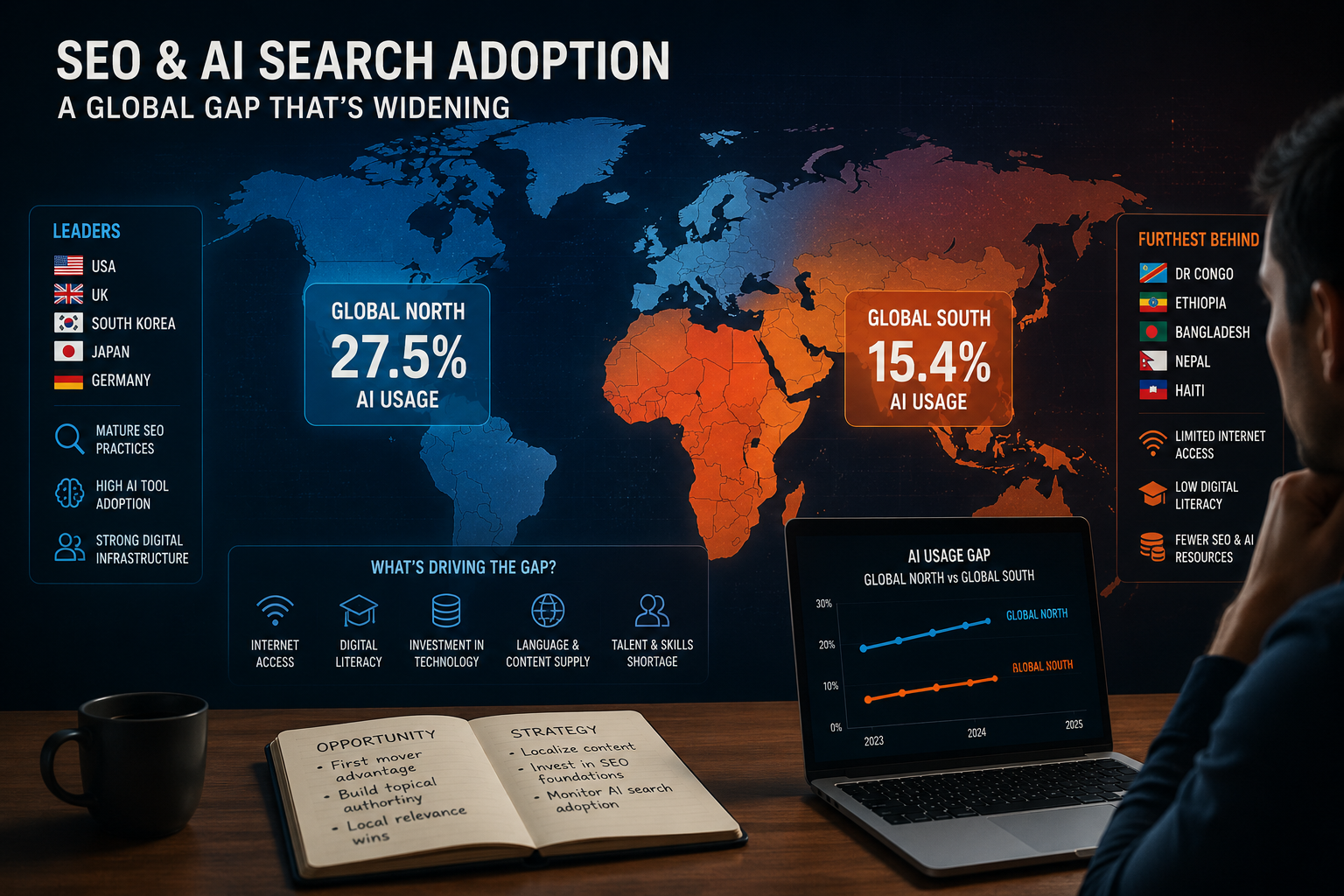
Which Countries Are Farthest Behind on SEO and AI Search — and What That Gap Actually Means
The global conversation about SEO and AI search is dominated by the US, UK, and a handful of advanced Asian markets — and for good reason. These are the places where search optimization is most mature and AI search tools are most embedded in daily buyer behavior. But zoom out to a global view and the picture changes dramatically. AI usage sits at 27.5% in the Global North and just 15.4% in the Global South, a gap that is widening — not closing. In this post we map which countries and regions are furthest behind on both traditional SEO and AI search adoption, what's driving those gaps, and what it means strategically for brands expanding into new markets or trying to build visibility across borders.
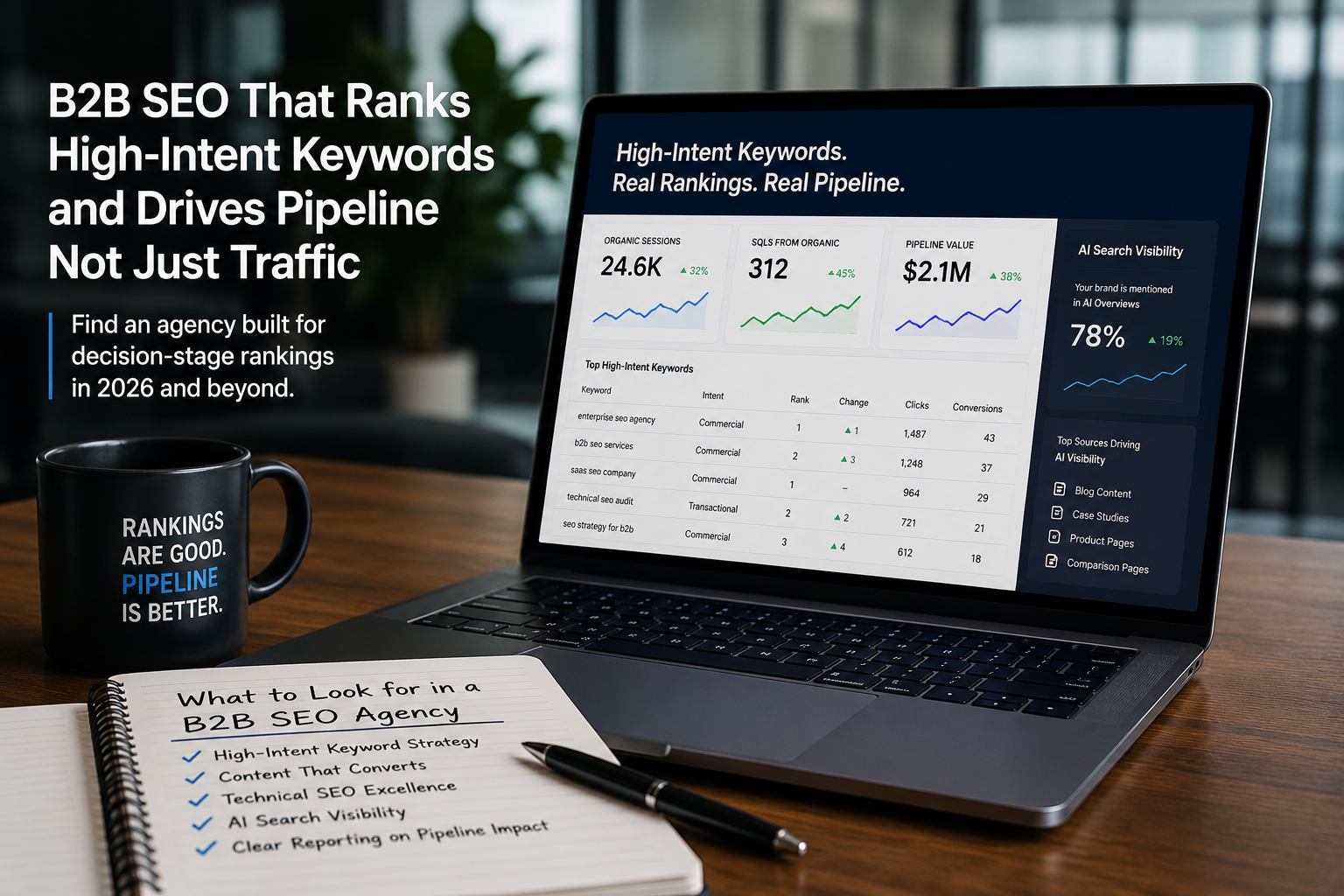
Who Is a Good B2B SEO Agency? Here's How to Find One That Actually Ranks for High-Intent Keywords.
Finding a B2B SEO agency that can actually rank for high-intent keywords in a competitive landscape is harder than it should be. Most agencies are built around traffic volume, not pipeline impact — and in B2B, those are very different goals. In this post we break down what high-intent keyword strategy really looks like, how to evaluate agencies before you hire them, what questions expose whether a partner is built for decision-stage rankings or just impressive-looking reports, and why AI search visibility has become a non-negotiable part of any serious B2B SEO program in 2026.
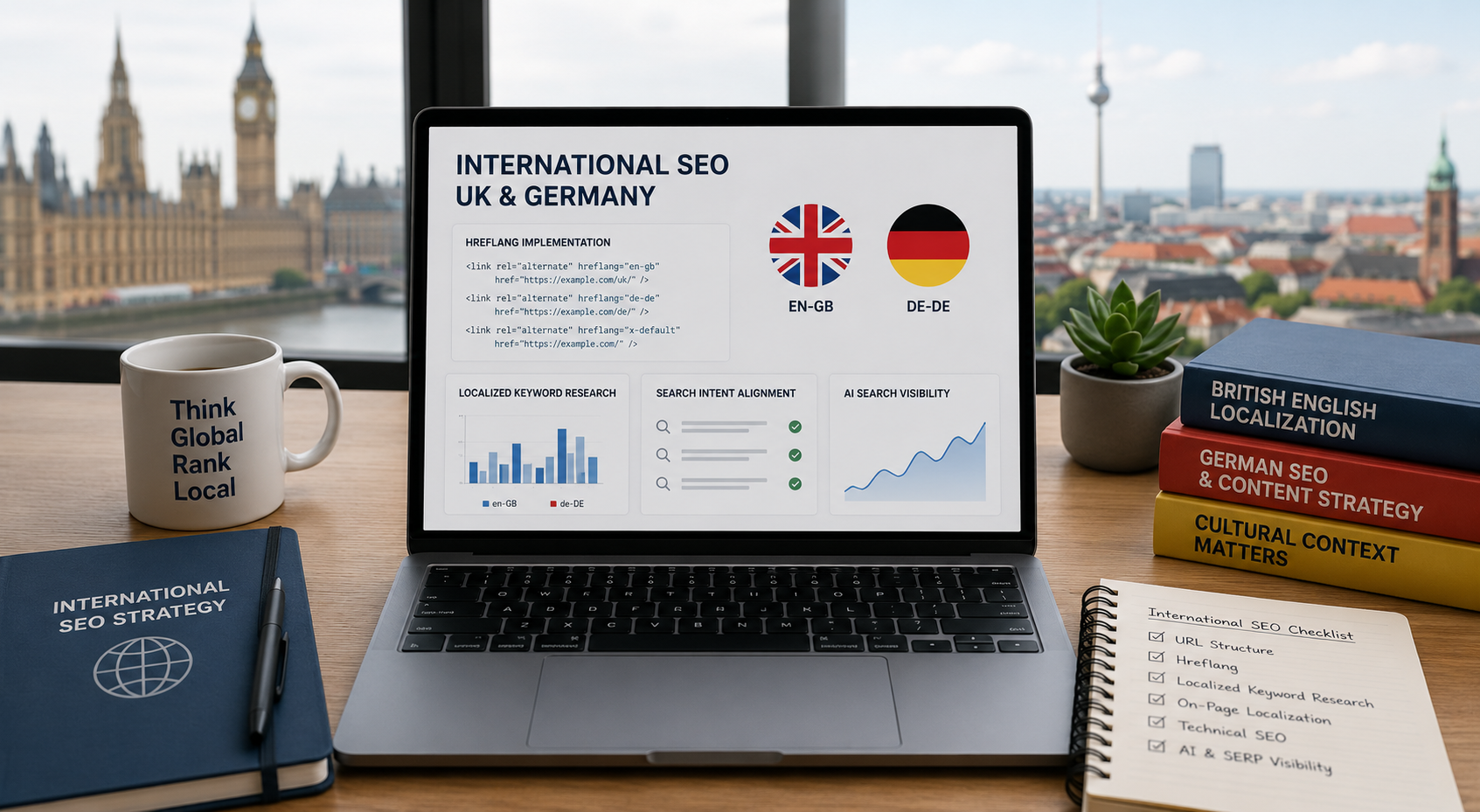
Expanding Into the UK and Germany? Here's Everything You Need to Know About International SEO Before You Launch.
Expanding into the UK and Germany isn't a translation project — it's a market entry strategy with deep technical, linguistic, and cultural dimensions. In this post we cover everything brands need to build real organic visibility in both markets: how to choose the right URL structure, how to implement hreflang without the errors that sink 75% of international sites, why localized keyword research means starting from scratch in each market, and what AI search visibility looks like when your buyers are searching in British English and German. If you're serious about international expansion, this is where to start.
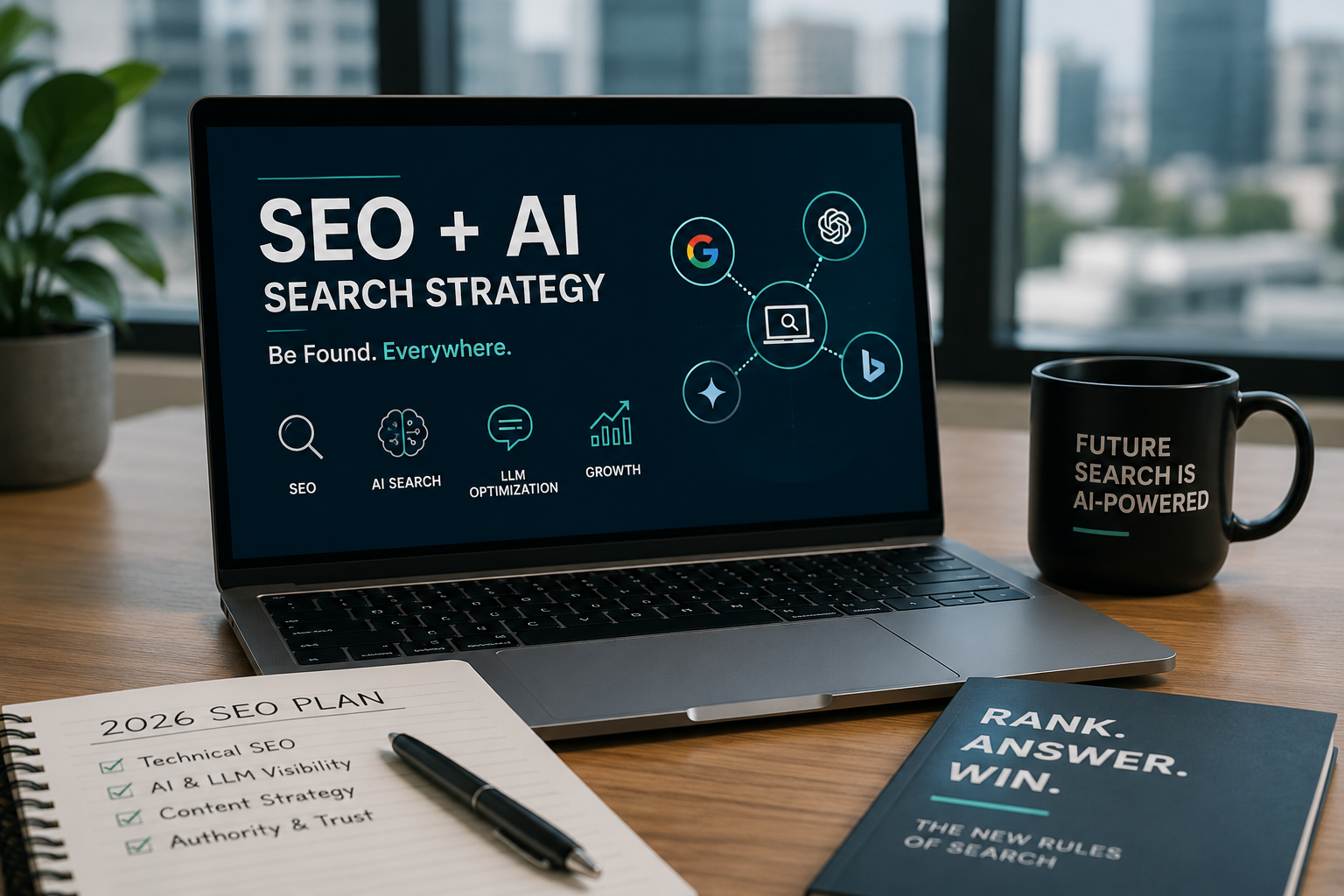
What Is an SEO and AI Search Agency — And Why Your Business Needs One in 2026
If you have searched for marketing help recently, you have probably noticed that the term "SEO agency" has expanded. Some agencies now call themselves AI search agencies or GEO specialists. Others are adding these terms to existing service pages without meaningfully changing what they do. The terminology has multiplied faster than most business owners have had time to understand what any of it means. This post cuts through that noise. What does an SEO and AI search agency actually do in 2026? How is it different from three years ago? What does your business lose by not working with one? And how do you tell the difference between an agency that genuinely understands this shift and one that renamed its 2022 playbook with new acronyms?
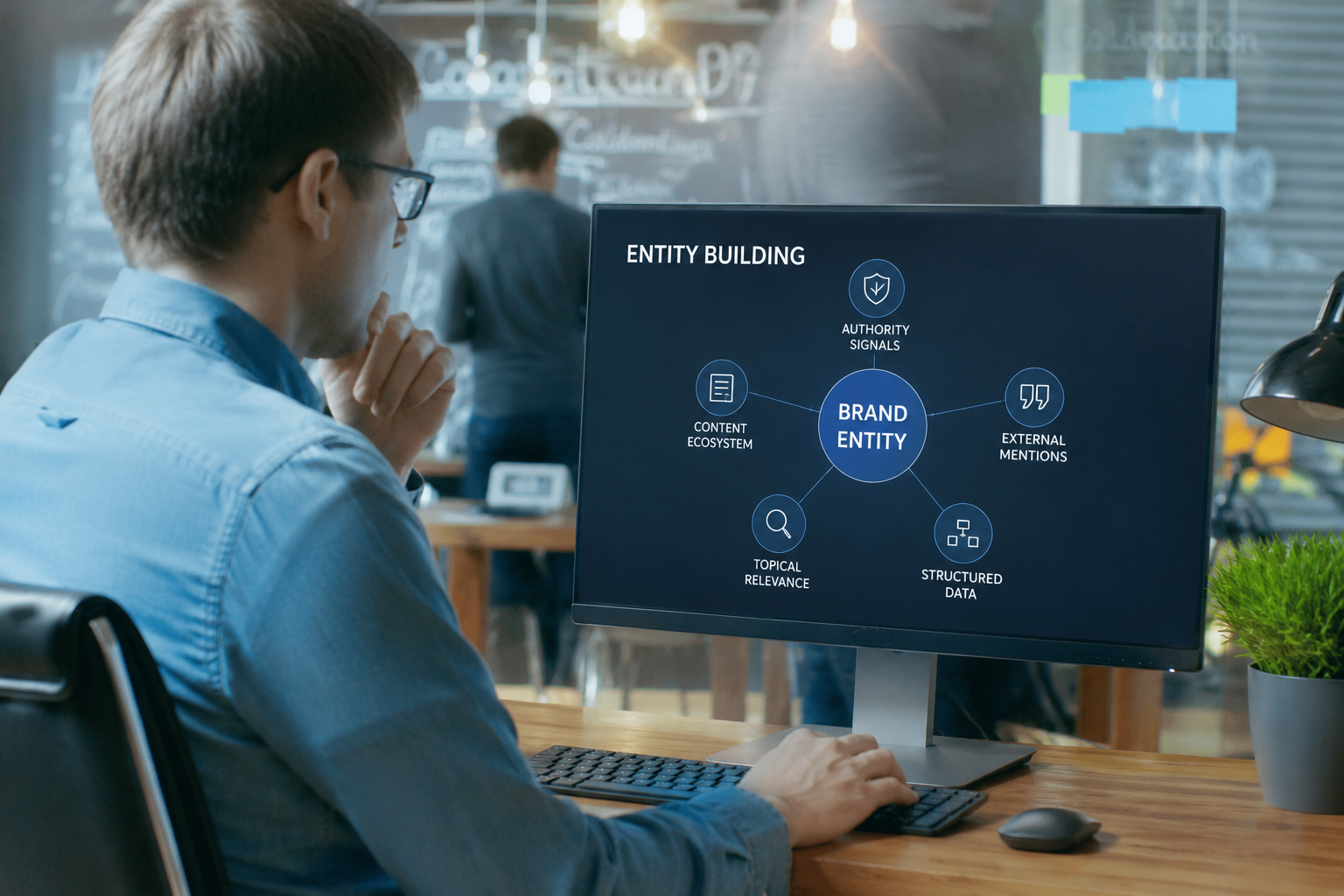
You Don't Have a Content Problem. You Have an Entity Problem.
Most content programs are solving the wrong problem. Publishing more pages, targeting more keywords, hitting more publishing deadlines — none of it matters if search engines and AI systems can't confidently identify what your brand actually is. The sites getting ranked and cited in 2026 aren't the ones with the most content. They're the ones that built a recognizable, verifiable, externally validated entity. Here's the difference — and how to build one.

PE Sponsors Are Asking the Wrong AI Question. Here's the One That Actually Moves EBITDA.
The LP calls ask about AI. The value creation plans name it as a workstream. The CEOs are getting pitched by every boutique with a deck. And the honest answer to "what's our portfolio AI plan" is still a slide, not a system. The enterprise AI programs making headlines were built for megafunds — the economics don't price down to a $40M revenue portco without breaking. But there's a focused, fast-payback AI workstream most operating partners haven't put in the value creation plan yet. And it maps directly to the revenue motion that already drives nearly half of B2B pipeline.

Do People Still Fill Out Website Contact Forms? What the Data Actually Says in 2026
About 9% of visitors who see a contact form submit it. Zero-click search has shrunk the traffic that reaches forms in the first place. And AI-referred visitors convert at 23x better rates than standard organic traffic. So: are contact forms still working in 2026? The answer is more nuanced — and more actionable — than most businesses realize.