Content Marketing Is a Lot Like Fishing
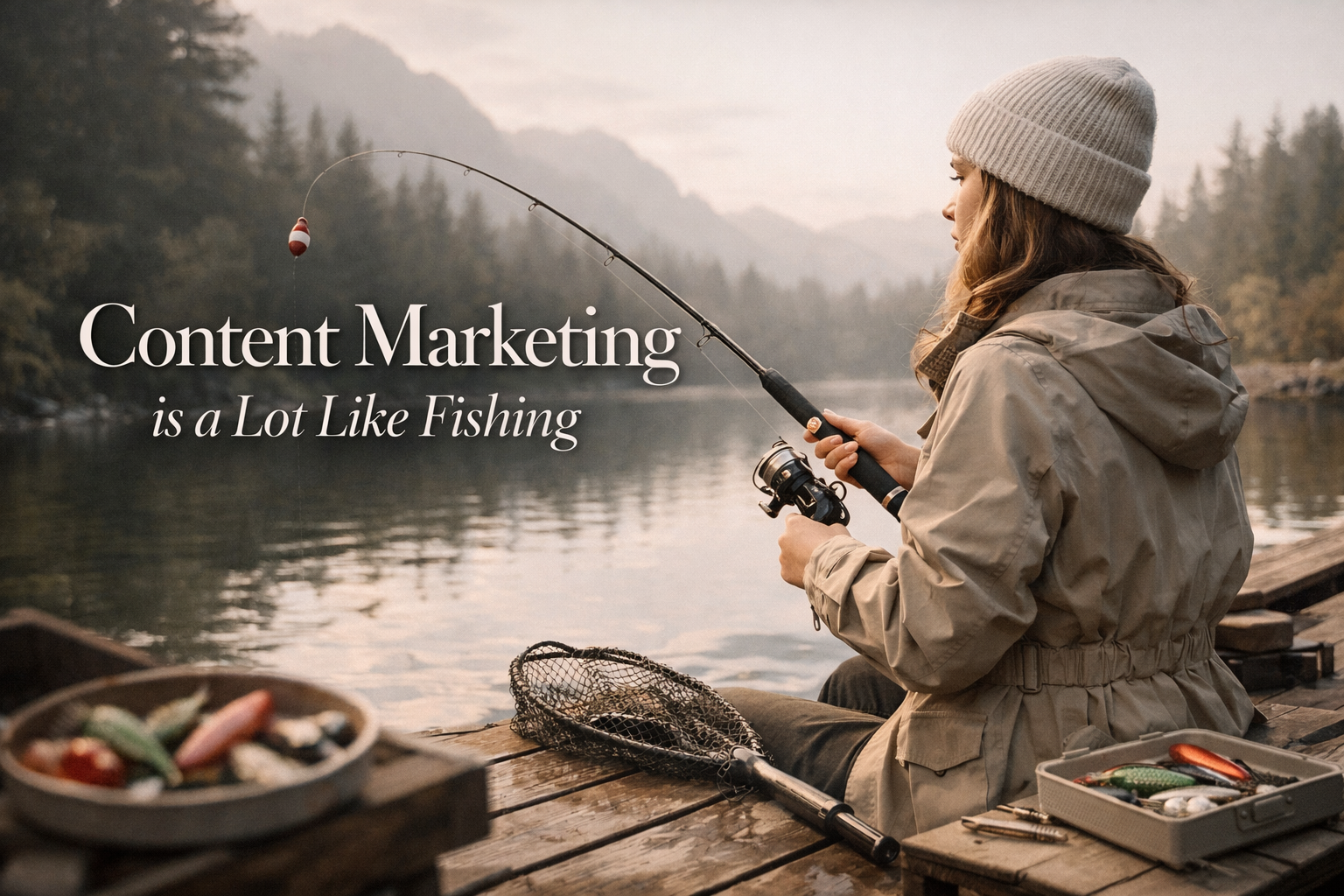
If you've ever spent a morning on the water, you already understand content marketing better than you think.
Fishing isn't about tossing a line anywhere and hoping for the best. It's about picking the right spot, choosing the right bait, reading the conditions, and adjusting when something isn't working. Content marketing operates on the exact same logic — and the businesses that treat it that way are the ones reeling in results.
Finding the Right Spot
Ask any angler what matters most and they'll tell you it's location. You can have the best gear in the world, but if you're casting into dead water, you're going home empty-handed.
The same is true for content marketing. Before you write a single word, you need to figure out where your audience actually is. Are they searching on Google? Scrolling LinkedIn? Browsing YouTube? Asking questions on Reddit?
Choosing the right channel is everything. A perfectly written blog post means nothing if your ideal customer never sees it. A detailed case study won't move the needle if it's sitting on a platform your audience doesn't use. Just like fishing, you have to go where the fish are — not where you wish they were.
Picking Your Bait
Here's where it gets interesting. Once you've found the right spot, you need to figure out what's going to get a bite. In fishing, that means testing different lures, live bait, colors, and presentations until something triggers a strike.
In content marketing, your bait is the type of content you put in front of people. And just like on the water, not every piece of bait works the same in every situation.
Service pages are your go-to lure. They speak directly to what you offer and target people who are already looking for a solution. Think of them as the reliable bait that works in familiar water — straightforward, effective, and built to close.
Industry pages are more specialized. They show prospects that you understand their specific world — their challenges, their language, their pain points. This is like switching to a lure that mimics exactly what the fish in that particular lake are feeding on. It's targeted, and when it works, it works well.
Location pages cast a wider net in a specific area. They help you show up when someone nearby is searching for what you do. It's the equivalent of knowing that the bass are biting on the north side of the lake this time of year and putting yourself right there.
Each page type serves a different purpose, attracts a different kind of prospect, and performs differently depending on the situation. The question isn't which one is best — it's which one works best for the audience you're trying to reach.
Testing Like Your Results Depend on It
No serious angler sticks with bait that isn't getting bites. They swap it out. They try a different color. They change the depth. They adjust the retrieve speed. They're constantly running small experiments to figure out what the fish want today— because what worked last week might not work now.
Content marketing is no different. This is A/B testing in its purest form. You publish a service page and track how it performs. You build out an industry page and compare the results. You launch a set of location pages and see which markets respond.
Then you double down on what's working and rethink what isn't. Maybe your service pages are generating traffic but not conversions. Maybe your industry pages are bringing in higher-quality leads with a shorter sales cycle. Maybe a location page in one city is outperforming another by a wide margin.
The data tells the story. Your job is to listen to it and keep adjusting — just like reading the water and changing your approach until you find the pattern.
Patience Is Part of the Process
Here's the part nobody wants to hear: fishing takes patience, and so does content marketing. You're not going to land a trophy on your first cast. Some days the water is quiet. Some pages take time to index and rank. Some content needs to be reworked before it starts pulling its weight.
But if you stay consistent, keep testing, and pay attention to what the data is telling you, the results come. The businesses that win at content marketing are the ones that treat it like a long game — showing up, casting smart, and making adjustments along the way.
The Takeaway
Content marketing isn't about producing as much content as possible and hoping something sticks. It's about being strategic with where you show up, what you put out there, and how you refine your approach based on real performance.
Pick your spot. Choose your bait. Test it. Adjust. Repeat.
At Ritner Digital, we help businesses build content strategies that actually land results — the right pages, in the right channels, optimized to convert. If your current strategy feels like you're fishing in an empty pond, let's fix that.
Frequently Asked Questions
How is content marketing like fishing?
Both require picking the right location, choosing the right approach, and testing until you find what works. In content marketing, your channels are your fishing spots and your content types are your bait. Success comes from being strategic and willing to adjust.
What role do service pages play in content marketing?
Service pages target people who are actively searching for what you offer. They're direct, solution-focused, and designed to convert visitors who already know they have a problem that needs solving.
Why should I create industry-specific pages?
Industry pages show potential customers that you understand their unique challenges and speak their language. They build trust faster because prospects see that you're not offering a generic solution — you know their world.
How do location pages help with content marketing?
Location pages help you rank in local search results and connect with prospects in specific geographic areas. They're especially valuable for businesses that serve multiple markets and want to show up when someone nearby searches for relevant services.
How do I know which type of content is working?
Track performance metrics like organic traffic, time on page, bounce rate, and most importantly conversions. Compare how different page types perform against each other — just like testing different bait — and invest more in what's driving real results.
How long does content marketing take to show results?
It depends on your industry, competition, and how strategic your approach is. Some pages can gain traction within weeks while others take months to build momentum. Consistency and ongoing optimization are what separate businesses that see results from those that give up too early.
Related Reads
〰️
Related Reads 〰️

High-Volume vs. Low-Volume Keywords: How to Plan Content That Actually Grows Traffic
Should you chase high-volume keywords or focus on low-volume wins? This guide breaks down how to balance keyword volume, intent, and competition to build a content strategy that compounds organic traffic over time.

Your Clients Are Telling You What to Write About (And AI Is Listening)
A hardscaping client casually mentioned how the freeze-thaw cycle destroys concrete every winter — something they explain to customers all the time. But there was nothing about it on their website. That gap between what you know and what your website says is one of the biggest missed opportunities in small business marketing. Here's why that kind of content builds real credibility and why AI search platforms are now rewarding businesses that publish it.

How Many Pages Should Our Website Have?
"How many pages should our website have?" It's one of the most common questions we get from clients, and the honest answer is: it depends. But not in a vague, noncommittal way. There's a real framework for figuring out the right number of pages — and it has everything to do with what your business does, where you do it, and what your customers are actually searching for.