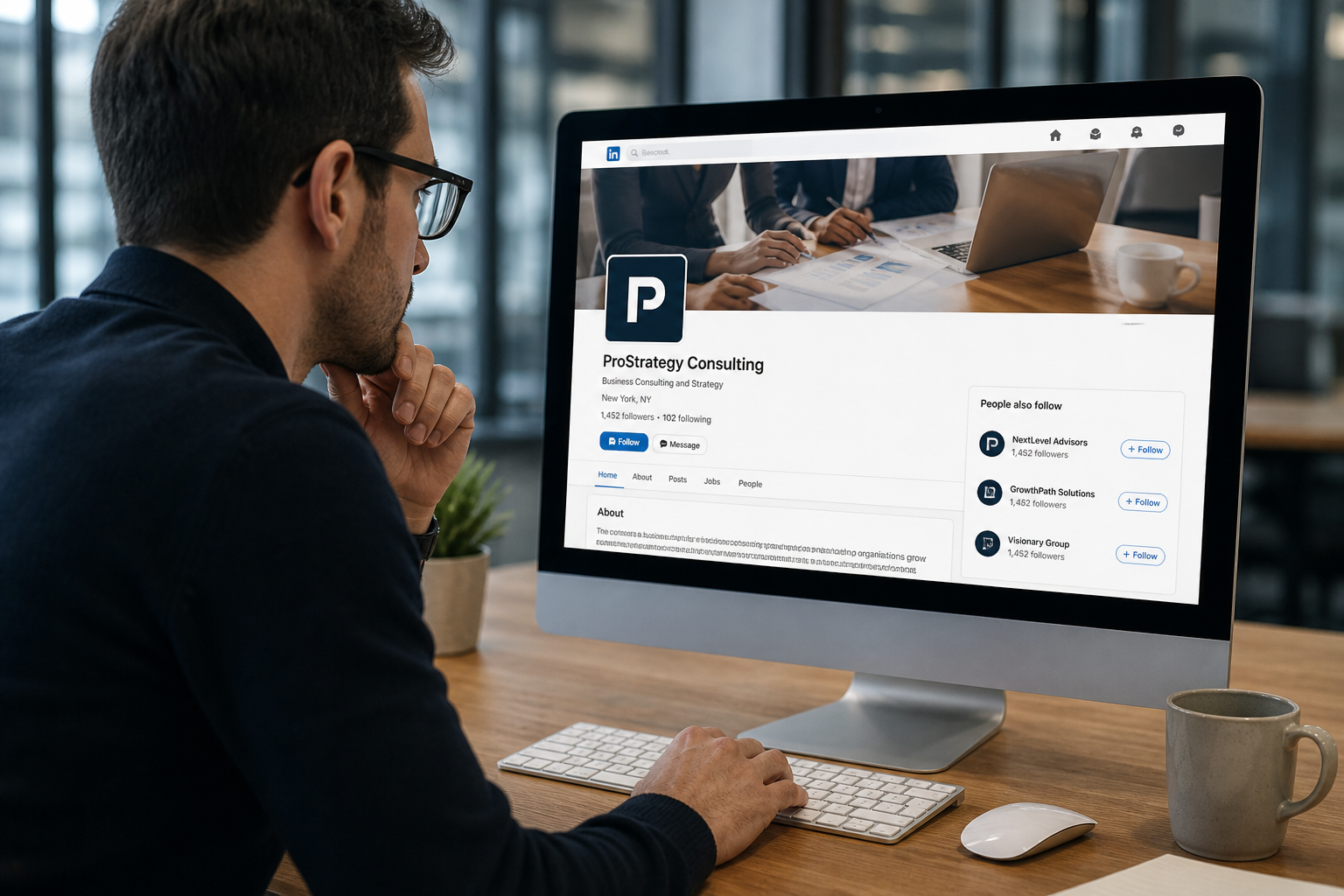
The Silent Sales Rep: Why Your Follower Count Is Sending a Message Before You Ever Say a Word
Before a prospect takes your meeting, reads your proposal, or returns your call — they've already looked you up. Here's why your social media follower count is one of the most powerful trust signals your brand has, and what it's saying about you right now.

Why Your Employees Are Your Most Powerful Marketing Channel (And You're Probably Not Using Them)
Your company's LinkedIn page will never out-convert your employees' personal profiles. The data is clear — employee advocacy leads convert 7x more frequently than brand content. Here's why that gap exists and what to do about it.
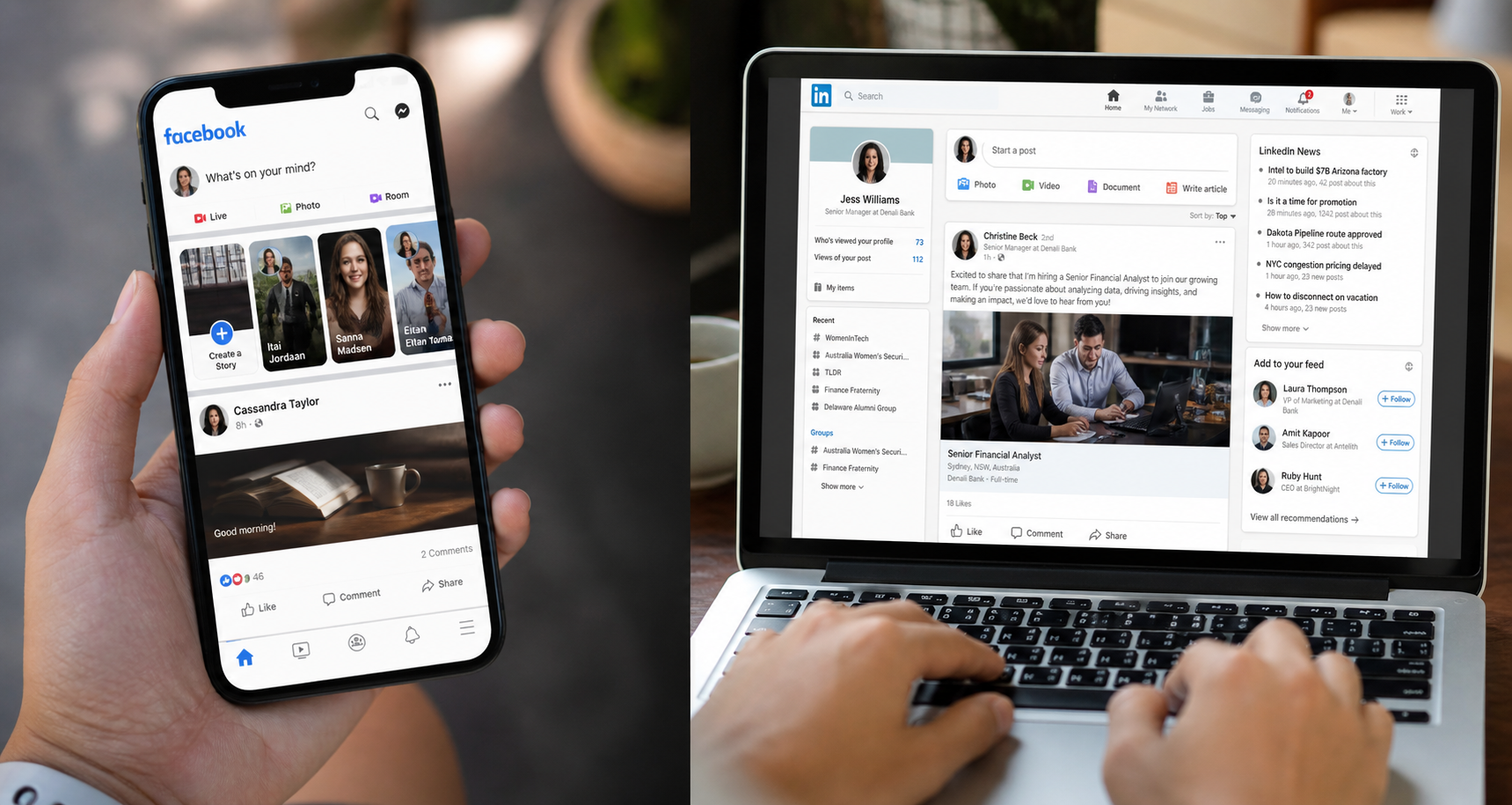
Does Your Facebook or LinkedIn Following Actually Help Your SEO? Here's the Real Answer.
Most business owners assume a big social following helps their SEO. The reality is more nuanced — and the rules changed significantly in 2025. Here's what Facebook and LinkedIn actually do for your search visibility, and which one moves the needle more for your business.

4 AI Companies Changing Dealership Operations Forever
The CDK outage cost dealers $605 million in two weeks. Some stores never skipped a beat — because they'd already switched to better technology. Here's a breakdown of the four AI companies changing how dealerships operate, sell, and compete in 2026.
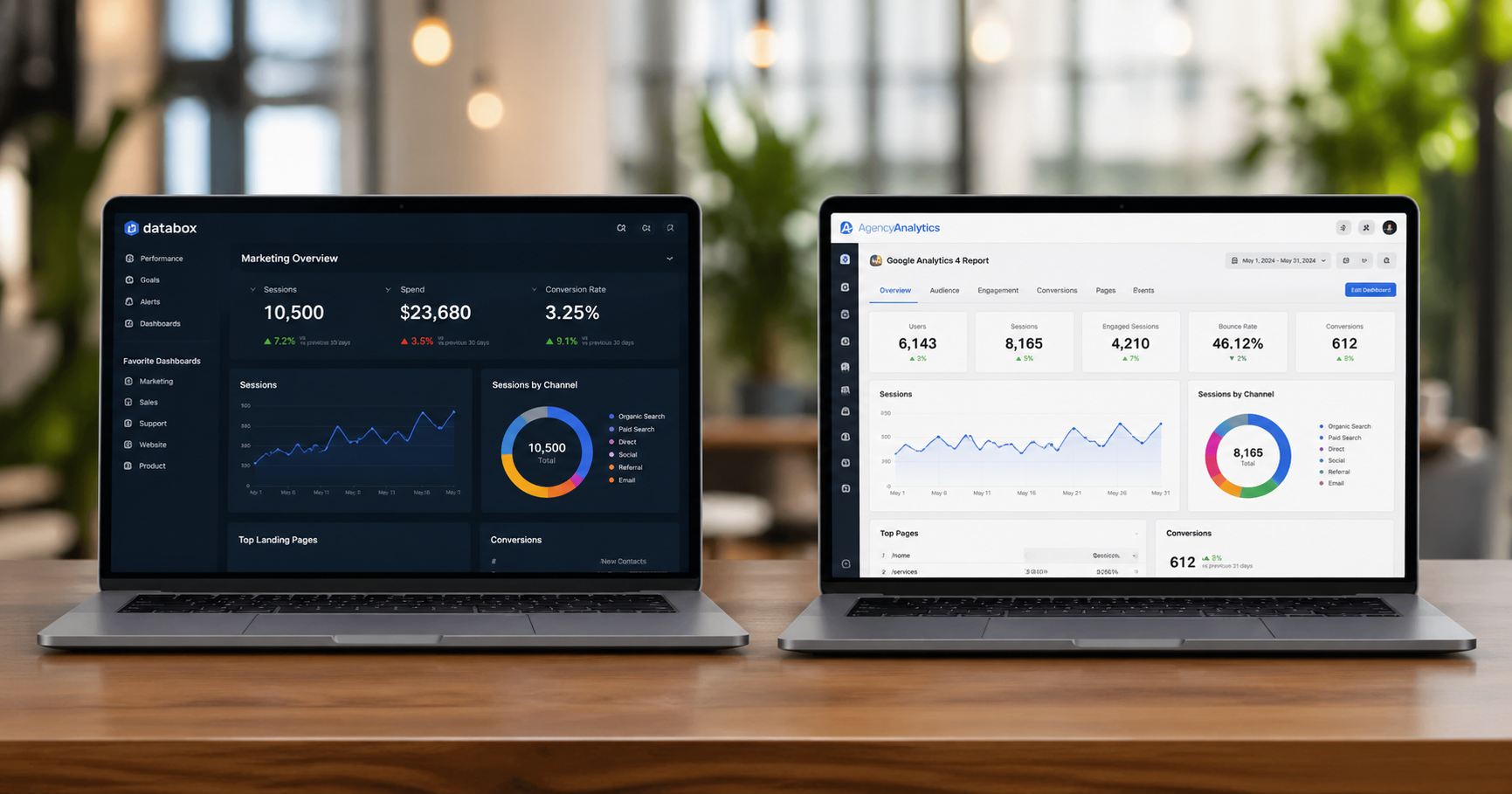
Databox vs. AgencyAnalytics: Which Reporting Tool Is Right for Your Team?
On the surface, Databox and AgencyAnalytics look like they're solving the same problem. They're not. One is built for internal business intelligence. The other is built for agency client reporting. Here's how to tell which one is actually right for your team.

The Marketing Org Is Being Rewritten. Here's What the New Structure Actually Looks Like.
The channel-based, specialist-siloed marketing org is giving way to something more technically integrated and AI-native. Here's what the new titles actually mean, which roles are under pressure, and how smart teams are reorganizing right now.

What Is a High-Fidelity Wireframe? (And When You Actually Need One)
Not every project needs a high-fidelity wireframe. But when complex flows, stakeholder sign-off, or developer handoff are on the table, getting this level of precision early is one of the most efficient investments you can make in a build process.

Stop Forcing Channel Behavior. Start Earning Channel Loyalty.
If your customer wants to shop through a retail partner, let them. A customer who buys ten times in store is still a loyal customer — you just have to be able to see them. Here's how to build the omnichannel retention system that actually does.
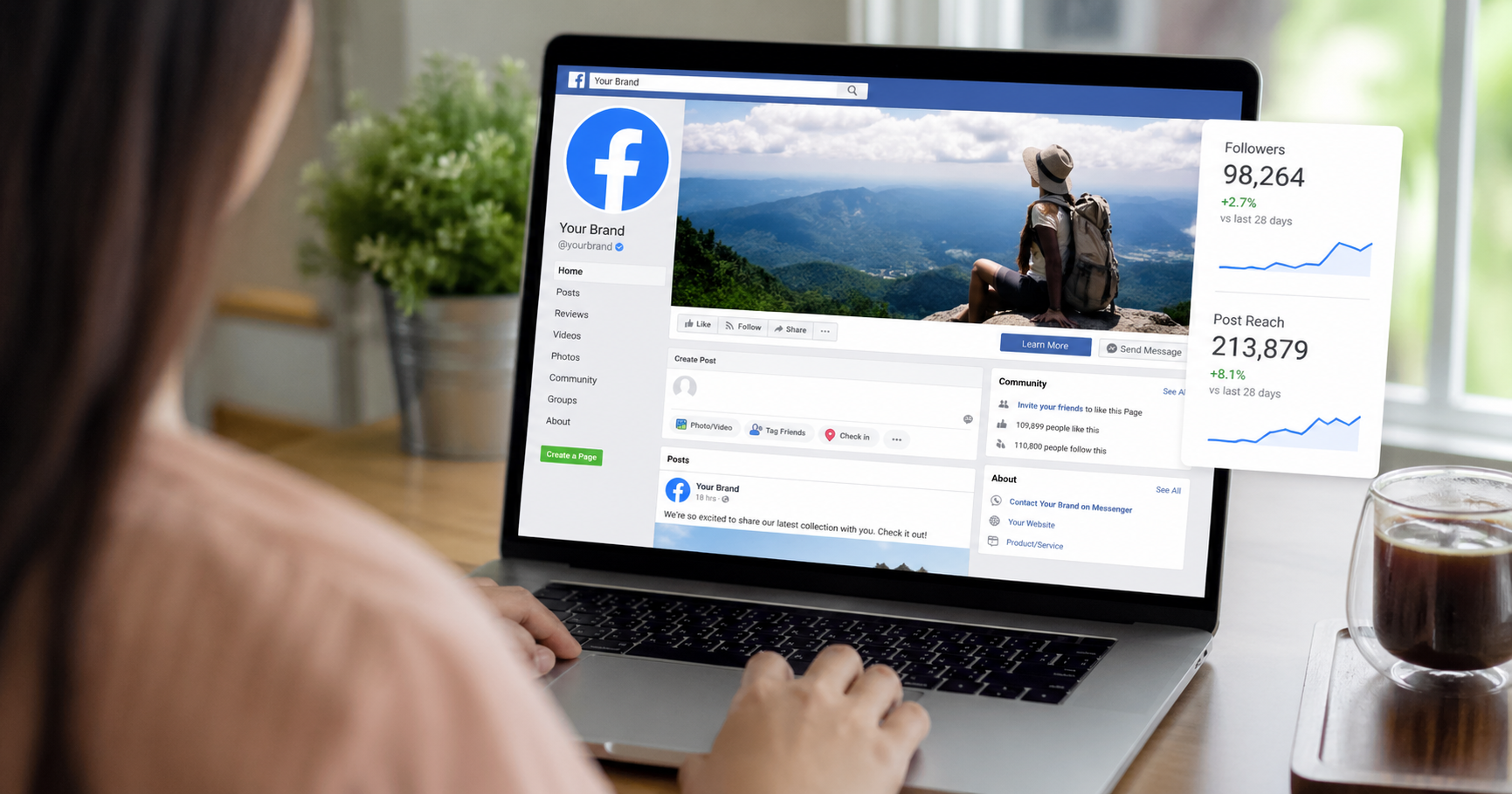
Why Facebook Followers Still Matter in 2026 — And How They Fuel Your Organic Reach
With organic reach at historic lows, many brands have written off their Facebook follower count as a vanity metric. But in 2026, your audience size is still one of the most important factors in how far your content travels — to followers and non-followers alike. Here's what the algorithm is actually doing, and why building the right audience changes everything.
The Complete Guide to Hiring an SEO Company in New Jersey (And Why It Changes Everything)
If you run a business in New Jersey and you're not showing up on the first page of Google, you're losing customers to competitors every single day. In this guide, Ritner Digital breaks down what a real SEO campaign looks like, what the data says about ROI, and why the Garden State's unique market demands a strategy built specifically for New Jersey.

Why Senja Belongs in Your Marketing Stack (And What It Says About Your Brand When It's Not)
Most businesses have happy customers. Very few have a system for turning that happiness into a marketing asset. Senja changes that — and the data behind why it matters is hard to ignore. Here's our full breakdown of the platform, the brand, and why testimonials belong at the center of your marketing operations.

The AI Double Standard: Why Marketing Leaders Can't Have It Both Ways
There's a conversation happening in every marketing department, agency pitch deck, and LinkedIn thought leadership post right now. AI is the future. AI will transform your content. You need an AI strategy or you'll get left behind. Then you send them something created with AI assistance — and suddenly it's "low effort." Welcome to the great marketing AI double standard, where the technology is revolutionary in the boardroom and suspect in the inbox.

The DOJ Extended the ADA Title II Web Accessibility Deadline — Here's What Public Entities Actually Need to Do Now
If your organization has been watching the ADA Title II web accessibility deadline with a mixture of urgency and dread, there is some news that changes your timeline — but not your obligation. On April 20, 2026, the Department of Justice published an Interim Final Rule extending compliance deadlines by one year across the board. Public entities serving populations of 50,000 or more now have until April 26, 2027. Smaller entities and special district governments have until April 26, 2028. The technical standard has not changed — WCAG 2.1 Level AA is still what you need to meet. What has changed is how much time you have to get there. Here is what that actually means for your organization, what the extension does not protect you from, and how to use the additional runway productively.

The Marketing Ethics Hard Stop List: If Your Team Is Considering Any of These, Say No Immediately
Marketing teams are under constant pressure — pipeline targets, competitor moves, a boss who just saw someone else's engagement numbers and wants to know why yours don't match. In that environment, shortcuts that feel low-risk in the moment can start to sound reasonable. They are not. The gap between how harmless these tactics feel in a Monday morning meeting and how serious the legal, reputational, and operational consequences are when they come to light is one of the most dangerous disconnects in modern marketing. This is a direct, specific list of practices that should generate an immediate and unconditional no from anyone in a marketing or sales leadership role — not a "let's think about it," but a hard stop, right there in the room.

Can You Use Fake Email Personas for Outbound ABM? The Legal, Ethical, and Deliverability Case for Real Sender Identity
Can you create a fictional "James from the team" to run outbound ABM email campaigns, distribute sending volume, or test different angles on a target account list? It's a question that comes up in virtually every serious conversation about scaling B2B outbound — and the answer is an unambiguous no. Federal law requires that every commercial email's "From" field accurately identify the real person who sent it. Fake personas violate CAN-SPAM at up to $51,744 per email, fail GDPR's transparency requirements, collapse under basic LinkedIn verification, and damage the domain reputation your entire sending program depends on. Here's the full picture — legal, technical, and strategic.
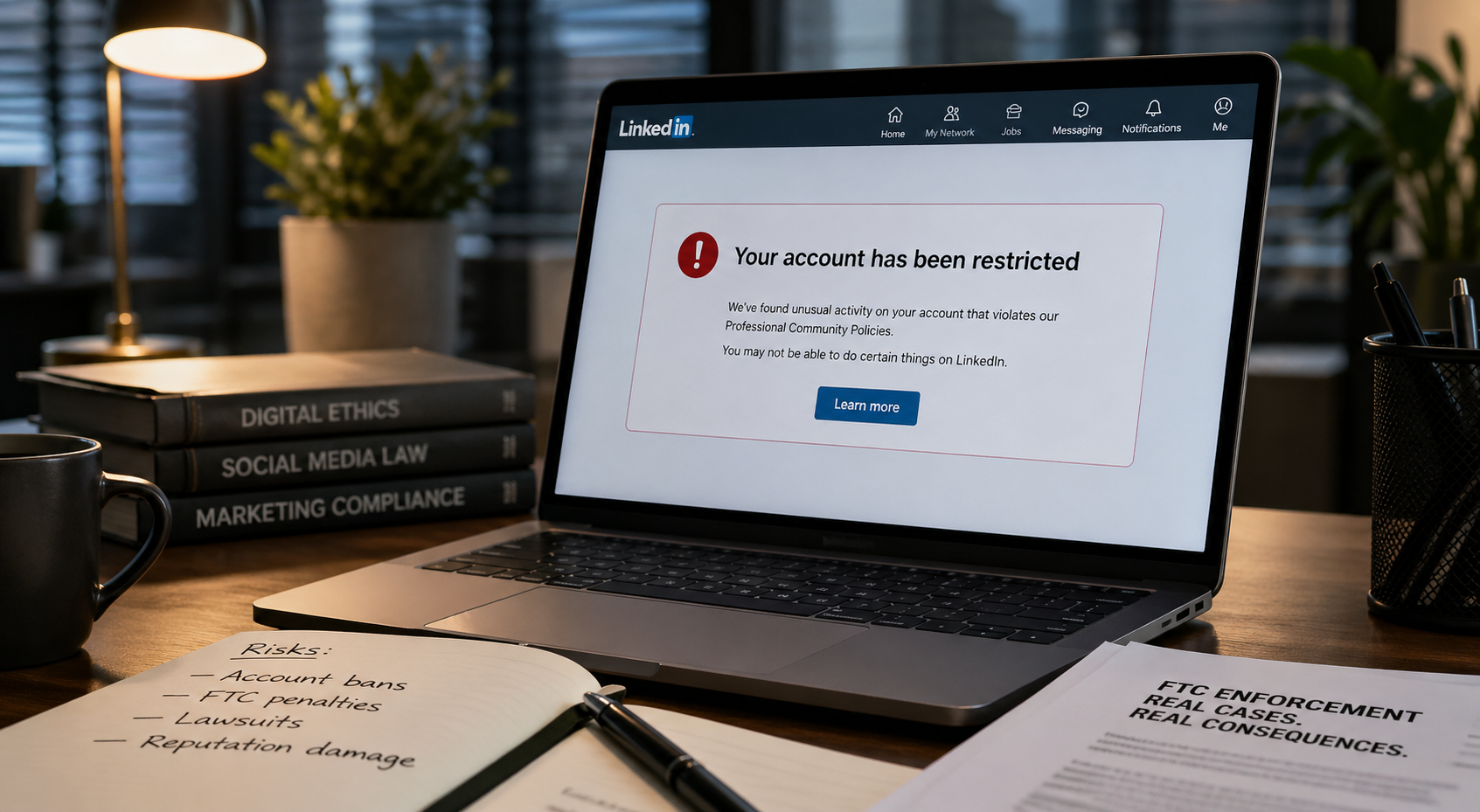
The Fake Profile Playbook: Why Companies Are Gambling Their Reputation (and Freedom) on LinkedIn Fraud
There's a tempting idea floating around B2B marketing circles: what if you just created a few extra LinkedIn profiles? Some coordinated employee engagement, a network of company pages pointing back to you, a little algorithmic lift. It sounds low-stakes. It sounds like everyone's doing it. But the gap between how harmless this feels and how serious the consequences are is enormous — and growing. LinkedIn's detection systems have become frighteningly sophisticated, the FTC has sharpened its enforcement teeth, and courts have seen enough to establish a clear paper trail of what happens to companies that get caught. Here's the full picture.

Social Media Is the New Search Engine: What the Data Says About Discovery in 2026
As AI Overviews eroded organic clicks and search trust frayed, consumers didn't disappear — they migrated. To TikTok, Instagram, YouTube, and Reddit. The data on this shift is now definitive: over 60% of product discovery happens on social platforms, and Gen Z uses social more than Google to find information. Here's what the numbers say and what your brand needs to do about it.
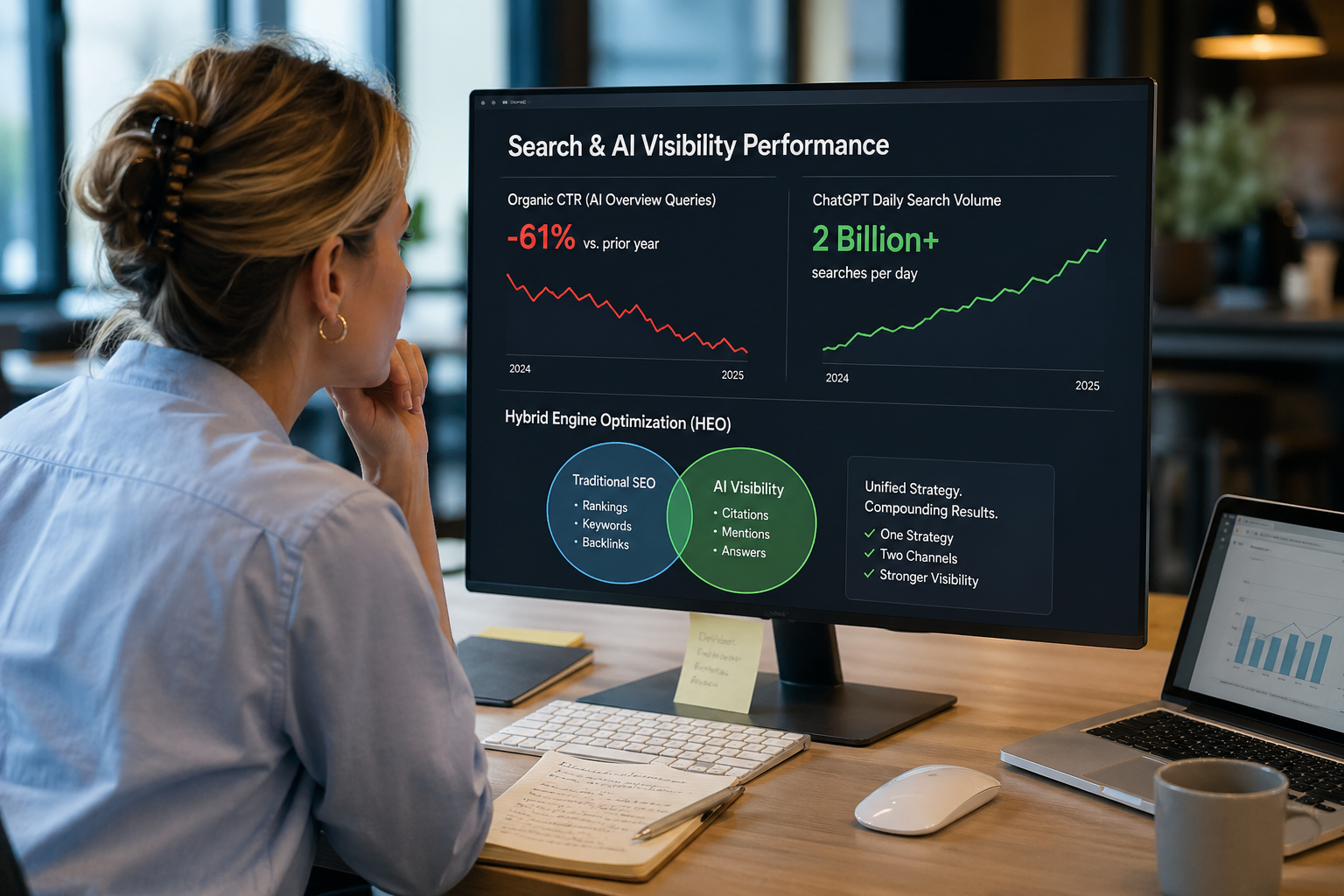
Hybrid Engine Optimization (HEO): The New Playbook for Search & AI Visibility in 2026
At SEO Week 2026 in New York City, one concept cut through the noise: Hybrid Engine Optimization. With organic click-through rates down 61% on AI Overview queries and ChatGPT processing 2 billion searches daily, the brands that treat traditional SEO and AI visibility as one unified system are the ones pulling ahead. Here's what HEO is, what the data says, and what your business needs to do about it.

Client-Side vs. Server-Side Rendering: What's Actually Happening When a Page Loads
Every time someone lands on your website, a decision has already been made — one most business owners never think about. Where does the work of actually building that page happen? On a powerful server before the content ever reaches the user's device, or inside the browser itself after a bundle of code downloads and runs? That choice — client-side vs. server-side rendering — affects your Google rankings, your load times, your infrastructure costs, and how your site feels to every person who visits it. Here's what it actually means, and why it matters for your business.

How Long Does It Really Take for Content Marketing to Penetrate an Industry?
Every founder asks it eventually: why isn't our content working yet? The answer usually isn't a strategy problem — it's a timeline problem. This guide breaks down the real phases of content marketing growth, what the data says about industry penetration, and what separates the brands that break through from the ones that quit three months too early.