Do I Need More Than 10 Pages for My Website?
Short answer?
Probably not.
Long answer?
It depends — but not in the way you think.
If you’re staring at your sitemap wondering whether 10 pages makes you look “small,” take a breath. Website size isn’t a flex. Strategy is.
Let’s break it down.
First: More Pages ≠ More Power
Somewhere along the way, business owners started equating page count with credibility.
50 pages? Must be legit.
100 pages? Enterprise energy.
10 pages? …Are we even trying?
Here’s the reality:
Google doesn’t rank page quantity. It ranks value.
A bloated website with thin, repetitive content won’t outperform a tight, strategic 8–12 page site that clearly communicates:
What you do
Who it’s for
Why you’re different
How to take the next step
If anything, too many pages can dilute your authority.
What Actually Matters
Instead of asking “Do I need more than 10 pages?” ask:
1. Does every page have a purpose?
If you can’t clearly explain why a page exists, it shouldn’t.
Strong core pages usually include:
Home
About
Services (sometimes broken into individual service pages)
Case Studies / Portfolio
Blog
Contact
That often lands right around 8–15 pages organically.
Not because 10 is magic.
Because clarity is.
2. Are you building for users or your ego?
Extra pages often show up when businesses:
Try to sound bigger than they are
Create separate pages for micro-variations of the same service
Over-explain instead of converting
More pages = more navigation choices = more friction.
And friction kills conversions.
3. Are you planning long-term content growth?
Here’s where page count does expand strategically: blogging.
A 10-page core site plus an active blog is a powerful combo.
Why?
Because blog content:
Targets specific search intent
Builds authority
Attracts organic traffic
Supports your core service pages
Your website doesn’t need 50 static pages.
It might need 50 strategic blog posts over time.
Big difference.
When You Do Need More Than 10 Pages
There are real scenarios where page count grows — intentionally:
Multiple service categories that deserve individual optimization
Multi-location businesses
E-commerce (each product = a page)
Industry-specific landing pages
SEO pillar + cluster strategies
If expansion supports visibility and conversion, it’s smart.
If expansion just fills space?
It’s expensive decoration.
The Hidden Cost of “More”
More pages mean:
More content creation
More SEO optimization
More internal linking
More updates
More opportunities for outdated information
If you’re not maintaining it, you’re weakening it.
A focused site that’s consistently updated will outperform a massive site that’s neglected every time.
The Real Question
Your website is not a brochure.
It’s a conversion system.
So instead of asking:
“Do I need more than 10 pages?”
Ask:
Is my messaging clear?
Does every page guide visitors toward action?
Am I ranking for the right search intent?
Is my structure built for growth?
If 10 pages accomplish that? You’re good.
If 18 pages accomplish that? Also good.
If 47 pages don’t? We have a strategy problem.
Bottom Line
A strategic 10-page site beats a scattered 40-page site.
Every time.
Build lean.
Build intentional.
Then expand based on data — not insecurity.
If you’re unsure whether your current page structure is helping or hurting your growth, that’s not a content problem.
That’s a strategy conversation.
And those are our favorite kind.
FAQs
Because if you’re still counting pages like they’re Pokémon cards, let’s clear a few things up.
1. Is 10 pages enough for SEO?
Yes — if those pages are optimized and intentional.
Search engines don’t reward volume. They reward relevance, authority, and clarity. A focused 10-page site with strong messaging, proper keyword targeting, and internal linking can absolutely compete.
What doesn’t work?
Ten vague pages trying to rank for everything.
2. Will my business look “small” with fewer pages?
No. It will look clear.
Visitors don’t count pages. They scan for:
Professional design
Clear positioning
Proof (testimonials, case studies)
Easy navigation
If those elements are present, page count is irrelevant.
3. Does Google prefer bigger websites?
Google prefers better websites.
Large sites often rank well because they’ve built authority over time — not because they hit a page quota. If your content is thin, duplicated, or unnecessary, more pages can actually hurt performance.
4. Should I create separate pages for every tiny service variation?
Only if:
The service targets a different audience
It has distinct search intent
It deserves its own optimization strategy
Otherwise, you’re just slicing the same pie into too many pieces.
5. What’s the ideal number of pages for a small business website?
There’s no magic number, but most small to mid-size service businesses thrive with:
Home
About
3–5 Service Pages
Case Studies or Portfolio
Blog
Contact
That typically lands between 8–15 pages. Natural. Strategic. Clean.
6. Should I focus on adding more core pages or more blog content?
For most businesses: blog content.
Core pages establish your positioning.
Blog posts build authority, attract traffic, and support SEO growth over time.
Ten strong core pages + consistent blog strategy > 30 random service pages.
7. Can too many pages hurt conversions?
Absolutely.
More pages = more choices.
More choices = more friction.
More friction = fewer conversions.
A tight site structure guides users toward action. A bloated one distracts them.
8. How do I know if I actually need more pages?
Ask yourself:
Am I trying to rank for additional keywords that deserve their own page?
Do I serve different industries or locations?
Is my current navigation clear and conversion-focused?
Is my data telling me users want more information?
If the answer is no to most of those — you don’t need more pages. You need sharper messaging.
9. What’s worse: too few pages or too many?
Too many.
You can always expand strategically.
It’s much harder to untangle a messy, overbuilt site later.
10. So… what’s the real goal?
Not page count.
Performance.
Your website should:
Attract the right traffic
Build trust quickly
Guide visitors to action
Support long-term growth
If 10 pages do that? You’re winning.
If 20 pages do that? Also winning.
If you’re unsure whether your site structure is helping or quietly hurting your growth — that’s where strategy comes in.
And strategy beats page count every time.
Related Reads
〰️
Related Reads 〰️
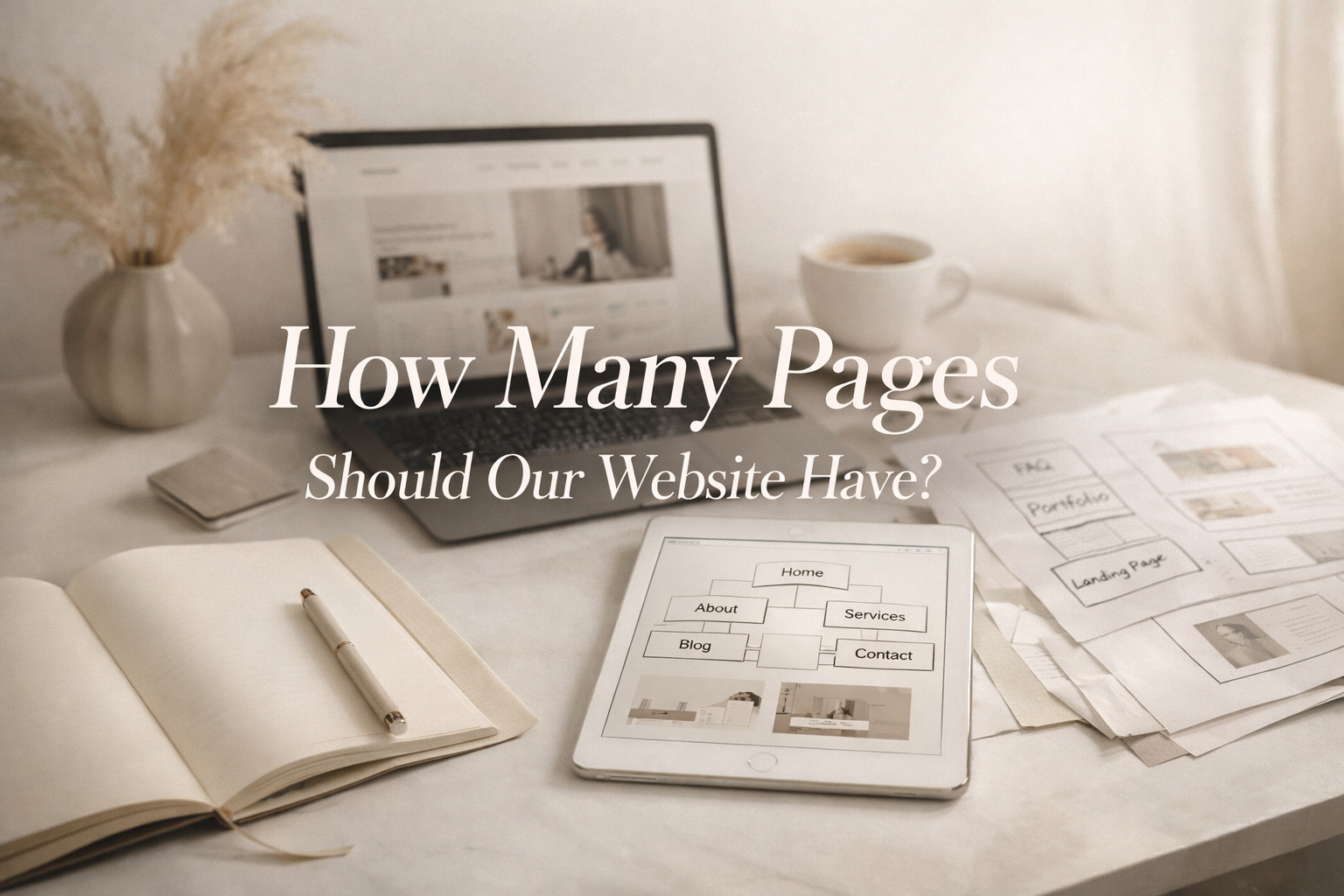
How Many Pages Should Our Website Have?
"How many pages should our website have?" It's one of the most common questions we get from clients, and the honest answer is: it depends. But not in a vague, noncommittal way. There's a real framework for figuring out the right number of pages — and it has everything to do with what your business does, where you do it, and what your customers are actually searching for.

Content Marketing Is a Lot Like Fishing
Content marketing and fishing have more in common than you might think. You're picking your spot, choosing your bait, and figuring out what gets a bite. Whether it's service pages, industry pages, or location pages — the strategy is all about testing, adjusting, and landing the catch.
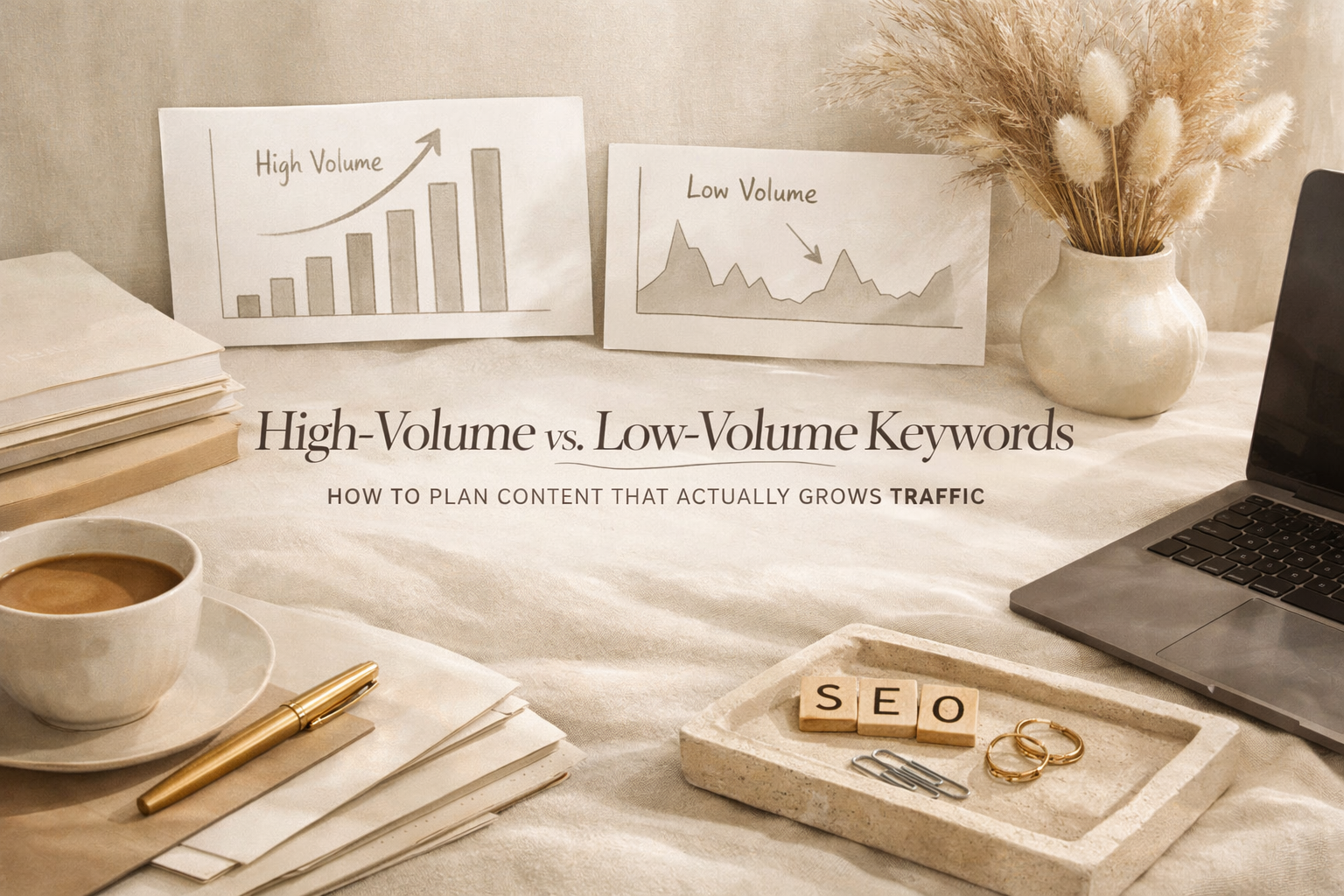
High-Volume vs. Low-Volume Keywords: How to Plan Content That Actually Grows Traffic
Should you chase high-volume keywords or focus on low-volume wins? This guide breaks down how to balance keyword volume, intent, and competition to build a content strategy that compounds organic traffic over time.