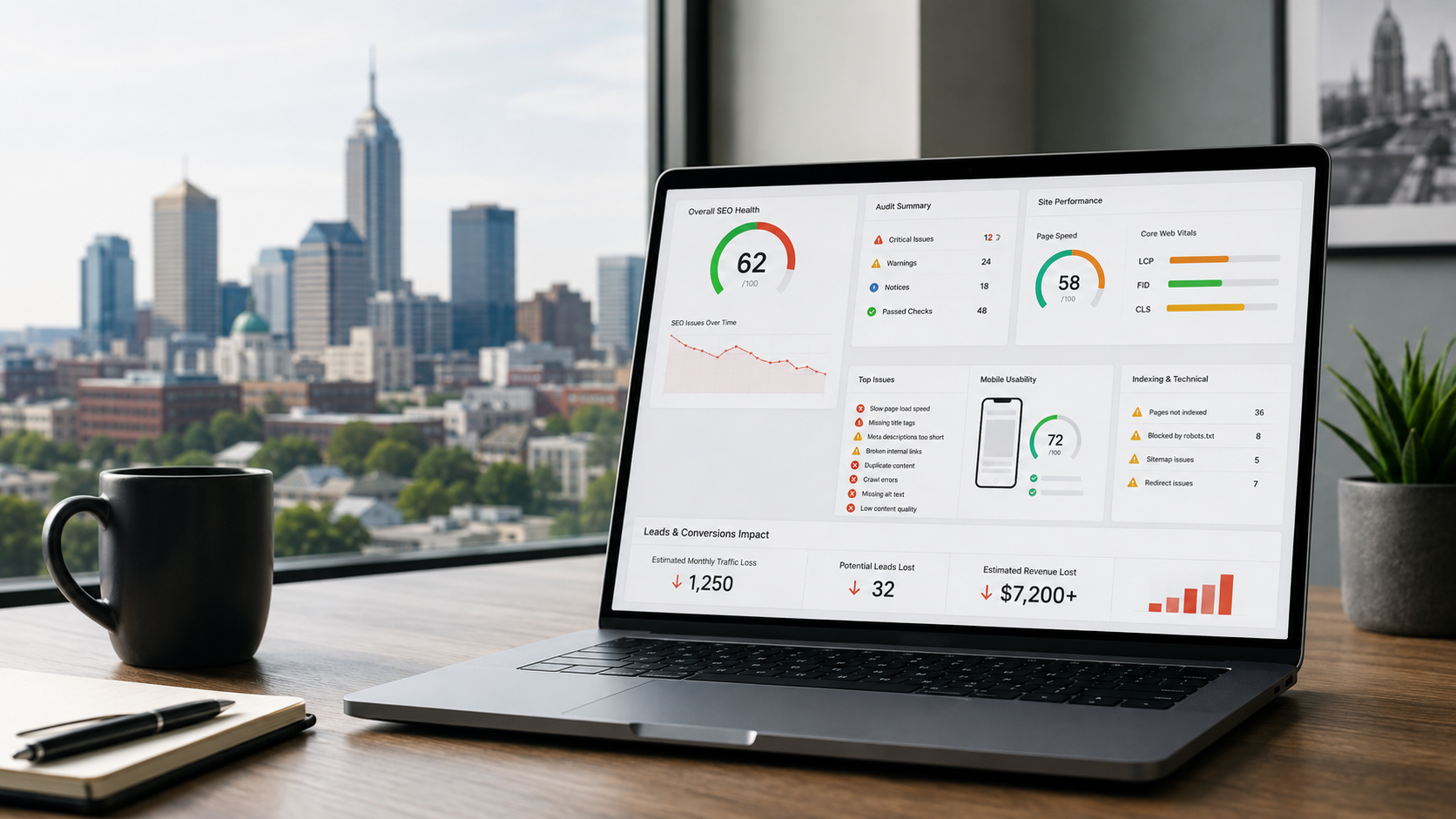
The Indianapolis Website Audit: 20 SEO Problems That Cost Local Businesses Leads
Your website can look professional and still quietly lose Indianapolis customers every day. This 20-point SEO website audit covers indexing, site speed, mobile UX, titles, content, internal links, local signals, schema, conversion tracking, and the technical problems that can keep local businesses from ranking and generating leads.

When Does It Actually Make Sense to Build a Campaign Microsite on a New Domain?
Someone in every marketing meeting suggests it: what if this campaign had its own site? Its own domain? Sometimes that's the right call — but far more often it's an expensive mistake dressed up as a creative decision. We know the cost precisely, because we launched on a brand-new domain and documented every day of it. Day one produced two impressions. Meaningful traffic took five months. Here's what that means for your campaign, and the six situations where a separate domain is genuinely worth it.
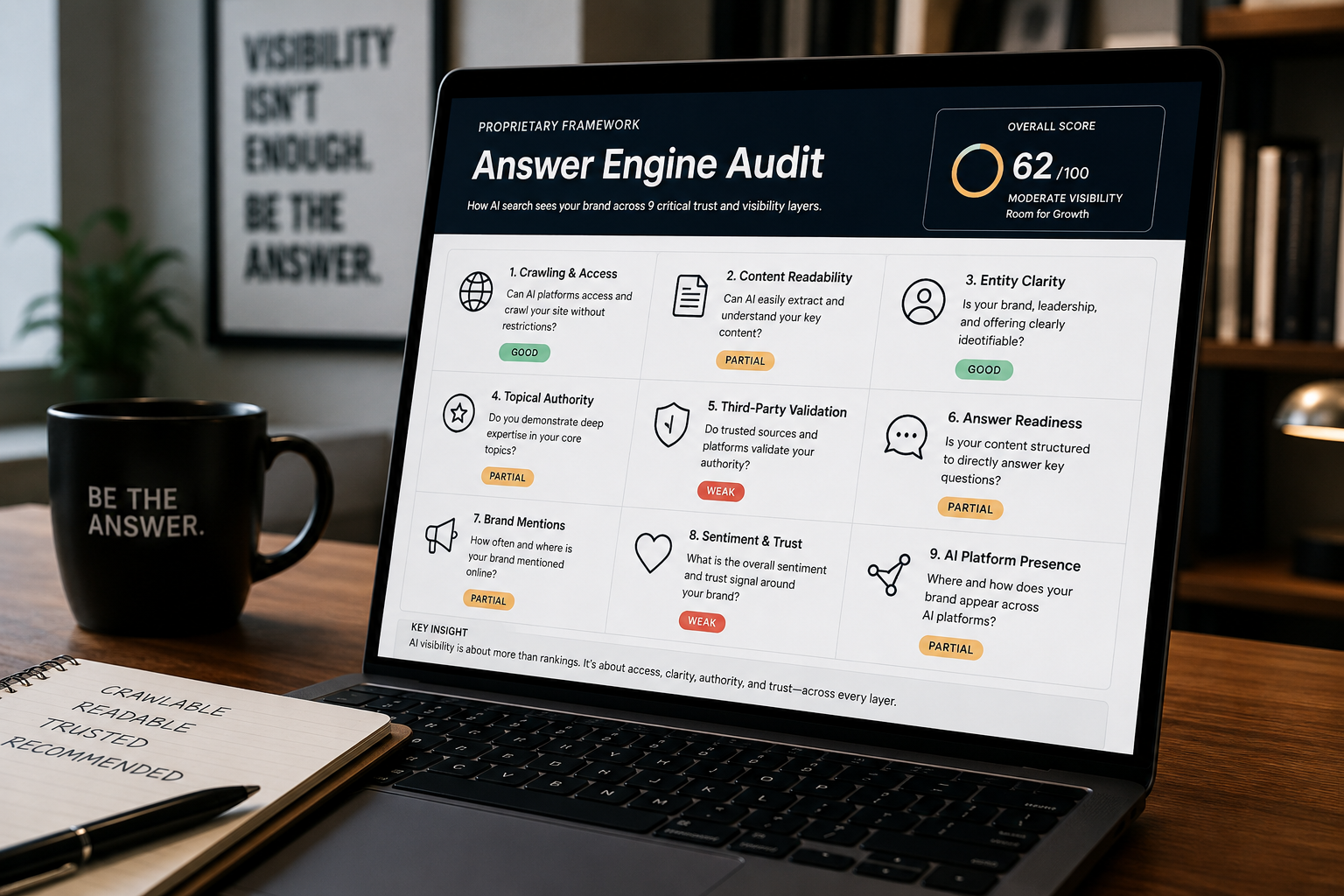
Inside Our Proprietary "Answer Engine" Audit
You know your Google ranking. But do you know what ChatGPT says when a prospect asks for a recommendation in your category—or whether Perplexity can even read your site? Our nine-point Answer Engine Audit examines your brand the way AI does. Here's the entire framework, with nothing held back.
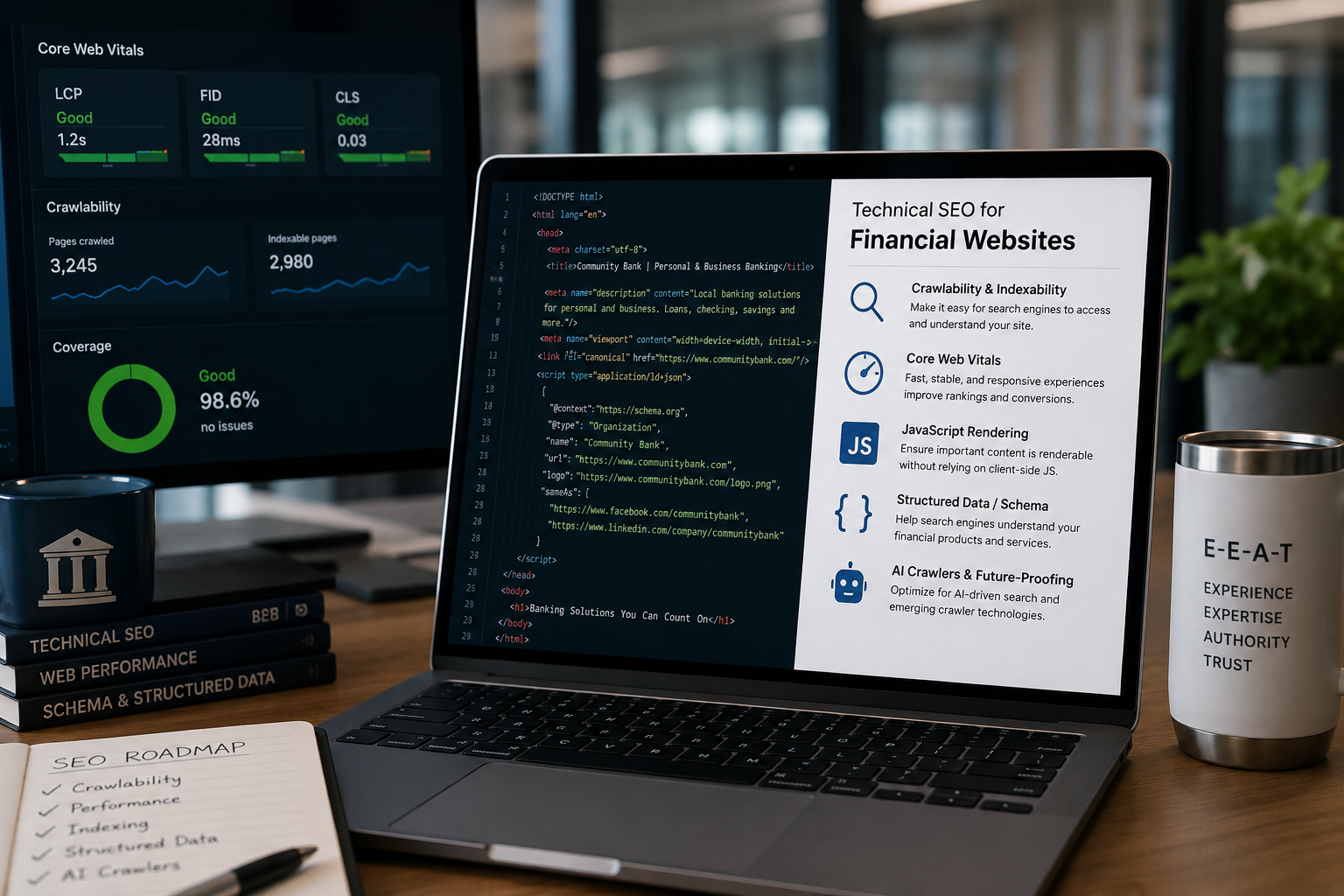
Technical SEO for Financial Websites: What Your Dev Team Needs to Know
Technical SEO is the foundation that decides whether your content and local SEO efforts ever pay off. This guide bridges marketing and engineering, covering what your dev team needs to prioritize on a financial website in 2026 — from crawlability and Core Web Vitals to JavaScript rendering and AI crawlers.
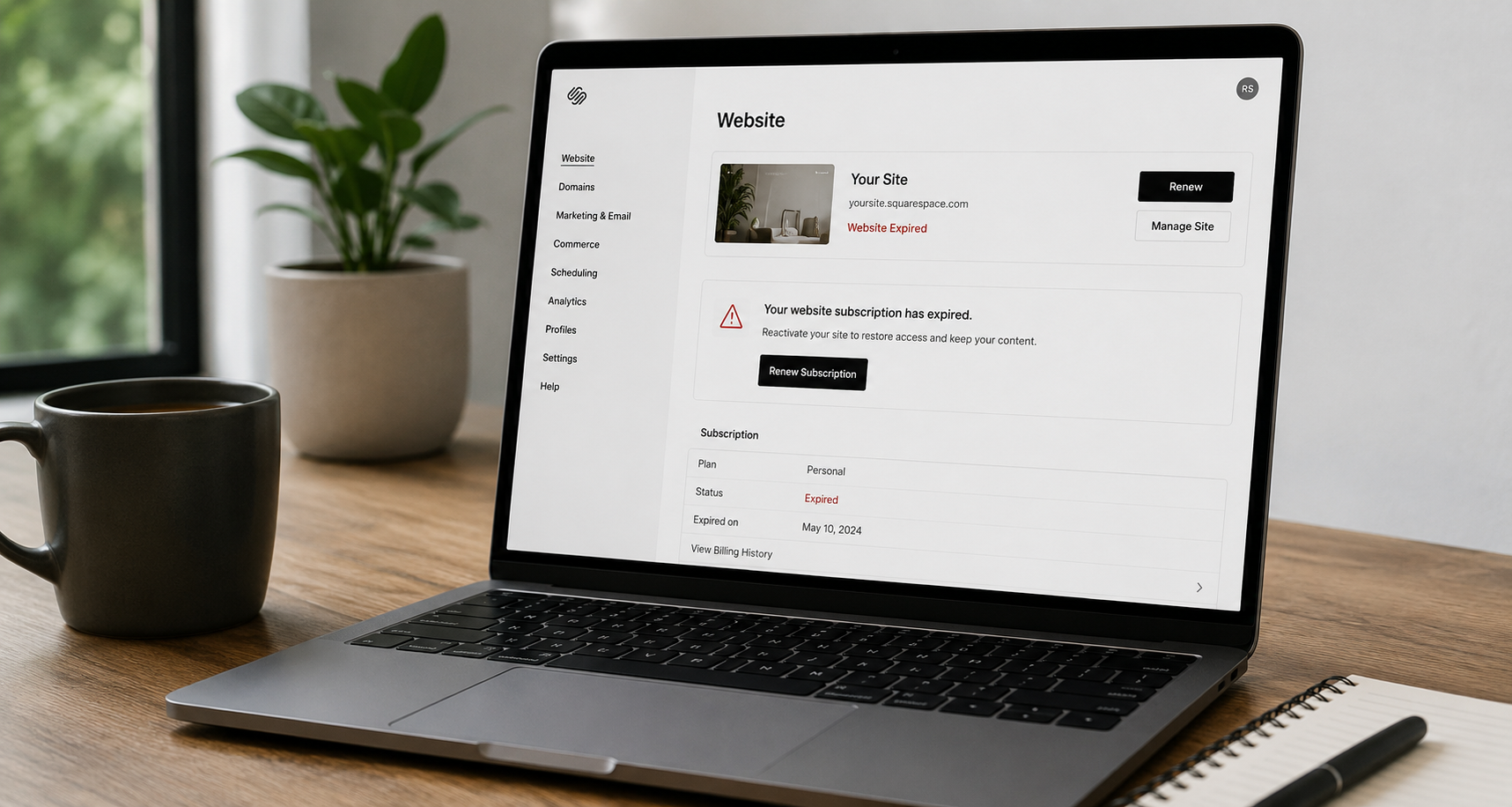
Why Squarespace Won't Let You Delete a Site From Your Dashboard — Even After Billing Has Expired
You canceled the subscription, the billing lapsed, and the site shows "Website Expired"—so why won't Squarespace let you delete it? The answer comes down to one rule the dashboard never explains: an expired website isn't the same as a deletable one. Here's exactly what's blocking the delete, why Squarespace designed it that way, and how to actually remove the site.
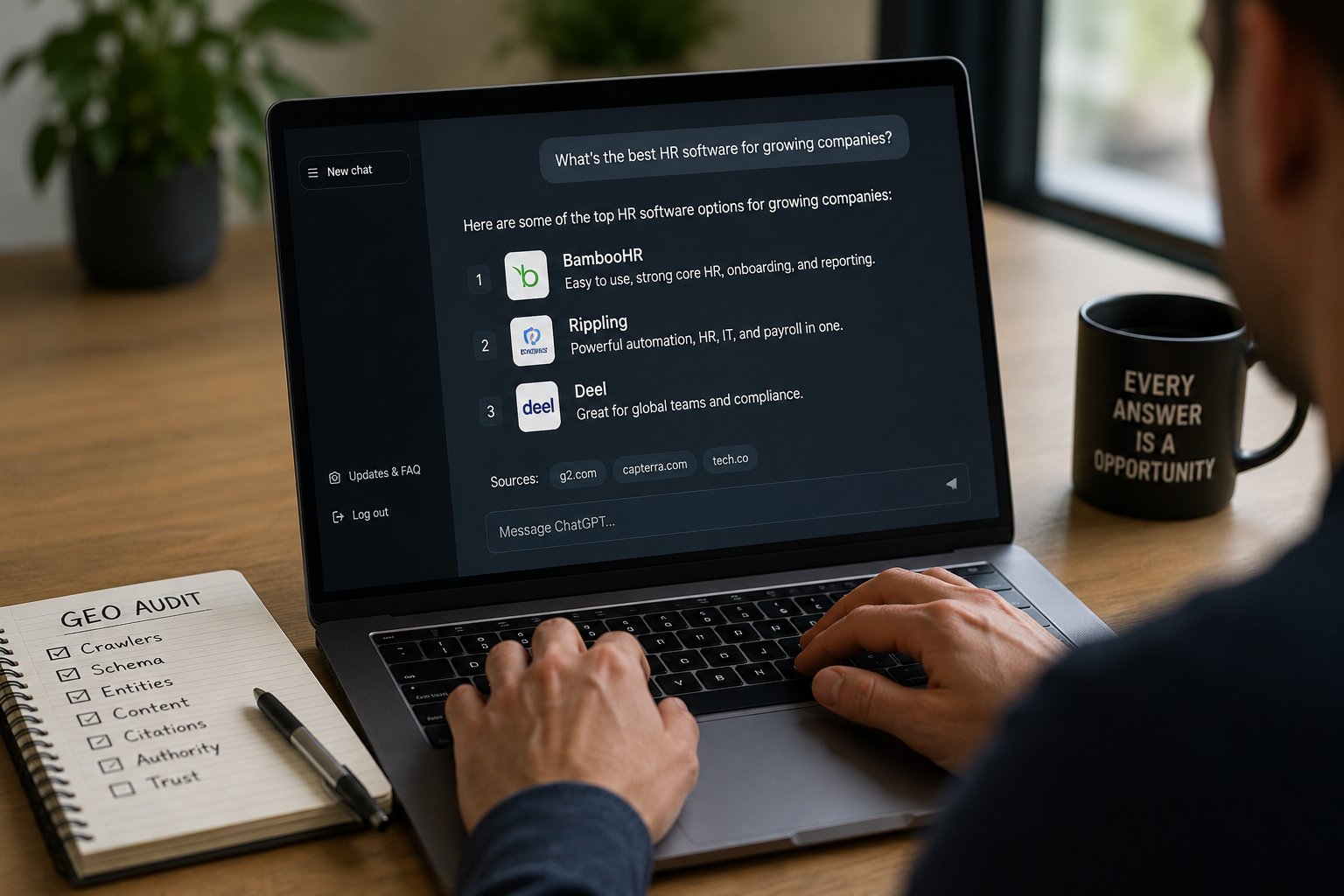
The GEO Audit: 7 Things to Check If You're Not Showing Up in AI-Generated Answers
You typed the question into ChatGPT yourself — "best company for [what you do]" — and your name wasn't in the answer. A competitor's was. That sting is one of the most common experiences in marketing right now, and one of the most fixable. Showing up in AI-generated answers isn't luck or a black box; it's the product of specific signals AI systems use to find, understand, trust, and cite your brand. This tactical GEO audit walks through the seven things to check — from crawler access and schema to entity clarity, citation-ready formatting, and third-party validation — in the order that actually matters.
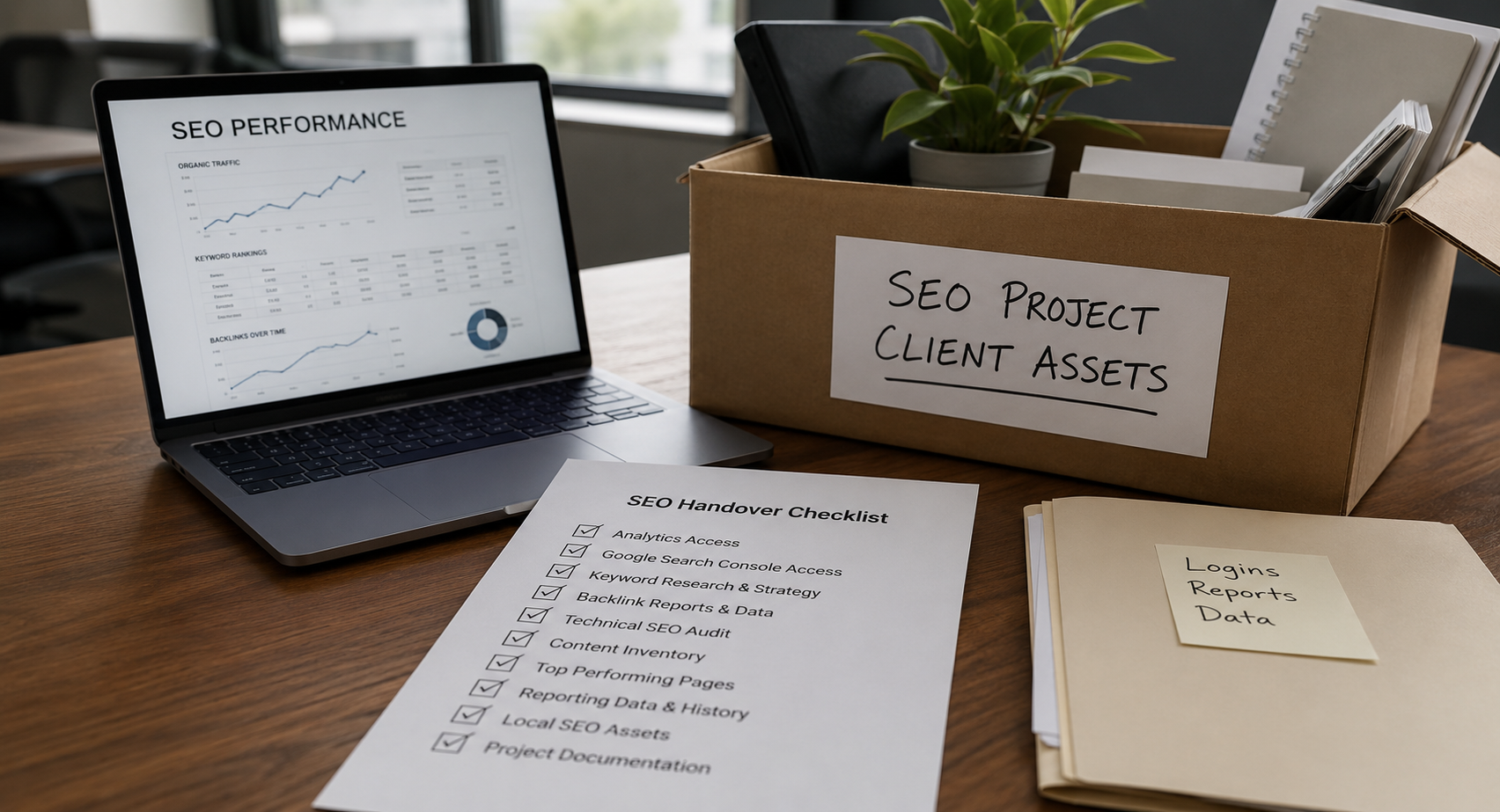
What Your Old SEO Agency Should Give You Before They Leave
When an SEO agency relationship ends, most clients ask for their logins back and call it done. But there's a lot more that belongs to you — keyword strategies, link building records, technical documentation, content archives, and years of reporting data that your next agency needs to hit the ground running. Here's the complete list of what you're owed and how to make sure you get it.
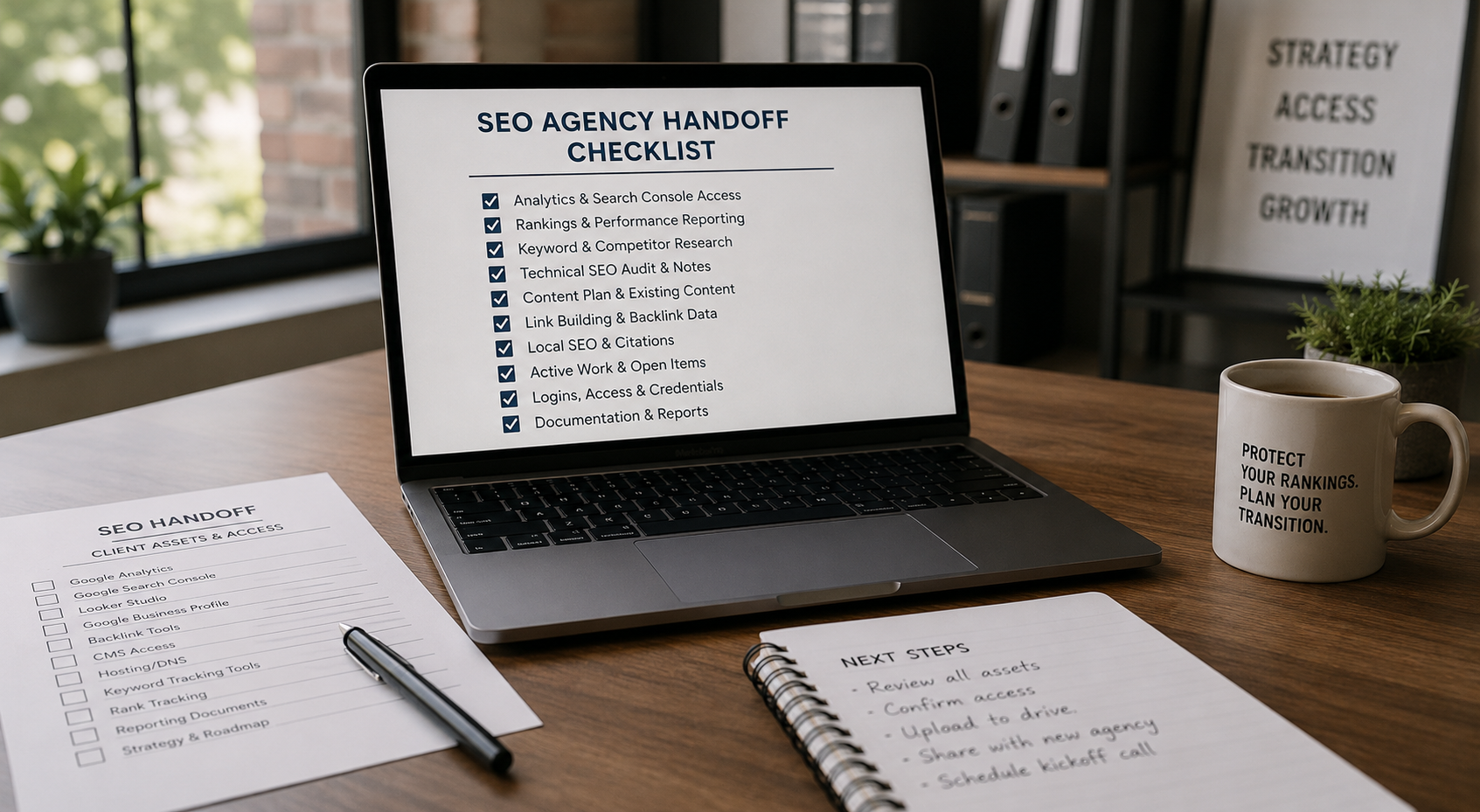
The SEO Agency Handoff Checklist: Everything You Need Before You Switch
Switching SEO agencies goes wrong in predictable ways — lost access, missing documentation, and gaps in active work that quietly erode rankings you spent years building. This checklist covers every asset, account, and piece of documentation you need to secure before your current agency's last day, so your transition protects what you've built instead of undoing it.

SEO Migration Checklist for Enterprise Websites
Enterprise website migrations are categorically different from small business migrations in ways that matter significantly for SEO execution. The URL count isn't just larger — it's large enough that manual processes break down and systematic automation becomes necessary. The backlink profile isn't just more valuable — it's distributed across thousands of referring domains in ways that require prioritization frameworks rather than comprehensive manual outreach. The stakeholder landscape isn't just more complex — it includes legal, compliance, IT security, and procurement functions whose requirements shape the migration timeline in ways that pure SEO planning can't account for.
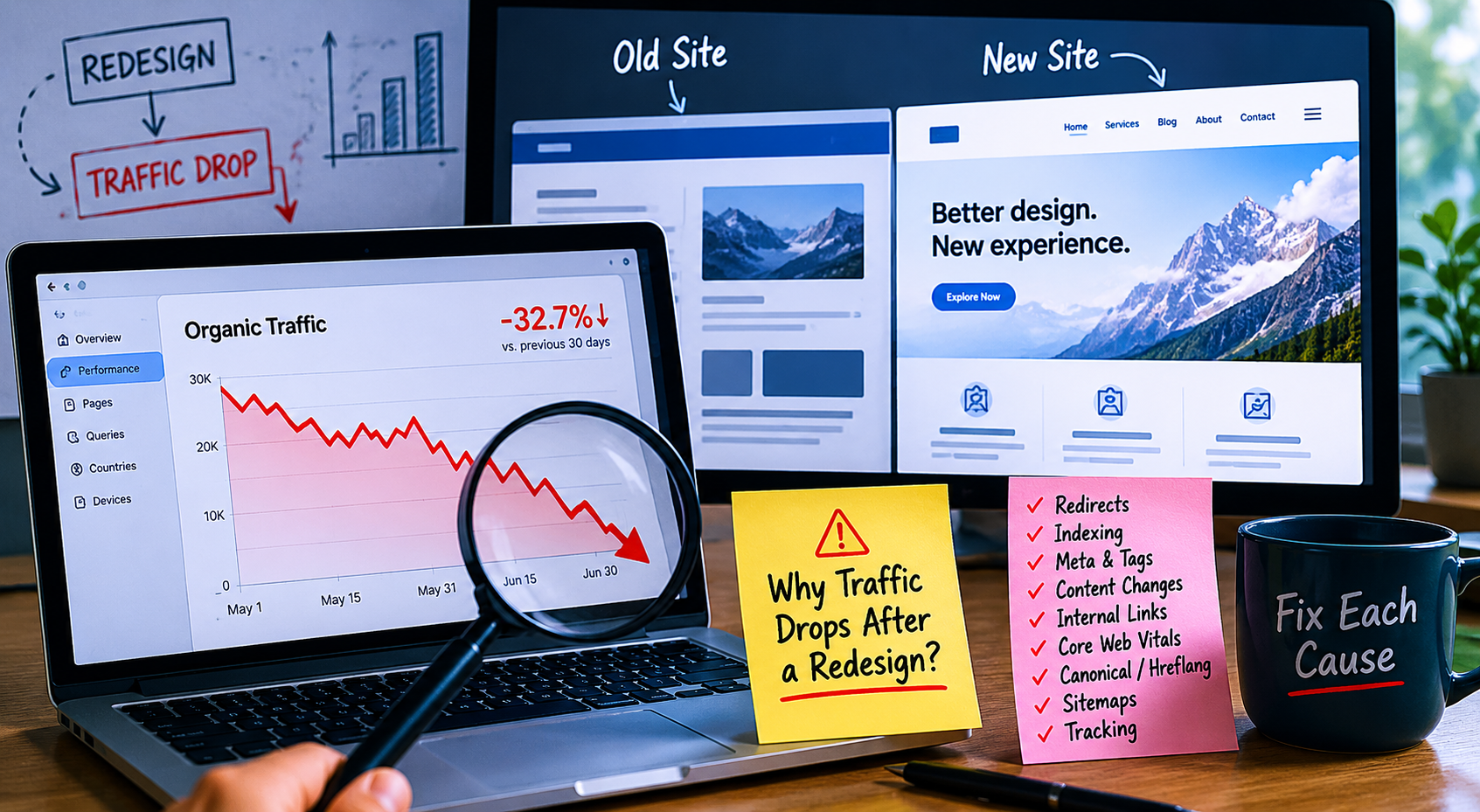
Why Traffic Drops After a Redesign
You launched the new site. It looks better. It loads on mobile. The stakeholders are happy. And then the traffic graph starts going in the wrong direction. Post-redesign traffic drops are one of the most common and most preventable problems in digital marketing — and one of the most frustrating, because the cause is almost never obvious from looking at the new site. The design looks fine. The pages load. Users can navigate. But Google is seeing something different from what the design team built, and the ranking signals it's evaluating have changed in ways that nobody planned.

What Happens to SEO During a Website Redesign?
Website redesigns are one of the most reliably misunderstood SEO events in digital marketing. The conversation starts as a design conversation — new visual identity, improved user experience, modernized layout. And then somewhere in the execution, design decisions become technical decisions that become SEO decisions that nobody planned for. The result is a pattern that repeats across the industry with predictable frequency: a company launches a redesigned website, celebrates the improved aesthetics, and then watches organic traffic decline over the following weeks as rankings drop on pages that were performing well before the redesign.
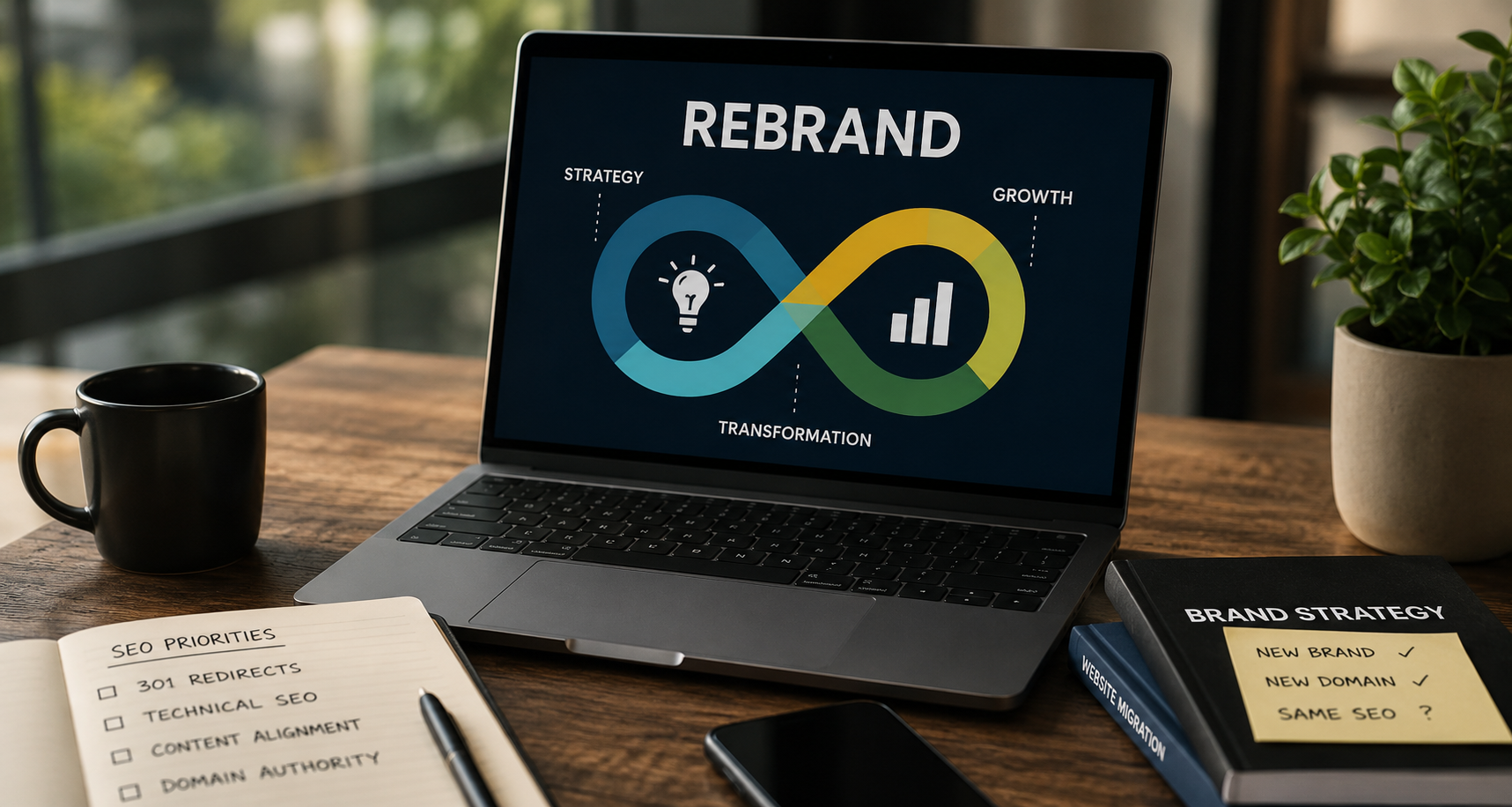
Rebranding Without Losing Rankings
A rebrand is one of the highest-stakes events in a company's digital history. Done well, it's an opportunity — new positioning, new domain authority trajectory, new content strategy aligned with who the company actually is. Done poorly, it's a self-inflicted traffic wound that takes years to heal. The SEO risk isn't theoretical. Domain changes, brand name changes, and URL restructuring all trigger the same fundamental search engine recalculation that platform migrations trigger — except rebrands often happen alongside content changes and positioning changes that multiply the variables and make diagnosing post-rebrand ranking losses significantly more complex.
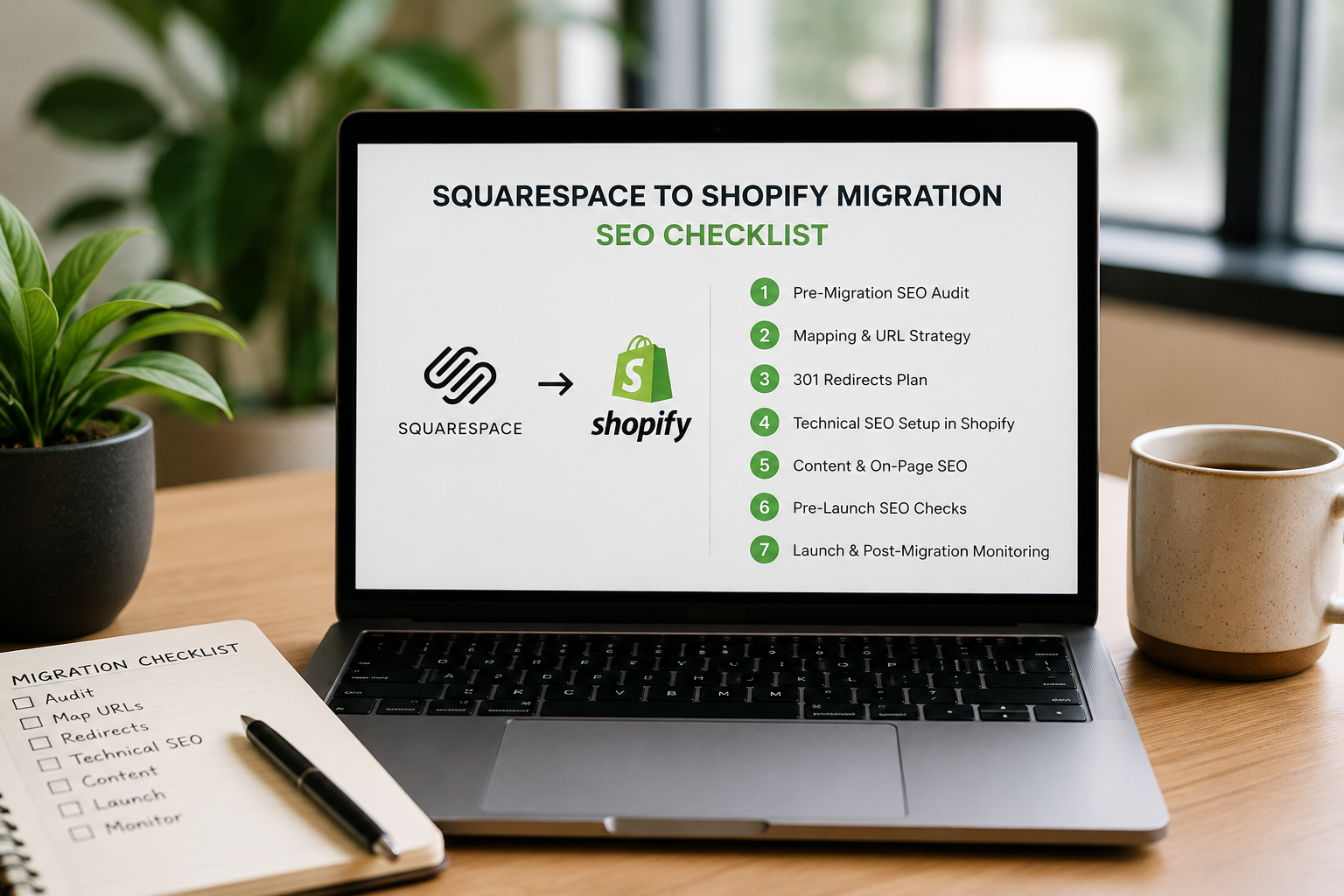
Squarespace to Shopify Migration SEO Checklist
Migrating an e-commerce site from Squarespace to Shopify is one of the most common platform moves in the DTC and small business space right now — and one of the most SEO-consequential. Unlike a brochure site migration where a handful of pages and a few hundred backlinks are at stake, an e-commerce migration involves product pages, collection pages, variant URLs, canonical handling for filtered results, and a revenue stream that is directly tied to search visibility. The stakes are higher and the complexity is greater than most merchants anticipate when they initiate the move.
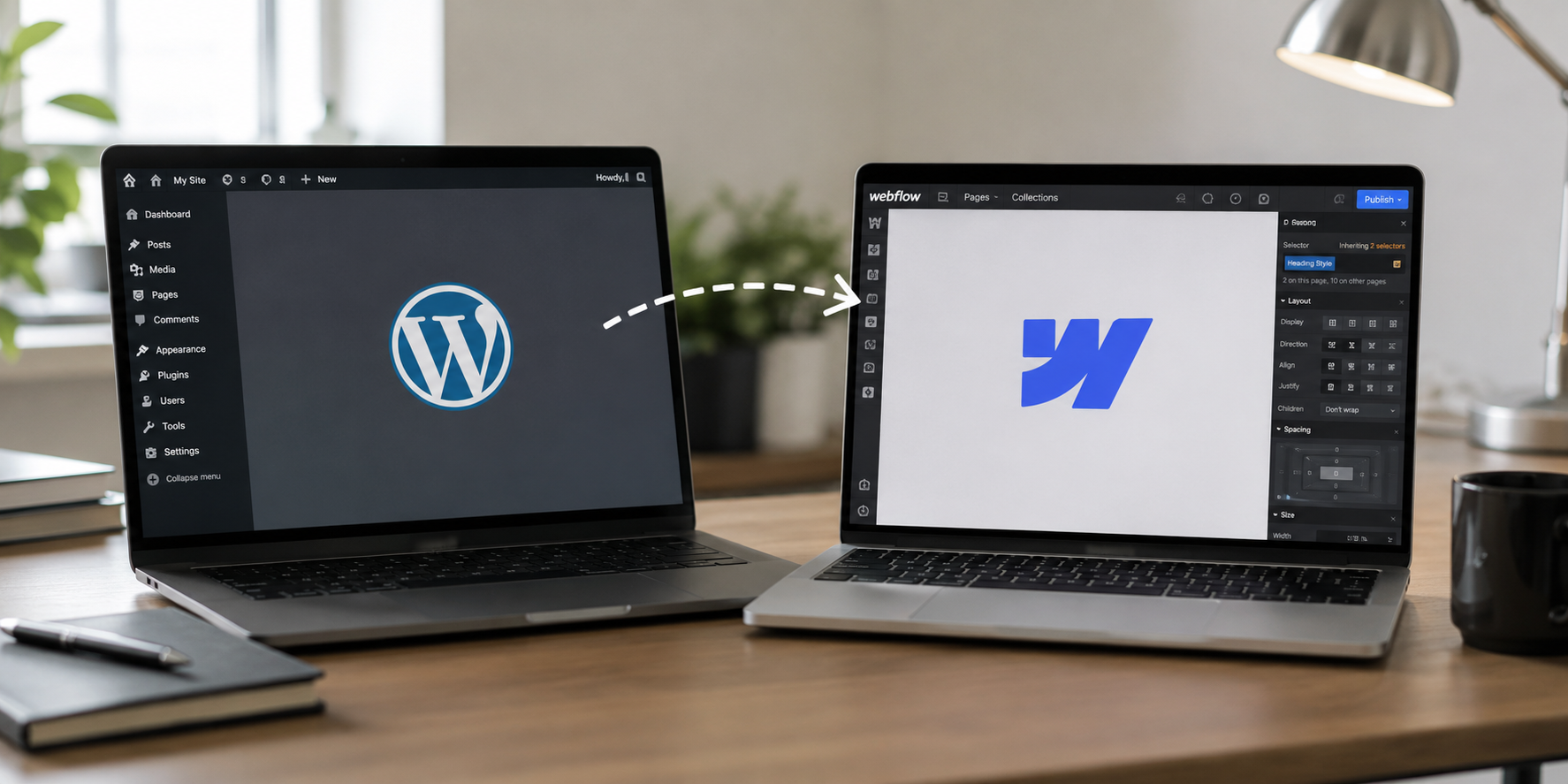
Moving from WordPress to Webflow Without Losing SEO
Platform migrations are one of the highest-risk events in a website's SEO history. Done well, a WordPress to Webflow migration is nearly invisible to search engines — rankings hold, traffic continues, and the new platform's advantages start compounding immediately. Done poorly, it's a traffic cliff that takes six to twelve months to recover from, with ranking losses that often don't fully resolve even after the technical errors are corrected. The difference between those two outcomes is almost entirely in the pre-migration preparation and the precision of execution.
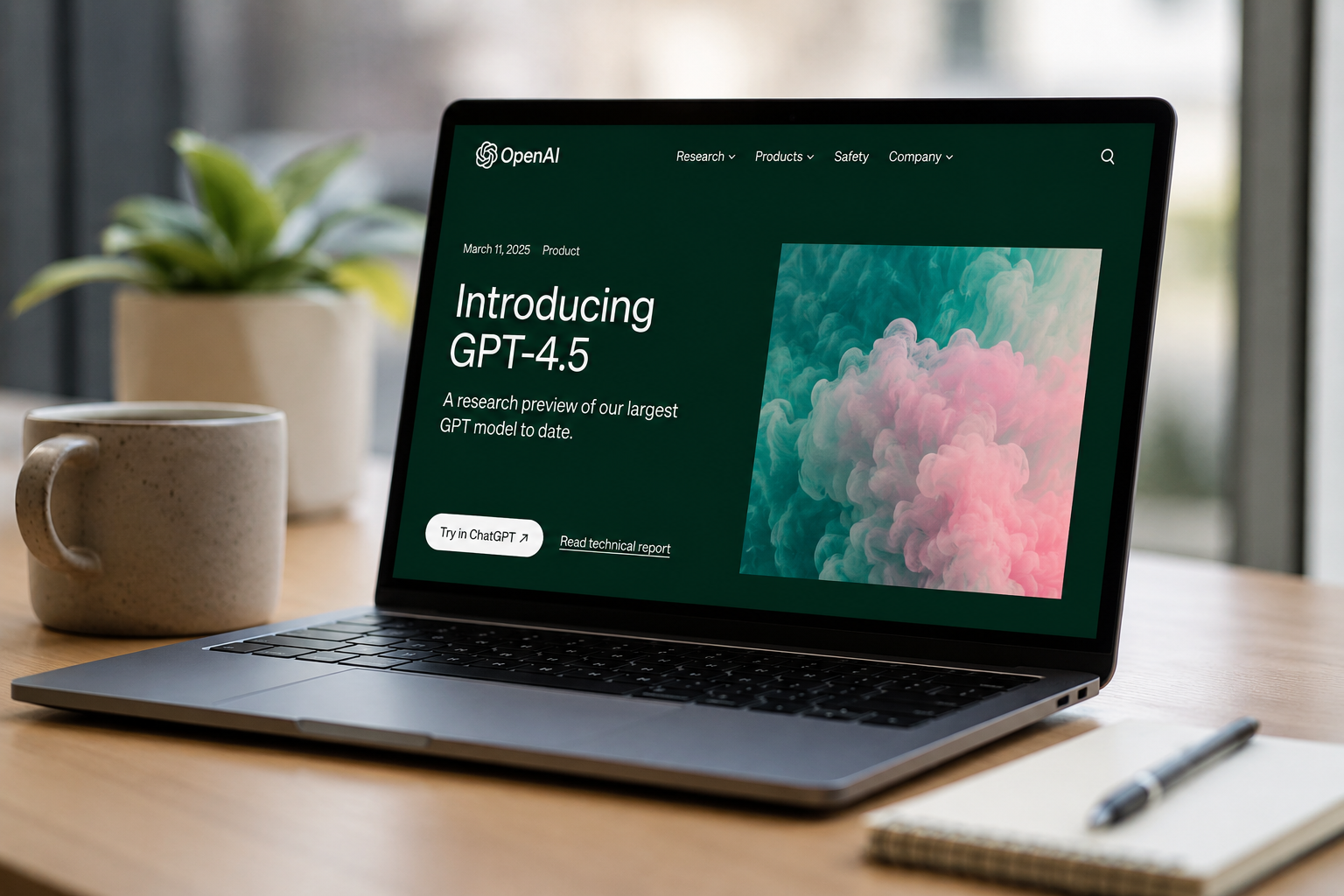
Can ChatGPT Crawl Your Website?
One of the most practical questions in AI search optimization right now is also one of the least clearly answered: does ChatGPT actually crawl your website, and if so, how does that affect whether your content gets cited in AI-generated answers? The short answer is yes — OpenAI operates a web crawler that can access your site. But the longer answer involves understanding what that crawler is actually doing, how it differs from what Google's crawler does, and why the distinction matters significantly for how you think about AI search visibility.

You Don't Have to Start Over: Why a Strong Domain Is Your Most Valuable Asset When You Pivot
When a business pivots, the instinct is often to start clean — new brand, new domain, new everything. But if your existing domain has age, backlinks, and a track record with search engines, abandoning it could cost you years of organic traffic. Here's what domain authority actually is, why it survives a pivot, and how to protect it when your company changes direction.
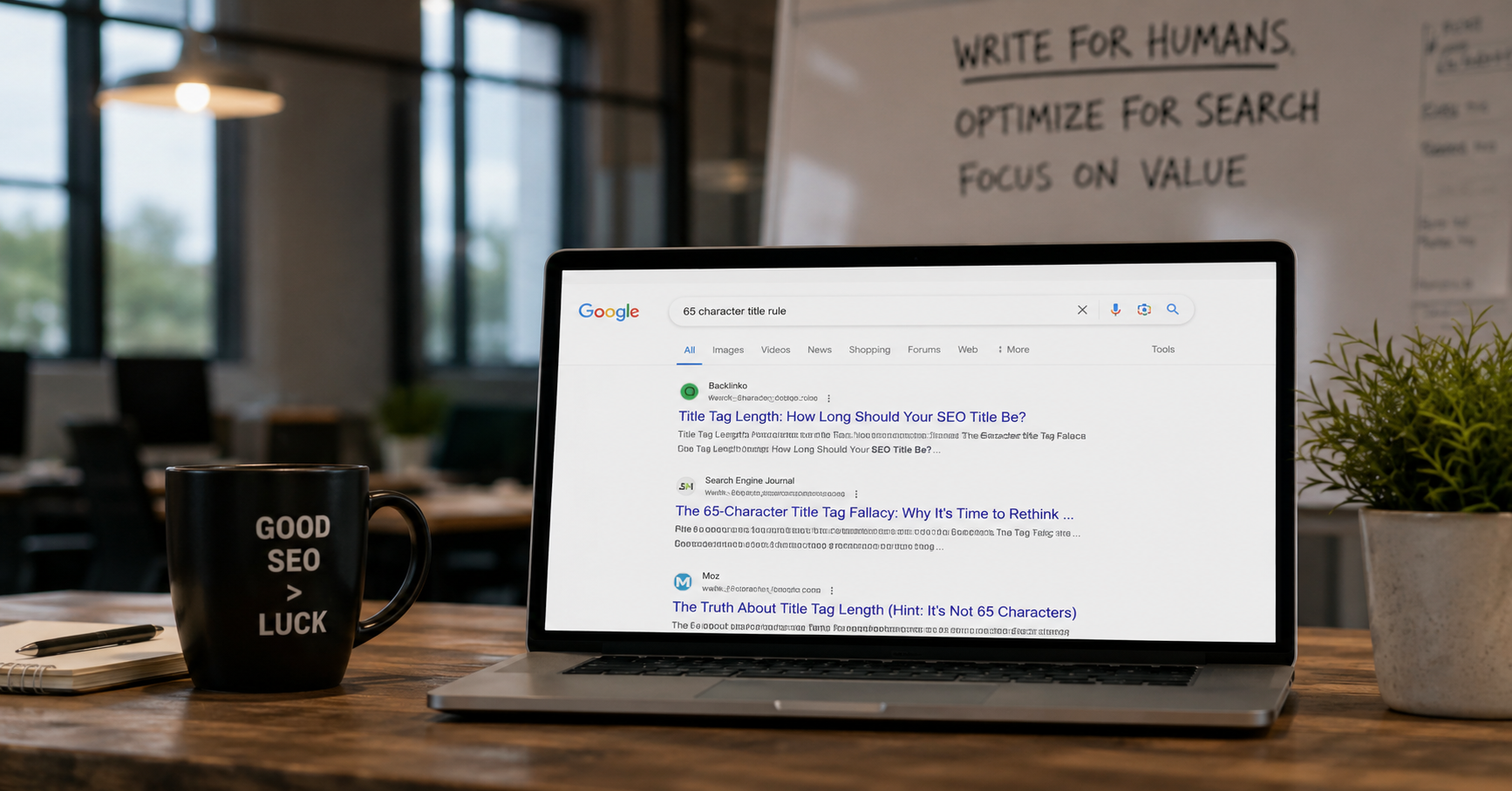
Why Obsessing Over 65-Character Titles and 155-Character Descriptions Is an Outdated SEO Mindset
The 65-character title and 155-character description guidelines feel like solid SEO ground. They're not — at least not in the way most teams treat them. Google rewrites metadata constantly, display constraints have shifted repeatedly, and hitting a character count has never been a ranking signal. Here's what actually matters.
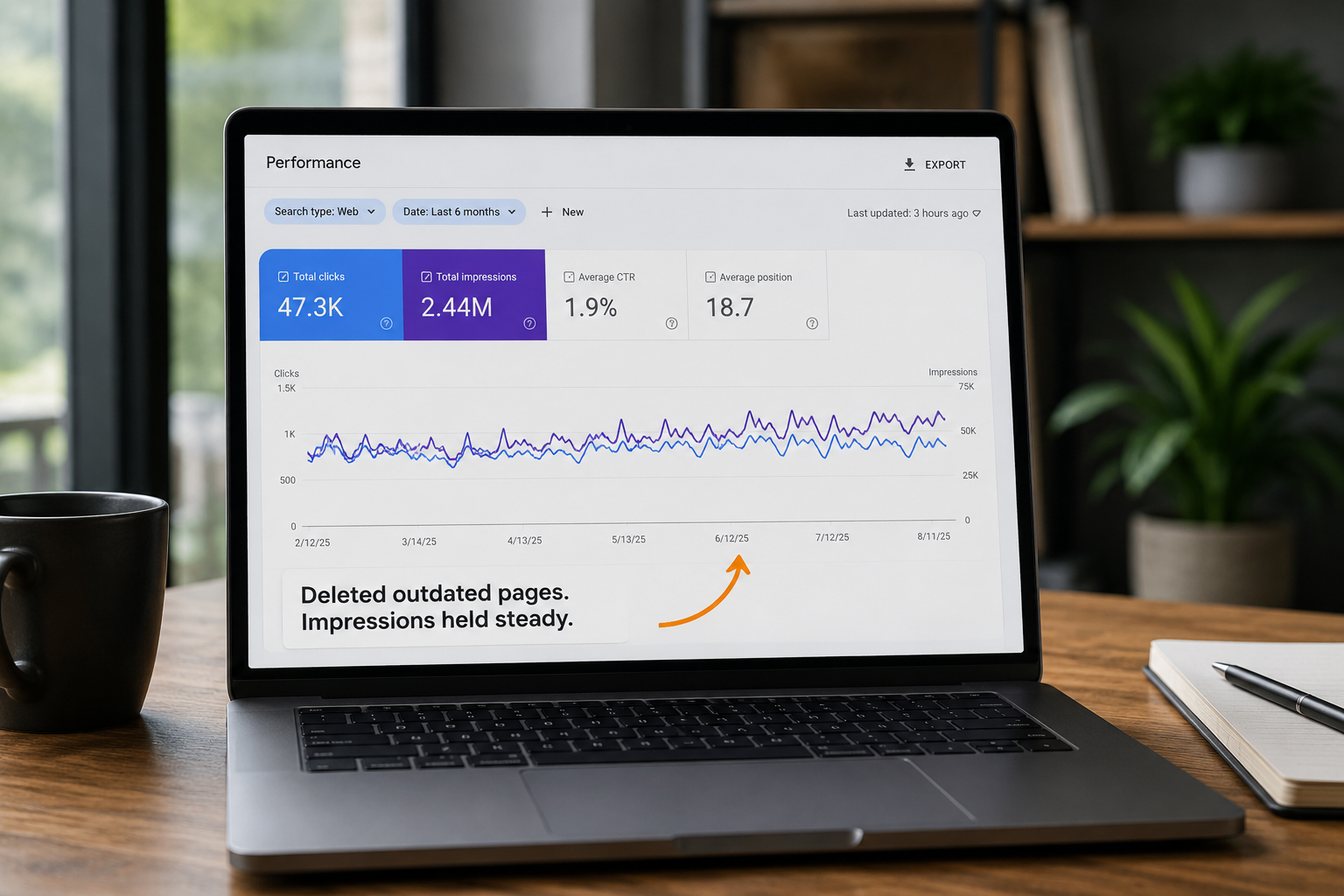
Why Deleting Old Content Didn't Kill Your Google Impressions (And What That Actually Tells You)
You've built a strong content library. Impressions are healthy. And deleting anything feels terrifying. But then you remove a handful of outdated pages — and impressions hold. Here's why that happens, what it tells you about how Google evaluates authority, and how to think about content auditing when you've built something real.

The AI Visibility Audit Scam Is Targeting Businesses — Here's How to Spot It
If a stranger reached out through your contact form claiming they already audited your AI search visibility — complete with a score, a list of technical gaps, and a PayPal link — you weren't alone, and it wasn't legitimate. Here's exactly how this new wave of AI-powered spam works, why the technical language sounds so convincing, and what genuine AI visibility work actually involves.
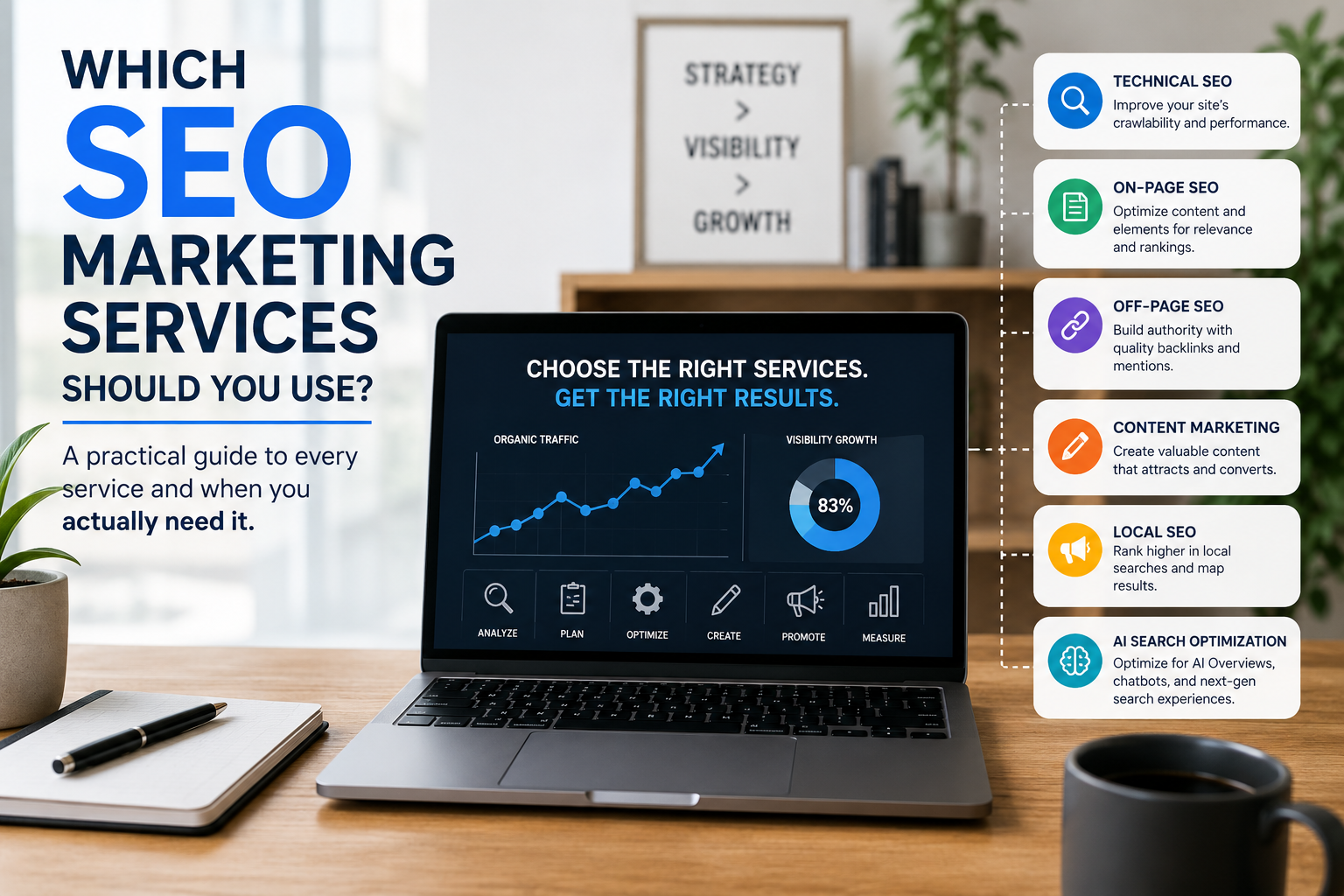
Which SEO Marketing Services Should You Use? A Straight Answer for Every Business Situation.
"Which SEO services should I use?" is one of the most common questions we hear — and one of the most frequently answered wrong. The right answer isn't a package someone else built. It depends on what's actually holding your visibility back. In this post we break down all six core SEO service categories, explain what each one does and when it matters most, and give you a practical framework for deciding which combination makes sense for your specific business situation — including the AI search optimization layer most agencies still aren't handling well.