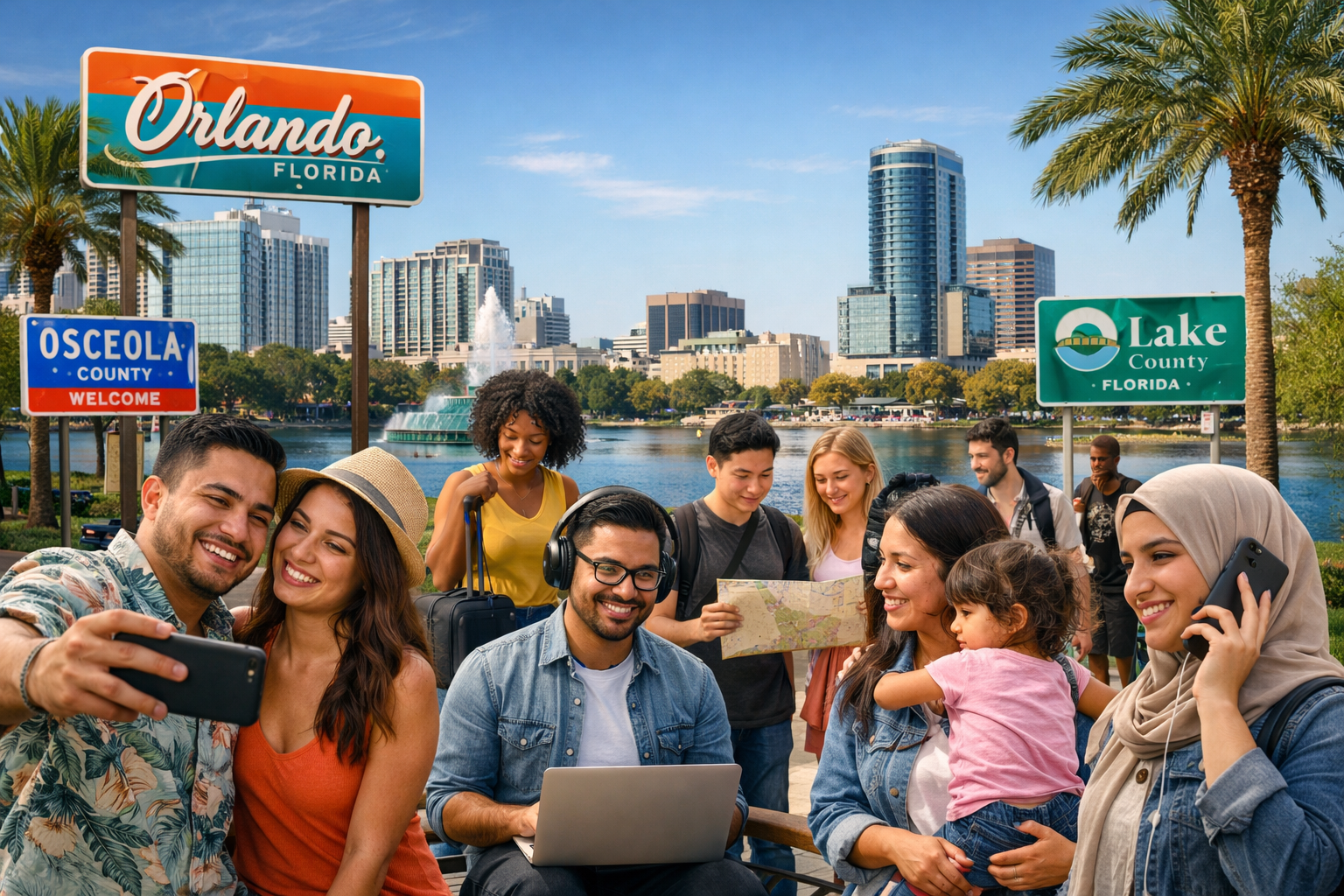
Orlando Is Approaching 3 Million People. Is Your Marketing Keeping Up With Who's Actually Moving Here?
Orlando's population just hit nearly 2.96 million — and the region is on the verge of a milestone that would have seemed extraordinary a decade ago. But the headline number isn't the most important part of the story for local businesses. The most important part is who those people are. Since 2020, 65% of Orlando's population growth has come from international migration. More domestic residents left the region than arrived in 2025. The fastest-growing counties are Osceola and Lake — not Orange or Seminole. And the newcomers arriving every week are younger, more diverse, more digitally native, and more multilingual than the customer base most Orlando businesses were built to serve. If your marketing hasn't been updated to reflect that shift, you're not marketing to Orlando. You're marketing to a version of Orlando that no longer exists.
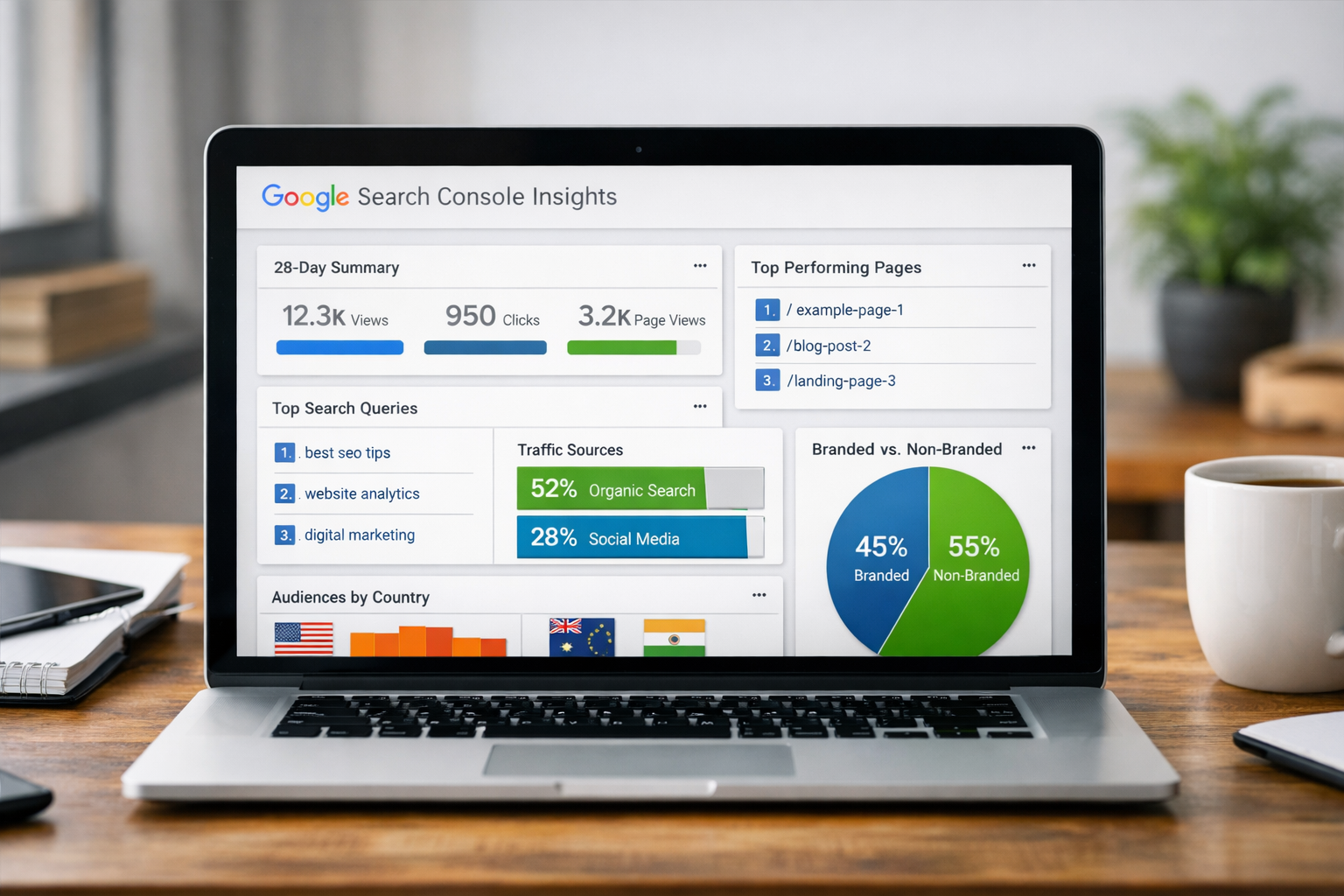
What Is Google Search Console Insights — And What Does Your Data Actually Mean?
If you've ever logged into Google Search Console and clicked on the "Insights" tab, you've seen a dashboard that looks deceptively simple. A handful of numbers. A few top-performing pages. Some queries. A country breakdown. A branded versus non-branded traffic split. It's easy to glance at it, feel vaguely good or vaguely concerned, and move on without extracting anything actionable from it. That's a mistake — because Search Console Insights, read correctly, is one of the most honest performance reports your website produces. It tells you exactly how the internet is finding you, what content is resonating, and where your search visibility is growing. This post breaks down what every metric means and what your data is actually saying about your growth trajectory.
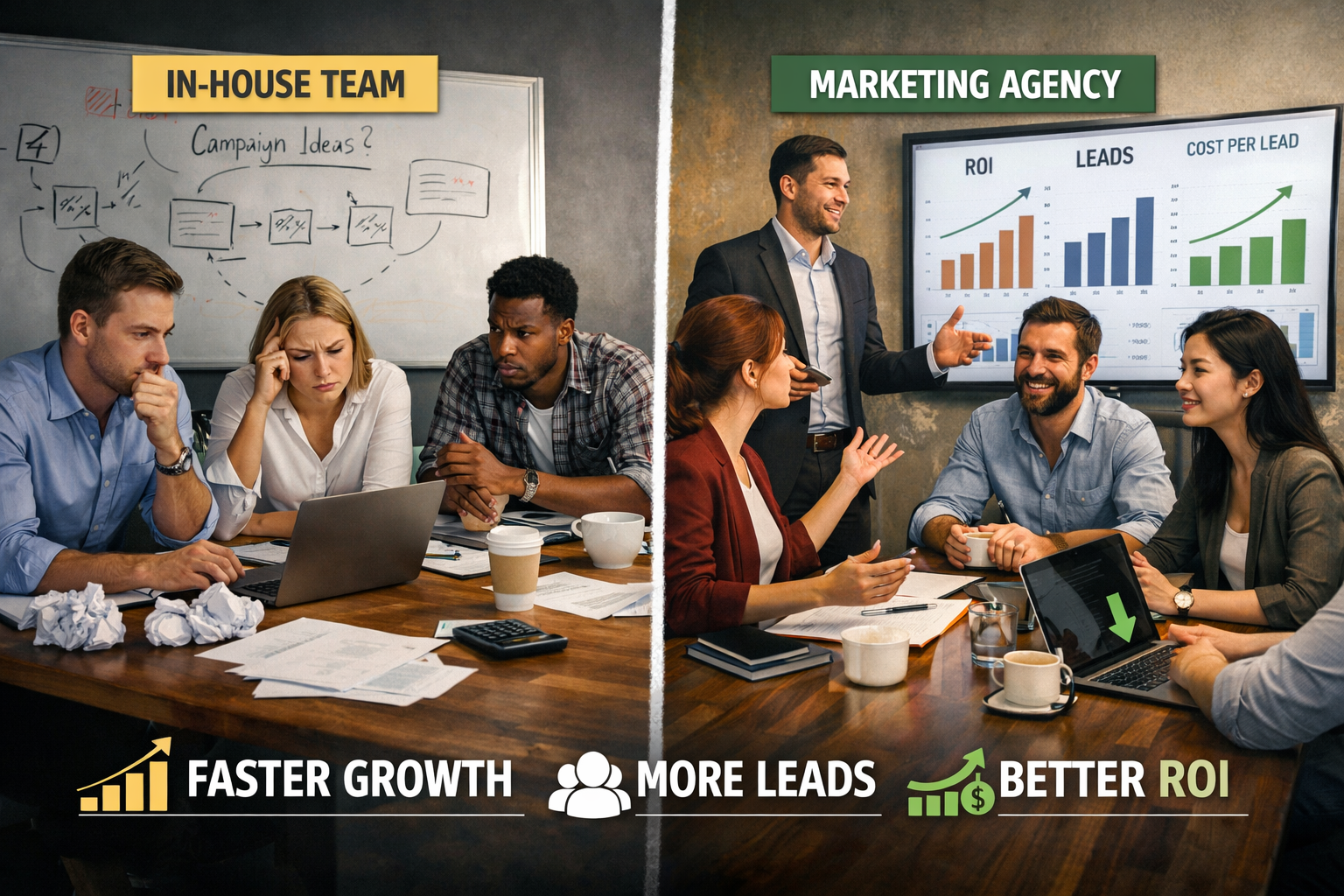
Why Companies That Retain Marketing Agencies Scale Faster, Generate More Leads, and Pull Ahead of Competitors
There is a version of the in-house marketing debate that gets had in boardrooms every year, and it almost always starts the same way. Someone says: "Do we really need an agency? Can't we just hire a few people and handle this ourselves?" It's a reasonable question on the surface. But the data tells a very different story. Companies that outsource marketing and lead generation achieve up to 43% better ROI than in-house efforts, save an average of 25% on marketing costs, and generate leads at a 30–40% lower cost-per-lead. The gap between businesses that get this right and those that don't is measurable, growing, and increasingly difficult to close.
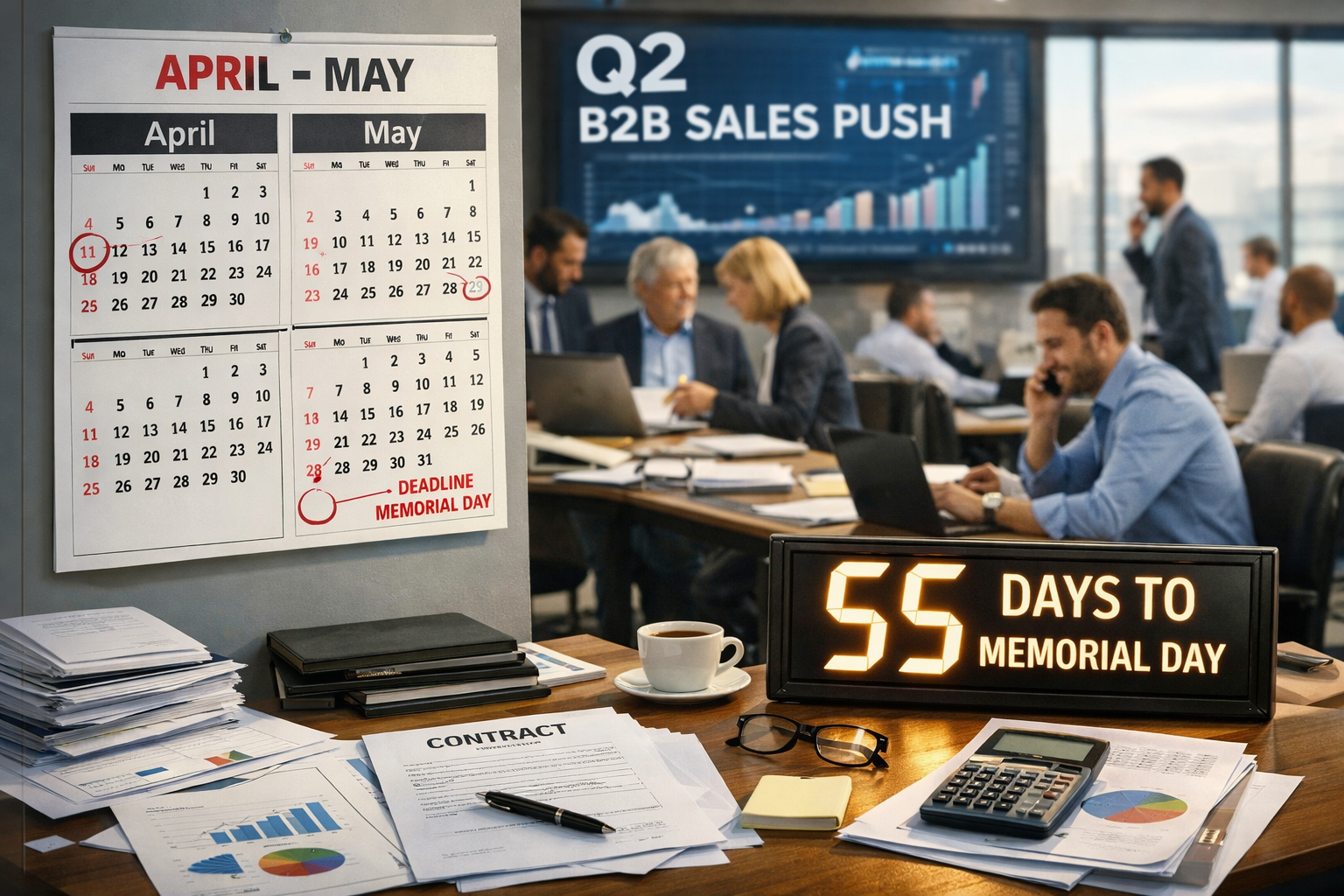
The Window Is Open: Why April 1 to Memorial Day Is the Most Important B2B Push of the Year
There is a window in every business year that separates the companies that hit their numbers from the ones that spend Q3 wondering what happened. It opens on April 1st. It closes on Memorial Day weekend. Fifty-five days. Eight working weeks. The single most concentrated period of B2B deal-making, contract signing, partnership activation, and pipeline conversion in the entire calendar year — and most organizations are either not treating it with the urgency it deserves, or they're walking into it with a Q1 that didn't deliver what it was supposed to.

Tableau Conference 2026: Why TC26 Is the Most Important Data Event of the Year
There are conferences that recap what happened. And there are conferences that define what happens next. Tableau Conference 2026 is firmly in the second category. Taking place May 5–7 in San Diego, TC26 is built around one of the most significant shifts in enterprise analytics in a decade — the move from passive, report-based business intelligence to proactive, AI-driven insight and action. Whether you run on Salesforce CRM, use Tableau for reporting, or simply need to understand where business intelligence is heading, this is the event where the next chapter gets written.

Worth Just Raised $30 Million in Orlando. What the Local Tech Boom Means for B2B Marketing.
On March 24, 2026, Orlando-founded fintech company Worth announced a $30 million Series A — the latest milestone for a startup built by the same founders who turned Stax into a billion-dollar unicorn right here in Central Florida. The funding round is impressive on its own terms. But for Orlando B2B businesses paying attention, the bigger story isn't the check size. It's what it signals about the competitive landscape every company that sells to other businesses in this region now operates in. Orlando's tech ecosystem is maturing fast — and the buyers emerging from it are more sophisticated, more digitally native, and harder to reach through traditional relationship-based marketing than anything Central Florida has seen before.
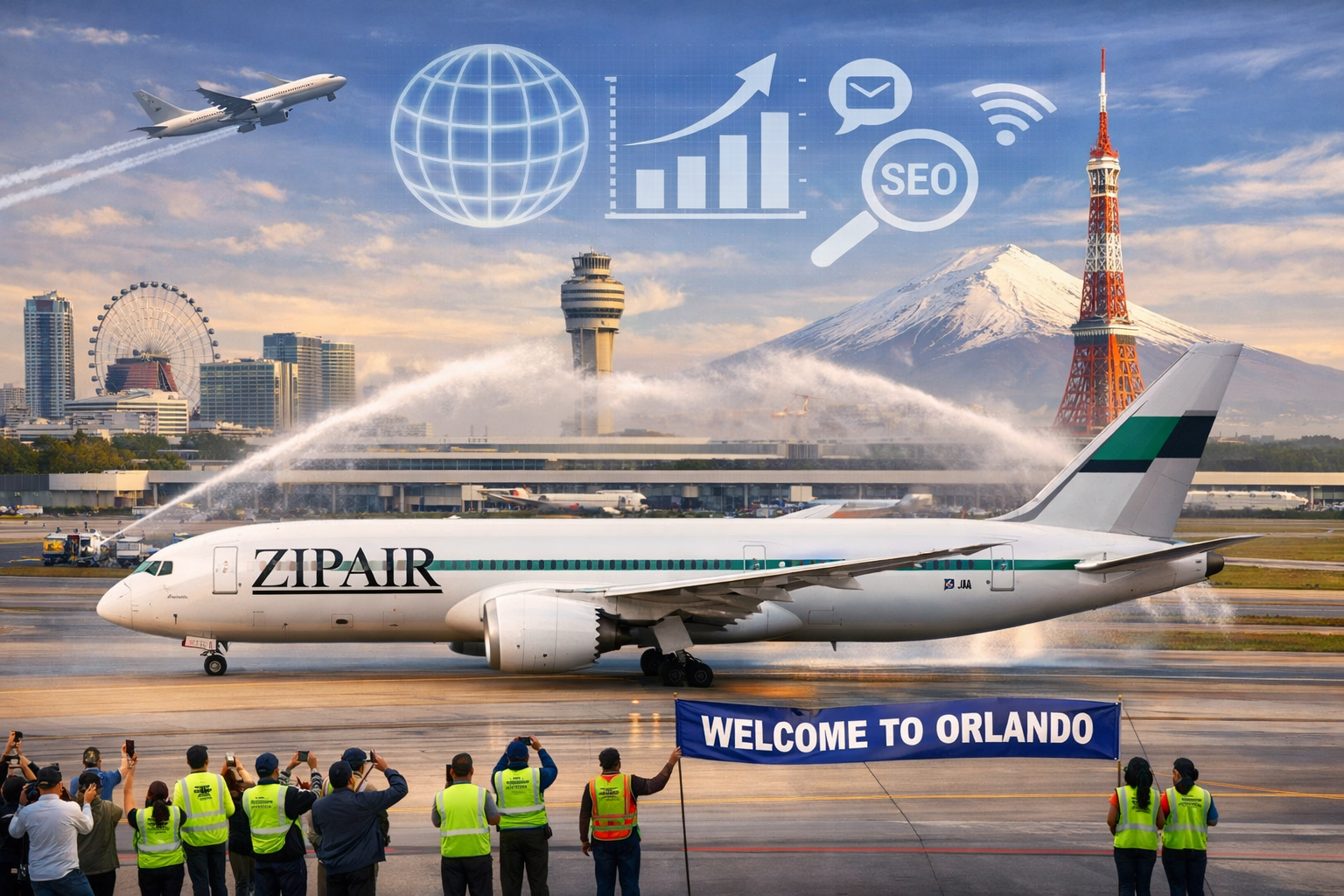
Orlando Got Its First Nonstop Flight to Asia. Your Digital Marketing Should Think Globally Too.
On February 23, 2026, a ZIPAIR flight from Tokyo touched down at Orlando International Airport for the first time in history — marking Florida's first ever nonstop connection to the Asia-Pacific region. For aviation fans, it was a milestone. For Orlando business owners paying attention, it's something more: a clear signal that Orlando is no longer just a great American city. It is becoming a global one. And if your digital marketing strategy is still thinking locally, you are already behind.
Orlando Just Became a $233 Billion Economy — Is Your Digital Marketing Keeping Up?
Orlando is now a $233 billion economy — one of the largest in the country — and it didn't get there by slowing down. Four consecutive years of growth outpacing the U.S. average has brought record job creation, tens of thousands of new residents, and a wave of nationally recognized companies planting flags right here in Central Florida. All of that growth is good news. But for established Orlando businesses that haven't seriously invested in their digital presence, it's also a warning. More growth means more competition — and the new players coming into this market aren't arriving without a marketing strategy.
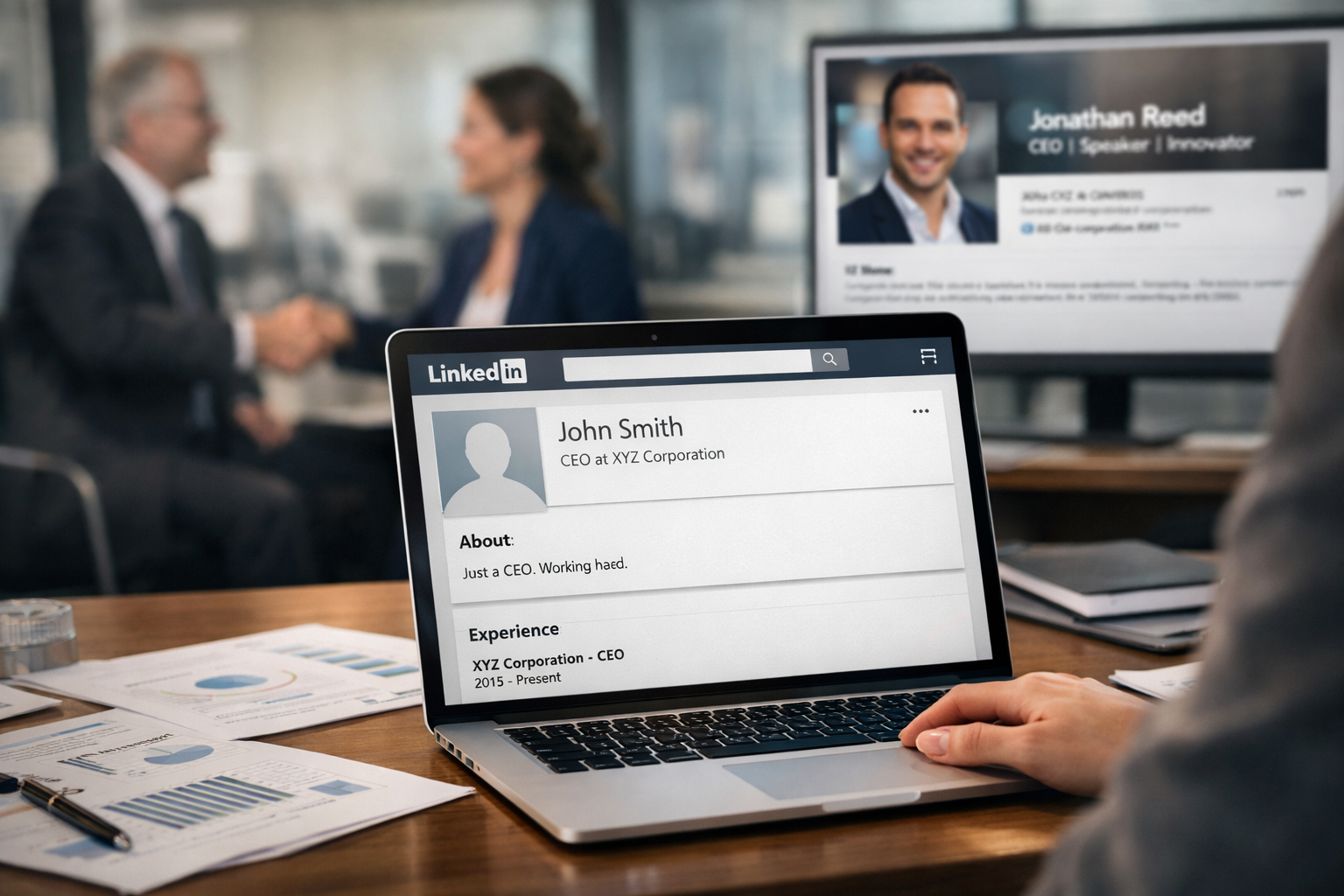
The Invisible Tax of a Weak CEO LinkedIn Profile
There's a cost your business is paying that never shows up on a balance sheet. It won't get flagged in an audit or caught in a quarterly review. But it's real — and it compounds every month in deals that didn't close, partnerships that never materialized, and candidates who chose a competitor whose leader simply looked more credible online. The source isn't your product, your pricing, or your marketing. It's your CEO's LinkedIn profile.
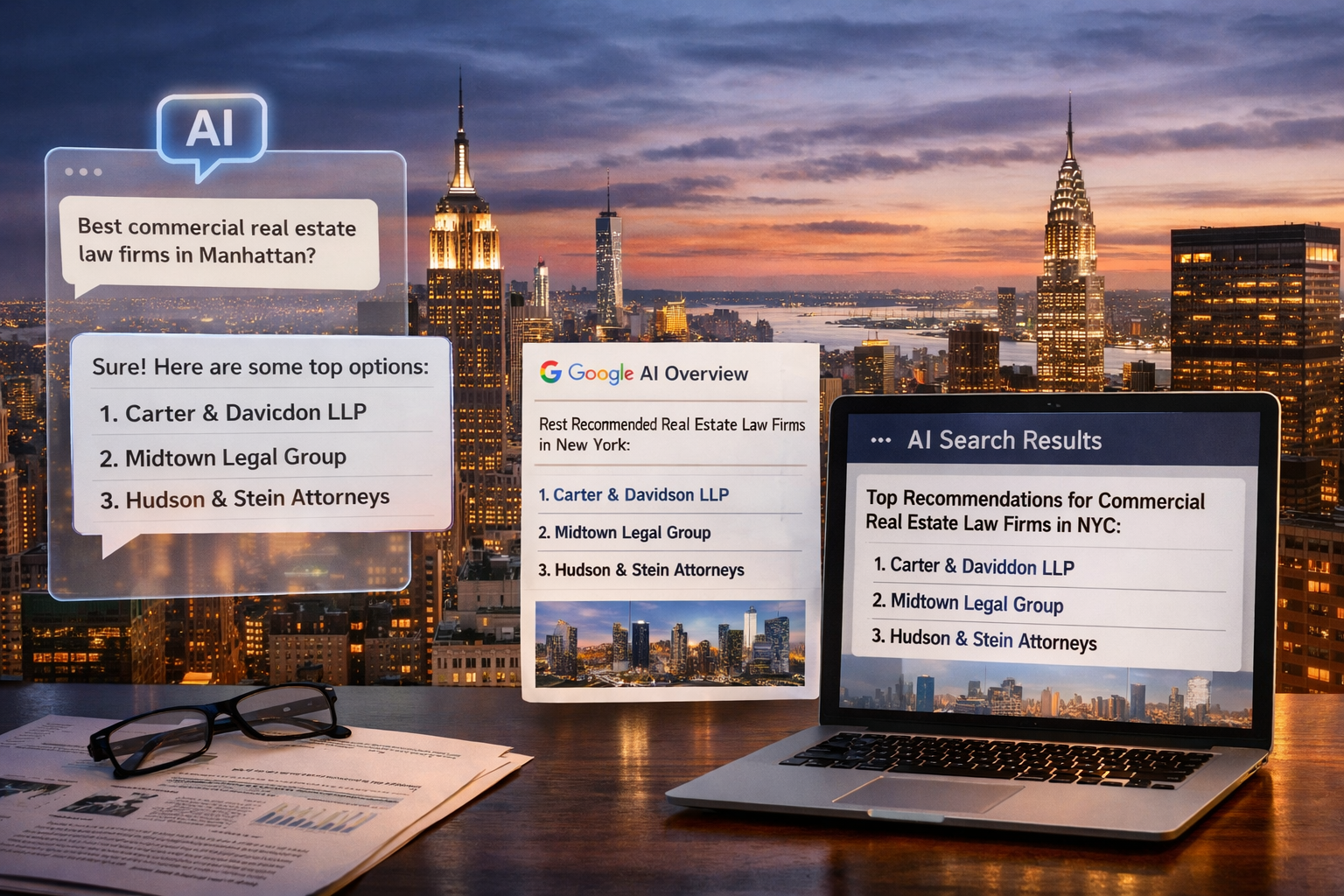
GEO vs. SEO: How New York Businesses Should Think About Getting Found in AI Search in 2026
Something fundamental has shifted in how your potential clients find information — and most New York businesses are optimizing for a version of search that is no longer the complete picture. A growing share of qualified buyers aren't scanning Google's blue links anymore. They're asking ChatGPT to recommend a law firm that handles commercial real estate in Manhattan. They're reading a Google AI Overview that names two or three brands without linking to anyone else. Generative Engine Optimization — GEO — is the practice of getting your brand cited in those answers. This post explains what it is, how it differs from SEO, why they're complementary rather than competitive, and exactly what New York businesses should do about it now while the competitive field is still open.
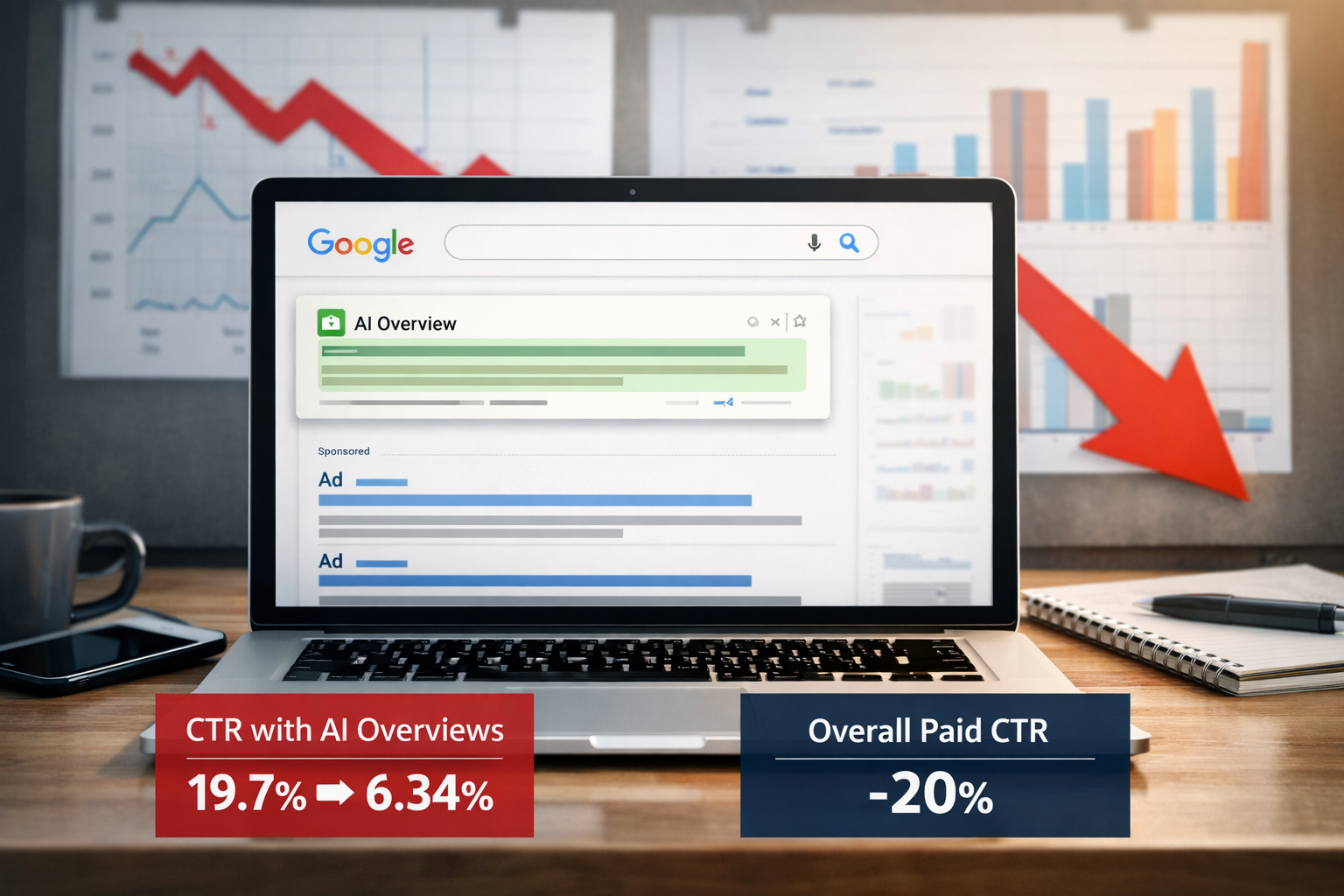
Why Your Google Ads Click-Through Rate Dropped in 2025 — And What's Different in 2026
If you've been running Google Ads and noticed your click-through rates declining through 2025 — and that the decline accelerated sharply in July — you're not looking at an underperforming campaign. You're looking at a structural change in how Google search works that affects every advertiser on the platform. Paid CTR on queries with AI Overviews dropped from 19.7% to 6.34% between June 2024 and September 2025 — a 68% collapse. And even on queries without AI Overviews, paid CTR still fell 20%. This post gives you the specific diagnosis, the data behind it, and the concrete adjustments that New York businesses need to make right now.
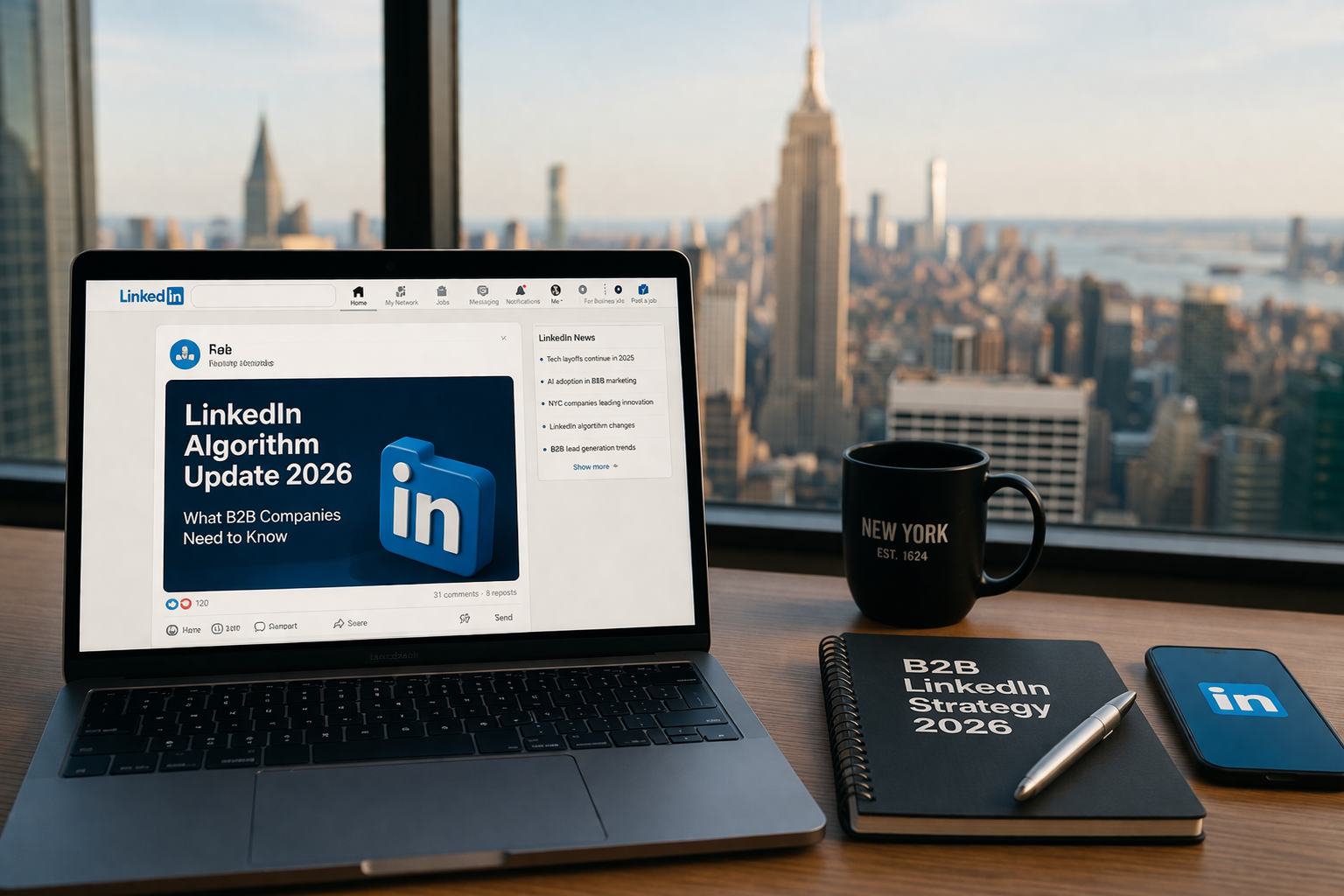
LinkedIn Just Changed Its Algorithm Again — Here's What New York B2B Companies Need to Know
If your LinkedIn content stopped performing the way it used to sometime in the second half of 2025, you're not imagining it. Views are down 50% year-over-year. Company page organic reach has fallen to just 1.6% of followers. A new AI foundation model called 360Brew has replaced thousands of LinkedIn's old ranking systems with a single engine that reads content like a human editor — rewarding genuine expertise, penalizing coordinated engagement, and actively detecting AI-generated posts. This post breaks down exactly what changed, what the new algorithm actually rewards, and what New York B2B companies need to do differently to stay visible on the platform that still dominates professional lead generation.

What the 2026 NYC Business Climate Means for Your Marketing Budget
Generic national marketing advice rarely accounts for the city you're actually operating in. The 2026 New York City economy is a specific and genuinely interesting moment — Wall Street bonuses at record levels, healthcare the only sector with meaningful job growth, new business formation at a five-year low, inflation running above the national average, and an office market recovery building toward what looks like an expansion cycle in high-wage industries. Each of those facts creates a specific implication for how New York businesses should be thinking about marketing investment right now. This post connects the real economic data to practical budget decisions.
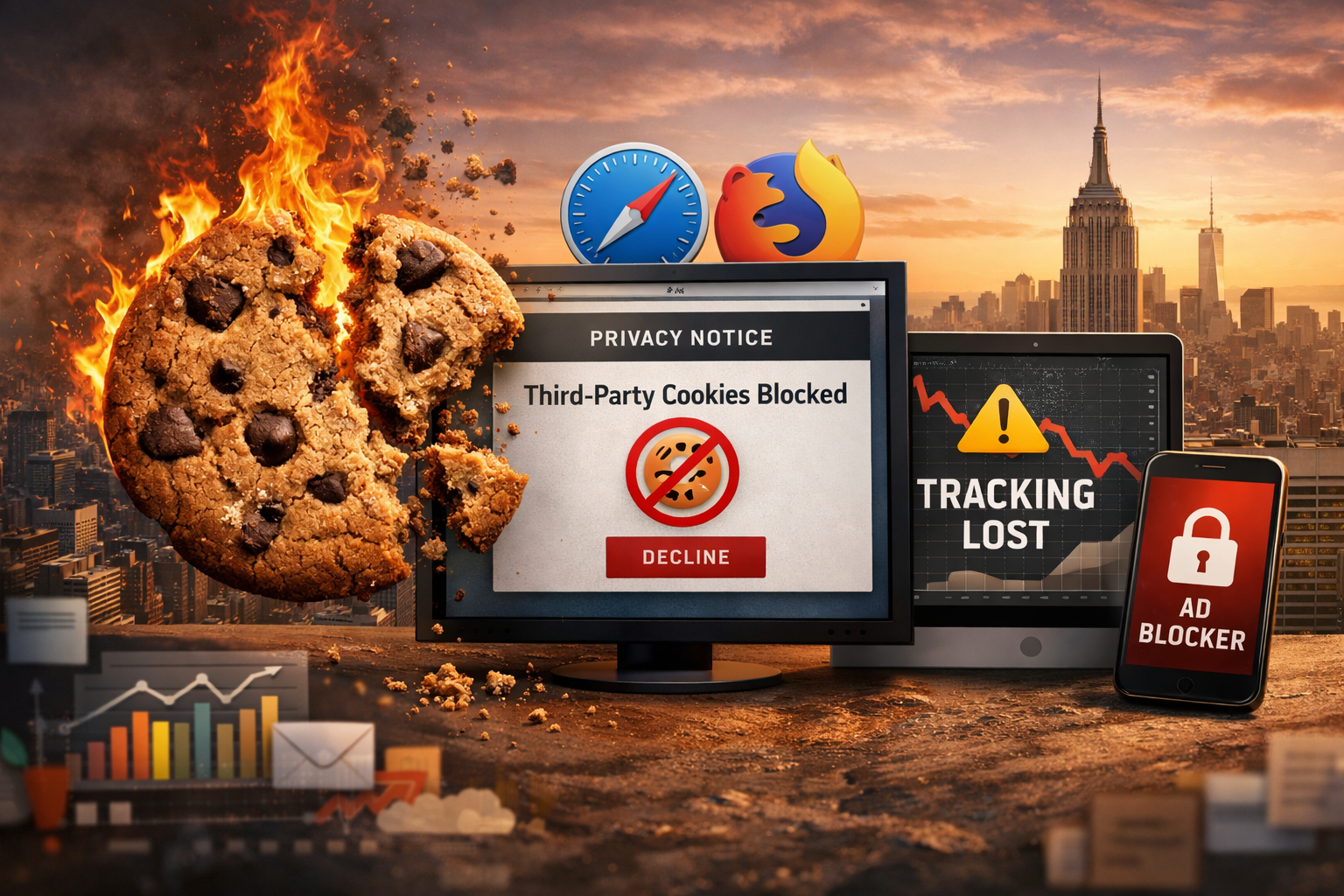
The Third-Party Cookie Is Dead (Sort Of) — What New York Marketers Need to Do Next
Few topics in digital marketing have generated more confusion over the past four years than third-party cookies. Google was going to kill them. Then they weren't. Then sort of. Most business owners tuned out somewhere around the third delay announcement and went back to running their campaigns the same way they always had. Here's the problem with tuning out: the resolution is not "everything is fine, nothing changed." Safari has blocked third-party cookies since 2020. Firefox since 2022. Add ad blockers and cookie consent declines, and roughly 30 to 40% of your audience is already invisible to your cross-site tracking — right now, regardless of what Google did. This post explains what actually happened, what it means for your campaigns, and exactly what to do about it.
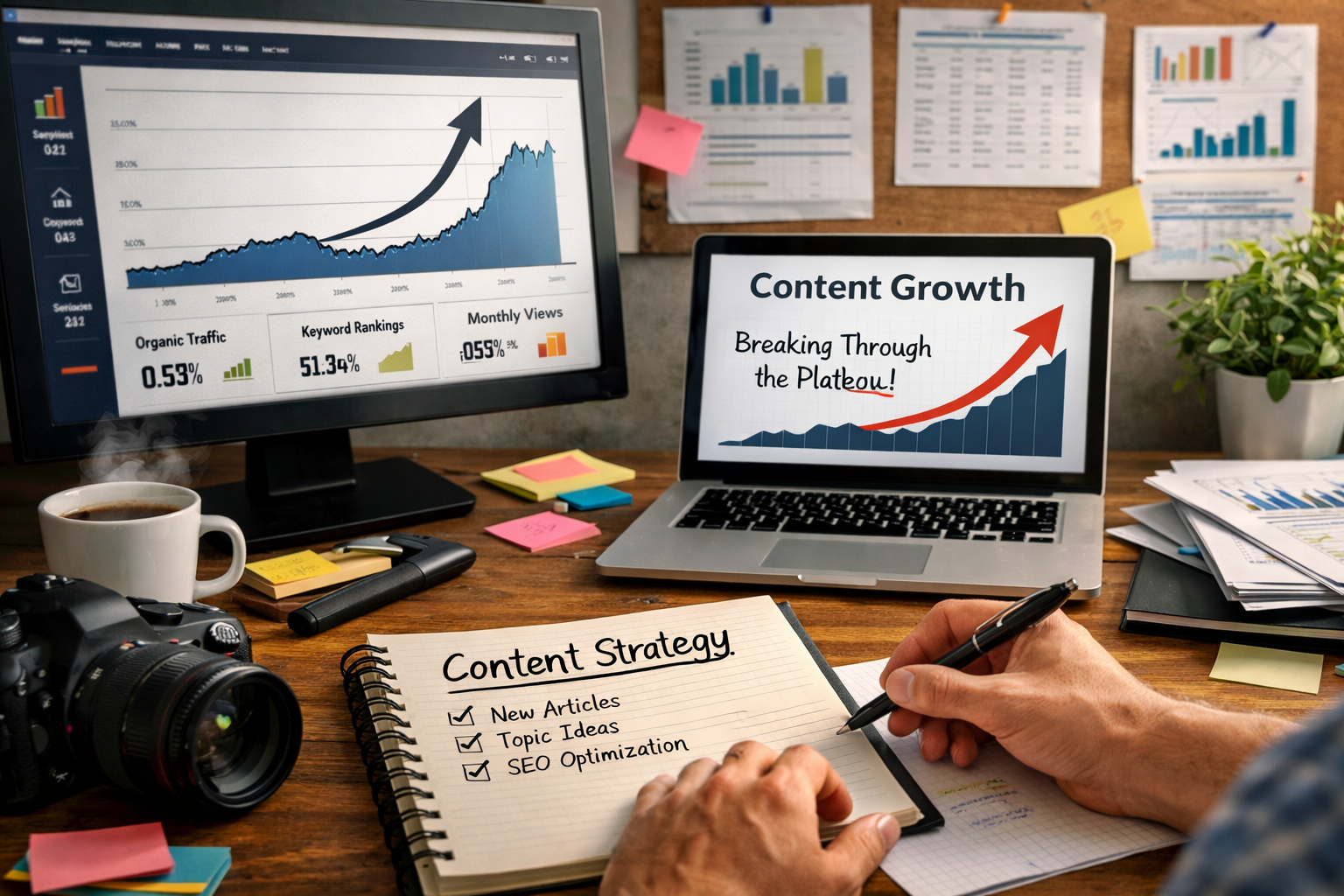
The Case for Publishing More Content — Even When Your SEO Has Plateaued
At some point in almost every content marketing program, the same thing happens. The early months produce real momentum — traffic climbing, keywords ranking, the dashboard finally showing something to be proud of. Then it slows. The curve flattens. And the question that follows is almost universal: is it still worth publishing? It's a reasonable question. Content takes time, money, and creative energy. But here's what the data consistently shows: the plateau is almost never a signal to stop. It's usually the exact moment right before the compounding begins. And the businesses that quit during it are handing their competitors the most valuable gift available in organic marketing.
Is TikTok Dead for B2B — Or Is There Actually a Play Here for New York Businesses?
For two years, every New York business owner with a TikTok account asked the same question: should I even bother? The platform spent 2025 in legal limbo — briefly shut down, restored by executive order, operating under permanent ban threat while a deal was negotiated behind closed doors. That uncertainty is now resolved. TikTok closed its U.S. ownership deal in January 2026 and the ban has been permanently averted. So the existential question has an answer. The more interesting question for New York B2B businesses is the strategic one: with 170 million U.S. users, an engagement rate 8 times higher than Instagram, and nearly half of corporate decision-makers on the platform weekly — is there actually a play here for companies selling professional services, technology, finance, and real estate? The honest answer is more nuanced than either the enthusiasts or the skeptics want to admit.
AI Ad Spend Is Exploding — But Are New York Businesses Getting Real ROI?
Google and Meta want you to hand your entire ad budget to their AI and trust the machine. For large advertisers with massive data sets and armies of specialists, that pitch is largely true. For the typical New York small to mid-size business spending $5,000 to $15,000 a month in one of the most expensive advertising markets in the country, the reality is considerably more complicated. Independent research shows Performance Max underperforms Search campaigns on conversion rate 84% of the time for lead generation accounts. Meta attribution inflates results by 30 to 60% compared to true incremental impact. And the structural tension at the heart of all of it — the platforms' interests and your interests are not the same — is the thing most AI advertising coverage conveniently skips. This post doesn't.
Generative AI Is Writing Everyone's Content Now — Here's How New York Businesses Can Still Stand Out
The tool that was supposed to give every business a competitive edge in content has become so universally adopted that it's erasing competitive edges instead of creating them. 97% of content marketers plan to use AI for content creation in 2026. Your competitors are using the same tools, trained on the same data, producing variations of the same answers to the same questions. The result is a web flooded with competent-but-generic content — and Google has noticed, AI citation systems have noticed, and your buyers have absolutely noticed. This post breaks down what AI genuinely cannot do, how to use it without losing the human authority that makes content worth ranking and acting on, and what a differentiated content strategy looks like in practice for New York businesses.
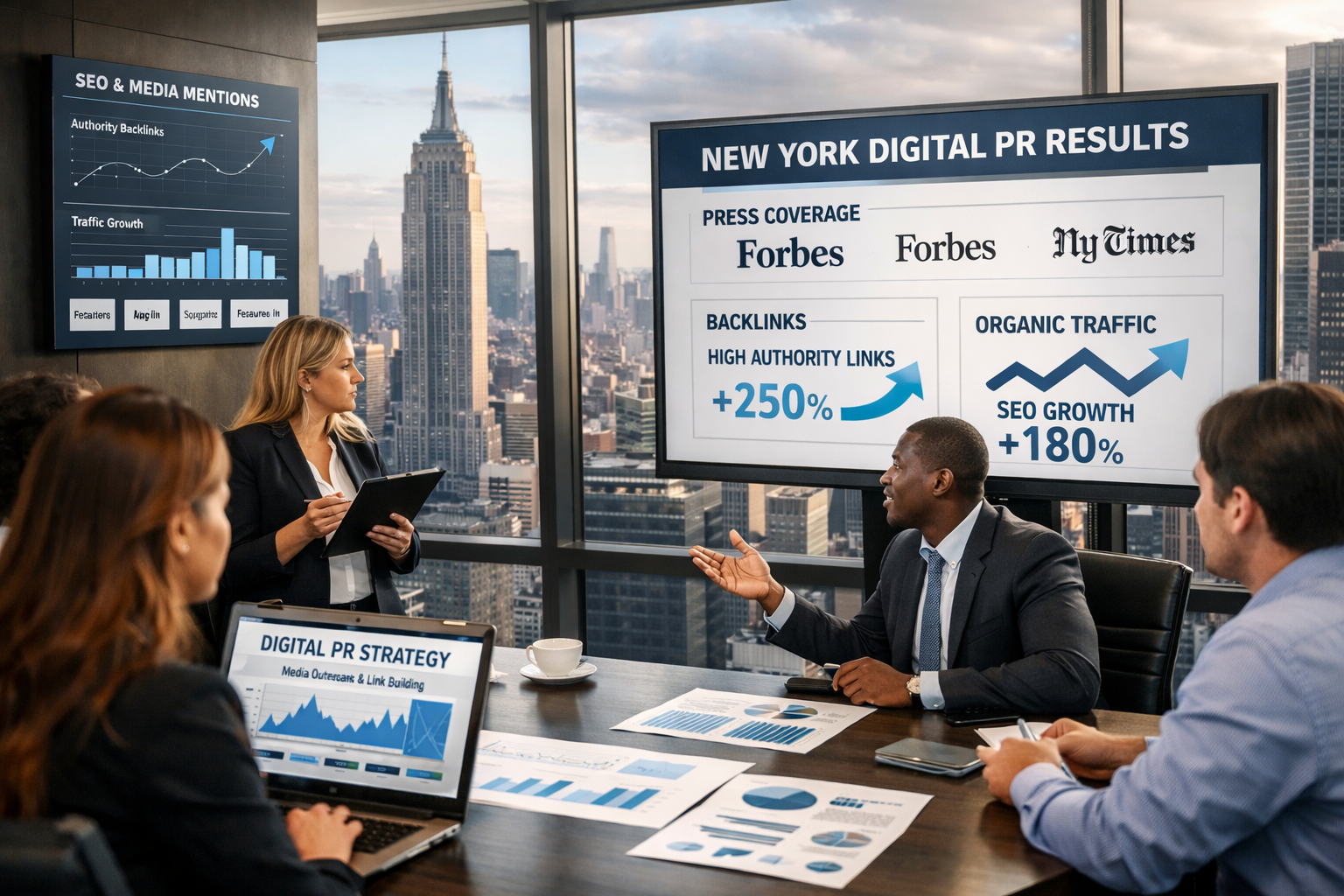
Why New York's Most Competitive Businesses Are Investing in Digital PR Right Now
There's a strategy shift happening among New York's most competitive businesses that most owners haven't noticed yet. The highest-performing companies in the most competitive markets are moving budget away from generic content production and toward digital PR — the deliberate work of earning editorial coverage, brand mentions, and high-authority backlinks from legitimate publications. This isn't about vanity press coverage. It's driven by two converging forces rewriting the rules of digital visibility in 2026: Google's ability to distinguish authoritative brands from commodity content, and AI-generated search that rewards third-party credibility above everything else. Here's why it matters, what the data says, and what it looks like in practice for New York businesses.
What Google's AI Overviews Mean for Your New York Business Right Now
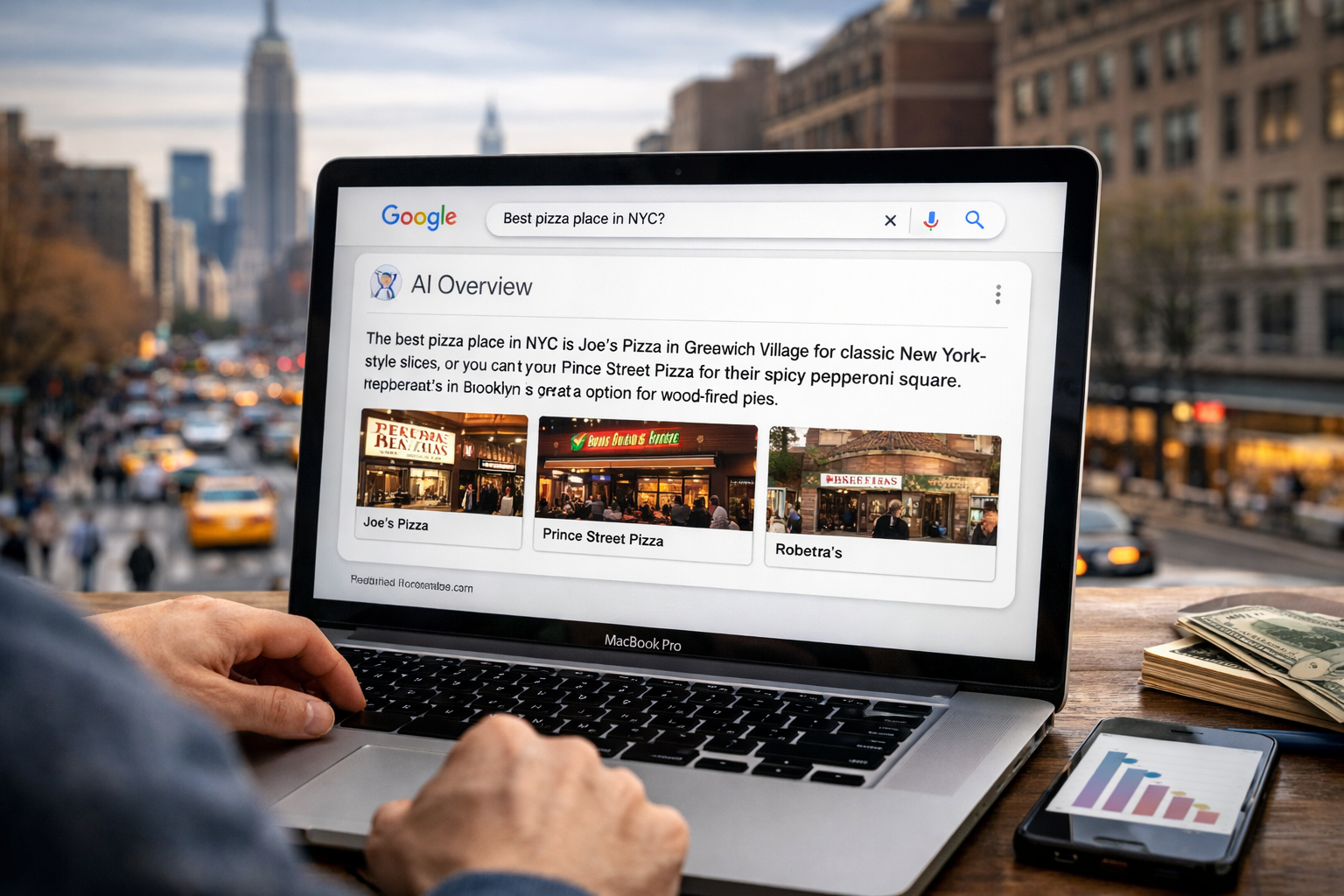
Something changed on Google and most New York business owners either didn't notice or don't yet understand what it means for them. A new AI-generated summary box now sits at the top of search results for roughly one in four Google searches — answering questions directly so users never need to click anywhere. If your business isn't cited in that box, you're losing traffic you don't even know you're losing. This post breaks down what Google's AI Overviews actually are, how badly they're hitting organic and paid clicks, which New York businesses are most exposed, and exactly what to do right now to protect your visibility and get into Google's AI citation pool before your competitors do.