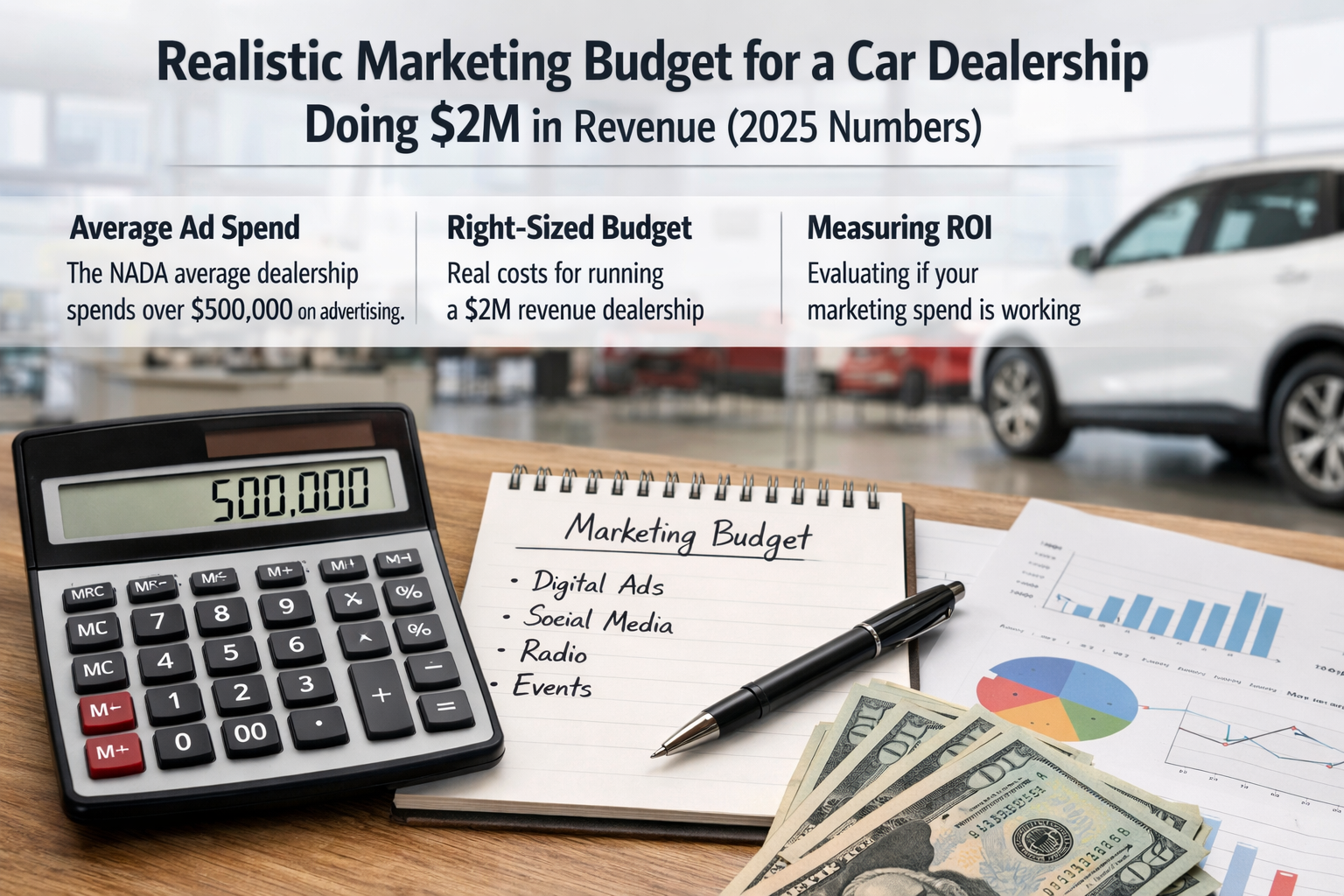
What's a Realistic Marketing Budget for a Dealership Doing $2M a Year in Revenue?
The NADA average dealership spends over $500,000 on advertising. That number is built around franchise operations doing ten to fifty times your volume and has almost nothing to do with running a $2M dealership. This guide gives you the actual math: what a realistic budget looks like at your revenue tier, what each channel costs and produces, and how to evaluate whether your marketing spend is actually working.

How Construction Companies Should Market Their Safety Record — and Why It Wins More Work Than Almost Anything Else
Every construction company says safety is their top priority. The phrase is on more hard hats and website headers than any other line in the industry. And it means essentially nothing — because it's a claim, not evidence. This guide is for contractors who have actually built a genuine safety record and want to communicate it in a way that wins bids, qualifies for better projects, and builds the kind of reputation that gets you called before work goes to bid.
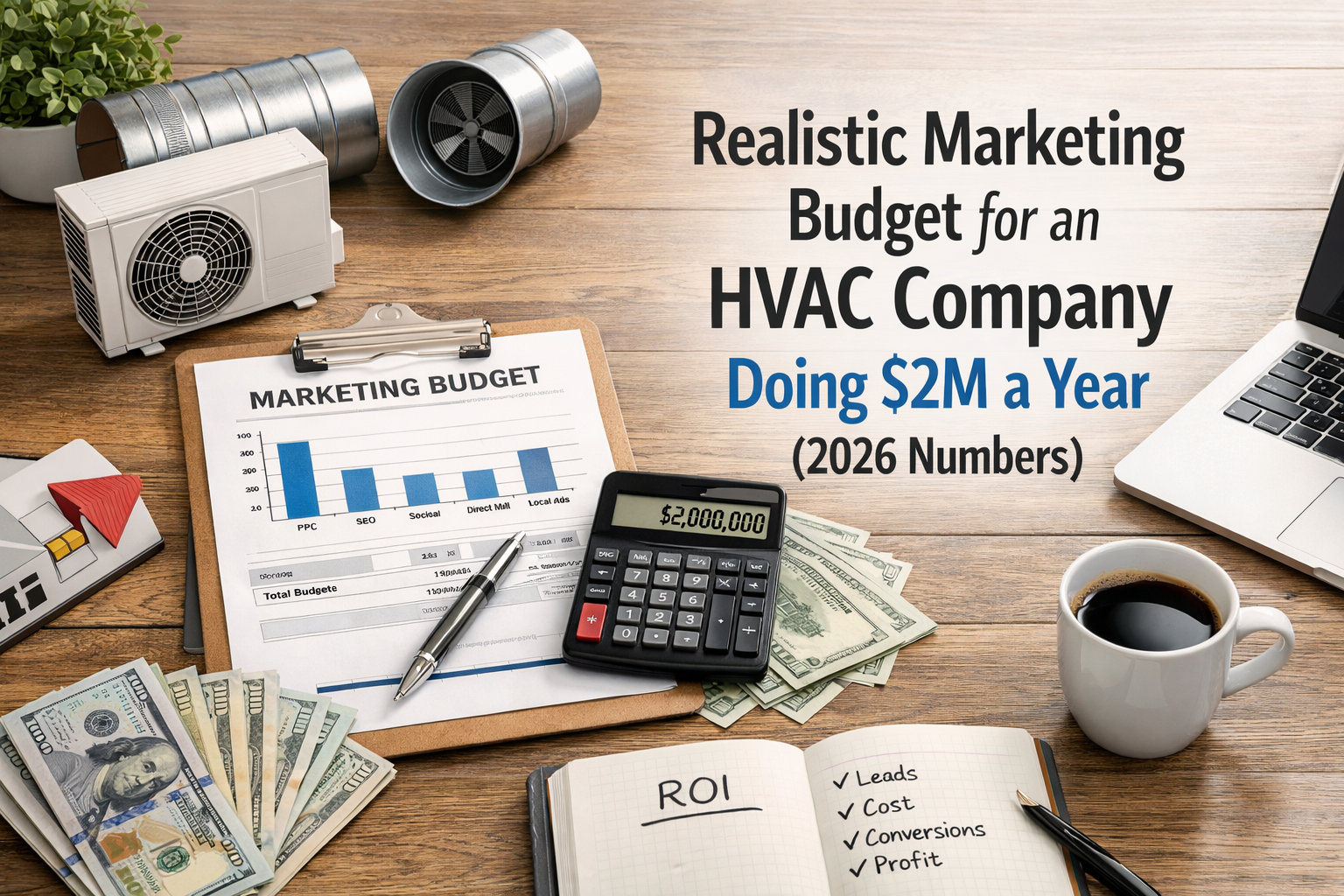
What's a Realistic Marketing Budget for an HVAC Company Doing $2M a Year in Revenue?
If you run an HVAC company doing $2 million a year and you've tried to find a straight answer on marketing budget, you've gotten vague percentages or vendor pitches. This guide gives you the real numbers: what the industry data says, what each channel costs at your revenue level, what your money actually buys, and how to think about ROI before committing to anything.

How Do I Fire My Marketing Agency and Switch Without Losing Everything?
You've made the decision to leave your marketing agency. Now comes the part that feels more complicated than it should — how do you actually end this without losing your website, your Google Ads history, your SEO rankings, or your data? This guide walks through every step of a clean agency transition, in order, including the uncomfortable ones most people get wrong.
What Does a Marketing Agency Actually Do Day-to-Day? What Am I Paying For?
You're paying a marketing agency every month and you're not entirely sure what's happening on the other end of that invoice. Reports come in. Calls happen. Things seem to be moving. But what exactly are they doing all day? This is the most honest answer you'll find — a real account of what agency work looks like week by week, what your retainer actually pays for, and how to tell the difference between an agency that's genuinely moving the needle and one that's just staying busy with your money.

AI Image Generation Prompts That Actually Work: A Visual Vocabulary Guide for Small Business Owners
Most people describe what they want in an AI image — the subject, the object, the scene. But what separates a forgettable output from one that actually fits your brand is describing how it should look. The lighting, the mood, the color palette, the era. This guide teaches you that visual vocabulary — organized by aesthetic style — with ready-to-use prompt descriptors and real small business applications for each.
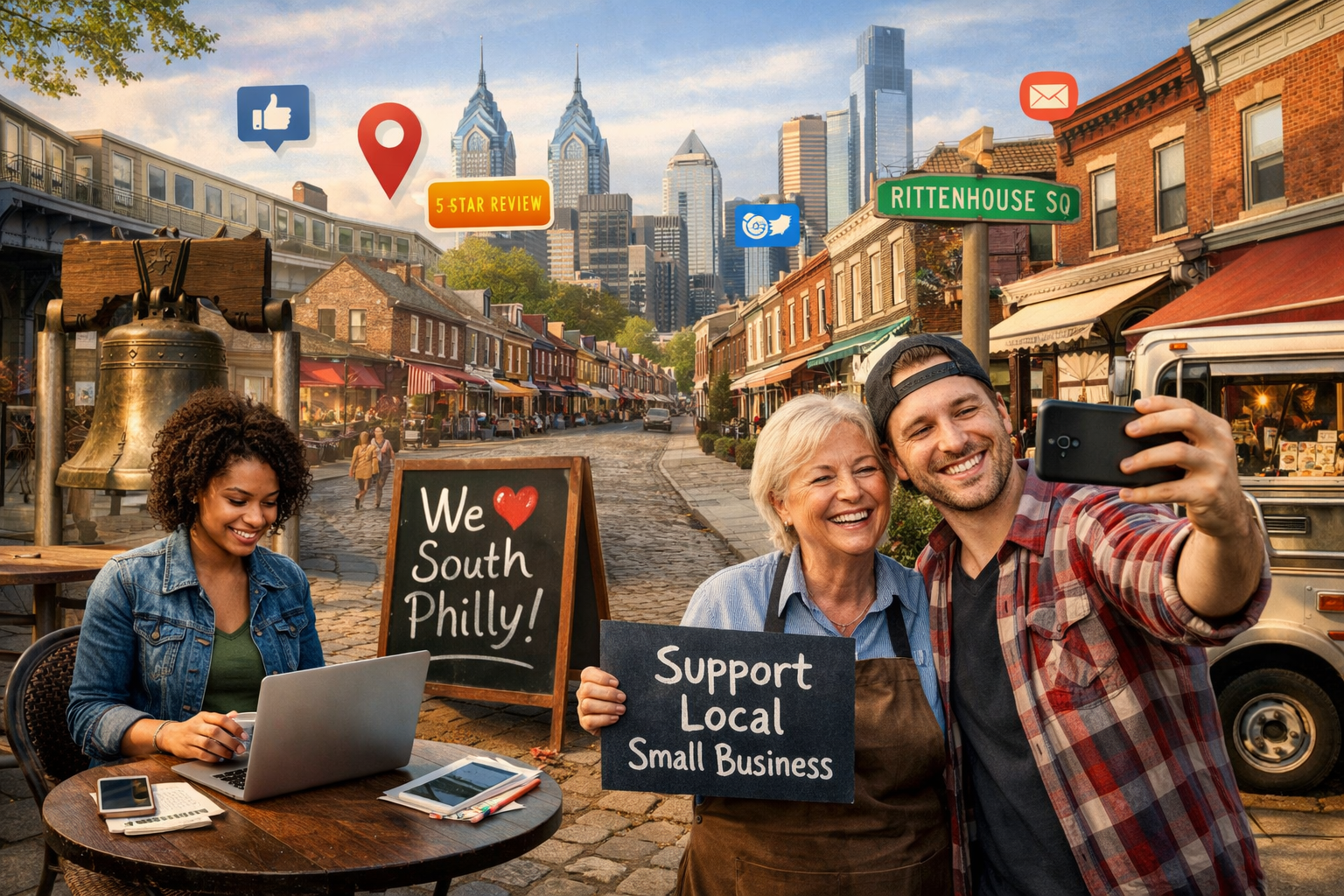
How Do Small Businesses in Philadelphia Find Clients Online Without a Big Budget?
Philadelphia isn't one city — it's Fishtown and Frankford, Rittenhouse Square and Roxborough, South Philly and the Northeast. Generic marketing advice doesn't fit. This guide gives Philly small business owners a ground-level, neighborhood-specific playbook for getting found online by the customers in their community who are already looking for what they offer — without spending a fortune.
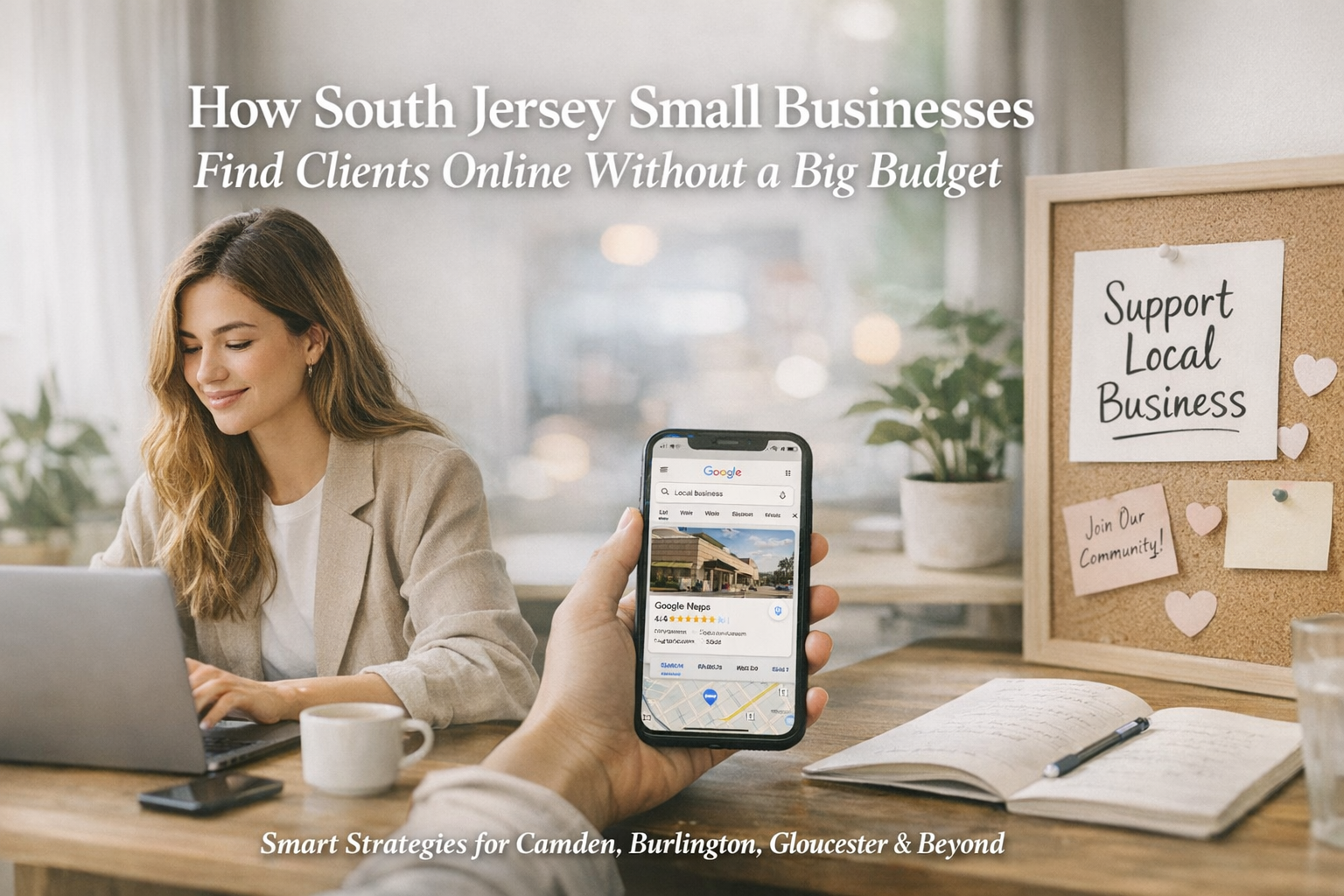
How Do Small Businesses in South Jersey Find Clients Online Without a Big Budget?
You don't need a big budget to find clients online in South Jersey. You need the right moves in the right order. This guide gives small business owners across Camden, Burlington, Gloucester, Atlantic, and Salem Counties a ground-level playbook for getting found by the people in their community who are already looking for what they offer — from Google Business Profile optimization to local Facebook groups to building the kind of online reputation that turns neighbors into loyal customers.
What Questions Should I Ask Before Hiring a Marketing Agency?
You've got a sales call with a marketing agency. They have this conversation every day. You don't. The standard questions aren't enough — because a good agency has prepared answers for all of them. This guide gives you the questions that reveal what you actually need to know, organized by what they're designed to uncover, and tells you exactly what a good answer sounds like versus a confident non-answer.

Do I Need a Full-Service Marketing Agency, or Just SEO / Just Paid Ads?
Every agency has an incentive to sell you their full suite. Every specialist has an incentive to tell you their channel is the only one that matters. Neither answer is automatically right for your business. This guide gives you the actual framework for thinking this through — what full-service vs. specialized agencies really offer, what SEO and paid ads each do and don't do, and the diagnostic questions that will tell you what your business genuinely needs right now.
What's the Difference Between a Marketing Agency and a Marketing Consultant?
You know you need marketing help. But then the options multiply: agency, consultant, fractional CMO. Each one sounds plausible, each one costs real money, and the industry makes it more confusing than it needs to be. This guide cuts through the noise with a clear, honest breakdown of what each model actually does, where they genuinely differ, and how to figure out which one matches where your business is right now.
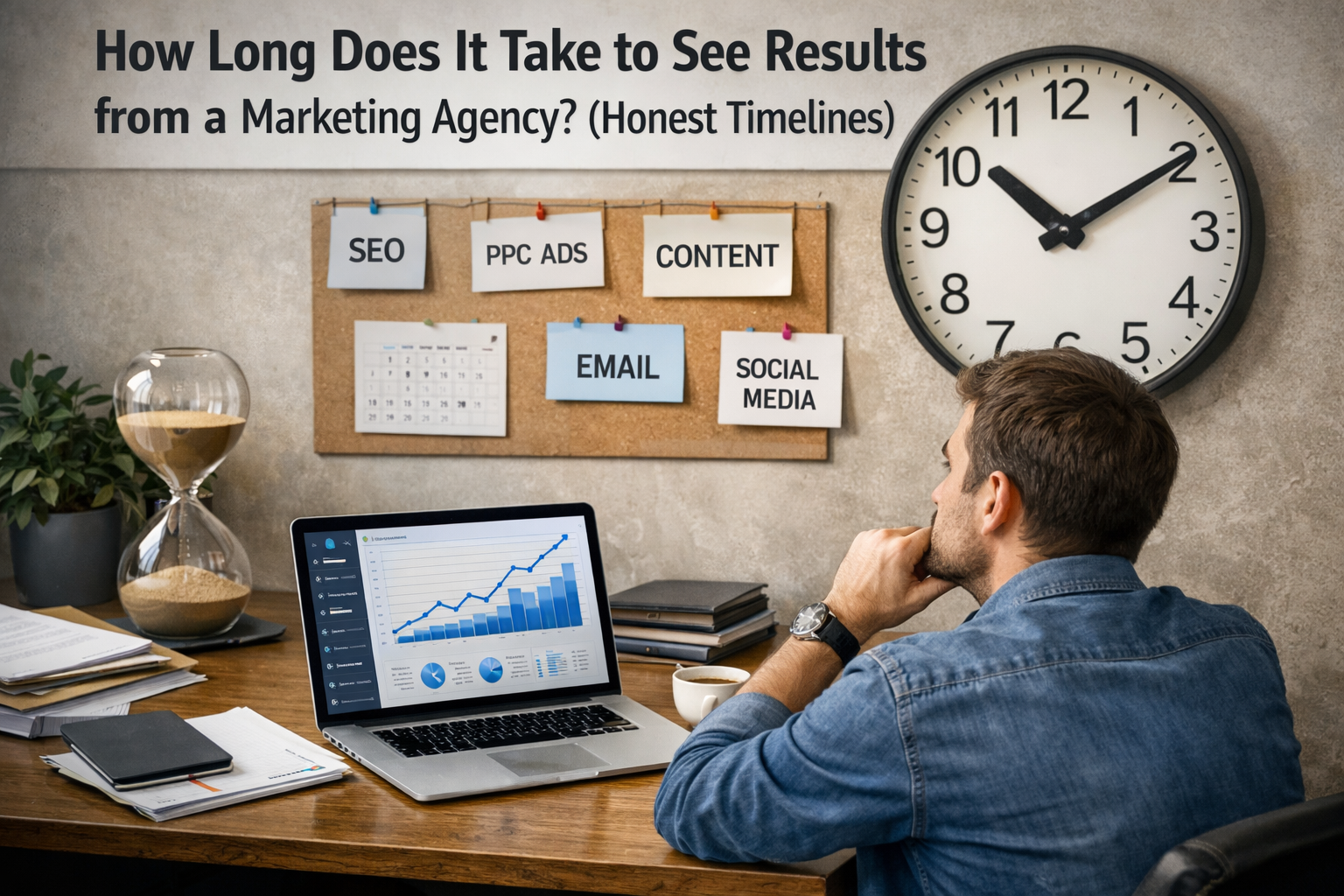
How Long Does It Take to See Results from a New Marketing Agency?
You signed the contract. You sat through the kickoff call. Now you're waiting — and wondering how long this is actually going to take. Most agencies give vague answers designed to manage expectations without committing to anything. This guide gives you the real answer: channel-by-channel timelines for paid ads, SEO, content, email, and social, plus a clear framework for knowing when to wait and when to worry.
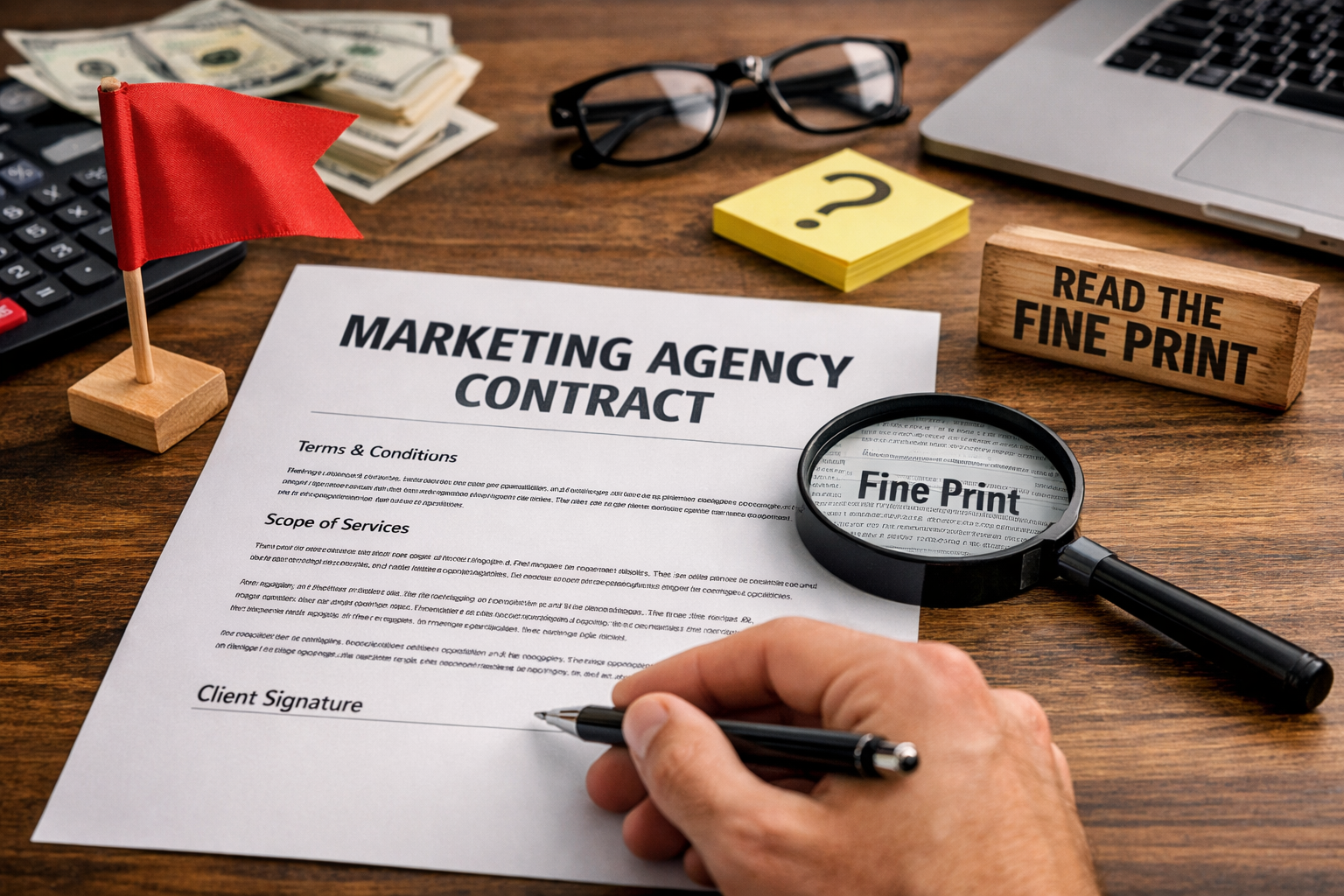
What Should Be in a Marketing Agency Contract? (And What to Watch Out For)
The contract is where a good agency relationship gets protected — and where a bad one gets locked in. Most business owners rush this step, but what's in that document will determine how much leverage you have if things go sideways. This guide covers every section a marketing agency contract must include, the red flags buried in fine print, and the questions to ask before you sign anything.
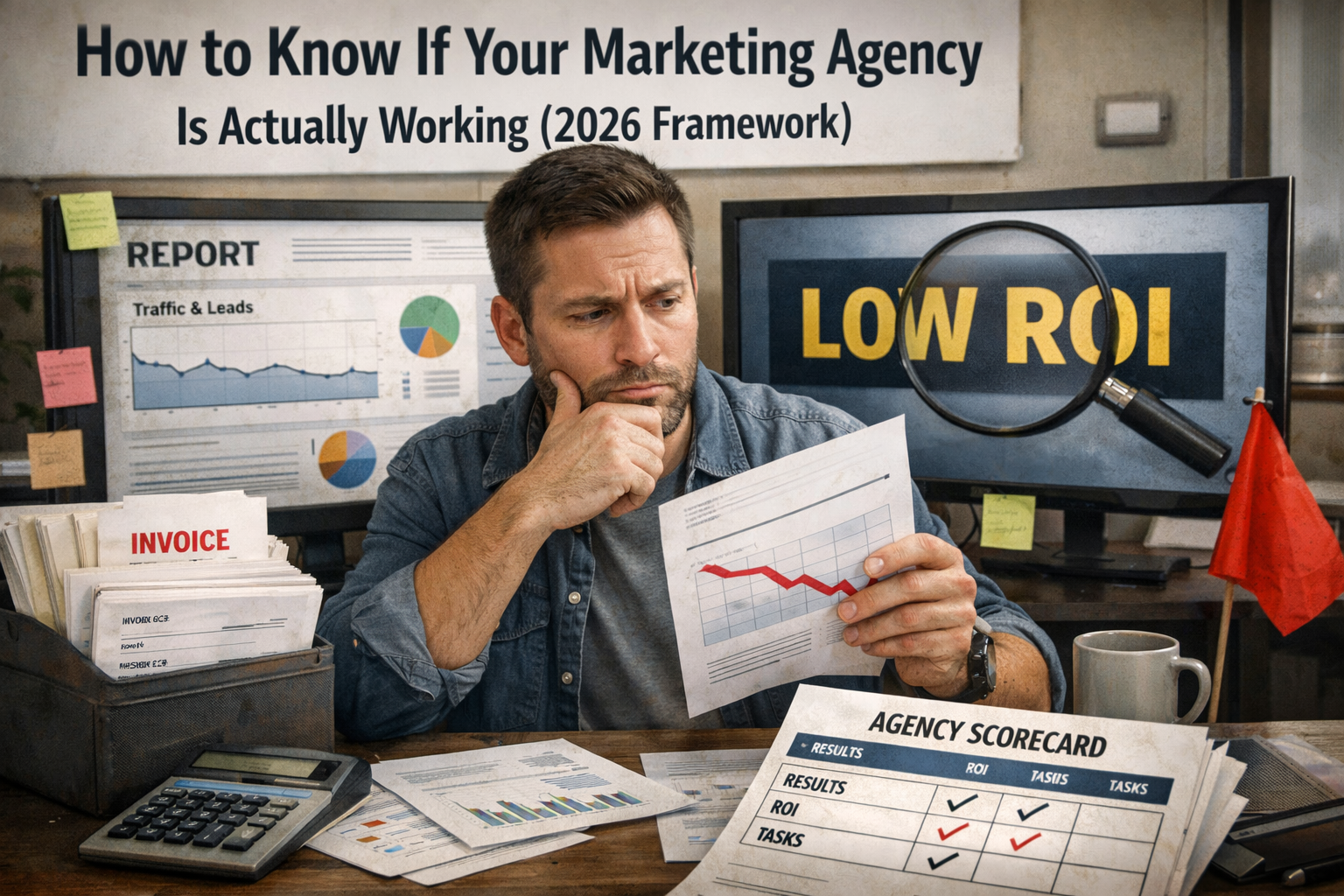
How Do I Know If My Current Marketing Agency Is Actually Working?
You're months into your contract, the invoices keep coming, and the reports look busy — but something feels off. If you've been wondering whether your marketing agency is actually moving the needle or just staying busy with your money, you're not alone. This guide gives you a concrete framework to evaluate your agency's performance using real benchmarks, behavioral red flags, and a simple scorecard you can run through today.

What 3 Months of Trade School SEO Would Have Cost in Google Ads
We took three months of Google Search Console data from a trades education and union apprenticeship client and asked the same question we always ask: what would this organic presence cost to replicate through Google Ads? With 1,390 clicks, 37,700 impressions, and 1,000 tracked queries across plumbing, HVAC, welding, and steamfitting terms, the paid-ad equivalent runs to $11,563–$15,000+ per quarter when you factor in clicks, impressions, and campaign management. Here's the full breakdown — and what it means for trade programs still treating SEO as optional.
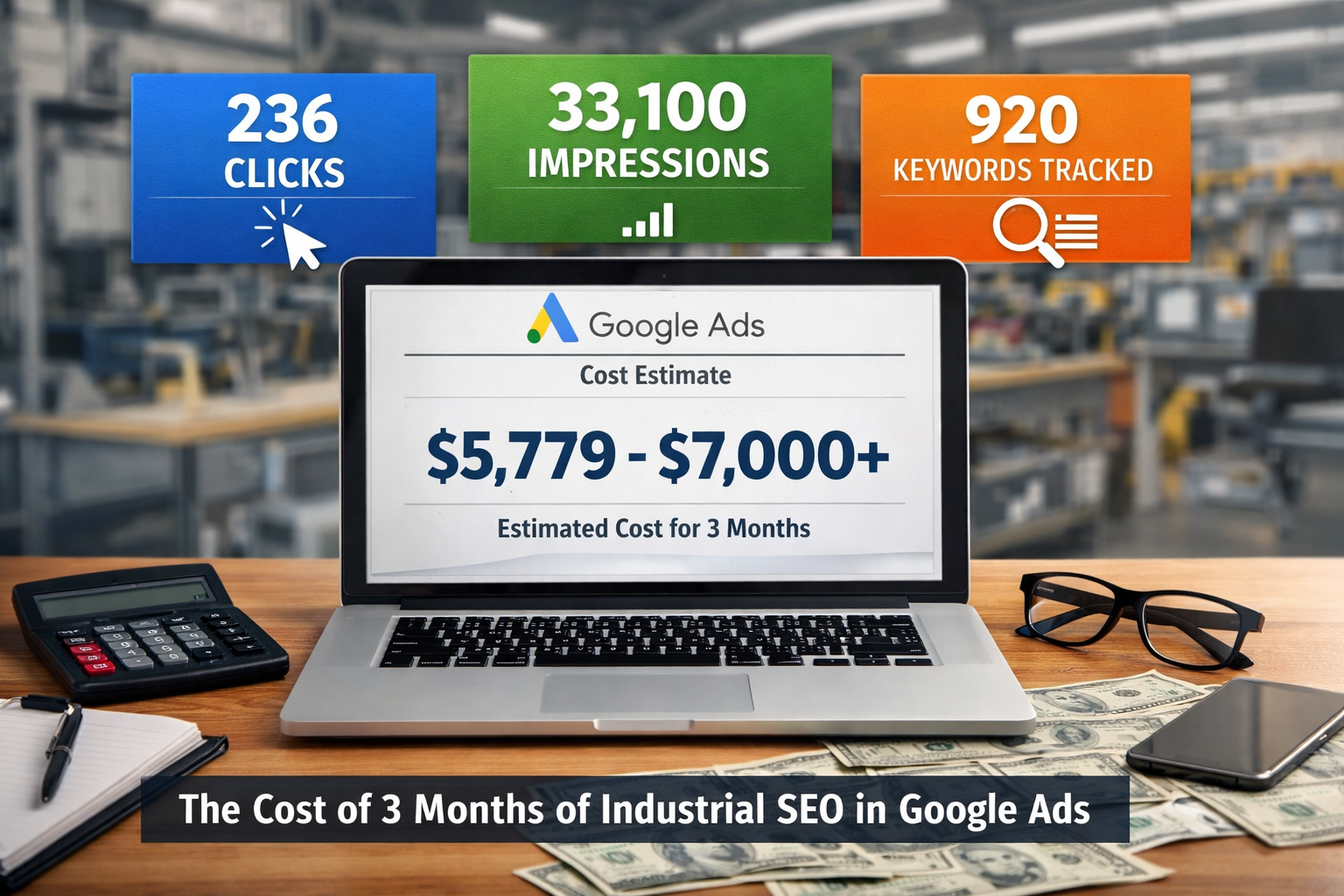
What 3 Months of Industrial SEO Would Have Cost in Google Ads
We took three months of real Google Search Console data from an industrial B2B client and asked one question: what would this organic search presence have cost in paid ads? With 236 clicks, 33,100 impressions, and 920 tracked queries across materials handling and motive power keywords, the paid-ad equivalent runs to $5,779–$7,000+ when you factor in clicks, impressions, and campaign management. Here's how we got there — and what it means for industrial companies still on the fence about SEO.

Northeast vs. Southeast: Why Your Marketing Strategy Needs a Regional Playbook
If you're running the same marketing campaign in Philadelphia and Atlanta, in Boston and Charlotte, in New York City and Nashville — you're leaving money on the table. The Northeast and Southeast United States are two genuinely distinct commercial cultures, and the businesses that win in both regions are the ones that understood the difference before they started spending. Here's what the data says, and what to do about it.

The Ultimate AI Prompt Guide for Small Business Owners
AI tools like ChatGPT, Claude, and Gemini can save your small business hours every week — but only if you know how to prompt them correctly. In this guide, Ritner Digital breaks down exactly how to write AI prompts that generate real marketing results, with 10 ready-to-use templates for social media, email campaigns, Google Ads, SEO content, and more.
The Web is Built. Now What? Why Strategy and SEO Beat Execution in the Age of AI
A small business owner can now open Framer, type a description of their company, and have a polished, mobile-responsive website live in twenty minutes. No developer. No agency. No five-figure budget. The technical execution of web development has been democratized — and that changes everything. When anyone can build a website, the question is no longer who can build it. The question is who gets found, trusted, and chosen. And that answer has always been, and will always be, strategy.

Will AI Coding Enable More Advanced Animations on Websites — With Less Code?
For years, truly impressive website animations required a rare and expensive skill set — deep knowledge of GSAP, WebGL, scroll-trigger mechanics, and the patience to hand-tune easing curves until they felt right. AI coding tools are changing that equation fast. But the real question isn't whether AI can generate animations — it's whether the output is lean, performant, and actually worth shipping. Here's the honest breakdown of where the technology stands, what it's getting right, and where human judgment still makes the difference.