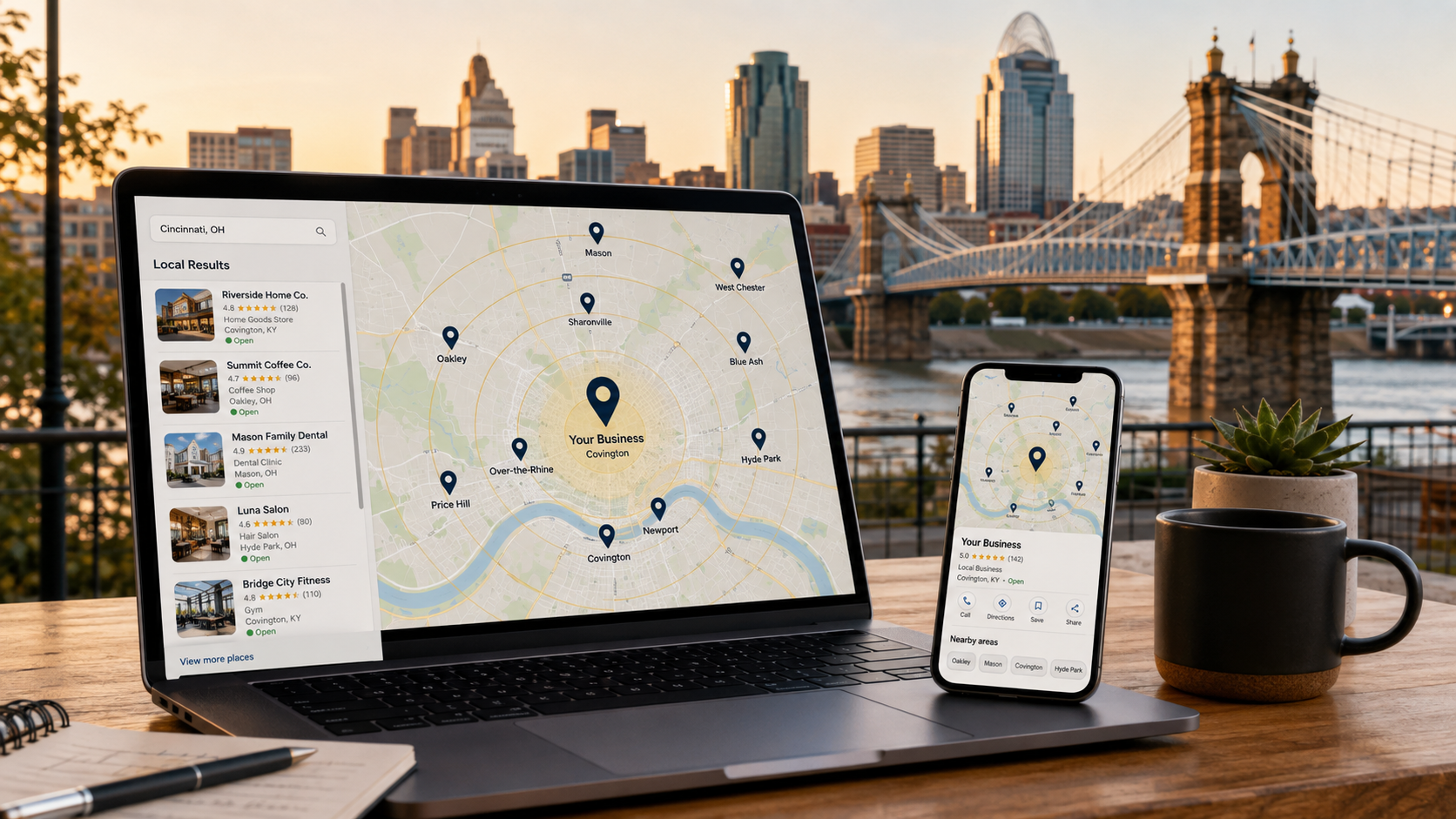
Local SEO for Cincinnati: Google Business Profile, Reviews, and the Neighborhood Factor
Cincinnati isn't one search market — it's fifty of them, from Oakley to Mason to across the river in Covington, and every one generates its own map pack. That's the opening small businesses miss: you're not competing for "Cincinnati," you're competing for a ring of neighborhoods, each separately winnable. The full playbook: the three factors Google itself says decide local rankings, the numbers behind a complete Business Profile and a real review system, and the ring-by-ring expansion strategy that lets one location beat a competitor spraying the whole metro.
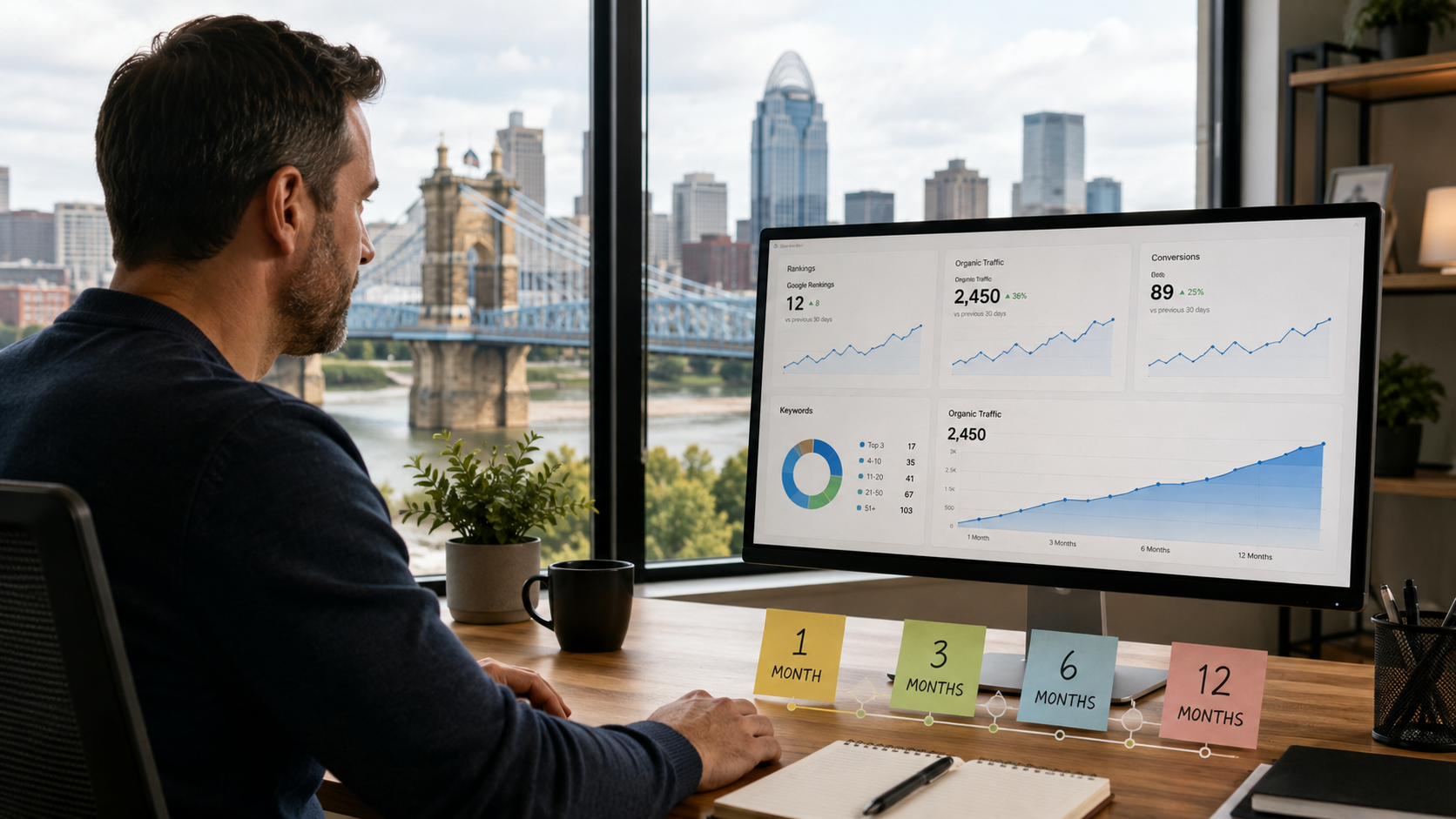
How Long Does SEO Take for a Cincinnati Small Business? The Honest Month-by-Month Answer
"When will I see something for my money?" Every Cincinnati business owner asks it, and almost no agency answers it straight — because a real timeline comes with checkpoints a client can hold you to. Here's ours anyway: what Google's own guidance says, what the ranking data proves, why local SEO moves faster in a fragmented market like Cincinnati, and exactly what should be happening in months 1, 3, 6, and 12 — including the early dip that scares businesses into quitting right before the turn.
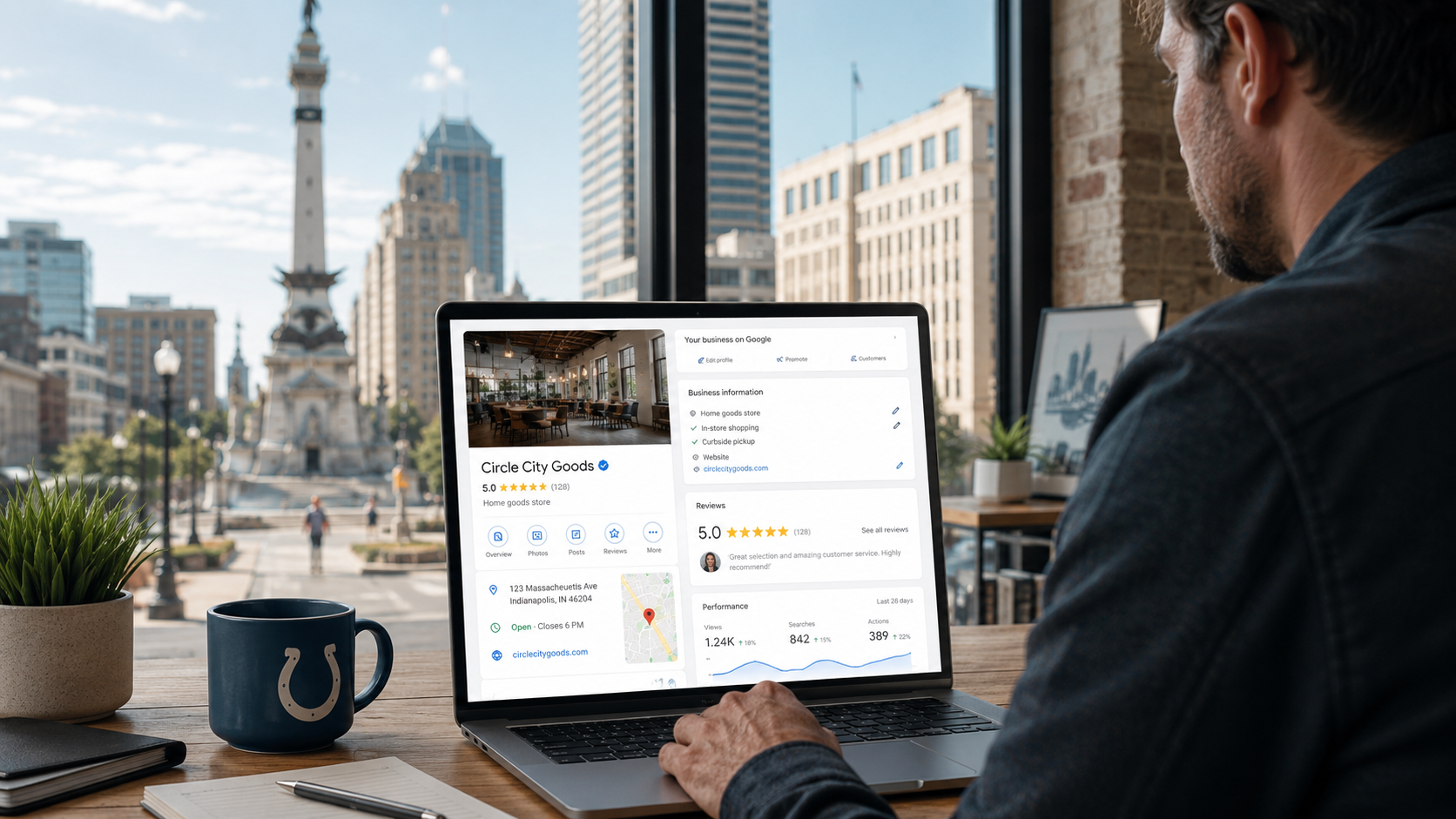
Google Business Profile Optimization for Indianapolis Businesses
A Google Business Profile can be one of the most valuable digital assets an Indianapolis local business owns—but simply claiming the profile is not enough. This 2026 guide explains how to optimize your business name, categories, address, service areas, services, hours, description, photos, reviews, social links, website connection, practitioner profiles, and performance tracking without violating Google's guidelines or chasing unsupported local SEO myths.

Why Your Indianapolis Business Isn't Showing Up on Google Maps
If your Indianapolis business isn't showing up on Google Maps, the problem may have nothing to do with “needing more SEO.” Your Business Profile could be unverified, suspended, duplicated, ineligible, incorrectly configured, too far from the searcher, weak for the service being searched, or simply being evaluated the wrong way. This 2026 troubleshooting guide explains how to determine whether you have a Google Business Profile problem, a local ranking problem, or both—and what to fix first.
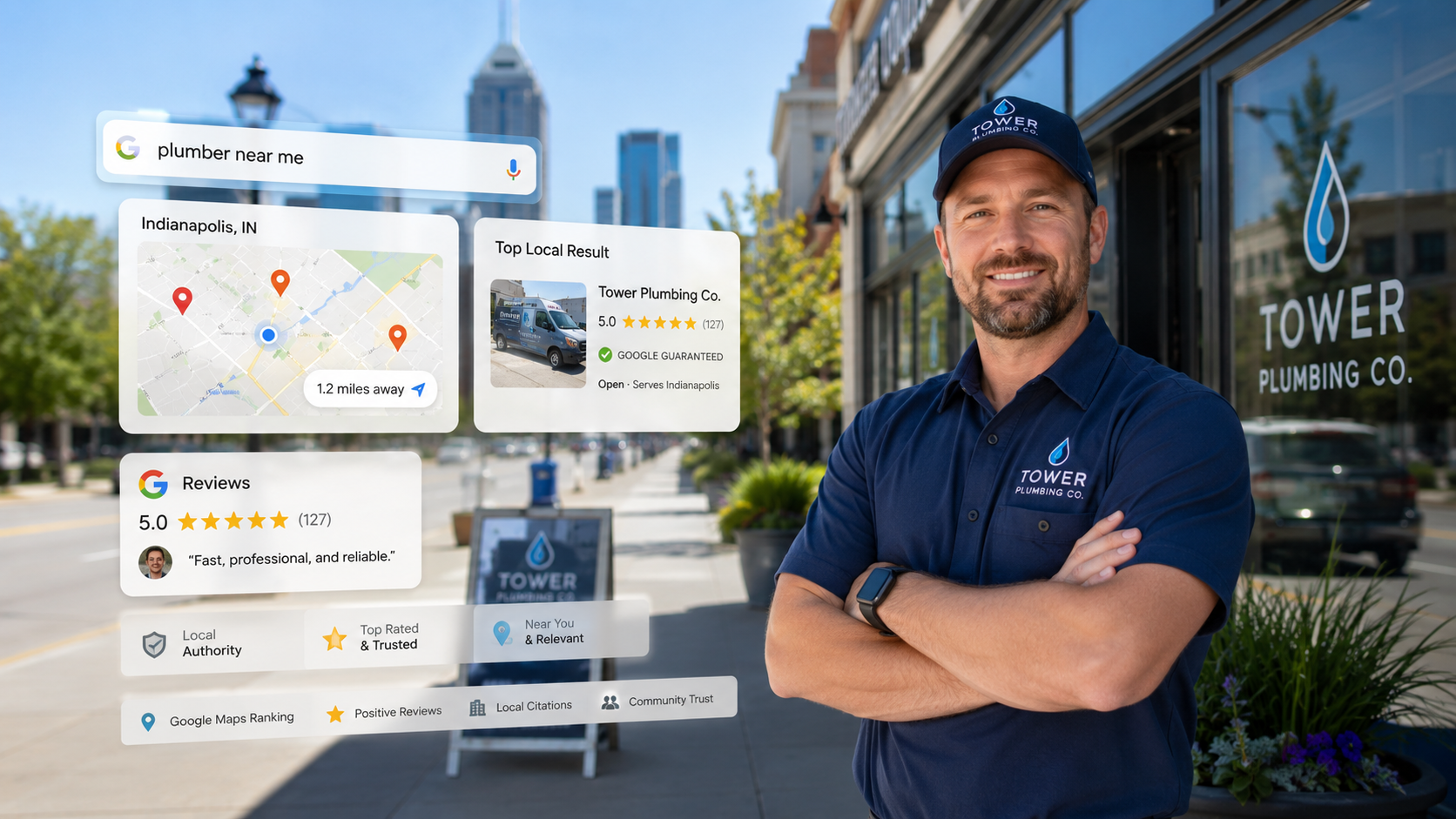
How to Rank for “Near Me” Searches in Indianapolis
When someone in Indianapolis searches “plumber near me,” “dentist near me,” or “SEO company near me,” Google isn't simply looking for websites that repeat the words “near me.” It is trying to identify relevant businesses near the searcher that appear credible enough to recommend. This guide explains how Indianapolis businesses can improve visibility for “near me” searches through Google Business Profile optimization, proximity, reviews, website SEO, local content, citations, backlinks, and geographic rank tracking.
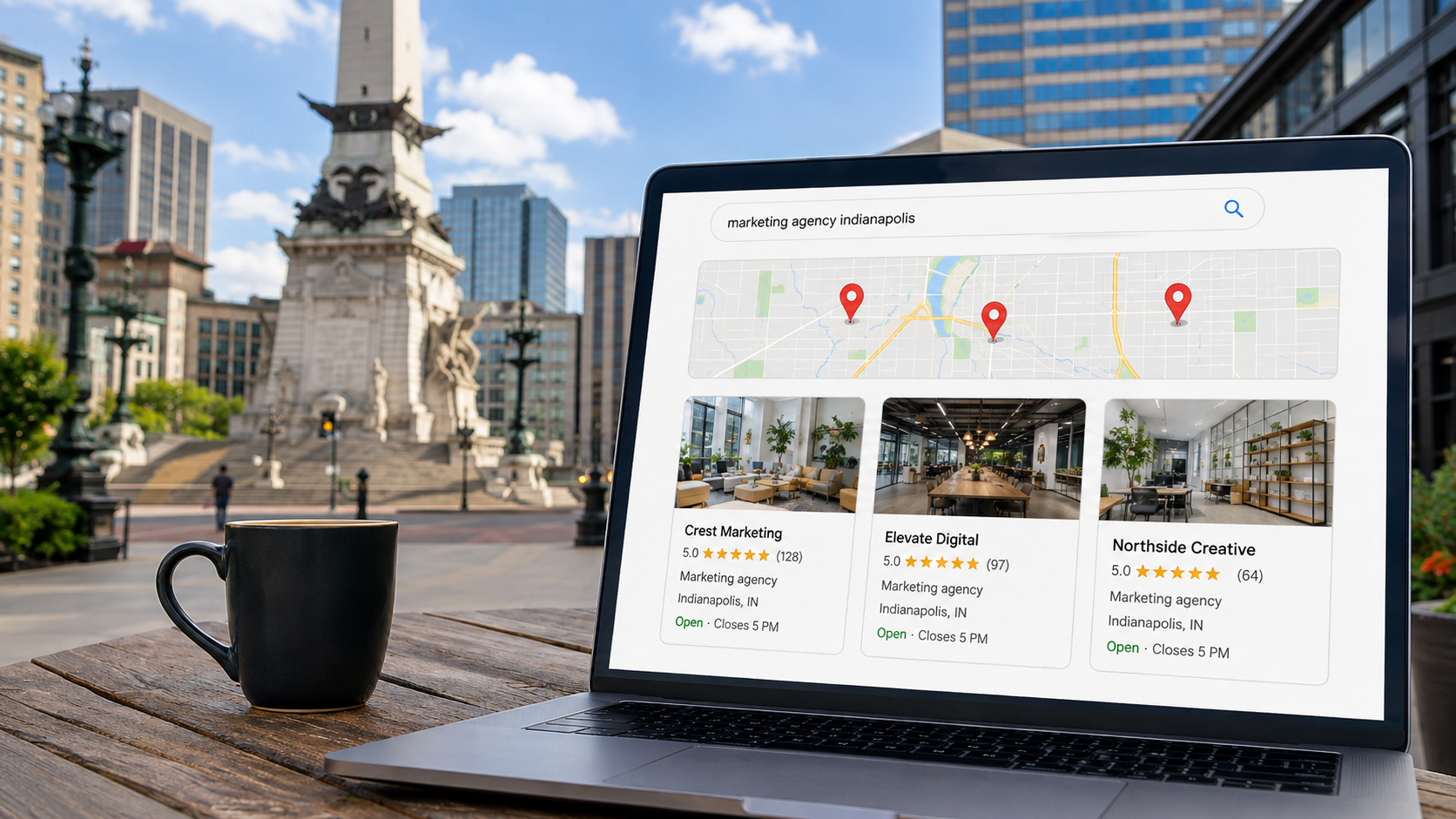
What Makes an Indianapolis Business Rank in Google's 3-Pack?
Why do three Indianapolis businesses appear at the top of Google's local results while everyone else gets pushed below the map? This guide breaks down the factors behind Google's 3-Pack, including relevance, proximity, prominence, Google Business Profile optimization, reviews, website SEO, backlinks, citations, local authority, and the signals Indianapolis businesses should prioritize in 2026.
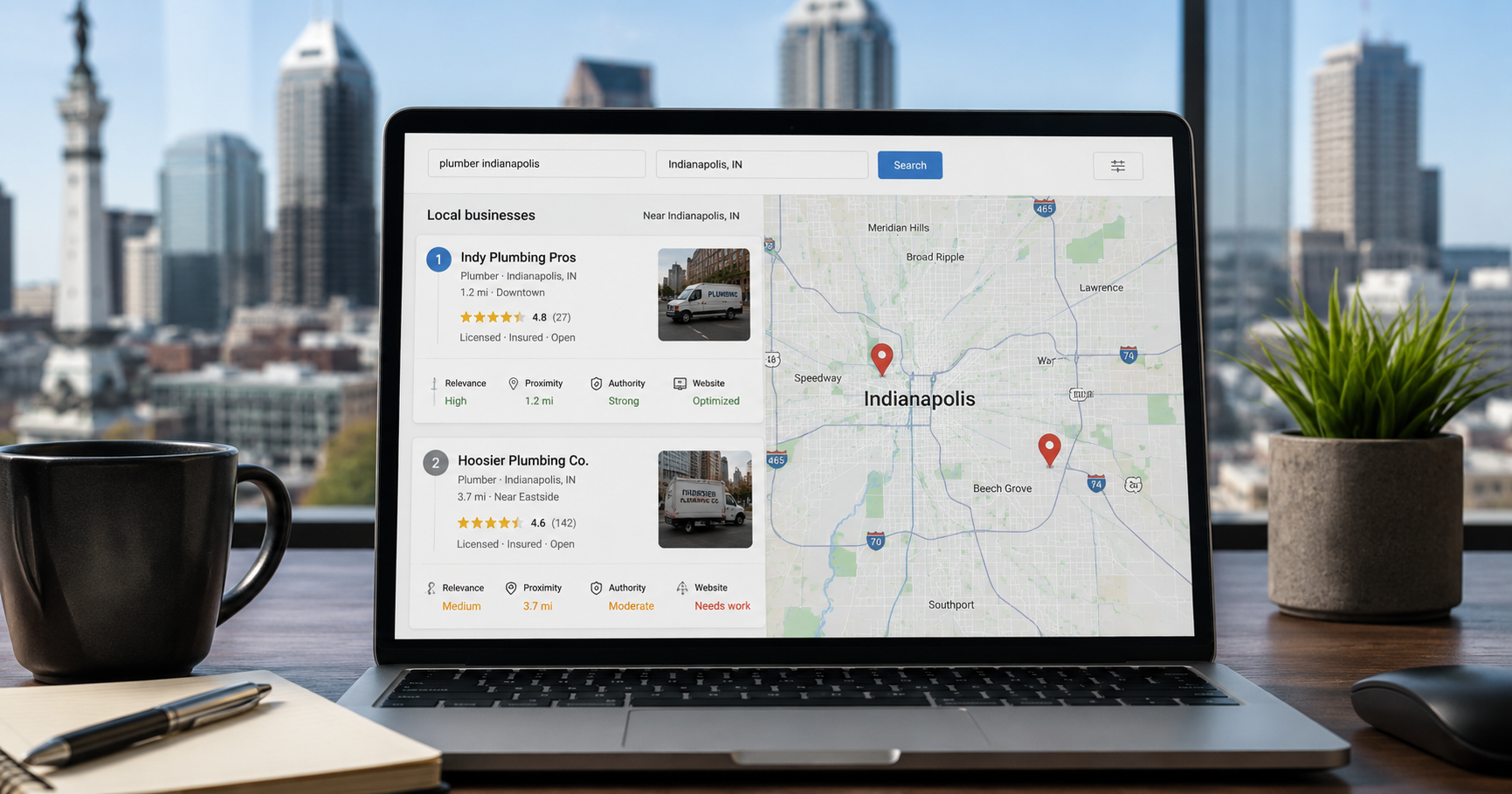
Why Your Competitor Ranks Above You in Indianapolis — Even With Fewer Reviews
Have more Google reviews than your Indianapolis competitors but still rank below them? Review count is only one piece of Google's local ranking system. Learn how relevance, proximity, Google Business Profile categories, website SEO, backlinks, local authority, review quality, and other signals can allow a smaller competitor to outrank you—and what to fix first.
Local SEO in Indianapolis: How to Rank Higher on Google Maps in 2026
Want more Indianapolis customers to find your business when they search Google? This guide explains how to improve your Google Maps rankings with better local SEO, Google Business Profile optimization, reviews, local content, backlinks, and authority-building strategies for 2026.
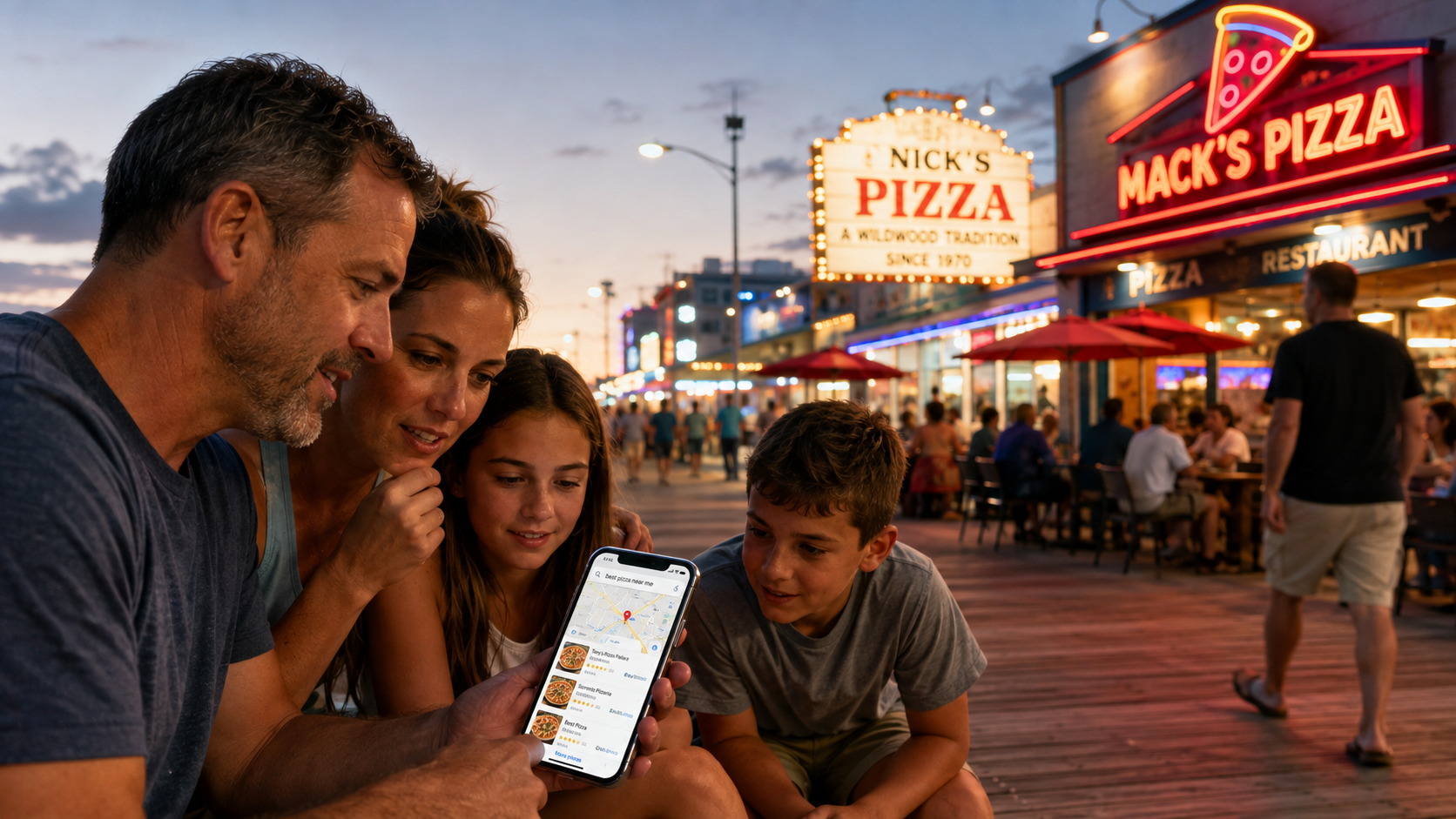
The Most Important Seat in Your Wildwood Restaurant Is a Boardwalk Bench 200 Feet Away
Every July evening, a family claims a boardwalk bench, pulls out one phone, and types "best pizza near me" — a moment repeated thousands of times a night within a few hundred yards of your door. In a town whose population turns over every Saturday, 79% of restaurant searches are non-branded, three Local Pack slots capture 126% more traffic, and 22% of diners now ask ChatGPT where to eat. This letter covers the two windows where the decision happens, the unmanaged-profile bleeding (seasonal hours chaos, the review vacuum), and the off-season build that wins the bench by Memorial Day.

Empty Chairs Cost More Than You Think: The Digital Playbook Every Multi-Location Salon Needs in 2026
Skill behind the chair and visibility in front of the customer are two different competitions — and plenty of talented salons are losing the second one before their stylists ever pick up their shears. This data-backed 2026 guide breaks down how new clients actually find salons, why your star rating quietly decides your revenue, and the concrete local-SEO and reputation moves that fill empty mid-week chairs. Built for multi-location salon owners who know their craft cold but suspect their digital presence isn't pulling its weight.
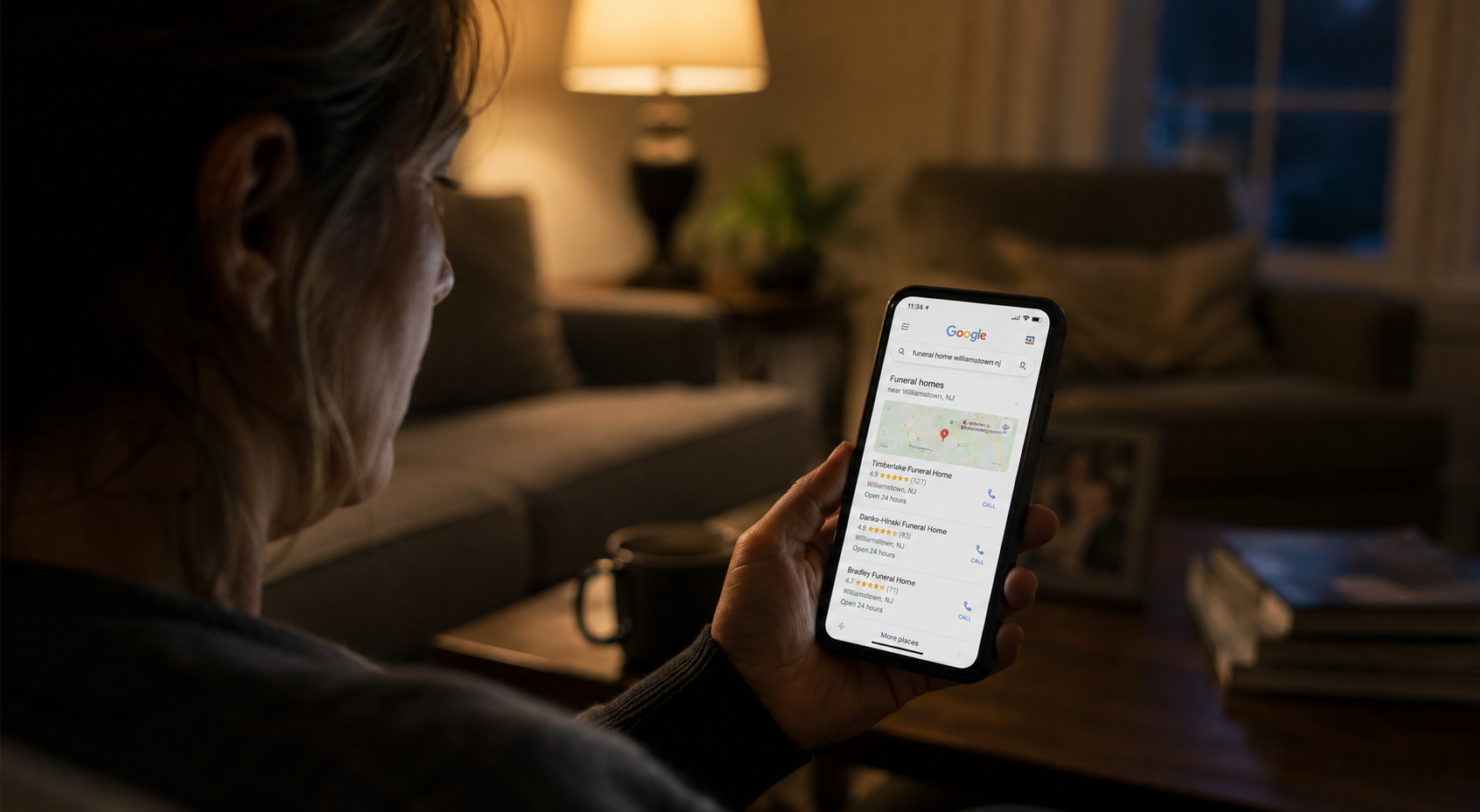
When a Williamstown Family Needs You, How Will They Find You? What Search Looks Like for Funeral Homes in 2026
It's late, and a phone call has just changed everything for a Williamstown family. Someone picks up their phone to search for help. Whoever they find and trust in those first minutes is often who they turn to. Here's how families find a funeral home in 2026 — and how to be there.
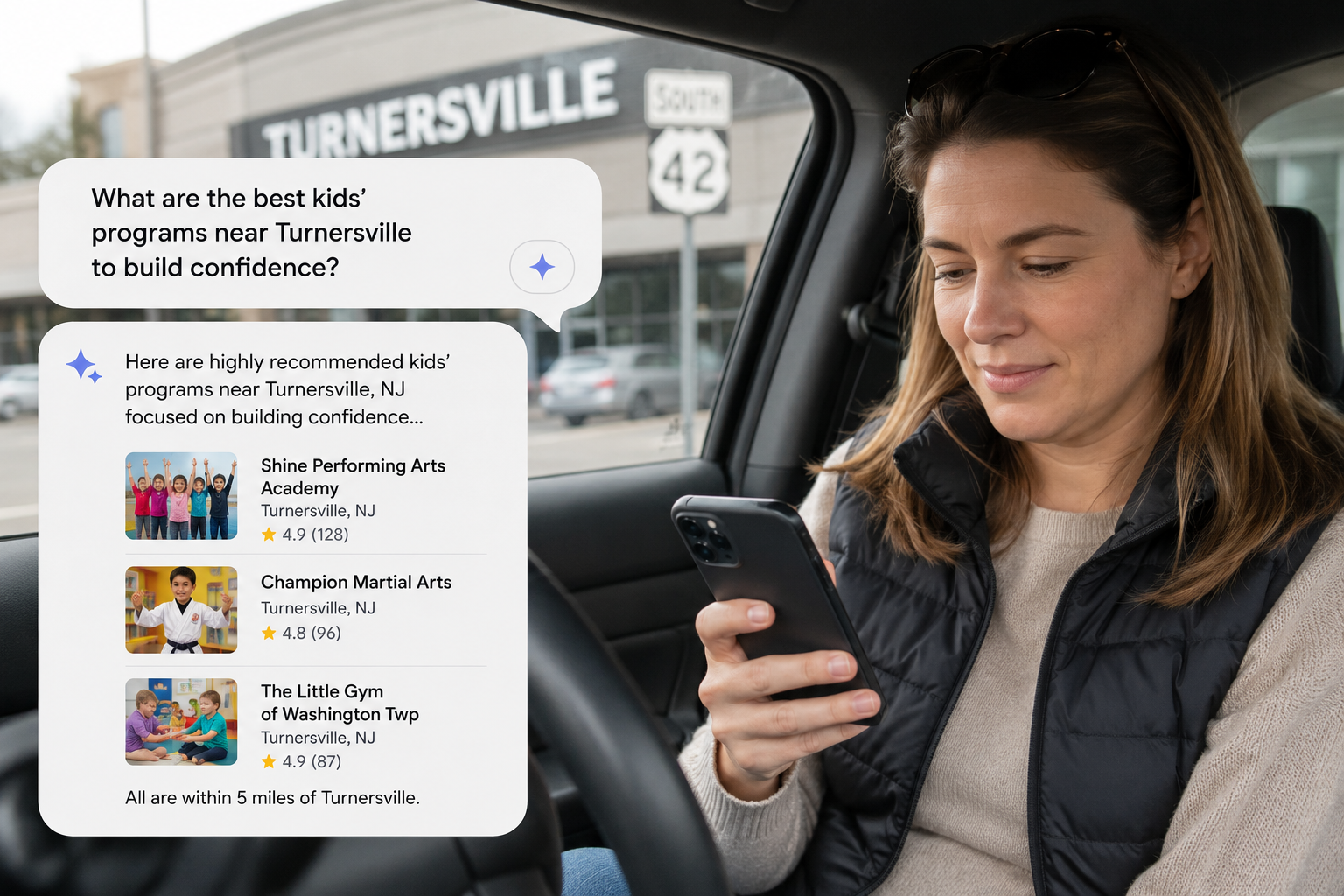
How a Turnersville Parent Actually Finds Your Kids' Program in 2026 (And Why "Near Me" Isn't Enough Anymore)
A parent off Route 42 picks up their phone and asks AI for the best program near Turnersville to build their preschooler's confidence. Whatever comes back shapes where that family spends the next two years. Here's how your Washington Township location becomes the answer — backed by 2026 search data.
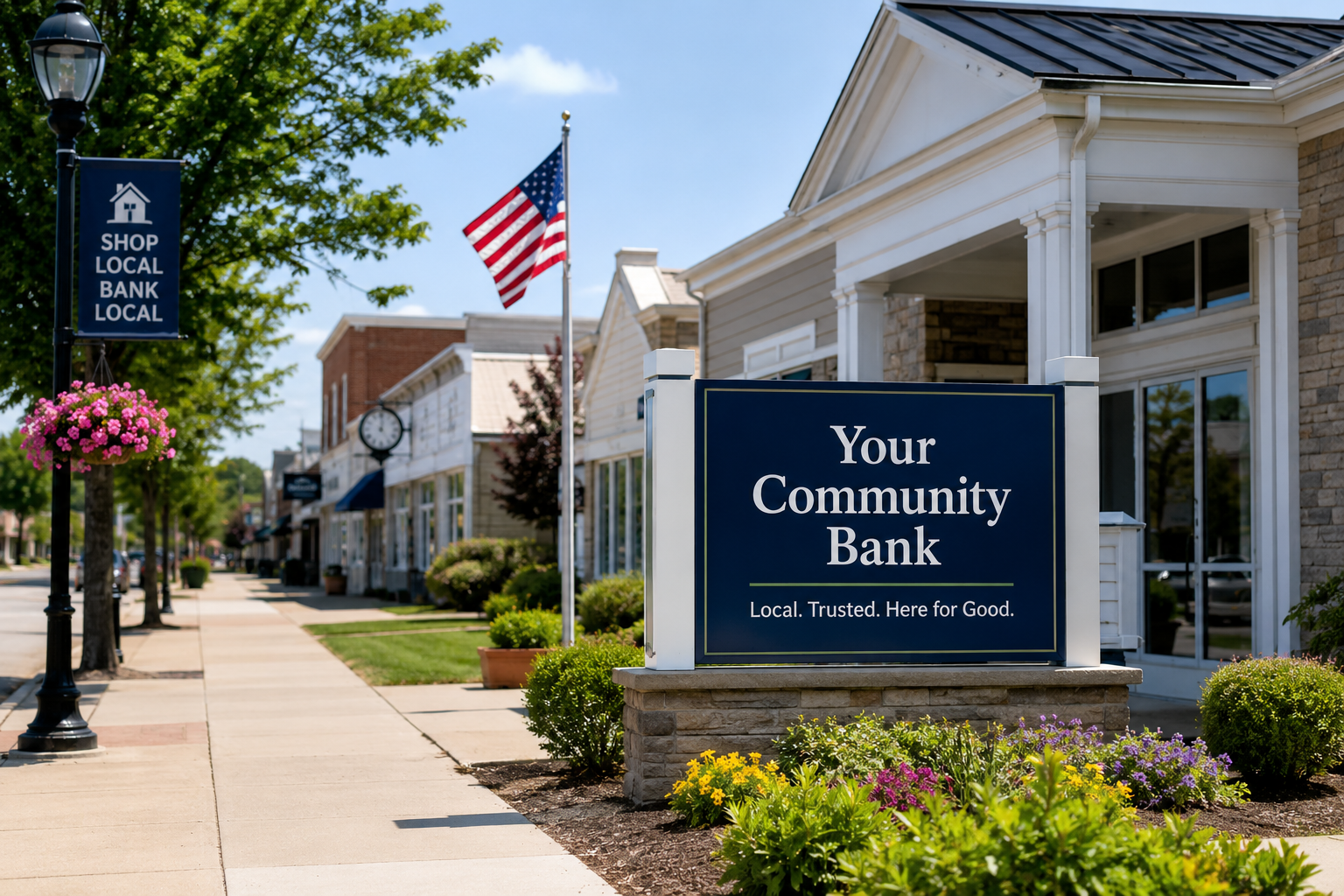
How Community Banks Can Dominate Local Search Without a Huge Budget
Community banks compete against institutions with vastly bigger marketing budgets — but local search is one arena where budget size isn't the deciding factor. This guide lays out a genuinely budget-conscious roadmap for dominating local search: what to prioritize first (hint: it's free), a realistic month-by-month plan, and how to know if and when outside help is actually worth the investment for your institution.
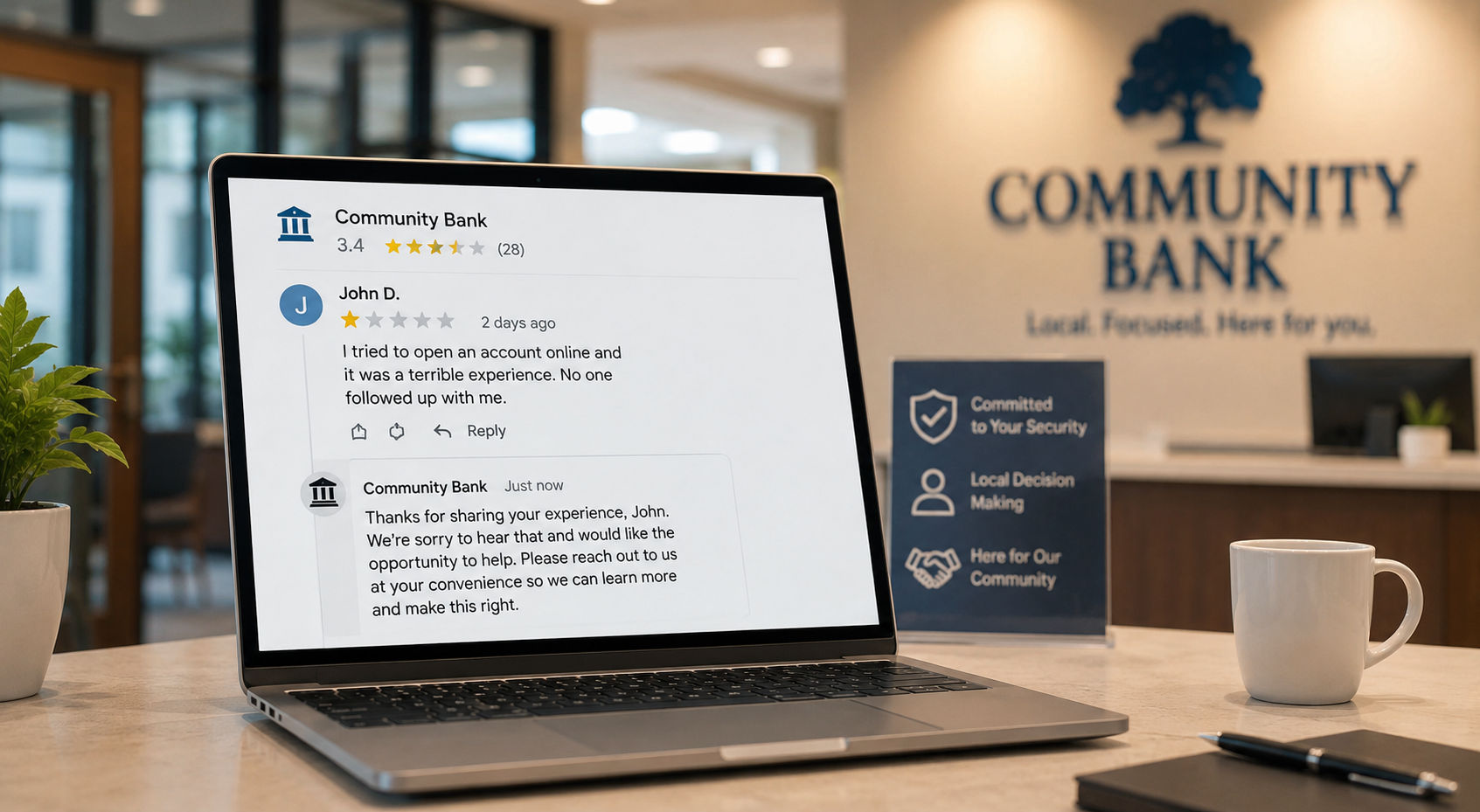
How to Respond to Negative Reviews for Financial Institutions (With SEO in Mind)
A single unanswered negative review can quietly suppress a bank's local search visibility — but responding the wrong way, by referencing account details or arguing publicly, creates real compliance risk. This guide breaks down a practical response framework built specifically for financial institutions: how to acknowledge concerns without repeating negative language, add legitimate SEO value without keyword stuffing, and redirect sensitive issues to a private channel — all while keeping every public response fast, warm, and fully compliant.
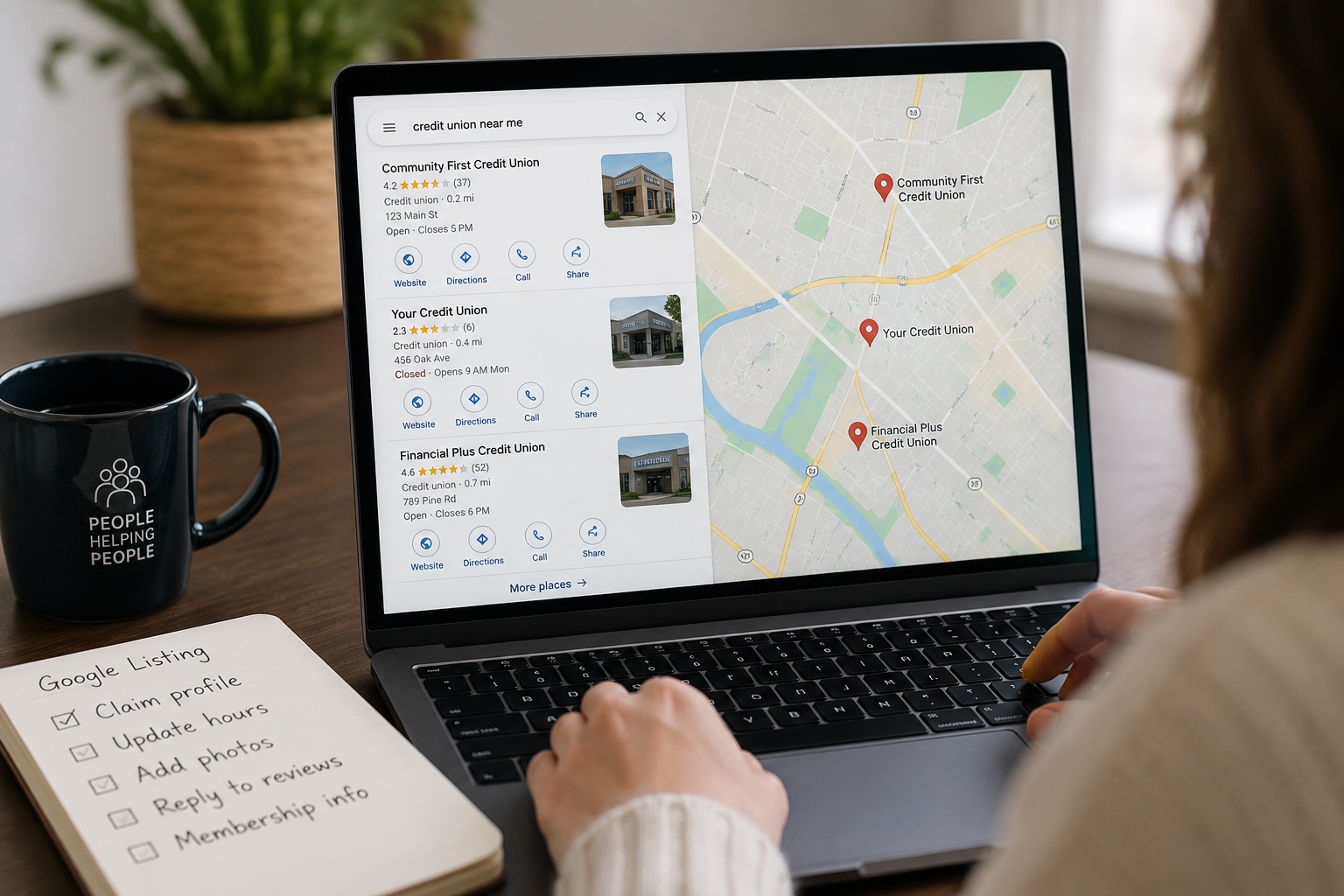
Why Your Credit Union's Google Maps Listing Is Losing You Members
Your credit union's biggest growth obstacle might not be rates or marketing spend — it could be a handful of small, invisible errors on your Google Maps listing. This guide breaks down the specific mistakes quietly costing credit unions new members: unclaimed and duplicate profiles, outdated hours, incomplete categories, unanswered reviews, missing membership eligibility information, and more — plus a clear, prioritized order for fixing them.
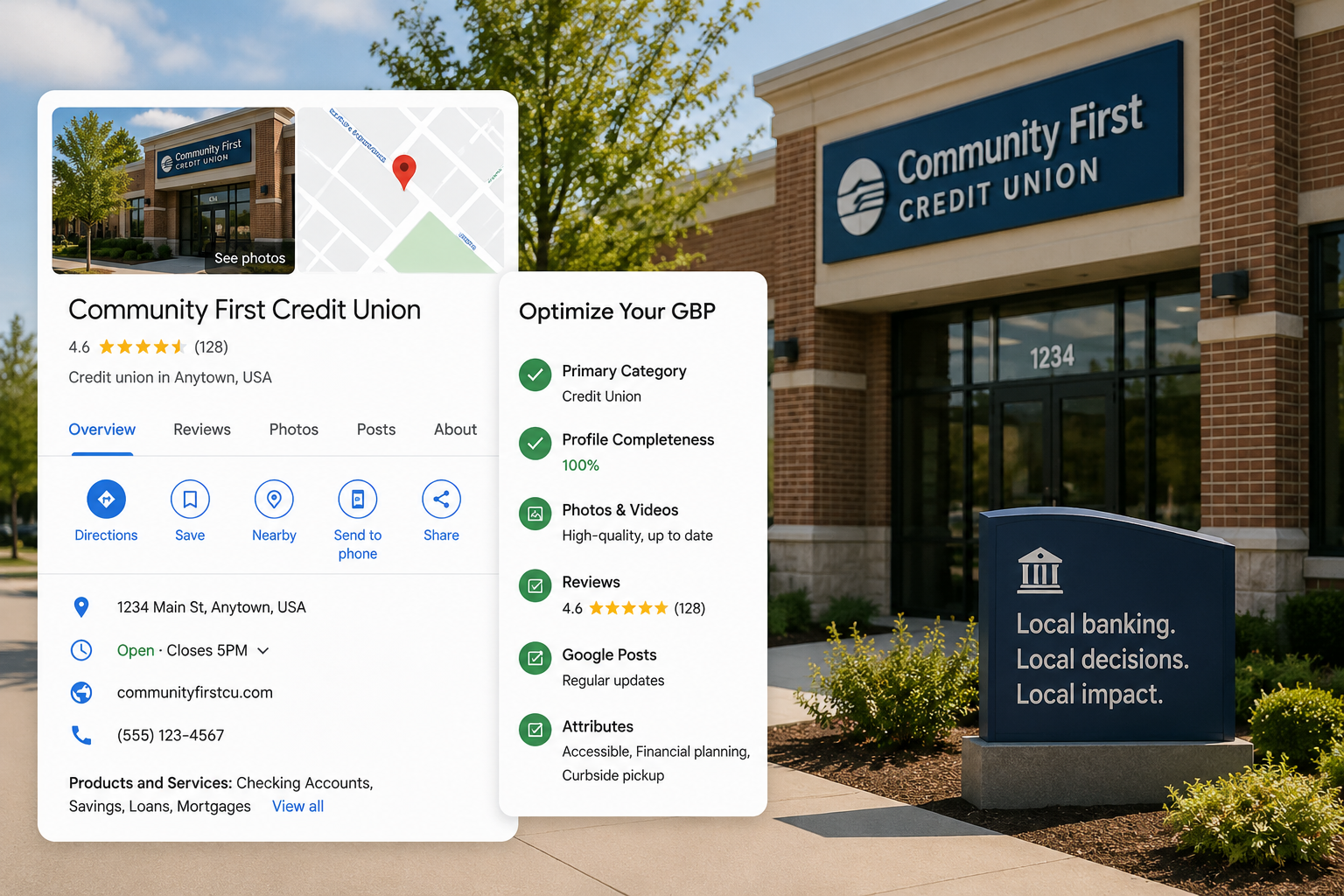
Google Business Profile Optimization for Banks and Credit Unions
Google Business Profiles appear in nearly 9 out of 10 local-intent searches, making it one of the most valuable — and most neglected — assets a bank or credit union controls. This guide breaks down what actually moves local rankings for financial institutions in 2026: category selection, profile completeness, attributes, review management, and the AI-driven signals now shaping which branches get surfaced before a customer ever visits the website.
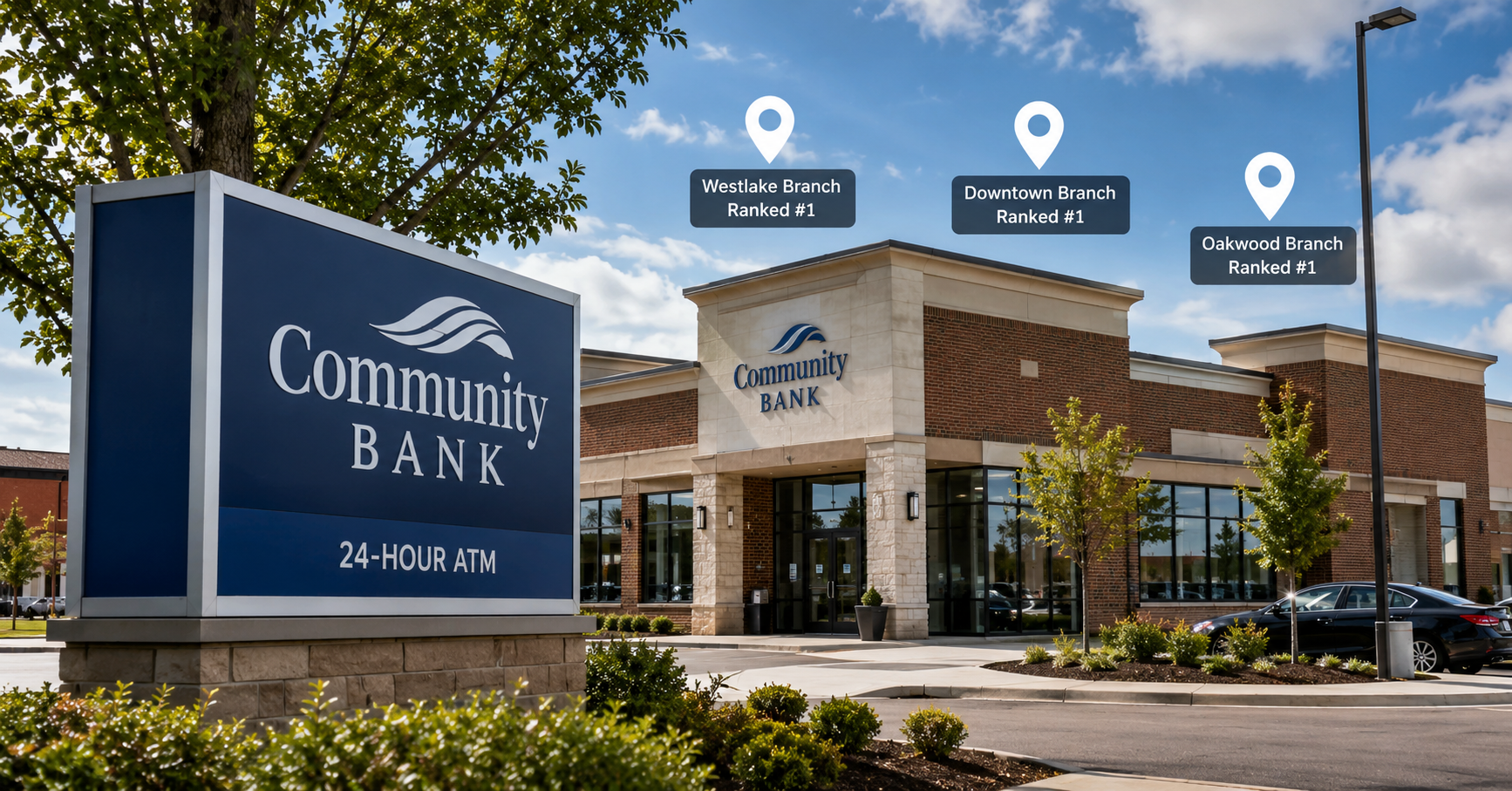
Branch-Level SEO: How to Rank in Every Market Your Bank Operates In
Most multi-branch banks don't lose local search visibility because Google penalizes them — they lose because their own site architecture fights itself. This guide breaks down why a handful of branches often capture all the visibility while others go invisible, and lays out the exact architecture — one Google Business Profile per branch, distinct local pages, clean NAP data, and a clear split between corporate and branch content — needed to rank in every market a bank actually operates in.
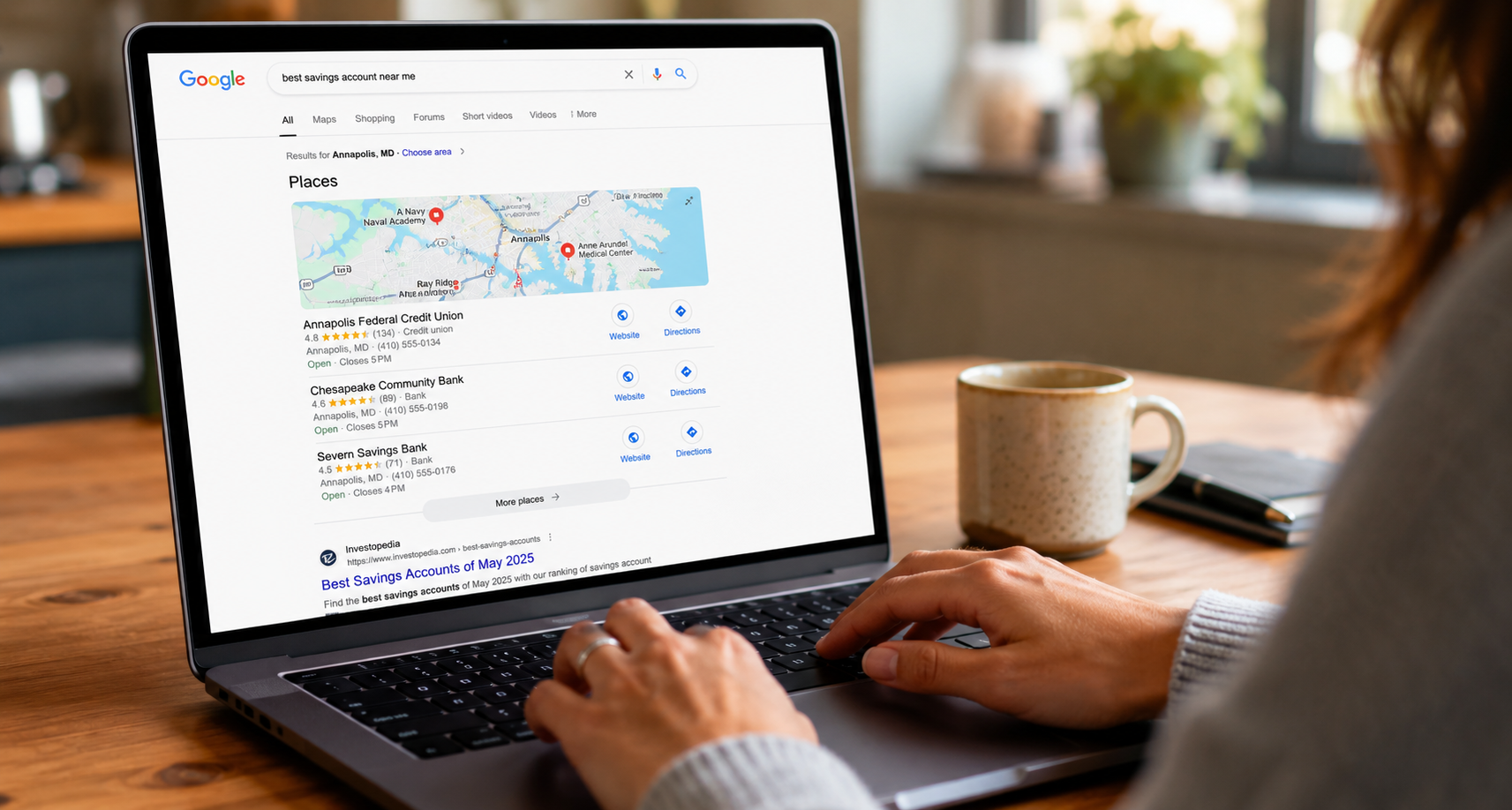
How to Rank for "Best Savings Account Near Me" — A Tactical Guide
"Best savings account near me" combines comparison intent that aggregators own with local intent where you have the edge. Win it, and you capture a saver who's ready to act and in your market. Here's a step-by-step tactical playbook for ranking — from the Local Pack to your localized savings page.
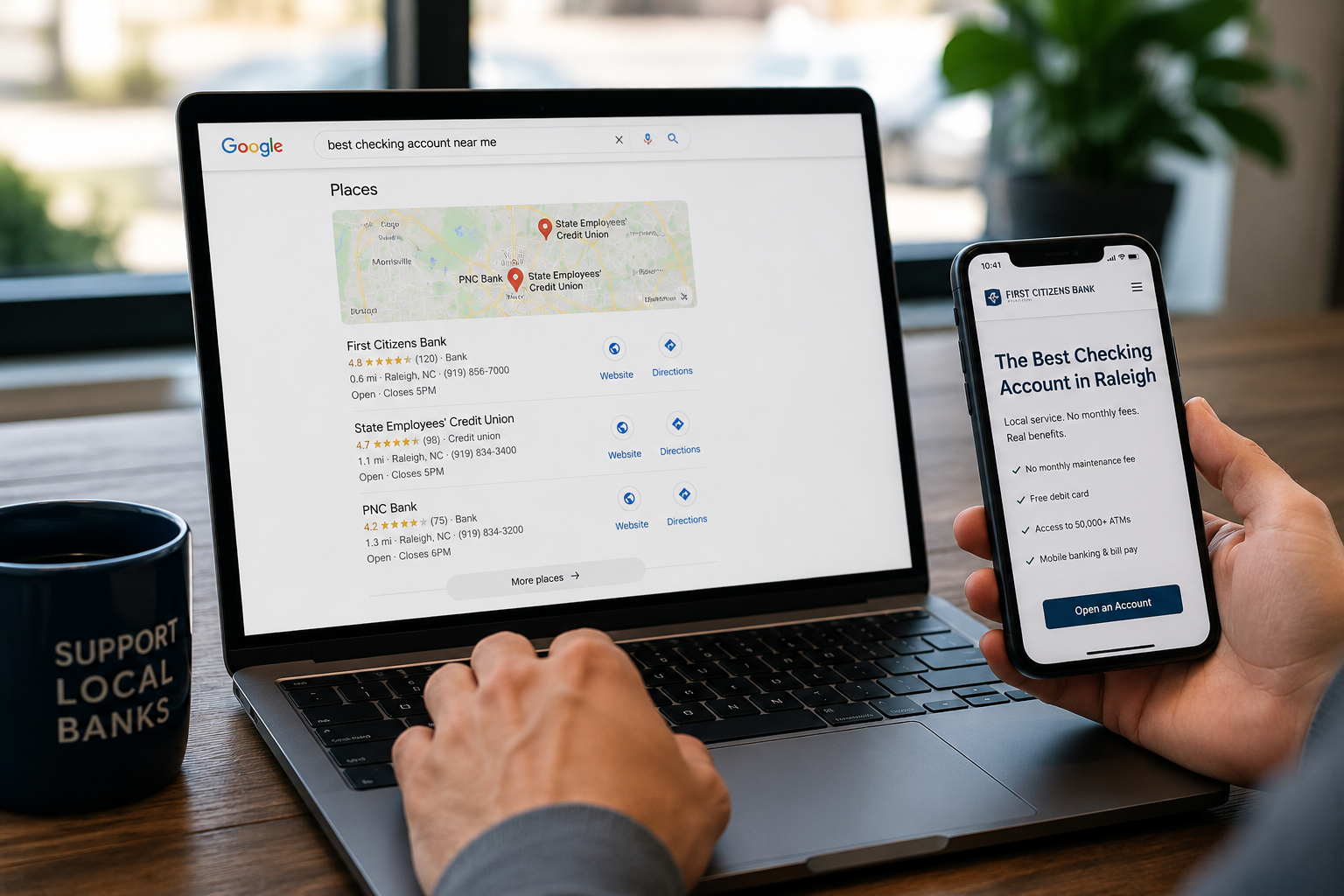
How to Rank for "Best Checking Account" in Your Local Market
Search "best checking account" and the whole first page belongs to NerdWallet and Bankrate. You won't beat them for the national term — but you don't need to. Here's how banks and credit unions can win the localized version of that search, where Google rewards the proximity aggregators can't fake.
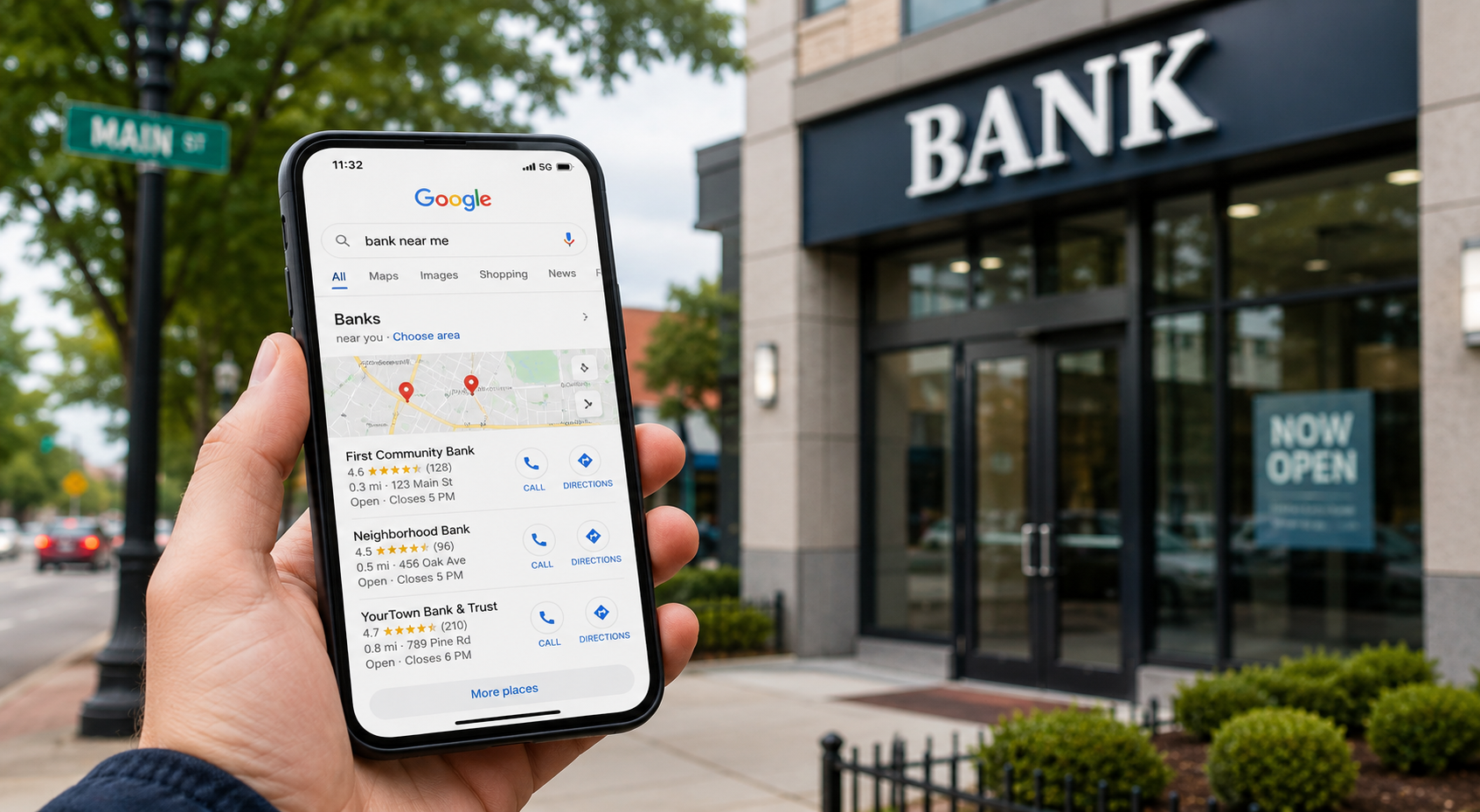
Local SEO for Banks: How to Dominate "Near Me" Searches in Every Branch Market
"Bank near me" gets roughly 71,000 searches a month, and about 90 percent come from a phone — someone standing in a parking lot who wants a branch they can walk into today. That three-listing box Google shows them has almost nothing to do with your marketing budget, and everything to do with local relevance. This 2026 playbook breaks down how to win the local pack — and AI answers — in every market you serve, not just your headquarters city.