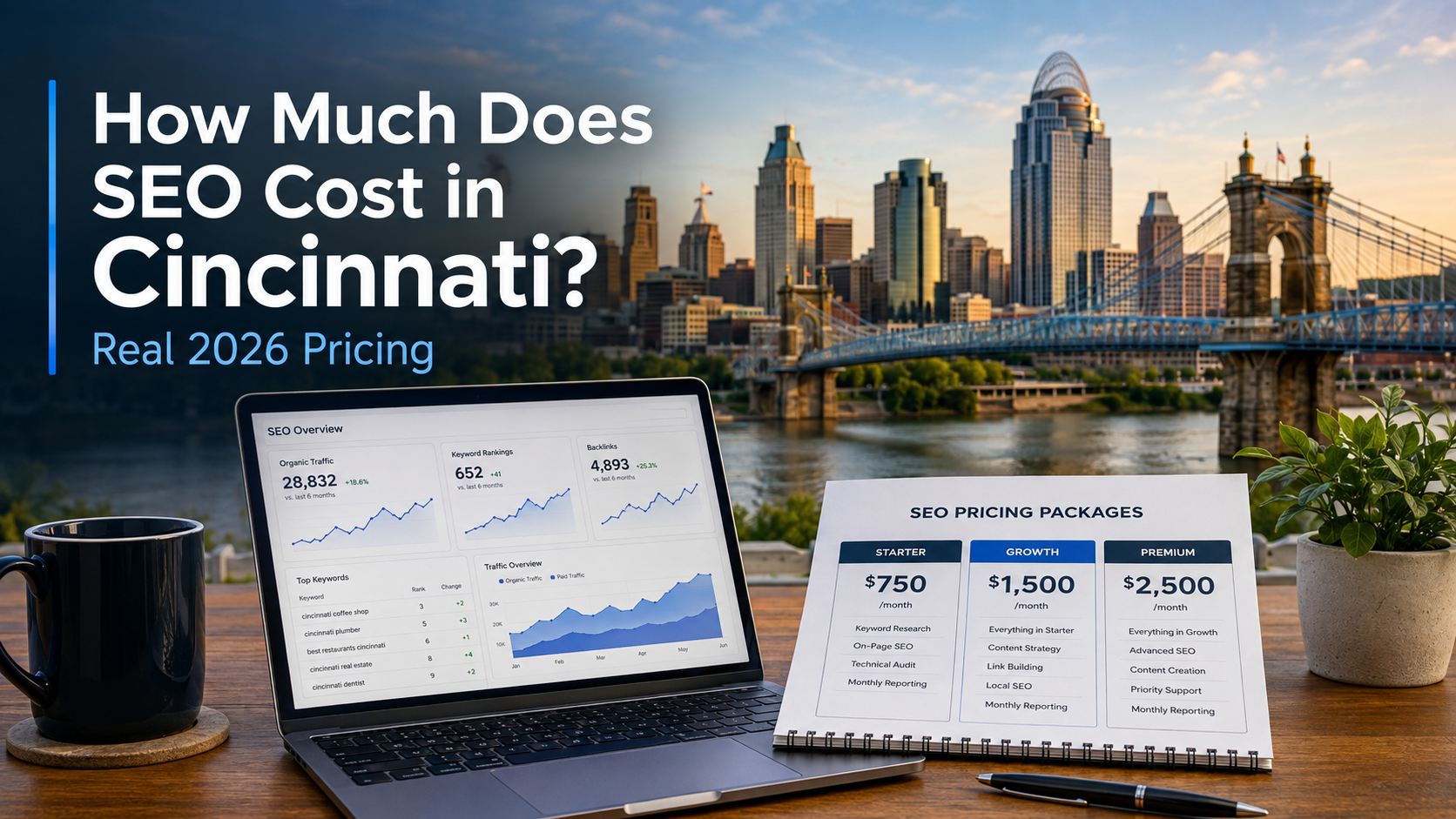
How Much Does SEO Cost in Cincinnati? A Real Pricing Breakdown (2026)
Ask five Cincinnati agencies what SEO costs and you'll get four "book a call"s. This is the pricing page the market doesn't have: what national surveys of 439+ providers actually say, what Cincinnati retainers run tier by tier, the six factors that move a quote, the red flags at any price, and the customer-value math that tells you whether a retainer will ever pay for itself. Our own pricing is public, so we went first.

You Started Publishing SEO Content and Your Leads Dipped. Here's Why That's Normal — and When It Recovers.
You had a five-page site and a phone that rang. Then you started a content engine and the leads slowed down. Before you panic, here's what's actually happening: Google re-reads your whole site, new pages drag your averages down, and your traffic shifts from buyers to researchers — the same turbulence a new site launch causes. This post breaks down all five mechanisms, the month-by-month recovery timeline, and how to tell a normal dip from a broken one.

Born in Gloucester County: Local Brands Punching Above Their Weight
The largest floral distribution company in America is headquartered in Sewell. A Deptford butcher shop turned 50 this year as a global food group. Gloucester County has been punching above its weight for decades — here are the stories, and the marketing lessons hiding inside each one.
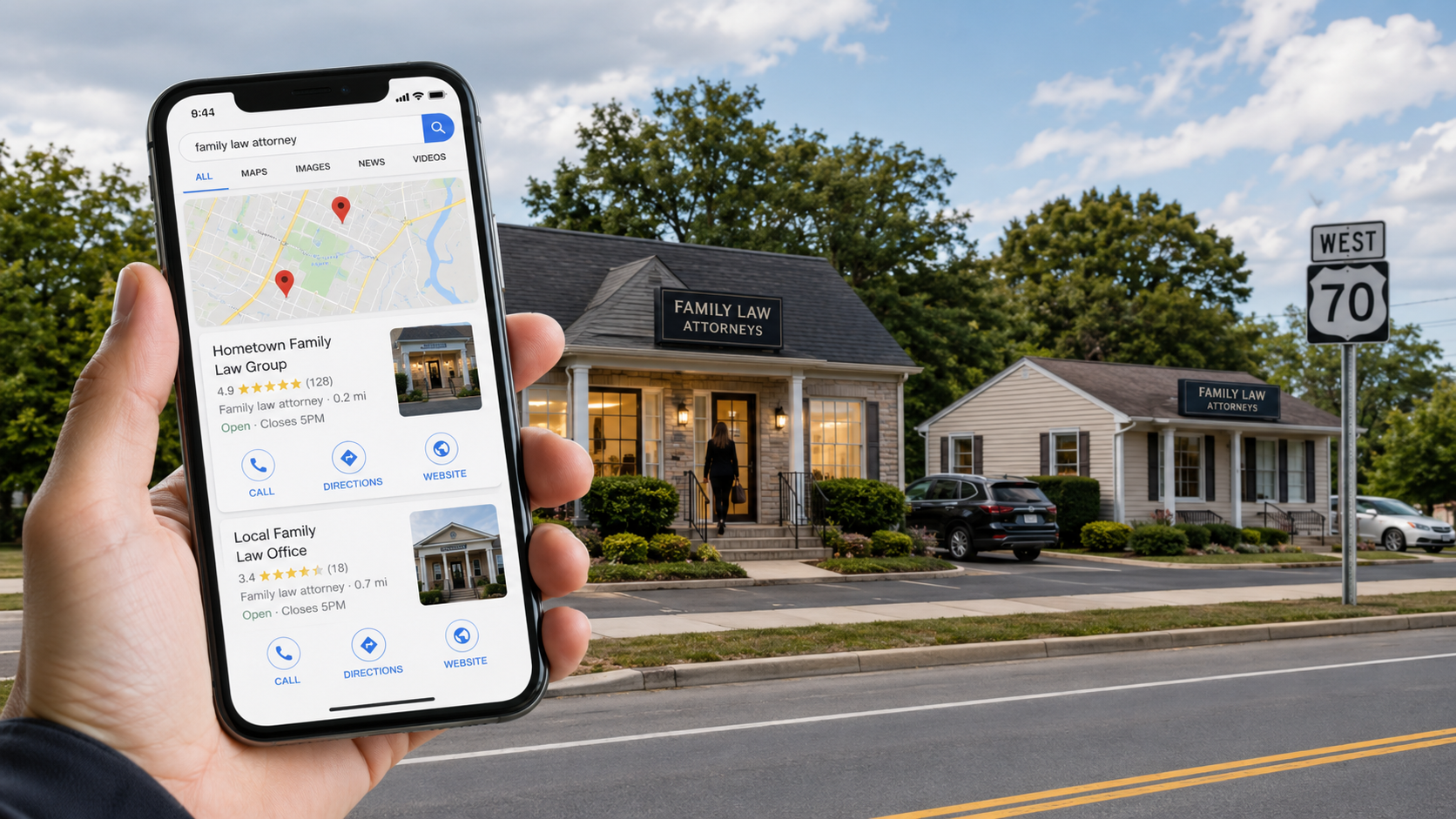
Local SEO for New Jersey Law Firms: Why You're Losing Cases to the Firm Across Route 70
Two family law firms, half a mile apart on Route 70, same credentials — one signed nine matters from search last month, the other signed two. The difference was decided in four seconds on a phone screen. Here's the field guide to which firm yours is, and the 90-day plan to switch sides.

PR Still Wins: What a 75-Year-Old Brockton Lawyer's Sudden National Fame Teaches Every Business About Authority
"Massachusetts has known him for decades." That NBC line about Kevin Reddington contains the entire physics of PR: visibility compounds on substance. Here's why earned authority still outperforms every channel you're buying — and the replicable version for local businesses.
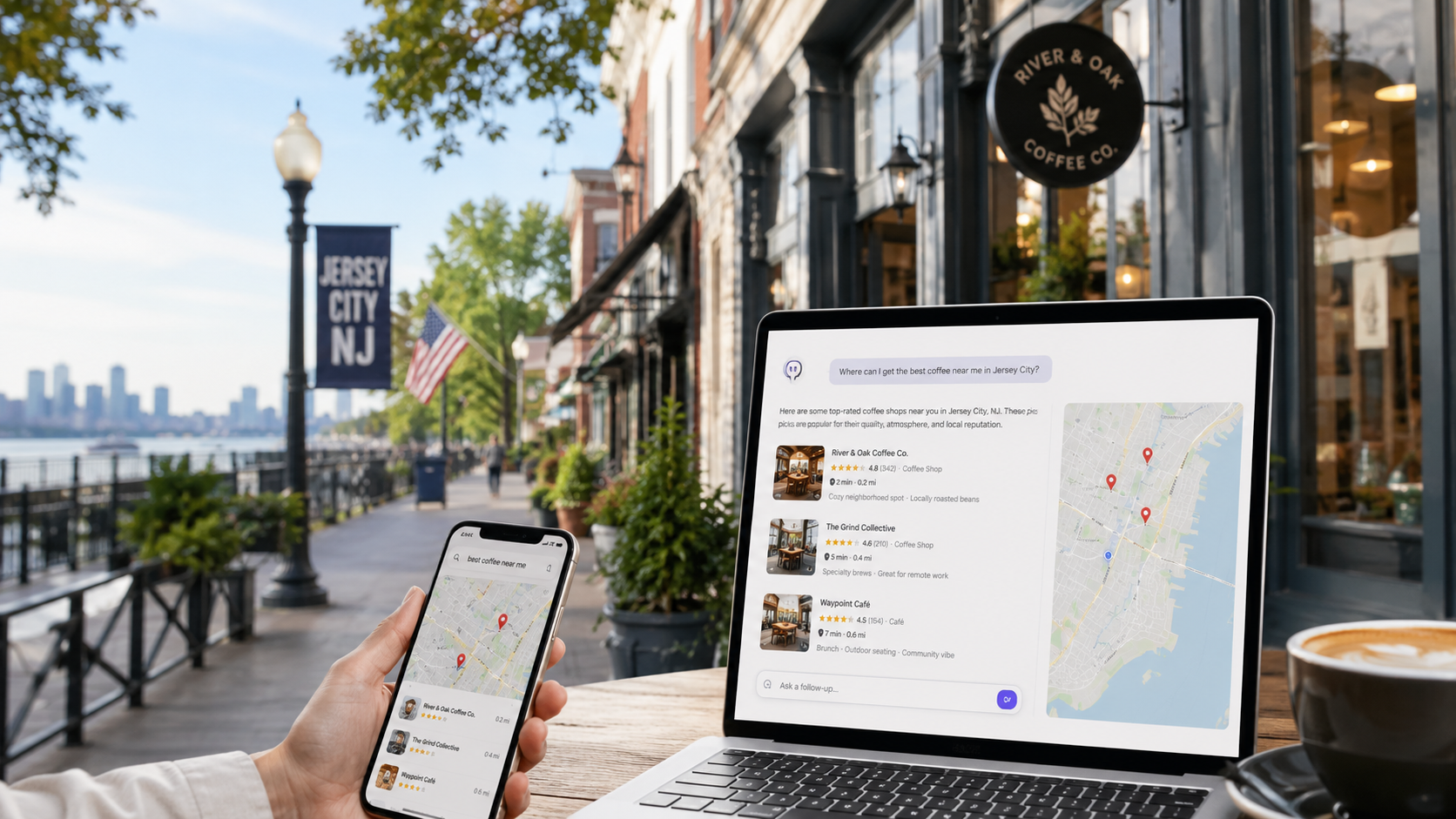
AI Search Is Coming for "Near Me" — What Local NJ Businesses Need to Know About GEO in 2026
"Near me" built the last fifteen years of local marketing. Now 45% of consumers ask AI for recommendations instead, and Google's AI Overviews answer local queries more often than the map pack does. Here's the plain-language GEO briefing for New Jersey businesses — the data, the playbook, and the snake oil to skip.
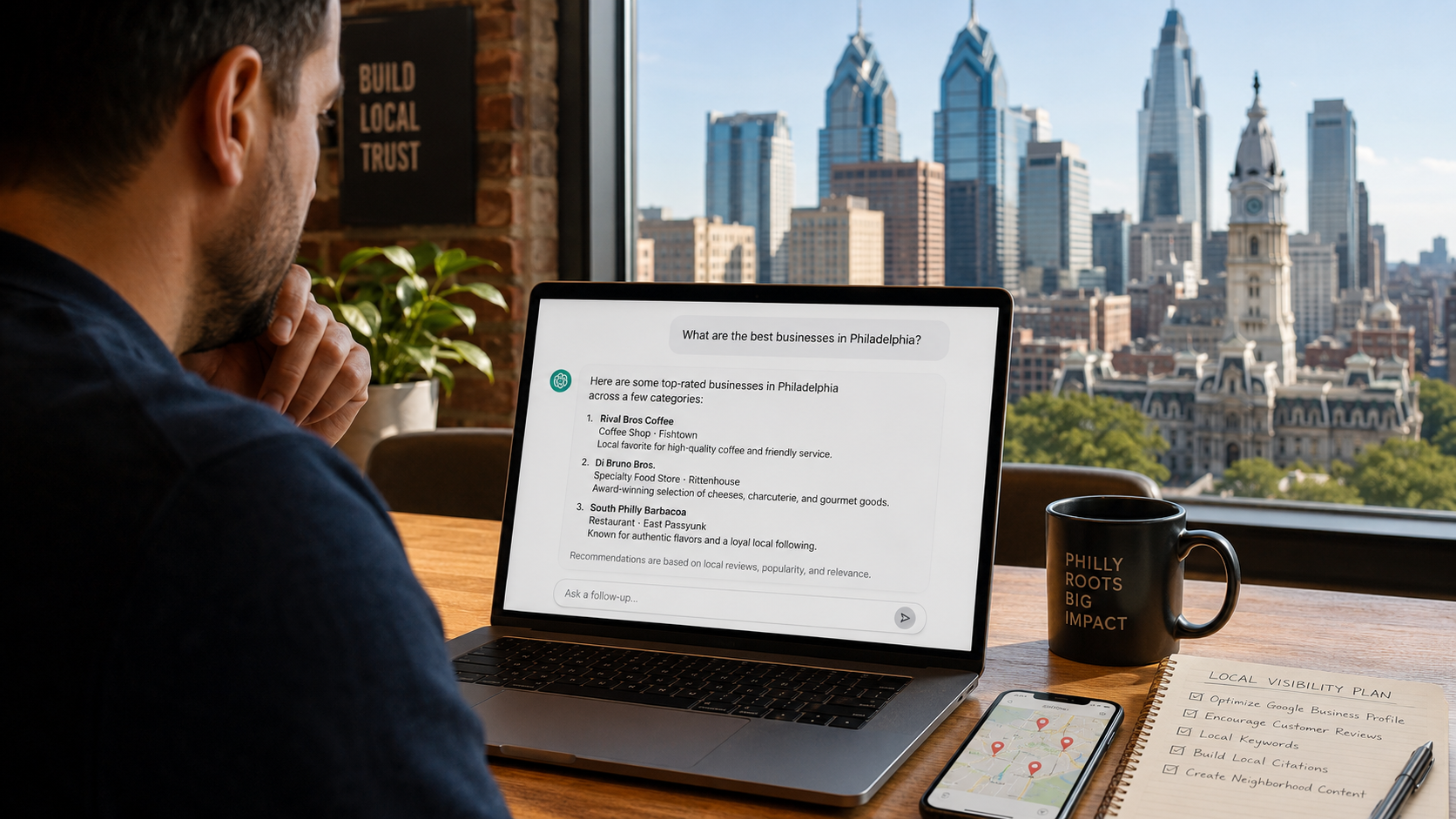
Does Your Philadelphia Business Show Up in ChatGPT? Here's How to Check in 5 Minutes
Ask ChatGPT for the best business in your category in Philadelphia. It will answer, confidently, with names. Here's the 5-minute protocol to find out if one of them is yours — plus what each result means and the fixes you can run yourself.
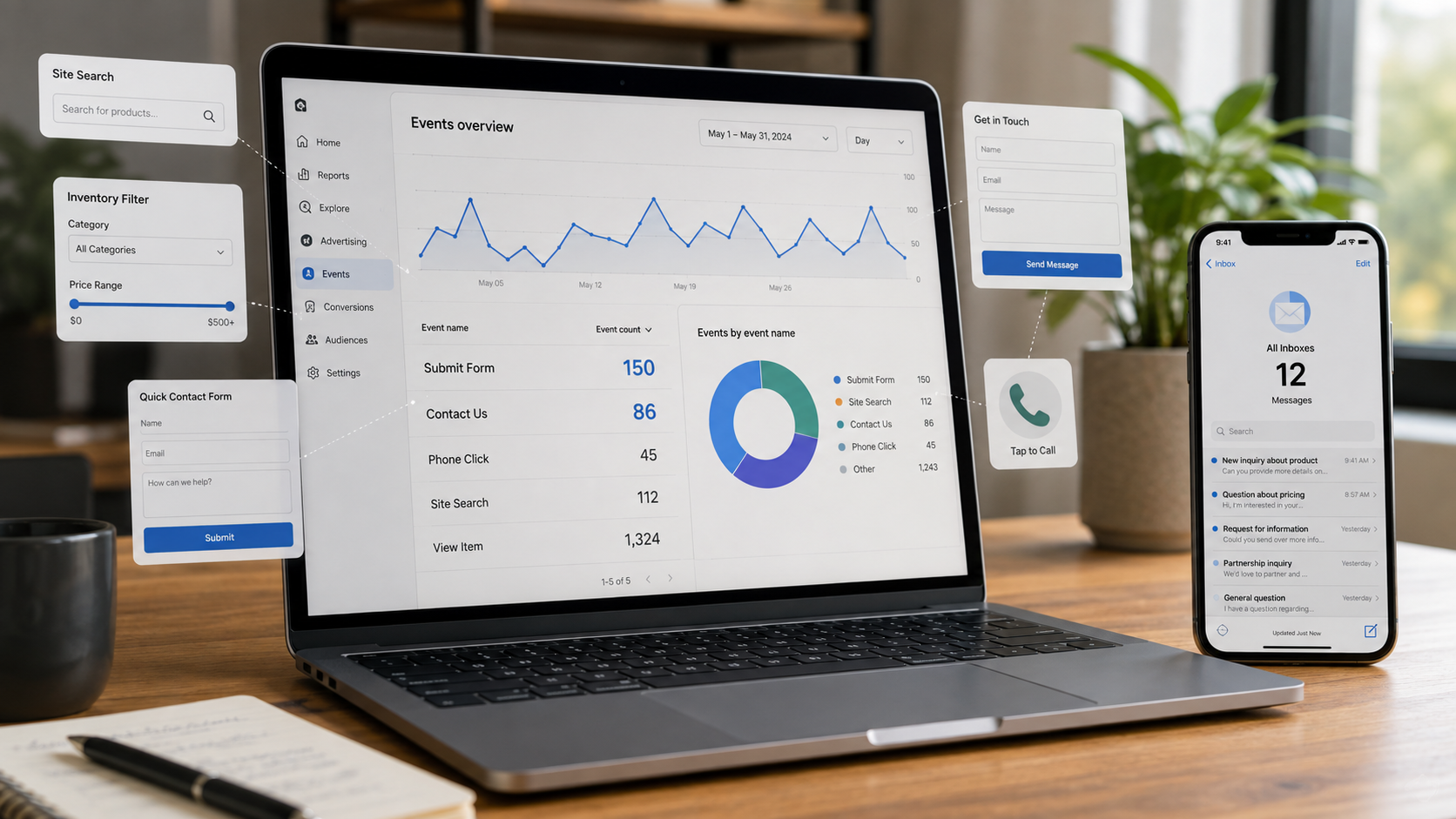
Why Microsoft Clarity's "Submit Form" and "Contact Us" Numbers Can Be Inflated (And What They're Actually Counting)
Clarity's "Submit form" event fires on any browser form submission — including your search box and inventory filters — and "Contact us" counts phone-number taps that never connect. Here's the full mechanical breakdown of why the numbers inflate, with Microsoft's own docs as the source, and how to get counts you can defend.
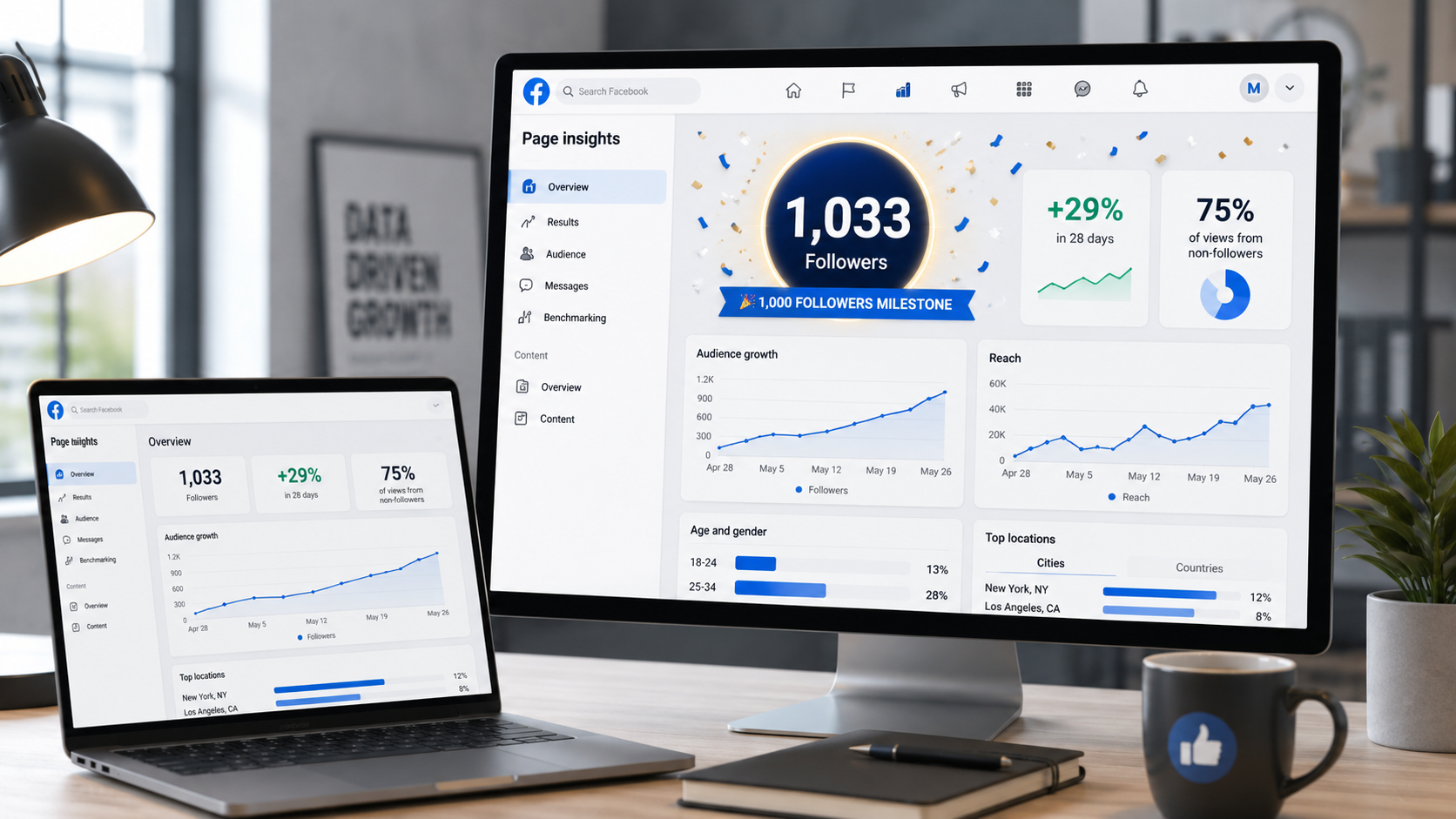
Ritner Digital Just Hit 1,000 Facebook Followers — Here's the Full Breakdown
1,033 followers, +29% in 28 days, and three-quarters of our views coming from people who don't follow us yet. Here's the full dashboard breakdown — the milestone post with the parts most agencies would crop out.

SEO Agency vs. Doing It Yourself: What Actually Makes Sense for a Small South Jersey Business
70% of small business owners spend under five hours a week on all their marketing combined — and that number, not skill, decides whether DIY SEO can work. Here's the honest framework: what you can genuinely win yourself, the four walls DIY hits, and the middle path agencies don't advertise.
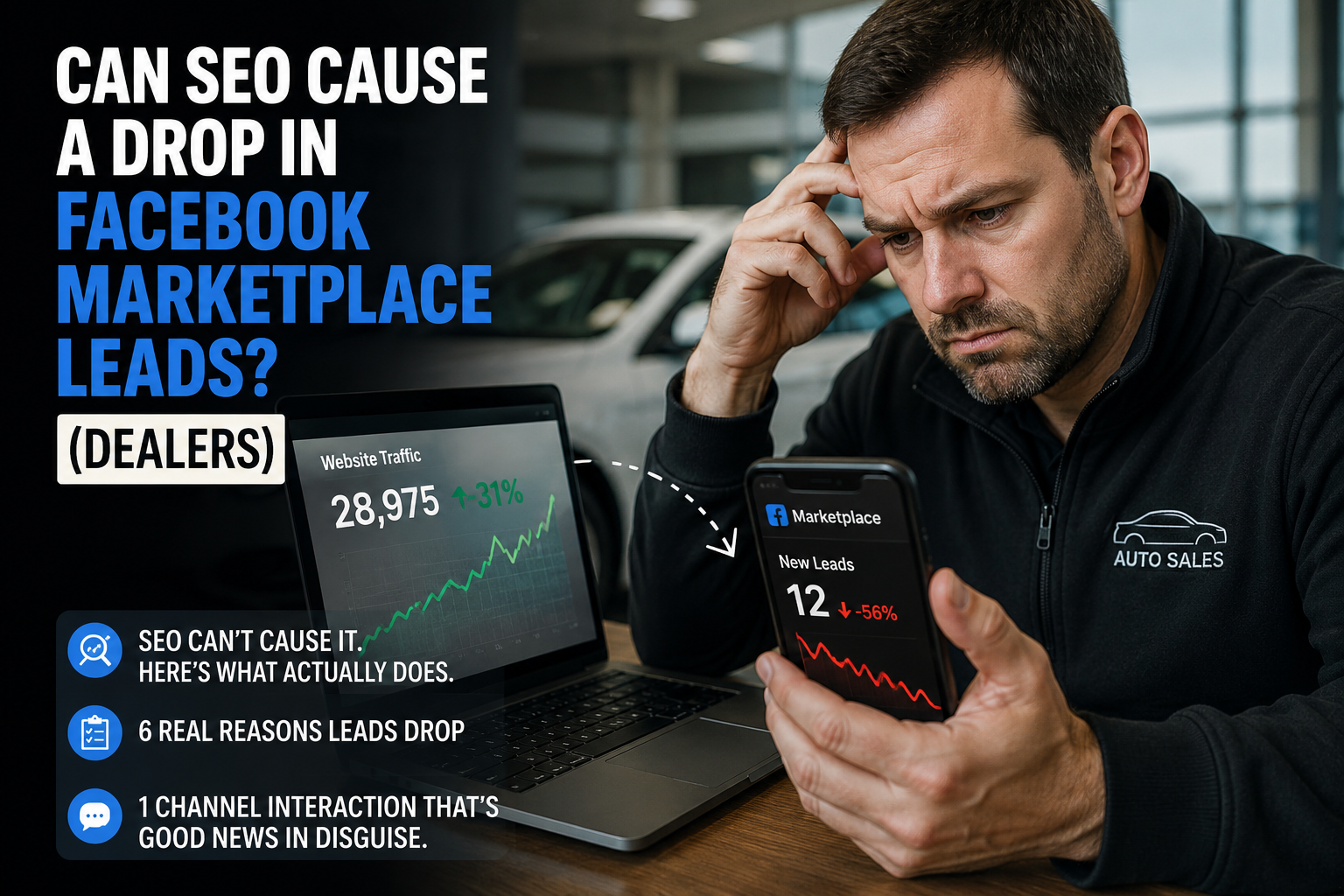
Did SEO Cause Your Facebook Marketplace Leads to Drop? What Car Dealerships Should Actually Check
Your website traffic is climbing, but Facebook Marketplace has gone quiet — and your brain wants to connect the two lines. Here's why SEO can't cause a Marketplace dip, the six things that actually do, and the one real channel interaction that's good news in disguise.
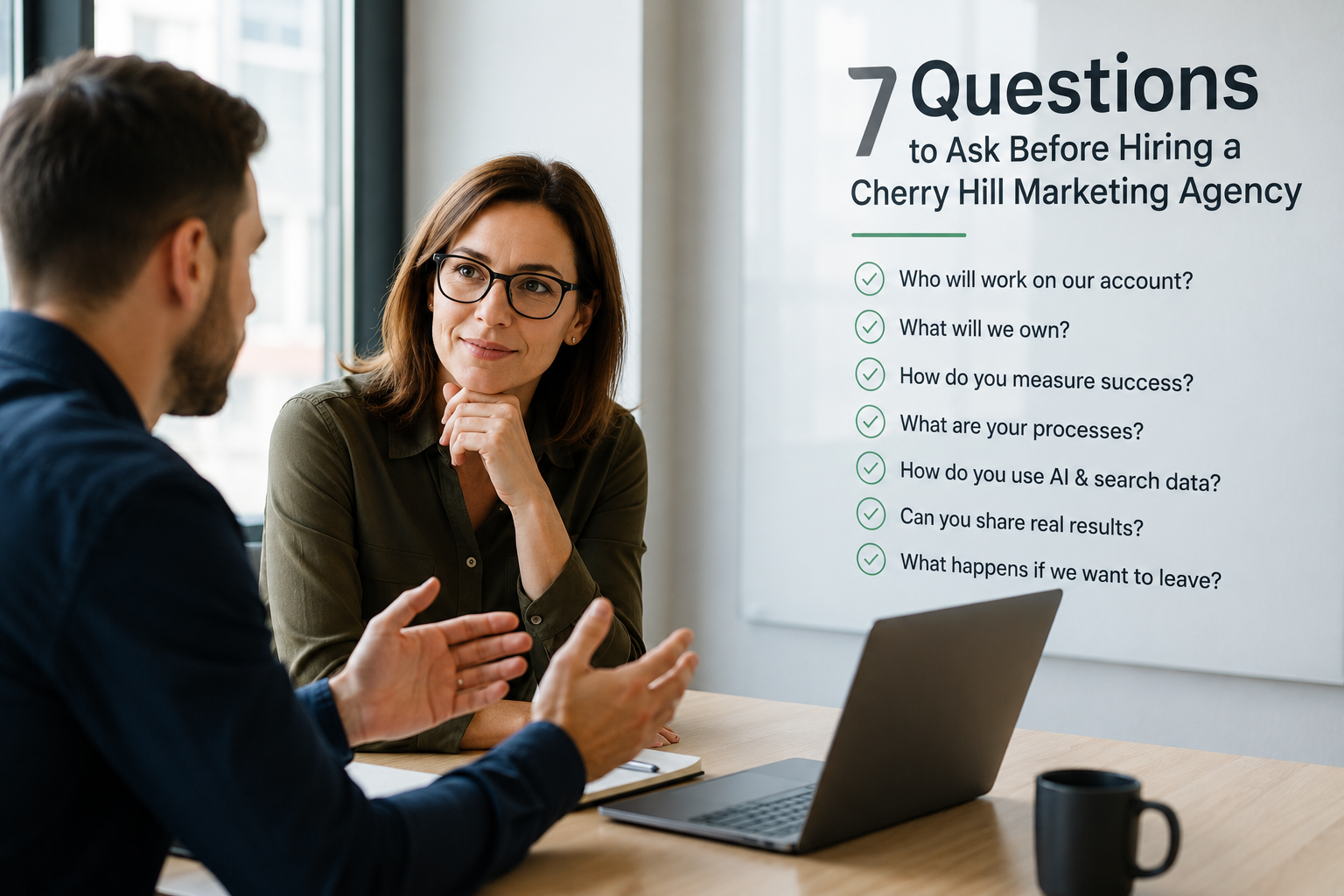
The 7 Questions Cherry Hill Businesses Should Ask Before Hiring a Marketing Agency
Delivery dissatisfaction is the #1 reason businesses fire their agency — yet agencies rank it seventh on their own list. That gap is where budgets go to die. Here are the seven questions that close it, with the red-flag answers to walk away from.
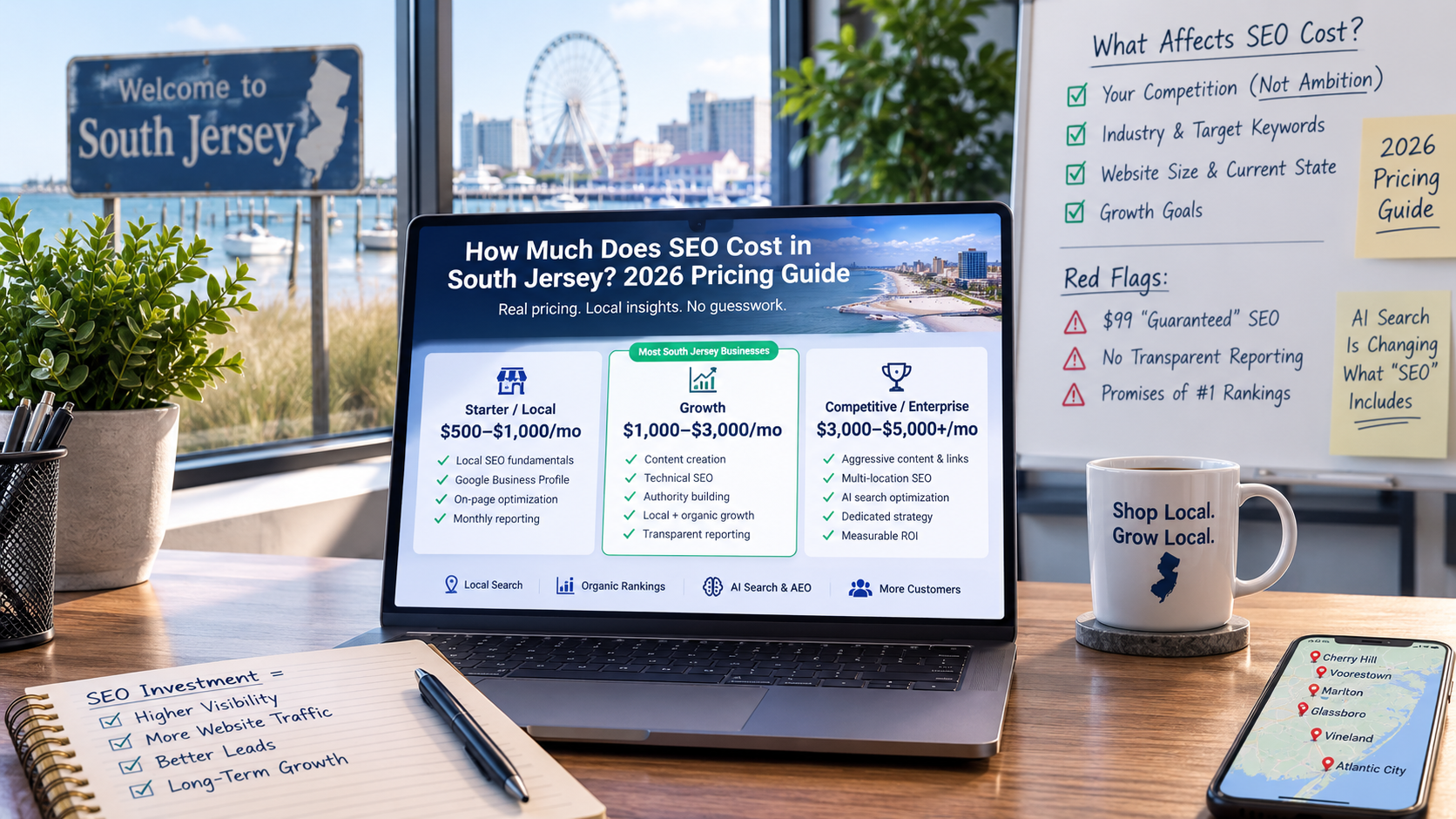
How Much Does SEO Cost in South Jersey? Real Pricing from a Local Agency (2026)
Most South Jersey businesses pay $500–$3,000/month for legitimate SEO — but the right number depends on your competition, not your ambition. Here's real 2026 pricing by tier, what you should actually get at each level, the red flags that burn local businesses, and why AI search is quietly changing what "SEO" includes.
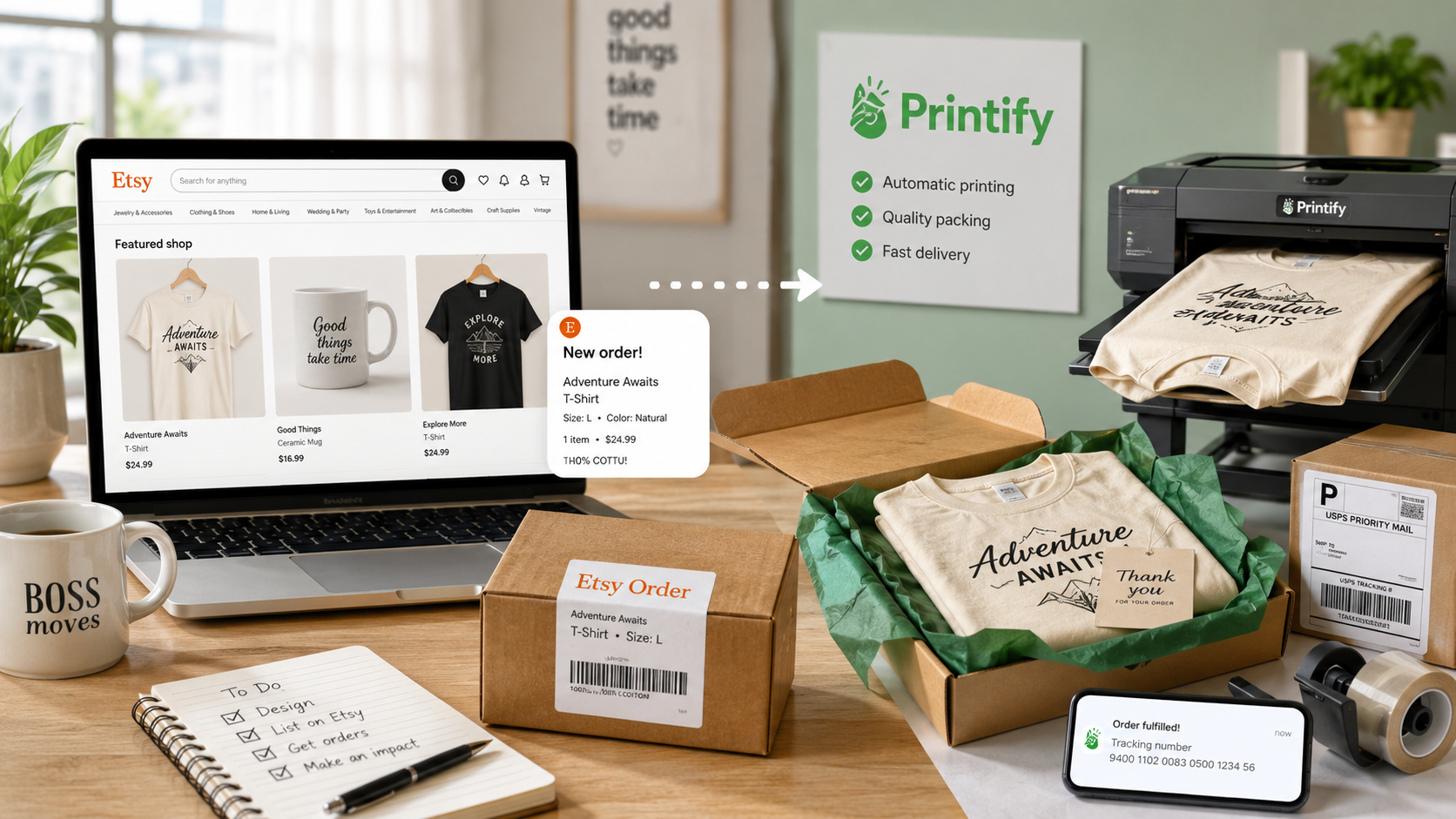
Etsy or Printify: Which Is the Better Place to Set Up Shop? (Trick Question — They Do Completely Different Jobs)
Trying to decide between setting up shop on Etsy or Printify? It's a trick question — they do completely different jobs. Etsy is the marketplace: the storefront and the 86 million buyers walking past it. Printify is the print-on-demand fulfillment service: when someone orders your design, it automatically routes to a print provider who prints, packs, and ships straight to your customer — you never touch inventory. In this guide, we break down the full stack: how the design-to-doorstep workflow actually works, Printify vs. Printful vs. Gelato for fulfillment, the real Etsy fee math (spoiler: ~24% total take rate, roughly $6–9 margin per t-shirt), the disclosure rules you must follow, and when to graduate from renting Etsy's audience to owning your own storefront.
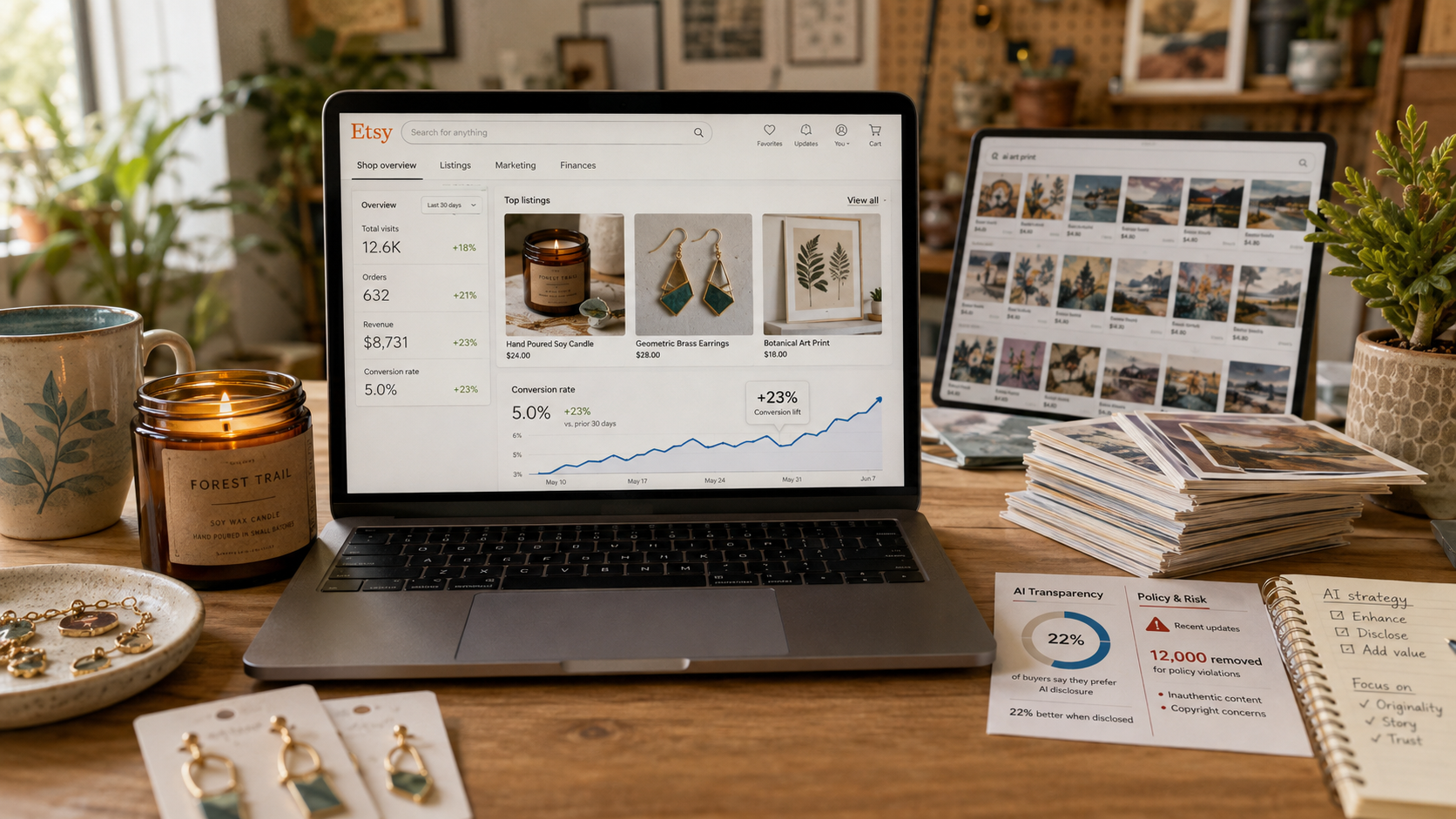
Have AI Images Actually Increased Etsy Sales? Here's What the Data Really Says
Ask whether AI images have increased Etsy shops and you'll hear two opposite stories — a gold rush of five-figure AI art sellers, and a flooded marketplace where real artists are watching sales collapse. Both are pointing at real data about different things. In this guide, we split the question into its three actual parts: AI-enhanced photos of real products (where conversion data shows lifts of 23% or more), AI-generated products as the product (where saturation, price wars, and Etsy's 2026 disclosure crackdown — 12,000 listings removed in Q1 alone — changed the math), and Etsy's own $200M platform AI (which generated $1B+ in sales through Gift Mode). Plus the most counterintuitive stat in the whole topic: disclosed AI listings convert 22% better than hidden ones.
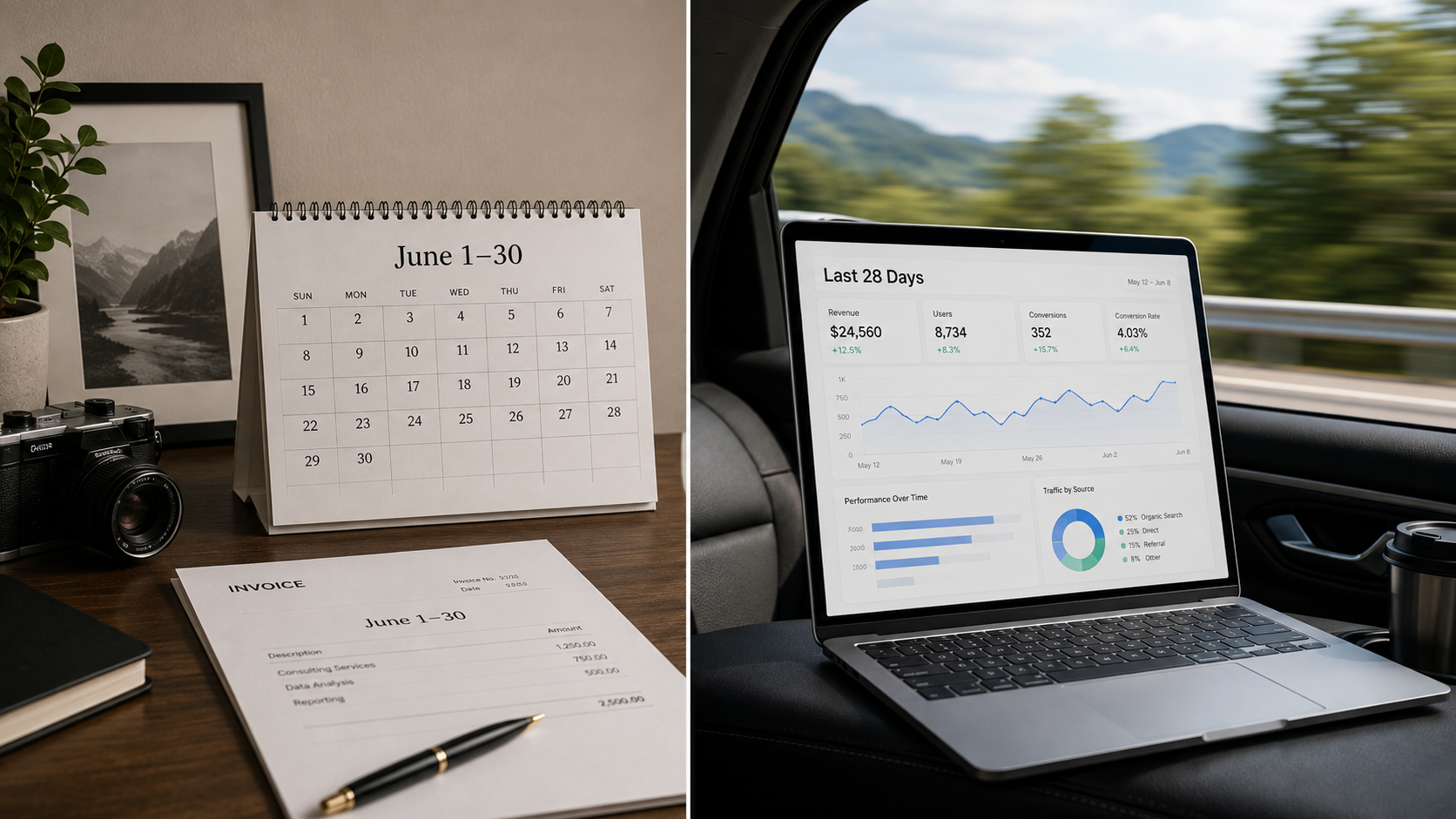
Rolling Window vs. Fixed Date Range: What's the Difference, and Why Does Your Reporting Keep Using Both?
Your dashboard says "last 28 days." Your invoice says "June 1–30." Both are date ranges — so why do they never agree? In this guide, we break down the difference between rolling windows and fixed date ranges in plain English: a fixed range is a photograph (stable, citable, calendar-shaped), while a rolling window is the view out a moving car (always current, recalculated daily). We cover where each shows up — from Google Search Console's 28-day window to trailing-twelve-month revenue — the signature traps of each (spike anniversaries, five-Monday months, overlapping snapshots), and the one rule that prevents most reporting arguments: monitor on rolling, record on fixed.
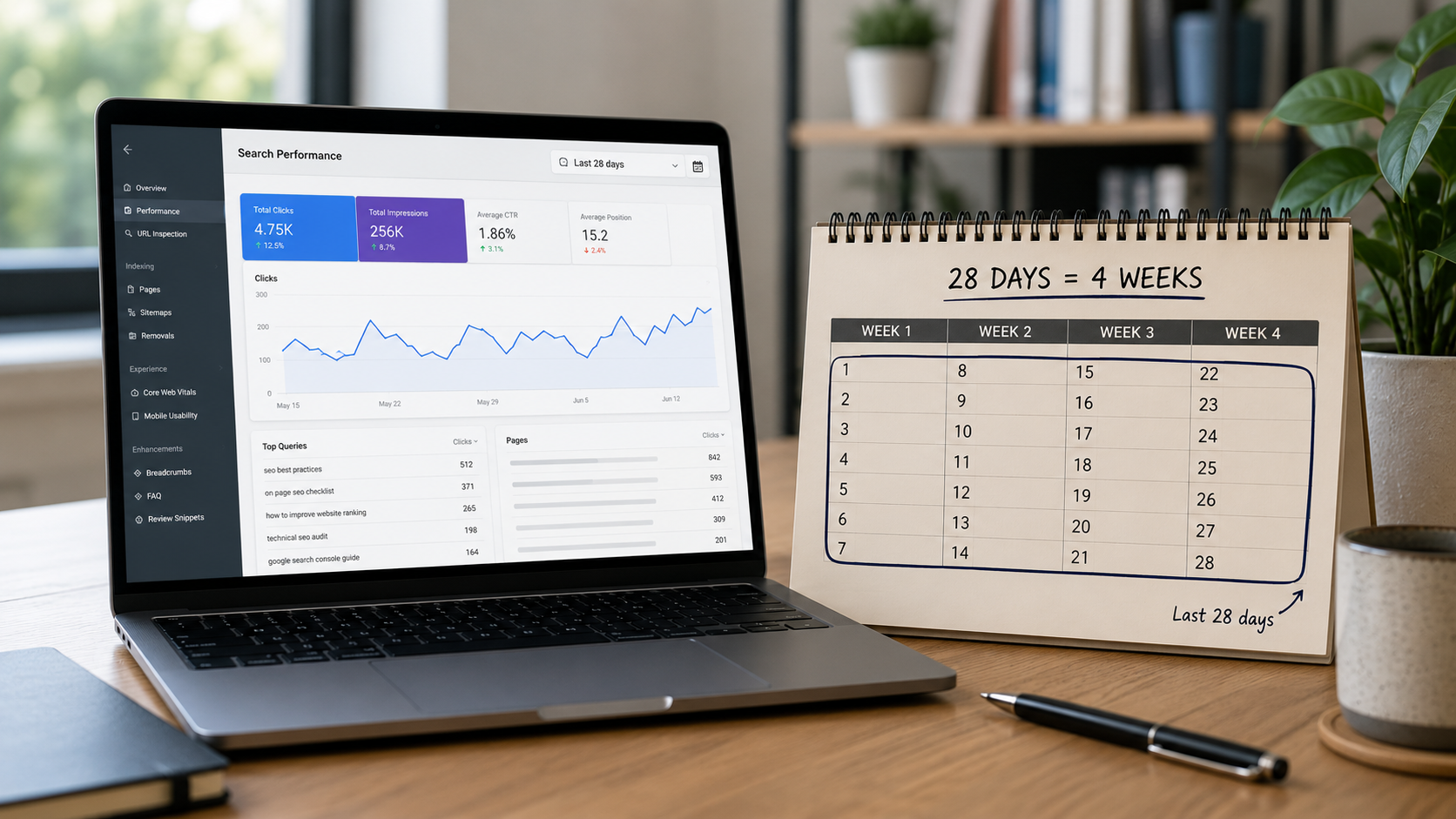
What Does "28 Days" Mean in Google Search Console? (And Why It's 28 and Not 30)
The number 28 is everywhere in Google Search Console — the Performance report, the Insights page, the Achievements milestones, even the emails. But what does "last 28 days" actually mean, and why 28 instead of 30? The answer is smarter than it looks: 28 days is exactly four weeks, so every window contains the same number of each weekday, making any period cleanly comparable to any other. In this guide, we explain how the rolling window really behaves — including why your totals can drop when nothing is wrong, why Achievement badges stay even when your clicks dip back down, why GSC never matches Google Analytics, and the "spike anniversary" effect that causes most false traffic panics.
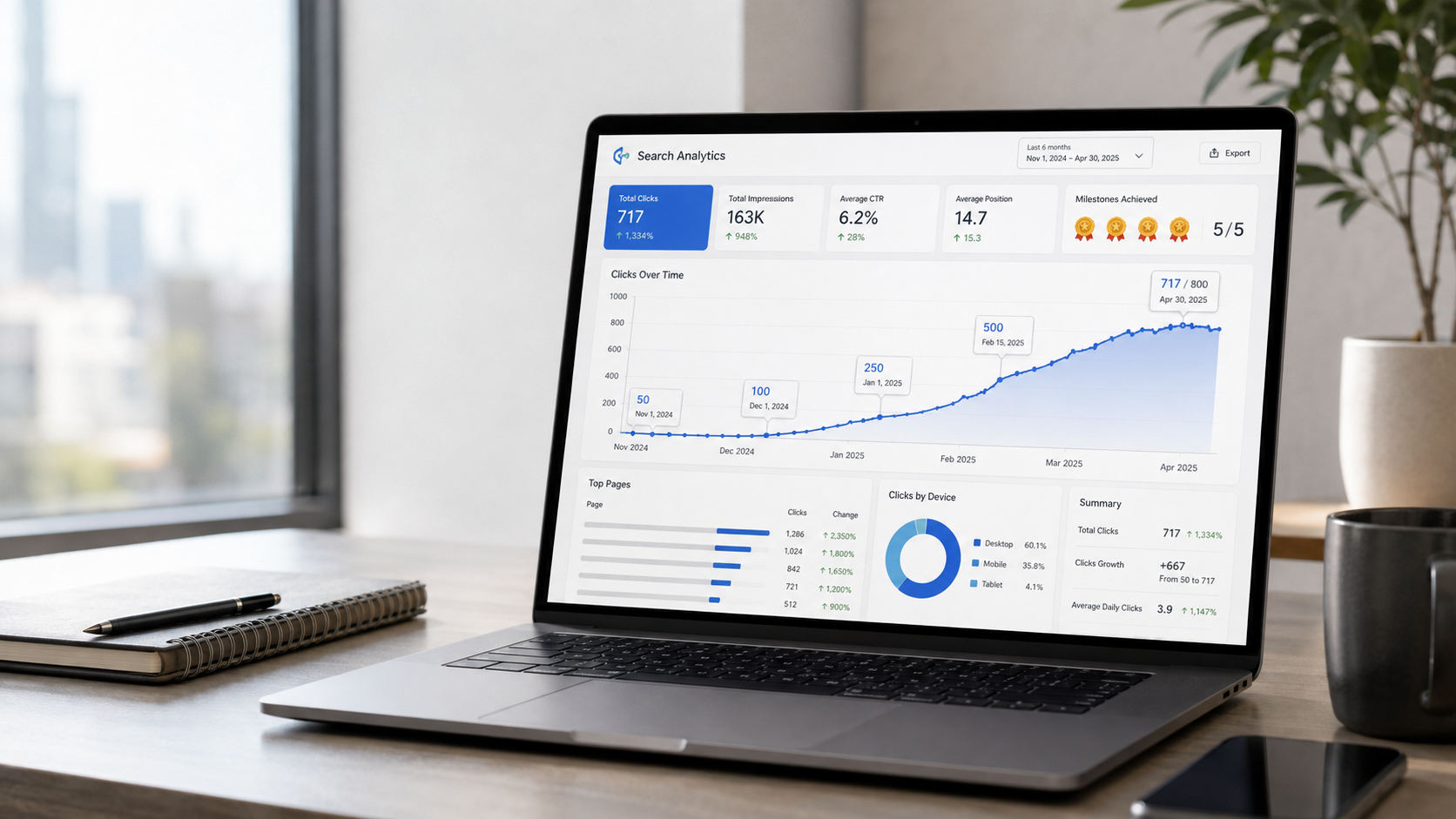
From 50 to 700 Clicks: Our Real Google Search Console Achievements Timeline (And What It Teaches About How SEO Growth Actually Works)
Most agencies tell you SEO compounds. Almost none show you their own dashboard. In this post, we publish our complete Google Search Console Achievements timeline — every click milestone for ritnerdigital.com, with the real dates, from our first 50-click badge in February to 717/800 today. The gaps between the dates tell the whole story: ten slow weeks to go from 50 to 100 clicks, then a three-week run where clicks doubled from 250 to 500 in just 17 days, then an honest plateau. We break down the four phases of compounding SEO growth, explain how the Achievements report works and where to find it, and share exactly what we did to drive a 14x increase in six months.
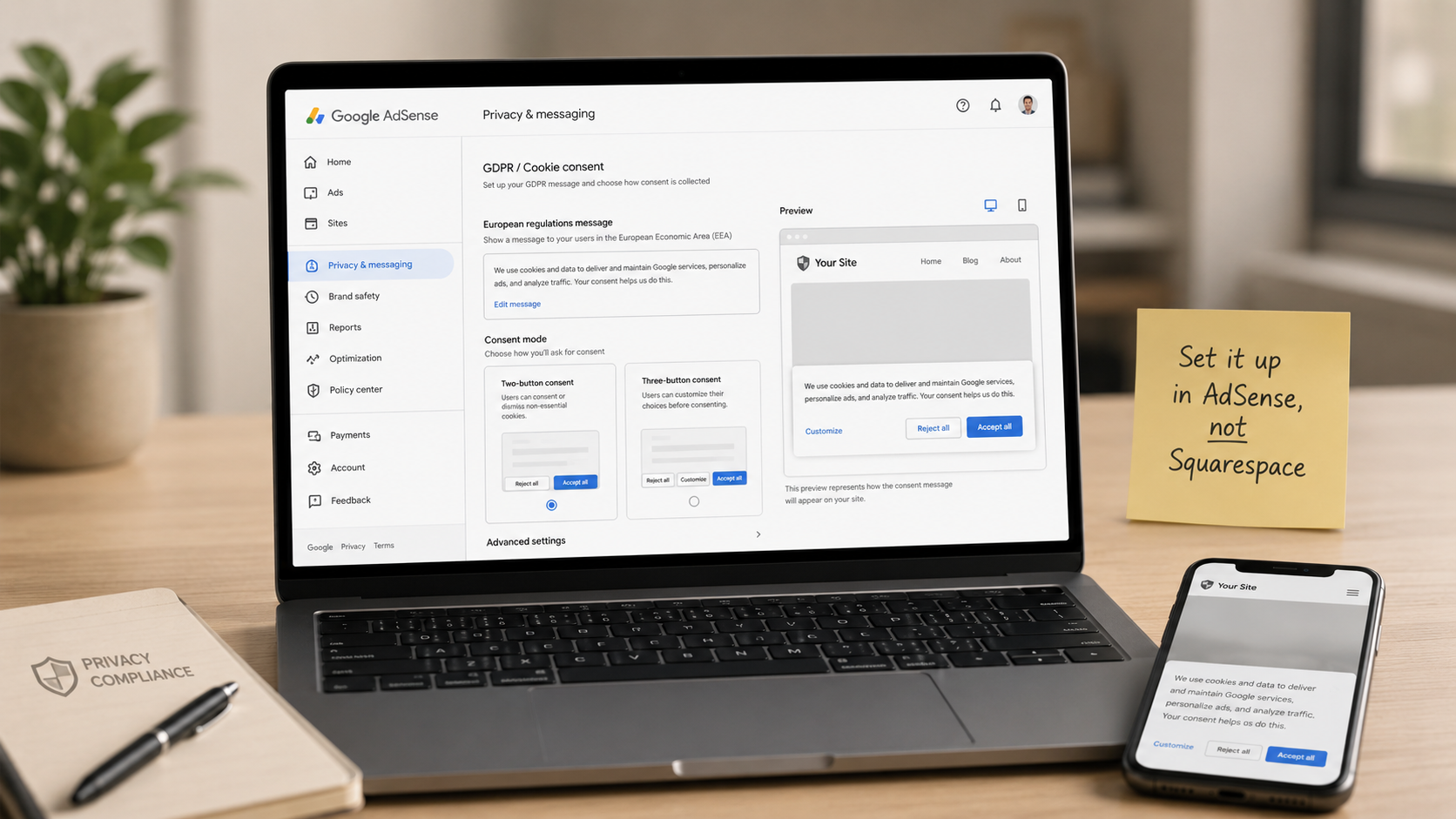
Where Do You Actually Set Up the AdSense Cookie Consent Banner? A For-Dummies Walkthrough (Squarespace Edition)
You know you need a Google-certified cookie consent banner to run AdSense — but where do you actually go to turn it on? Not Squarespace. The banner lives inside your AdSense account, in a sidebar menu called Privacy & messaging that most publishers have never clicked. This for-dummies walkthrough covers every step: creating the European regulations (GDPR) message, choosing between the two-button and three-button consent setup, enabling the US states message while you're there, testing it with a VPN (spoiler: you can't see the banner from New Jersey — that's by design), and what to do about Squarespace's built-in cookie banner so your European visitors don't get prompted twice. No code, no cost, about 20 minutes.
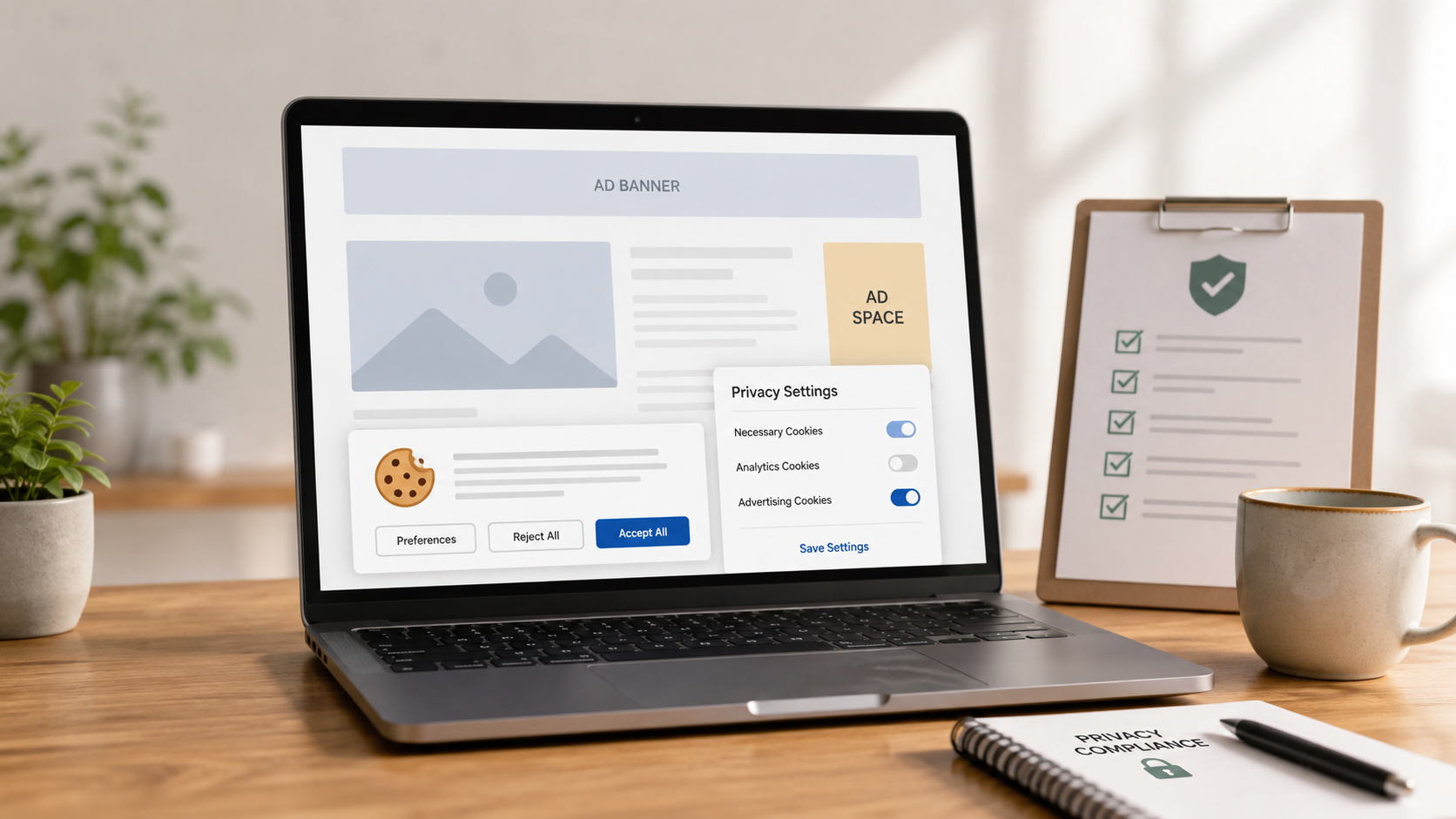
Do You Need Cookies Set Up on Your Site to Run Google AdSense?
Do you need cookies set up on your website before running Google AdSense? Not the way most people think — AdSense creates and manages its own cookies automatically the moment the ad code loads. What you're actually required to set up is the framework around them: a privacy policy disclosing Google's advertising cookies (required of every publisher, everywhere), and a Google-certified cookie consent banner if your site can be visited from the EU, UK, or Switzerland — which describes virtually every site on the open internet. This guide covers what AdSense's cookies do, exactly what Google requires, the free built-in CMP that handles compliance in about an hour, and what skipping it costs you in revenue before it ever costs you legally.