
Hiring a C-Suite Executive With No Personal Brand Is a Strategic Risk. Here's What It's Actually Costing You.
A decade ago, a senior executive with no personal brand was unremarkable. Gravitas came from being unreachable, and anyone too active on LinkedIn was probably just looking for their next job. That world is gone. In 2026, an executive with no public footprint isn't projecting gravitas — they're projecting absence, and the cost to the companies that hire them is no longer hypothetical. Edelman puts 71% of consumer trust on the line. Weber Shandwick ties 44% of company market value to CEO reputation. Brunswick finds 82% of candidates research an executive's online presence before accepting a role. Here's what hiring senior leaders with no personal brand is actually costing your company, why most great executives don't have one, and what to do about it without asking the executive to add another full-time job to their plate.
The Auto Sales LinkedIn Loophole: Why Personal Social Branding Works But a Personal Lead-Gen Website Doesn't
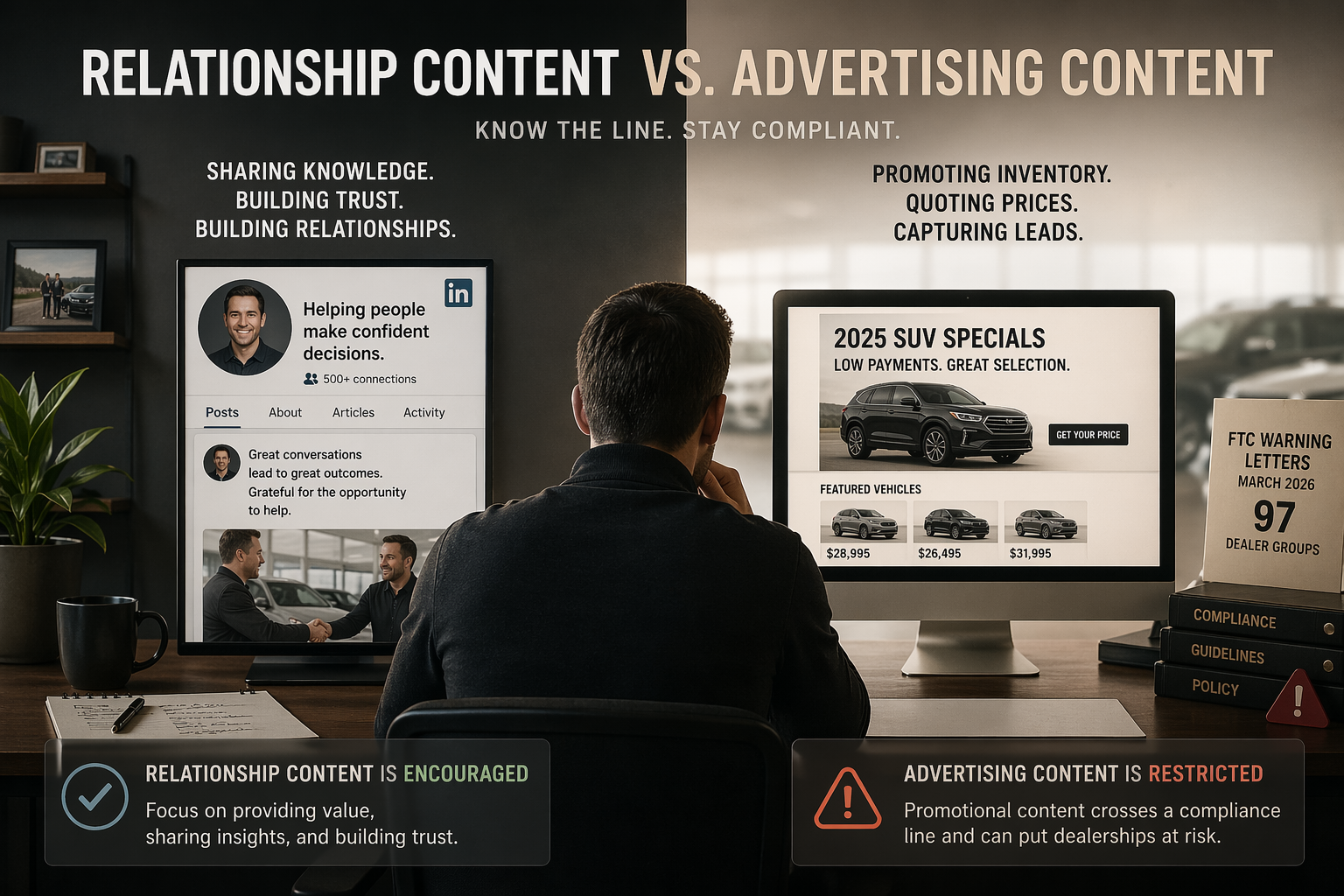
A car salesperson can build a 40,000-follower LinkedIn presence, post daily, and become an industry personality — and their dealership will encourage every minute of it. That same salesperson can't build a personal website that advertises vehicles, quotes prices, and captures leads, and if they do, the dealership will shut it down. It looks arbitrary until you realize the distinction isn't between social media and websites at all. It's between relationship content and advertising content — and in the wake of the FTC's March 2026 warning letters to 97 dealer groups, the line has never been sharper. Here's why personal branding works in one channel and crosses a compliance line in the other, and what dealerships and salespeople should actually be doing about it.
Why Real Estate Agents Build Personal Websites and Car Salespeople Don't: A Regulatory Tale of Two Sales Jobs
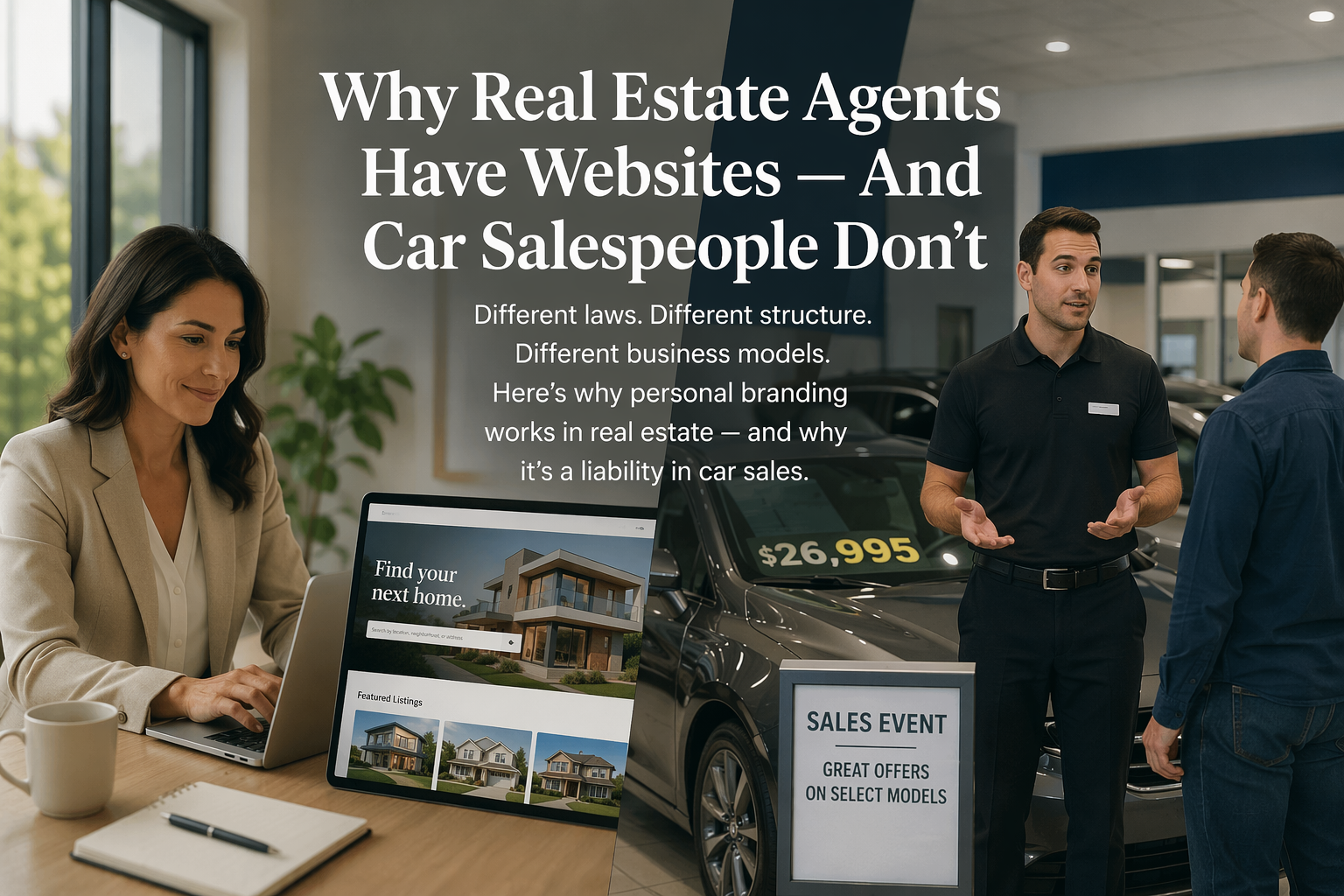
Every real estate agent seems to have their own website. No car salesperson does. It's not a matter of ambition, tech-savviness, or marketing sophistication — it's a matter of law. Real estate agents are federally classified as independent contractors who own their client relationships and keep their pipelines when they change brokerages. Car salespeople are legally defined as employees of licensed dealers, with licenses tied to specific stores and advertising compliance obligations that make independent marketing a liability rather than an asset. Here's why that structural difference matters for every business trying to figure out where personal branding actually works — and where company-level marketing is the only strategy that pays off.
Why Your Site Title Should Do More Than Just Say Your Name
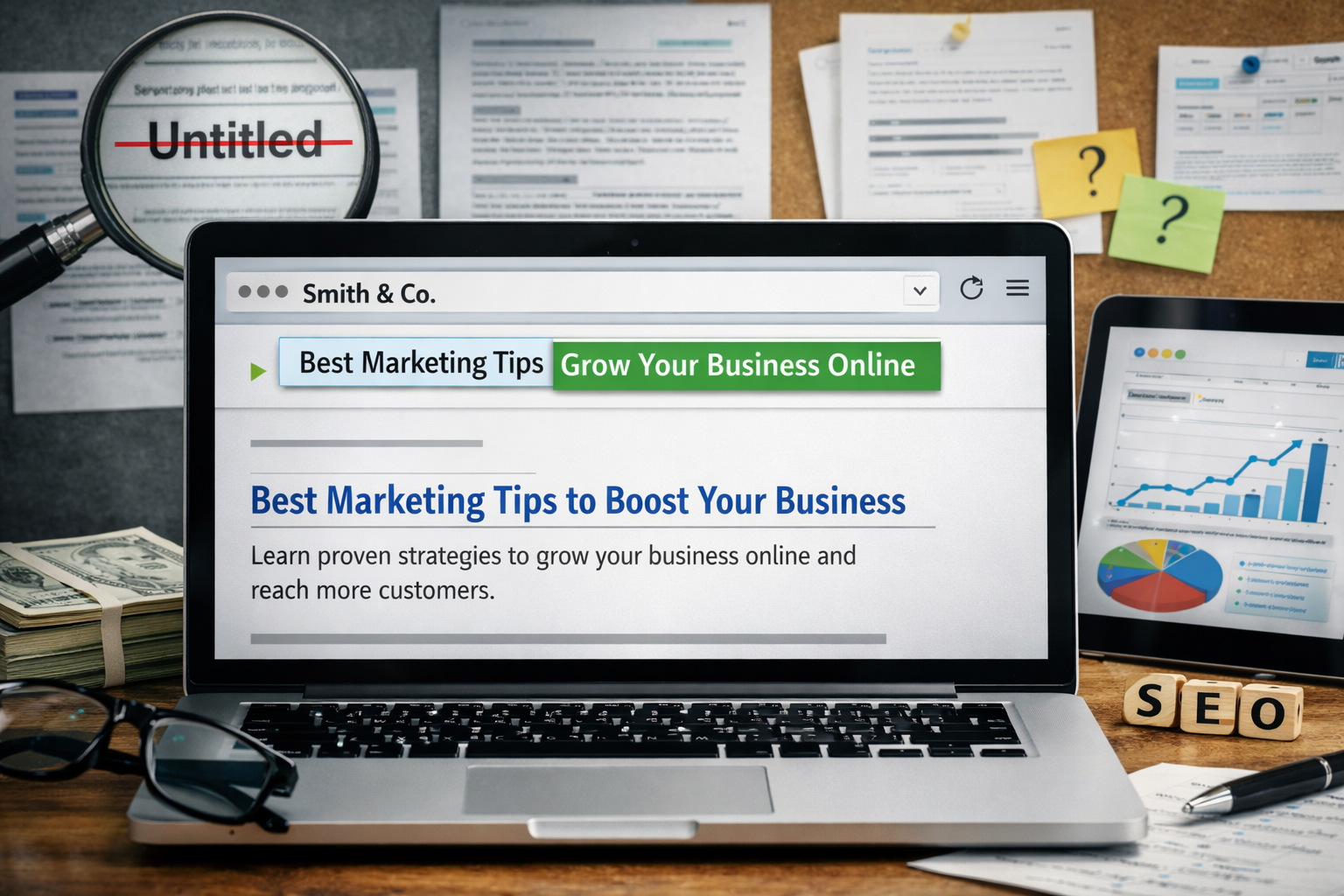
If your homepage title tag is just your business name, you're leaving money on the table. Google rewrites 76% of title tags — usually by stripping brand names — because they don't tell searchers what your page is about. Here's how to write a title tag that actually works for you.

Named Clients vs. Anonymous Case Studies: Which Actually Helps You Get Cited by AI Search?
This is the debate quietly happening inside every marketing team right now. One side says list every client logo you're allowed to name on the homepage — because AI engines need named entities to understand who you work with. The other side says anonymous case studies are safer, more compliant, and let you use bigger numbers. Both camps have a point, but if your goal is actually getting cited by ChatGPT, Perplexity, and Google AI Overviews, the answer isn't close. Named clients win — and not for the reason you think. Here's what's actually happening under the hood, and how to structure your site to take advantage.
Should You Add Your Agency to Your Website's Footer? The Honest SEO Answer
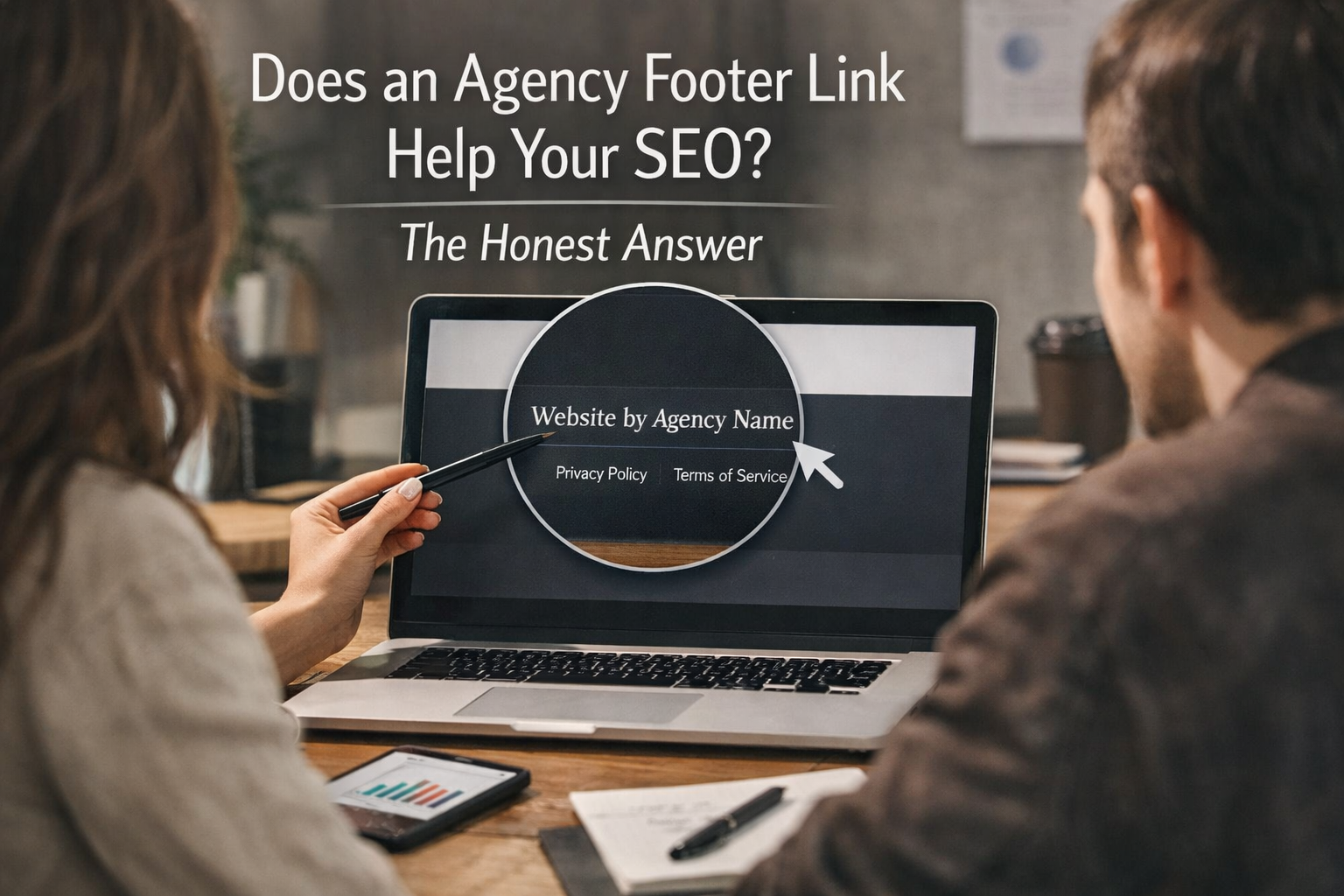
Walk through the footer of almost any small business website and you'll see it: "Website by [Agency Name]" with a link back to whoever built the site. It's been standard practice for two decades, and somewhere along the way both sides started quietly believing it was helping the client's SEO too. Here's the uncomfortable truth: in most cases, a dofollow footer link pointing from your site to your agency doesn't help your SEO at all. It helps the agency's — and depending on how it's implemented, it can actively hurt yours. Here's the honest breakdown.
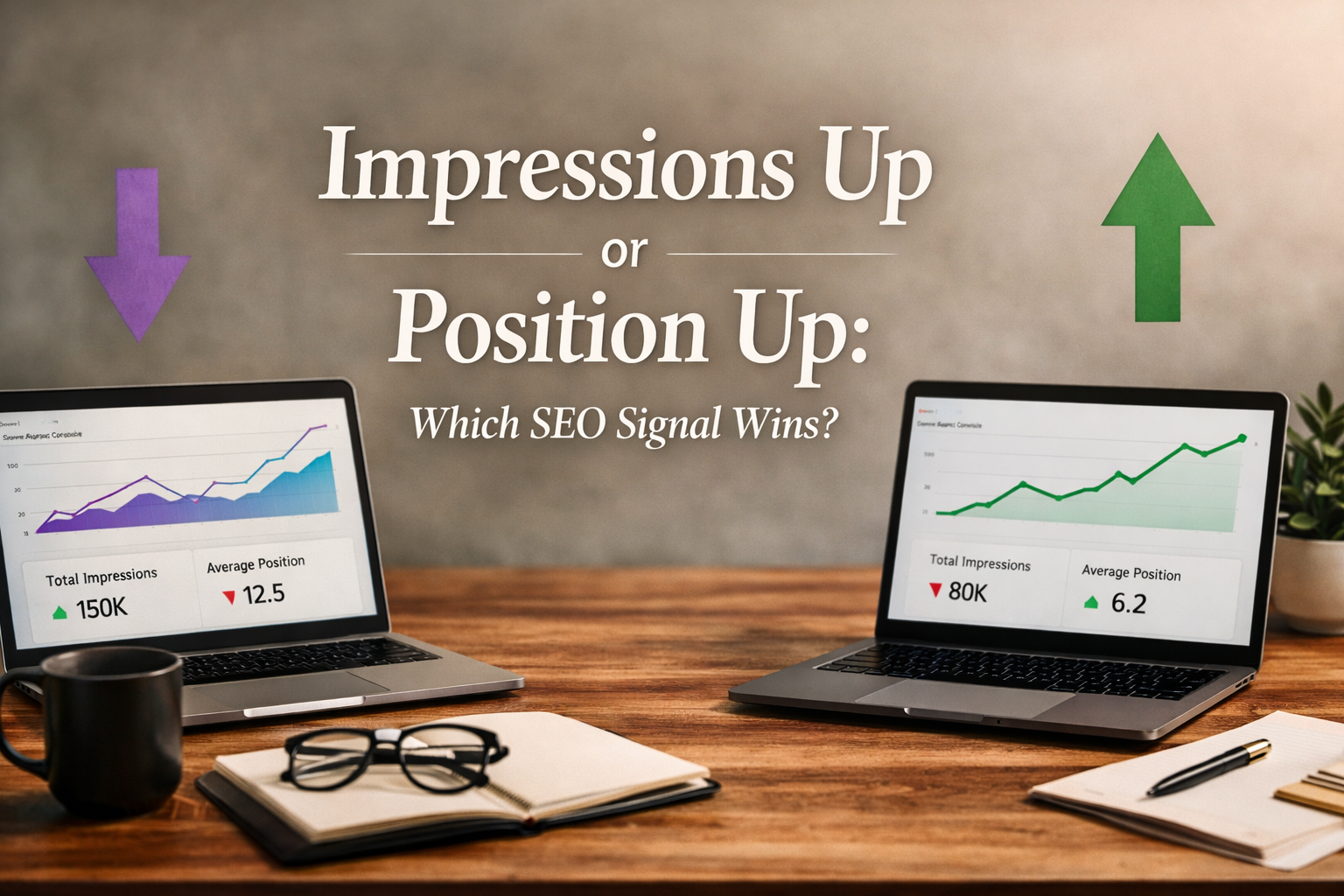
Impressions Up and Position Down — Or Position Up and Impressions Down? What Your Search Console Data Actually Says About Your SEO Maturity
If you've spent any real time in Google Search Console, you've heard both sides of this argument — usually from different SEOs, usually within the same week. "Impressions are up, position is down — that's great." Or the opposite: "Impressions are down, position is up — that's great." Both are technically defensible. Both are also how agencies quietly reframe flat performance as a win. So which one is actually better, and what does each pattern tell you about where your SEO program really sits on the maturity curve? Here's the honest breakdown.
Which Industries Have the Longest Marketing Cycles — And What Does the Data Actually Say?
A plumber can run an ad on Monday and have a booked job by Tuesday. A university might spend 18 months nurturing a prospective student before an application ever gets submitted. The length of your marketing cycle isn't random — it's driven by decision size, stakeholder count, emotional stakes, and risk. Ritner Digital digs into the data on which industries have the longest cycles and what it means for your marketing strategy.
Why Doesn't Claude Have an Image Generator Like ChatGPT? (And Why That's Actually Fine for Your Business)
ChatGPT generates images. Gemini generates images. Grok generates images. Claude doesn't — and for business owners trying to build an AI content workflow, that feels like a gap. But the reason behind it is intentional, the workaround is simple, and for most businesses the missing image tool matters far less than you'd think. Here's the honest breakdown.
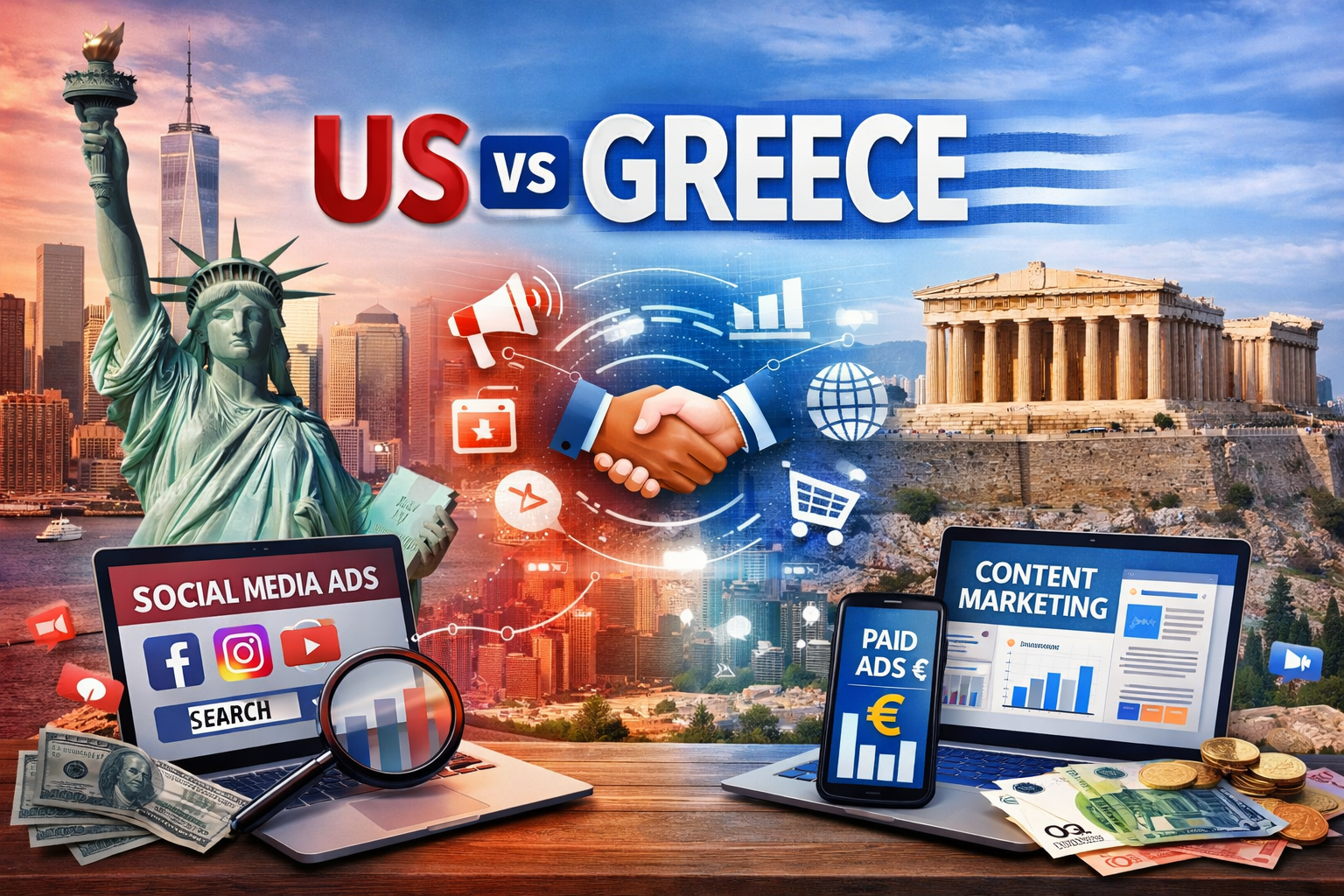
US vs. Greece: How Marketing Trends Compare — And What Each Market Can Learn From the Other
The US and Greece are both digitally connected markets — but the platforms, budgets, consumer behaviors, and trust dynamics that drive results look very different depending on which side of the Atlantic you're operating on. Ritner Digital breaks down the key differences across social media, search, paid advertising, content marketing, and culture — and what businesses in both markets can learn from each other.
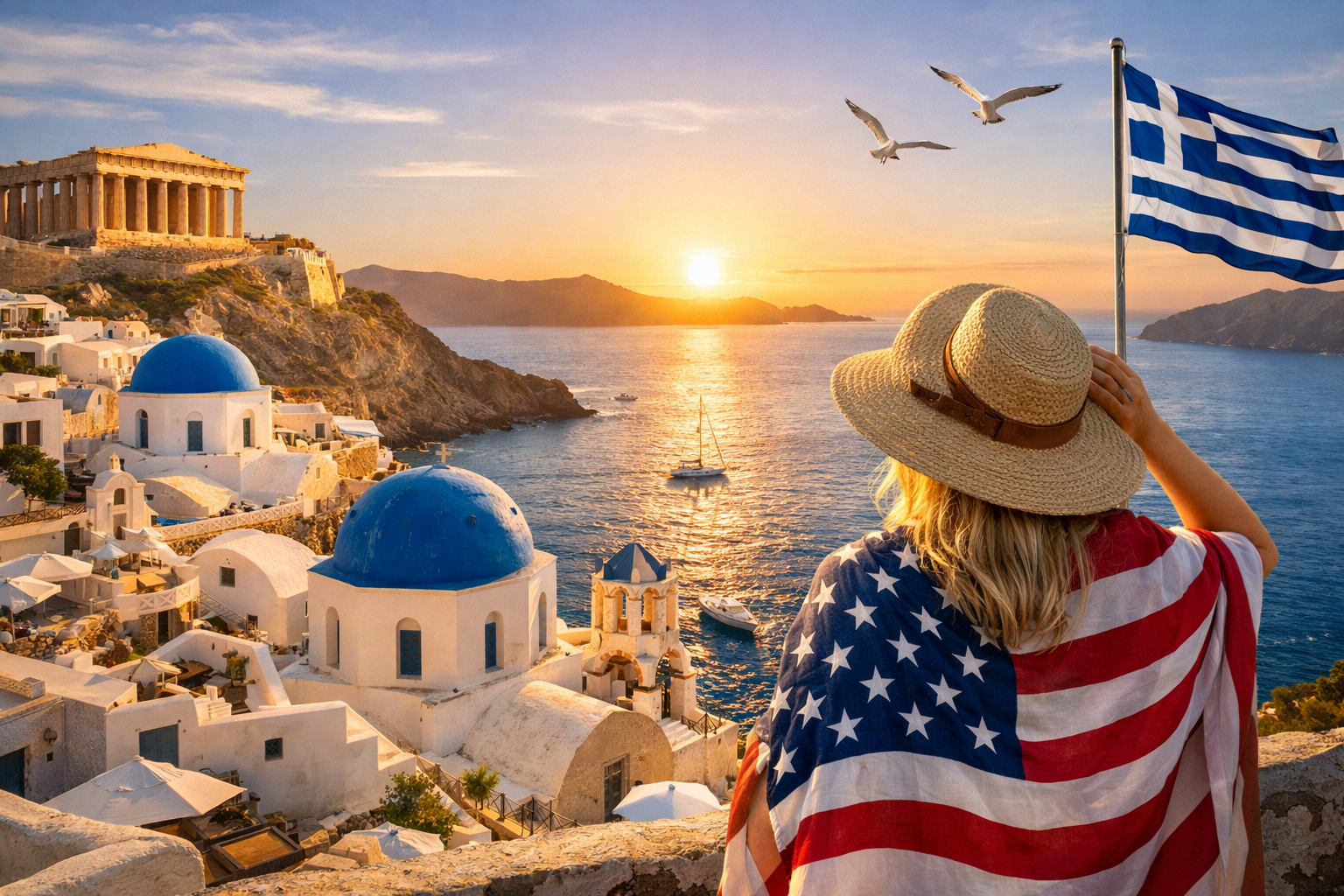
Why Americans Can't Stop Falling in Love With Greece — And What It Means for Travel Marketing
Greece has won the hearts of American travelers for five consecutive years — and the numbers behind that loyalty are staggering. US visitors are Greece's fastest-growing and highest-spending long-haul market, and the reasons run deeper than beautiful islands and ancient ruins. In this post, Ritner Digital unpacks exactly why Greece resonates so powerfully with American audiences, and what travel brands need to understand to market to them effectively.
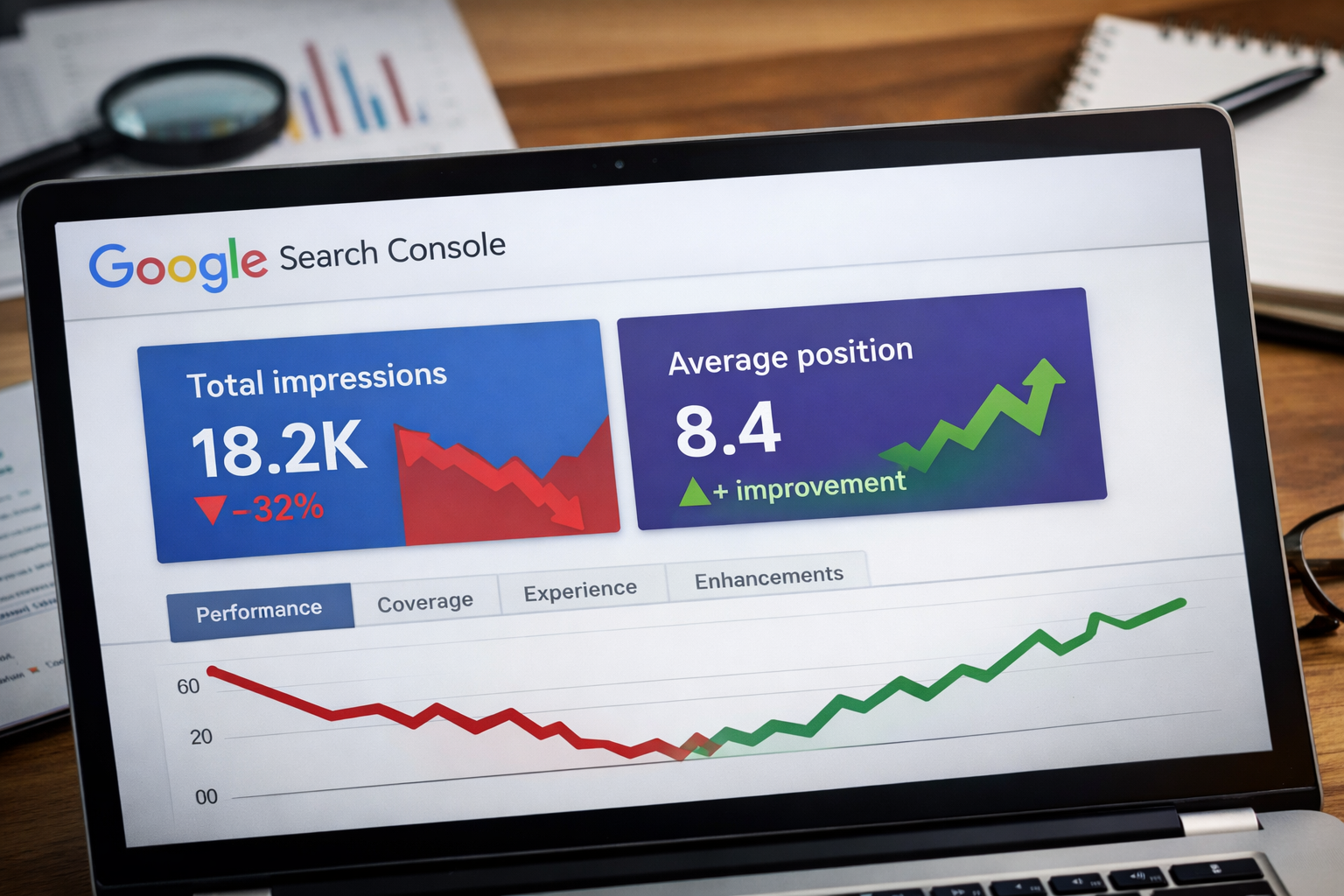
My Impressions Dropped But My Average Position Went Up in Google Search Console — What Does That Mean?
You open Google Search Console and something looks off — your impressions dropped, but your average position improved. That feels like it should be good news, but the dip in visibility has you second-guessing your SEO. Here's what's actually going on, why it usually signals progress rather than problems, and how to know when it's actually worth worrying about.
What Does It Mean to "Stop a Scroll" — And Why Your Business Depends on It
Every day, your potential customers scroll past hundreds of posts without registering most of them. Yours included — unless it does something to make them stop. In this post, Ritner Digital breaks down what "stopping a scroll" actually means, what makes content earn that pause, and why most businesses are unknowingly posting their way into irrelevance.
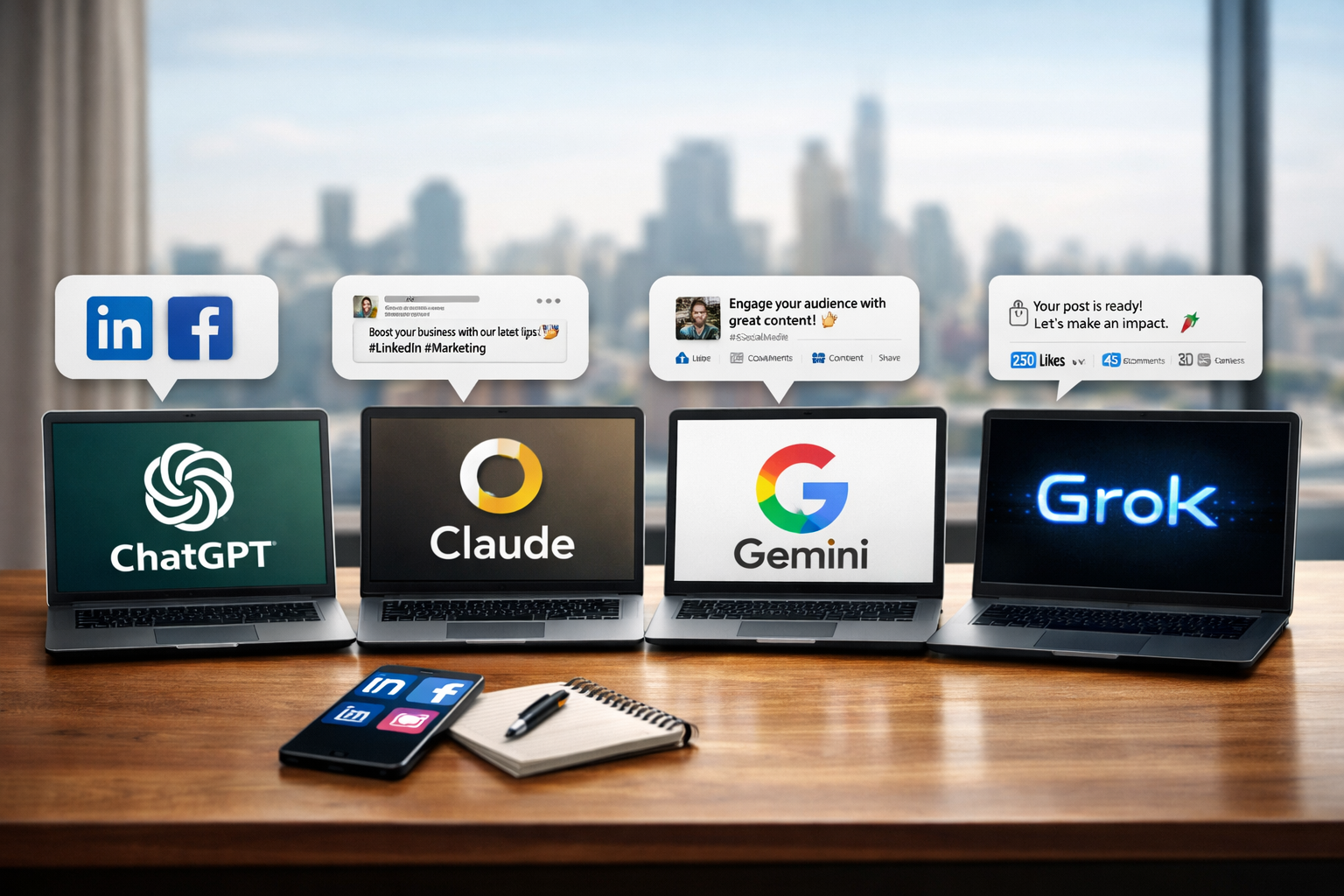
ChatGPT, Claude, Gemini, or Grok: Which AI Writes the Best LinkedIn and Facebook Posts for Your Business?
Every business owner has wondered whether AI can just handle their social media posts. The answer is yes — but only if you're using the right tool. Ritner Digital tested the four biggest AI platforms head-to-head for LinkedIn and Facebook content quality, and the results might surprise you. Here's the honest breakdown, and the clear winner.

From "Is This Thing On?" to Daily Leads: How to Make Your Contact Form Your Best Sales Tool
You built the website. You added the contact form. And then… nothing. If your form isn't generating consistent leads, you're not alone — but you're also not stuck. In this post, Ritner Digital breaks down exactly why most contact forms fail, what the data says about response times and field length, and what a high-converting lead system actually looks like in practice.

Aloha State of Mind: The Biggest Brands Born in Hawaii and What the Islands Are Actually Buying
Hawaii doesn't export brands the way other states do. It exports an idea — and the idea is so powerful, so globally recognized, so emotionally loaded that companies from the mainland have been appropriating it for decades without permission. Hawaiian Punch contains no Hawaiian fruit. Many Kona coffee blends contain as little as 10% beans from the region. And yet from these same islands came King's Hawaiian rolls, Kona Brewing, L&L Hawaiian Barbecue, and the plate lunch — one of the most culturally significant food traditions in America. This is the Hawaii edition of Ritner Digital's State by State Brand Series.
The Top Growing Marketing Channels in 2026 — and What Actually Deserves Your Budget Right Now
If 2025 was the year marketers panicked about what AI was going to do to their strategy, 2026 is the year they have to actually do something about it. The marketing channel landscape has shifted more in the past two years than it did in the previous decade — and the gap between which channels are growing and where most businesses are still spending is wider than it should be. This is a grounded, data-backed breakdown of the channels that are actually delivering in 2026, what the research says about each one, and what businesses of every size should understand before they finalize where their marketing budget goes this year.

Are Home Parties Still a Thing in 2026? The Rise, Fall, and Quietly Complicated Present of the Direct Sales Model — and Why Millennial Moms Might Be Its Next Chapter
Somewhere in America right now, a Pampered Chef consultant is setting up a cooking demo in someone's living room. A Scentsy party is running on Facebook. A wine guide is walking friends through a tasting in a suburban kitchen. The home party model — that peculiarly American invention born in the postwar suburbs — is not dead. It is not what it was. But the forces reshaping it in 2026 are more interesting than the simple narrative of decline suggests. This is the full story of what happened, who is still doing it, and why the millennial mom might be the most important figure in whatever the home party becomes next.

The Outdoor District Is Eating the Mall. Mosaic, Avalon, and Why the Suburbs Are Building Downtowns From Scratch.
There is a moment every American suburb eventually reaches. The mall is half-empty. The strip centers look like every other strip center in every other suburb in the country. And the residents start asking a question that sounds simple but turns out to be expensive: why doesn't this place feel like a place? The outdoor mixed-use district is the answer the industry landed on — and the Mosaic District in Merrifield, Virginia and Avalon in Alpharetta, Georgia are two of the best examples of what it looks like when you get it right. This is the full brand and marketing analysis of the model, the projects, and what every business operating inside one should be doing differently.

The Longaberger Story Is One of the Greatest Brand Lessons in American Business History
There is a seven-story building on State Route 16 in Newark, Ohio that is shaped like a basket. It cost $30 million to build, its handles weigh 150 tons, and the man who commissioned it walked into the architect's meeting carrying one of his products and said: this is what I want. If you can't do it, find someone who can. That man was Dave Longaberger, and what he built — a billion-dollar handcrafted basket company in small-town Ohio, powered by one of the most loyal customer bases in American consumer goods history — is one of the greatest brand stories this country has ever produced. This is the full analysis of how he built it, what went wrong after he was gone, and what every brand builder should take from both halves of the story.