
Why Kitchen & Bath Cabinetry Companies in Columbia, MD Are Finally Getting Serious About Digital Marketing — And What It's Costing Those Who Aren't
The demand is there. Howard County homeowners are actively spending on kitchen and bath renovations — but most local showrooms still can't tell you where their next customer is coming from or what it cost to get them. In this post, Ritner Digital breaks down the five components of a real lead generation system for kitchen and bath cabinetry businesses in Columbia, MD, including realistic CPL benchmarks, Google Ads expectations, and what the first 90 days of a serious marketing engagement should actually look like.

How AI Cuts Wasted Ad Spend by 40% (Real Numbers)
The average advertiser wastes 35 to 40% of their ad spend on ineffective campaigns. For a business spending $50,000 a month, that's $20,000 every month going nowhere. AI-driven bid management alone reduces wasted spend by around 37% — but the full efficiency picture covers seven distinct waste categories, each with a specific AI intervention. Here's where the waste comes from and exactly how AI eliminates it.

What Is Programmatic Advertising and Why Should You Care in 2026?
Most businesses running digital ads are already buying programmatically — they just don't realize it. And the 90% of digital display spending that flows through programmatic channels includes far more than Google and Meta. Connected TV, digital out-of-home, premium publisher networks, audio — all accessible through the same real-time bidding infrastructure. Here's what programmatic advertising actually is, how it works, what AI has changed, and why it matters for your business in 2026.

How Machine Learning Is Changing Facebook Ad Targeting Forever
Meta's Andromeda system. Advantage+ Audience. Consolidated interest categories. Creative-level machine learning. The Facebook ads platform that experienced advertisers built their skills around has fundamentally changed — and the advertisers fighting to maintain manual targeting control are increasingly fighting the platform's own optimization systems. Here's what changed, why it changed, and how to build a Meta ads program that works with the algorithm instead of against it.

Why AI-Managed Google Ads Outperform Manual Campaigns Every Time
Performance Max now drives 62% of all Google ad clicks. AI Max campaigns deliver 14–27% more conversions while requiring 73% less management time. The businesses losing ground in paid search aren't the ones using AI — they're the ones still managing campaigns like it's 2018. Here's why AI-managed Google Ads have a structural performance advantage, what that advantage actually requires to work, and where human oversight still makes the difference.
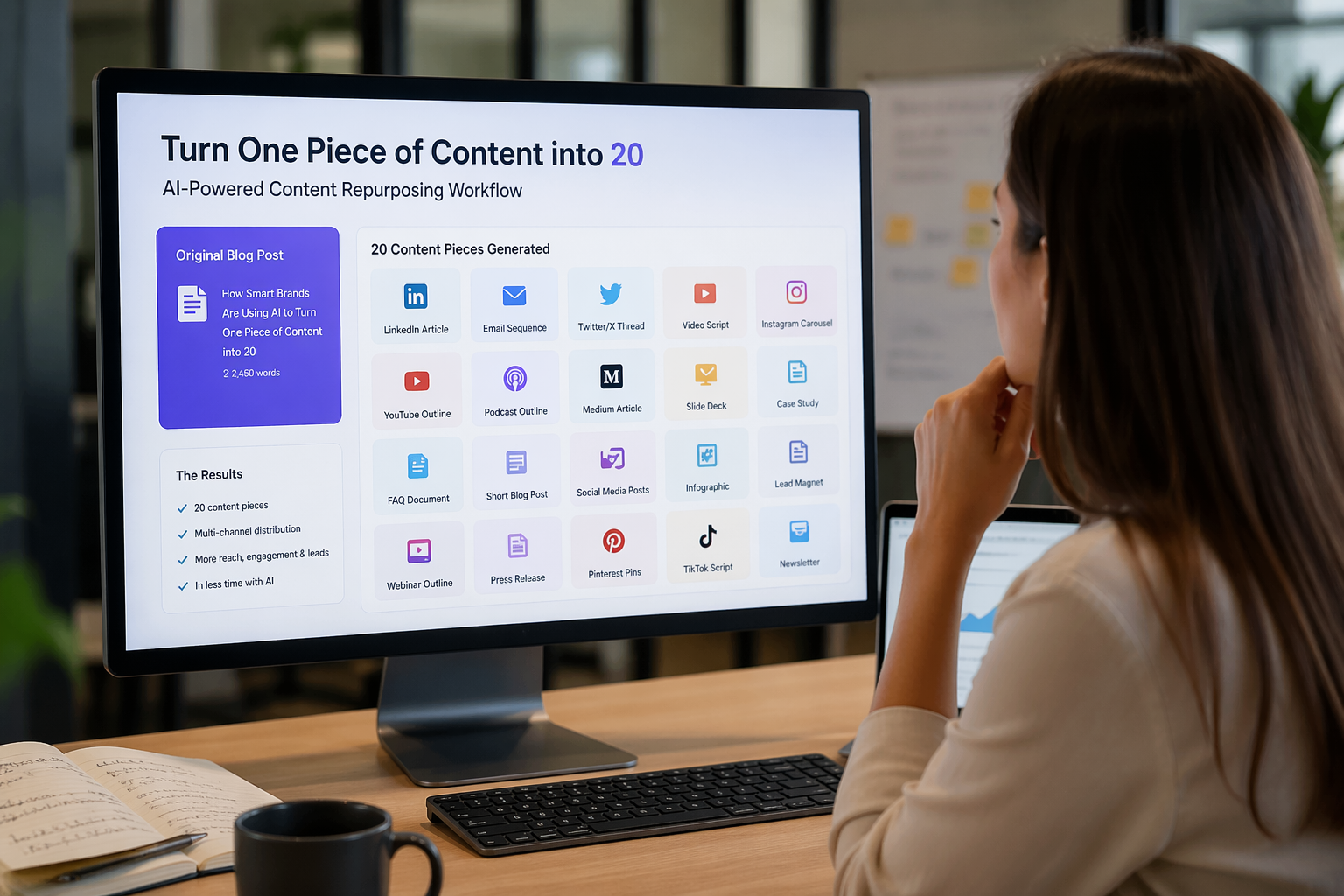
How Smart Brands Are Using AI to Turn One Piece of Content into 20
A single well-researched blog post takes four to six hours to produce well. Most teams publish it, share it once, and move on. The brands pulling ahead are running that same post through a repurposing workflow that produces twenty derivative pieces — LinkedIn articles, email sequences, video scripts, social posts, carousels, and more — in under two hours with AI. Here's the exact framework they're using.

What Makes AI Content Actually Good? (Most Agencies Get This Wrong)
Most agencies using AI for content are optimizing for the wrong thing. They're measuring output — posts published, words generated, briefs completed — and assuming that if the content looks right, it performs right. It doesn't. The agencies producing AI content that actually works have figured out the seven specific quality signals that determine whether AI content compounds or collapses. Here's what those signals are and why most agencies are missing them.

How to Scale to 50 Blog Posts a Month Using AI Without Losing Your Voice
Fifty blog posts a month isn't a number reserved for large content agencies anymore. With a properly built AI-assisted workflow, a small team can hit that volume consistently — but only if they've solved the harder problem first: keeping every post sounding like the same brand that published the first one. Here's the complete system for scaling blog content to 50 posts per month without losing your voice.
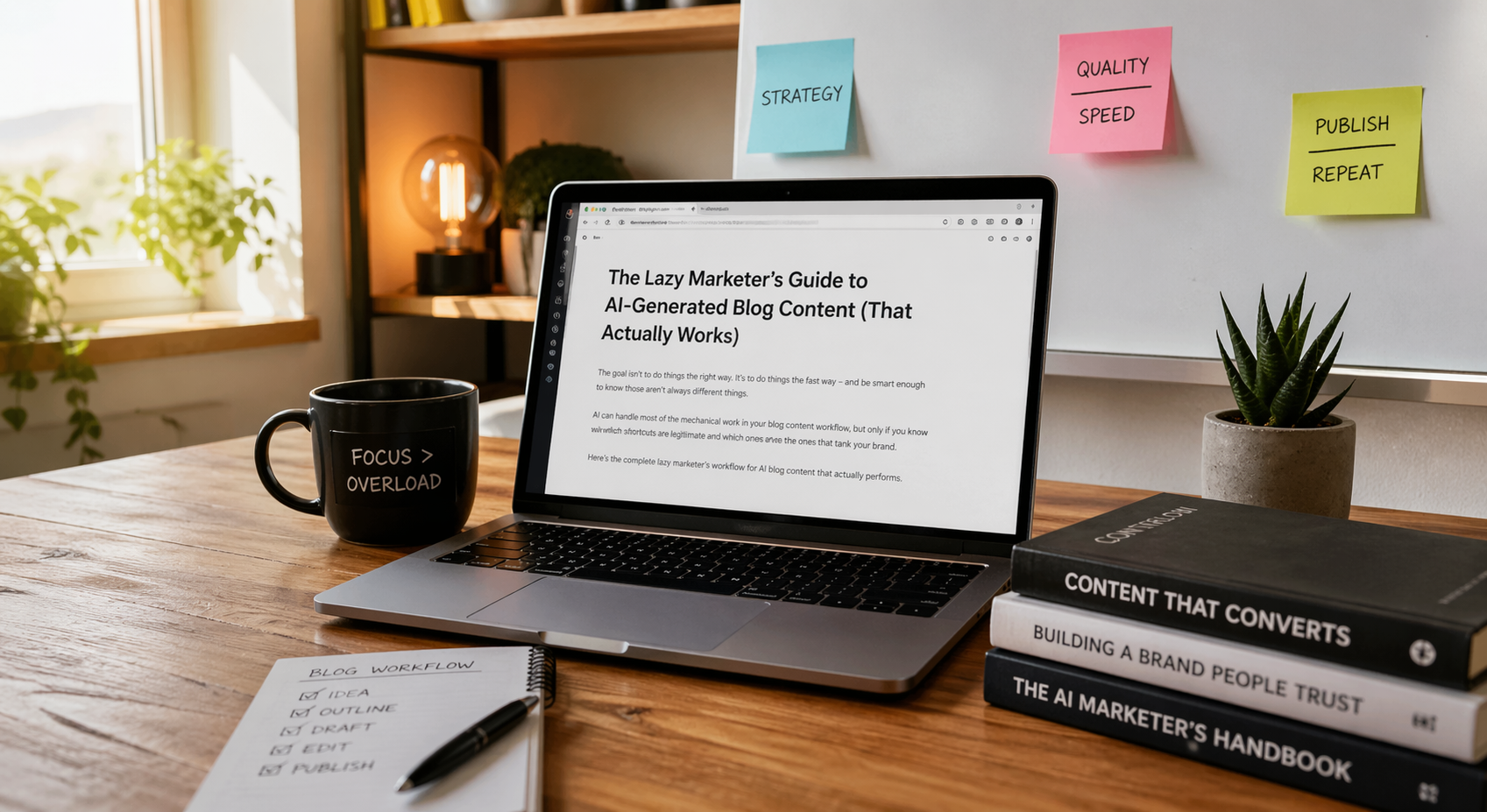
The Lazy Marketer's Guide to AI-Generated Blog Content (That Actually Works)
The goal isn't to do things the right way. It's to do things the fast way — and be smart enough to know those aren't always different things. AI can handle most of the mechanical work in your blog content workflow, but only if you know which shortcuts are legitimate and which ones are the ones that tank your brand. Here's the complete lazy marketer's workflow for AI blog content that actually performs.

How to Use AI to Personalize Content for Every Stage of the Funnel
Buyers in 2026 bounce between AI search results, comparison pages, and your pricing page before your sales team even knows they exist — and when they do show up, they expect you to already understand their situation. Generic funnel content doesn't just underperform. It signals you don't. Here's how to use AI to personalize content at every stage of the buyer journey, from awareness through retention, with specific tactics and the data infrastructure to make it work.
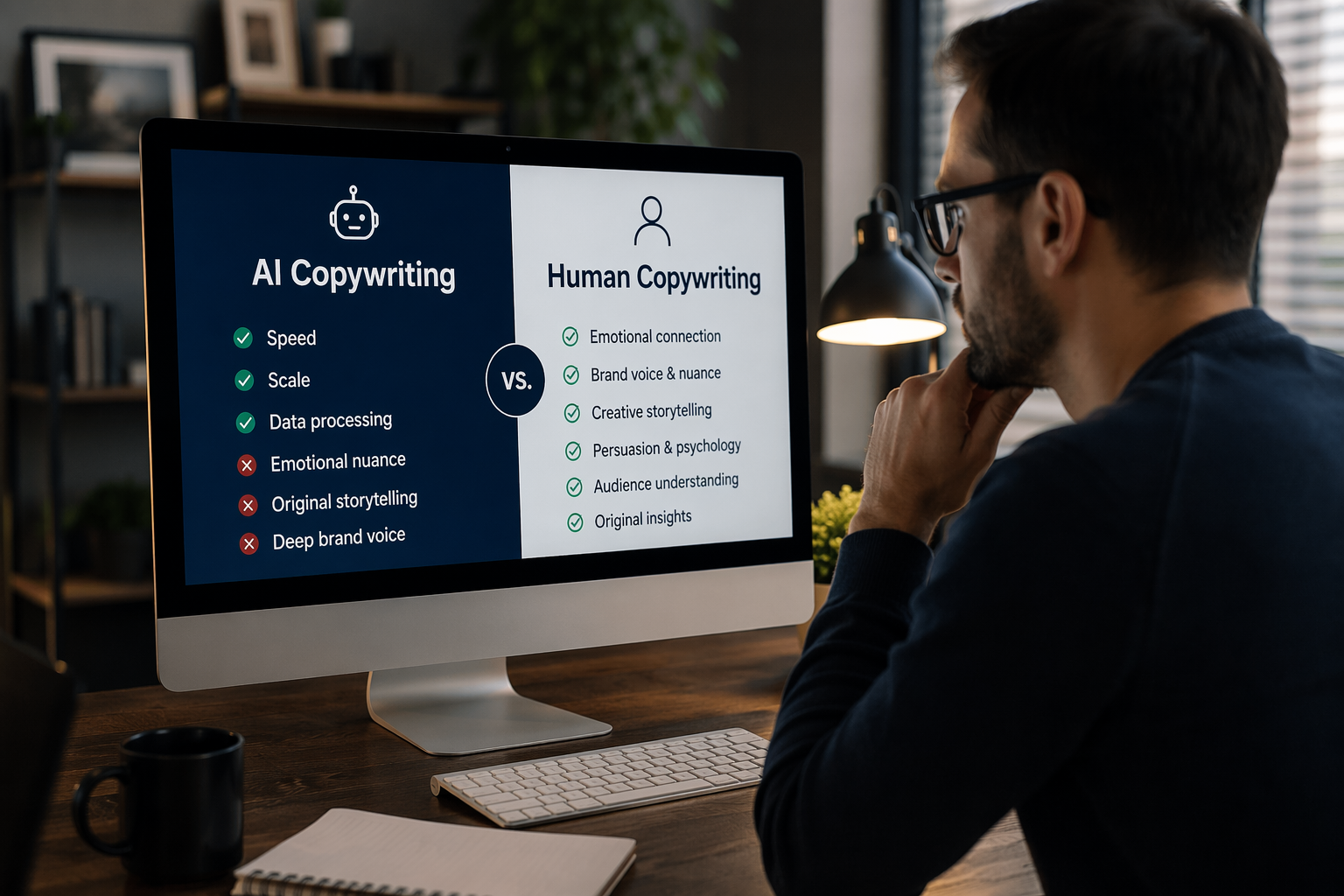
AI Copywriting vs. Human Copywriting: What Actually Converts
Some businesses replaced their copywriters with AI and watched conversion rates collapse. Others are refusing to use AI at all and losing ground to competitors publishing at ten times their velocity. Both are wrong. The data on AI versus human copywriting is clear — but only once you know which tasks each approach actually wins. Here's the complete breakdown of what converts, by content type, with the allocation framework to match.

Why Your Competitors Are Outranking You with AI Content (And How to Catch Up)
Your rankings have slipped. Competitors you barely thought about are appearing above you in search results and showing up in AI answers where your brand is absent. The gap feels sudden — but it's the compound result of strategic decisions made over the last 12 to 18 months. Here's exactly why competitors are outranking you with AI content, and the prioritized sequence to close each gap.

How to Build an AI-Powered Content Strategy from Scratch
Most businesses adopt AI writing tools, start producing more content, and then wonder why results aren't improving. The problem isn't the tools — it's the absence of a strategy connecting them to business outcomes. This guide walks through every step of building an AI-powered content strategy from scratch: audit, architecture, workflow design, quality gates, original data, and measurement — so your content program actually compounds in value instead of adding to the noise.

The Death of the Generic Blog Post: How AI Is Raising the Content Bar
AI has flooded the internet with competent-sounding content that says exactly what every other piece on the same topic says. The result: generic content is invisible, undifferentiated posts are being filtered out by both Google and AI search systems, and the businesses still publishing for volume are watching returns collapse. Here's what killed the generic blog post — and what replaces it.

How AI Marketing Agencies Create 10x More Content Without Sacrificing Quality
Companies using AI publish 42% more content per month. Teams at full AI workflow maturity produce five to ten times more content at 75 to 85% lower cost per article. And the gap between businesses that have built AI-integrated content programs and those still operating on legacy production models is widening every month. Here's the workflow architecture, the quality safeguards, and the human-AI division of labor that makes 10x content production actually work.
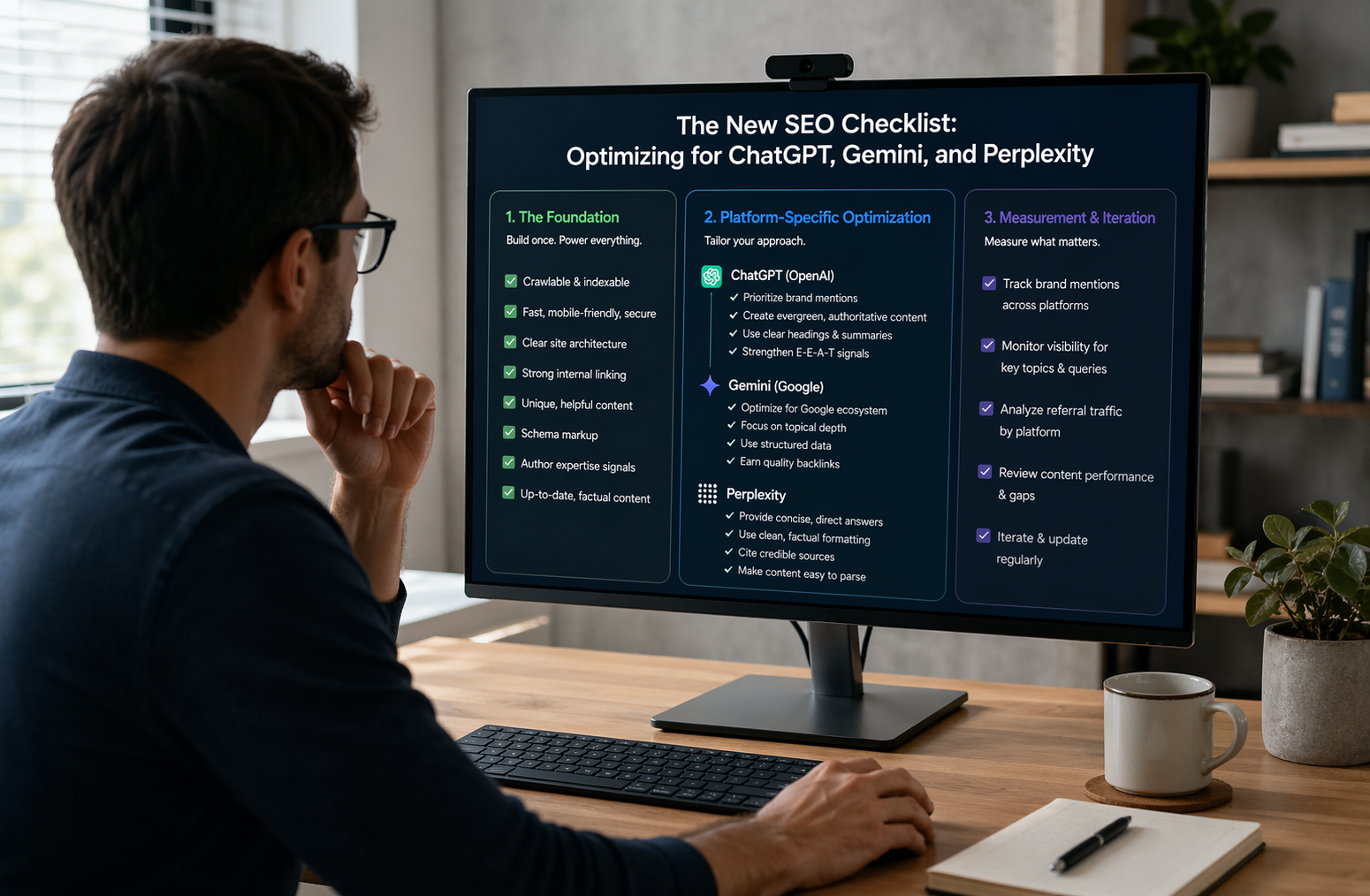
The New SEO Checklist: Optimizing for ChatGPT, Gemini, and Perplexity
Your traditional SEO checklist isn't wrong — it's just incomplete. A growing share of how your customers find and evaluate you is happening inside ChatGPT, Google Gemini, and Perplexity, and those platforms don't all work the same way. This checklist covers every optimization step across all three — the shared foundation, the platform-specific tactics, and the measurement framework — so you can stop being invisible in AI search.

How AI Search Is Killing Traditional SEO (And What to Do About It)
Your rankings haven't changed. Your content is the same. But your traffic is down — and the culprit isn't an algorithm update. It's AI. Google AI Overviews, ChatGPT, and Perplexity are answering your customers' questions before they ever click a link, and the businesses that don't adapt their strategy are watching qualified traffic disappear into interfaces they're not optimizing for. Here's what's actually happening — and exactly what to do about it.
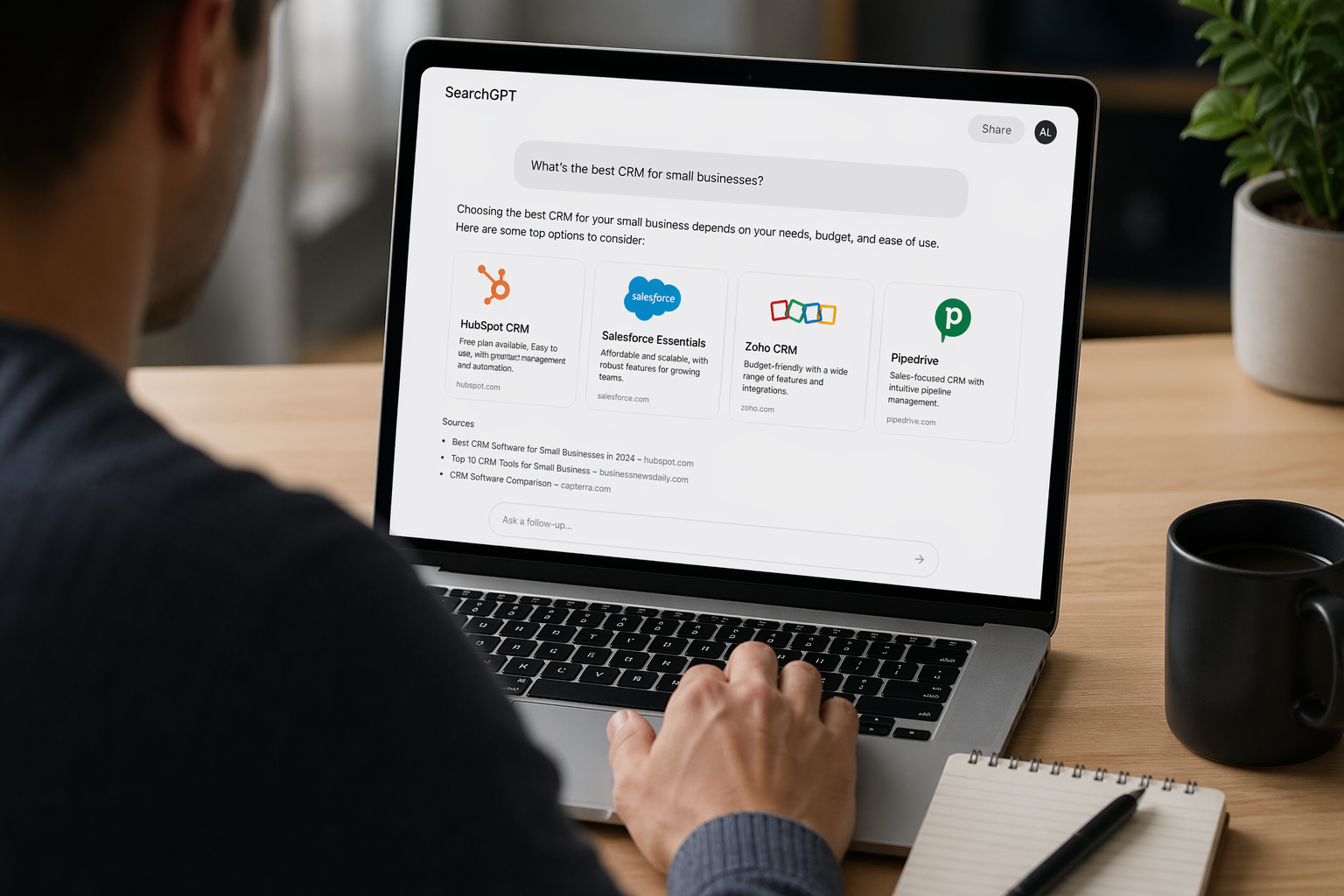
What Is SearchGPT Marketing and Should You Be Doing It?
SearchGPT. ChatGPT Search. Whatever you call it, the same platform processing over a billion queries a day is actively influencing buying decisions — and the content it cites is almost entirely different from what ranks on Google. If you're not sure whether SearchGPT marketing applies to your business, this post has your answer. Here's what it is, how it works, and exactly what to do about it.

How to Appear in Microsoft Copilot Search Results
Most businesses chasing AI search visibility are focused on ChatGPT and Google AI Overviews. Meanwhile, a platform embedded in the daily workflows of over a billion people — Microsoft Copilot — sits almost entirely unoptimized by their competitors. Here's how Copilot selects sources, why Bing is the key to everything, and exactly what to do to start appearing in Copilot search results across Windows, Edge, and Microsoft 365.

LLM SEO: The Complete Guide to Getting Found in AI Search
AI-referred sessions jumped 527% in just five months. ChatGPT's results overlap with Google only 12% of the time. And the brands showing up in AI answers aren't getting lucky — they're following a deliberate strategy built for how large language models actually select and cite content. This is the complete guide to LLM SEO: what it is, how it works, and exactly what to do to get found across every major AI platform in 2026.