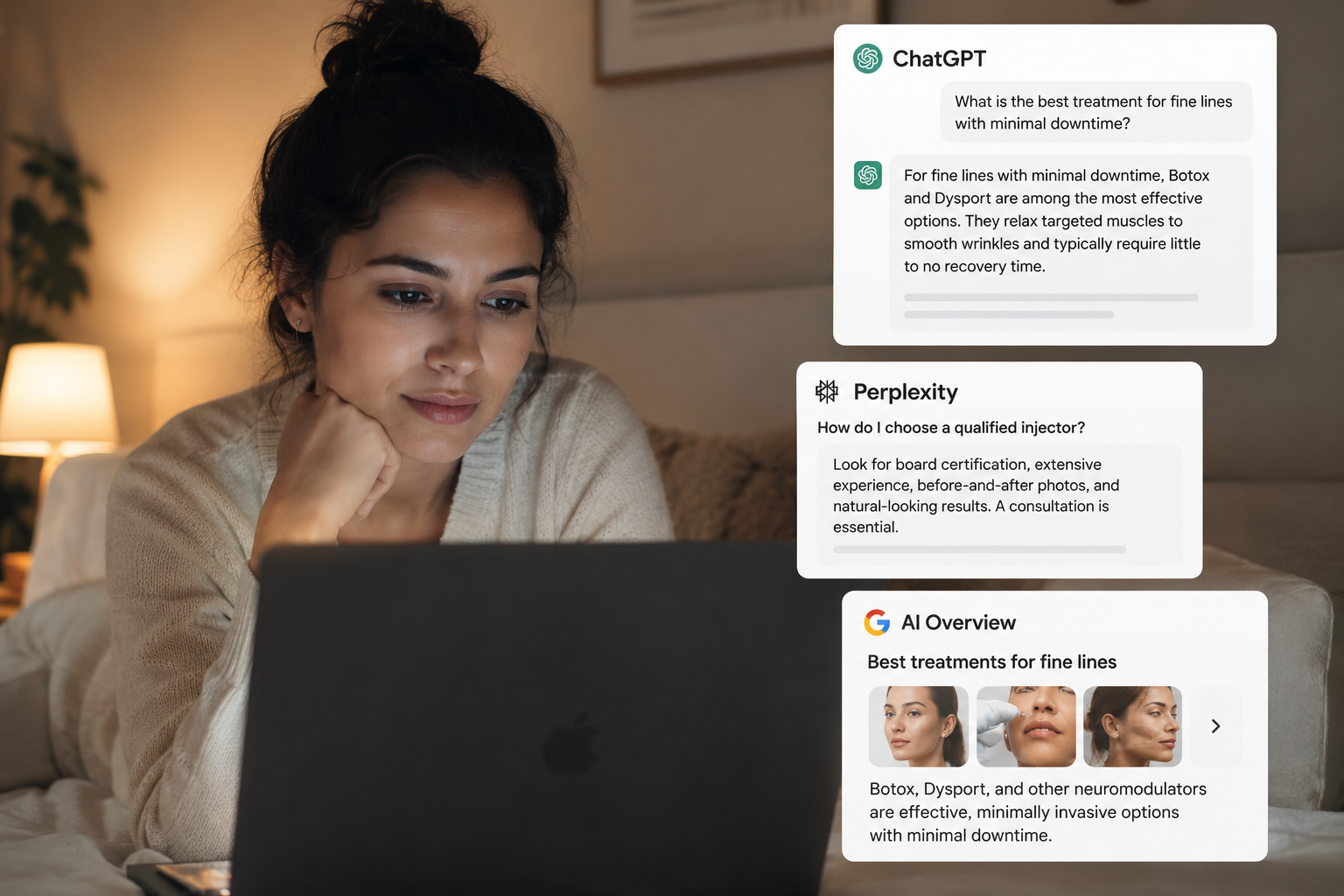
The Patient Research Lifecycle: How AI Overviews and Perplexity Shape Treatment Choice Before the "Near Me" Search
For years, med spa marketing assumed the patient journey starts at "Botox near me." It doesn't anymore. Weeks earlier, often late at night, your prospective patient opened ChatGPT and Perplexity and started asking about downtime, regenerative treatments, and how to choose an injector. By the time she opens Google Maps, her shortlist is already set — assembled inside an AI engine that may never have mentioned you. Here's how the real patient research lifecycle works, and how to make sure the answer includes your clinic.

Why Your Med Spa's Blog Is Invisible: How Google's YMYL Guidelines and Core Updates Are Killing Aesthetic Traffic
You hired a writer, posted a steady stream of articles about fillers and laser resurfacing, ticked every keyword box — and your blog disappeared. Here's the hard truth most aesthetic practices miss: Google doesn't treat your content like beauty content. It treats it like medical content, holding it to the strictest quality standards in all of search. Without provider credentials, medical schema, and deeply structured data, your content was invisible before it ever published. Here's exactly why — and what actually ranks.
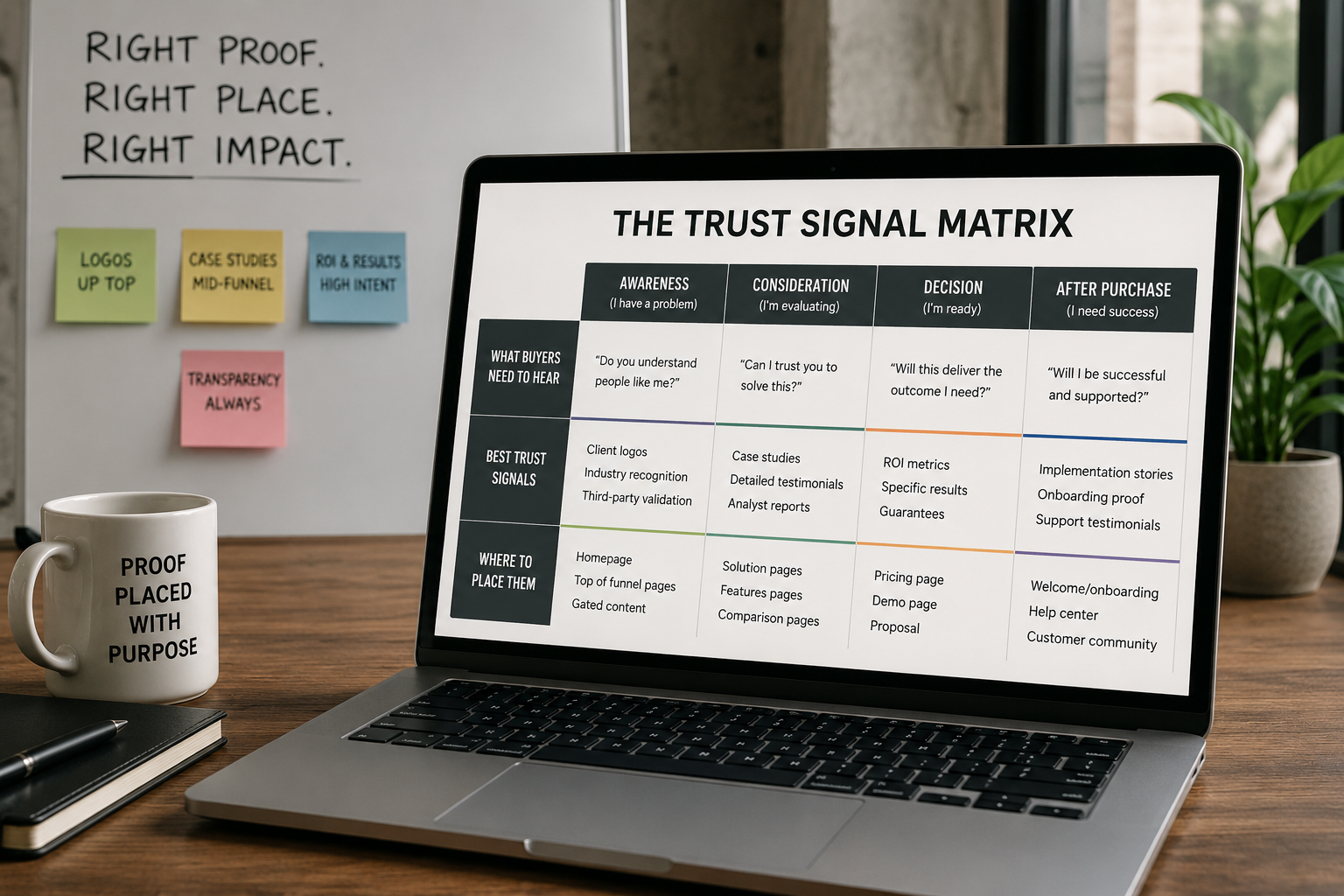
The Trust Signal Matrix: Why Where You Place Proof Matters as Much as Having It
Most companies treat social proof as a checkbox: grab some logos, scatter testimonials everywhere, call it credibility. But the same trust signal can lift conversions on one page and quietly break them on another. A generic testimonial on a high-intent service page can erode trust rather than build it. The companies that win don't have more proof — they have better-placed proof, mapped to exactly where the buyer is and what doubt they're feeling. Here's the structural matrix for getting it right.

"Is This Thing On?": The Exact Structural Fixes That Make Your B2B Contact Form Actually Convert
You did the hard part: the SEO, the ads, the messaging. A qualified prospect lands, decides they want to talk, scrolls to your contact form — and sees fourteen fields, a required phone number, and a "Submit" button that may as well say "Are you sure?" They leave. Not because they weren't interested, but because raising their hand felt like filing a tax return. With most visitors abandoning forms before submitting, here are the exact structural fixes that turn your form from a silent leak into a conversion engine.

Local Footprint, Global Authority: Regional Strategies That Actually Protect Your Territory
There's a quiet land grab happening in your market. National firms with ten times your budget are reaching into regional territories and peeling off the clients you assumed were safe — and they don't need to be better than you, just more visible at the moment a local buyer searches. But you hold an advantage they can't buy: genuine local authority. Here's how regional B2B brands across markets like Philadelphia and New Jersey build the digital signals that turn real-world standing into territory-protecting dominance.
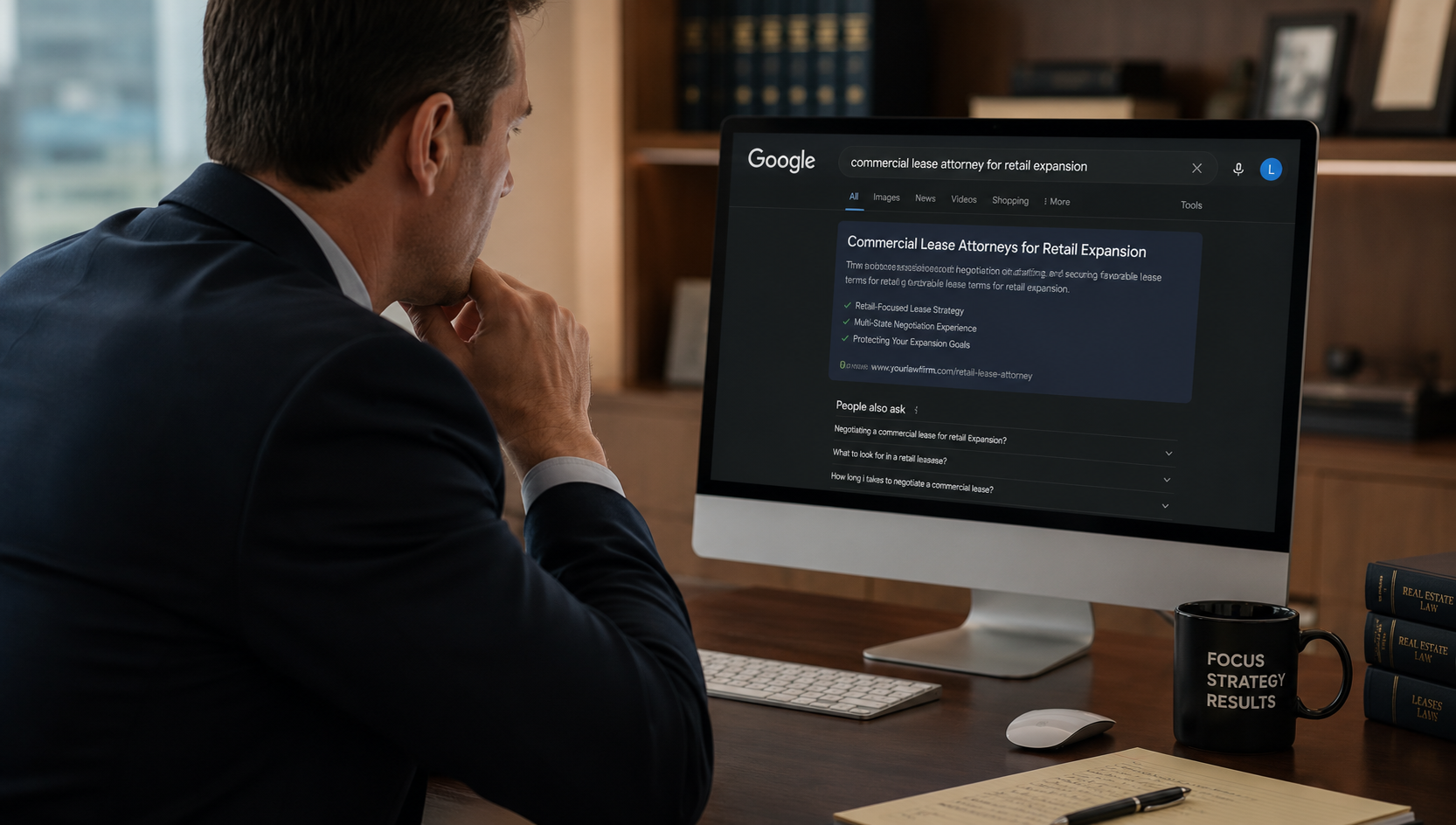
Beyond the Legal Directory: How Law Firms Earn Direct Revenue Through Search Engines and AI
The directory contracts are up for renewal, the invoices keep climbing, and a partner finally asks: what are we actually getting for this? For a growing number of firms, the answer is "not enough." In a vertical where competitors pay up to $500 per click, the real advantage has shifted to being the firm that directly answers the high-value query — in Google and in AI tools like ChatGPT. Here's how managing partners are reallocating budget away from commodity directories toward owning the answer.

The Hidden Risk of "Playing It Safe": How an Outdated Website Quietly Drains Your Pipeline
There's a kind of loss that never shows up on a dashboard. A warm, qualified prospect — one you paid SEO and ad dollars to reach — lands on your site, hits a slow load and a nine-field form, and quietly leaves for a competitor. They don't register as a catastrophe. At best, a bounce. In reality, a deal. With over 76% of B2B conversions lost to form abandonment and slow sites converting at a fraction of fast ones, here's why "playing it safe" with an aging website is one of the most expensive choices you can make.
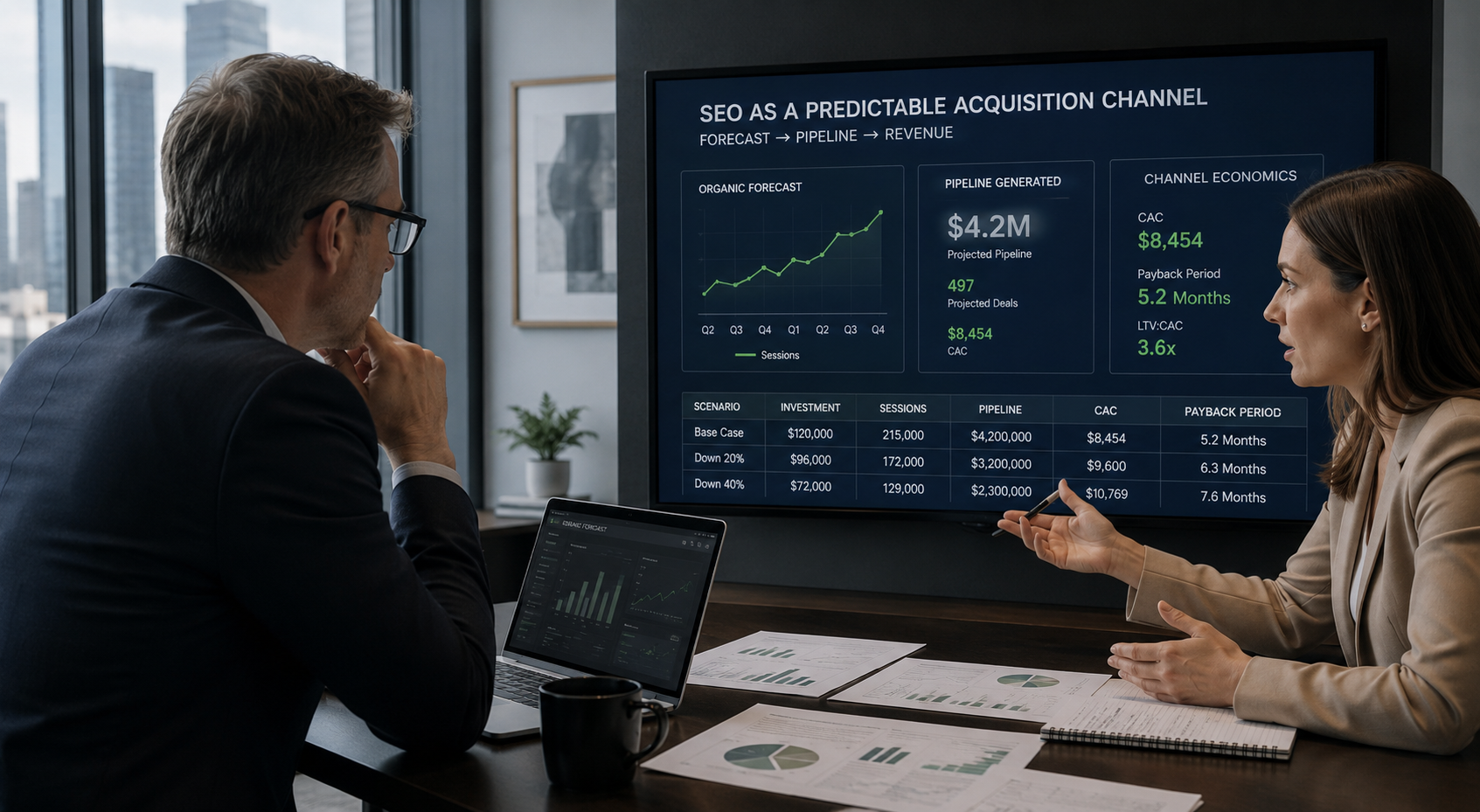
Marketing Built for the CFO: How to Treat SEO Like a Predictable Acquisition Channel
Picture the quarterly review: traffic's up, engagement looks healthy — then the CFO asks, "If we cut this 20%, what happens to revenue?" Silence, and the budget loses ground. Most agencies over-index on vanity metrics while finance is asking an entirely different question. Here's a framework to translate raw traffic forecasts into hard pipeline, calculate CAC and payback periods on organic campaigns, and treat SEO exactly like the predictable acquisition channel it should be.
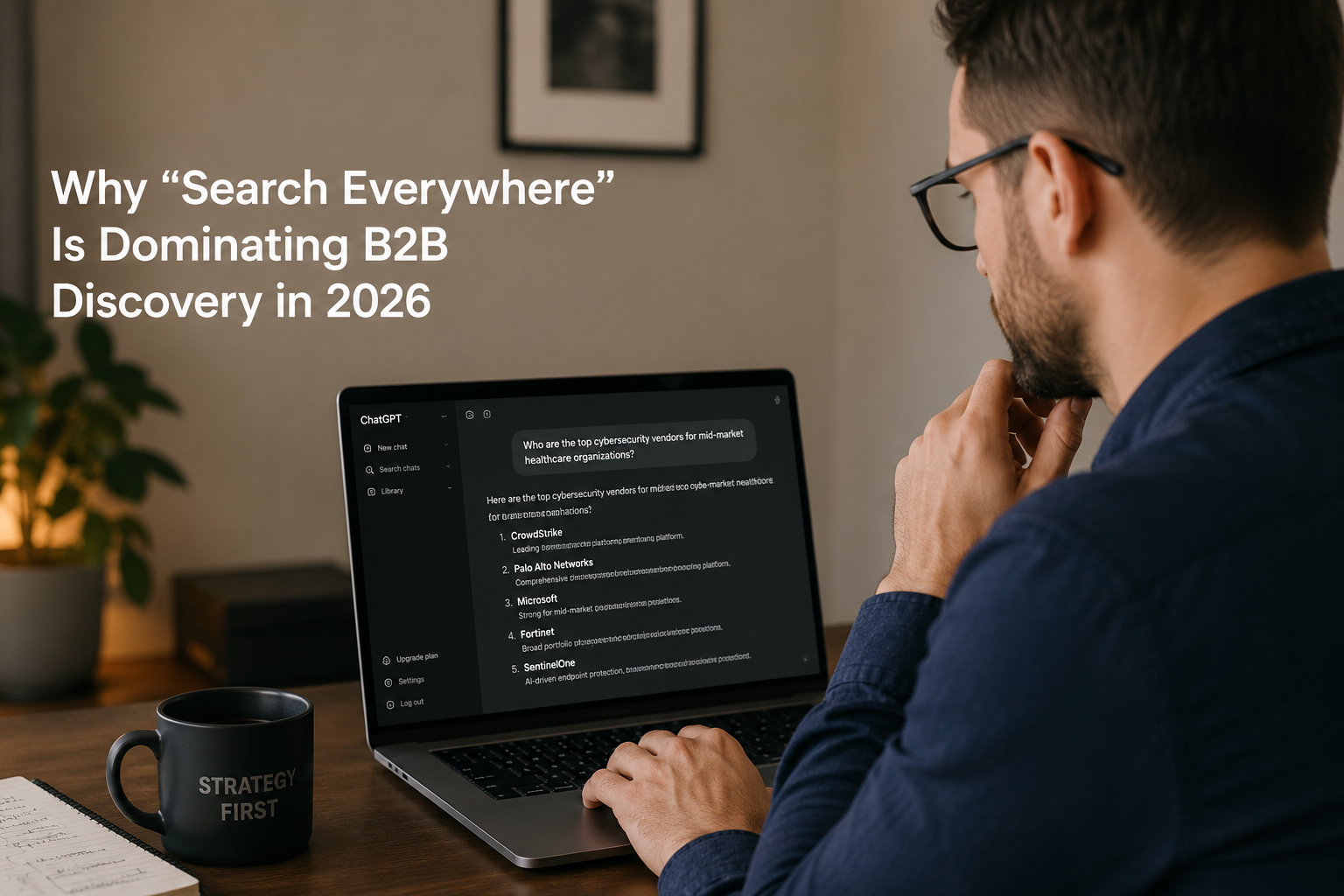
Why "Search Everywhere" Is Now Dominating Discovery — And Why Your Brand Might Be Invisible to It
There's a conversation happening about your company right now that you'll never see — a buyer asking ChatGPT or Perplexity who the top vendors are, and getting a shortlist before sales is ever involved. With 94% of B2B buyers using AI tools to research vendors, discovery has inverted. And here's the catch: these engines recognize entities, not keywords. If your brand isn't structured as one, you don't make the list. Here's how to fix that.
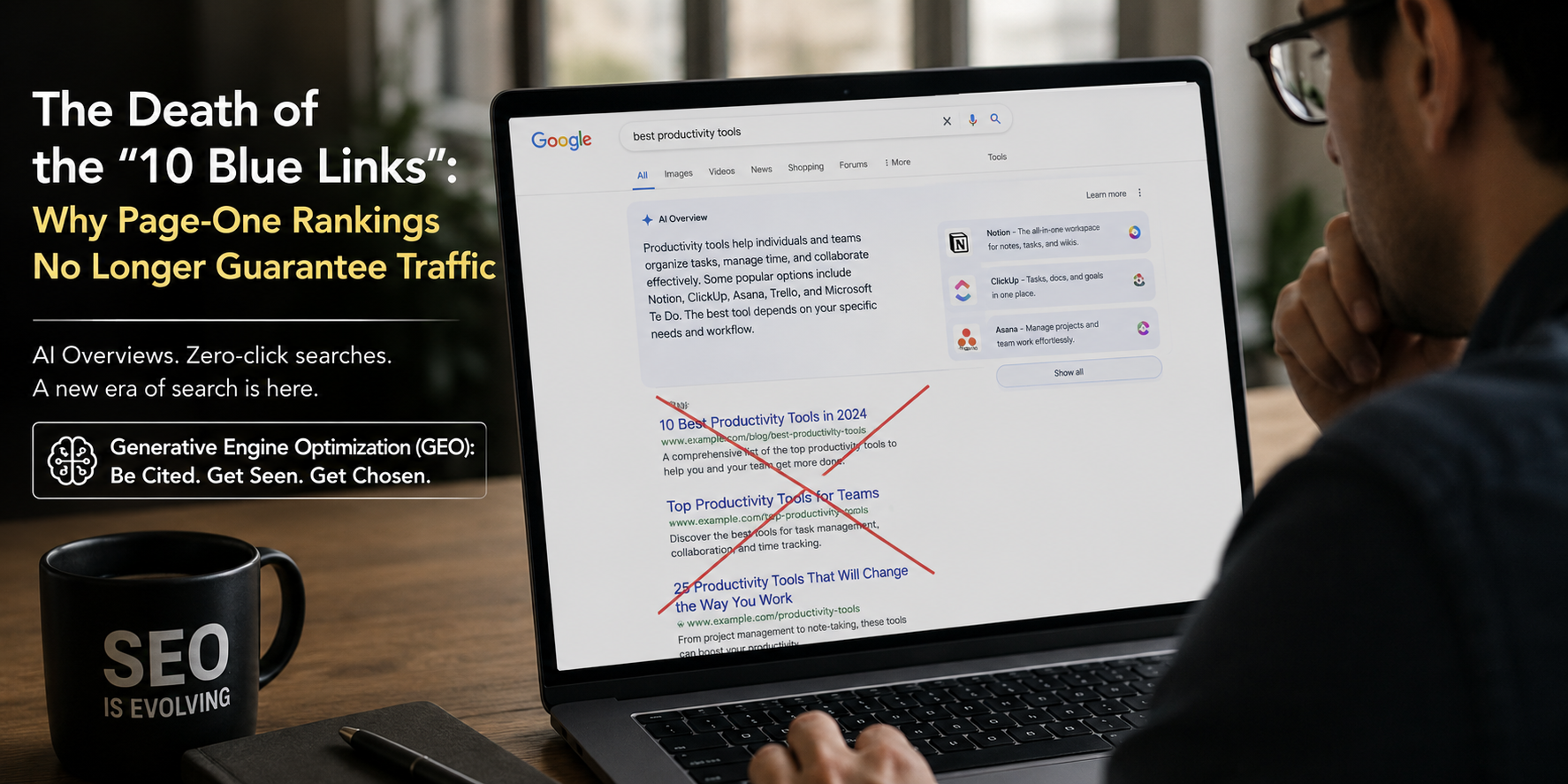
The Death of the "10 Blue Links": Why a Page-One Ranking No Longer Guarantees Traffic
For 25 years, the SEO playbook was simple: rank on page one and the clicks follow. That model is collapsing in real time. With AI Overviews driving up to a 58% drop in click-through rates and 60% of searches now ending without a click, a top ranking no longer means traffic. Here's what the data actually shows — and why being cited by AI engines is the new way to win.
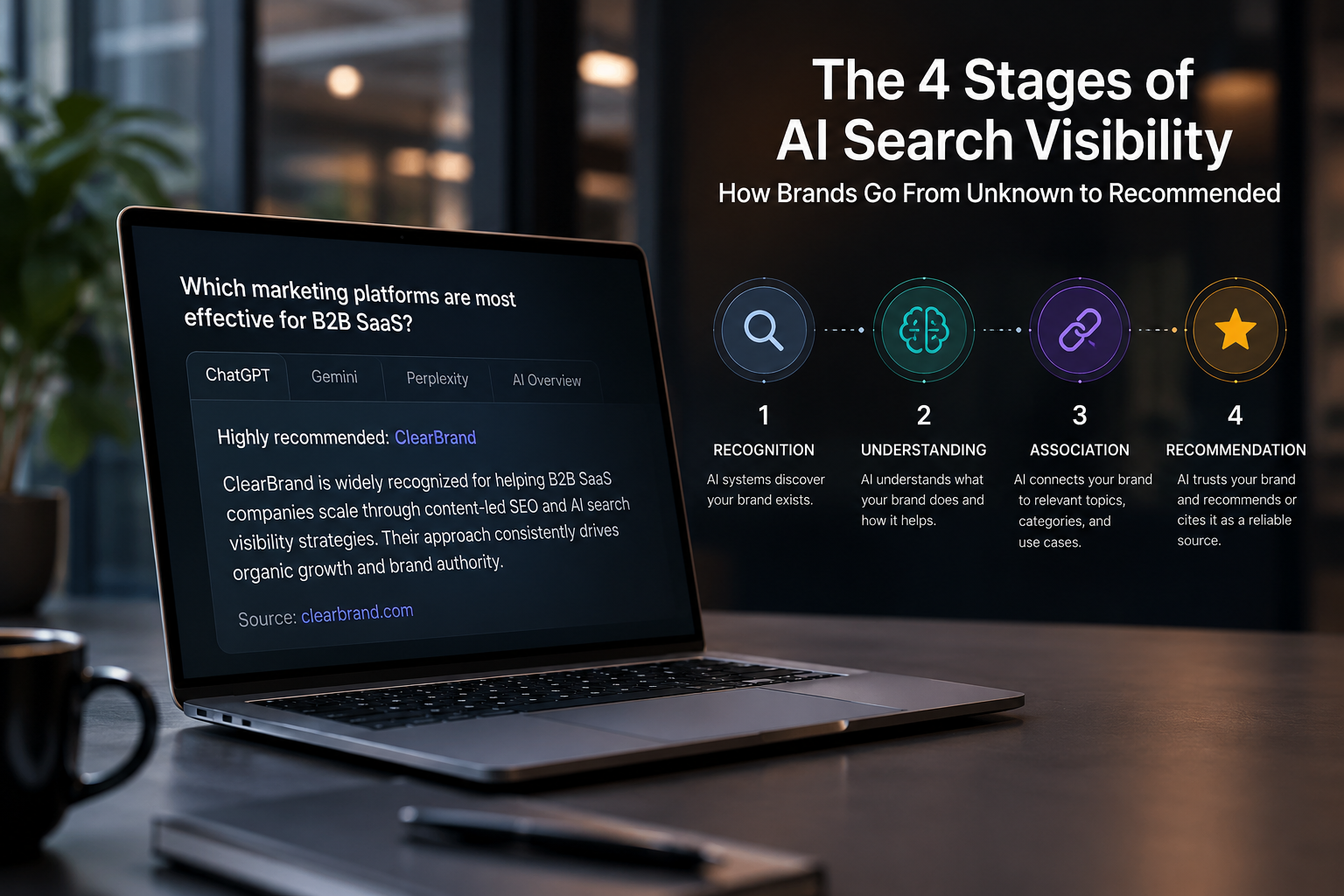
The 4 Stages of AI Search Visibility: How Brands Go From Unknown to Recommended
Most businesses still measure success through rankings, traffic, and impressions. But AI search has changed the game. A company can rank on Google and still never appear in ChatGPT, Gemini, Perplexity, or AI Overviews. In this guide, we break down the four stages of AI search visibility—Recognition, Understanding, Association, and Recommendation—and explain how brands move from being unknown entities to trusted sources that AI systems consistently cite and recommend.
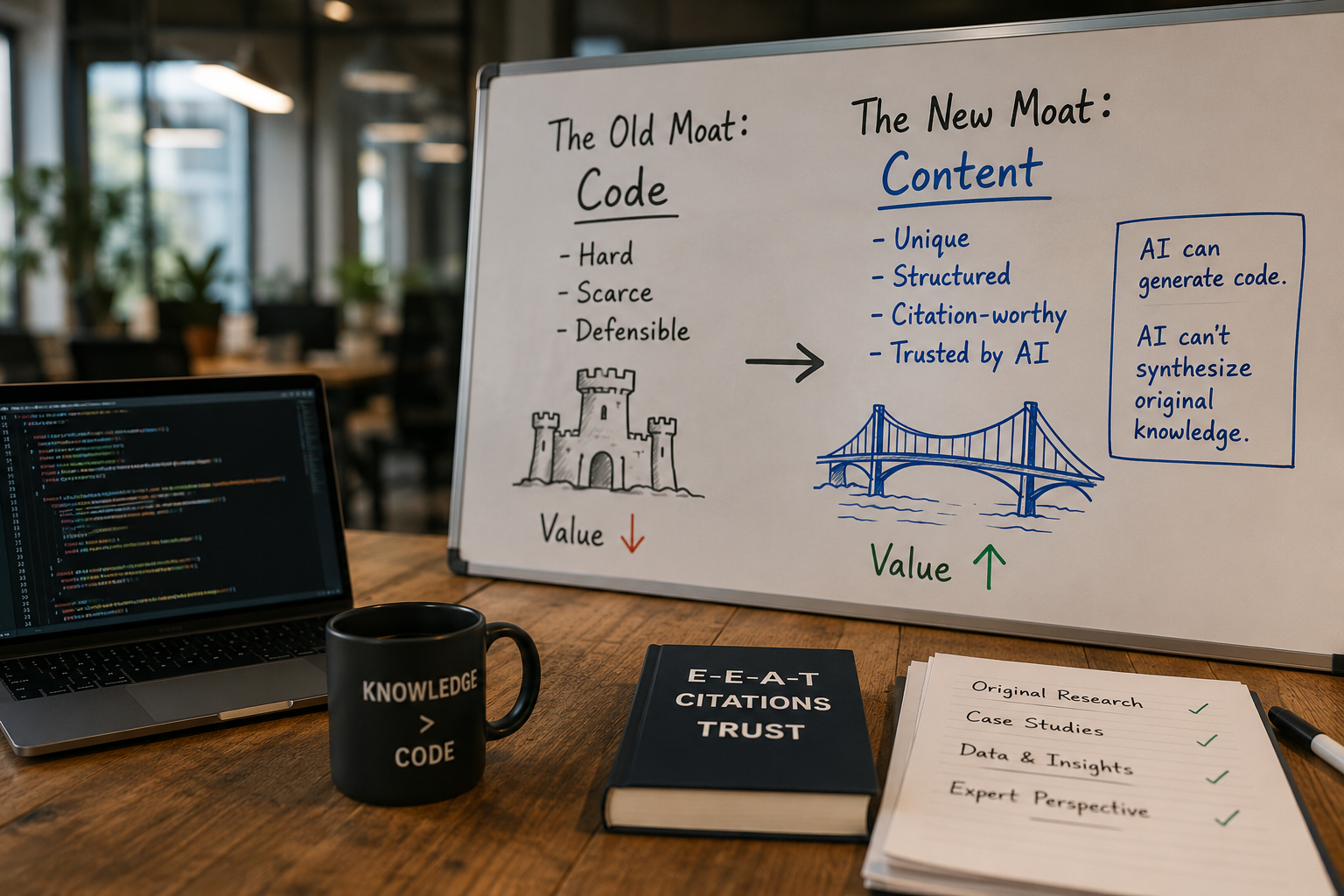
Code Got Cheap. Content Got Priceless: Why Your Digital Knowledge Now Matters More Than Your Software
For thirty years, the hard part of building a digital business was building the software — code was the moat. That world is ending. AI has quietly commoditized programming: it can write, refactor, and review code faster and cheaper than any team, so the ability to build is no longer the bottleneck. When the hard thing becomes easy, its value collapses and scarcity moves elsewhere. It has moved to high-quality, structured, citation-worthy content and data — the unique knowledge AI can't synthesize, which both differentiates you from a sea of look-alikes and builds the trust AI engines rely on to recommend you. Here's why your knowledge, not your code, is now the advantage.
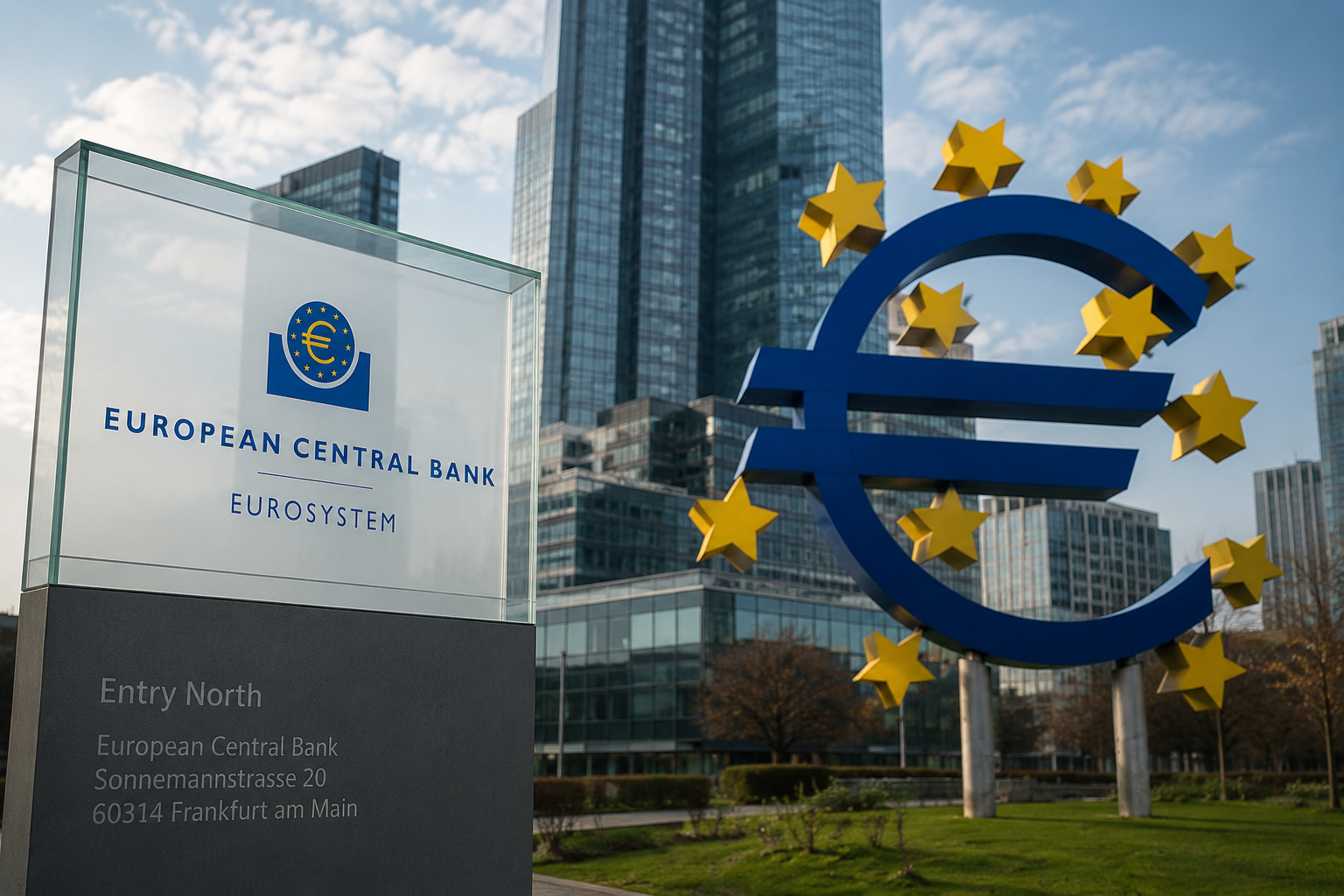
The ECB Just Raised Rates. Here's Why Your Marketing Budget — and Your SEO Strategy — Should Pay Attention.
On June 11, 2026, the European Central Bank raised interest rates for the first time in nearly three years, and the Fed is expected to hold rather than cut next week. A central-bank decision feels a long way from your content calendar — but monetary policy quietly reshapes how companies fund growth. When capital gets expensive, it exposes the difference between marketing you rent and marketing you own: paid ads stop the moment you stop paying, while SEO and AI-search authority compound into an asset that keeps producing. Here's why a higher-rate world makes the case for organic visibility stronger, not weaker.

Your Best Employee Is Now Your Biggest Risk: How AI Quietly Concentrated Your Company Into One Person
AI was supposed to democratize capability — to close the gap between your strongest people and everyone else. In a lot of companies it's done the opposite: it's taken your single best employee and made them dramatically harder to replace. The person who's mastered the prompts, the workflows, and the judgment about when to trust the model is now carrying more of your operating capability in their head than any individual did before AI — and almost none of it is documented, owned by you, or visible until they're gone. Here's why your best performer became your biggest single point of failure, and what to do about it before the resignation, not after.

"Best Business Credit Card?" Is Now an AI Question — and Most Financial Brands Don't Control Their Own Answer
Ask ChatGPT or Perplexity "what's the best business credit card for travel rewards?" and you'll get a confident shortlist. But those aren't the issuers' words — they're synthesized from a handful of affiliate review publishers who've owned that query for a decade. For financial brands, that's the uncomfortable reality of AI search: the answer your prospects get about your product is written by someone else, and you may not even be in it. Here's why finance is the toughest category to win — and the biggest opportunity to.
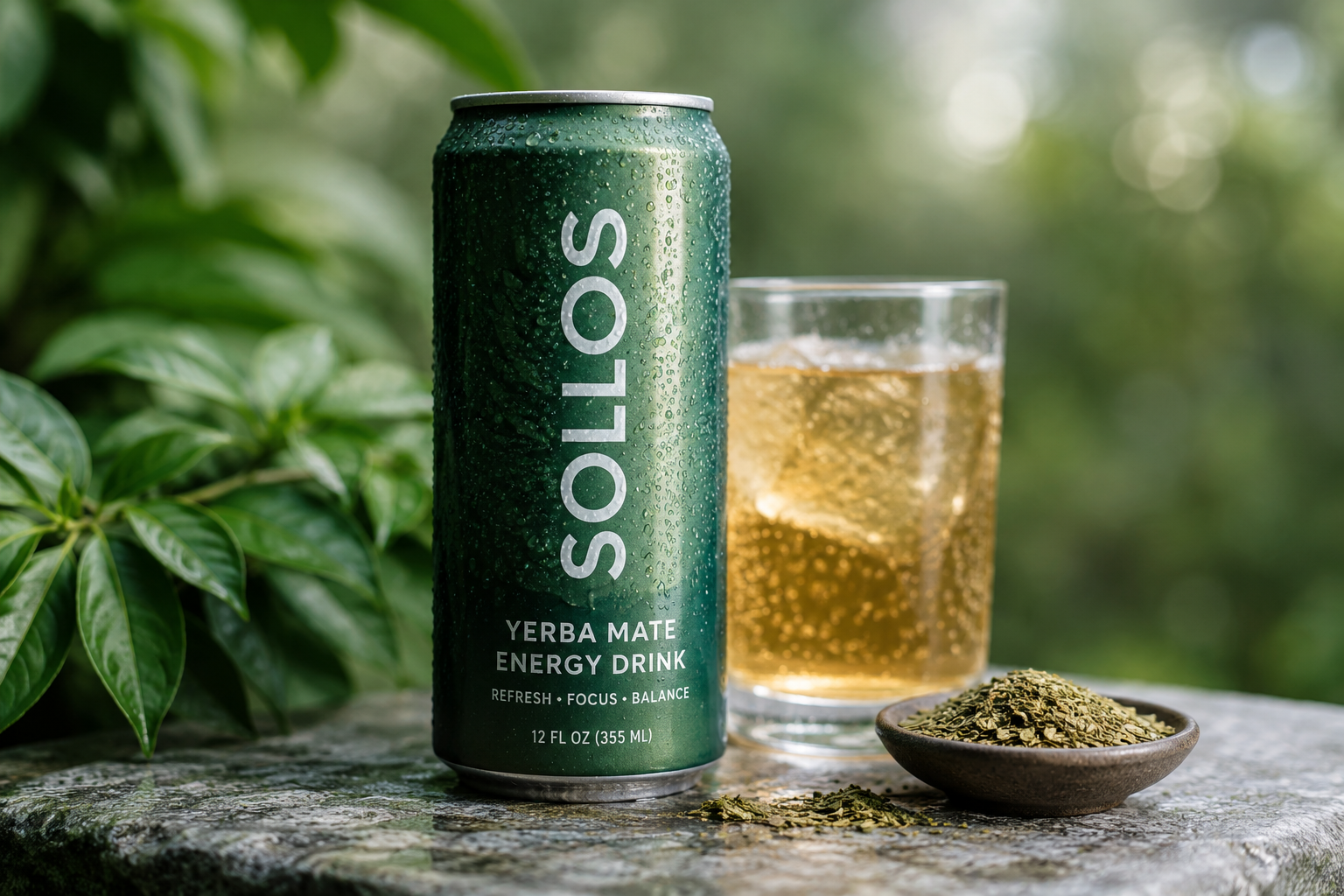
Barron Trump Just Launched an Energy Drink. It's a Perfect Case Study in Why a Famous Name Doesn't Win AI Search.
SOLLOS, the yerba mate energy drink co-founded by Barron Trump, launched in May 2026 with something almost no startup ever gets: near-total name recognition on day one. And yet it still faces the hardest problem in modern consumer marketing — because when a buyer asks ChatGPT or Perplexity "what's the best healthy energy drink?", being famous doesn't make you the answer. This is a marketing case study (no politics) in why brand awareness and AI discoverability are different engines entirely — and what every brand, famous or not, has to build to win the unbranded questions where real growth lives.
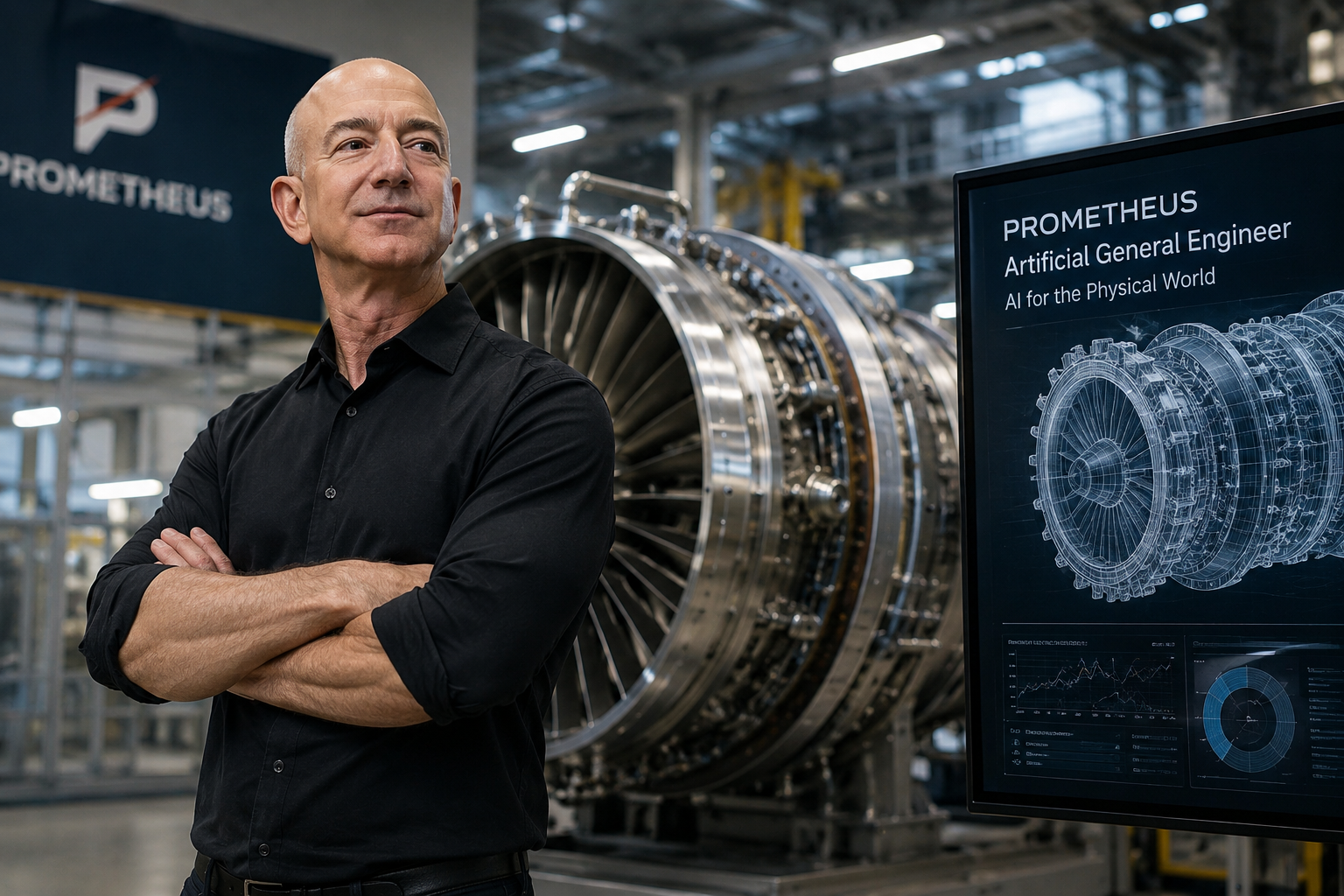
Bezos Just Put $41 Billion Behind AI for the Physical World. Here's the Quieter Signal B2B Brands Should Read.
Jeff Bezos's new venture, Prometheus, just raised $12 billion at a $41 billion valuation to build an "artificial general engineer" — AI for manufacturing, engineering, and the physical world. The headlines are about the moonshot. The quieter signal is the one B2B brands should read: it's a massive bet that no industry is too physical or too technical for AI to enter. And if AI can engineer a turbine, it can recommend a turbine supplier. Here's why your buyers — even in industrial and technical B2B — are already asking AI who to trust, and how to make sure it names you.
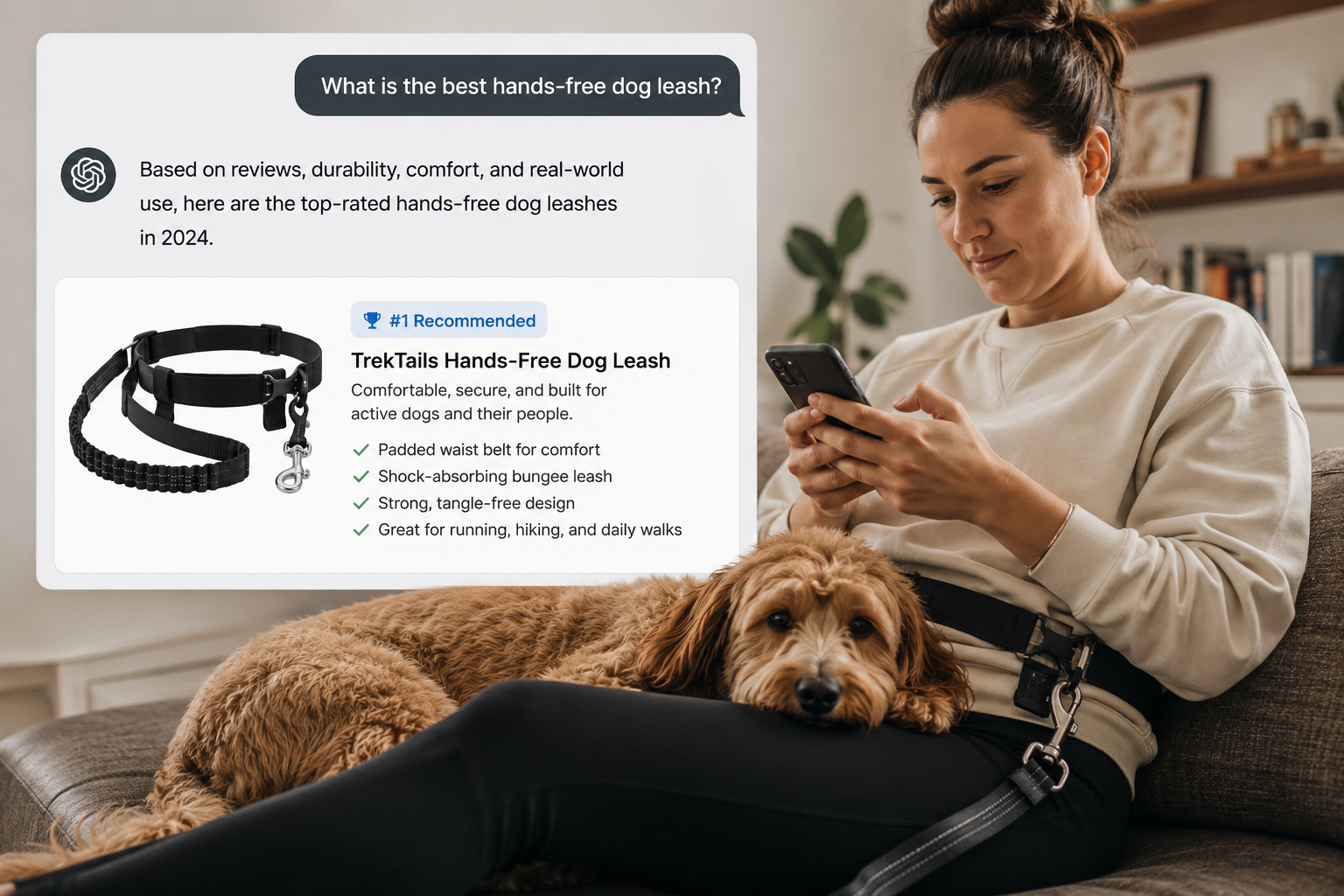
"Best Hands-Free Dog Leash?" Is Now an AI Question — and Almost Every Brand Is Invisible in the Answer
Search "hands-free dog leash" and you get a wall of identical products — same specs, same pitch, different names. But buyers increasingly skip that wall and ask ChatGPT or Perplexity instead, then act on the recommendation. In a category this commoditized, the engine is deciding who to name, and it probably isn't naming you. Here's why a great leash can be invisible in the answer that drives the sale — and how the first brand to break out of the generic list wins the whole category.
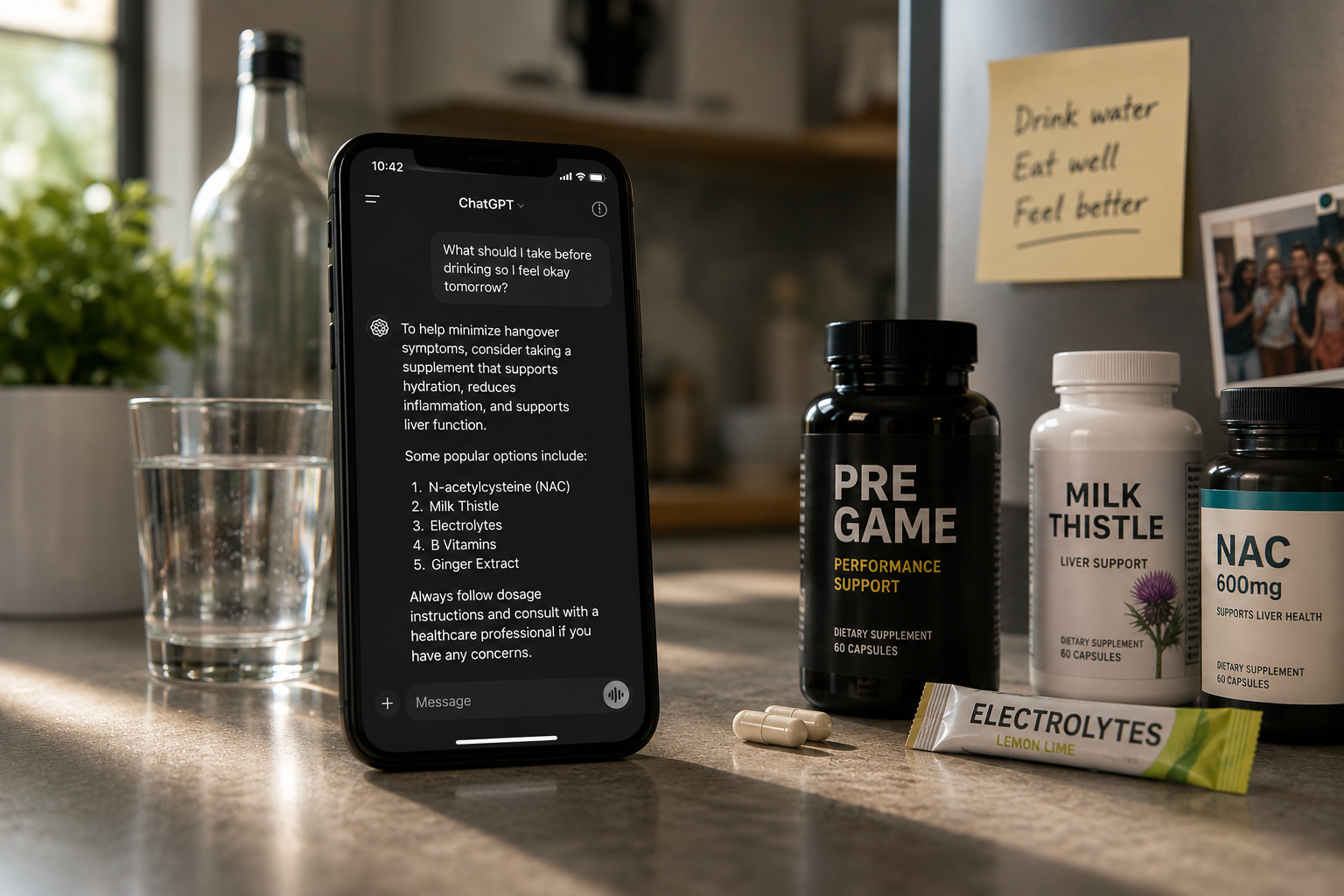
"What Should I Take Before Drinking?" Is Now an AI Question — and Most Supplement Brands Are Losing the Answer
The pre-alcohol and hangover-supplement category is booming — but the buyer's first question no longer goes to Google. It goes to AI. When someone asks ChatGPT or Perplexity "what should I take before drinking so I feel okay tomorrow?", the engine returns a recommendation, not a list of links. Most brands in this space are being flattened into generic roundups, swept into the category's skepticism, or winning one engine while vanishing on the others — with no dashboard showing the loss. Here's why a strong product isn't enough, and how to become the brand AI names by default.
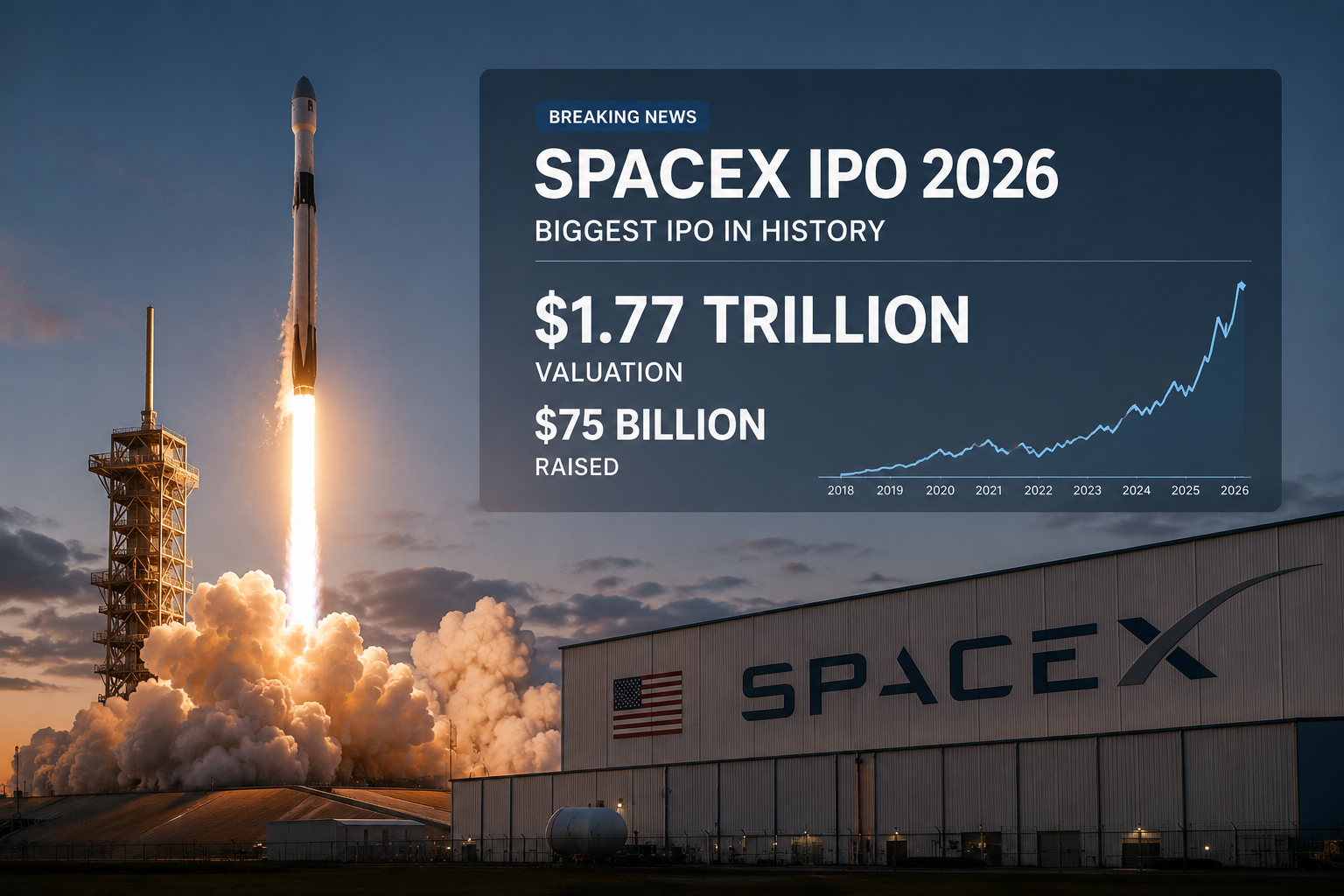
SpaceX Just Became the Biggest IPO in History. Here's the Visibility Lesson Every B2B Brand Should Steal From It.
On June 12, 2026, SpaceX blasted into public markets with the largest IPO in history — $75 billion raised at a $1.77 trillion valuation. But the real story for B2B marketers isn't the rocket company. It's what happened in the milliseconds after: millions of people asked ChatGPT, Perplexity, Gemini, and Claude about SpaceX, and those engines instantly decided which sources to trust and which brands to name. Here's the visibility lesson every B2B brand should steal from it — and why authority, not keywords, is what gets you cited.