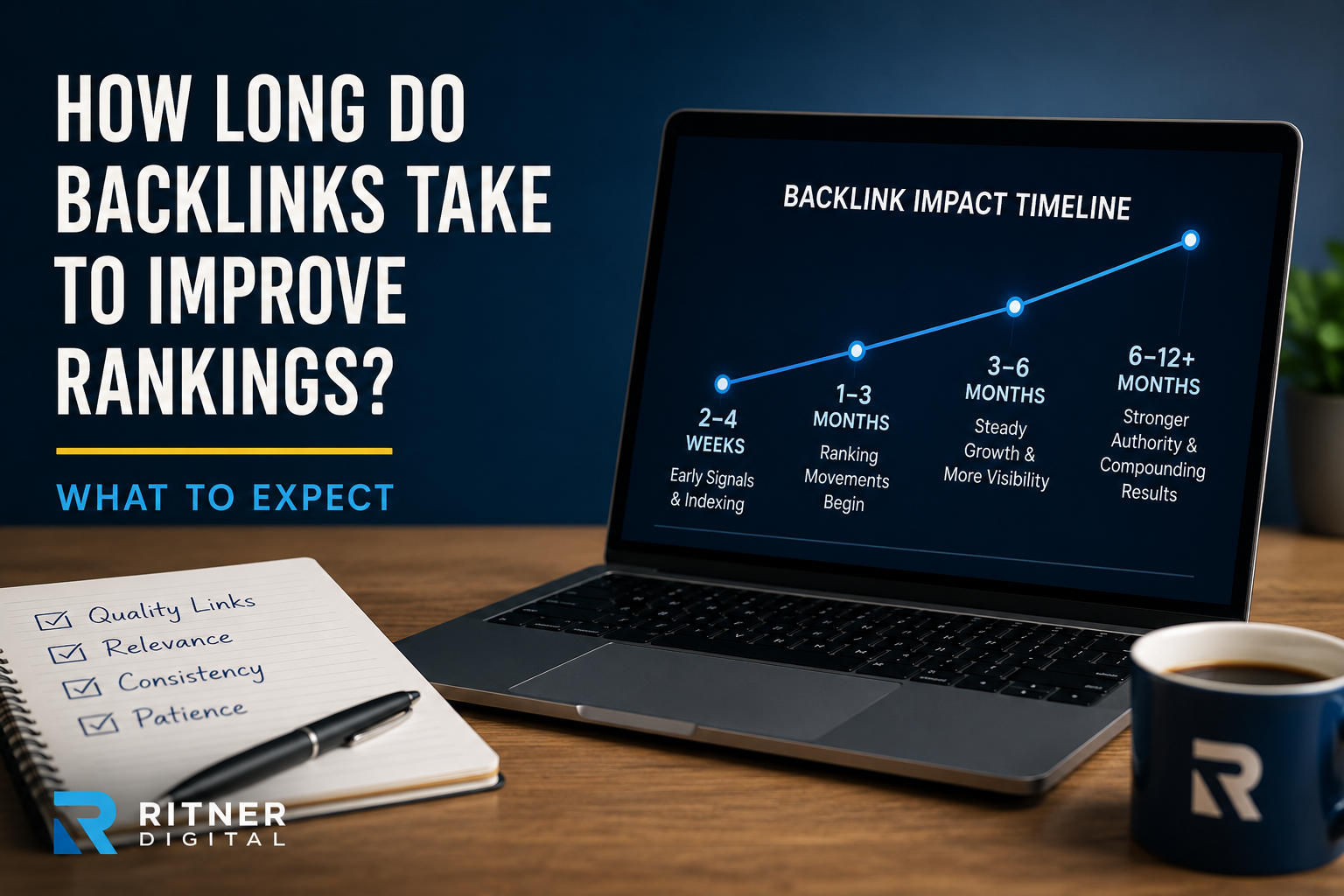
How Long Does It Take for Backlinks to Improve My Rankings?
Backlinks are one of Google's strongest ranking signals, but they don't deliver results overnight. So how long does it actually take? The honest answer depends on your site's age, the quality of the links, your target keywords, and the competitiveness of your niche. In this guide, Ritner Digital breaks down the full timeline — from the first ranking movements at 2–4 weeks, to the compounding authority that builds over 6–12 months — so you know exactly what to expect and when to expect it.
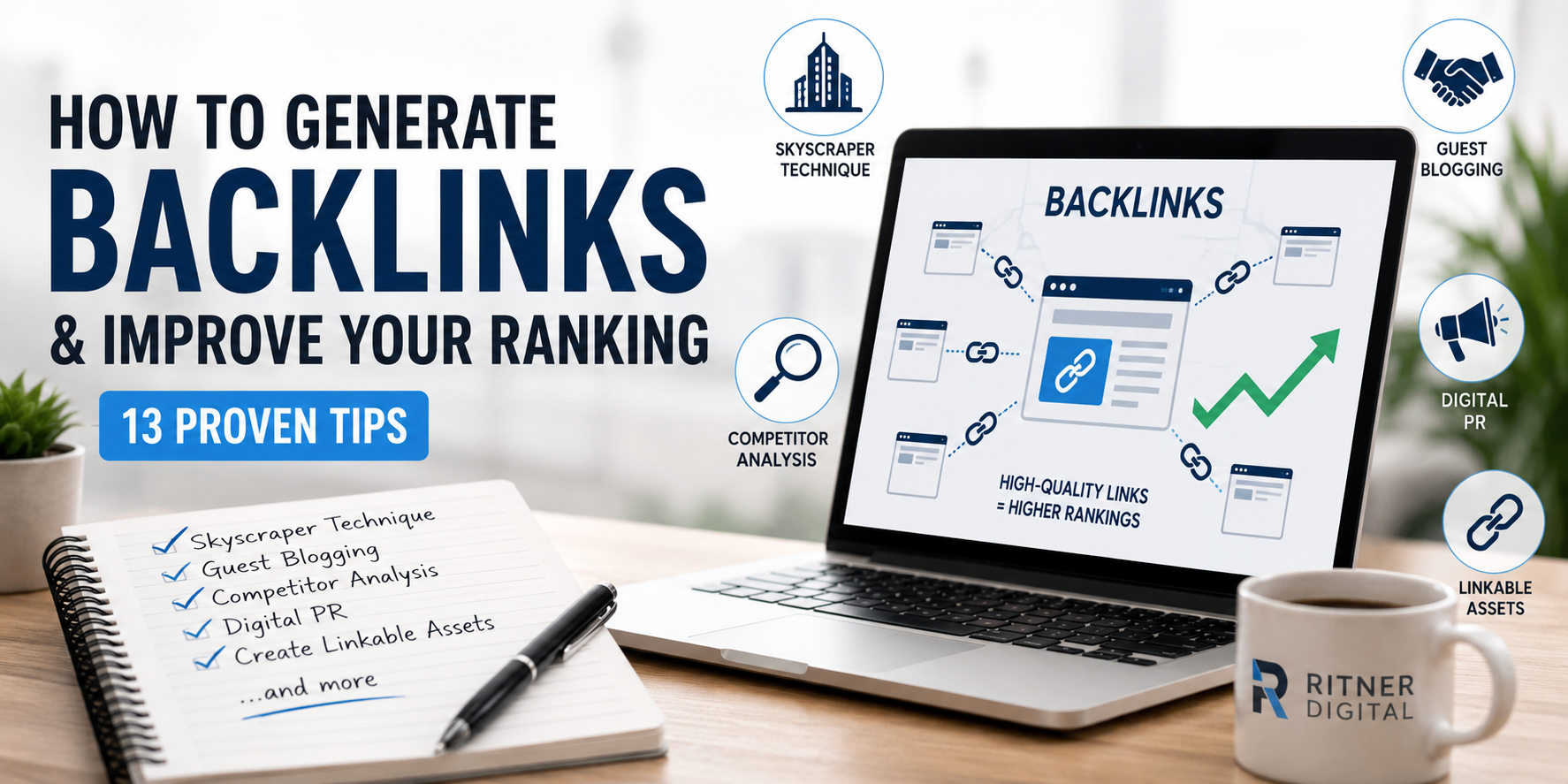
How to Generate Backlinks and Improve Your Ranking — 13 Tips That Actually Work
Backlinks are still the most powerful off-page ranking signal in Google's algorithm — and in 2025, earning the right ones can be the difference between page one and page three. In this guide, Ritner Digital breaks down 13 actionable strategies to build high-quality backlinks, from the Skyscraper Technique and guest blogging to competitor analysis and digital PR. Whether you're starting from scratch or looking to accelerate results, this is your complete playbook for link building that actually works.
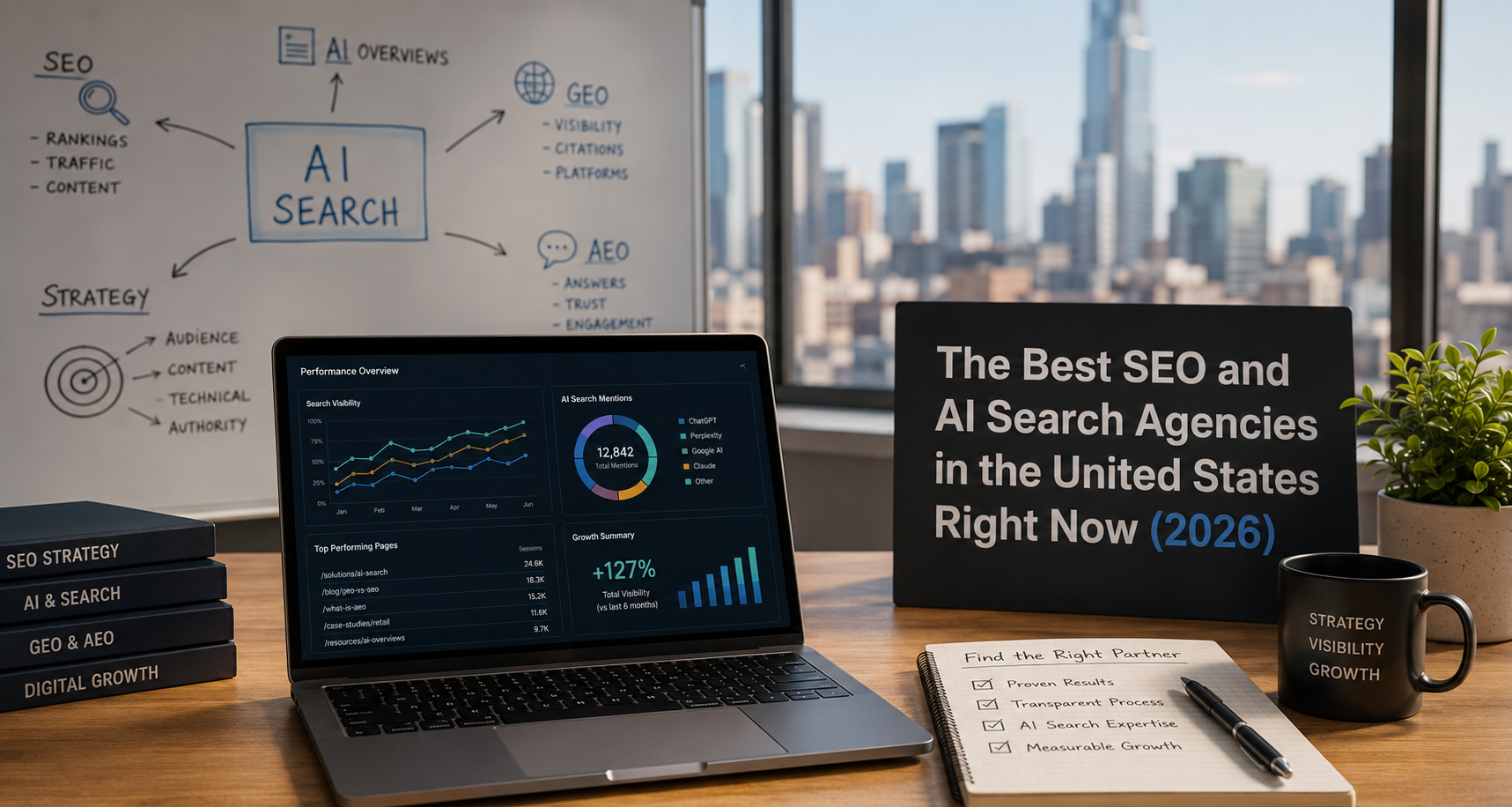
The Best SEO and AI Search Agencies in the United States Right Now
The search for an SEO or AI search agency in 2026 is genuinely harder than it was three years ago — not because good agencies are harder to find, but because the category has expanded and fragmented in ways that make meaningful evaluation more difficult. Every agency now has AI somewhere in its service description. GEO and AEO appear on service pages that have not substantively changed their methodology. This roundup cuts through that noise — covering the firms with documented results across traditional SEO, GEO, and AEO, organized to help you identify the right category of firm for your specific situation rather than producing a meaningless ranked list.
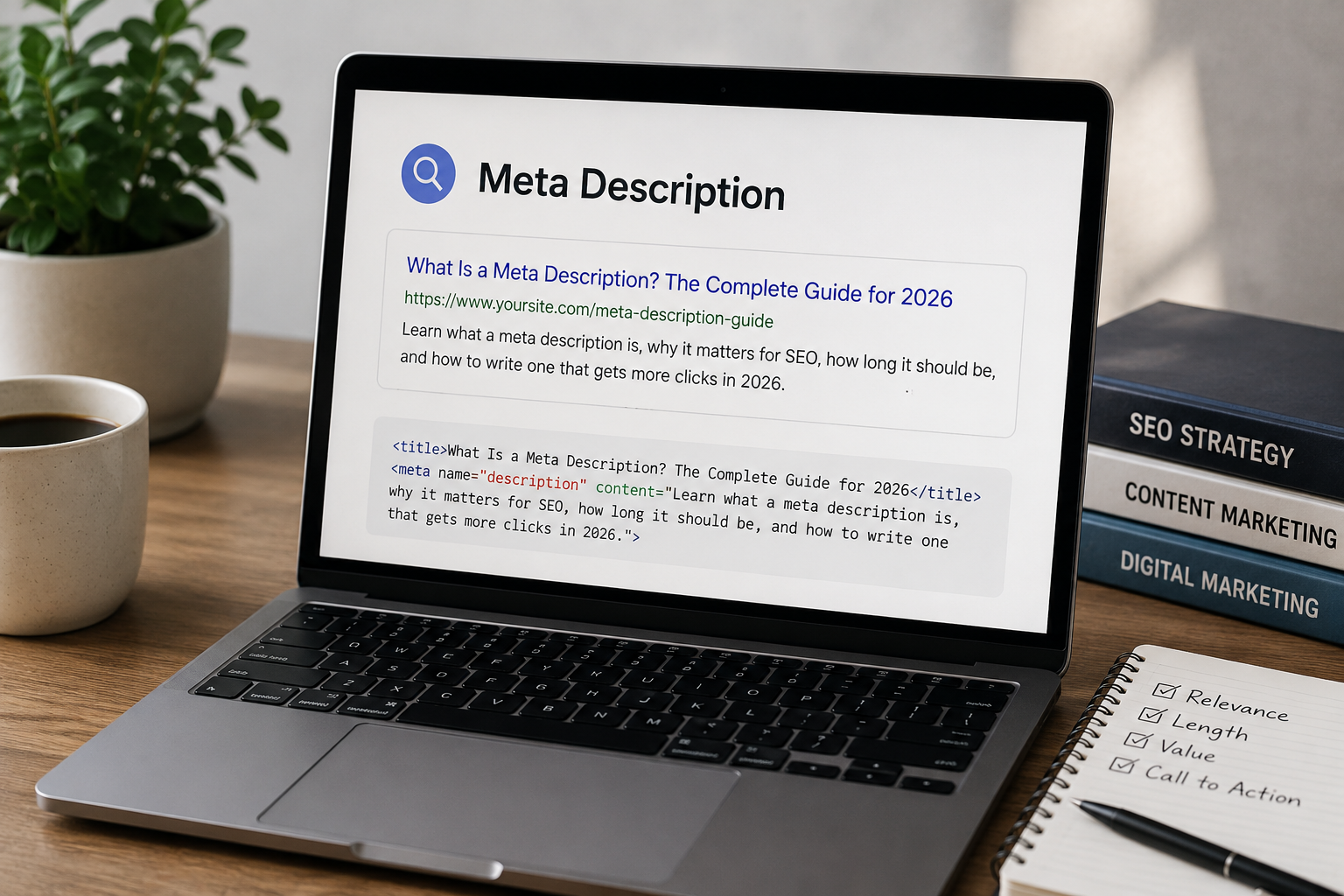
What Is a Meta Description? The Complete Guide for 2026
You have probably seen the term meta description in your CMS, in an SEO audit, or in a conversation with a marketing agency. You may have even been told your meta descriptions need work without being given a clear explanation of what they actually are, why they matter, or what a good one looks like. This is that explanation — covering what a meta description is, whether it affects rankings, how long it should be, what makes one worth clicking, and what happens when you leave the field blank.
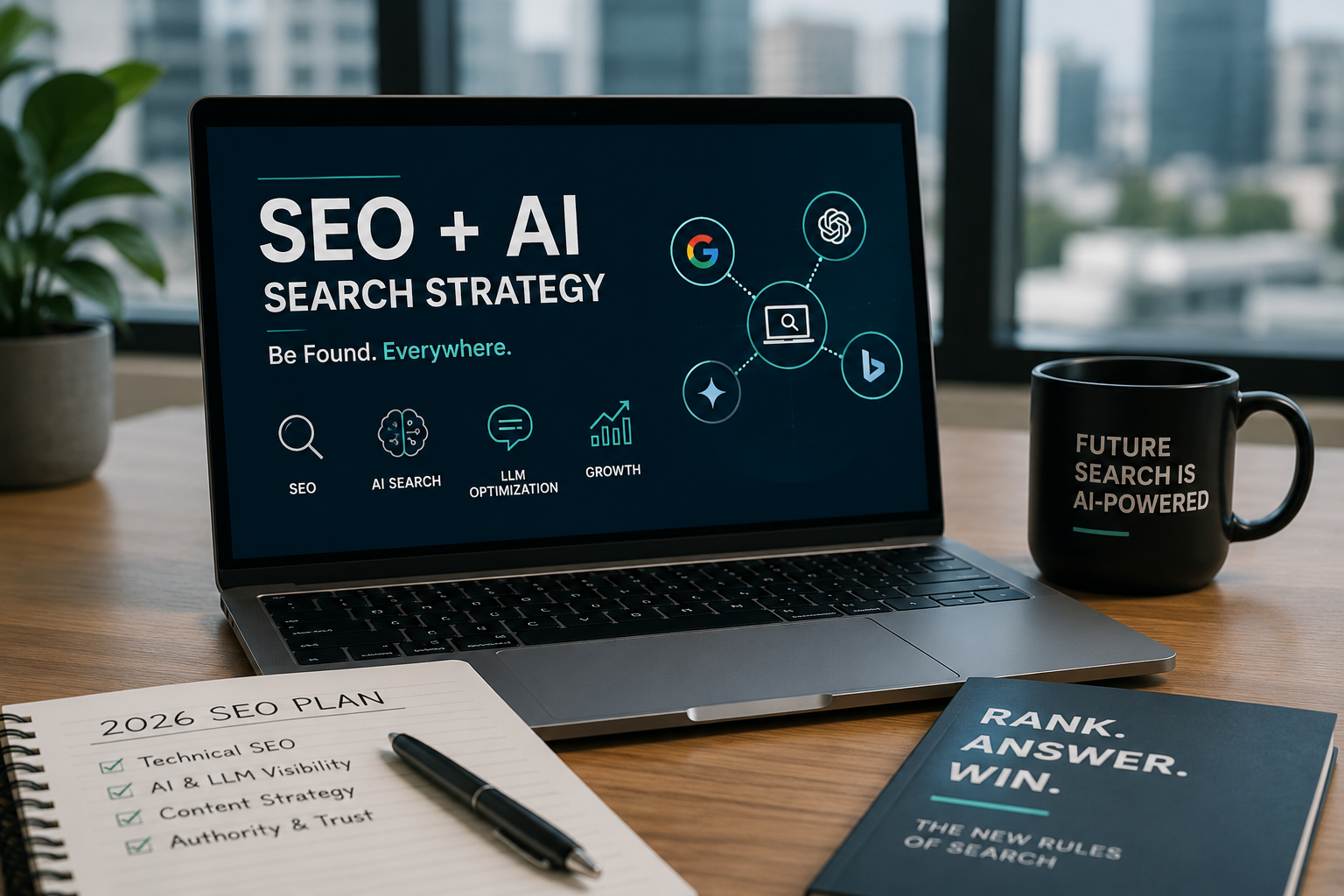
What Is an SEO and AI Search Agency — And Why Your Business Needs One in 2026
If you have searched for marketing help recently, you have probably noticed that the term "SEO agency" has expanded. Some agencies now call themselves AI search agencies or GEO specialists. Others are adding these terms to existing service pages without meaningfully changing what they do. The terminology has multiplied faster than most business owners have had time to understand what any of it means. This post cuts through that noise. What does an SEO and AI search agency actually do in 2026? How is it different from three years ago? What does your business lose by not working with one? And how do you tell the difference between an agency that genuinely understands this shift and one that renamed its 2022 playbook with new acronyms?

When Building the Moat Takes Too Long: The Case for Acquiring One Instead
There is a moment in every competitive market when a strategically honest person looks at what it would take to build the search visibility their competitor has — the topical authority, the citation moat, the entity authority built over years — and does the math. The math is uncomfortable. Topical authority takes six to twelve months of consistent investment to build. External citation accumulation takes longer. And in markets where a competitor is already the default recommendation in AI-generated answers for your most important commercial queries, the honest strategic question is not how to build faster. It is whether building is the right move at all.
What Is an SEO Competitive Moat — And Do You Actually Have One?
Most businesses that invest in SEO are optimizing for positions. They want to rank higher, generate more traffic, and capture more demand than their competitors. That is a legitimate goal. But a ranking is not a moat. A competitor with a larger content budget can outpublish you. An algorithm update can redistribute your positions overnight. An AI system can absorb your informational traffic and redirect it into a response that cites someone else. The investment that produced your position does not protect the position. In 2026, the distinction between a ranking and a moat matters more than it ever has — because the search environment is rewarding the characteristics that produce moats while simultaneously eroding the value of the characteristics that produced positions.
The Enterprise SEO Reporting Problem: Why Your Dashboard Is Hiding What's Actually Happening
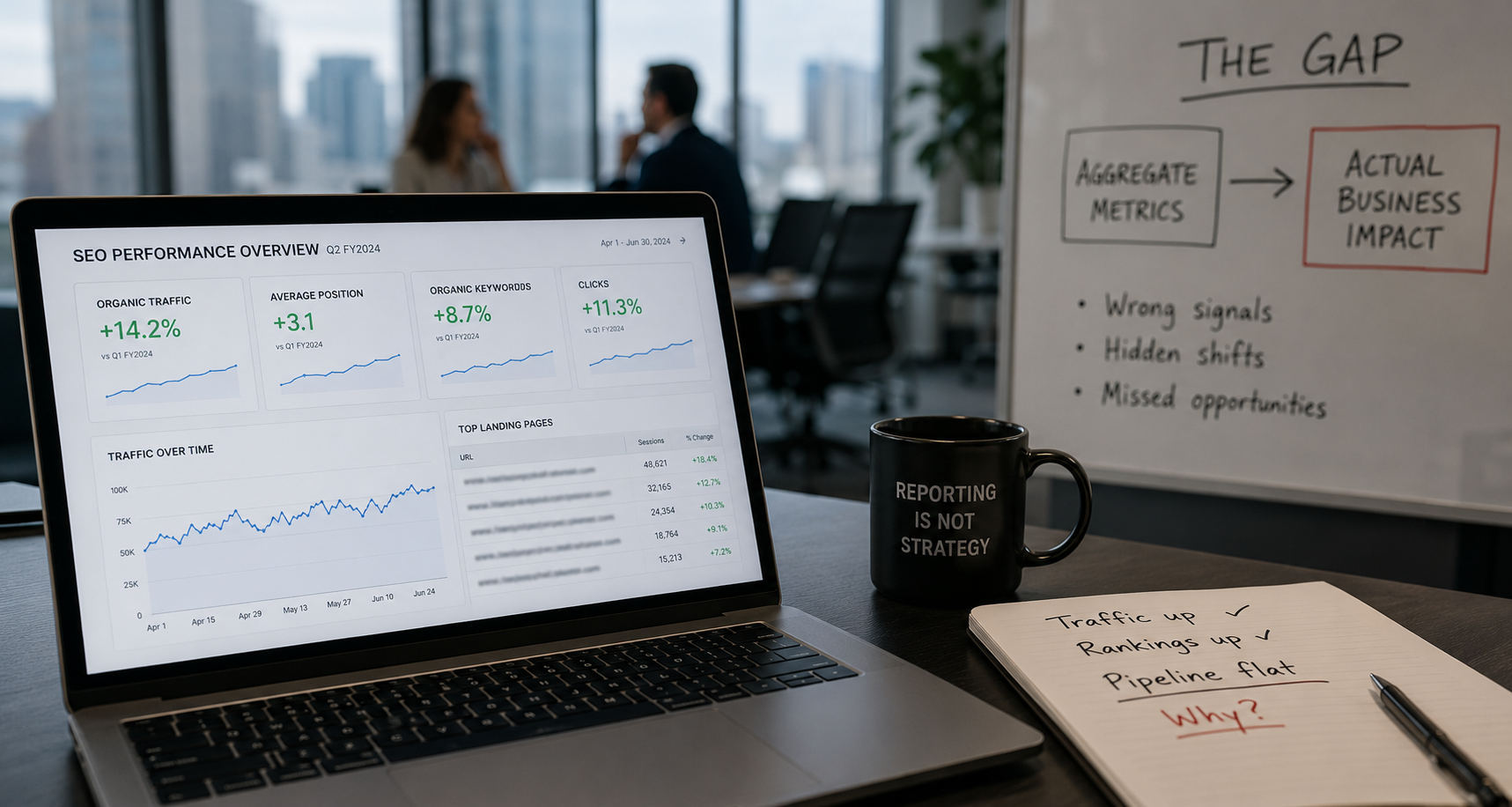
There is a version of enterprise SEO reporting that looks like it is working. The dashboard is clean. The numbers are moving in the right direction. Organic traffic is up fourteen percent. Average position improved by three points. The slide deck for the quarterly business review builds itself. And then six months later, organic pipeline contribution is flat, a competitor is getting cited in AI-generated answers for your most important queries, and you cannot explain why the green numbers and the flat revenue coexist. This is the enterprise SEO reporting problem — not fraud, not incompetence, but a measurement framework built on aggregate metrics that hide what is actually happening at the level where search performance is won and lost.
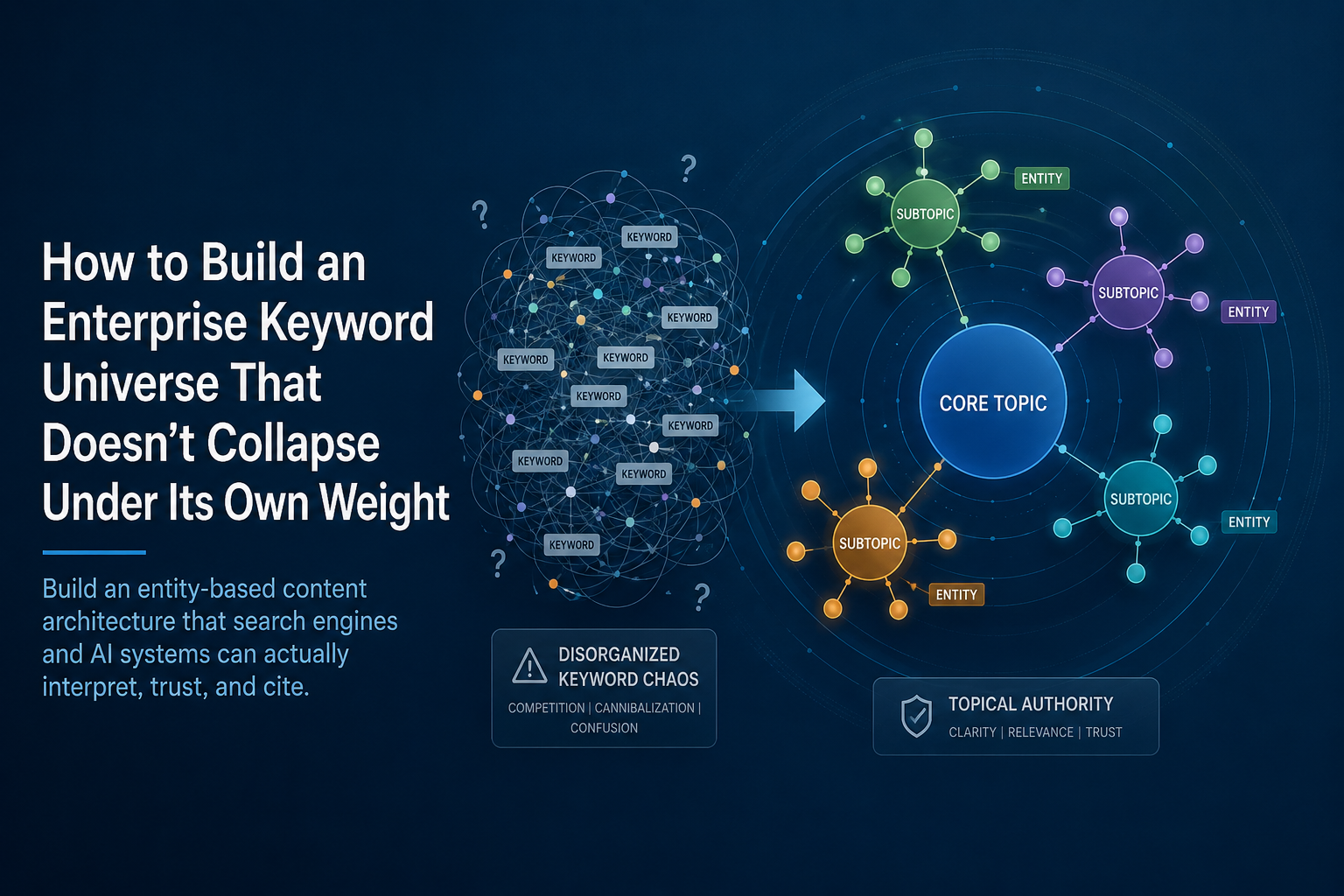
How to Build an Enterprise Keyword Universe That Doesn't Collapse Under Its Own Weight
There is a particular kind of enterprise SEO failure that does not announce itself loudly. Rankings do not fall off a cliff. Traffic does not crater overnight. Instead, the site just stops growing. New content publishes and barely moves. Existing pages oscillate in positions they never quite break out of. The keyword tracking spreadsheet grows longer every quarter while organic pipeline contribution stays flat. The cause is almost always the same: the organization built a keyword universe that is wider than it is deep, inconsistently structured, and actively competing with itself. This is the framework for fixing it — not by adding more content, but by building the entity-based content architecture that search engines and AI systems can actually interpret, trust, and cite.
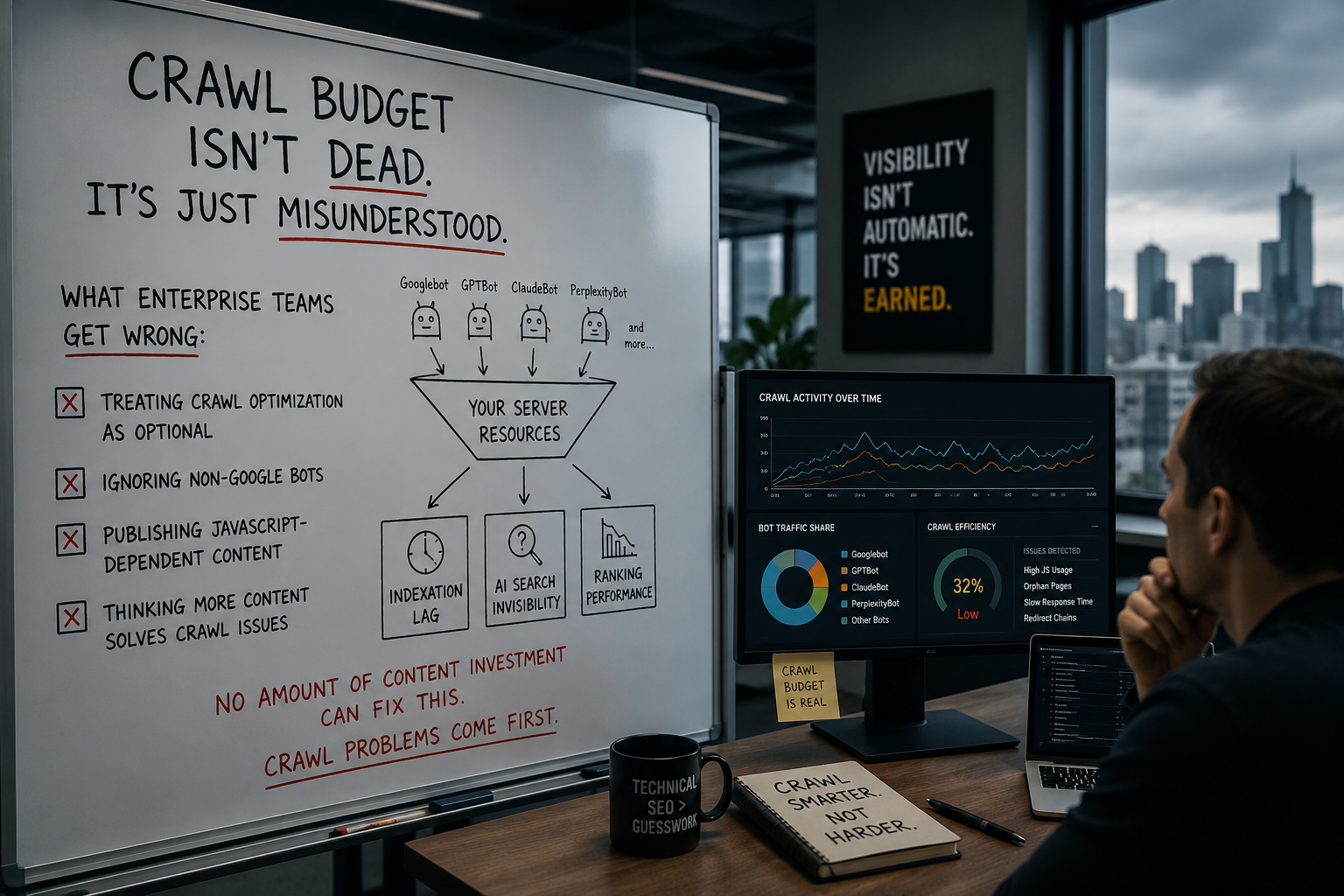
Crawl Budget Isn't Dead. It's Just Misunderstood. Here's What Enterprise Teams Get Wrong.
Every few years someone declares crawl budget dead. The argument usually goes: Google's infrastructure has scaled, Googlebot is smarter, just publish good content and it'll figure it out. This argument was always wrong. In 2026 it's wrong in several new directions simultaneously. The number of bots competing for your server resources has multiplied. GPTBot, ClaudeBot, and PerplexityBot fetch static HTML only — meaning JavaScript-dependent content is invisible to them regardless of how well you've optimized everything else. And the enterprise teams still treating crawl optimization as optional technical cleanup are paying for it in indexation lag, AI search invisibility, and ranking performance that no amount of content investment can fix while the crawl problem persists.
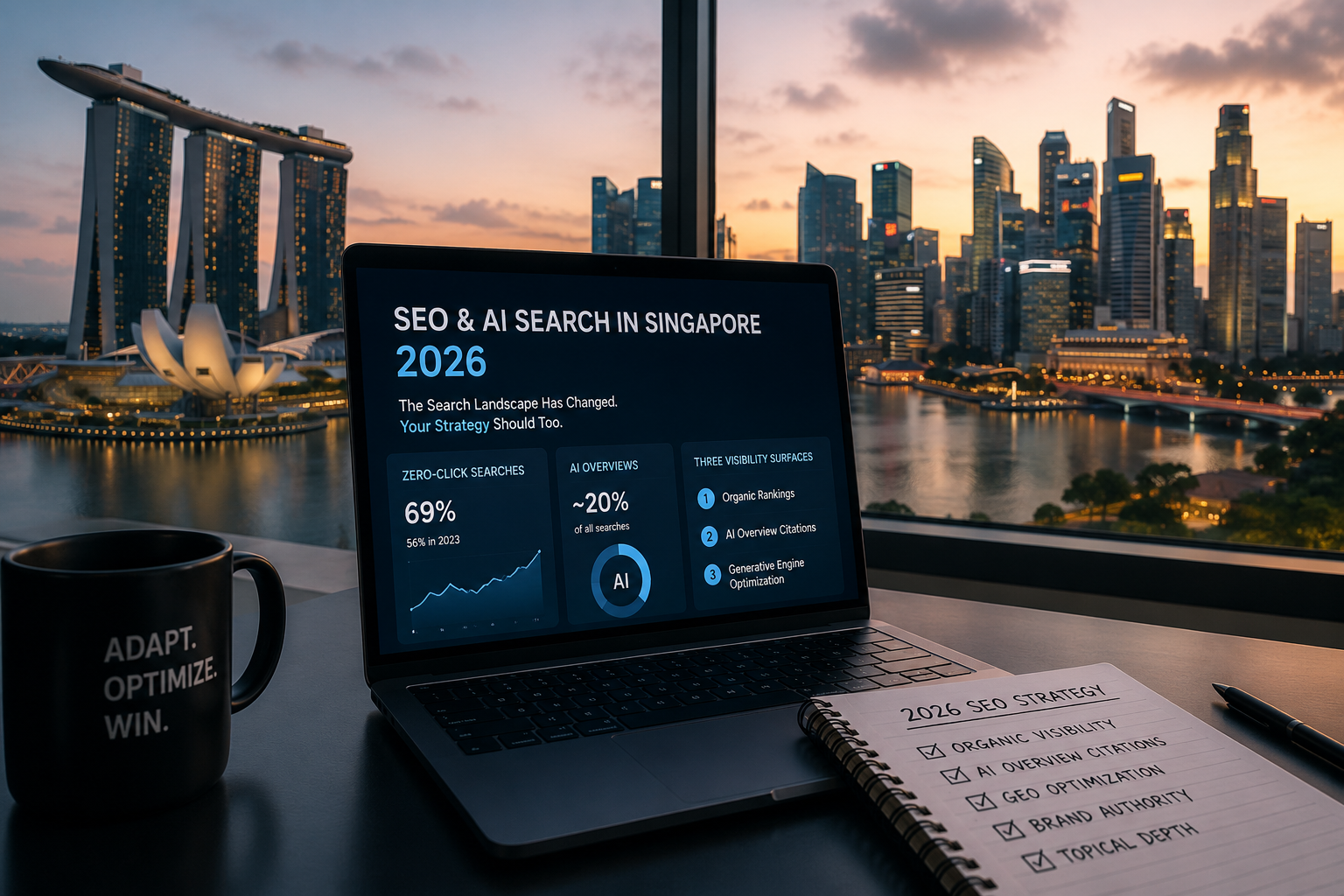
SEO and AI Search in Singapore in 2026: What's Actually Changed and What to Do About It
If your Singapore SEO strategy looks the same as it did in 2023, you are not slightly behind — you are optimizing for a search landscape that no longer exists. Zero-click searches jumped from 56% to 69% in a single year. Google AI Overviews now appear in nearly 20% of all Singapore searches. And the businesses pulling ahead aren't doing more SEO. They've rebuilt their entire approach around three distinct visibility surfaces — organic rankings, AI Overview citations, and generative engine optimization — while most of their competitors are still measuring success with 2022 metrics.
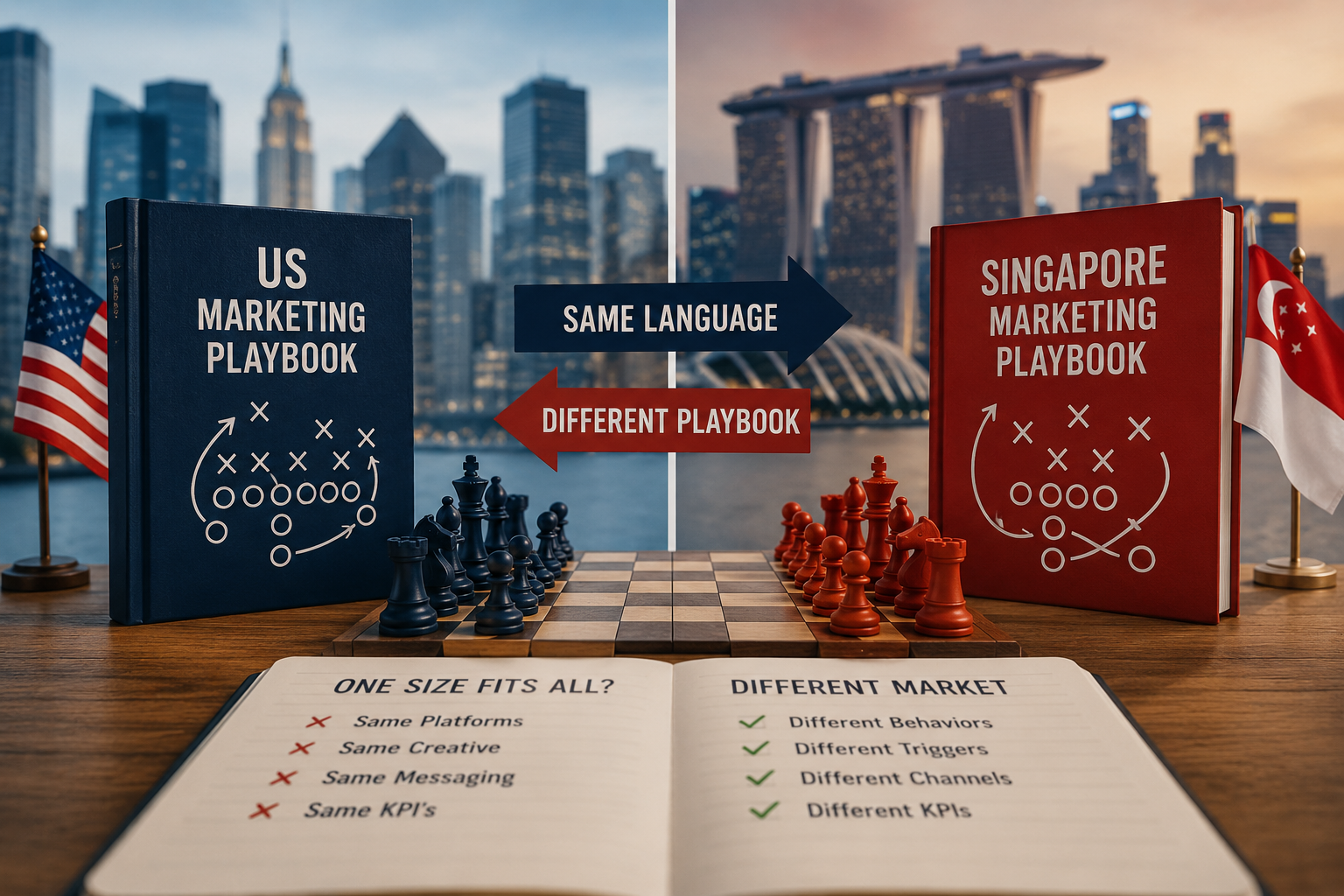
Same English, Completely Different Playbook: Marketing Trends in the US vs. Singapore in 2026
A US brand enters Singapore, assumes that because English is widely spoken the playbook translates, and runs the same campaigns on the same platforms with the same creative. The results are predictably mediocre. The brand concludes Singapore is a hard market. Singapore isn't a hard market. It's a different one — and the difference is significant enough that it deserves its own framework, not a regional adaptation of a US strategy. Here's what that framework actually looks like.
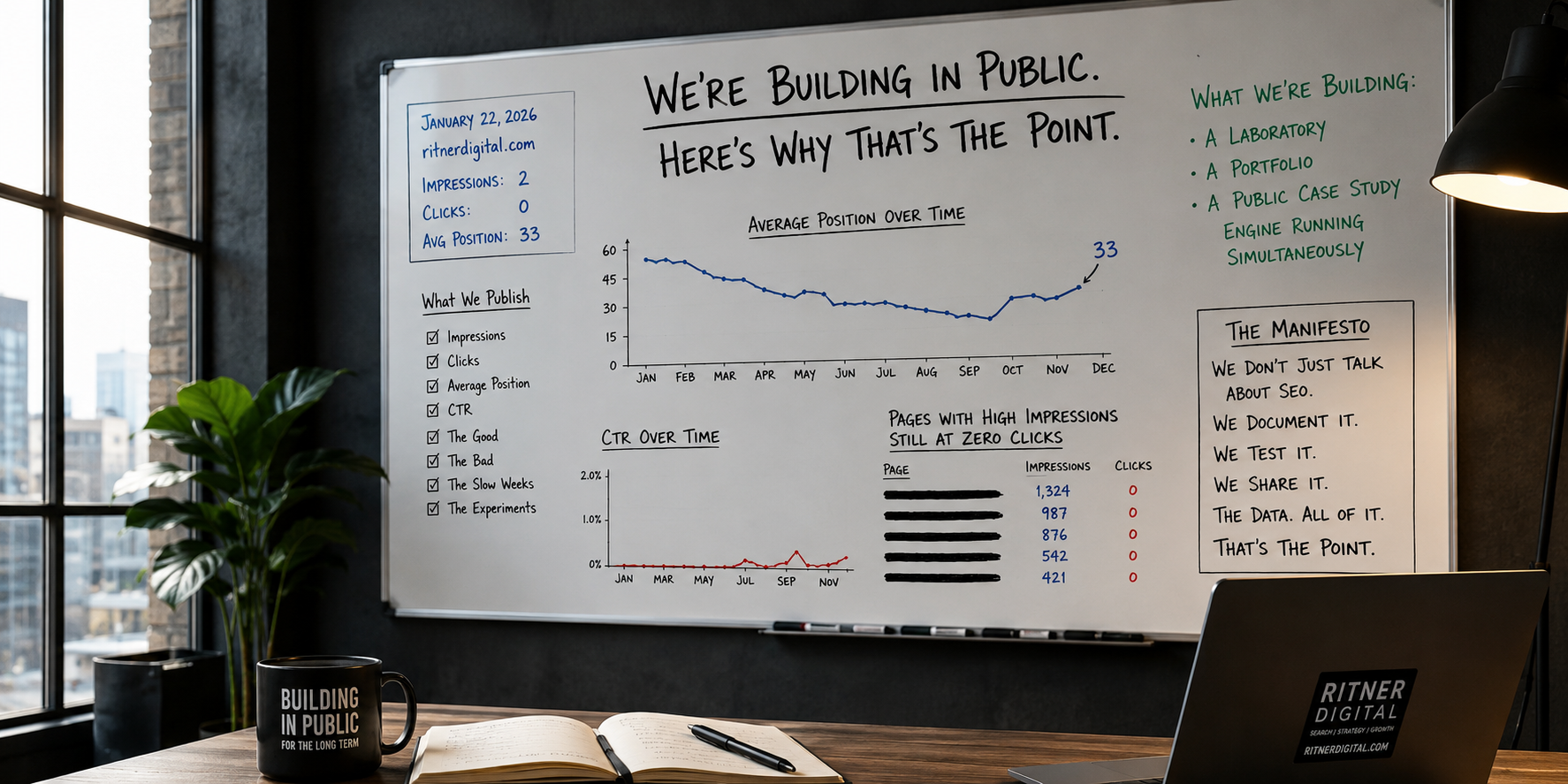
We're Building in Public. Here's Why That's the Point.
On January 22, 2026, ritnerdigital.com generated 2 impressions in Google Search Console. Zero clicks. Average position 33. We published that number. We published every number that followed — the days at position 60, the months where CTR didn't move, the high-impression pages still sitting at zero clicks. What we're building is a laboratory, a portfolio, and a public case study engine running simultaneously. This is the manifesto for why.
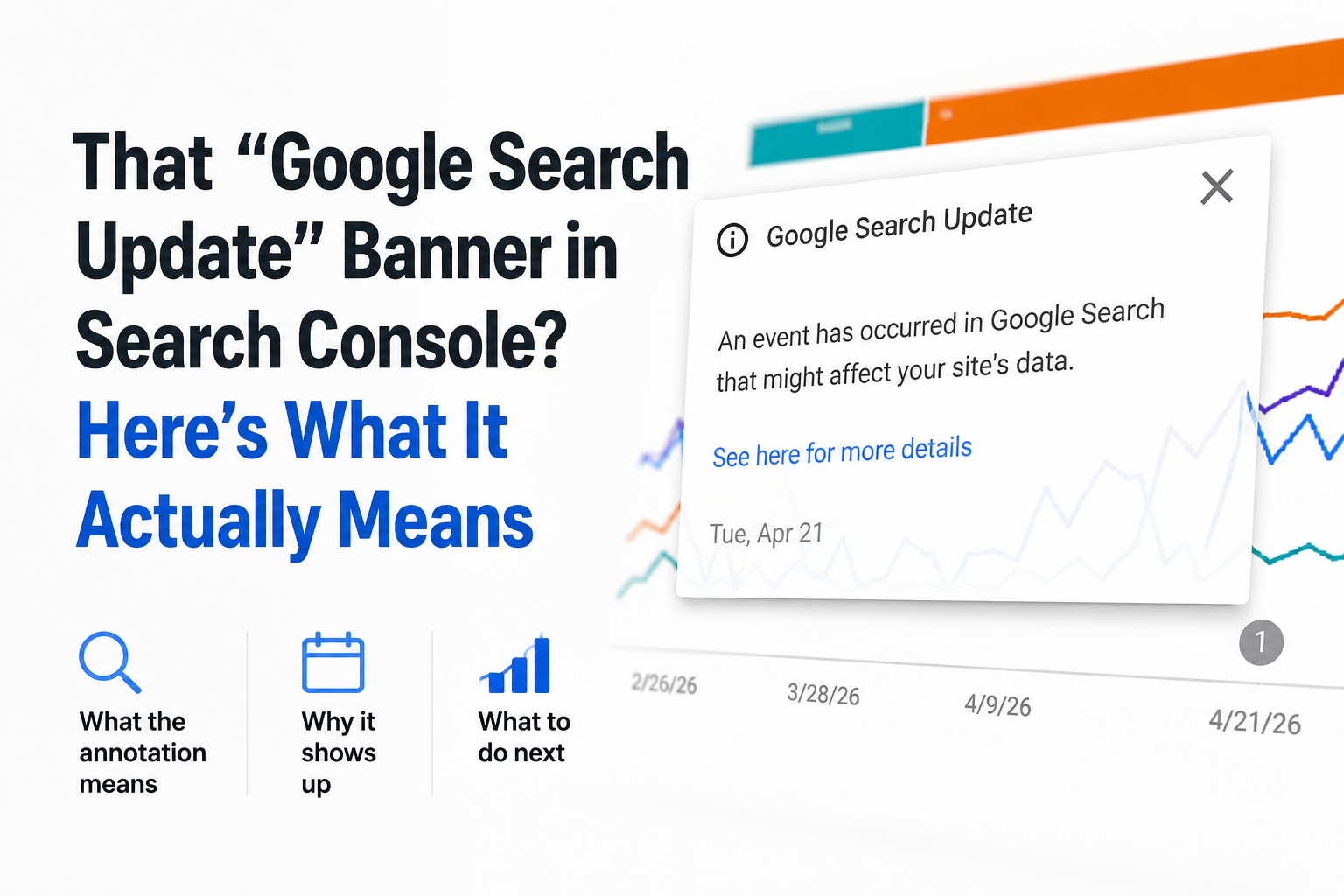
That Little "Google Search Update" Banner in Your Search Console? Here's What It Actually Means — And What to Do Next
You opened Google Search Console and saw it — a small banner that said "An event has occurred in Google Search that might affect your site's data." No explanation. No action items. Just a date and a vague warning that something happened. Here's the thing: that annotation is not a penalty notice, and it didn't arrive in a vacuum. It landed in the middle of a core update rollout, an eleven-month impression reporting bug, and one of the most data-chaotic stretches Google Search has had in years. This post explains exactly what it means and what to do with it.

You Don't Have a Content Problem. You Have an Entity Problem.
Most content programs are solving the wrong problem. Publishing more pages, targeting more keywords, hitting more publishing deadlines — none of it matters if search engines and AI systems can't confidently identify what your brand actually is. The sites getting ranked and cited in 2026 aren't the ones with the most content. They're the ones that built a recognizable, verifiable, externally validated entity. Here's the difference — and how to build one.

Why Enterprise SEO Fails: The Internal Alignment Problem No Agency Will Tell You About
Most enterprise SEO programs fail for the same reason — and it has nothing to do with the quality of the audit. Recommendations sit in backlogs for months. Legal holds up content for weeks. Development priorities the agency can't touch. The strategy was fine. The org chart killed it.
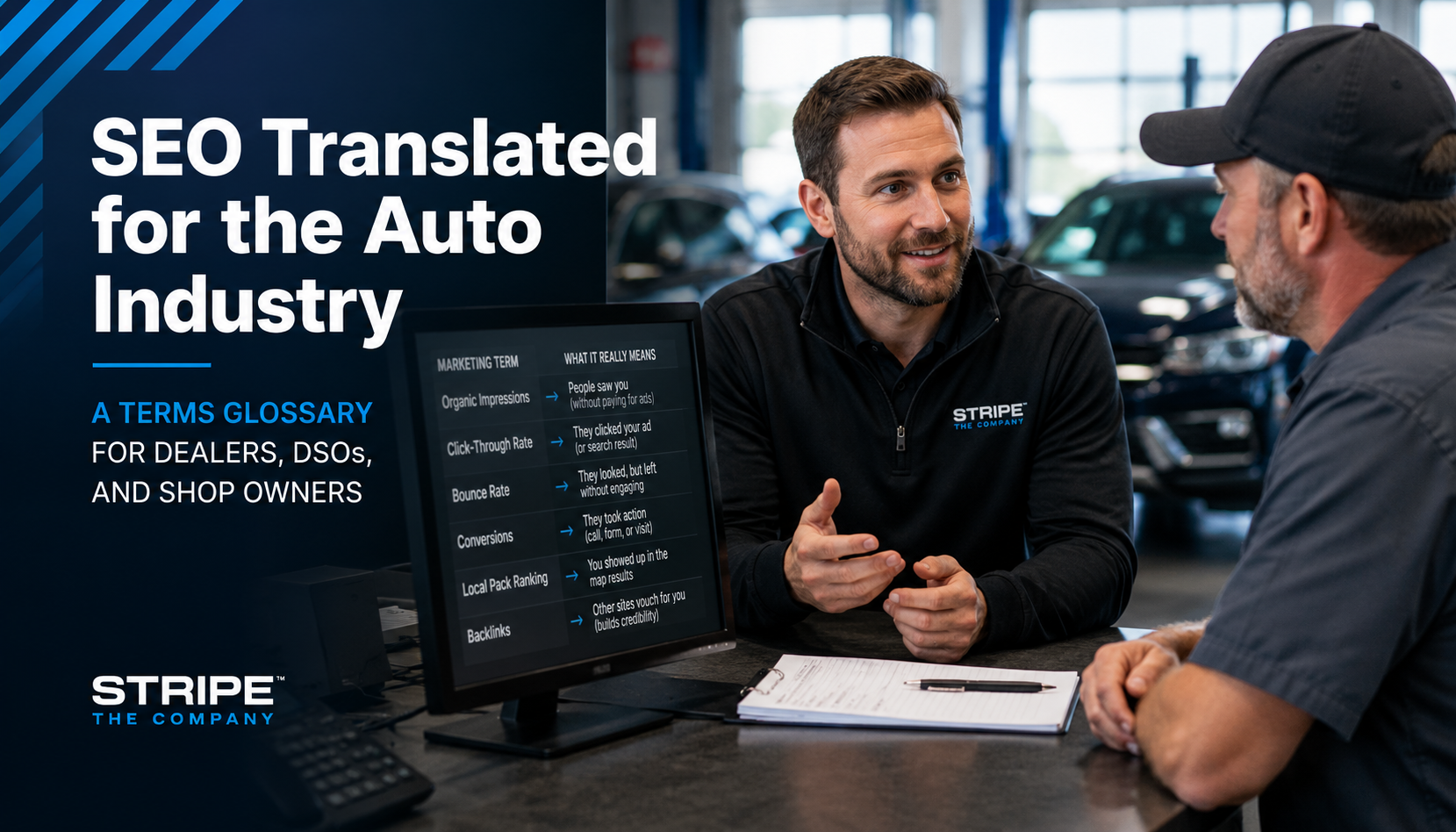
SEO Translated for the Auto Industry: A Terms Glossary for Dealers, DSOs, and Shop Owners
Your service advisor doesn't talk about "organic impressions." Your marketing agency doesn't talk about "door swings." But they're describing the same thing. This glossary translates the terms your agency uses into the language your dealership, DSO, or shop actually runs on — so you can stop nodding along and start making better decisions.

The AI Search Penalty That's Quietly Strangling Federal Contractors
Federal contractors are among the most accomplished operators in the American economy. They also can't talk about most of what they've done. In an AI search environment built to reward specific, named, documented proof, that silence is a structural disadvantage — and it's getting more expensive by the month.
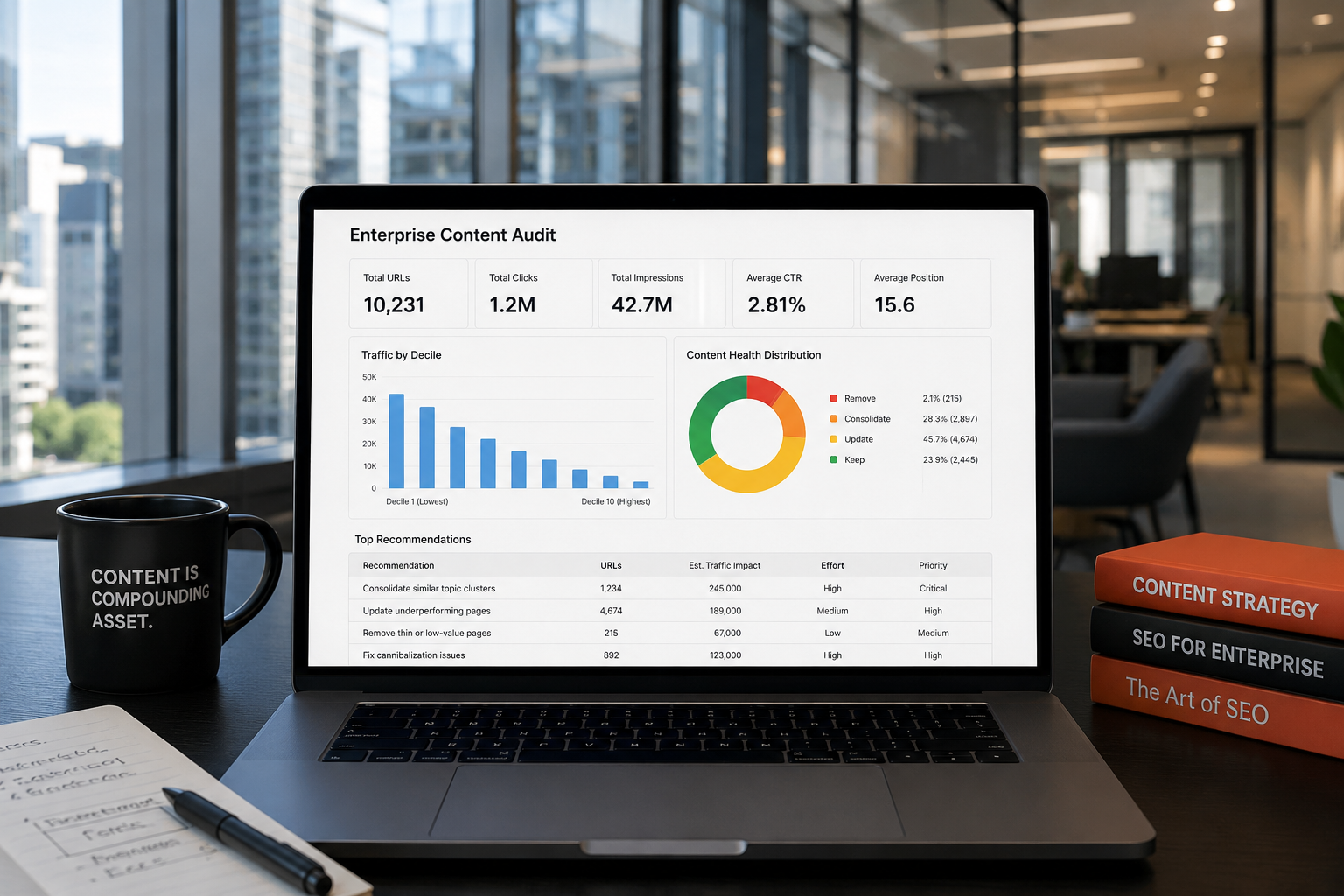
The Enterprise Content Audit That Actually Scales: How to Fix What's Killing Your Rankings Across 10,000+ Pages
Most enterprise content audits start with a spreadsheet and end with a spreadsheet. Someone exports all URLs, adds GSC data, sorts by traffic, flags the low performers, and produces a recommendation list that's either too long to action or too vague to implement. The pages stay live. The cannibalization continues. The authority dilution compounds. Six months later, someone runs the same audit and produces the same spreadsheet. The reason this keeps happening isn't bad intentions or lazy execution — it's that most content audit frameworks weren't designed for 10,000 pages, multiple content teams, and an implementation process that requires stakeholder alignment across half the organization. This is the framework that was.
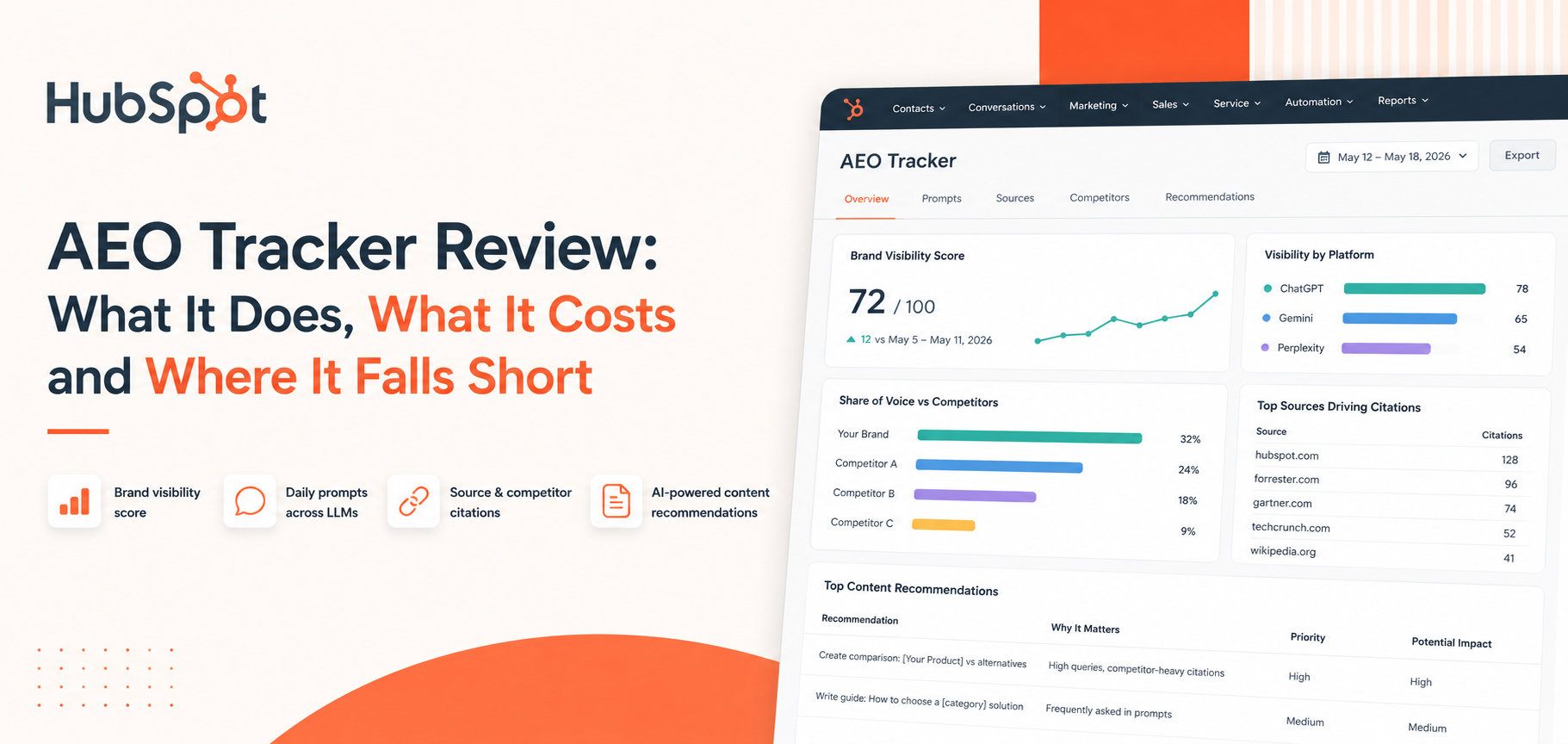
HubSpot's AEO Tracker: A Hands-On First Look at What It Actually Does
When a platform with 200,000+ customers ships a new tool, it's worth paying attention — not just to the feature, but to what it signals about where the market is going. HubSpot launched its AEO tracker in Spring 2026 and we've been living in it. It tracks your brand visibility score, runs your prompts daily across ChatGPT, Gemini, and Perplexity, breaks down which sources are driving competitor citations, and turns all of it into a prioritized content recommendation list. Here's what it actually does, where it's genuinely useful, and where the gaps still are.