Google Search Console Is Showing Zero Data for March 18, 2026 — Here's Why You Shouldn't Panic
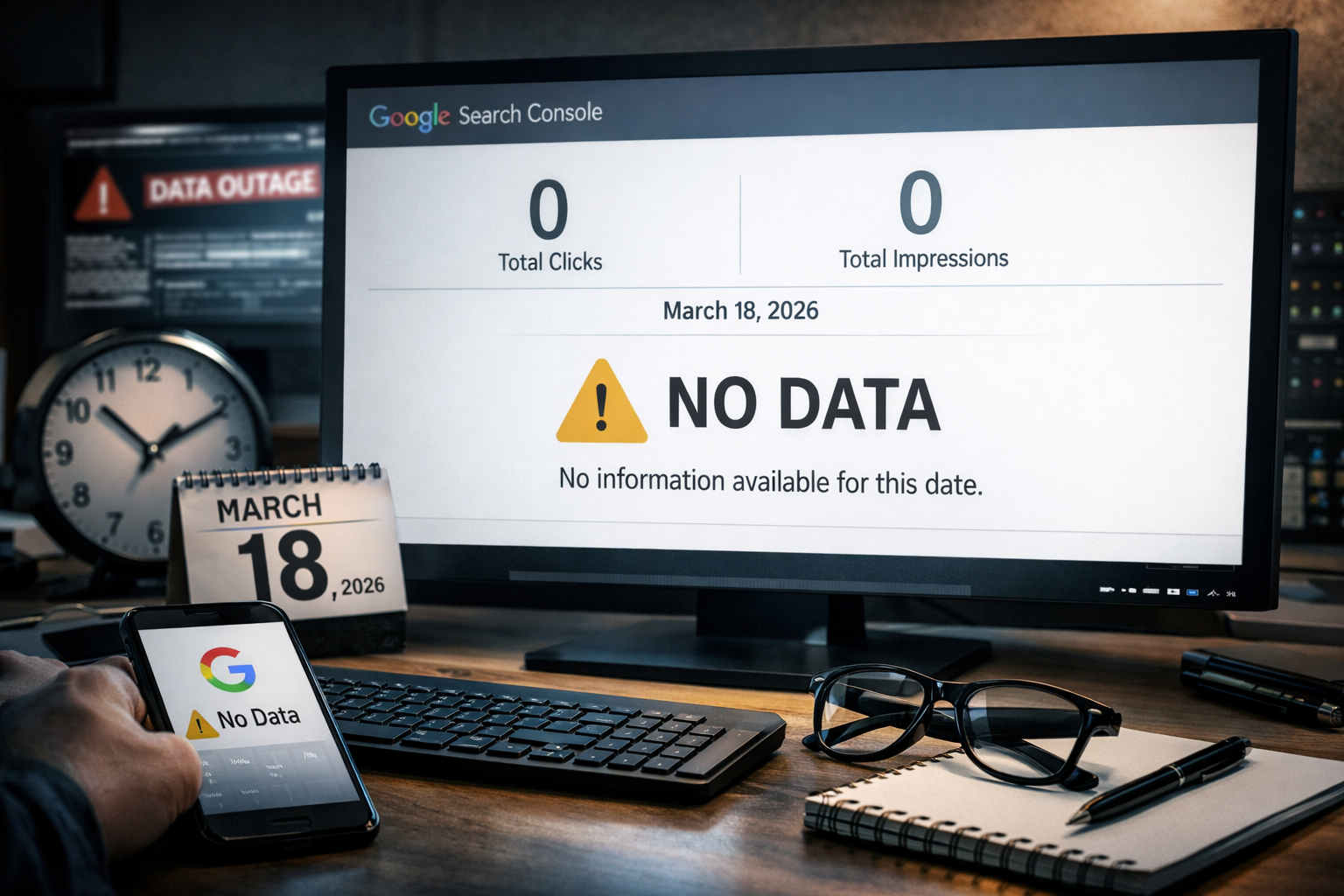
If you logged into Google Search Console this morning and saw a flatline — zero clicks, zero impressions, a graph that looks like your site fell off the internet — take a breath. Your site is fine. Google is not.
We're flagging this because we caught it first, across multiple client properties.
What We're Seeing
At Ritner Digital, we manage Search Console access across a range of client accounts. That cross-account visibility gives us something solo operators and in-house marketing teams don't have: pattern recognition at scale. When one client shows a data anomaly, it might be a site issue. When it shows up across every property simultaneously, it's Google.
That's exactly what happened here.
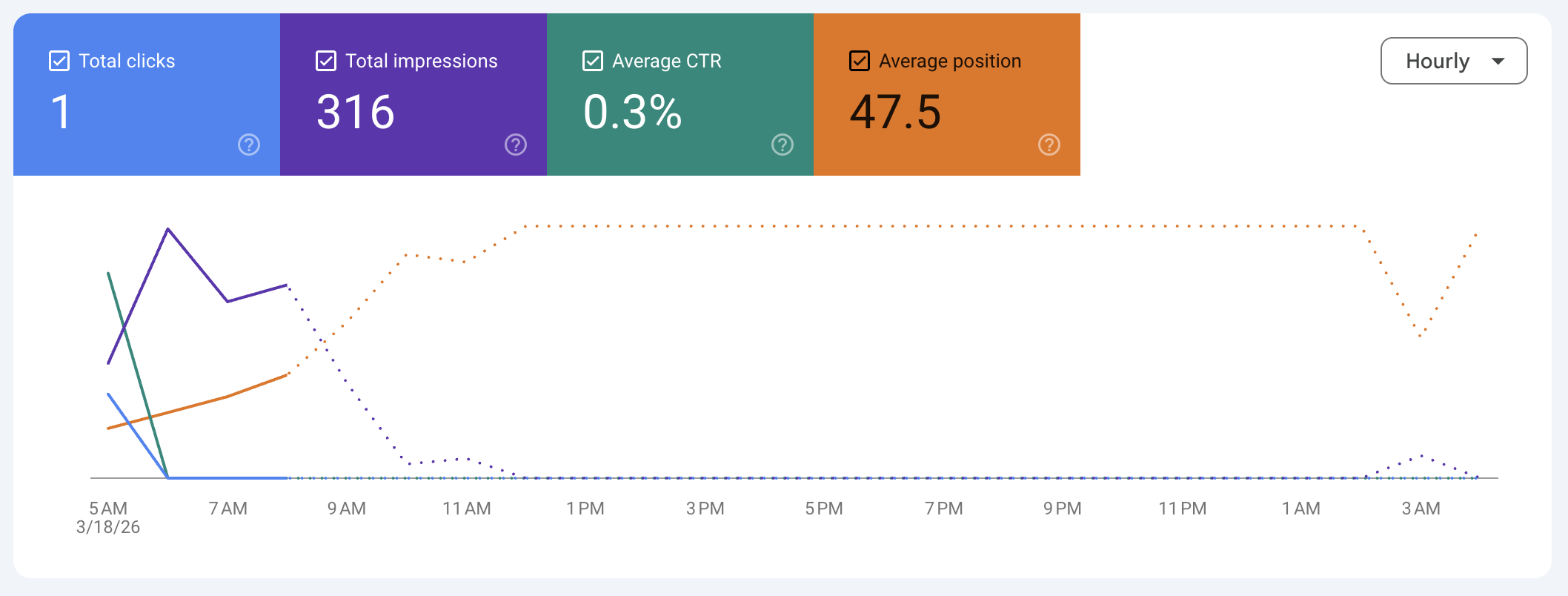
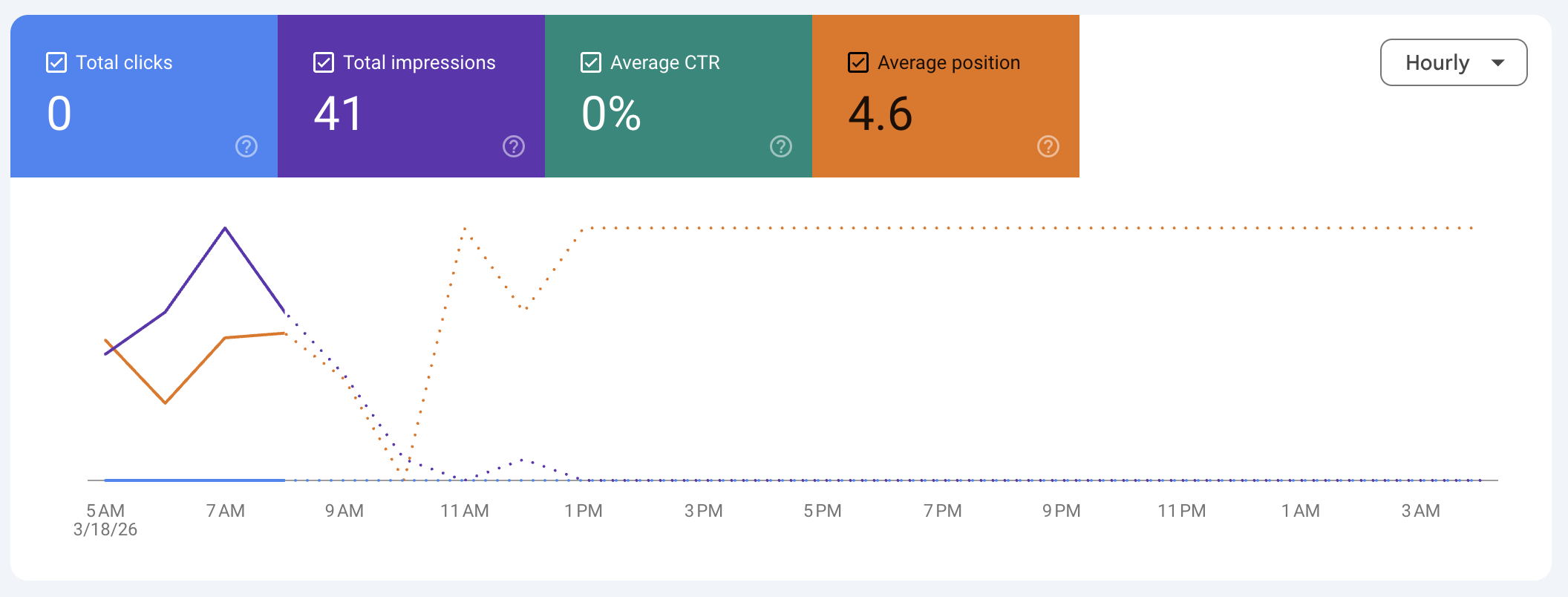
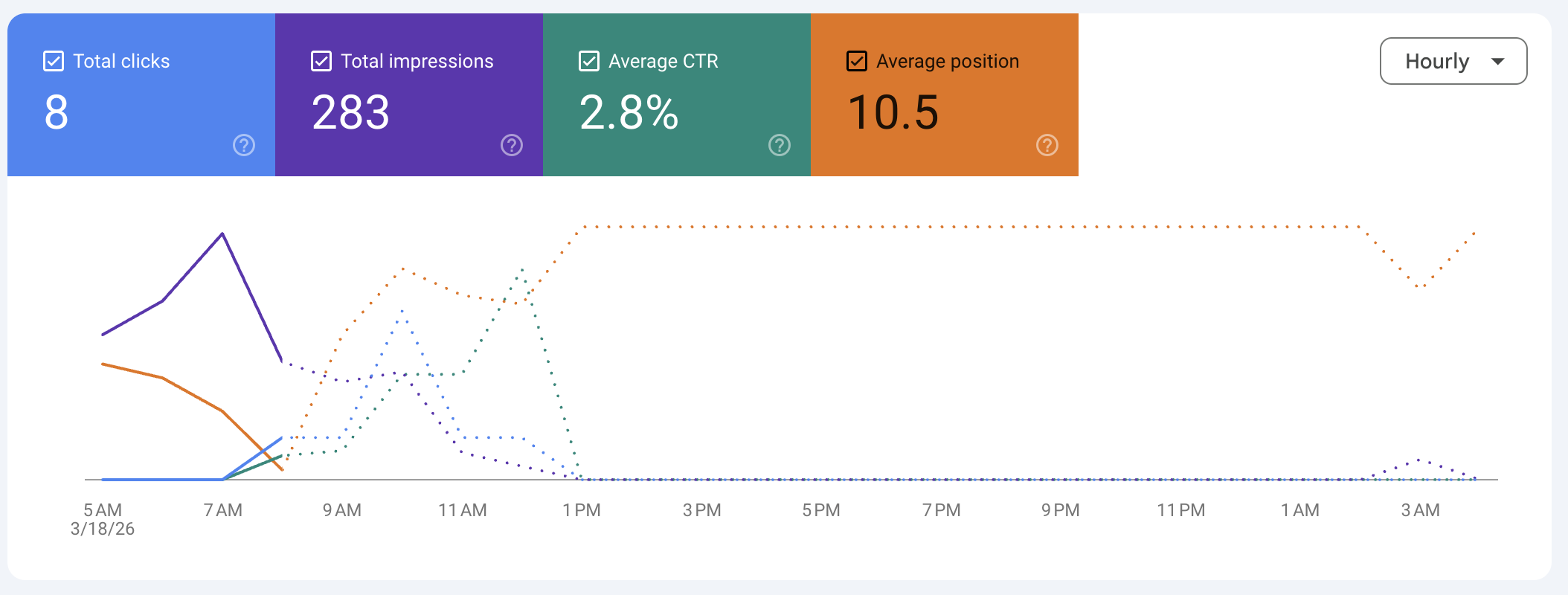
Starting around 8:00 AM on March 18, 2026, Google Search Console performance data went dark. Clicks dropped to zero. Impressions dropped to zero. The 24-hour view showed a clean flatline where there should have been a normal traffic curve. The gap appears to have persisted through approximately 3:00 AM on March 19, representing a roughly 19-hour window of missing data in the reporting pipeline.
We confirmed this independently across multiple client domains in different industries, different regions, and different traffic tiers. The gap is identical across all of them — which is the fingerprint of a Google-side infrastructure issue, not anything on your website.
You're Not Alone — Others Caught It Too
We weren't the only ones watching closely, though the March 18–19 gap appears to be freshly breaking as of this writing and hasn't yet received widespread coverage.
That said, this type of GSC reporting failure is well-documented territory. WideRipples has written on the mechanics of exactly this phenomenon — how when Google pauses or recalibrates its reporting system, the hourly view stops updating and shows 0 clicks and 0 impressions, and how once the update completes, the entire missing block of data reappears. Their breakdown is worth reading for anyone who wants to understand why this keeps happening at a technical level, even though their piece predates this specific outage.
This is a pattern Google has repeated several times over the past year. In October 2025, Search Console performance reports froze across all properties for nearly a week. In December 2025, the Page Indexing report lost weeks of historical data. In February 2026, a technical issue caused two days — February 28th and March 1st — to go missing from bulk data exports for some properties. Google Support Google even maintains a dedicated "Data Anomalies" page in Search Console Help specifically because these gaps happen often enough to warrant one.
What makes the March 18–19 gap different is the precision of the window and the speed at which we identified it. Because we're monitoring across multiple client properties simultaneously, we were able to pinpoint the start time at approximately 8:00 AM on March 18 and track it through to roughly 3:00 AM on March 19 — a roughly 19-hour outage — while single-domain operators were likely still trying to figure out if they'd done something wrong.
What's Actually Happening Under the Hood
Google Search Console runs on a data processing pipeline that sits between raw search activity and what you see in your dashboard. The issue lies only in the reporting pipeline — clicks and impressions that occurred during the gap simply haven't been logged in the dashboard yet. In reality, Google's search results continue to function normally. Your pages are still being crawled, indexed, and displayed in search.
Think of it like a receipt printer going offline at a busy restaurant. The transactions still happened. The kitchen is still cooking. The printer just isn't printing. When it comes back online, it catches up.
When Google pauses or recalibrates its reporting system, the hourly view stops updating and shows 0 clicks or 0 impressions. Once the update is complete, the entire missing block of data will reappear. This happens when the reporting pipeline is delayed, but Google's search index remains active. Wide Ripples Your rankings haven't moved. Your pages haven't been penalized. The data is sitting in a queue waiting to be processed.
What To Do Right Now
Don't touch your site. Seriously. The instinct to "fix something" when a chart looks broken is strong, but there is nothing to fix. Reinstalling your Google Site Kit plugin, re-submitting your sitemap, or removing and re-adding your property will accomplish nothing and may create confusion later.
Cross-check GA4. If your Google Analytics 4 organic traffic looks normal for March 18, that confirms your real-world search visibility is intact. GA4 and GSC pull from different systems — GA4 tracks actual sessions on your site, so it won't show the same reporting gap.
Screenshot what you're seeing. For your own records and client communication, a screenshot of the flatline with the date range visible is useful documentation. When the data backfills — and it will — you'll want a record of what the gap looked like before.
Note it in any client reports going out this week. If you're an agency or freelancer sending performance updates, call it out proactively. Clients who see a March 18 flatline without context will ask questions. Get ahead of it with a one-liner: this is a known Google-side reporting gap, not a performance issue.
Wait. Based on previous GSC outages, Google typically stores the raw data and backfills the reports once the processing issue is resolved. Historical precedent — October 2025, December 2025, February 2026 — suggests the missing window will reappear, likely within 24–72 hours of the pipeline resuming.
Why Agencies Catch This First
This is a good moment to explain why multi-account visibility matters.
If you're managing a single domain — whether you're an in-house marketer, a small business owner, or a solopreneur — you have no external reference point when your data looks wrong. A 19-hour gap in Search Console could look like an algorithm penalty, a technical site issue, a hosting problem, a tracking break, or a catastrophic drop in rankings. Without cross-account comparison, you're making decisions in the dark.
Agencies operating across dozens or hundreds of accounts see the pattern instantly. When the same anomaly appears in a local business's GSC account, a national e-commerce brand's account, and a B2B company's account at exactly the same time, it's not a coincidence and it's not your fault.
That's why we published this as soon as we confirmed it. If you're staring at zeroes right now and trying to figure out what you broke — you didn't break anything.
The Bigger Takeaway
GSC outages and data gaps have become a recurring feature of the reporting landscape, not an exception. October, December, February, and now March — Google's reporting infrastructure keeps surfacing gaps, and the SEO community keeps catching them before Google officially acknowledges them.
This is a strong argument for building redundancy into your analytics stack. GSC is invaluable, but it shouldn't be your only source of truth. GA4 organic traffic, rank tracking tools, server logs, and third-party platforms give you signal when GSC goes quiet. Many agencies rely on GSC for weekly and monthly client reports, so a reporting gap like this can make healthy websites appear to have lost visibility overnight. Elite Seo Consulting The agencies that weather these gaps best are the ones who saw them coming — because they've built monitoring systems that don't depend on a single platform.
We'll update this post if Google issues an official statement or if the data backfills on a different timeline than expected.
Ritner Digital is a digital marketing agency. If you have questions about what you're seeing in your Search Console account, reach out — we're watching it closely.
Frequently Asked Questions
Is Google Search Console down right now?
Not in the traditional sense. Google Search itself is functioning normally — your site is still being crawled, indexed, and served in search results. What's broken is the reporting pipeline that feeds data into your Search Console dashboard. It's a backend data processing issue, not a full platform outage.
Why does my Search Console show zero clicks and zero impressions on March 18, 2026?
Google's performance data pipeline experienced a gap starting around 8:00 AM on March 18, 2026 and running through approximately 3:00 AM on March 19. During that window, the system stopped logging click and impression data to the dashboard. The data for that period either hasn't been processed yet or will be backfilled once Google resolves the issue on their end.
Is my website actually getting traffic during this gap?
Almost certainly yes. Cross-reference your Google Analytics 4 account and look at your organic traffic for March 18. If GA4 shows sessions coming in from Google Search, your site is receiving traffic — it's just not showing up in Search Console yet.
Did my rankings drop?
No. This is a reporting issue, not a ranking change. Google's search index continued operating normally throughout the gap. If your pages were ranking before March 18, they were still ranking during it.
Will the missing data come back?
Based on every previous GSC outage — October 2025, December 2025, February 2026 — Google backfills the missing data once the pipeline is restored. We expect the March 18–19 window to reappear in your performance reports, though timing varies. Check back within 24–72 hours.
Should I resubmit my sitemap or request re-indexing?
No. Those actions won't affect a reporting pipeline issue and will just add noise to your account. Leave your site configuration alone until the data returns.
How did Ritner Digital catch this so quickly?
We manage Search Console access across multiple client properties. When the same zero-data pattern appeared simultaneously across accounts in different industries, regions, and traffic levels, we knew immediately it wasn't a site-specific issue. That cross-account visibility is one of the core advantages of working with an agency.
Has Google acknowledged this outage?
As of publishing, Google has not issued an official statement about the March 18–19 gap specifically. Google's official Data Anomalies page and Search Status Dashboard are worth bookmarking — they're the first places Google documents confirmed reporting issues, though historically they lag behind community detection.
What should I tell my clients or boss about this?
Keep it simple: "Google Search Console experienced a data reporting gap on March 18, 2026 affecting all properties globally. This is a Google-side infrastructure issue with no impact on actual search performance or rankings. The missing data is expected to backfill once Google resolves the pipeline issue."
How do I make sure I'm not caught off guard by this in the future?
Don't rely on Search Console as your only performance signal. Layer in GA4 organic traffic tracking, a rank monitoring tool, and regular data exports from GSC. When one source goes quiet, the others keep you informed.