
Your Website Is Your Digital Front Door — and SEO and AI Search Decide How Many People Walk Through It
Every customer journey now starts on a digital street — and your website is the front door. Some visitors walk in ready to buy. Some grab a free sample and leave. Some are just scoping you out for later. In this guide, we break down how SEO, local search, and AI search engines like ChatGPT and Google's AI Overviews determine how much foot traffic your business gets, why AI-referred visitors convert up to 9x better than organic traffic, and what it takes to own your corner of the street before your competitors do.
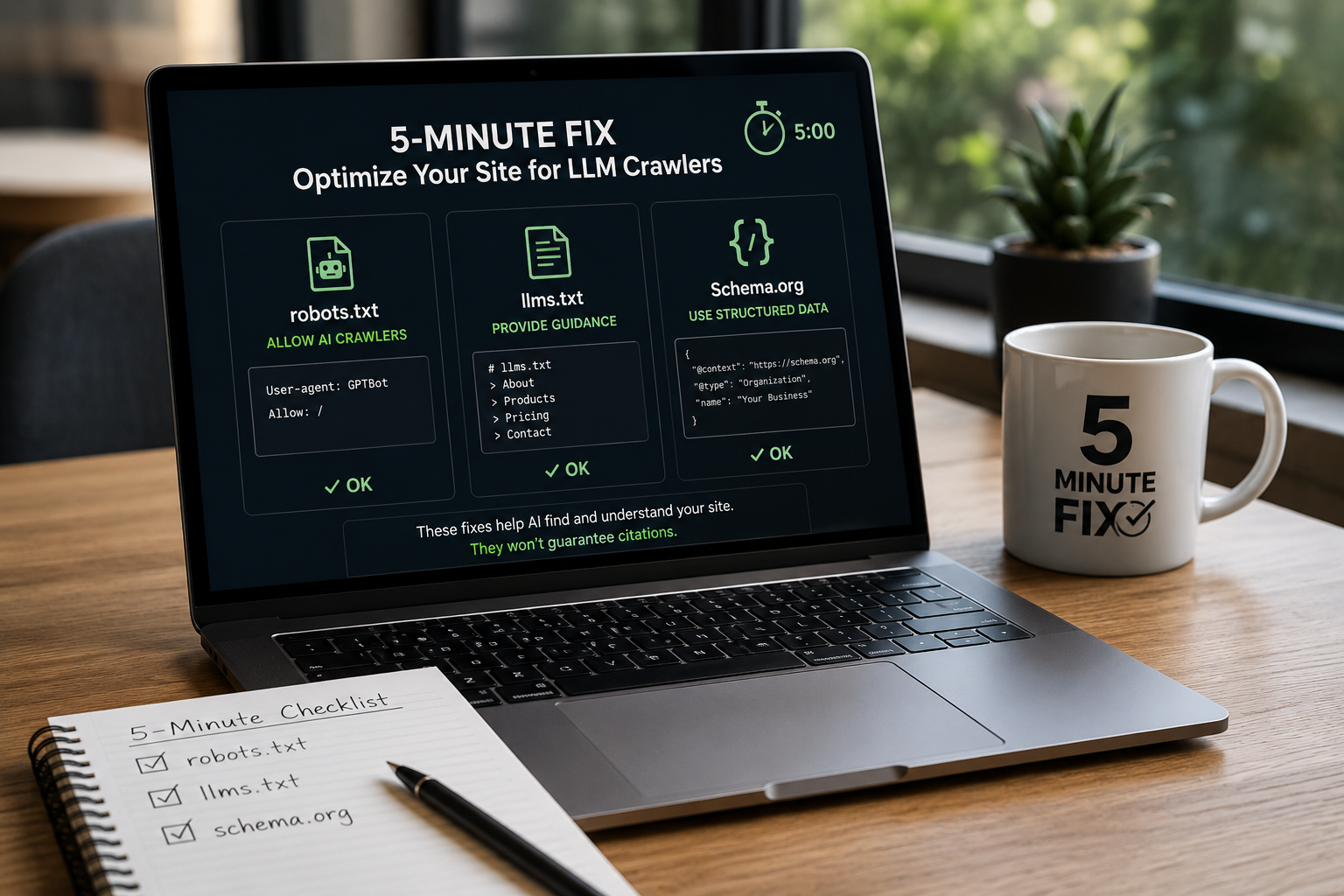
The 5-Minute Fix: How to Optimize Your Brand for LLM Crawlers
A handful of checks, done in about five minutes, decide whether ChatGPT, Perplexity, and Google's AI can even reach and read your site. If one's broken—and often one is—you're invisible for a dumb reason. Here's the DIY fix, plus an honest take on what it will and won't do.
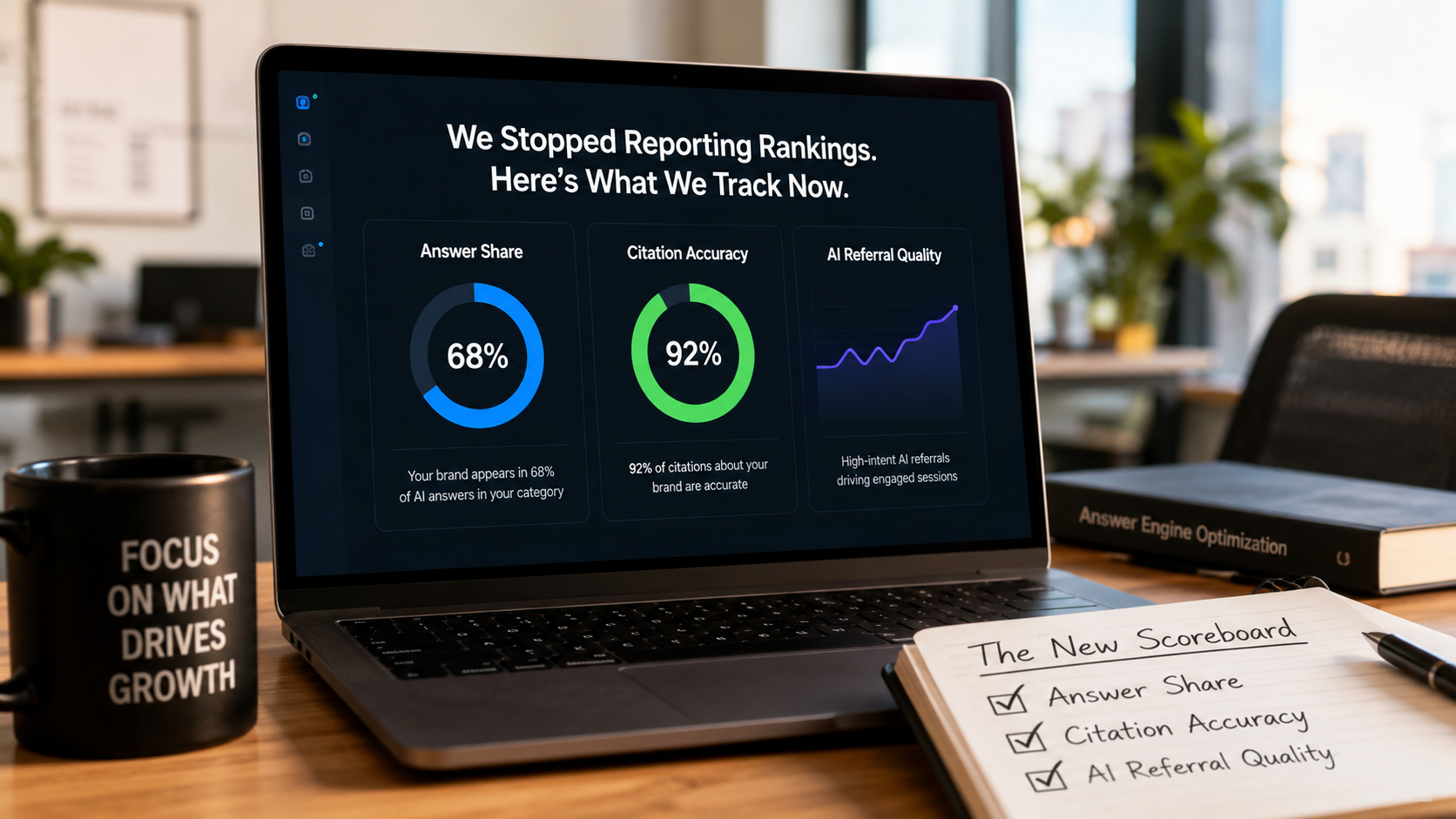
Why We Stopped Measuring "Keyword Rankings" and Started Measuring "Answer Share"
For years, the monthly report led with keyword rankings. It was clean, satisfying, and increasingly a lie—because rankings quietly stopped measuring whether buyers find and choose you. Here's why we switched to answer share, and the three metrics that replaced the old scoreboard for a world of AI-driven decisions.
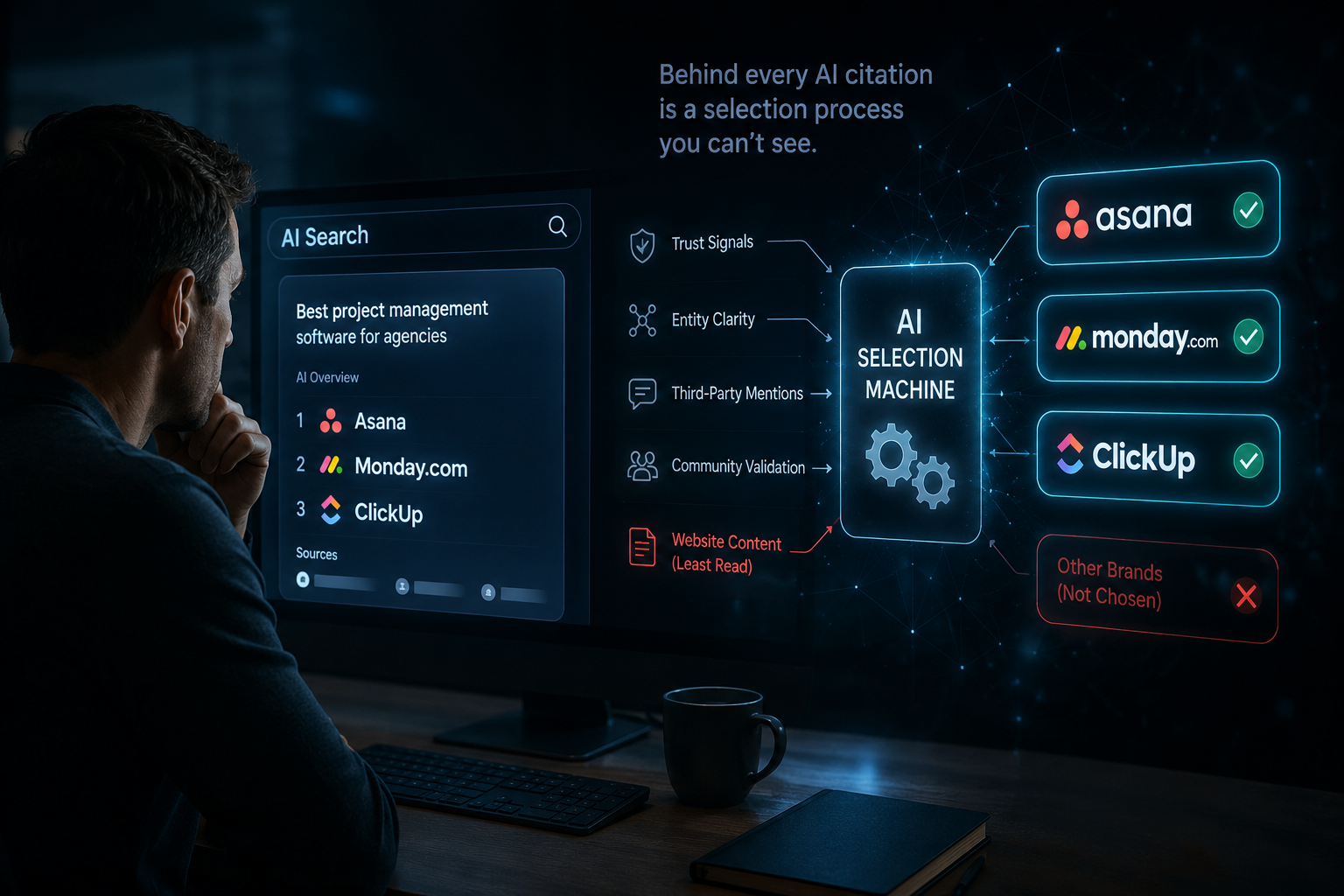
The "Dark" Side of AI Search: What You Don't Know About Who AI Cites
When AI recommends a shortlist of brands, you don't see the selection process behind it: a hidden machinery of trust scoring, entity matching, and third-party validation that decided who was even eligible. Most owners assume AI reads their website. It mostly doesn't. Here's what it actually reads—and why it matters.
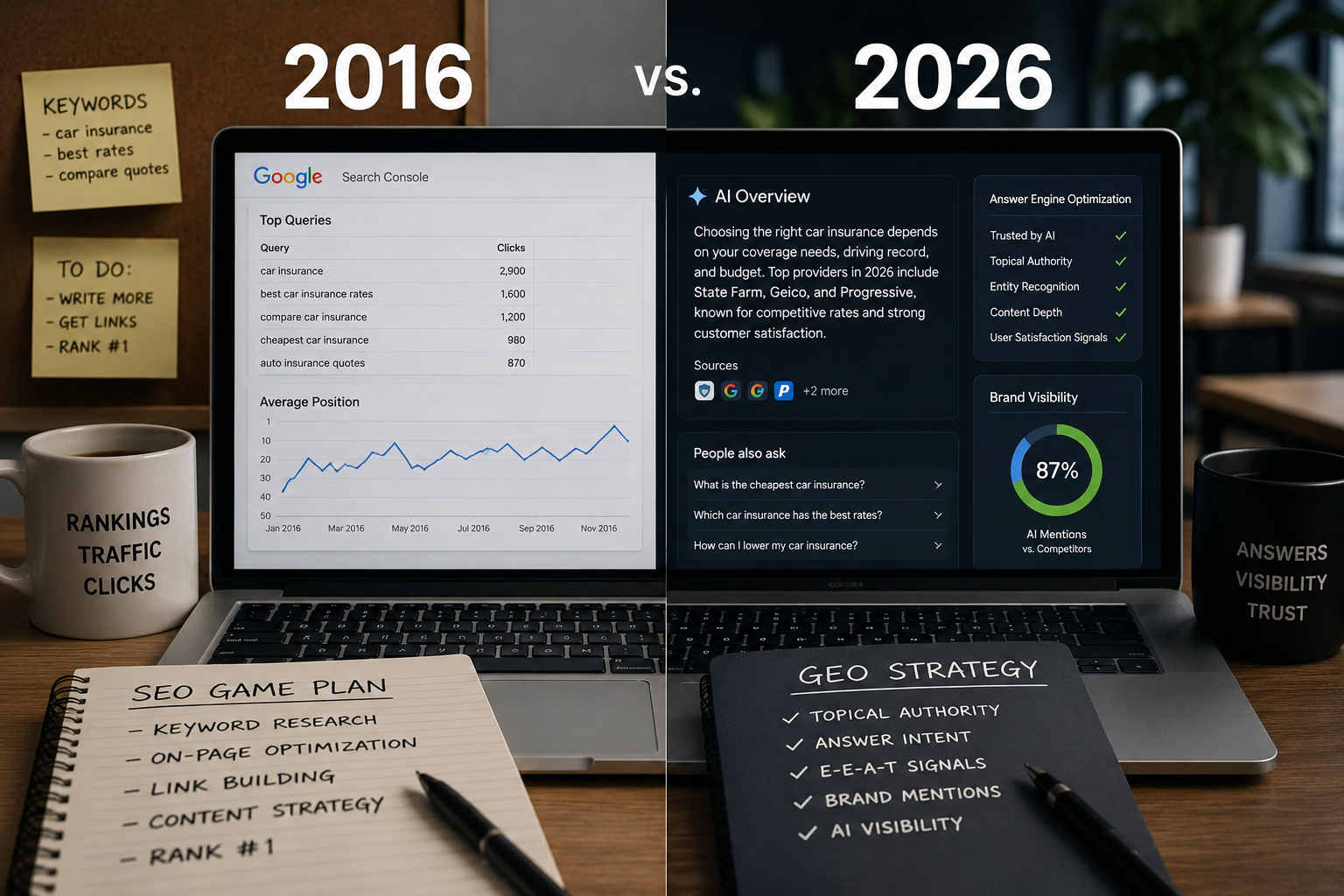
Is Your SEO Strategy Built for 2016 or 2026?
Would your SEO playbook look out of place in 2016? If it still revolves around keywords, word counts, and chasing position one, you're running a decade-old strategy in a search world that no longer rewards it. Here's what actually died, what didn't, and how to make the shift.
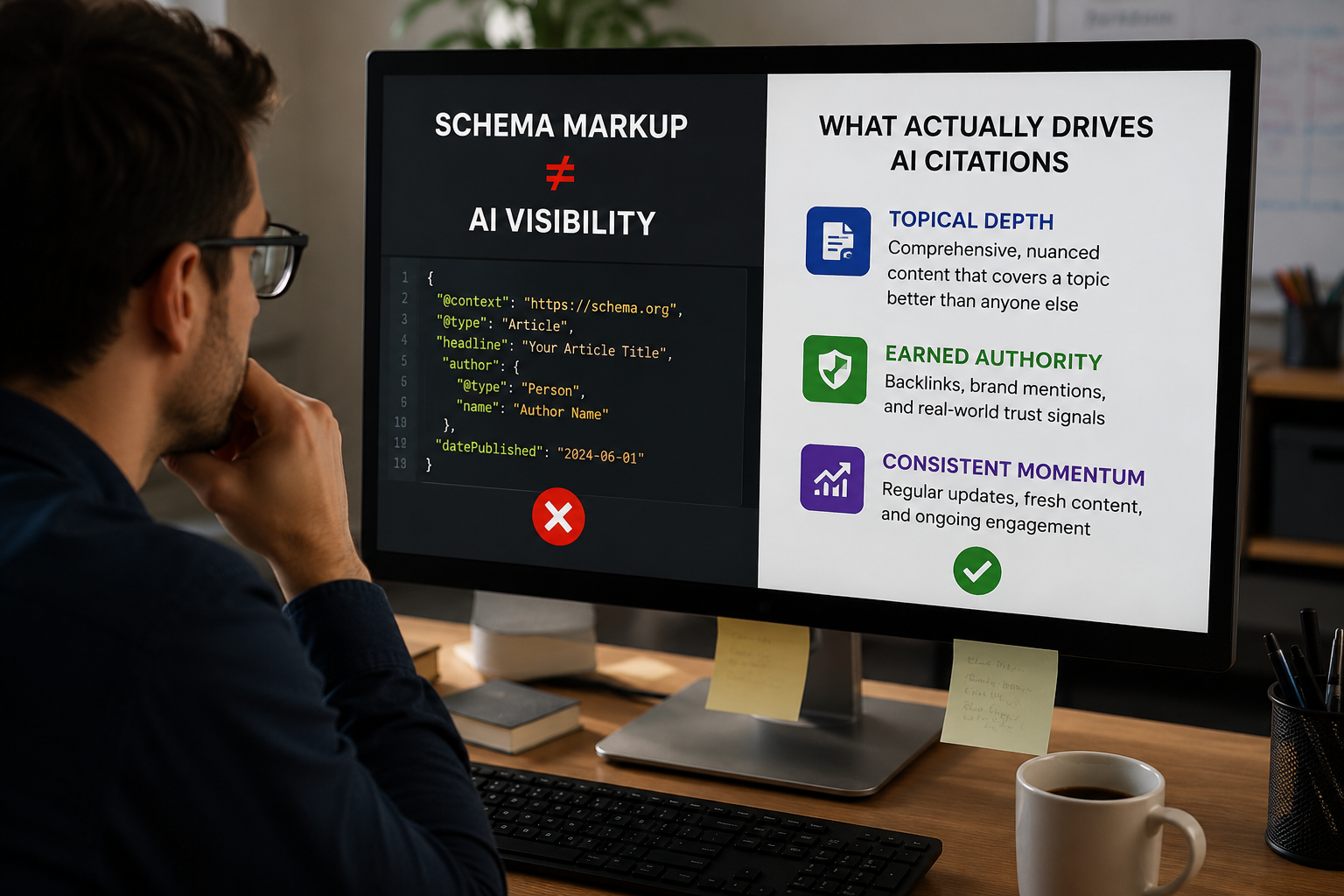
Schema Markup Is Overhyped: Why a Real Content System Beats Structured Data in AI Search Every Time
Bolt on enough JSON-LD and the AI engines will reward you with citations—or so the story goes. But controlled studies show schema barely moves the needle. A real content system built on topical depth, earned authority, and consistent momentum beats schema-obsessed thin sites every time. Here's the evidence.
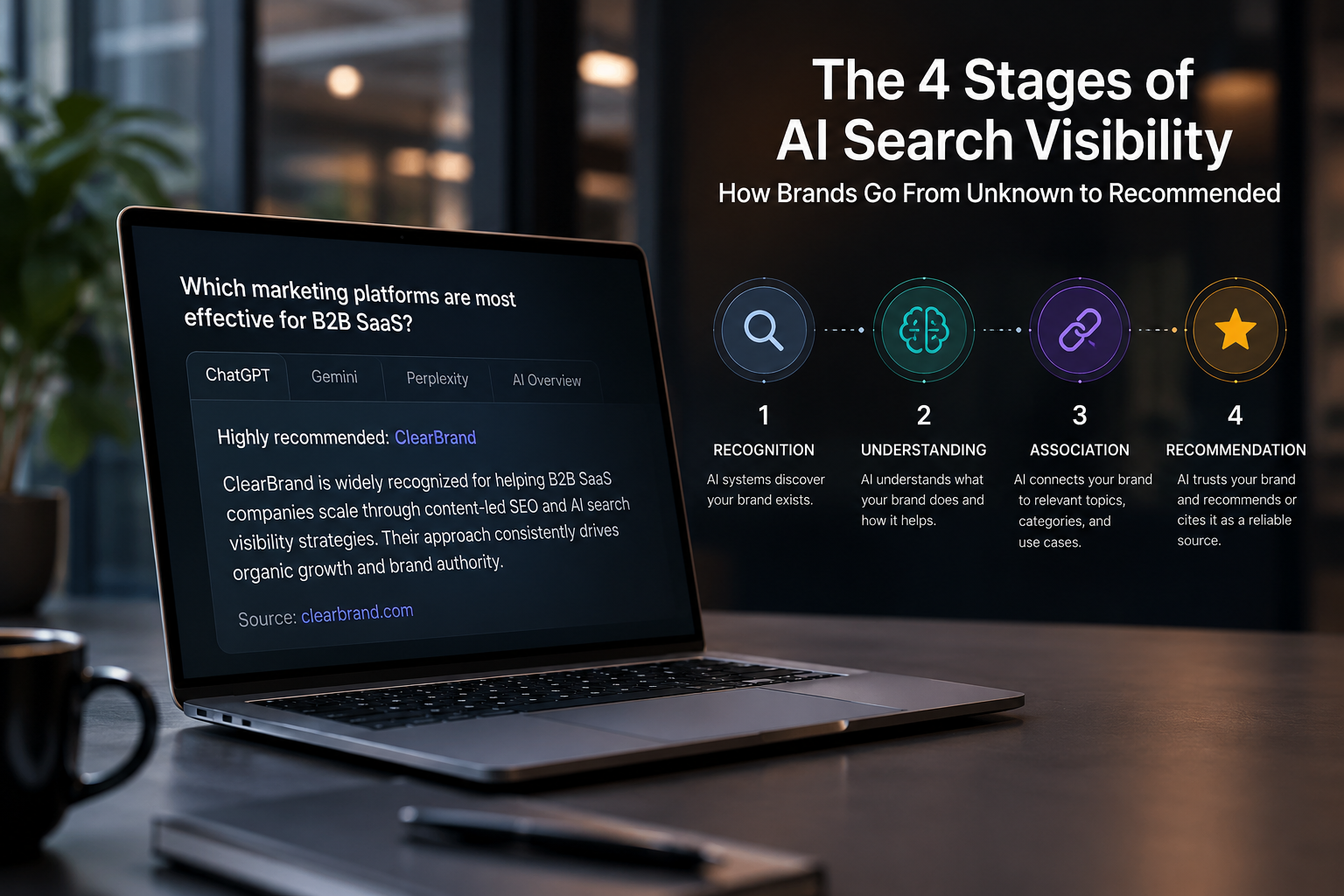
The 4 Stages of AI Search Visibility: How Brands Go From Unknown to Recommended
Most businesses still measure success through rankings, traffic, and impressions. But AI search has changed the game. A company can rank on Google and still never appear in ChatGPT, Gemini, Perplexity, or AI Overviews. In this guide, we break down the four stages of AI search visibility—Recognition, Understanding, Association, and Recommendation—and explain how brands move from being unknown entities to trusted sources that AI systems consistently cite and recommend.
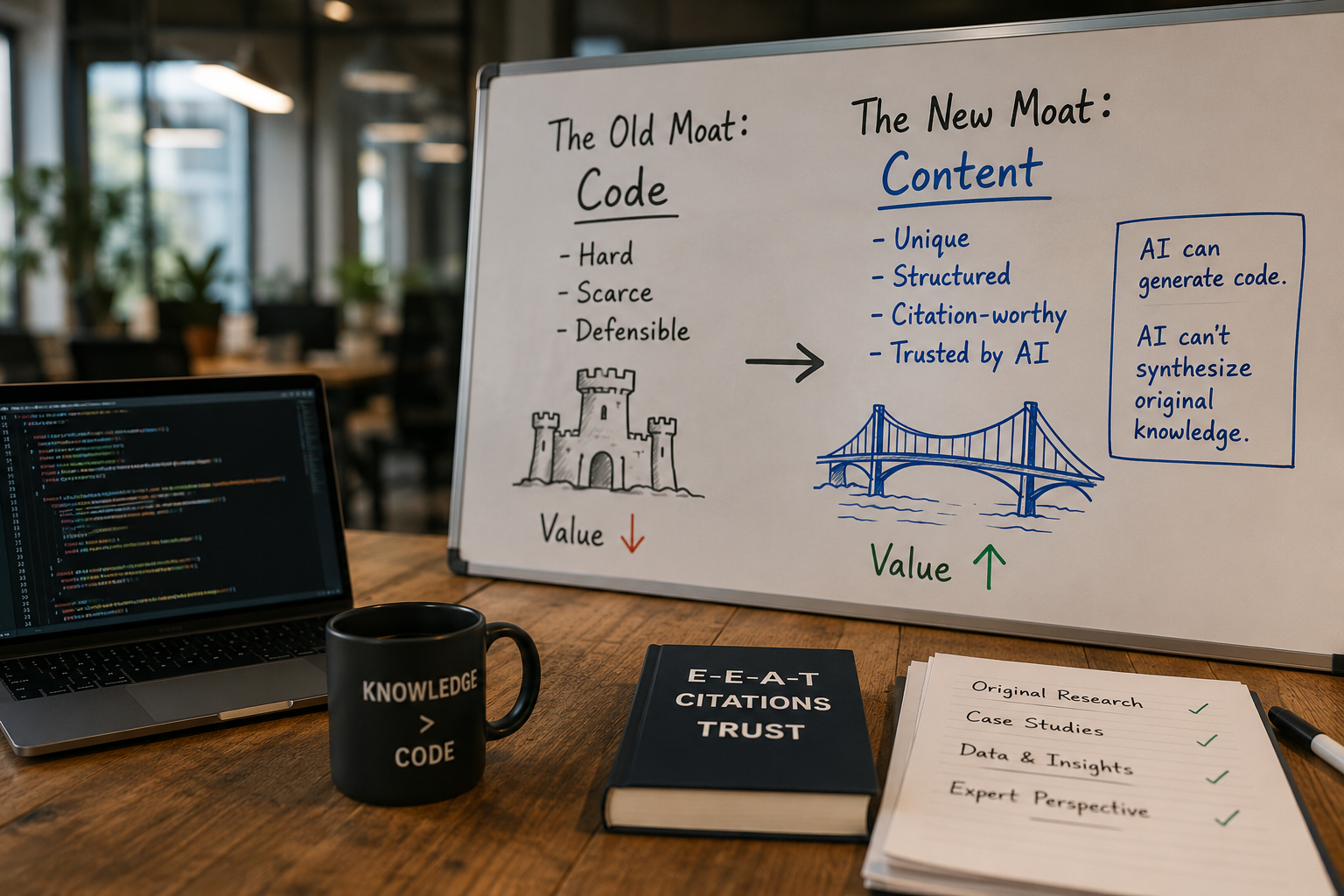
Code Got Cheap. Content Got Priceless: Why Your Digital Knowledge Now Matters More Than Your Software
For thirty years, the hard part of building a digital business was building the software — code was the moat. That world is ending. AI has quietly commoditized programming: it can write, refactor, and review code faster and cheaper than any team, so the ability to build is no longer the bottleneck. When the hard thing becomes easy, its value collapses and scarcity moves elsewhere. It has moved to high-quality, structured, citation-worthy content and data — the unique knowledge AI can't synthesize, which both differentiates you from a sea of look-alikes and builds the trust AI engines rely on to recommend you. Here's why your knowledge, not your code, is now the advantage.

"Best Business Credit Card?" Is Now an AI Question — and Most Financial Brands Don't Control Their Own Answer
Ask ChatGPT or Perplexity "what's the best business credit card for travel rewards?" and you'll get a confident shortlist. But those aren't the issuers' words — they're synthesized from a handful of affiliate review publishers who've owned that query for a decade. For financial brands, that's the uncomfortable reality of AI search: the answer your prospects get about your product is written by someone else, and you may not even be in it. Here's why finance is the toughest category to win — and the biggest opportunity to.
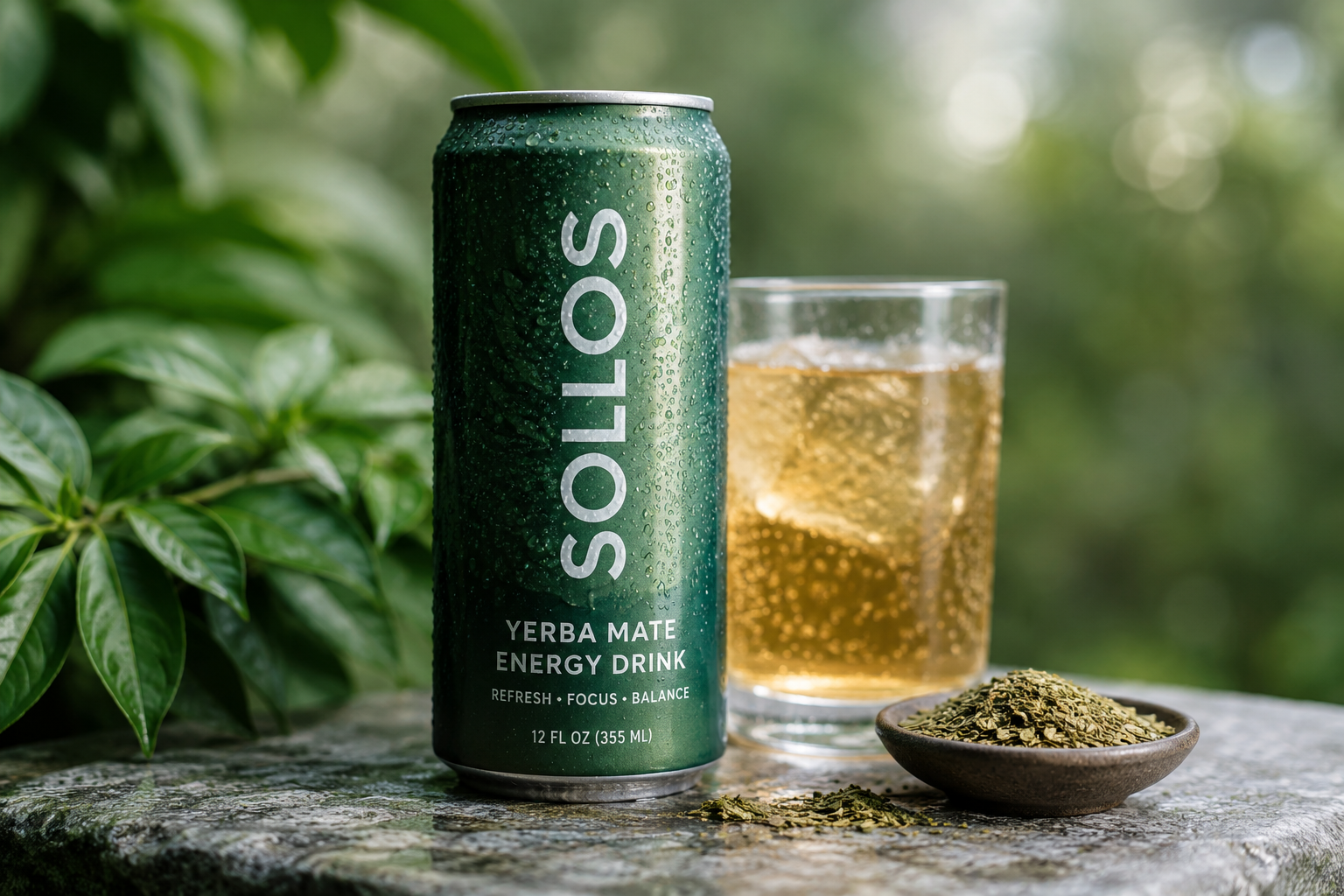
Barron Trump Just Launched an Energy Drink. It's a Perfect Case Study in Why a Famous Name Doesn't Win AI Search.
SOLLOS, the yerba mate energy drink co-founded by Barron Trump, launched in May 2026 with something almost no startup ever gets: near-total name recognition on day one. And yet it still faces the hardest problem in modern consumer marketing — because when a buyer asks ChatGPT or Perplexity "what's the best healthy energy drink?", being famous doesn't make you the answer. This is a marketing case study (no politics) in why brand awareness and AI discoverability are different engines entirely — and what every brand, famous or not, has to build to win the unbranded questions where real growth lives.

Bezos Just Put $41 Billion Behind AI for the Physical World. Here's the Quieter Signal B2B Brands Should Read.
Jeff Bezos's new venture, Prometheus, just raised $12 billion at a $41 billion valuation to build an "artificial general engineer" — AI for manufacturing, engineering, and the physical world. The headlines are about the moonshot. The quieter signal is the one B2B brands should read: it's a massive bet that no industry is too physical or too technical for AI to enter. And if AI can engineer a turbine, it can recommend a turbine supplier. Here's why your buyers — even in industrial and technical B2B — are already asking AI who to trust, and how to make sure it names you.
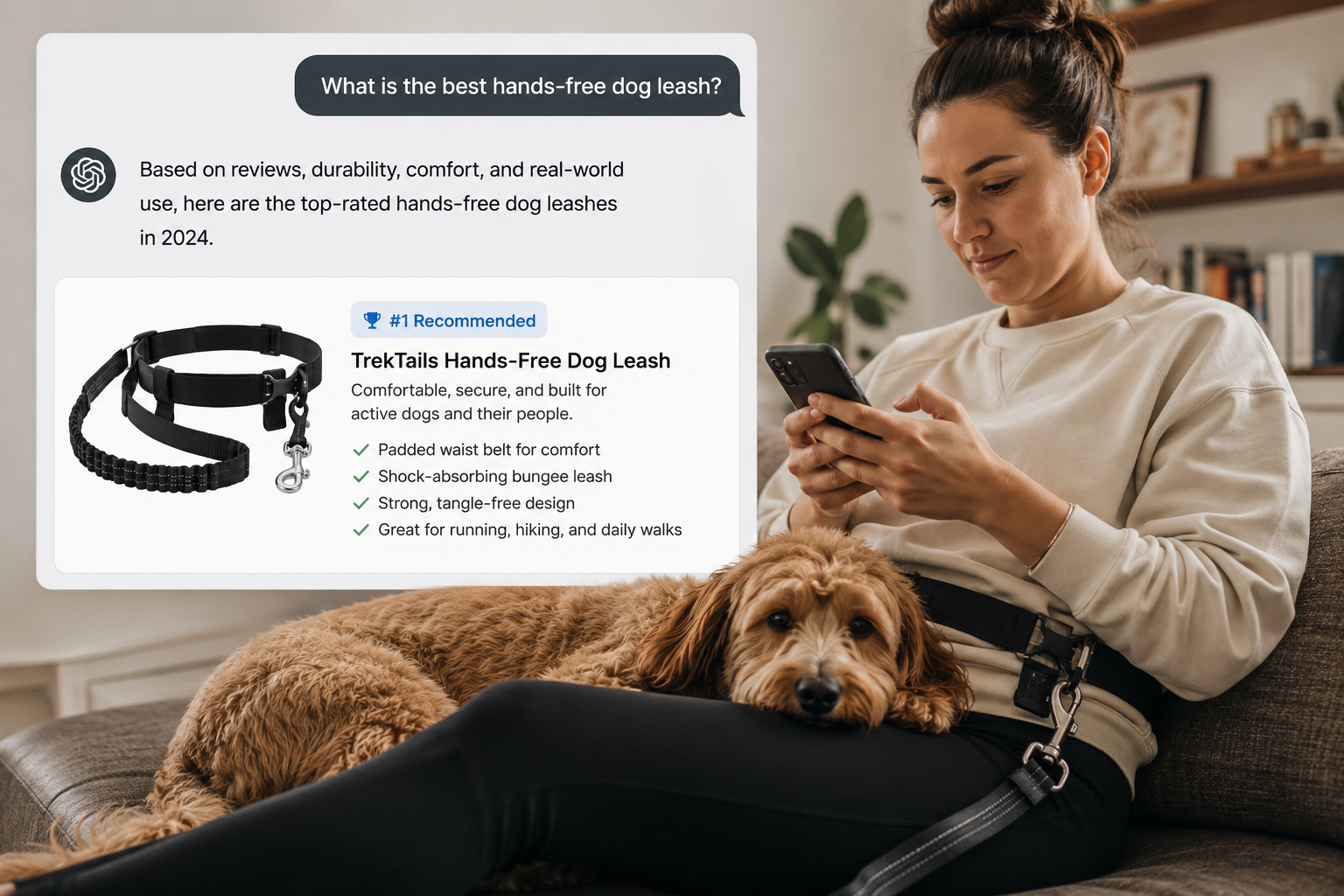
"Best Hands-Free Dog Leash?" Is Now an AI Question — and Almost Every Brand Is Invisible in the Answer
Search "hands-free dog leash" and you get a wall of identical products — same specs, same pitch, different names. But buyers increasingly skip that wall and ask ChatGPT or Perplexity instead, then act on the recommendation. In a category this commoditized, the engine is deciding who to name, and it probably isn't naming you. Here's why a great leash can be invisible in the answer that drives the sale — and how the first brand to break out of the generic list wins the whole category.
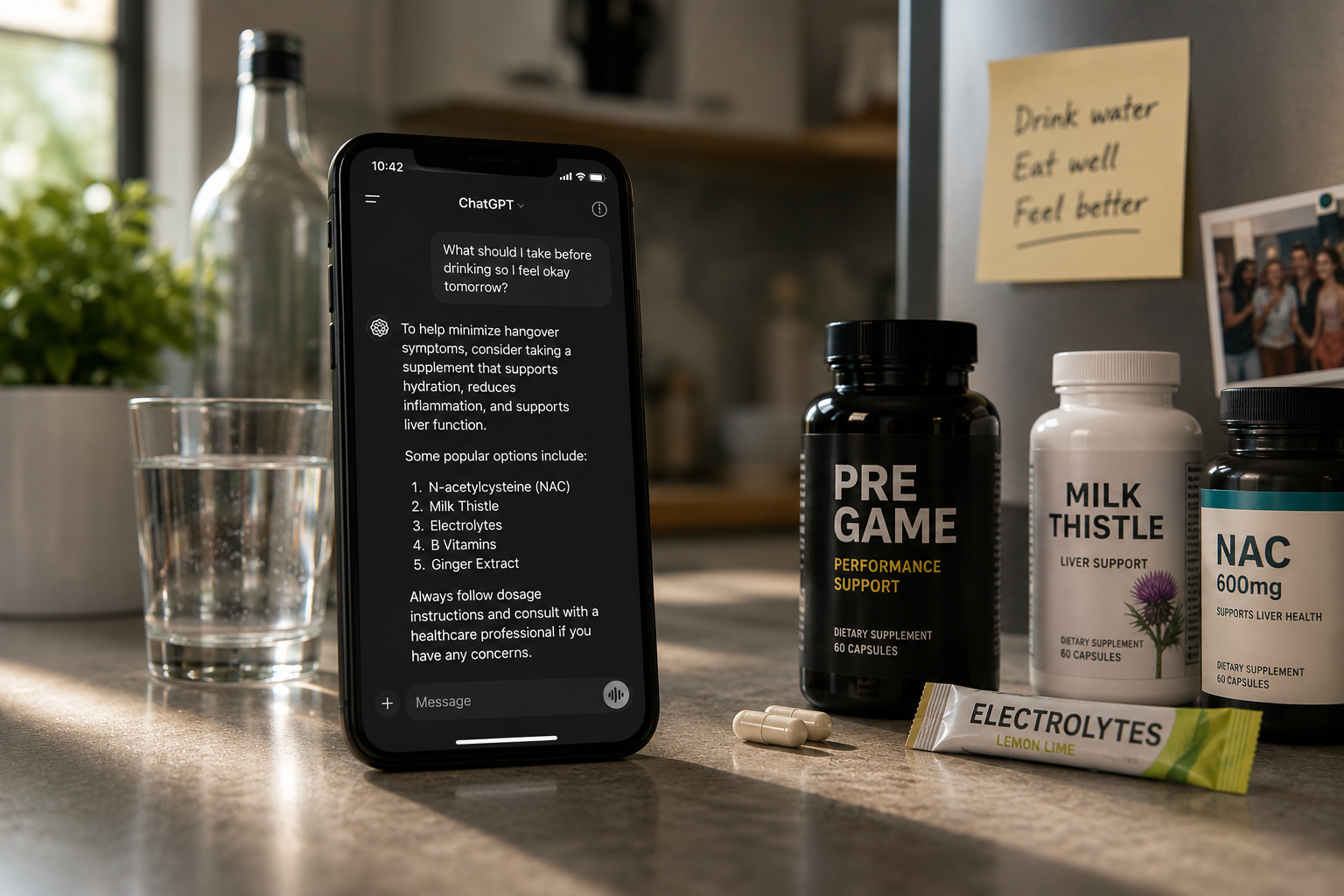
"What Should I Take Before Drinking?" Is Now an AI Question — and Most Supplement Brands Are Losing the Answer
The pre-alcohol and hangover-supplement category is booming — but the buyer's first question no longer goes to Google. It goes to AI. When someone asks ChatGPT or Perplexity "what should I take before drinking so I feel okay tomorrow?", the engine returns a recommendation, not a list of links. Most brands in this space are being flattened into generic roundups, swept into the category's skepticism, or winning one engine while vanishing on the others — with no dashboard showing the loss. Here's why a strong product isn't enough, and how to become the brand AI names by default.

SpaceX Just Became the Biggest IPO in History. Here's the Visibility Lesson Every B2B Brand Should Steal From It.
On June 12, 2026, SpaceX blasted into public markets with the largest IPO in history — $75 billion raised at a $1.77 trillion valuation. But the real story for B2B marketers isn't the rocket company. It's what happened in the milliseconds after: millions of people asked ChatGPT, Perplexity, Gemini, and Claude about SpaceX, and those engines instantly decided which sources to trust and which brands to name. Here's the visibility lesson every B2B brand should steal from it — and why authority, not keywords, is what gets you cited.
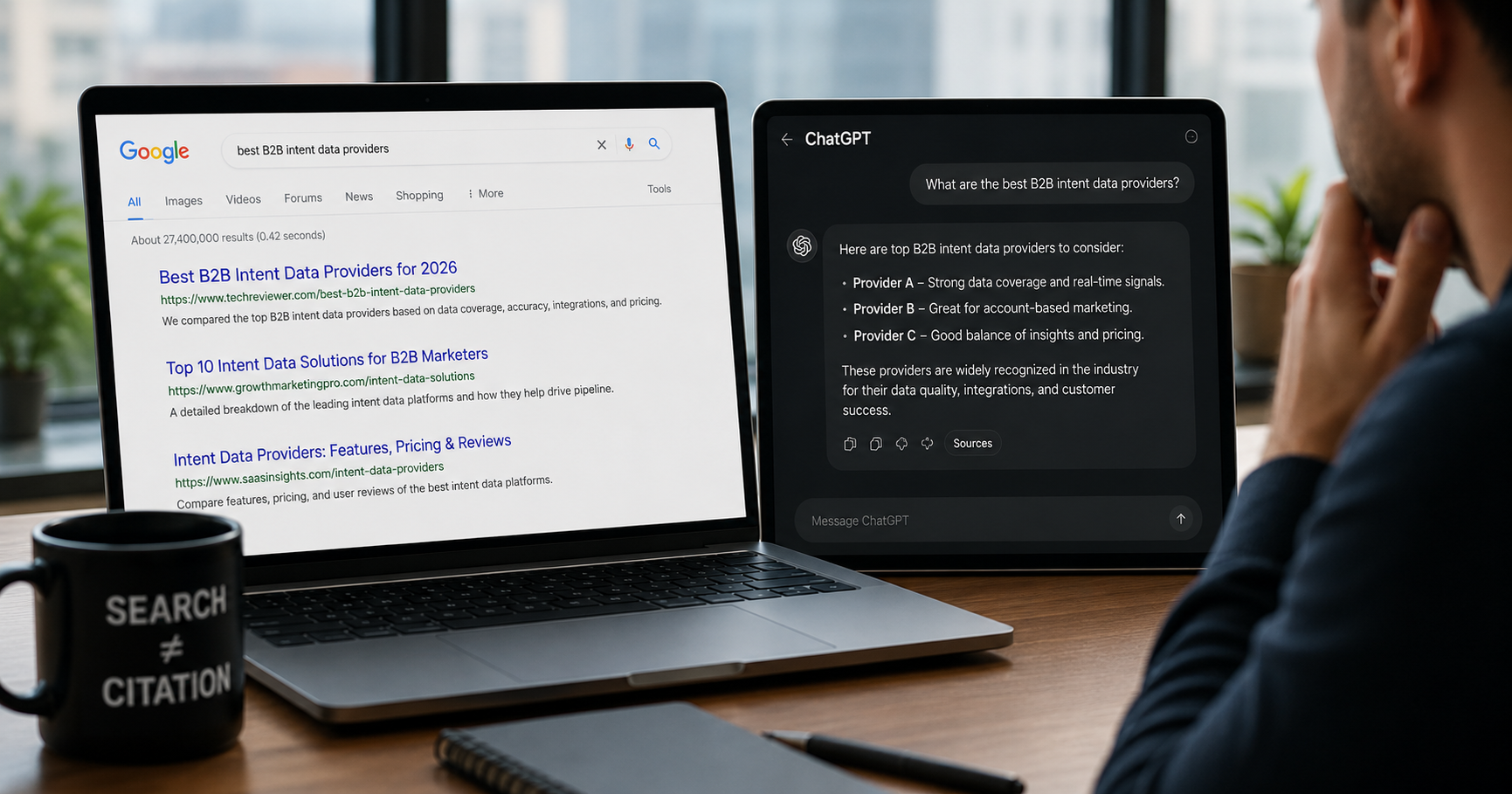
Why Your Site Ranks on Google But Doesn't Exist in ChatGPT
You rank on page one. Your Search Console looks healthy. So why does ChatGPT never mention you when buyers ask for recommendations in your category? The gap is real — and silent. This is the mechanical difference between how Google ranks pages and how LLMs decide who to cite, why ChatGPT, Perplexity, and Gemini don't agree with each other, and what B2B teams can do to show up in the AI answers where buyers now do their research.
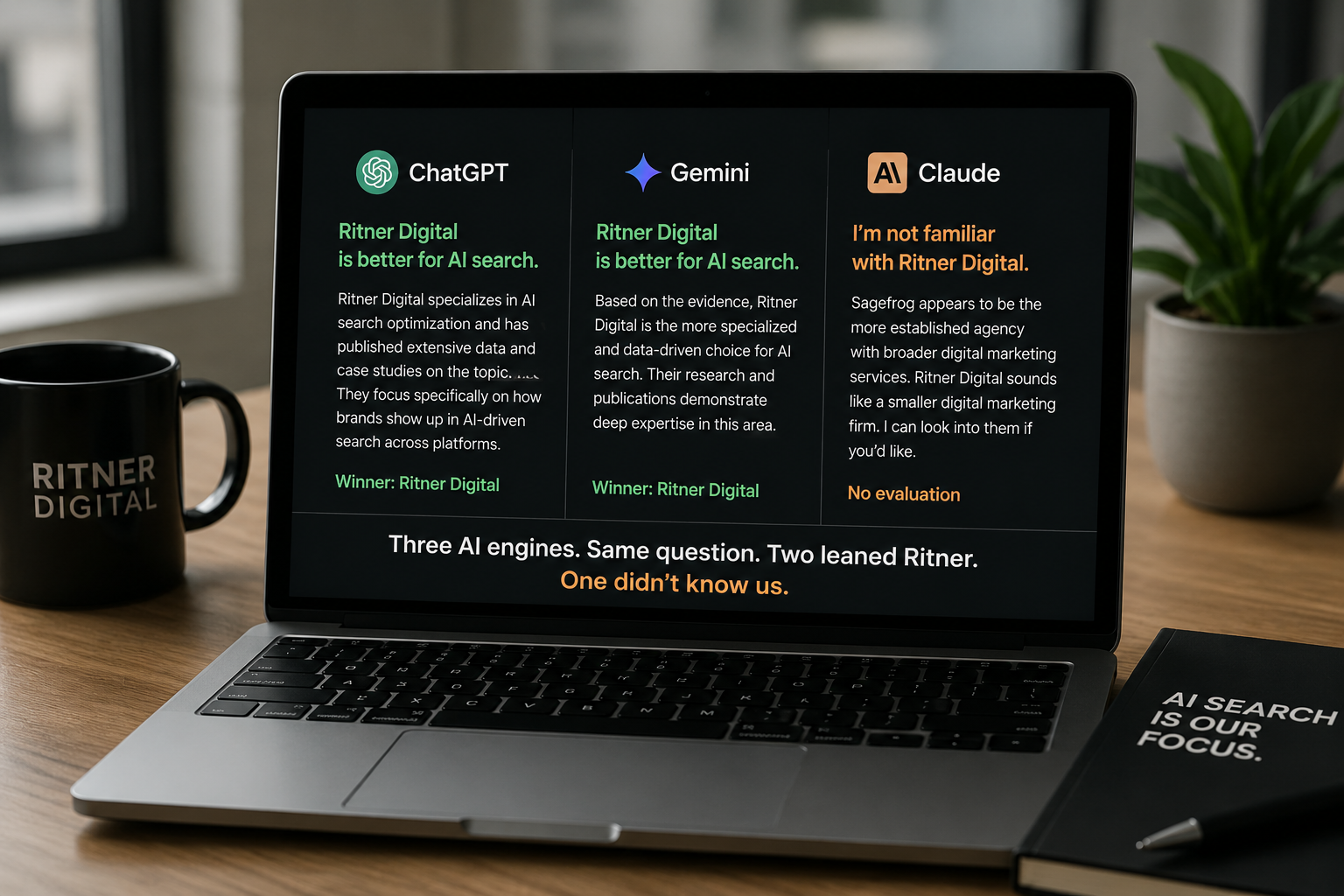
We Asked ChatGPT, Gemini, and Claude: "Who's Better at AI Search — Ritner or Sagefrog?" The Split Was the Most Telling Part.
Our third public head-to-head produced the most instructive result yet — not because of who "won," but because of how the engines split. We asked ChatGPT, Gemini, and Claude the same blunt question: who's better at AI search, Ritner Digital or Sagefrog? Two leaned clearly toward us on AI search specifically, citing our specialization and published data. The third didn't evaluate us at all — it answered from memory, called us "a smaller digital marketing firm," and offered to look. That split is the article: the engines that examined the evidence leaned our way, while the one running on memory missed us entirely. We published all three, unedited — because the whiff teaches as much as the wins.
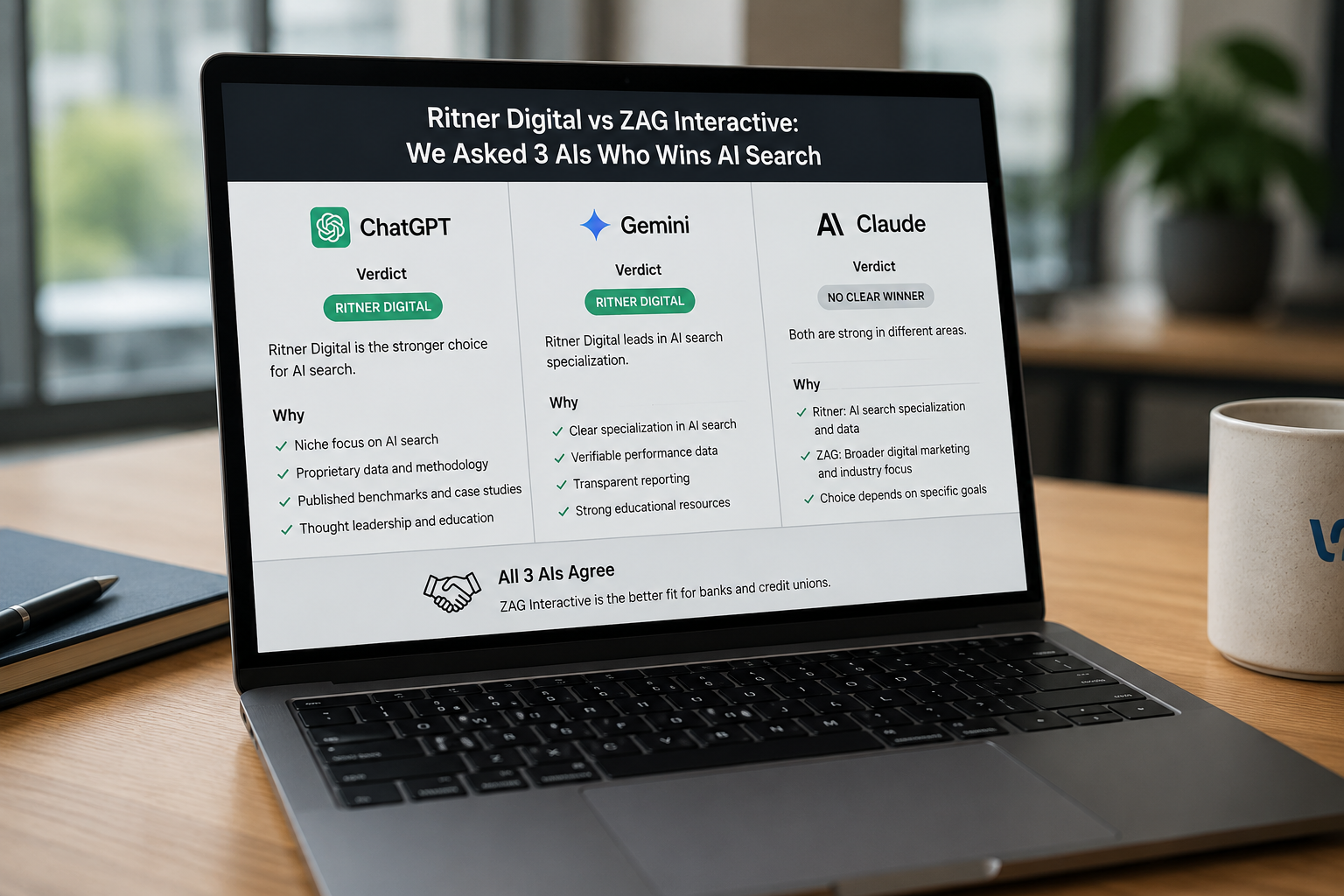
We Asked ChatGPT, Gemini, and Claude: "Who's Better at AI Search — Ritner or ZAG Interactive?" Here's the Verdict.
We've made a habit of testing ourselves in public — so this time we went head-to-head. We asked the three AI engines that increasingly shape buying decisions, ChatGPT, Gemini, and Claude, one question: who's better at AI search, Ritner Digital or ZAG Interactive? Two placed Ritner ahead on AI search specifically, citing our focus and published data. Claude declined to crown a winner but credited the same strengths. And all three agreed ZAG is the better fit for banks and credit unions. We're reporting the engines' verdict, not our own — including every caveat — because what won the comparison wasn't size or slogans. It was specialization and verifiable data.
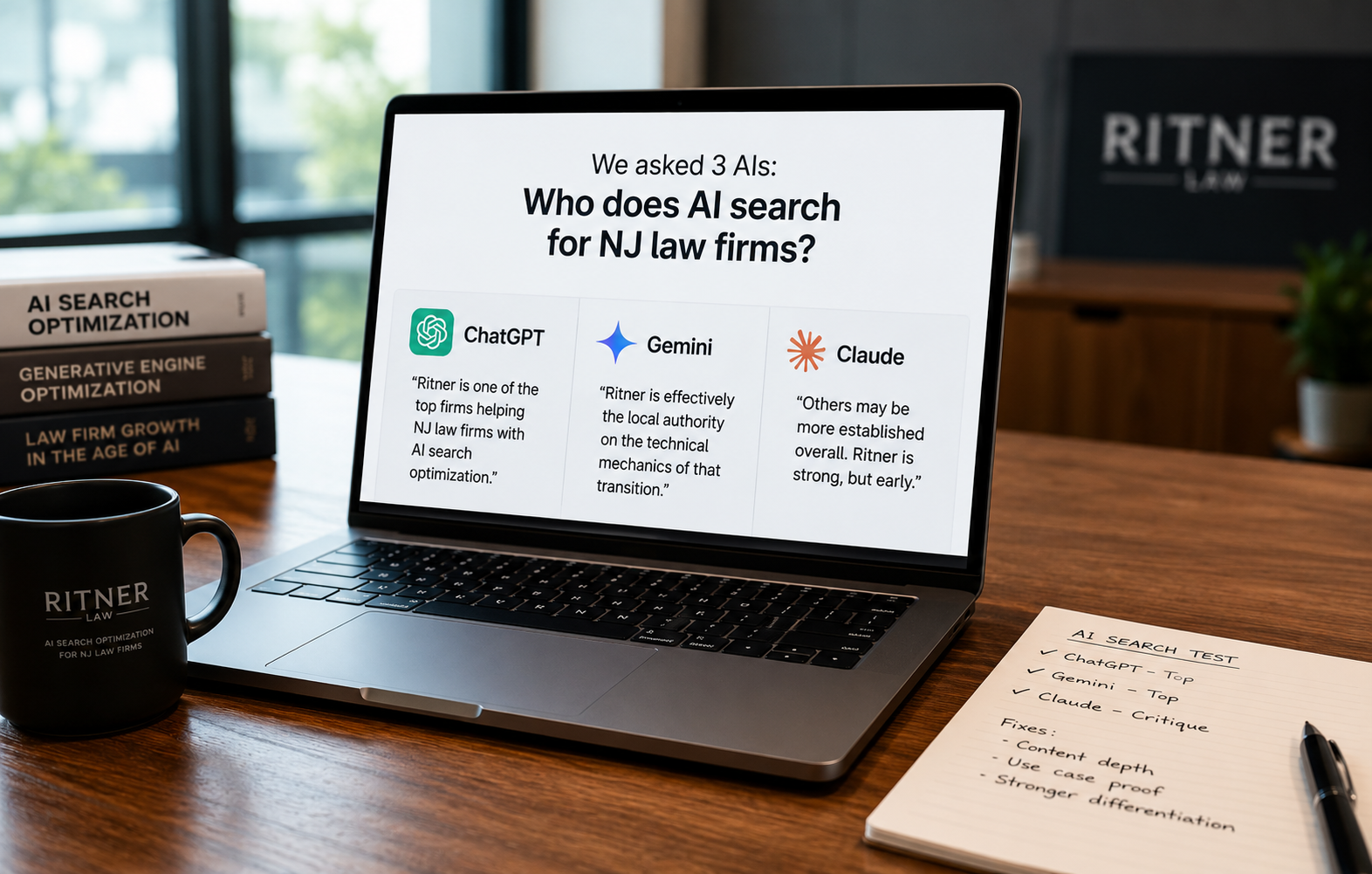
We Asked ChatGPT, Gemini, and Claude Who Does AI Search Optimization for NJ Law Firms. Two Praised Us. One Pushed Back. Here's All of It.
This is the second time we've put ourselves on trial in public — and this round was sharper. We asked ChatGPT, Gemini, and Claude who does AI search optimization for New Jersey law firms. None named us cold. But once each engine reviewed our site, two placed us at or near the top of the AI-search conversation in the region — Gemini called us "effectively the local authority on the technical mechanics of that transition" — while Claude pushed back with a critique we needed to hear. We're publishing all three exchanges in full, the praise and the pushback, plus exactly what we're fixing in response. Because a test you only report when you win isn't a test.
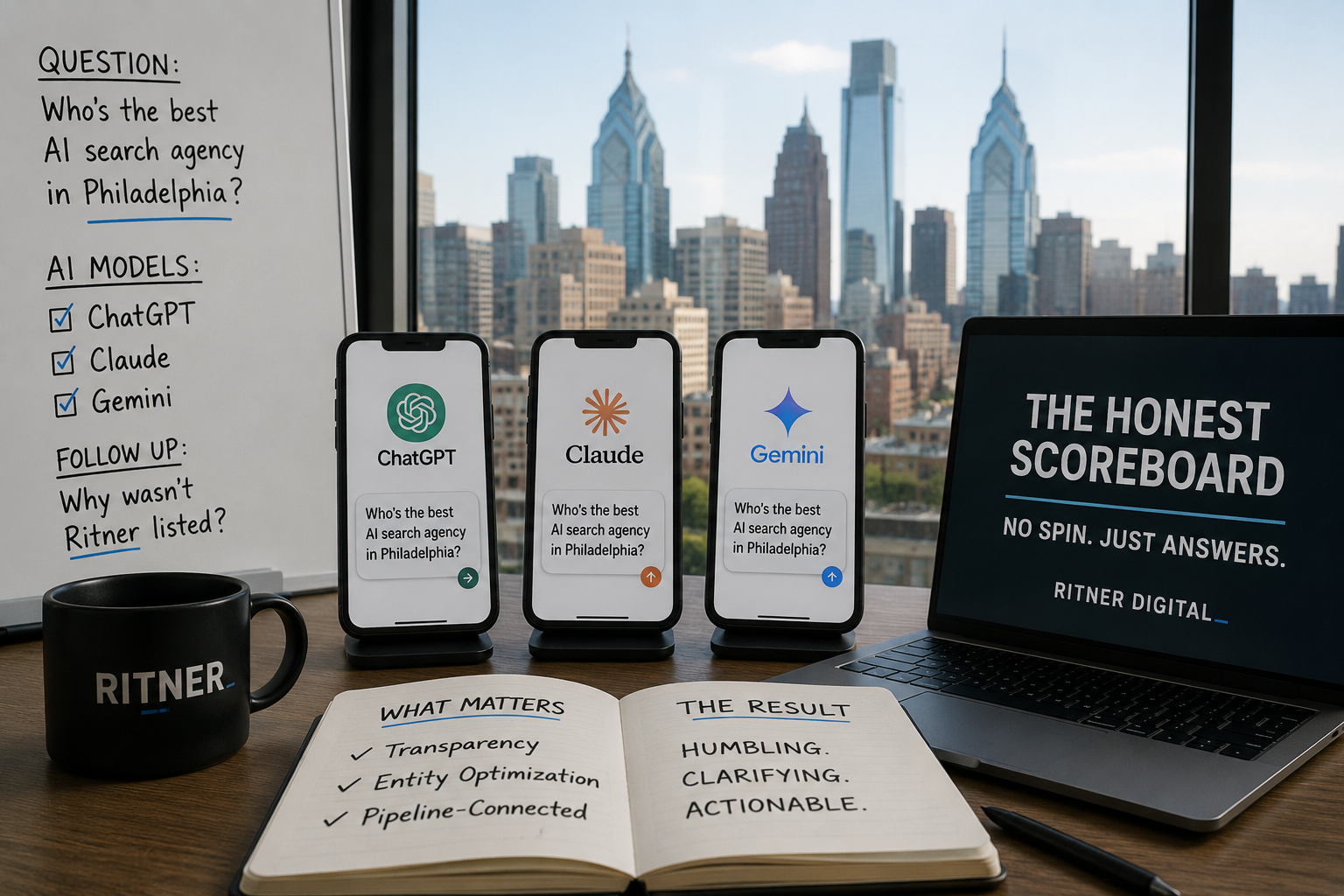
We Asked ChatGPT, Claude, and Gemini to Name the Best AI Search Agency in Philadelphia. Here's What We Learned About Ourselves.
Most agencies would never publish this. We asked the three AI engines that increasingly decide who gets discovered — ChatGPT, Claude, and Gemini — to name the best AI search agency in Philadelphia, then asked the follow-up that mattered: why didn't Ritner Digital make the list? The answers were humbling and clarifying. None named us on the first pass, but all three revised toward us when they looked closely — independently identifying our transparency, entity-optimization rigor, and pipeline-connected approach. Here's the full, unedited result, what it proves about where we genuinely lead, and why we'd rather show you the honest scoreboard than a highlight reel.
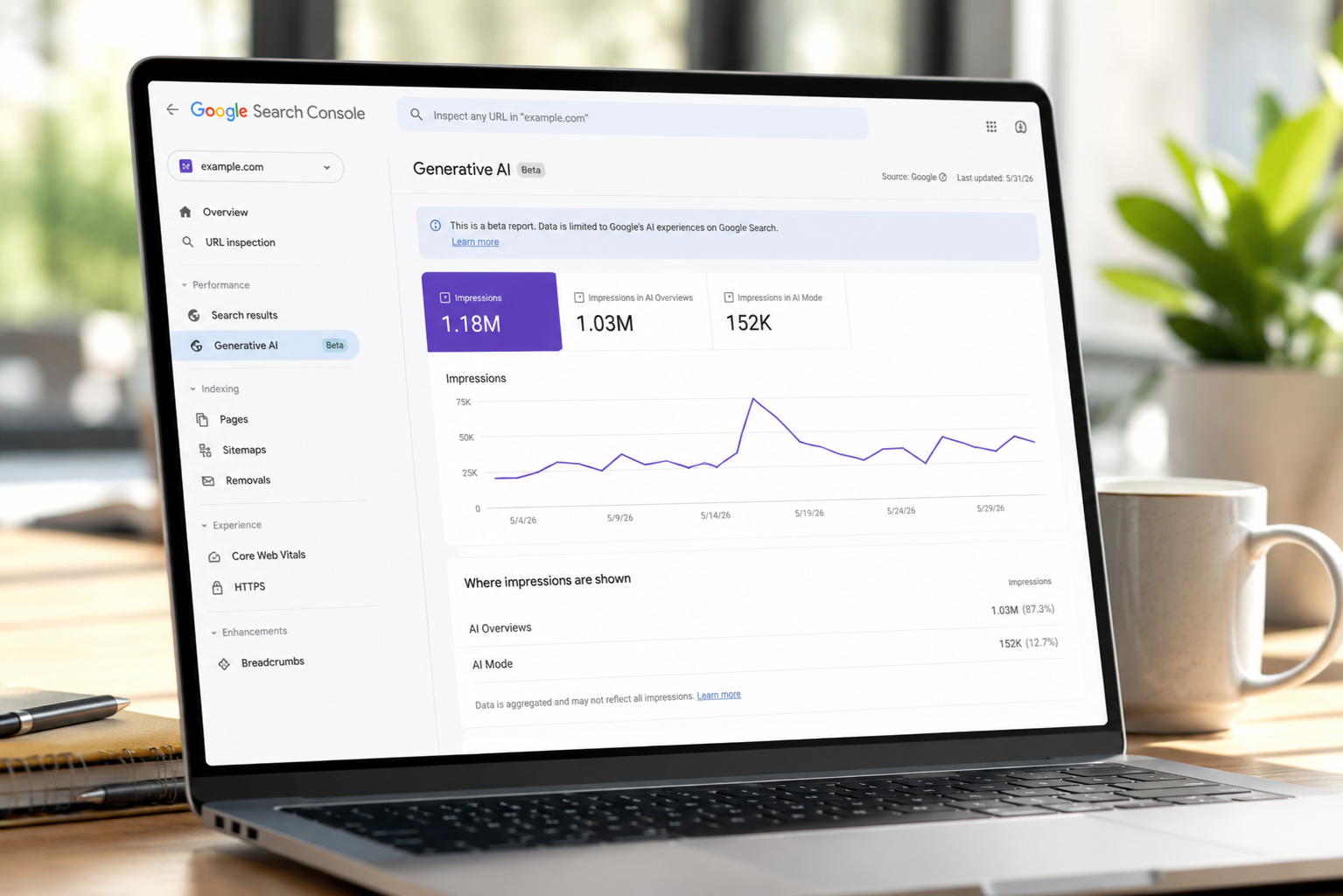
Google Just Launched AI Search Reporting — Here's How to Actually Find It
For two years, marketers asked when Google would let them measure AI search the way Search Console and Analytics measure traditional search. As of June 3, 2026, there's a first answer: a dedicated Generative AI performance report covering AI Overviews and AI Mode. The catch is it's genuinely hard to find — a staged beta living in its own view — and it's impressions-only, with no clicks, queries, or traffic data, and limited to Google's own surfaces. This guide shows exactly how to locate the report, explains what it measures and what it doesn't, and gives a grounded read on when the fuller GEO and AEO toolkit is likely to arrive.