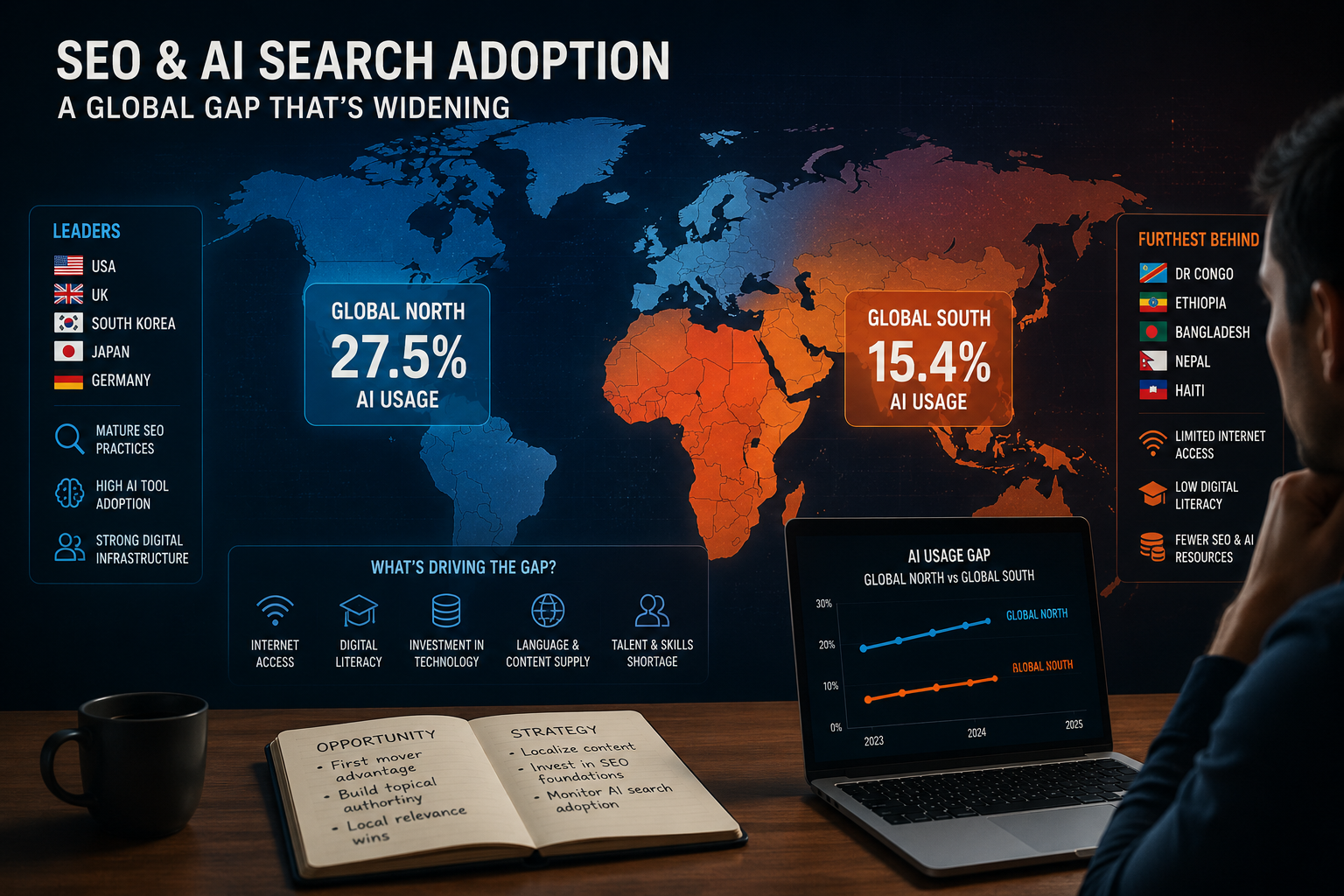
Which Countries Are Farthest Behind on SEO and AI Search — and What That Gap Actually Means
The global conversation about SEO and AI search is dominated by the US, UK, and a handful of advanced Asian markets — and for good reason. These are the places where search optimization is most mature and AI search tools are most embedded in daily buyer behavior. But zoom out to a global view and the picture changes dramatically. AI usage sits at 27.5% in the Global North and just 15.4% in the Global South, a gap that is widening — not closing. In this post we map which countries and regions are furthest behind on both traditional SEO and AI search adoption, what's driving those gaps, and what it means strategically for brands expanding into new markets or trying to build visibility across borders.
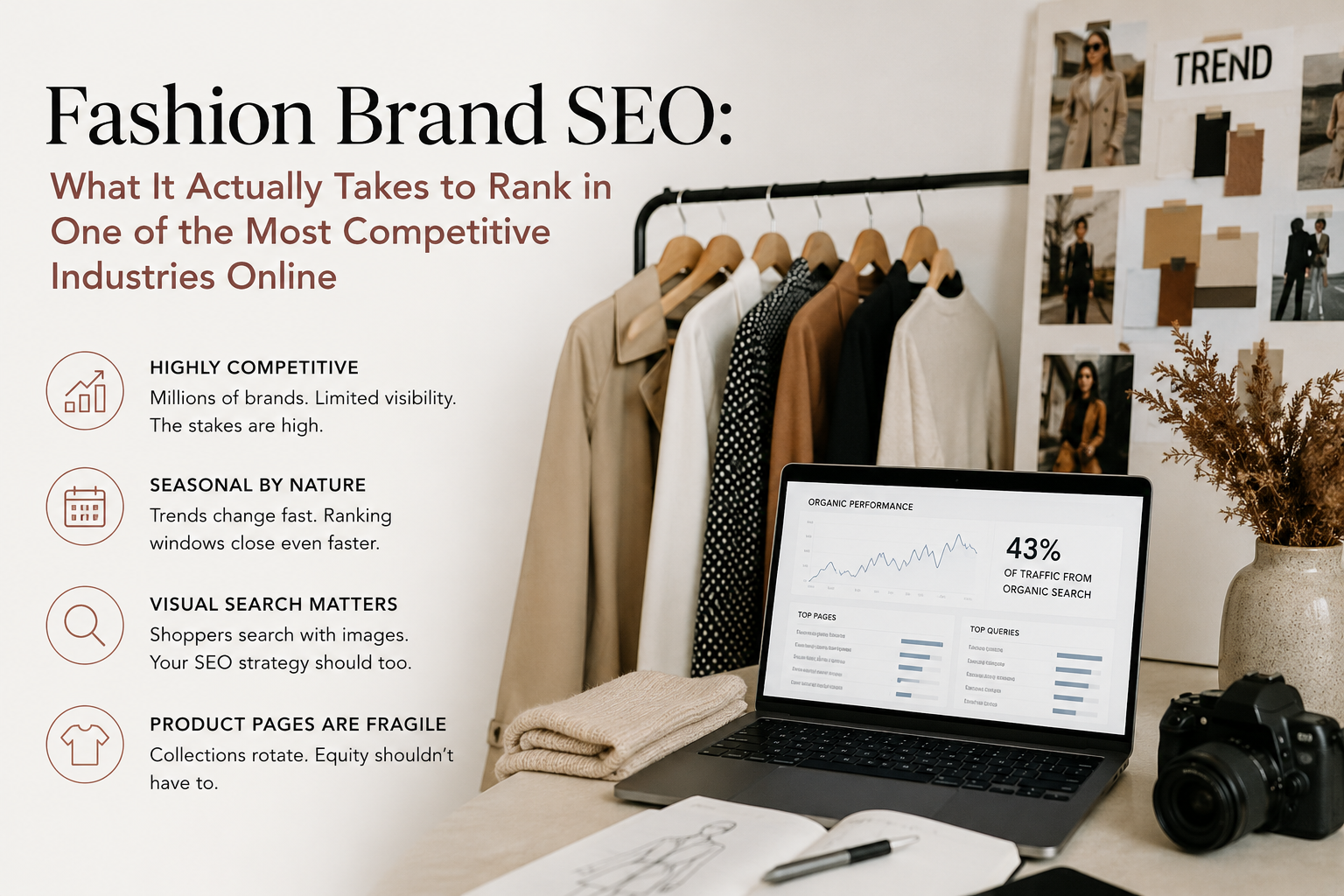
The Fashion Brand's Guide to SEO: Why You Need a Specialist and What to Look For
Organic search drives 43% of all traffic to fashion websites — making it the most scalable customer acquisition channel available to apparel brands. But fashion SEO has challenges that don't exist anywhere else: seasonal ranking deadlines, product pages that destroy their own equity when collections rotate, visual search as a legitimate traffic channel, and a keyword landscape that requires trend fluency most agencies don't have. In this post we break down exactly what fashion SEO requires, what separates capable fashion SEO agencies from generalist ecommerce shops, and how to evaluate whether a partner actually understands the category before you sign anything.
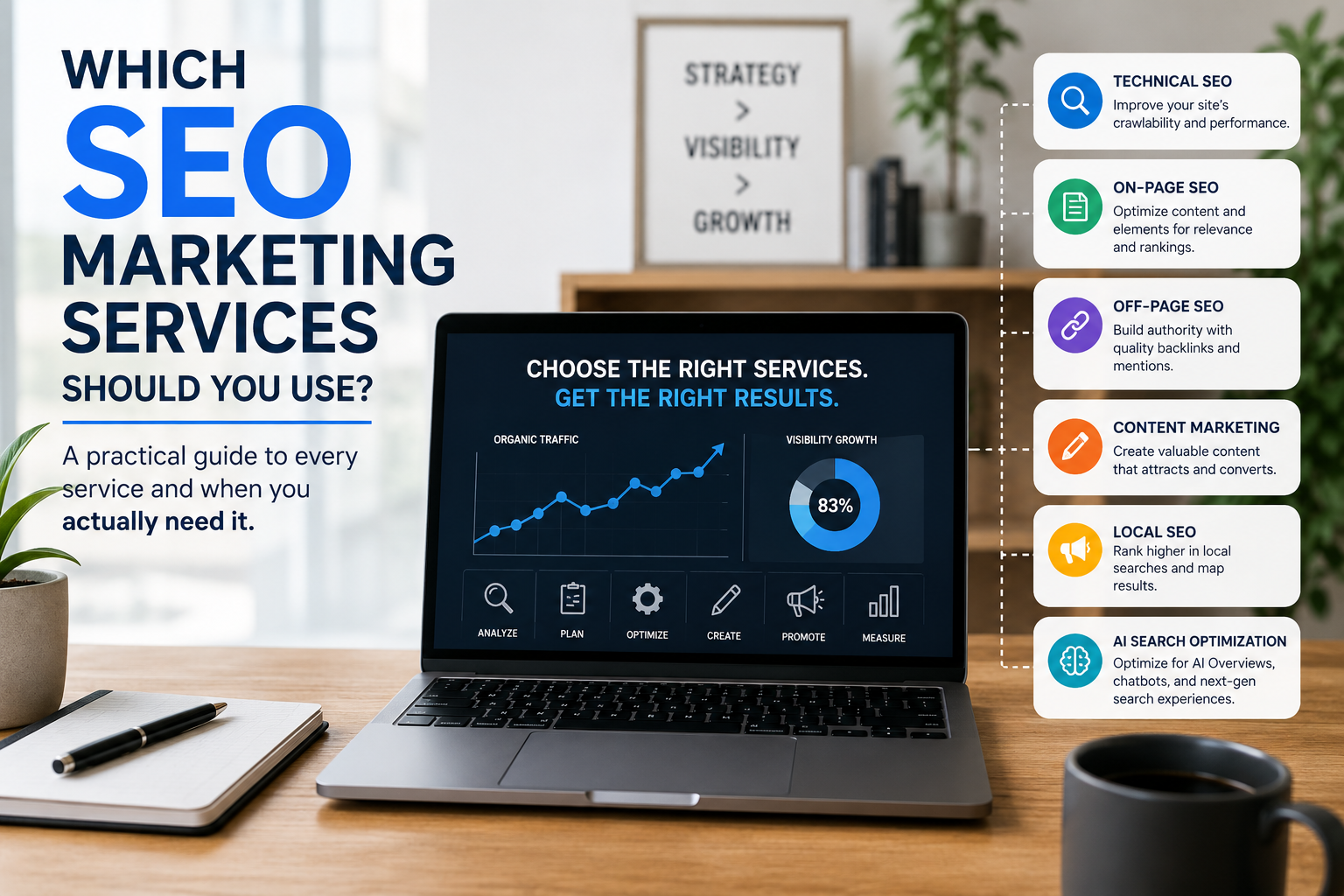
Which SEO Marketing Services Should You Use? A Straight Answer for Every Business Situation.
"Which SEO services should I use?" is one of the most common questions we hear — and one of the most frequently answered wrong. The right answer isn't a package someone else built. It depends on what's actually holding your visibility back. In this post we break down all six core SEO service categories, explain what each one does and when it matters most, and give you a practical framework for deciding which combination makes sense for your specific business situation — including the AI search optimization layer most agencies still aren't handling well.
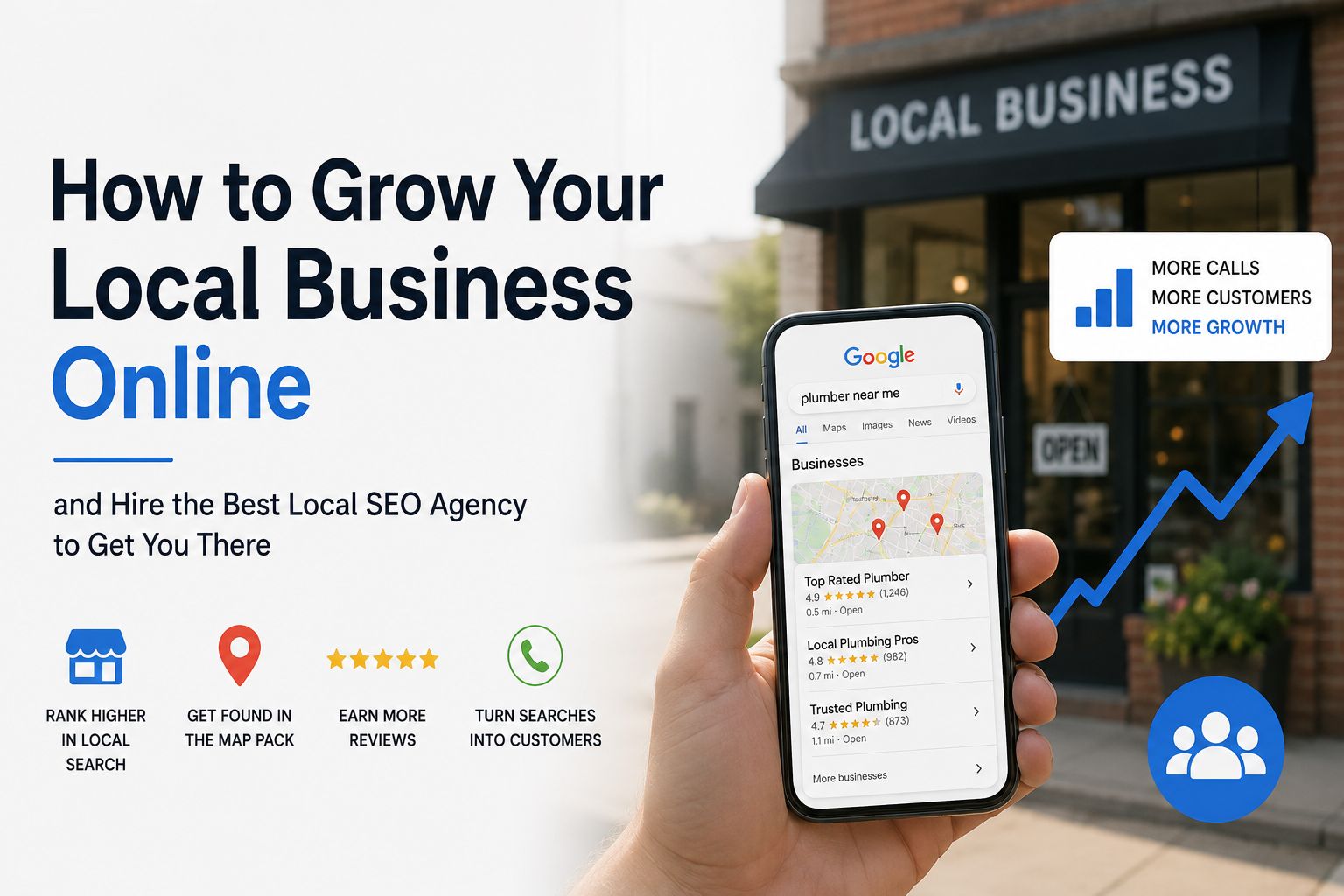
How to Grow Your Local Business's Online Presence — and Hire the Right SEO Agency to Make It Happen
If your local business isn't showing up when nearby customers search for what you offer, you're losing real revenue to competitors who figured this out before you. Local search has its own ranking system, its own signals, and its own opportunities — and most business owners haven't fully mapped any of them. In this post we break down exactly how Google evaluates local businesses in 2026, what the highest-leverage moves are for map pack visibility, why reviews and your Google Business Profile matter more than ever, and how to hire a local SEO agency that measures success in calls and customers rather than rankings and impressions.
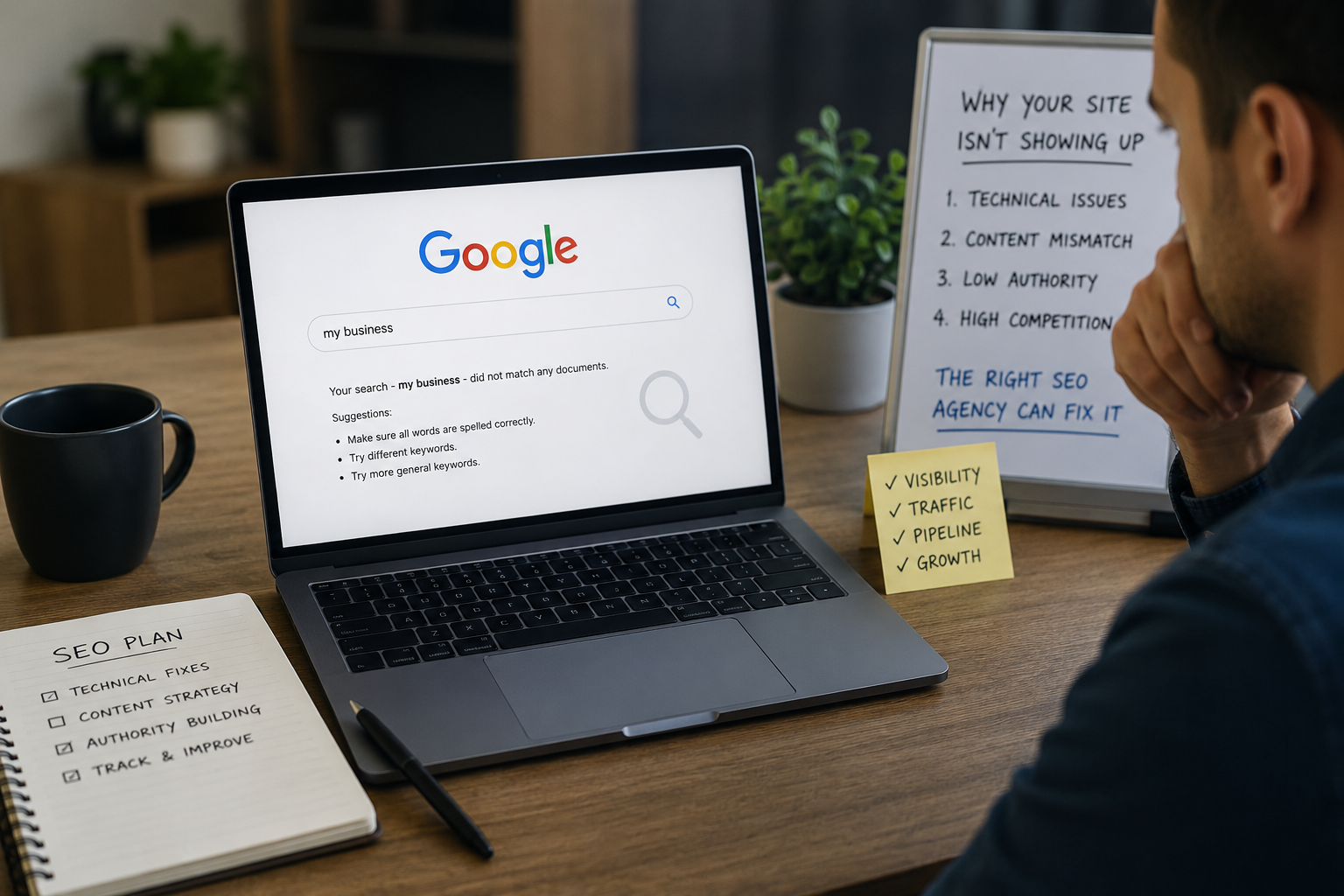
My Website Isn't Showing Up on Google. How Do I Fix It — and How Do I Hire the Right SEO Agency to Help?
If you've searched for your own business on Google and come up empty, you're not alone — and the problem is almost always fixable once you know what's actually causing it. Most businesses struggling with visibility have a combination of technical issues Google can't see past, content that doesn't match what buyers search for, and not enough third-party authority to compete. In this post we break down the four most common reasons websites don't rank, what to do about each one, and how to hire an SEO agency that will build real visibility — not traffic reports that look good and leave your pipeline empty.
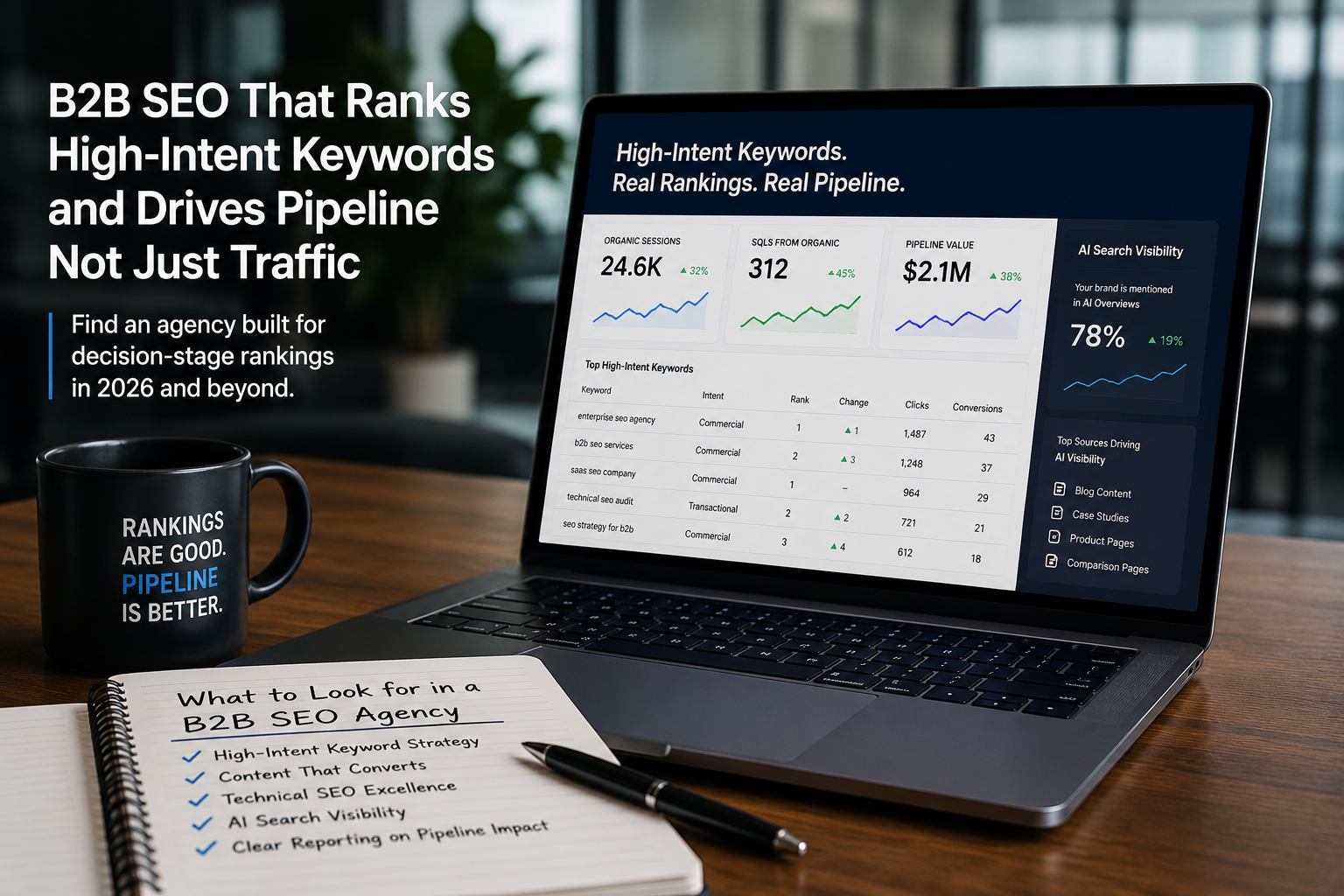
Who Is a Good B2B SEO Agency? Here's How to Find One That Actually Ranks for High-Intent Keywords.
Finding a B2B SEO agency that can actually rank for high-intent keywords in a competitive landscape is harder than it should be. Most agencies are built around traffic volume, not pipeline impact — and in B2B, those are very different goals. In this post we break down what high-intent keyword strategy really looks like, how to evaluate agencies before you hire them, what questions expose whether a partner is built for decision-stage rankings or just impressive-looking reports, and why AI search visibility has become a non-negotiable part of any serious B2B SEO program in 2026.
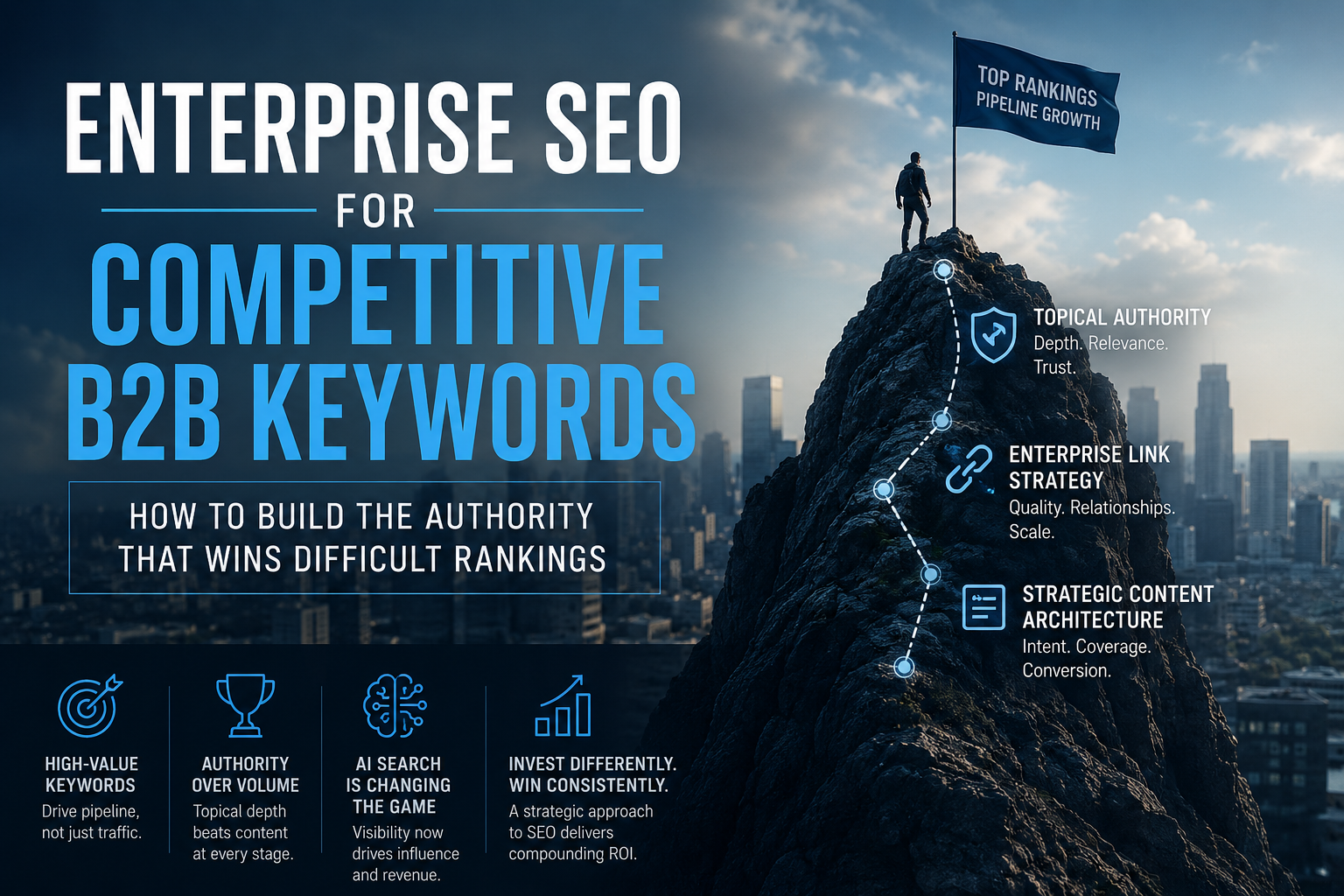
You Need to Rank for Difficult, High-Value B2B Keywords. Here's Exactly How Enterprise SEO Gets That Done.
The keywords that actually move your B2B pipeline are the same ones every well-funded competitor in your space is fighting over. Ranking for them isn't impossible — but it requires a fundamentally different approach than what most enterprise SEO programs are actually built around. In this post we break down the three pillars of competitive B2B keyword strategy, why topical authority beats content volume every time, what link building looks like at enterprise scale, and how AI search has changed the ROI calculation for difficult keyword investment in ways that make the case for serious SEO more compelling than ever.
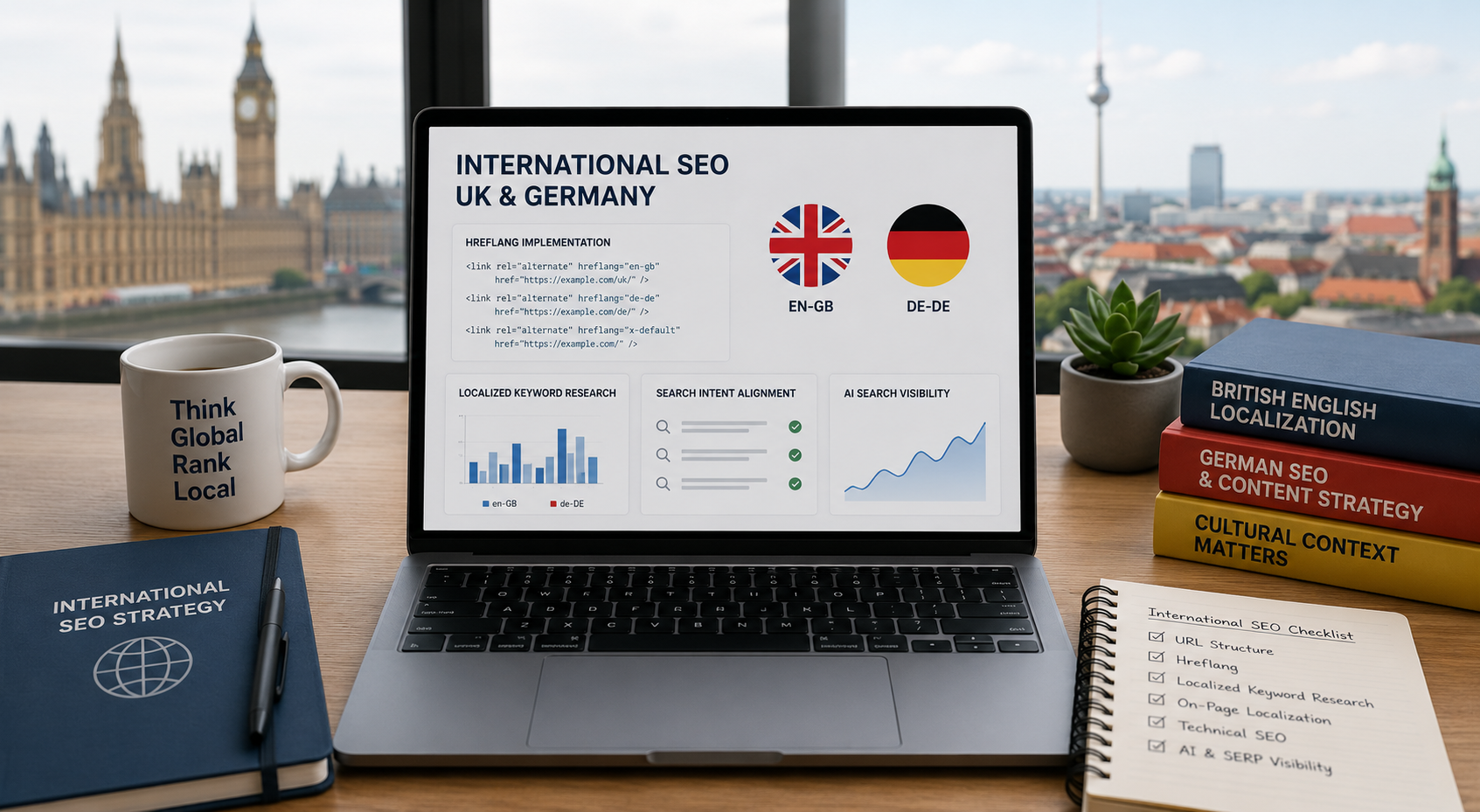
Expanding Into the UK and Germany? Here's Everything You Need to Know About International SEO Before You Launch.
Expanding into the UK and Germany isn't a translation project — it's a market entry strategy with deep technical, linguistic, and cultural dimensions. In this post we cover everything brands need to build real organic visibility in both markets: how to choose the right URL structure, how to implement hreflang without the errors that sink 75% of international sites, why localized keyword research means starting from scratch in each market, and what AI search visibility looks like when your buyers are searching in British English and German. If you're serious about international expansion, this is where to start.
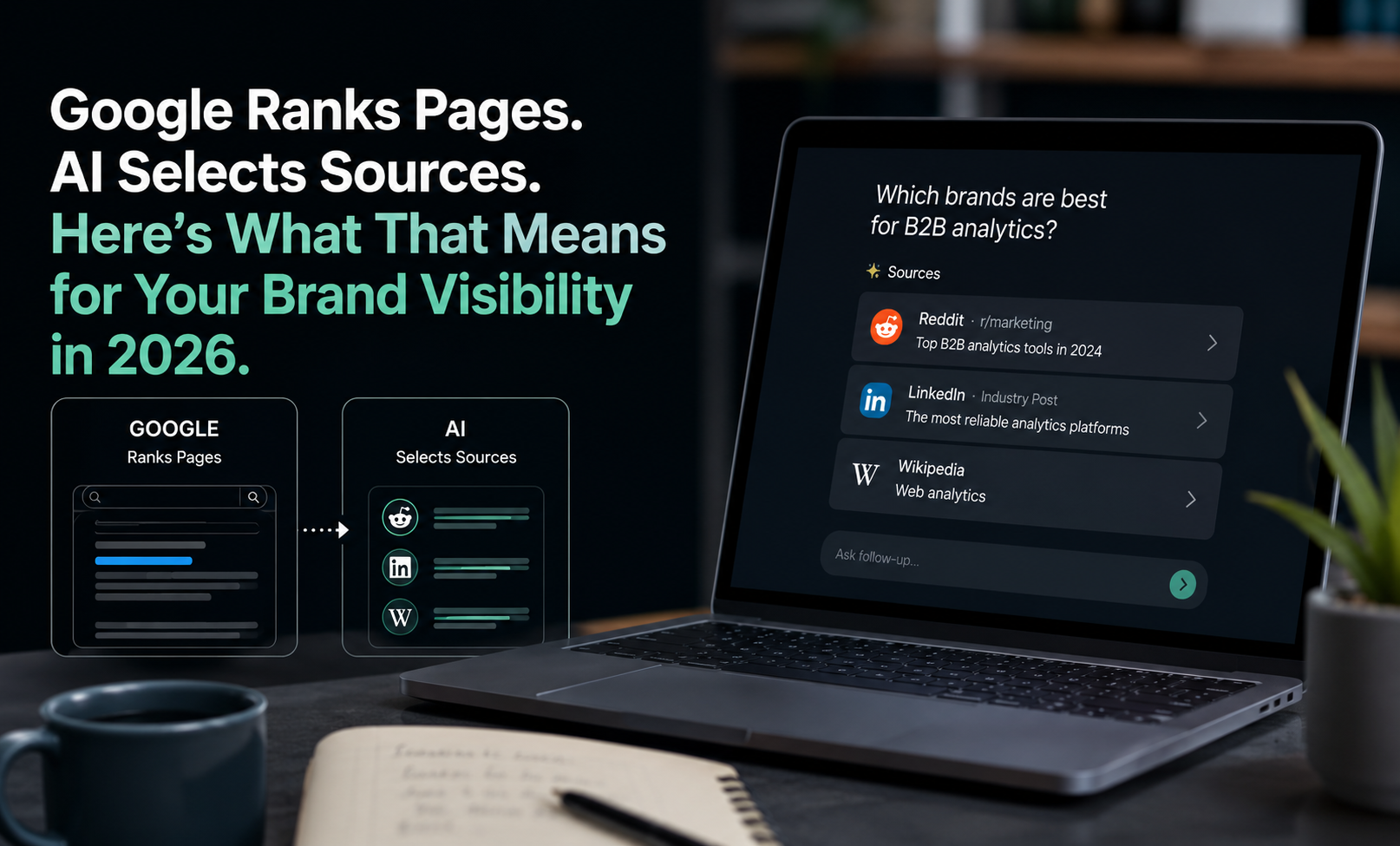
Google Still Ranks Pages. AI Doesn't. Here's Why That Distinction Is Rewriting Every Marketing Strategy.
Google still ranks pages. AI doesn't — it selects sources. That single distinction is reshaping how brands earn visibility, and most marketing teams haven't caught up yet. In this post we break down exactly how AI search selects the brands it cites, why ecosystem trust across Reddit, LinkedIn, and third-party platforms now matters as much as your organic rankings, and what a practical strategy looks like for building visibility across both layers of modern search.
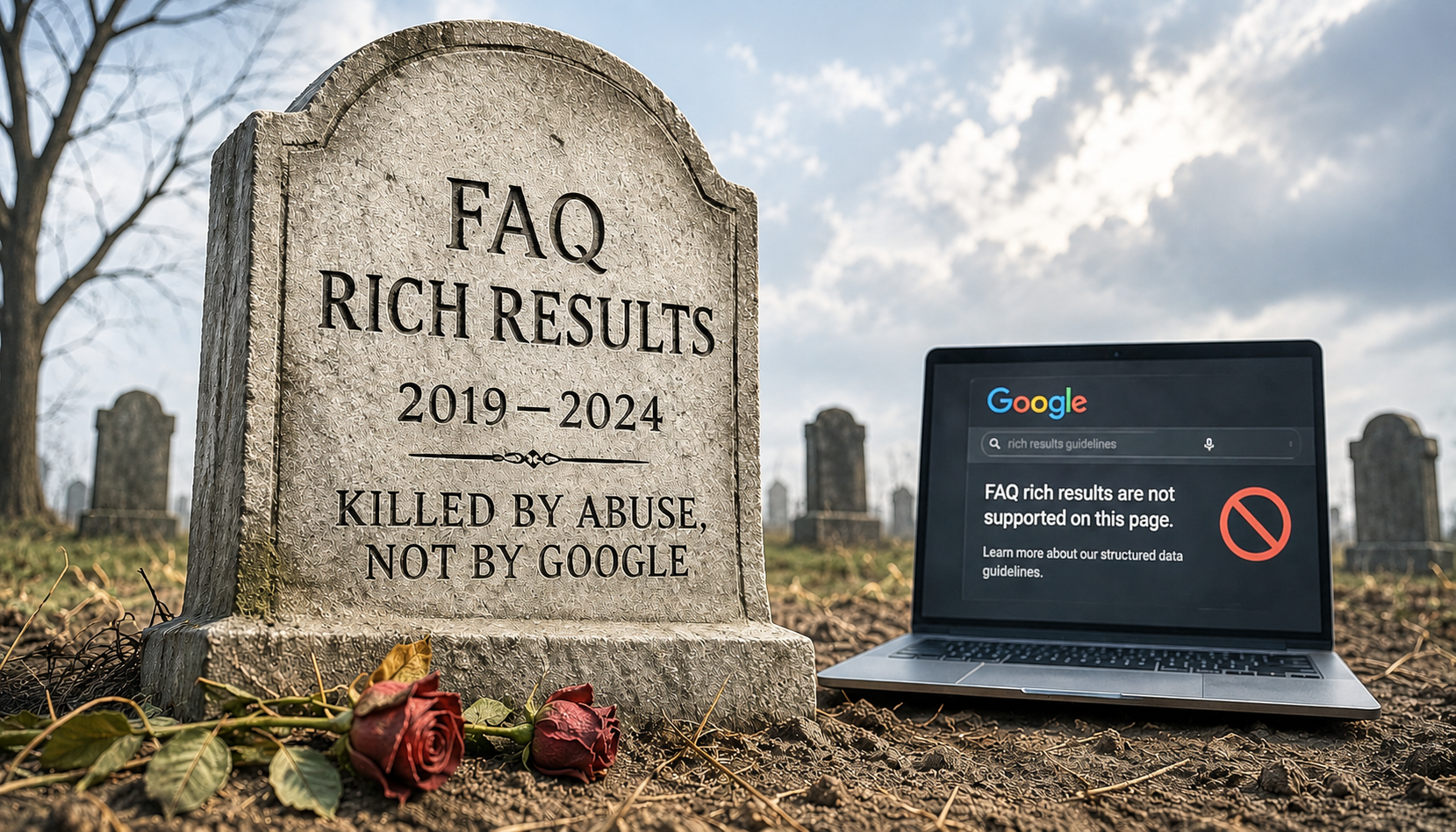
Google Didn't Kill FAQs. It Killed the Abuse of Them. Here's What's Actually Going On.
There's a post making the rounds in SEO circles with a headline that reads like an obituary: "BREAKING: Google just KILLED FAQ rich results." Cue the panic, the hot takes, and the comment section brawl. Here's the thing — both sides are wrong. Google didn't kill FAQs. It killed the abuse of them. Here's what actually happened, why it's been coming since 2023, and what it means for your website.
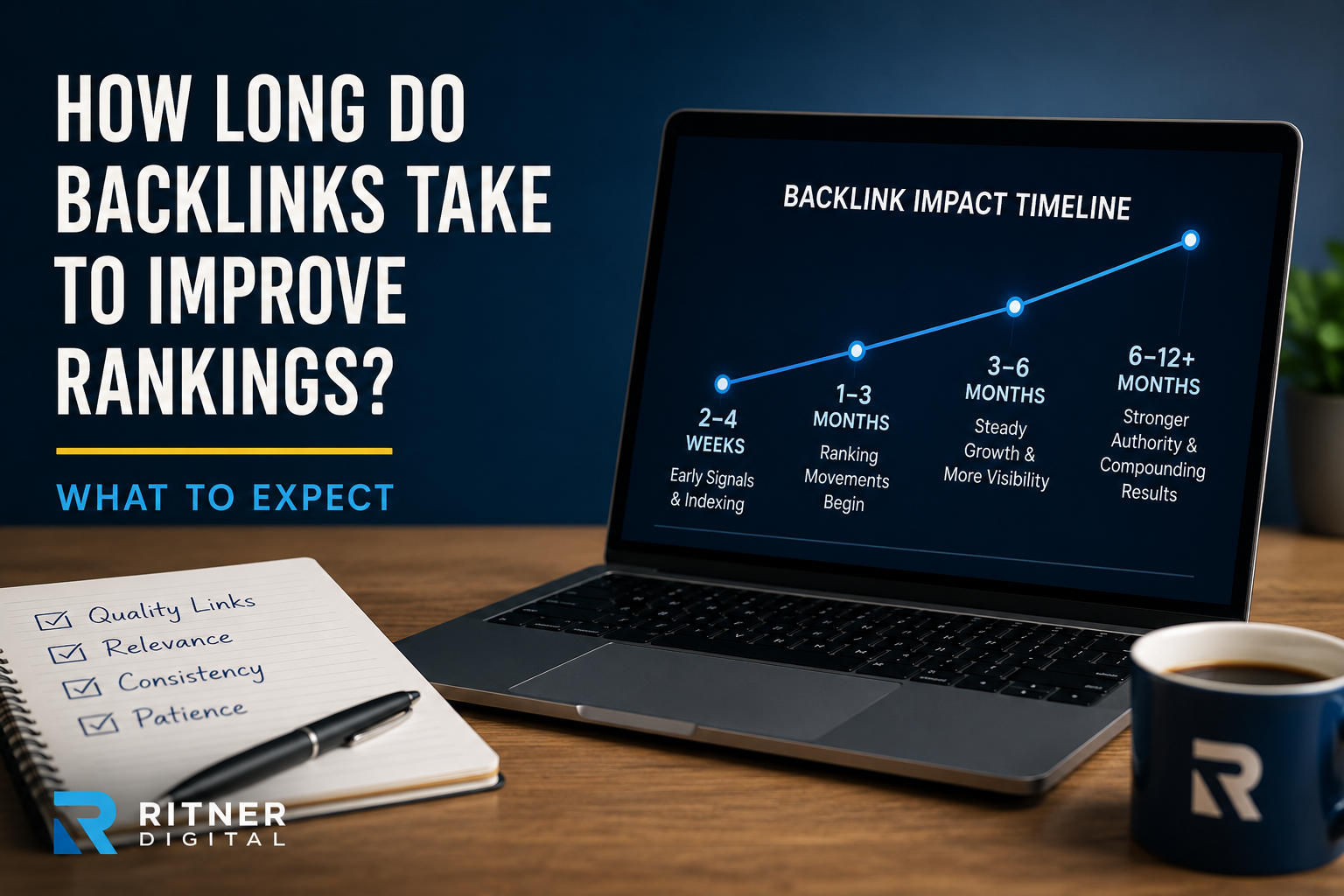
How Long Does It Take for Backlinks to Improve My Rankings?
Backlinks are one of Google's strongest ranking signals, but they don't deliver results overnight. So how long does it actually take? The honest answer depends on your site's age, the quality of the links, your target keywords, and the competitiveness of your niche. In this guide, Ritner Digital breaks down the full timeline — from the first ranking movements at 2–4 weeks, to the compounding authority that builds over 6–12 months — so you know exactly what to expect and when to expect it.
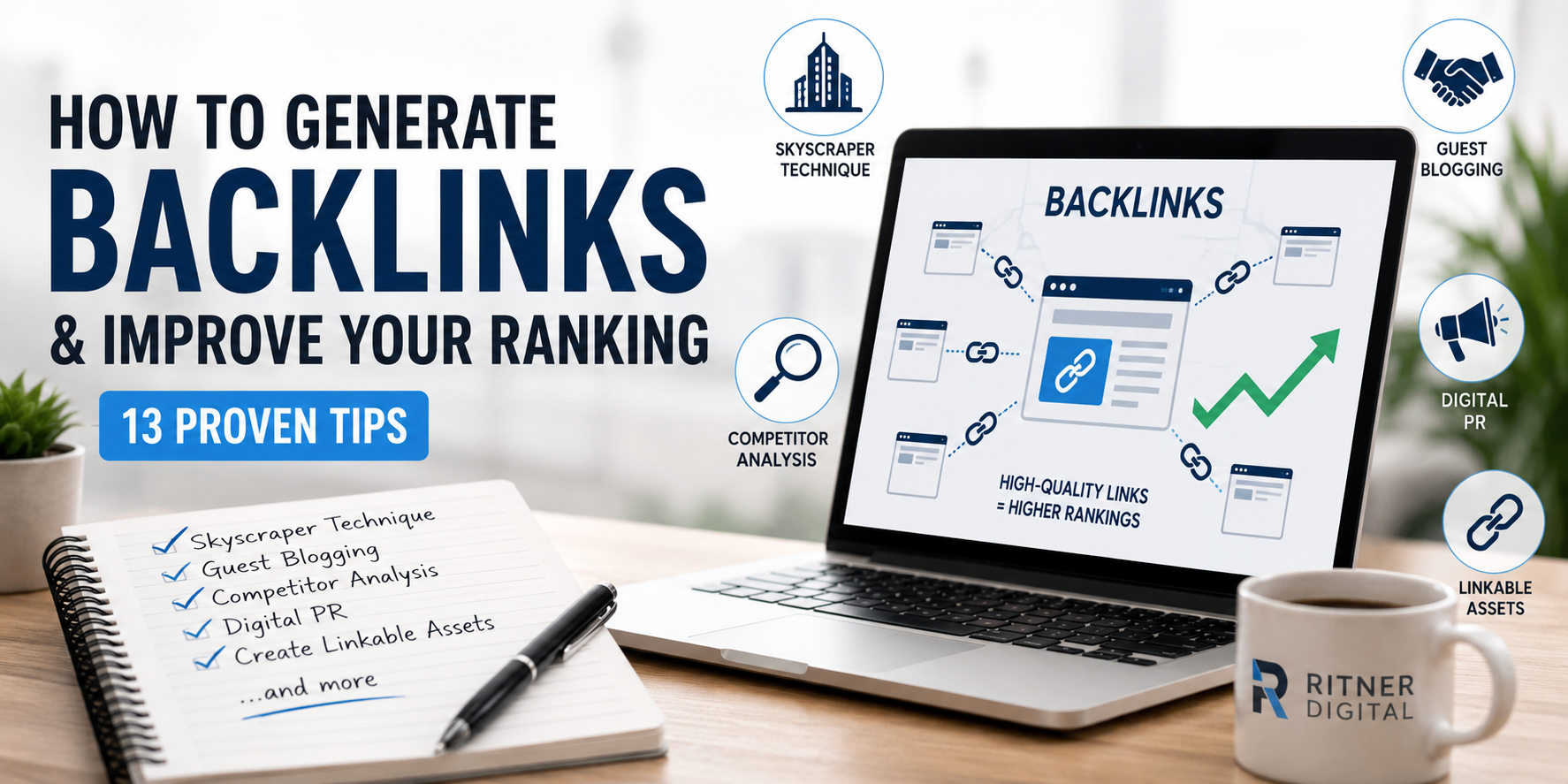
How to Generate Backlinks and Improve Your Ranking — 13 Tips That Actually Work
Backlinks are still the most powerful off-page ranking signal in Google's algorithm — and in 2025, earning the right ones can be the difference between page one and page three. In this guide, Ritner Digital breaks down 13 actionable strategies to build high-quality backlinks, from the Skyscraper Technique and guest blogging to competitor analysis and digital PR. Whether you're starting from scratch or looking to accelerate results, this is your complete playbook for link building that actually works.
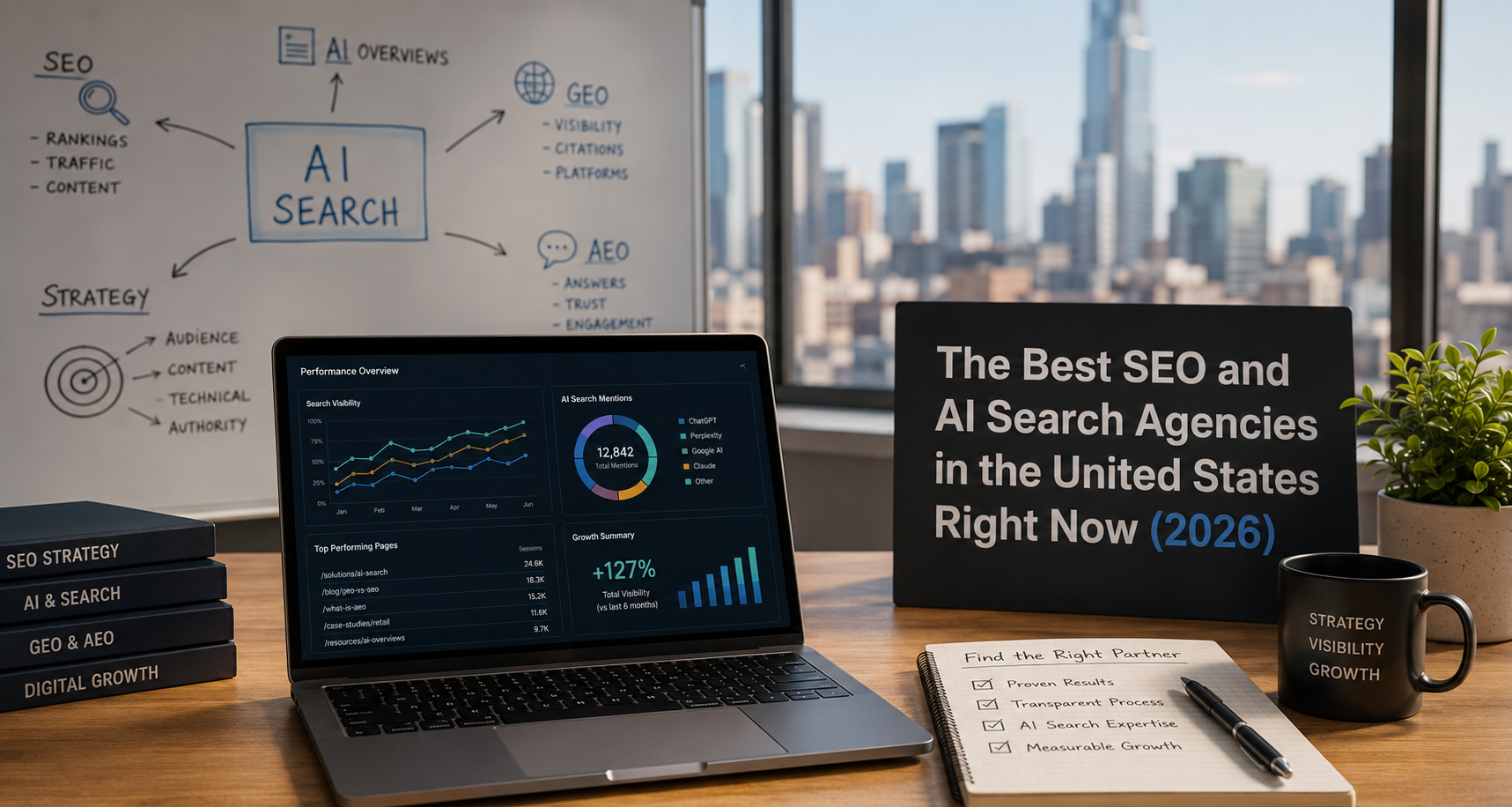
The Best SEO and AI Search Agencies in the United States Right Now
The search for an SEO or AI search agency in 2026 is genuinely harder than it was three years ago — not because good agencies are harder to find, but because the category has expanded and fragmented in ways that make meaningful evaluation more difficult. Every agency now has AI somewhere in its service description. GEO and AEO appear on service pages that have not substantively changed their methodology. This roundup cuts through that noise — covering the firms with documented results across traditional SEO, GEO, and AEO, organized to help you identify the right category of firm for your specific situation rather than producing a meaningless ranked list.
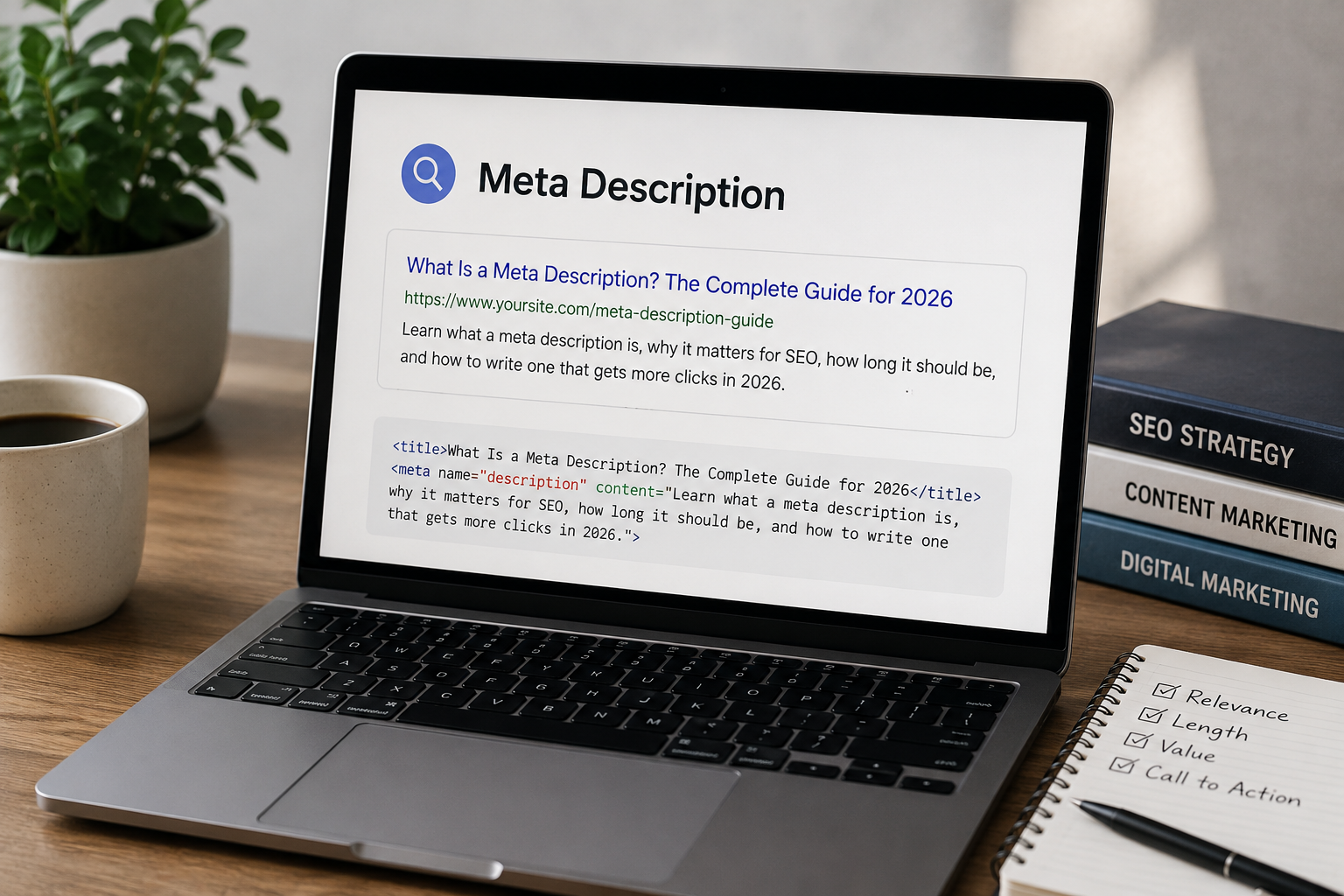
What Is a Meta Description? The Complete Guide for 2026
You have probably seen the term meta description in your CMS, in an SEO audit, or in a conversation with a marketing agency. You may have even been told your meta descriptions need work without being given a clear explanation of what they actually are, why they matter, or what a good one looks like. This is that explanation — covering what a meta description is, whether it affects rankings, how long it should be, what makes one worth clicking, and what happens when you leave the field blank.
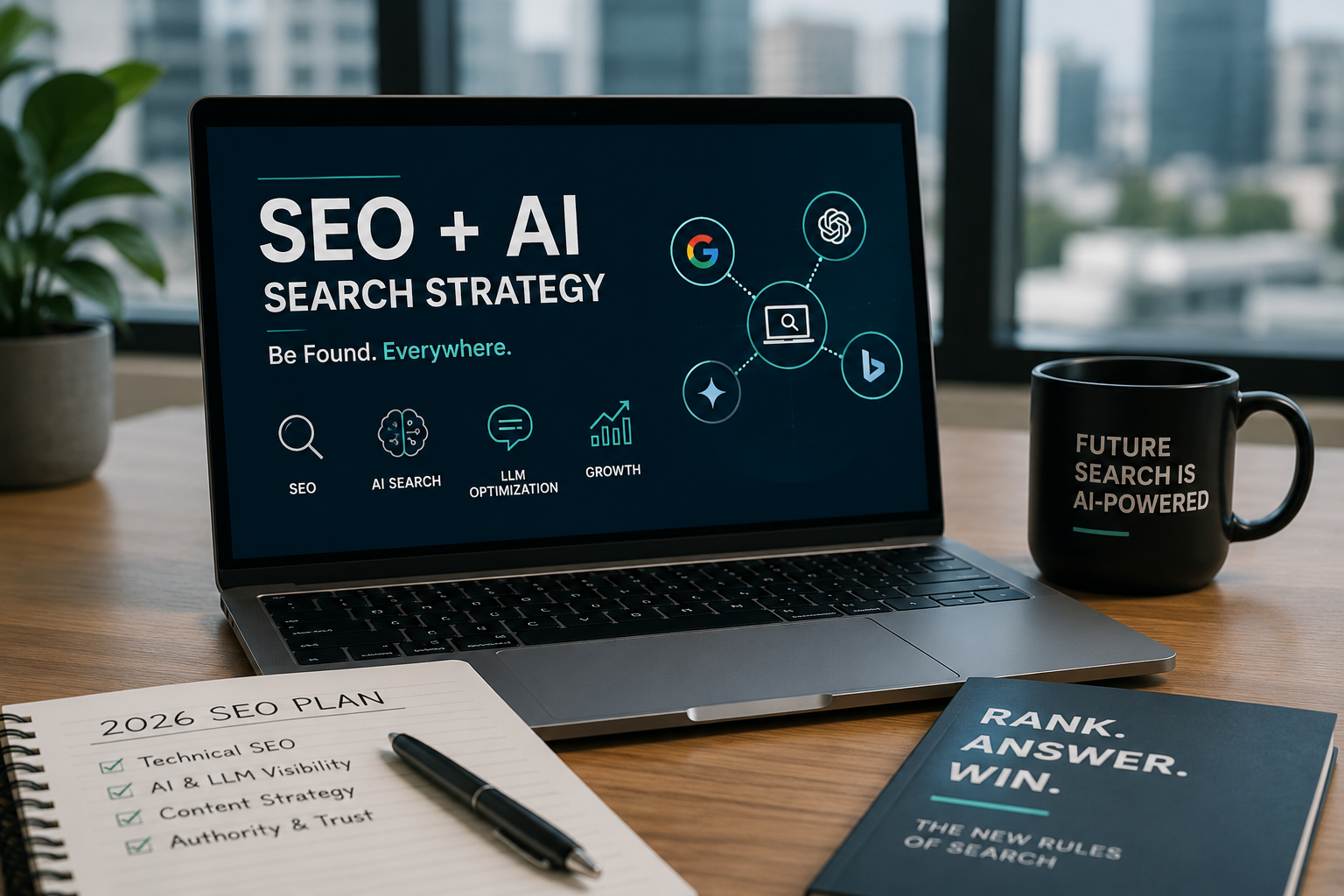
What Is an SEO and AI Search Agency — And Why Your Business Needs One in 2026
If you have searched for marketing help recently, you have probably noticed that the term "SEO agency" has expanded. Some agencies now call themselves AI search agencies or GEO specialists. Others are adding these terms to existing service pages without meaningfully changing what they do. The terminology has multiplied faster than most business owners have had time to understand what any of it means. This post cuts through that noise. What does an SEO and AI search agency actually do in 2026? How is it different from three years ago? What does your business lose by not working with one? And how do you tell the difference between an agency that genuinely understands this shift and one that renamed its 2022 playbook with new acronyms?

When Building the Moat Takes Too Long: The Case for Acquiring One Instead
There is a moment in every competitive market when a strategically honest person looks at what it would take to build the search visibility their competitor has — the topical authority, the citation moat, the entity authority built over years — and does the math. The math is uncomfortable. Topical authority takes six to twelve months of consistent investment to build. External citation accumulation takes longer. And in markets where a competitor is already the default recommendation in AI-generated answers for your most important commercial queries, the honest strategic question is not how to build faster. It is whether building is the right move at all.
What Is an SEO Competitive Moat — And Do You Actually Have One?
Most businesses that invest in SEO are optimizing for positions. They want to rank higher, generate more traffic, and capture more demand than their competitors. That is a legitimate goal. But a ranking is not a moat. A competitor with a larger content budget can outpublish you. An algorithm update can redistribute your positions overnight. An AI system can absorb your informational traffic and redirect it into a response that cites someone else. The investment that produced your position does not protect the position. In 2026, the distinction between a ranking and a moat matters more than it ever has — because the search environment is rewarding the characteristics that produce moats while simultaneously eroding the value of the characteristics that produced positions.
The Enterprise SEO Reporting Problem: Why Your Dashboard Is Hiding What's Actually Happening
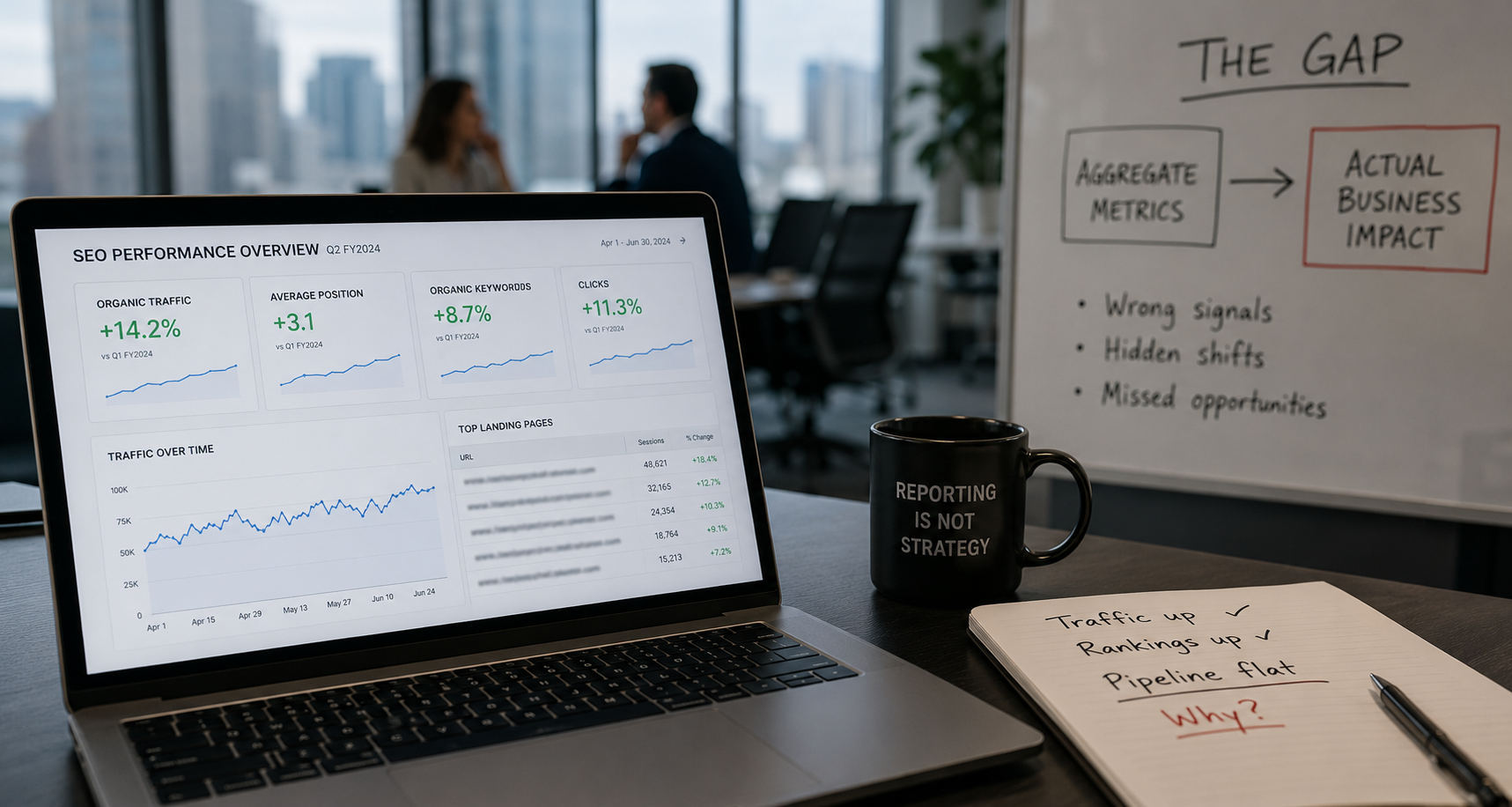
There is a version of enterprise SEO reporting that looks like it is working. The dashboard is clean. The numbers are moving in the right direction. Organic traffic is up fourteen percent. Average position improved by three points. The slide deck for the quarterly business review builds itself. And then six months later, organic pipeline contribution is flat, a competitor is getting cited in AI-generated answers for your most important queries, and you cannot explain why the green numbers and the flat revenue coexist. This is the enterprise SEO reporting problem — not fraud, not incompetence, but a measurement framework built on aggregate metrics that hide what is actually happening at the level where search performance is won and lost.
How to Build an Enterprise Keyword Universe That Doesn't Collapse Under Its Own Weight
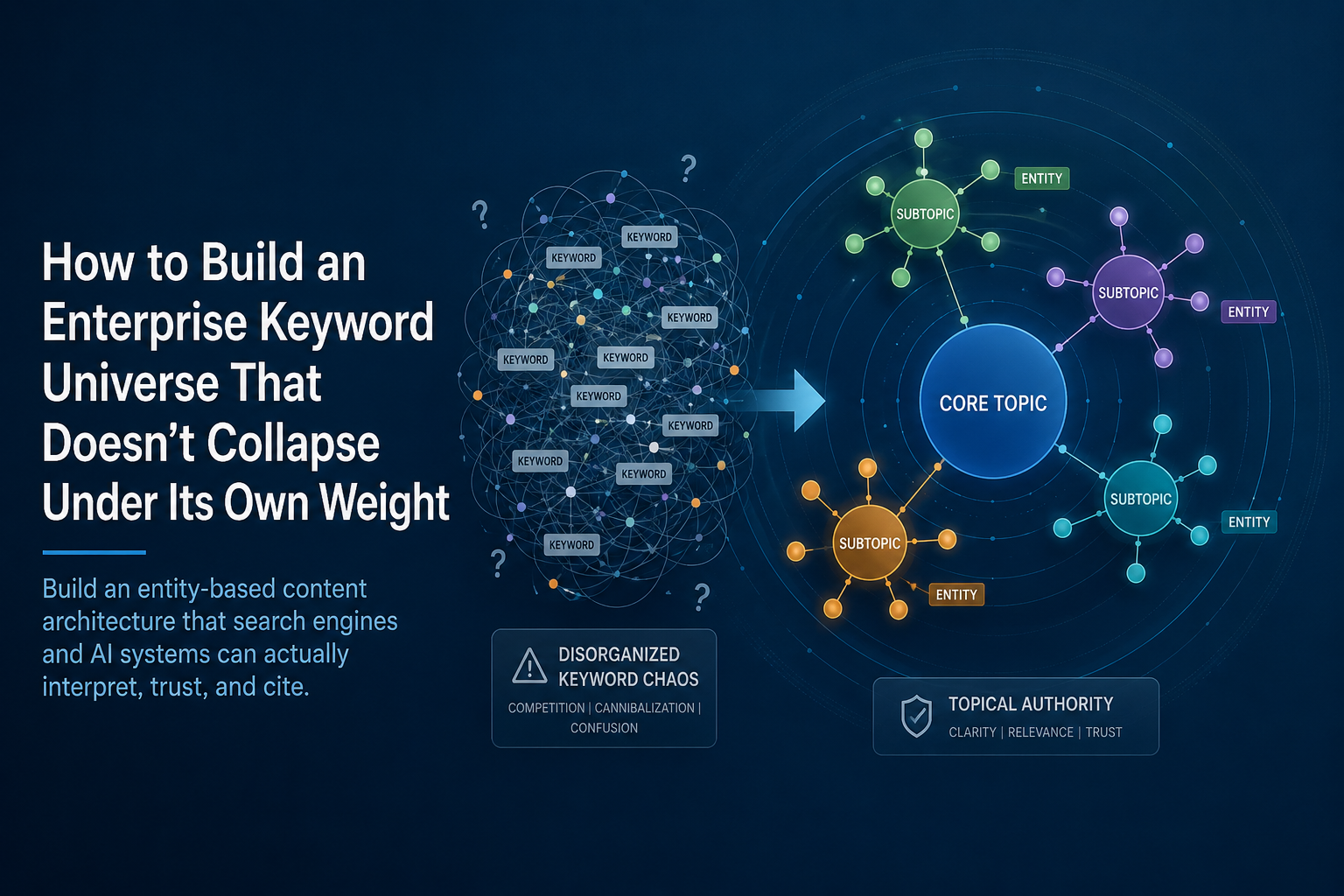
There is a particular kind of enterprise SEO failure that does not announce itself loudly. Rankings do not fall off a cliff. Traffic does not crater overnight. Instead, the site just stops growing. New content publishes and barely moves. Existing pages oscillate in positions they never quite break out of. The keyword tracking spreadsheet grows longer every quarter while organic pipeline contribution stays flat. The cause is almost always the same: the organization built a keyword universe that is wider than it is deep, inconsistently structured, and actively competing with itself. This is the framework for fixing it — not by adding more content, but by building the entity-based content architecture that search engines and AI systems can actually interpret, trust, and cite.
Crawl Budget Isn't Dead. It's Just Misunderstood. Here's What Enterprise Teams Get Wrong.
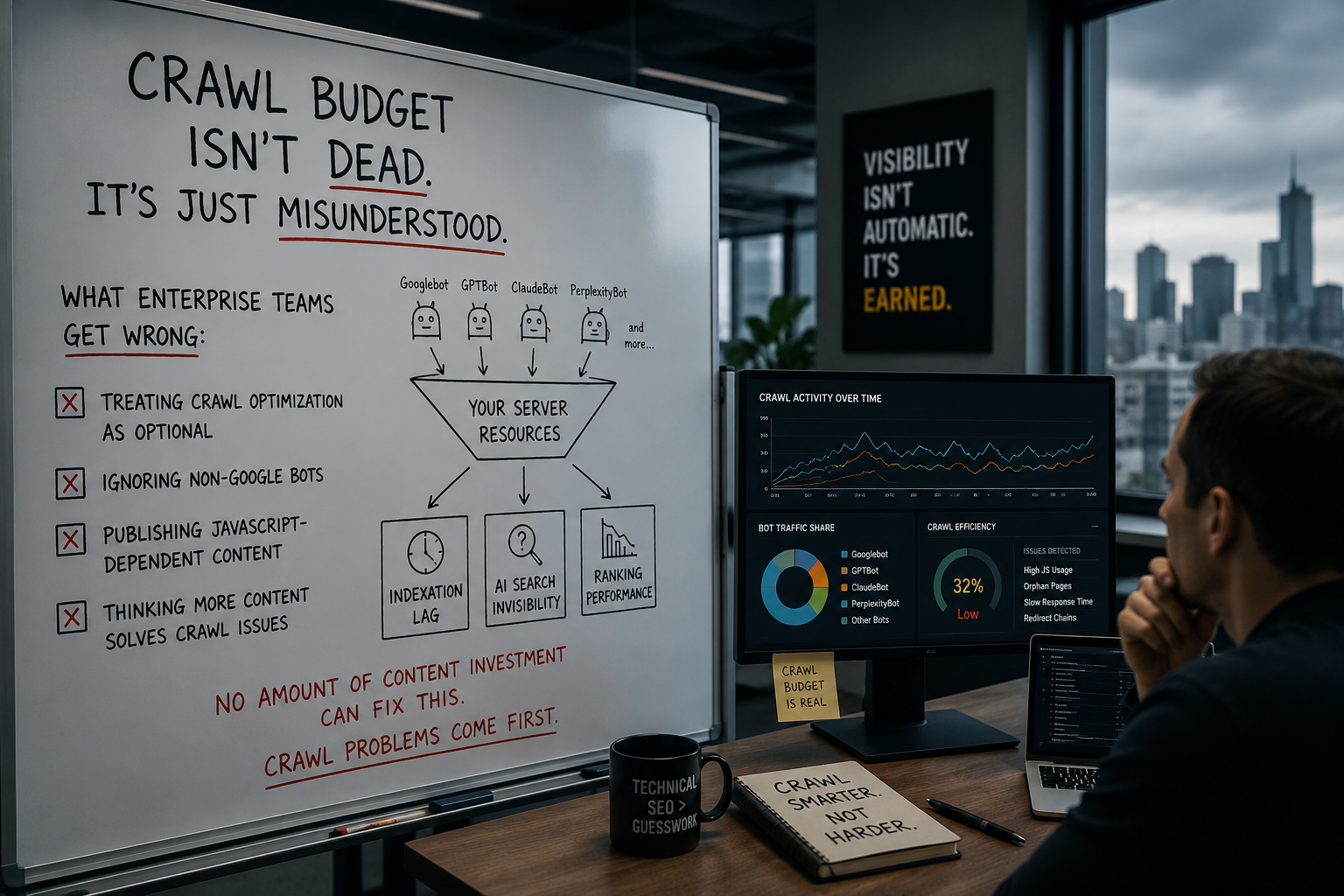
Every few years someone declares crawl budget dead. The argument usually goes: Google's infrastructure has scaled, Googlebot is smarter, just publish good content and it'll figure it out. This argument was always wrong. In 2026 it's wrong in several new directions simultaneously. The number of bots competing for your server resources has multiplied. GPTBot, ClaudeBot, and PerplexityBot fetch static HTML only — meaning JavaScript-dependent content is invisible to them regardless of how well you've optimized everything else. And the enterprise teams still treating crawl optimization as optional technical cleanup are paying for it in indexation lag, AI search invisibility, and ranking performance that no amount of content investment can fix while the crawl problem persists.