
Your Online Persona Is Writing Checks Your Real Personality Can't Cash
There's a particular type of B2B founder whose LinkedIn is warm, relatable, and full of hard-won wisdom — and who is none of those things in person. It used to be a manageable gap. In 2026, with 90% of buyers researching before first contact and 71% of purchasing authority held by Millennials and Gen Z, that gap is becoming a liability the data can no longer ignore.
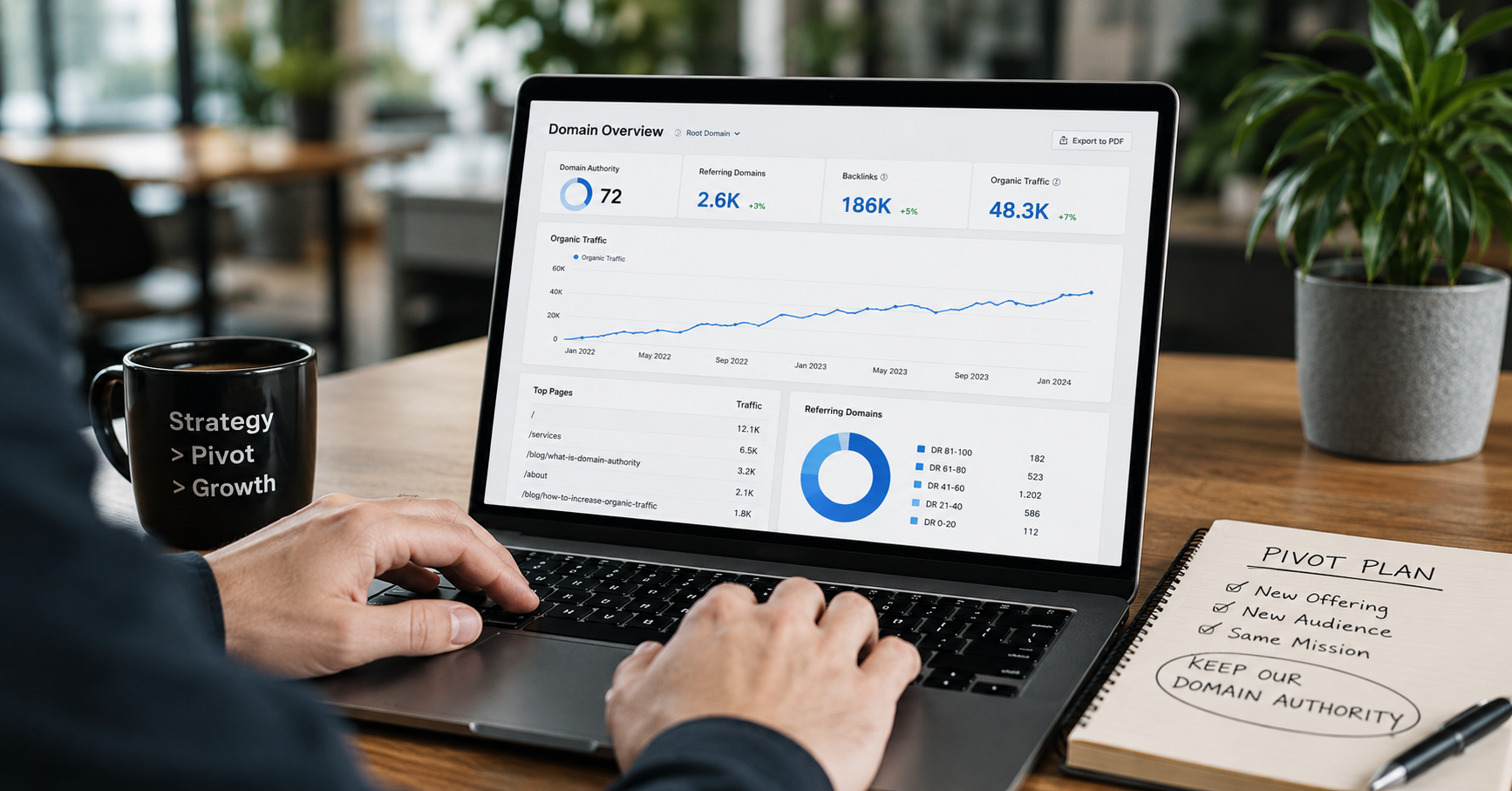
You Don't Have to Start Over: Why a Strong Domain Is Your Most Valuable Asset When You Pivot
When a business pivots, the instinct is often to start clean — new brand, new domain, new everything. But if your existing domain has age, backlinks, and a track record with search engines, abandoning it could cost you years of organic traffic. Here's what domain authority actually is, why it survives a pivot, and how to protect it when your company changes direction.
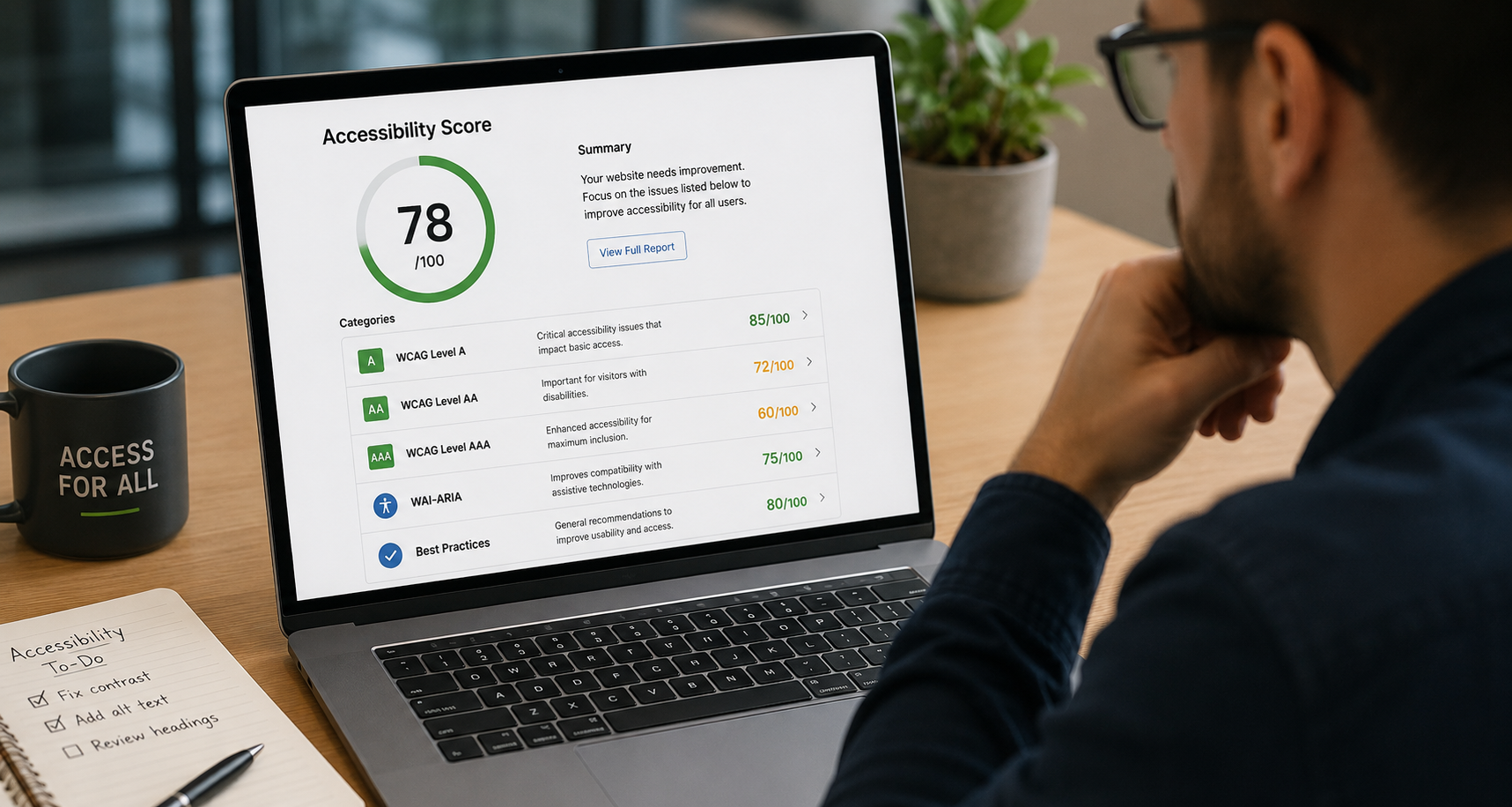
What Every Number on Your Accessibility Score Report Actually Means
An accessibility score report is more than a number — it's a map. But if you don't know what Level AA, WAI-ARIA, or accessibility best practices are actually testing, that map is hard to read. This guide walks through every major category on a typical accessibility report, in plain language, so you can understand your results and know exactly where to start.
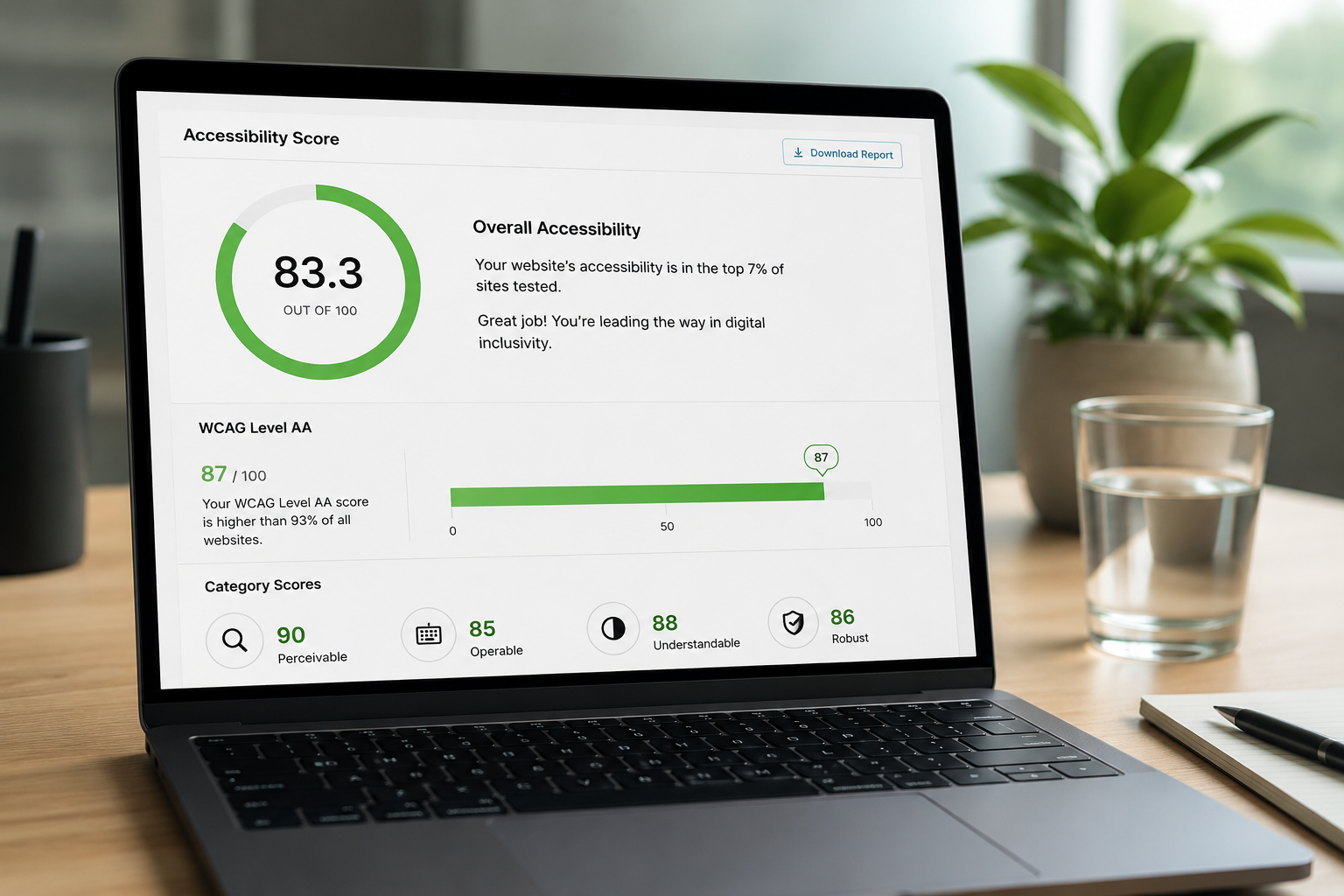
An 83.3 Accessibility Score Is Actually Exceptional — Here's the Data to Prove It
An 83.3 accessibility score sounds like a solid B. But web accessibility isn't graded on that curve. With 95.9% of the top million websites failing WCAG standards outright and the private sector median Level AA score sitting at just 43 out of 100, a score in the 80s doesn't just pass — it leads. Here's the data behind why.

Should You Hire an SEO Agency That Specializes in One Industry — or One That Works Across Many?
It's one of the most common questions businesses ask when vetting SEO partners: does it matter if my agency only works with companies like mine? On the surface, hiring a vertically specialized agency seems like the safe bet. But dig deeper, and the picture gets more complicated — and the answer depends far less on industry experience than most people think.
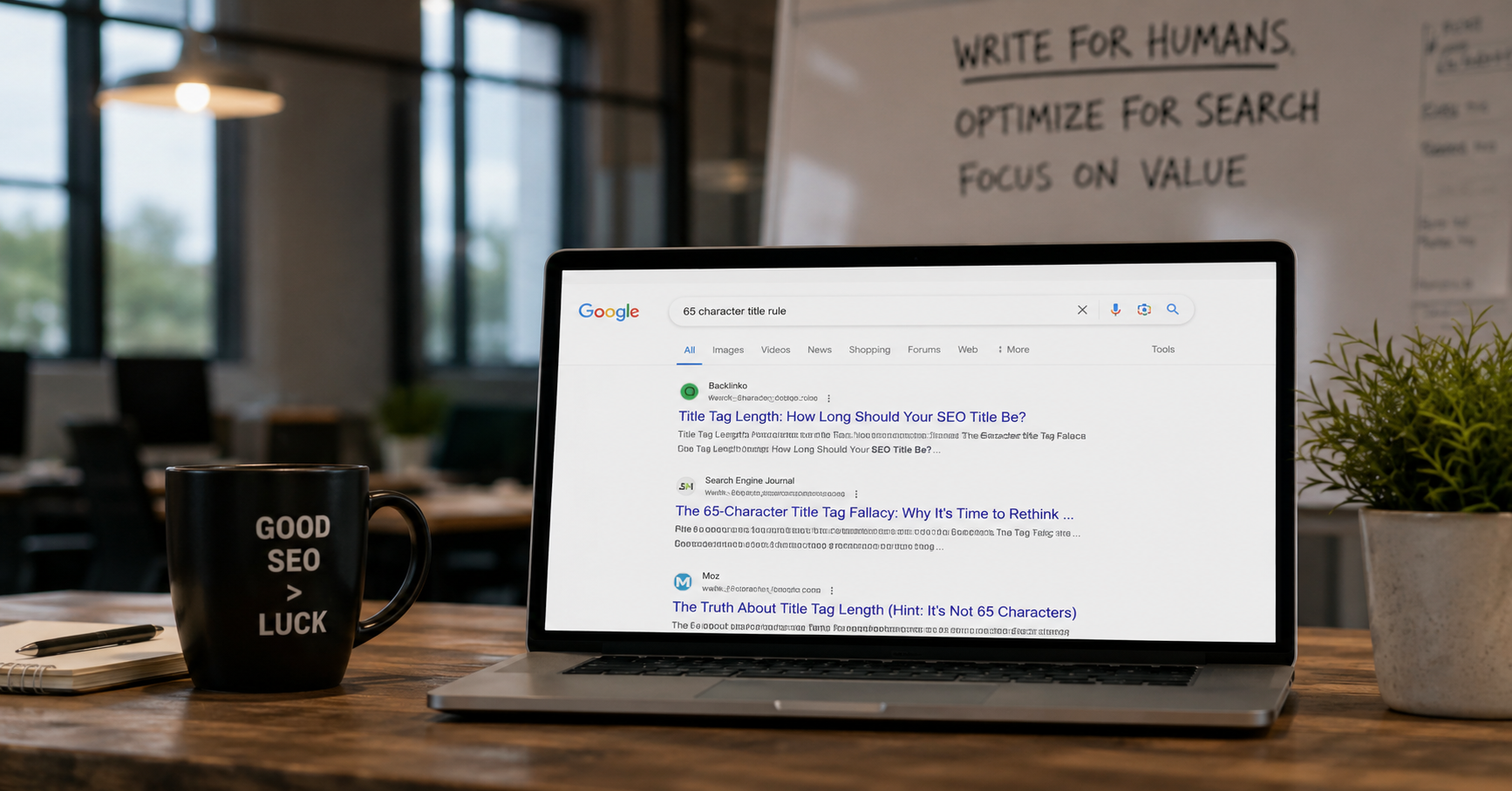
Why Obsessing Over 65-Character Titles and 155-Character Descriptions Is an Outdated SEO Mindset
The 65-character title and 155-character description guidelines feel like solid SEO ground. They're not — at least not in the way most teams treat them. Google rewrites metadata constantly, display constraints have shifted repeatedly, and hitting a character count has never been a ranking signal. Here's what actually matters.
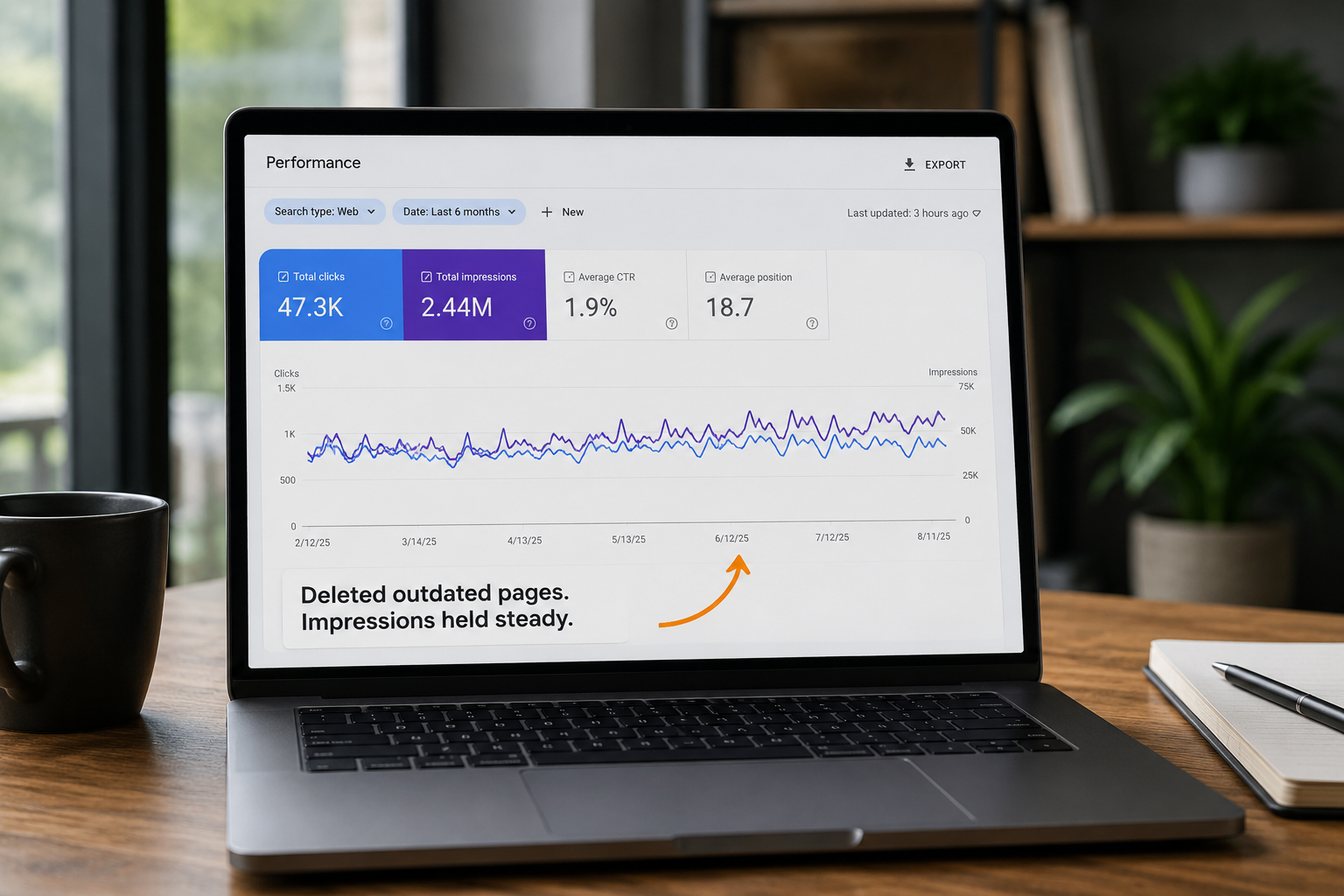
Why Deleting Old Content Didn't Kill Your Google Impressions (And What That Actually Tells You)
You've built a strong content library. Impressions are healthy. And deleting anything feels terrifying. But then you remove a handful of outdated pages — and impressions hold. Here's why that happens, what it tells you about how Google evaluates authority, and how to think about content auditing when you've built something real.
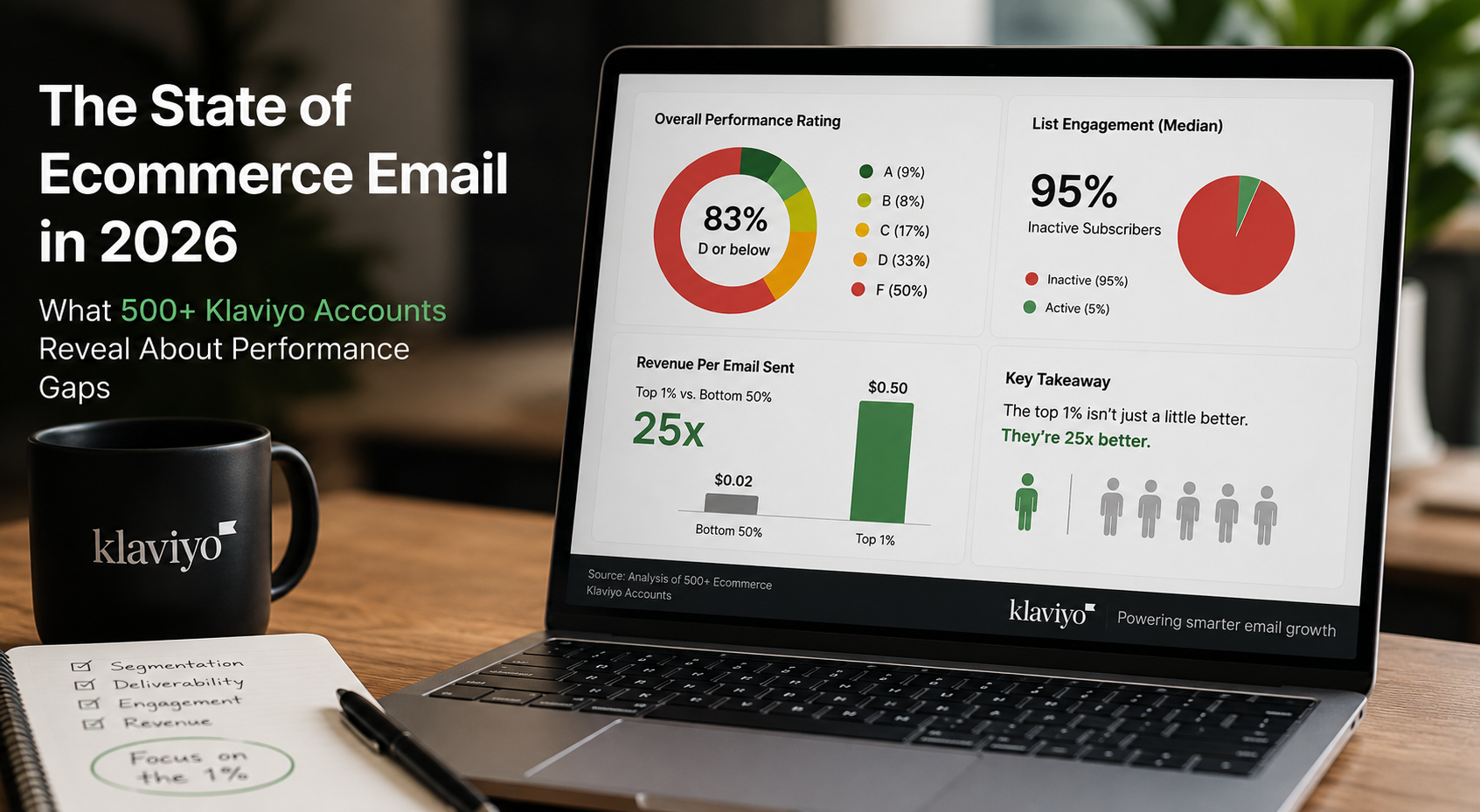
The State of Ecommerce Email in 2026: What the Data Actually Shows About Klaviyo Performance
Most ecommerce brands believe their Klaviyo program is working. Data from 500+ accounts tells a different story. 83% score D or below. The median list is nearly 95% inactive. Revenue per email sent varies by 25x between top and bottom performers. Here are the six findings — and what the top 1% does differently.

You Have the Data. Now What? Why Insights Without Strategy Are Just Expensive Spreadsheets.
Data doesn't grow your business. Strategy does. Most brands already have access to numbers that reveal exactly what's broken — they just lack the framing, prioritization, and execution plan to act on them. Here's where insight dies without the right partner, and what it looks like when strategy finally catches up to the data.
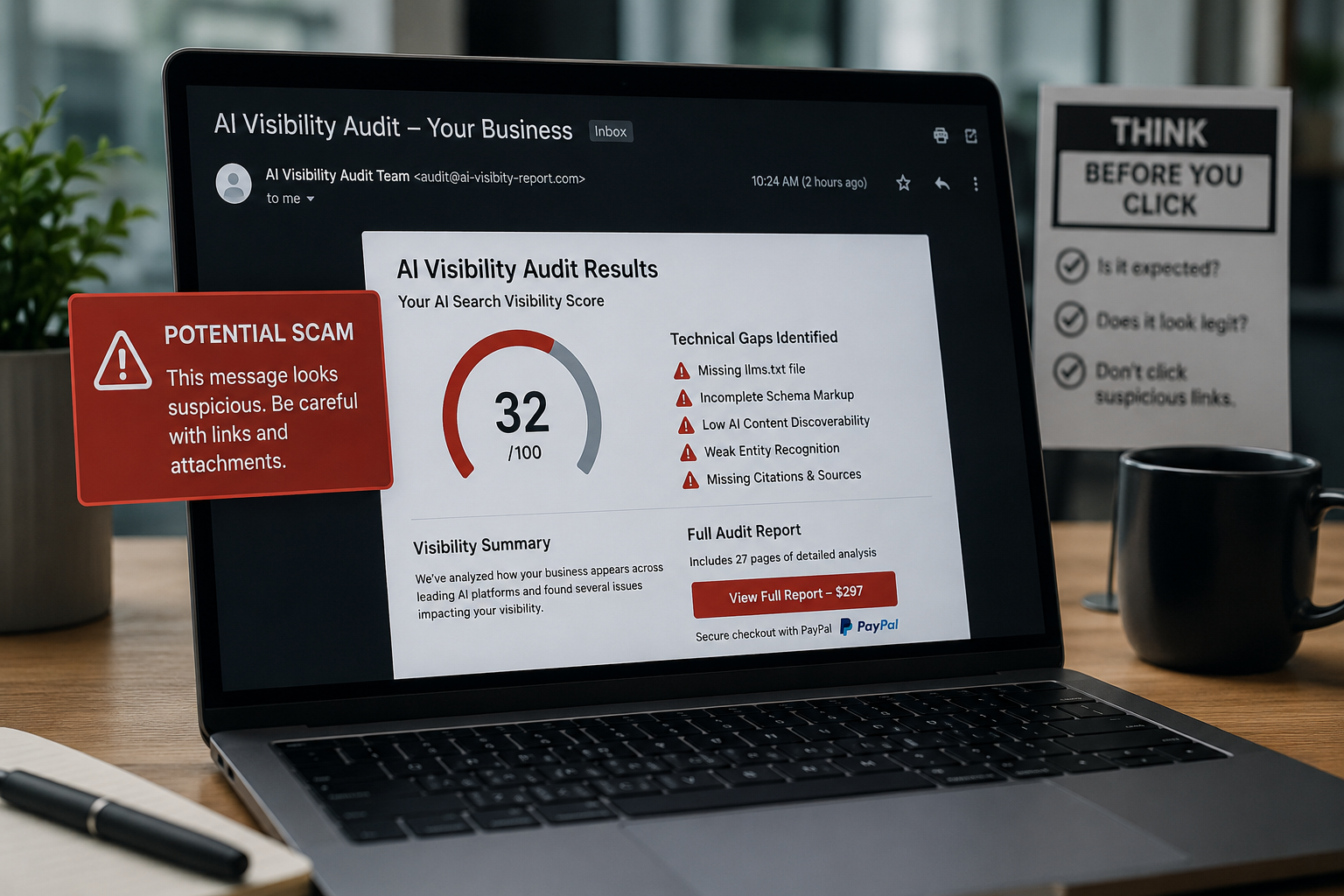
The AI Visibility Audit Scam Is Targeting Businesses — Here's How to Spot It
If a stranger reached out through your contact form claiming they already audited your AI search visibility — complete with a score, a list of technical gaps, and a PayPal link — you weren't alone, and it wasn't legitimate. Here's exactly how this new wave of AI-powered spam works, why the technical language sounds so convincing, and what genuine AI visibility work actually involves.
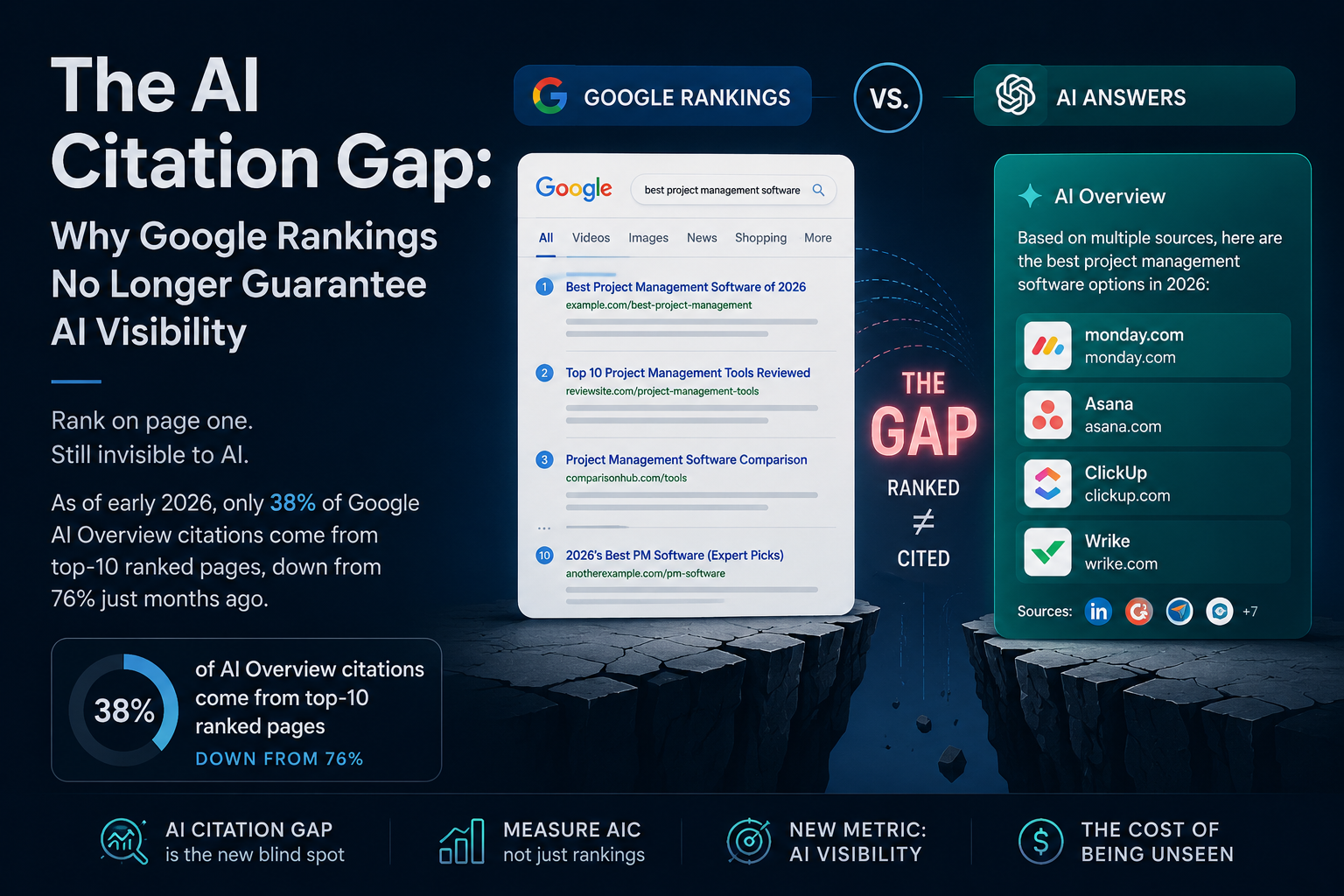
The AI Citation Gap Is Costing You Business — And Most Brands Don't Even Know It
We asked ChatGPT five questions on May 16, 2026 — questions your customers are already typing into AI systems right now. The answers revealed something every brand needs to understand: ranking on Google and being cited by AI are no longer the same thing. As of early 2026, only 38% of Google AI Overview citations come from top-10 ranked pages, down from 76% just months ago. This deep-dive research analysis breaks down the AI citation gap, the rise of AIC as a metric, how to measure AI search visibility, and why your current SEO benchmark report is only telling you half the story.
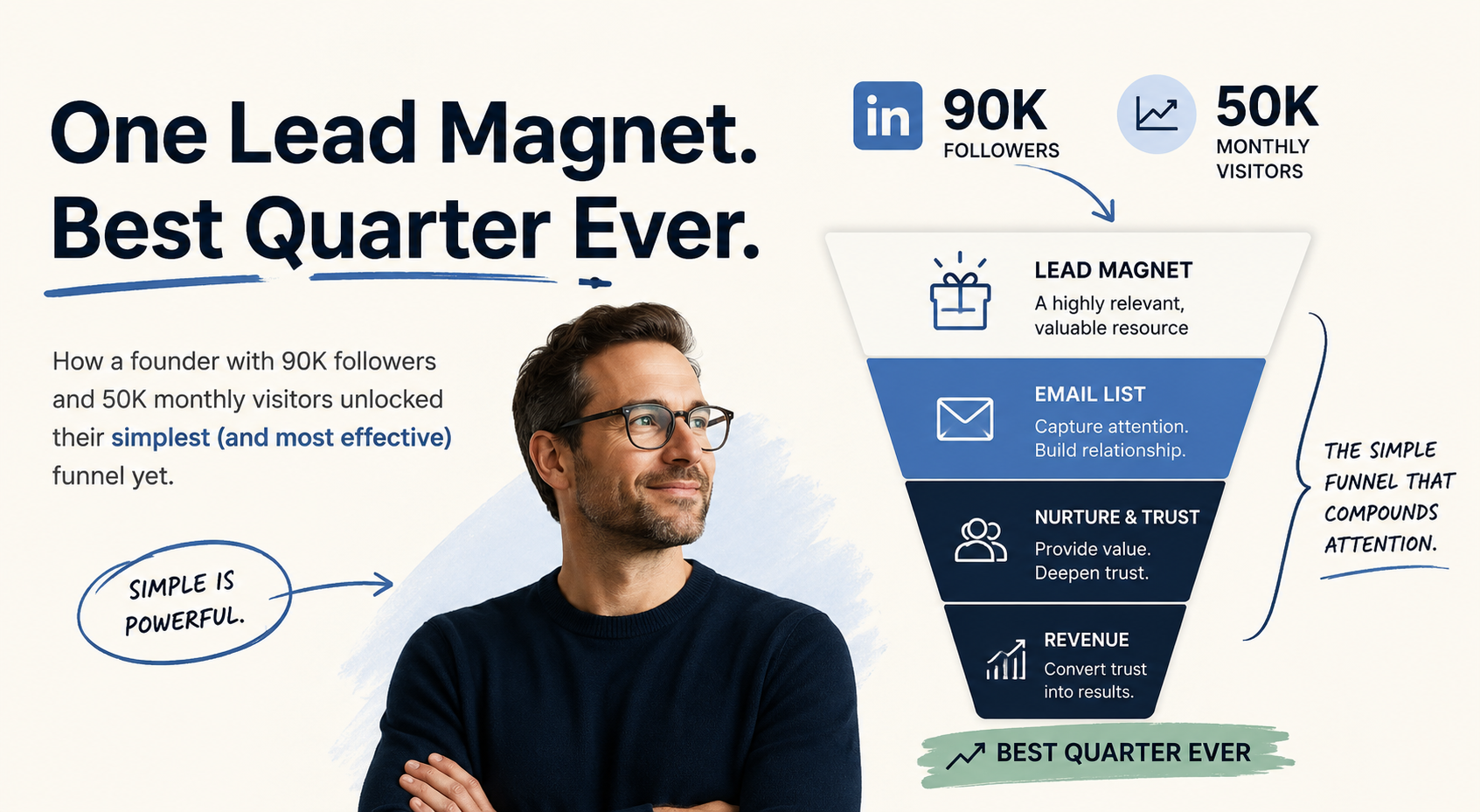
The Simplest Thing a Founder With 90K Followers Did to Have Their Best Quarter Ever
Most founder-led brands have already done the hard part — building a real audience, earning genuine trust, driving consistent traffic. What they're missing isn't more content or a bigger ad budget. It's a mechanism to capture and compound all of that attention. One founder with 90,000 LinkedIn followers and 50,000 monthly visitors just had their best quarter ever after adding a single well-built lead magnet. Here's why it worked — and why the funnel doesn't need to be nearly as complicated as most people make it.
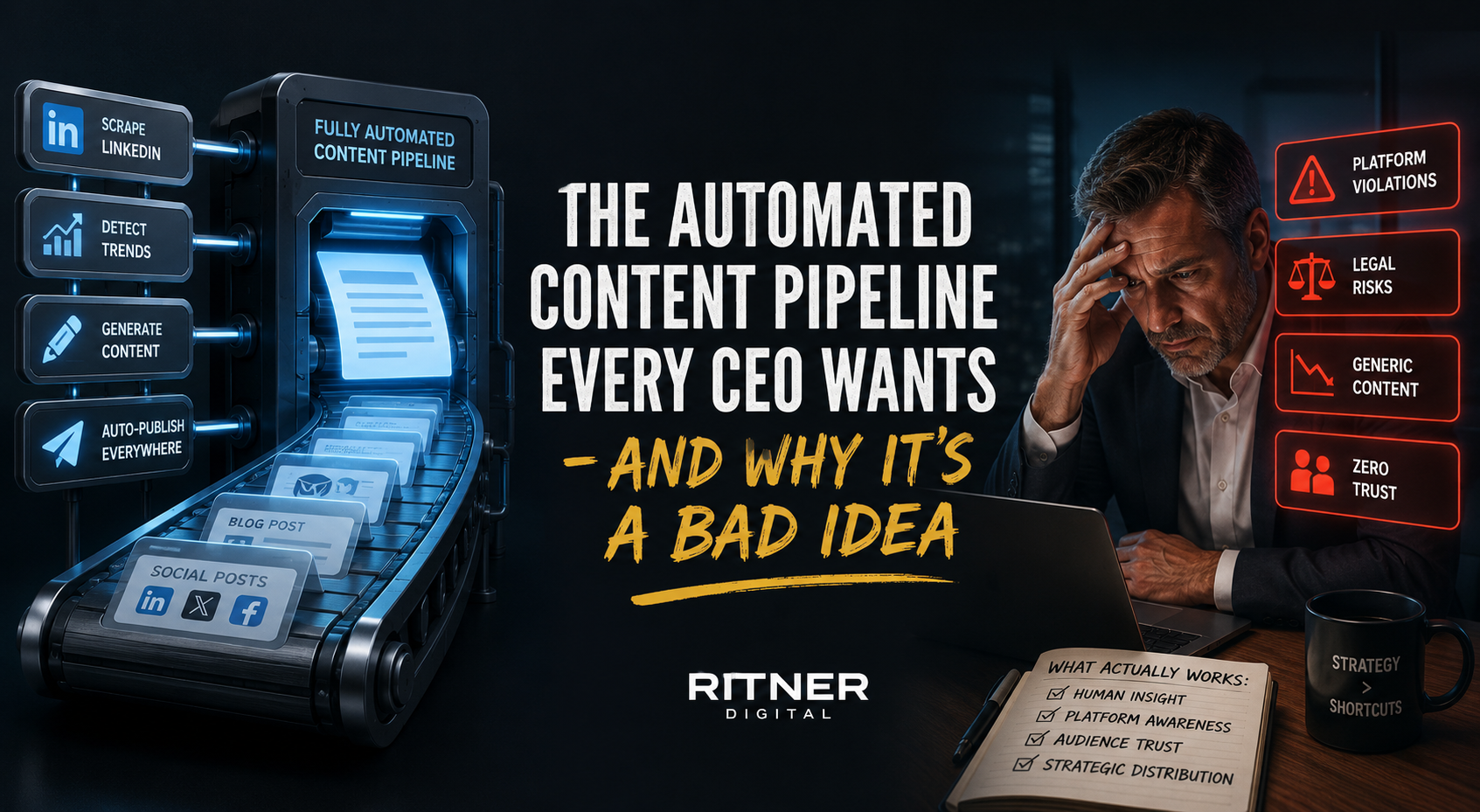
The "Genius" Idea Every CEO Keeps Pitching — And Why It Doesn't Work
There's an idea making the rounds in every boardroom and strategy session right now: build a tool that scrapes LinkedIn, detects what's trending, and automatically writes and distributes your newsletter, blog, and social content. CEOs love it. Solutions architects pitch it. And it fundamentally misunderstands how content, platforms, and audiences actually work in 2026. Here's the honest breakdown of why it fails — and what a smarter version of this idea actually looks like.
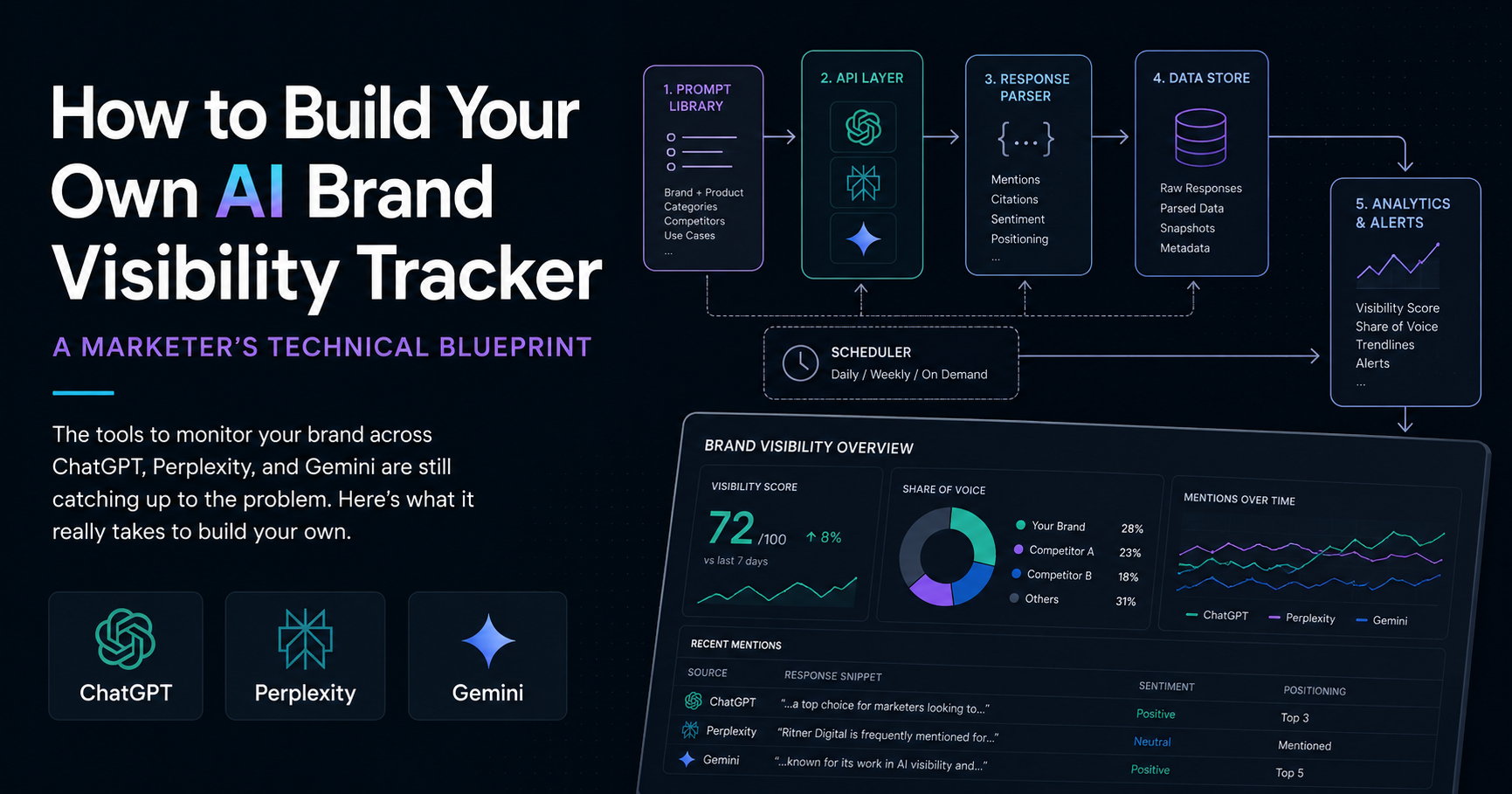
How a Marketer Would Actually Build Their Own AI Visibility Tracker (And Why It's Harder Than It Sounds)
The tools to monitor your brand across ChatGPT, Perplexity, and Gemini are still catching up to the problem. So what would it actually take to build your own? From prompt libraries and API access to parsing logic and cost estimates, here's an honest technical blueprint for marketers who want to understand how AI visibility tracking works under the hood — and what makes it harder than it looks.
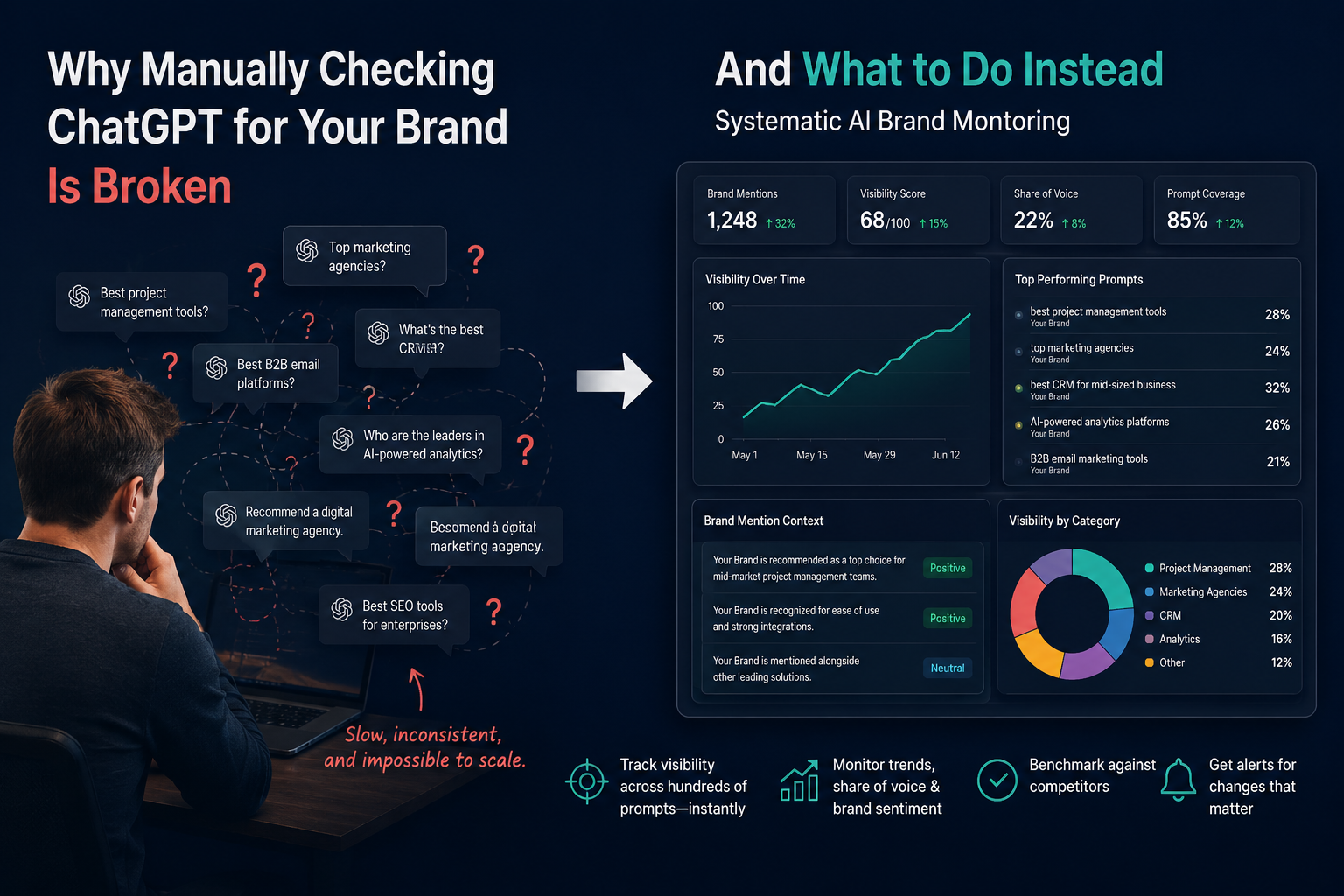
You Shouldn't Have to Play 20 Questions With ChatGPT Just to Know If Your Brand Shows Up There
Your brand is either showing up in AI-generated answers or it isn't — and right now, most marketers have no reliable way to know which. While teams are running sophisticated SEO reporting stacks, the majority are still checking their AI visibility by manually typing questions into ChatGPT and hoping for the best. Here's why that's not a strategy, and what actually needs to change.
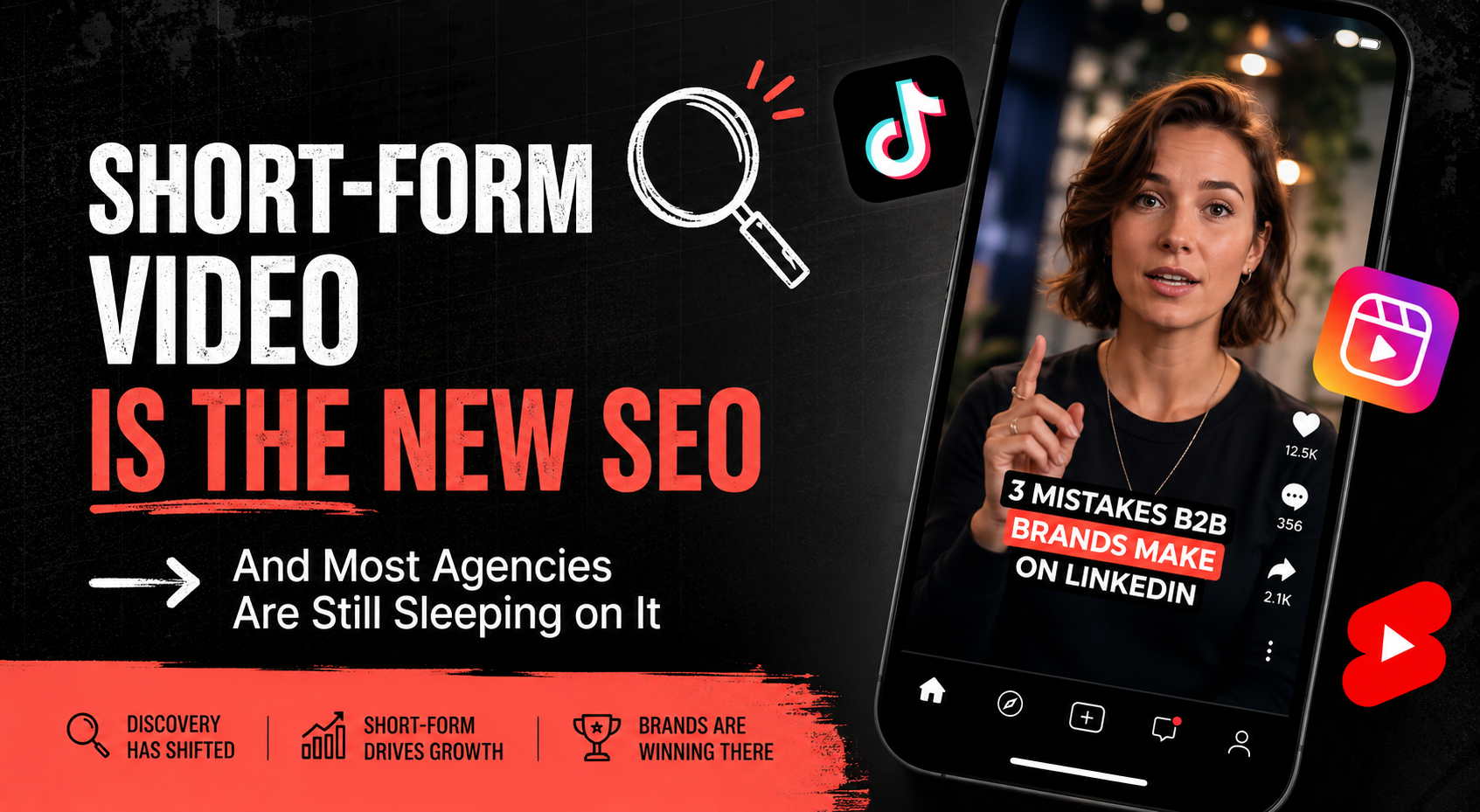
Short-Form Video Is the New SEO — And Most Agencies Are Still Asleep at the Wheel
Discovery behavior has fundamentally shifted. Nearly half of U.S. consumers now use TikTok as a search engine, and brands across auto, legal, media, and SaaS have already figured out how to win there. So why are so many marketing agencies still hesitant to treat short-form video as a serious channel — and what does it look like when brands actually get it right?
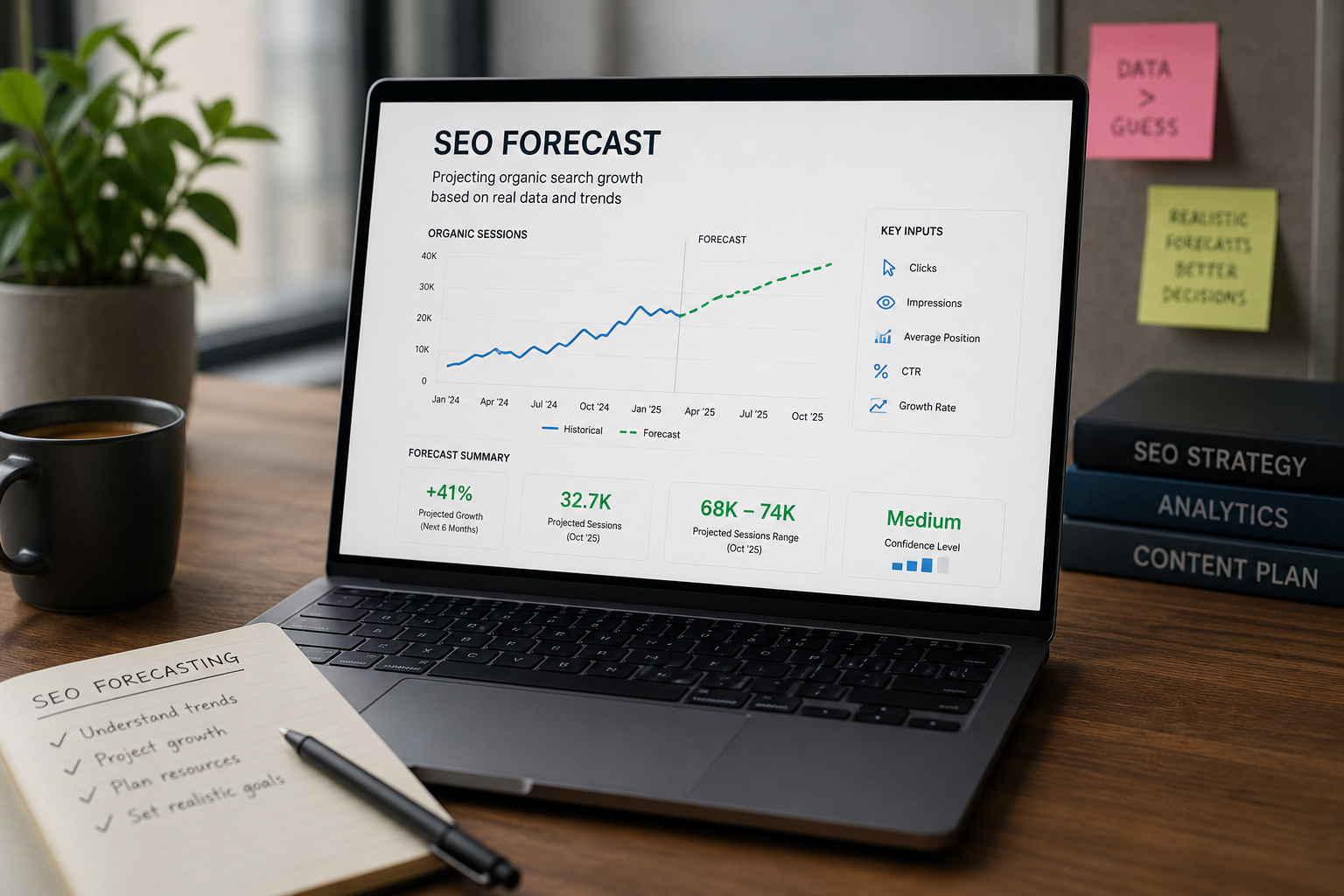
What Is SEO Forecasting? A Plain-English Guide to Predicting Organic Search Growth
Most businesses investing in SEO eventually ask the same question: when will we actually see results? SEO forecasting is the discipline that answers that question with data instead of guesses. It takes your real click trends, impression volume, ranking positions, and growth rates and projects where your organic search performance is headed — and when. This guide covers exactly how SEO forecasting works, what data goes into it, how forecasts are built, where they are reliable, and where they have real limits. No hockey sticks. No guarantees. Just a plain-English explanation of one of the most underused planning tools in digital marketing.
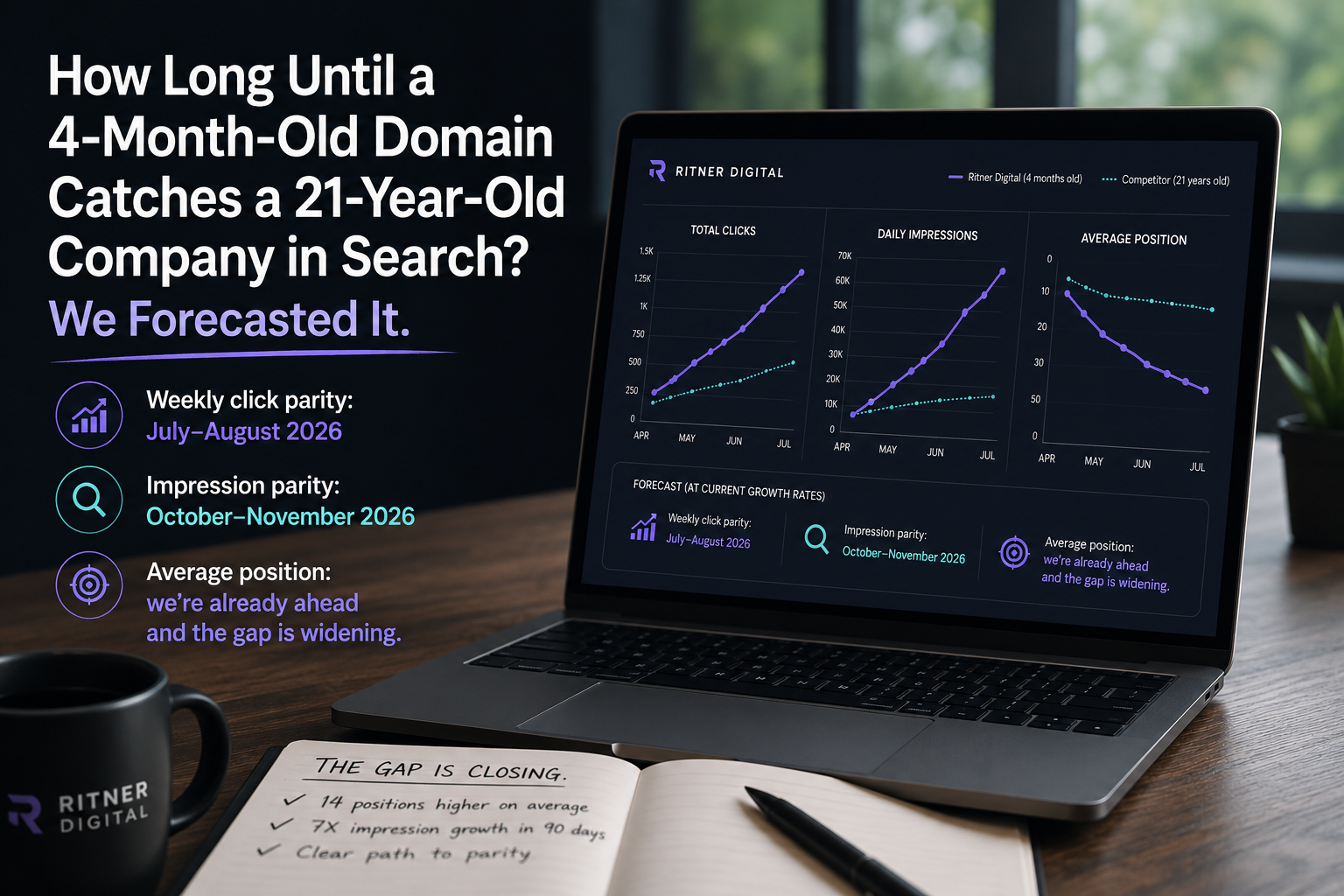
How Long Will It Take a 4-Month-Old Domain to Catch a 21-Year-Old Company in Search? We Did the Math.
Ritner Digital is four months old. The company we're forecasting against has been in business since 2004. Right now they lead us in total clicks and daily impressions — but we already rank 14 positions higher on average, our impression volume has grown 7x in 90 days, and theirs hasn't moved. In this post we compare both sites across every key metric, run the math on current growth trajectories, and forecast exactly when Ritner Digital closes each gap. Weekly click parity: July–August 2026. Impression parity: October–November 2026. Average position: we're already ahead and the gap is widening.
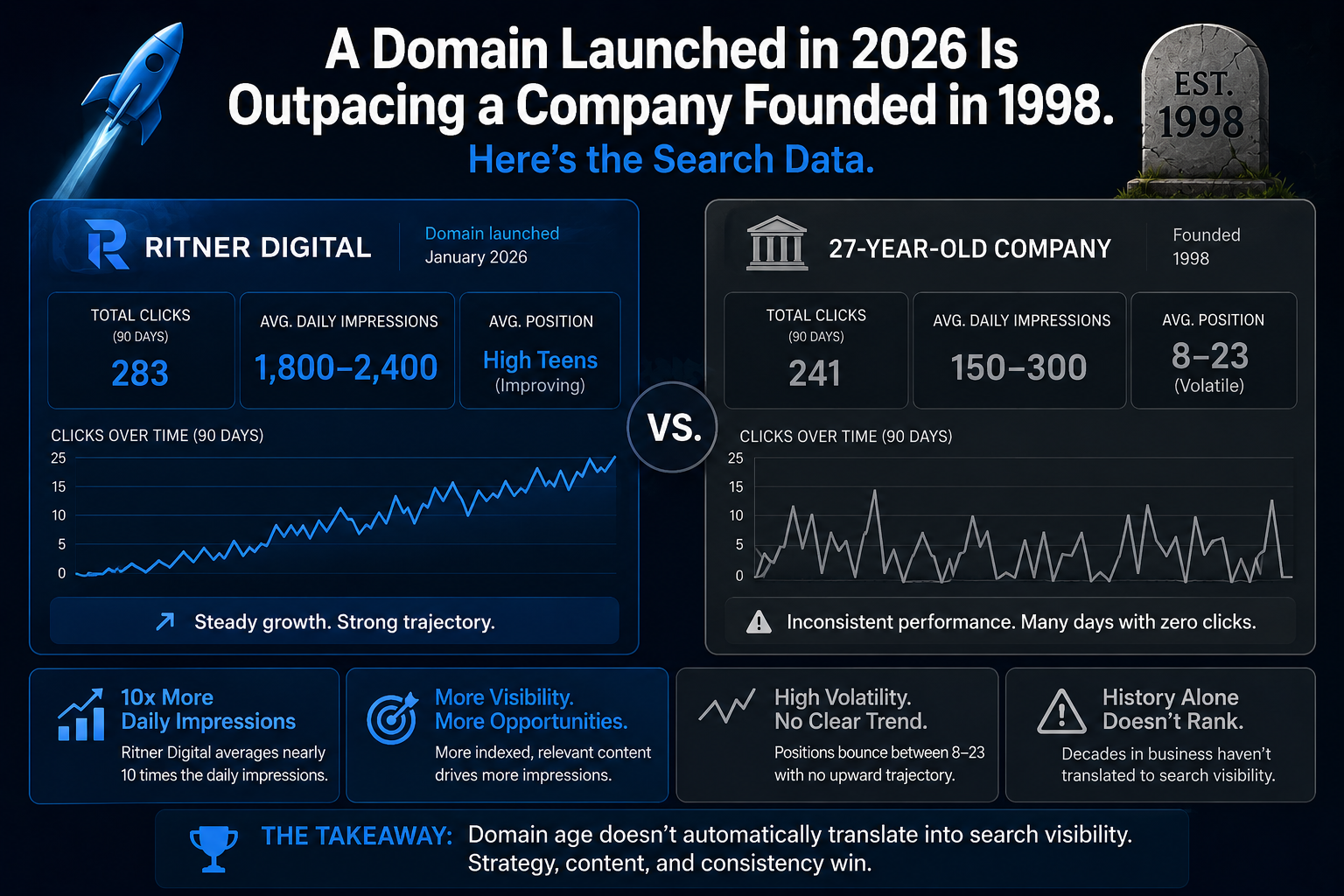
We Launched in January 2026. We're Already Outpacing a Company Founded in 1998. Here's the Data.
Ritner Digital didn't exist as a domain until January 2026. The company we're now outpacing in organic search has been in business since 1998. Over the same 90-day window, we generated 283 clicks and nearly 10 times the daily impressions of a 27-year-old organization that has deeply underinvested in SEO. This post shows the exact data from both sites, explains why domain age doesn't automatically translate into search visibility, and makes the case for why the cost of continued SEO inaction compounds every single month.
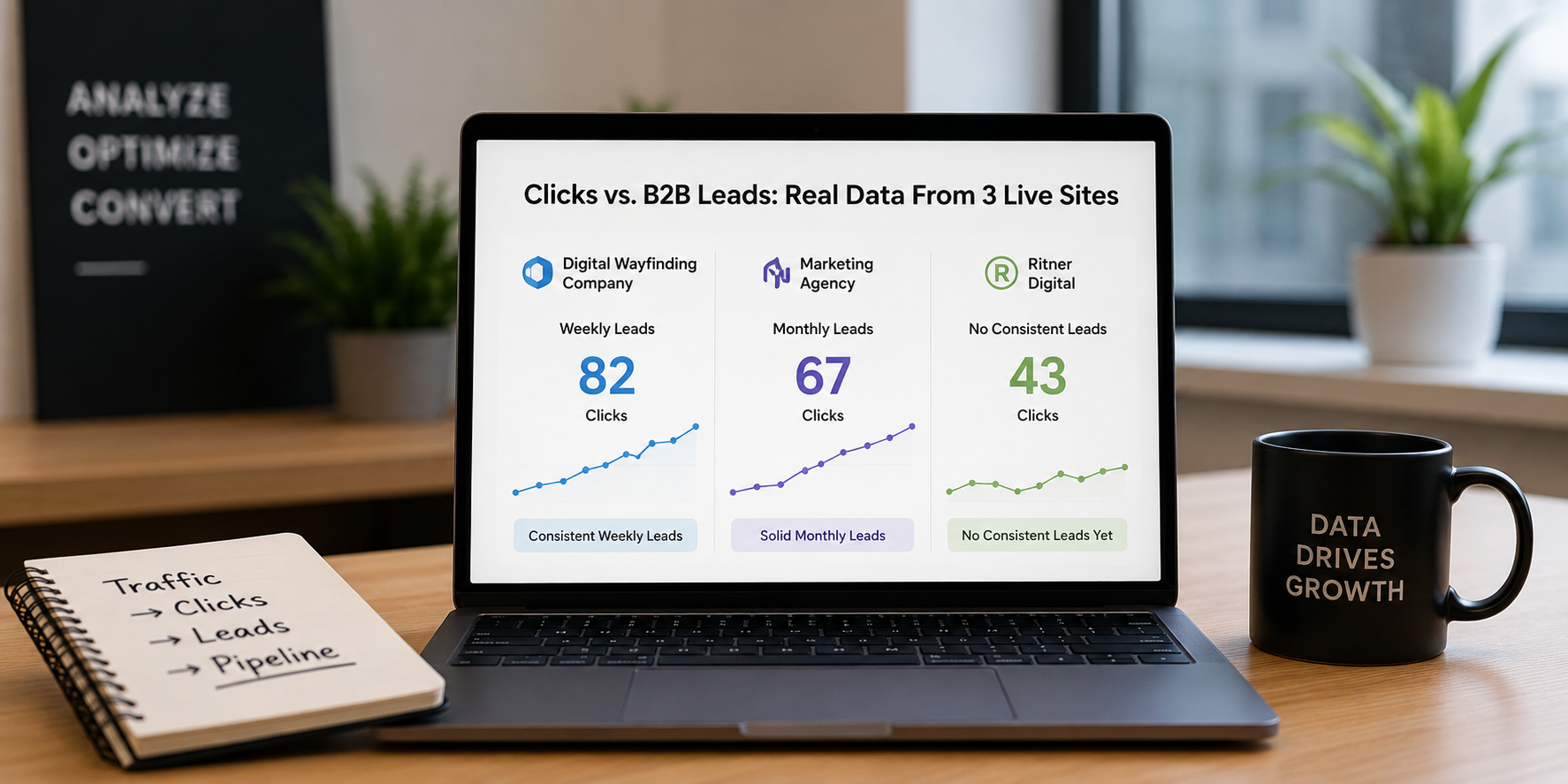
How Many Clicks Does It Actually Take to Generate Leads? Real Data From Three Live Sites — Including Our Own
Every business investing in SEO wants to know the same thing: when do clicks actually turn into leads? We pulled real Google Search Console data from three live sites — a digital wayfinding company seeing weekly leads at 82 clicks, a marketing agency seeing solid monthly leads at 67 clicks, and Ritner Digital's own site at 43 clicks with no consistent leads yet. Here's exactly what the numbers say, and what it means for your pipeline.